Identify and break free from you prisons with Shaka Senghor and Seth Godin | Porchlight Live
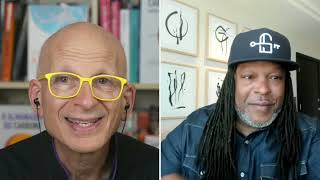
Shaka Senghor spent decades in prison for homicide, including years in solitary confinement. He discovered writing and journaling inside, self-published a book, and now teaches others how to break free from invisible prisons like grief, guilt, and shame through acknowledgment, writing, and concrete action.
Questions this video answers
He says he was sentenced to 17 to 40 years in prison.
He states he was 19 when he went into prison.
He reports self-publishing his first book from prison in 2008.
He says his brother was murdered in July 2021.
Sam, it.
Hey, it's Seth. And welcome to some time well spent. I've been looking forward to this ever since we put on the calendar. I'm going to start before I introduce my friend Shaka by quoting my friend Kat Hoke. And Kat says, what if you were judged forever by the worst thing you ever did? I don't think most of us could tolerate that. I don't think most of us could survive that. But we do it to people who are in prison every day. And our guest today, and I'm going to shut up and let him talk most of the time, is Shaka Senghor. He's an author of books and novels and he was formerly VP of Corporate Communications at navon. I met him at the MIT Media Lab where we were both directors, fellows and, or he was, I don't know what they called me. And he was a fellow at the W.K. kellogg Foundation's Community Leadership Network. The reason we're here is because he has written a breakthrough book, a book that almost no one else could possibly have written called how to Be Free. So, Shaka. Hi. Welcome.
Seth. How are you? I'm excited to be here today.
I am really well, thank you. We have a lot of stories to tell. Stories about the writer's journey, stories about invisible prisons, stories about resilience and sunk costs. So why don't I just tee you up? Tell us how someone ends up sitting, zooming in from Vegas talking about their, what, sixth book? A book that's going to help countless people, but starts in Detroit in the 80s as a little kid. What happened?
Yeah, thank you so much for teeing that up. You know, I, I grew up in, in this beautiful city called Detroit. A lot of people have got more familiar with it over the last few years because our sports teams are doing pretty good. But I grew up in the era that was tough, you know, was doing a crack cocaine era on the outside, looking in. You know, my, my home life looked like the model for working class America. And unfortunately, it was a lot going on in the household, you know, abuse and, and trauma and, you know, I ran away and at the time, I was an honor roll scholarship student. Seth. I had dreams of being a doctor. You know, I always wanted to help people. You know, I had dreams of being an artist. You know, I always had a, a really deep connection to various forms of artistry. And so that's where I thought my life would land me at. And unfortunately, I got seduced into the crack cocaine culture. And the reason I use the word seduced is because oftentimes when we talk about kids who end up in the street, we forget that they're actually kids. You know, I was about 13, 14 years old in this very adult culture. And, you know, I experienced all the horrors that came with that culture. You know, my childhood friend was murdered. I was robbed at gunpoint and beat nearly to death. And one would think that that would be enough to, you know, make a kid say, hey, I've had enough. But the reality is the way that children's brains develop, you know, it's impossible for them oftentimes to really protect themselves and to really know what the right decision is when they've been traumatized. And so I stayed in that culture, and within three years of that, I was shot multiple times. Stand on the corner of my block. You know, I always think back to that moment of being a 17 year old whose body is being pummeled with bullets. And then you're left to try to figure out life after that. And even now and you're sitting there.
With bullets in you and the ambulance doesn't even show up.
Yeah, yeah, no ambulance came. You know, my friend had to take me, which had to be traumatizing for him because he was only like 18 at the time and he had got shot the year prior. And so we get there, you know, they extract two of the bullets. I still have one of the bullets in to this day. The bullet holes are still prominently on my leg some. So it's all these things that are constant reminders, you know, and at 17, you know, I was left to try to unpack that. And unfortunately, like many kids who grew up in these traumatized environments, I began to carry a gun. And more importantly, I began to make up a narrative that if I found myself in a conflict, I would actually shoot first. And tragically, and unfortunately, that's exactly what happened about 16 months later when I shot and tragically caused a man's death and was sentenced to 17 to 40 years in prison. And at the age of 19, I went into this environment with the mindset that my life was over and that I would never get out of this place. And so I got into tons of trouble early on. I know nowadays when people look at my life, they're like, oh, well, you must have been like a model prisoner and had a kind of come to Jesus moment. I'm like, no, no, it wasn't that. It was a long, arduous journey, you know, that I went on.
Yeah. And one of the things that I've learned from your Story is the first part, which you just said, no one, whether they're 13 or 30, announces, I'm going to walk into the crack cocaine trade. Everyone is seduced to death. The system has power. But there's also often a moment when real writers writing that comes from the heart arises that the conditions are such that we realize we have to stop hiding and write something. So what was, where were you when that happened? It's absolutely heartbreaking to hear the details, but I think it's worth sharing just how much inhumanity we're capable of subjecting other people to.
Yeah, that's a great question. You know, when I, when I think about my writing journey, it always mystifies me how people think that writers come to be. And I was one of those people, right? I was an avid reader and I thought all writers had a cool smoking jacket and they wrote on change on trains, you know, with a glass of like, you know, whiskey or Merlot or something. So I had a very romanticized idea of what does it mean to be a writer. So when I first began writing, I didn't think of myself in that way. I was right. Not a desperation, you know, I was nine years into my incarceration. I was in solitary confinement on 23 hour lockdown, you know, five days a week and 24 hour the other two days. And so this environment is literally one of the most barbaric and humane environments imaginable in, in the US and it's something that has kind of existed in this kind of hidden way where people really do not know what we're doing to our fellow citizens who have run afoul of the law, who have been rightfully convicted, who've been wrongfully convicted, who have mental health challenges of the highest order. And so when I began my journey as a writer, it was in the midst of chaos. There was fecal wars going on in solitary confinement. There were people who would beat on their lockers, you know, all day. People who we, we called them cutters because they would maim their bodies just so they can get out of their cell and go to the nurse and get patched up and feel some type of human compassion. And for me, it was the darkest moment of my life. It was a moment of reckoning. I had read Plato's Republic and I come across this line that the unexamined life isn't worth living. And I remember pondering that line, like, what does that mean? Like, you know, what does it mean to examine one's life? And initially I was like, it sounded crazy. To me, like, I'm from the hood, philosophy isn't like my first language, or at least I didn't think so until I really started to understand that that's what rappers really were, was modern day philosophers. But that line led to me really beginning to assess my life after I got a letter from my oldest son, and his mom had told him why I was in prison. And he wrote me this letter, and I never forget. The letter opened up with, my mom told me, you're in prison for murder, dad. Don't murder again. Jesus watches what you do. And that reading that over and over and thinking about this innocent little boy who has to try to figure out the life of his dad in a way where I don't have the opportunity to provide context, you know, I can't really, you know, help him really understand the magnitude of what his mother shared with him. And it led to me journaling. And I started with this essential question of how did I end up here? And what I began to do was be unpack all the things that had transpired in my young life. All the trauma, all the abuse, all the things that had happened to me, but also all the things that I was responsible for. And what I realized through that journaling process, that I had never finished anything. I started a whole lot of things. And I had been arrested before, and I would say, you know, if I get out of this jam, I'll never get in trouble again. And then I would find myself in trouble again. And so through that journaling and that deep, deep, vulnerable way of really kind of expressing all the things that I have felt and experienced, I landed on this big idea. If I was going to transform my life and never get out of a prison cell, I had to complete one thing. And I looked around my cell and I was like, okay, there's not much here to work with. What do I do? And that's when I had this brilliant idea to write a book. And not just write a book, but write a book literally in 30 days. And that's where my journey as a. As a writer began.
Wow. All right, so for context here, when you're in solitary confinement in the middle of feces wars with people banging on drums, lockers night and day, you don't get to say, please bring me the. The latest Mac Mini with a big screen and some donuts. I intend to write a book so they don't make it easy for you. And I think that's part of the journey here. Yeah, what, like you can ask Stephen King what kind of Pencil does he use? But I'm asking you, do they even give you a pencil?
No. So in solitary, they give you this really flimsy pen. It's almost the equivalent of what's inside a regular pen because they don't want you to have anything. Firmness. Afraid you're going to, like, poke somebody. And so I remember when I. When I looked at the pen, I said to myself, there's no way possible that I'm going to write a book, book in 30 days with this thing. And I struck. I was struck with this idea of like, you know what? You're making an excuse. And the reason you haven't finished many things is because you always land on excuse or a reason not to follow through. And that's when I had this brilliant idea. I was like, well, what if I take this pen and I wrote it up in some paper like this and it'll become firm? And. And I had experience rolling things up in paper. So I was like, you know, what if I. What if I just roll this thing up? And I rolled it up and I just began to write and. And we would get, you know, we would have to buy our own, you know, writing pass or whenever I had money. And then they would give us like, you know, 10 pieces of stationary a month. And so a lot of times I would just, you know, hustle the stationary from other guys so I can write whenever I didn't have writing pads. And an interesting thing, you know, next time you're in LA and you come to my house, I'll show you this. I still have all my original writings. And sometimes my writing is very vertical at those times because I'm sitting at my desk just writing. But other times it's very slanted because when they would cut the power off, I would have to stand by the door and just that little beam of light that would come in, I would have to turn the paper so that I can, like, write. And so it's like there's these moments where it's vertical, then it's landing and vertical. And so when it's vertical, that means that I was writing at like 2 or 3 in the morning with no light and really, you know, writing out of desperation. But when I finished that book, it was one of the proudest moments I've experienced in my life. Just completely. I didn't know if it was good. I just know it was done. And I think that's one of the big lessons that I try to impart to my mentees is finish the thing you can make it better later, but just finish it. It's such an empowering way to live life. It's like finish the things we start. And so that's, that's, that's how it began in that environment. And you know, I wrote those first. I wrote two books, two novels, detective novels. And I started a third one and then I fell into a deep bout of depression.
Yeah. And were waiting to hear then what happened.
I fell into a deep bottle depression because I discovered I had this talent in an environment where I could not give birth to this dream that was bubbling inside of me. So I couldn't write in that moment. And I shifted my focus which is really where a lot of the big ideas in my new book comes from. I was reading all these self help books, the, you know, as a man think of the secret and I was arguing with these people like there's no way possible you can imagine a life that's different from the one I'm living. And all of this, this positive woo woo stuff is not real. Like it doesn't happen to guys from the hood. But one book in particular, as a man thinketh was pushing me, it was pushing me to the limits of like excuse, you know, removing excuses. Right. And I just would read that book over and over. And it was about this idea that if you master your thinking, you can master your destiny. And so I was struck by this, this idea that I'm not going to wallow in self pity. I'm not going to be stuck and depressed. I'm going to figure out a way to do something about it and what's most important right now, which is getting out of solitary confinement. And I said to myself, if this idea that you can attract the life that you want is real and it works in a negative, which I figured out from journaling that you know, a lot of the things that I had thought about my life to me being in prison before I was ever in a prison cell. And if I'm going to get free, I have to think about freedom before I get paroled. And so that's what I did. I started thinking differently and I wrote the Word and it was like, hey, you know, if you let me out of here, here's what I'm going to do. I'm going to type up these books I've written and I'm going to mentor the men in the environment. And that's literally what I did. You know, I really began to shift my focus. The warden wrote me back, he advocated for me getting out. It took another Two years for me to get out of solitary. But when I got out, I just typed up those books on my little word processor and. And then I self published my first book from prison in 2008.
So now we're starting to understand the difference between the mental invisible prisons and the real prison, because you were in both, and then something switched and you were in just in one.
Yeah, yeah.
And almost every person who's listening to this finds themselves in an invisible prison. One that they want to deny its existence. And because there's no one throwing feces at them and because they have the freedom to walk out the door, it doesn't feel like an invisible prison. But it is one.
Absolutely. And when I. When I was writing this book, it was really born out of a few different experiences. Right. You know, I got out of prison 15 years ago and I came home. I was so optimistic. You know, I just knew that the world would say, hey, you served your time. You can move on and, you know, get a job and contribute. And that just wasn't the case. Like, society was still really mad, and it still is to this day. We live in this very punitive society. But some other things happened as well that was very different. People embraced the idea that one could reimagine life for themselves. And so I went on this journey, and what it led to was a variety of interactions, engagements with people from all walks of life. And as I began to find success as a writer, what would happen is I would be at these events and people would come up to me and they would say to me, hey, you know, your story has helped me tell this story for the first time that I've been holding inside. My child is addicted to fentanyl right now, or my child is addicted to opioids, or, you know, I'm in the middle of a divorce and I can't tell my colleagues why I don't show up at work the same way. And it just became such a recurring theme in my life that I was like, man, what is. What is really happening? And it hit me that there are so many people in this world who are in prison by their experiences, by their past in very specific areas. Grief, which is where I started this book at. It's the toughest prison for anyone to get out of. And the reason I say that is that it would be cruel to sell somebody, hey, you've grieved long enough. Get over it. And so we make room for people to grieve as long as they want to or need to. But what I can tell you is through experience in my own grief, is that it is so tough to live a life of joy, laughter, fulfillment, and abundance when you're trapped in a singular moment that no longer exists. Right. And that's what I knew that I wanted to do, is be able to help people identify these moments that are sometime right in front of us, but they're not obvious to us. Us. And I can show them that. You know, for every hidden prison, there is a door. And sometimes you may go in and out because, you know, grief is one of those prisons that is a recurring theme in our lives. If you live long enough, you're going to lose people, but you're also going to lose opportunities, you're going to lose lovers, you're going to lose friends. There's so many things that we grieve throughout life. But I promise you that if you go on this journey with me, you share this journey with others, what you're going to see is that there are keys that unlocks those doors, and there's keys that allow you to safely and. And. And, you know, in the most positive way, acknowledge your grief, honor your grief, but also recognize that the. The true essence of getting free of grief is to land on gratitude. And so that. That those are the things that come from, you know, this. This side of the prison experience of getting out. And it became really prominent during COVID Yeah.
Well, one of the things that is very clear from your story is you made a shift from focusing on the person you saw in the mirror to focusing on other people. And that outward focus, which is essential for the craft of writing because you're writing in a language other people understand, is. You know, when you did that first book, if no one had read it, you would feel incomplete.
Absolutely.
And you would go to enormous lengths to get someone else to read it. Well, were they. Were you doing that for you, or you're doing it because you needed someone else to experience what you had to say? And this outward generous focus is such a key part of the story you're telling.
You know, it's such a great question. You know, when I. When I first wrote the. My first book, you know, what popped into my mind was that a book isn't a book until somebody reads it. And so I clammed down on my cell floor, and I literally yelled under the door, like, hey, anybody want to read this book? And I just remember guy hollering back like, don't nobody want to read that. This ain't Oprah. I was like, wow. Like, yo, I got this for trying to do something positive. And. But what. What happened is, normally under those circumstances, that would have been an invitation to a beef, you know, that was an invitation to a fight, to a stabbing or whatever. But for me, it was an invitation to write down the goals that I wanted to have in my life. And so I wrote down that one day I want to write something that's worthy of Oprah Winfrey taking the time out to read. Because what I knew is that it would be the greatest opportunity for me to help other people. If Oprah read something that I had written, it meant that I was really a writer. Which was. Which was a hard thing to think of when you're in a prison cell, is think of yourself as a writer. And so I started. I sent out my first book to a guy in a cell block, and I just remember him coming back to the door and saying, man, this is one of the best books I've ever read. And I got so excited, like. Like, I had an old school reaction. I don't know if you remember those old school. I think they were Toyota commercials. And the guy would jump in the air and say, oh, what a feeling. But that's what it was for me. I was like. I jumped in the air and hills. I was so happy. And then I thought about. I was like, well, this guy's in solitary confinement. He's probably over there.
Like, compared to what?
Yeah, anything I said, it was going to be amusing. And so that's when I started sending my work out. You know, I would send out to different people. My brother, I was sending out to college students and professors. And sometimes I would hear back from people. Sometime I wouldn't. I ended up, you know, getting real, you know, deep pen pals from. From sending my workout, and we would exchange ideas. And I started feeling like, hey, I can actually. I might be on to something here, you know, but it was so important because reading, to me is like a communal thing. And it's also something that in my life, I feel like is one of the luckiest things that I experienced, because in prison. But a lot of people don't know, and I think it's really important to add some context here, is that the average reading grade level in prison is third grade. And so I was lucky to be literate. And so as a writer, being able to share stories, you know, it means more to me than most can even begin to imagine, because books changed my life. And knowing that I can help change other people's lives, I mean, it's nothing greater as A writer.
Yeah. Let's go back a little bit to the bridge between validation and generosity. So you send your book to your brother. What? Give us the context of that.
Yeah. So. So my brother. This is my older. He's my stepbrother, but he's just my brother. To me, his name is Will. And out of my brothers, he was the one who did it right. He went to school, he played basketball. You know, he went off and got, you know, a great job, got married, and, you know, he has an amazing daughter, my niece Asia. And when he. When he wrote me back, the first.
Thing he said, wait, wait, wait, wait. The con. I. I'm sorry to keep correcting your own story, but how much had you heard from him before you said, oh, I hadn't.
I hadn't heard from him? Like. Like, you know, when you go away to prison, a lot of people lose contact with their families, with their friends, and for a variety of reason, life goes on, moves on without you. Sometimes people are angry that you made a poor decision. Sometimes people are hurt. Sometimes people just don't feel like they even know what to say. And so up until that point, I hadn't heard from my brother. It's about nine years I hadn't heard from him directly. You know, I would hear when I call home and, you know, hey, your brother said hi. But we hadn't corresponded. And so when I sent him my workout, I didn't even know if he would write back. And. And so I was shocked when he wrote me back and how positive he was. He. He was like, man, I went to school, and you write better than a lot of the people I went to school with. And so that was just like, one of the most affirming things as a writer I could hear, especially for somebody who came from a very different walk of life than I came from. And that. That shot in the arm gave me so much confidence that I was on the right path. And, you know, I began to send him all my stuff, like, bro, read this. You know, and he probably was overwhelmed with the articles and essays and, you know, and I still have some of those original writings as well, which is. Which is. It's funny to go back and read because sometimes I. I cringe. I was. I was learning new words, and I feel like I had to use all of them in every sentence. But it's a beautiful, beautiful part of the journey is to be able to go back and see the evolution of the craft, which I love, you know? You know, it's. You know, we're Selling books, and we're putting books in people's homes and hands. And I love that part as well. But I love the craft of learning how to use language.
Yeah. All right, so in a few minutes, we're going to take your questions. So go ahead and type them in the comments if you've got one. And then as we come full circle to this idea of how to be free, you didn't call it I am free. You said how to be free. You want to give people some of the building blocks that you've learned the hard way.
Absolutely. You know, when I. When I started writing this book, you know, there was a. There was a intentionality behind it based on all the experiences that I've talked about. And what I realized is that people need a way out. They need to figure out how to access agency over their own lives. They need tools in their toolbox to help them see their way through a thing. And. And if I don't know how to do anything else, I know how to live a free life, given that so much of my freedom was taken away. And I always tell people this. I was incarcerated before I ever stepped foot in the prison cell, and I was free before I ever got out. And the reason is because there were practices that I learned over the time of being incarcerated that are applicable to any form of incarceration. And I wanted to provide that toolkit, but also wanted to provide it in a way that added context based on lived experiences and not based on theory. I think there's a lot of theoretical books about how do you live, you know, a life of purpose and value and freedom, but oftentimes they're not coupled with, like, real processes that someone who's went through. And so for me, it was really like, how do I give people the keys to open up their own doors? And what that looks like is like. Journaling isn't just a set it and forget it idea. I do what's called active journaling, where you have to take action steps as you discover these difficult things in your life. And one of my. One of my action steps is when I sit down to write and I sit down to journal. I only start when I know I am at a place that I can be absolutely honest with myself, that I'm not filtering it through insecurities, fears, or the worry of, do I cause somebody else hurt and harm? I can only sit when I'm ready to write the truth, no matter how ugly it is, no matter how hurtful it is or how beautiful and how amazing it is. And then as I discover things, I challenge myself to take an action step. So it's not just like, hey, I want to, want to learn how to forgive. What is the action step that goes with that? You know. And so there's many practices in the book, there's opportunities to dig deeper, which is also one of my favorite parts of the book, to pause to think about, to really reflect. Sometimes we want to just kind of plow through these things and get to a end solution, but they really are procedural. They really do require you to step up in a way that really puts you in power of changing your own life. And that's the magic of it all. It's not, you know, nobody's going to come in with a cape and save you from your own self. You have the power to do it. And that's what the book really shows is that, listen, if I can come from 19 years in prison, seven years in solitary confinement, you know, a hard scrabble life that includes gun violence, abuse and everything in between, and arrive at a space to where I wake up in the spirit of gratitude that I get a chance to go out and live whatever dream I've imagined for myself, you can do it absolutely without hesitation, with probably more ease than I ever would have been able to do it. But it's possible and belief is a big part of that. You know, how much do you believe in yourself? You know, in, in my journey, I run into so many obstacles based on having, just having a felony. And, and I'm always mindful that these are, these are going to be one or two things. They're going to be impediments. Well, they're going to be opportunities. And so this book is full of these opportunities for people to live the freest life possible. They're full of a framework. You know, even the way that I structured the book, you know, I wanted to start with the toughest prison possible and help people work them way their way down as they come out on the other side. Because that's what I had to do. I started in, you know, I was in maximum security, I was in the highest level of security and I had to work my way down to lower levels. And eventually I worked my way to freedom. And so even the book is structured in a way that helps people kind of navigate through this framework.
And that's why it's so important to share a book like this. Because if a colleague or a family member also reads it now you have a foundation to have the conversation. So we've got a question. Here, from Scott, we're going to put it on the screen if all this magic works or not. There we go. How can we transform guilt and that sense of loss into gratitude? This modern. Get it now for me, at all costs society?
That's such a great question. You know, the first chapter is what was one of the toughest chapters because I was navigating exactly what Scott just wrote. So here's what happened. In July 2021, my brother was murdered. I flew home to Detroit to help my family bury my brother and to support, you know, our family. And it was a moment where I was in our living room and all our friends are coming by and our house is just full of people. And I was looking at my stepmom and she was in tears because she had just lost her youngest boy. And in that moment, I was struck with the deepest sense of guilt because I made somebody's family feel like that. And so in that moment, I couldn't allow myself to grieve because I was feeling guilt. And how I arrived at gratitude was that instead of getting stuck in that prison that didn't allow me to be present for my brother is I wrote a letter to the person who murdered my brother. In this letter, it was really about understanding what had transpired in his life from a place of empathy and compassion. And what it led to me understanding about this journey of grief is that if I really step into the spirit of gratitude and be thankful for the moments I spent with my brother, to be thankful for, the arguments, the dust ups, the times he invaded my space as a little brother, the laughs, the stories that we got a chance to share in, the food we got a chance to eat together, that it began to dissipate the guilt. And that that to me was real grieving was really being able to acknowledge that, hey, there's a real feeling I'm experiencing to recognize that I had to reconcile my past with the present moment I was in, and to lean deeply into gratitude. Most of what ails us no longer exists. The pain of the past is a moment that we've already lived, that we choose to keep playing over and over. If we can be present with ourselves in a moment and recognize that in the moment, the moment that we're in, the only thing we really have is now. You can arrive at gratitude in the deepest way. And that's what I had to do with my brother. And that's how I'm able to navigate the guilt, is that I'm fully present in my life, sometimes to my own detriment, I could be so present that I'm constantly changing my mind in real time, which, which drives my wife crazy in the best of ways because she's the sweetest and most patient when it comes to that. But it is truly a testament to what, what it means to be mindful and what it means to be present. And that's how I've navigated that.
You know, we all tell ourselves stories all the time. And every story we tell ourselves is true. But every story we tell ourselves is also not true. That on close examination, we've left something out. On close examination, we've highlighted one thing instead of another. And in this tragic moment when you are so raw after your brother's death, it's true he's lost, he's gone forever. But it's also true that you can find a way forward. It's also true that you can connect to this person who is feeling totally differently than they did in that moment. And so stories are a tool, they're a fuel. We don't have to tell ourselves a story that doesn't work when we have the choice to tell ourselves a story that does work to create possibility as we go forward. And that is really what it is to be free is to choose your story.
Absolutely. And that's the, that's the magic of this book. And one of the reasons I got so raw and so real with some of the stories and that I chose because when I was journaling, it was liberating to really get through these tough moments that I had hit. Like anybody, shame is so, you know, shame is one of the one. Excuse me. Shame is one of those un underrated impediments to a fulfilling life. It's ones where we think of only as a blink of the eye moment. But really, shame undergirds all the other things that hold us in place. And so writing those stories down and being honest with them and being able to actually, you know, here, here's. Here's what I've learned about when you go through tough things, sometimes you take on a responsibility of the person who harmed you. And that's what makes it hard to get out of it, because you're questioning yourself, well, what did I do to deserve that? Or what is it about me? Or why me? Or maybe I did deserve that. And it's all these crazy stories we tell ourselves, none of which are true. And what writing it down does is it gives you agency to one reassign responsibility. The person who shot me, that was a choice that he made. I didn't choose to get shot. And I had to, at some point, assign that responsibility to this person so that I could actually heal from that experience.
This is beautiful. All right, let's bring Mark's question on, and then we'll do a quick one from Khan. And if you've got a question, please put it in the comments. Go ahead, Mark. Inspiring conversation. Thank you. For someone feeling trapped by their past or self doubt, what would you suggest as the first step toward freedom?
So the first step for me is always about acknowledgment, you know, acknowledging that, hey, I am stuck right now. Because once you. Once you claim it, then you can actually address it in a real way and start to solve. If you are not honest about it, if you are not vulnerable with yourself, which is one of the chapter chapters, is called vulnerability. If you're not willing to be vulnerable with yourself or others, you can't move forward from the thing. And so acknowledgment is one of the best, biggest things for me. And. And once you. Once you make that claim, this is. This is where the journaling becomes the magic, right? When you write it down and you could just look at it. And it takes time, right? You got to take time. You gotta. Sometimes you got to go back and read it over and over and get more comfortable with it. But now you have agency. Now you have power. Now you can make different decisions. And then you get a chance to recognize, like, hey, I got a choice here. Do I want to stay stuck or do I want to live the life that I'm worthy of? And part of that acknowledgment is it removes all these other things that we think will make our lives better. If, you know, if the sun just shined a little bit brighter, I would feel happier today, you know, if I just got another raise, you know, if, if, if, if, if, if. Right. The reality is we have choices, and we get a chance to choose. And you can only get to there if you acknowledge the thing first.
And if you're feeling stuck, but you acknowledge that there's choice, it's because you want to be stuck. At some level, being stuck is safe. At some level, being stuck amplifies resistance, and it makes it so that we can't be criticized and we can be a victim and we're safe. So part of what happened in your visible, not invisible, but you're a visible prisoner is. I think you came to the conclusion you did not want to be there.
Absolutely.
And unfortunately, we have created the conditions where many people feel like they have no options.
Yeah.
And you realized you have an option.
Absolutely.
So Khan asked you the same question I did before we went on the air. So if we could throw Khan's question up, because I'm also interested in the second half of it.
You see Khan's question.
Here it comes. He wants to know what is the significance of the art on the wall behind you and on your hat?
Oh, so that's a great question. The. The art on the wall behind me has no significance. I'm holed up in a hotel.
But maybe we should make up a story. That circle represents the circle of freedom, and it. Right, right, right.
So. So the ones on the wall behind me have. Have no meaning other than it. Well, they actually do have meaning. I'm in a hotel with my family. We're going to a concert this evening. And actually it's a hotel I stay at frequently, so. So it does have some meaning. It's a comfort. And knowing that my family, my wife, my son, we're gonna have a great time tonight. But the symbol on my hat is actually my logo, which is two S's for my name and the key that unlocks everything. And so it's. It's been so fun to have something that symbolically truly represents my life. That was a great question, though. Yeah.
All right, so we're going to start wrapping this up. We had a good question here from someone whose name is Make, Create, Build. I have no idea what their parents were thinking when they were named that, but we'll put it on the screen. After processing on the page and gaining awareness, how do you move to action?
Yeah, that's. That's a great. That's a great question. So one. One of the things that I've learned when it comes to figuring out how to get free. Right. Is that you have to embrace the process. And it was a long, arduous process for me. So when I first started writing about the big idea that one day I'm going to be free and I'm going to live a different life and I'll one day get out of prison, that was 2000. I didn't get out of physical prison until 2010. But what I did is every day from that moment that I decided I wanted to live my life different, I took an action step that would lead to the outcomes that I desired. I wrote the war in the letter. I typed up those books that I had handwritten. I read a book on self publishing, so I would learn how to publish a book, publish the book from prison. I just Kept doing everything I could to prepare myself for life after my imprisonment. And so what does that look like in our day to day life? Always tell people to start with this question, what does my life look like without the things that cause me hurt, that makes me feel insecure, that makes me feel afraid to take a leap of faith. What does that life look like? And then write that life down. I would write down when I was in prison, I didn't even know if I was getting out of prison at this point. I didn't even know if I was getting out of solitary confinement. But what I did is I wrote down the exact life I wanted to live. And I can tell you it was one of the hardest lists I've ever made. Because every time I would write something down, what would pop into my mind is that you don't deserve that you're not worthy of that. That doesn't happen to people like you. Of course you can't achieve that because you're a ex con and you name all the different things. The self doubt. And I would write it down anyway. And I would go back and read it until it started to feel real in my body. And that's what I would say is like the, the process of. Once you write it down, now you have to start making those action steps. Here's, here's a cool thing that I do to this day. I have experiences that, you know, I put myself physically in. So for example, if I want a new car and I'm gonna use a car because it's superficial and it's something we all can relate to, transportation, if I want that, I started to think about it, I'll go to the dealership. Even if I don't have money, I'll test drive it. I'll start to feel. What does it feel like to be in this experience? Same thing with a new home, with a new book. I want to feel that right? So when I started writing, even when I started writing this book, which I'm excited for people to read and then share with others, I would go in a bookstore and I would look in a section because this is a new section for me. And I would look at the books on the shelf and I feel those books and, and I promise you all while I'm traveling, I. Every time I travel, I stop in the book section. I probably have way too many books right now as a result. But putting a feeling to it, a tangible feeling, what does it feel like to have my book in this section? What does it feel like to hold a book in my hand, you know that. That putting ourselves in those experiences are as just as important as writing them down. So as you're figuring out the things you want for yourself, get courageous. Go on that adventure. You know, you. You want to imagine a life for yourself. You have to imagine what does my life feel like if I'm not held down a hell hostage by these things that lead to my own suffering. And that, that is how you start to apply these things in real time.
That's beautiful. Shaka, I'm sending you hugs from New York. I think you made a difference to a lot of people today. You'll be getting the book soon. If you're on this call, please share it with some other people. These are conversations that we need to have. Shaka, thanks for the difference you make.
Thank you so much for having me. It's truly an honor.
Keep making it Ruckus.
More from Shaka
Joe Rogan podcast Shaka Senghor #shakasenggor #podcast #joerogan #interview #jre #jreclips
Surviving a Shooting at 17 Joe Rogan X Shaka Senghor | Joe Rogan Podcast | #shorts