Incarcerated for 19 years. Here’s how he found freedom | Shaka Senghor
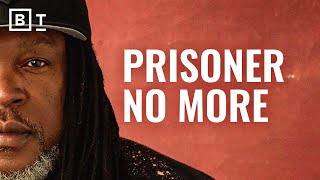
Shaka Senghor spent 19 years in prison, seven of them in solitary confinement, before finding freedom through education, forgiveness, and reconnecting with his son. A letter from Nancy, the victim's sister, and his son's words shifted how he saw himself. He now defines freedom as gratitude and purpose, not the absence of walls.
I was incarcerated well before I was in prison. And I was free before the gates of prison opened up and let me out. In life, there are massive doors that stand in our way of our personal freedom, these narratives that imprison us. Sometimes it's guilt, sometimes it's grief, sometimes it's sadness. They lock us into a space where we feel like our whole world has contracted in a way that doesn't allow us to move about freely within and outside of ourselves. From my early beginnings, I experienced trauma at a very high level. And it came full circle. When I was about 14 years old. I had ran away from home and I got seduced into the crack cocaine trade. I experienced some of the most horrific events imaginable. My childhood friend was murdered. I was robbed at gunpoint. And at the age of 17, I was shot multiple times. I was locked into this narrative that said my life could only have limited outcomes. An early grave or a prison cell. I believed at that time that this was what my life was meant to be. I had just turned 19 years old. I was at my house and a car pulled up. An argument ensued and escalated and I turned to walk away, but I heard what I thought was the car door opening. I remember my body tensing up. I was triggered by my prior experience, and I fired what turned out to be four fatal shots. I was subsequently arrested and I was sentenced for second degree murder. It had all finally came true. I was destined to be an incarcerated soul. Over the 19 years of my incarceration, seven of those years were in solitary confinement. Now I'll never forget the sense of shame that I felt. I was given the bland prison blues, the that had been worn by the person's number who had been etched out and whose mind had been replaced with. And I remember feeling so dehumanized with each moment. It felt like the walls were getting tighter and tighter and the door getting smaller and smaller. I realized the impact and power of solitary confinement and its ability to dim the light of freedom. And I think back on that time and think about how lucky and fortunate I was to find the keys that helped me regain a sense of what it means to be free. But that didn't come easy. It started with what I call my three personal miracles. The first one was books. And I remember reading Malcolm X's autobiography and understanding this man used education as a tool to escape prison. And so I embarked on this quest to read as many books as I could. And I began to feel just an inkling that there was a possibility of a life beyond Bars. And then five years into my sentence, I received a letter. It was a woman named Nancy. She began to articulate to me who the man whose life I was responsible for taking who he was. And in that letter, Nancy handed me the second key. And that key was forgiveness. A few years later, I received the third key, which also came in the form of a letter. This time, it was from my own child. And he told me that his mother had told him that I was in prison for murder. And I remember my heart breaking into pieces. And I realized in that moment that I owe my son a father he can be proud of. And that recognition and acknowledgement began to unlock the ideas that I had about my own personal freedom. The challenge that I was faced with every day was to decide in each moment who I wanted to be. I began to even reshape the way that I thought about that environment. Instead of a solitary confinement cell, it became a university. It became a creator's den. It became a meditation room. And there was nothing more liberating to me than being able to reimagine the most brutal of environments as something positive, even though it wasn't. It was my last day in prison, one day after my 38th birthday. And I remember those doors just opening up. And I remember taking that first breath. Everything appeared different. And it was something magical about driving through the city, seeing the sights and sounds of Motown. It was almost like a ballet of just people moving about with a carelessness and a freedom that was new to me. And there was like this electrical feeling inside of me. Freedom to me, is gratitude. Freedom is dancing for no reason at all. It's laughing late into the night, being a dad, being curious, moving throughout the world with purpose and intent. And it's the ability to love and be loved. Those things are so liberating. But the greatest expressions of freedom for me now is. Is the ability to emote and to cry. Freedom is trusting that the moment you're in is divine. And that's what I choose to believe.
More from Shaka
Joe Rogan podcast Shaka Senghor #shakasenggor #podcast #joerogan #interview #jre #jreclips
Surviving a Shooting at 17 Joe Rogan X Shaka Senghor | Joe Rogan Podcast | #shorts