Shaka Senghor and Oprah Explore How Freedom Is a Mental State
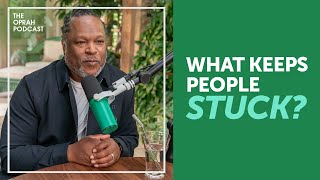
A recorded conversation (YouTube) between Oprah Winfrey and Shaka Senghor about Shaka’s journey from physical incarceration to mental freedom. They discuss how self-imposed narratives and trauma create hidden prisons, the role of active journaling and defined steps in transformation, forgiveness as a healing practice, and examples from Shaka’s life (e.g., completing a book in 30 days, receiving and extending forgiveness).
Questions this video answers
15 years
19 years
About eight to nine years
2021
Write a book in 30 days
How to be Free. How to Be Free. A proven guide to escaping life's hidden prisons. I saw this title and I thought, whoa, how did we free? Is that one of the core things that we all are striving for? And what made you write this? Because 10 years ago you wrote a book called Righting My Wrongs, which I just love that title. And how to be Free. You've been free now.
Yeah.
For how many years?
Coming up on 15 years. So it's really amazing to even think about that part of my journey after spending 19 years. To now be 15 years this side of freedom and to be able to live this experience is really what inspired the book. Yeah.
And you were inspired because you have conversations with other people and you realize there are many people who are not like you. They hadn't been to a real prison, hadn't been incarcerated behind bars, but are incarcerated in their own self imposed bars.
Yeah, yeah, yeah. You know, it's been one of the most incredible parts of my journey is to think about what does it even mean to be free? And obviously I had the kind of very real experience of being physically incarcerated. But what came up for me was that I was free before I ever got out of prison. I was actually free before I even knew I was getting out of prison. But I was also incarcerated before I went in because I had bought into a narrative that my life could only have very limited outcomes. And so when I got out and I started.
Okay, so let's start with that. Yeah, you were incarcerated before you went into prison.
Absolutely.
Tell us what that means.
Yeah. So the mindset that I embraced this narrative that my life can only have two outcomes. I would be dead or in jail before I was 21. And so I live within this very.
Limited belief about that was its own incarceration.
That was my own prison, the own hidden prison. And so I began to live my life through that lens and it produced that outcome. I ended up being in that environment. And then when I had this awakening, you know, I was doing this journaling and just really trying to answer this question, like, how did I end up here and what's next for me?
And this was how many years into your. Into your imprisonment, into your incarceration?
This was roughly about eight or nine years in solitary confinement and really coming to terms with, like, what my life had become. And I started journaling and just asking these hard questions. How did I end up here? And what I discovered was that all these things had happened early in my childhood. The trauma, the abuse, the violence and Most importantly was the narrative that I.
Embraced and also the choices that you made as a result of that narrative.
Absolutely. Absolutely. And that was one of the most powerful things that if I can choose based on this negative narrative and create these negative outcomes, what would happen if I chose positive narrative and started to live my life with those outcomes in mind?
Because you could really physically see that for yourself. When you're journaling and solitary confinement, you have a lot of time, and you were able to absolutely go through the patterns that had put you exactly where you were.
Absolutely.
Yeah.
Yeah. And it was steps. And it was steps. Like any other thing that you want to build out, there are steps you have to take. And I took steps that led me to prison. So I was like, what are the steps necessary to lead me out of it and lead me up into the greatest sense of what it means to be free? And that journaling really opened up all the possibilities, because I fell in love with my mind.
Ooh, I love that I fell in love with my mind. And so long before you were actually letting out of the walls of the prison, you felt that you had liberated yourself within the walls of the prison. Tell us about that.
Yeah. What I discovered in that. In that space was that I can go wherever I wanted to go in my mind, and they could take me to places far beyond the prisons. But more importantly, what it did is it showed me that there's still possibility. You still have a life left, and if you can dream, you can actually achieve it. Like, it was really like, even though it's one of those things we hear all the time, you know, conceive it, dream it, believe it, and it'll happen. It really became a mantra for me. And I just started writing down, here's what I want to happen in my life. And I've realized that writing it down was just part of it. And I, you know, I encourage people to journal, but it's also active journaling. What are the steps that I'm going to take to make this become reality?
So active journaling. So give us an example. You would write down.
So I wrote down that I wanted to finish something, because what I learned during my journaling is I had never completed anything. I never graduated high school. I never followed up going to the military. I always started things but never finished anything. So one of the first things for me was, you have to complete something. And that something was writing a book. And I gave myself a very defined timeline to do it. 30 days, you have to write a book. And that was the action Step. And what I said to myself when I wrote that down, if I finish this book in 30 days, my life can be anything that I imagine it to be. And I did it.
And that's how righting my wrongs came.
That was the beginning of my writing journey which led to righting my wrongs eventually.
Yes, yes, yes. And so I want to say that I think that this book, how to be Free, a proven guide to escaping life's hidden prisons is. It's a guide.
Yeah, absolutely.
For anybody looking to tear down their own self imposed barriers to getting free. And you write on page four, how to be Free, that prison. You say prison is designed to break you. The walls you say, the rules, the routine, it's all meant to just strip you down until you, you forget who you are. And what you discovered is that the most powerful prisons aren't the ones made of concrete and steel, but they're the ones that we carry with us that are built from our anger and our shame and our trauma and our self doubt. So is that why you wanted to write this book?
Absolutely. You know, on, on my journey, when I put right in my wrongs are people would come up to share stuff with me that they said they had never shared before. A child who committed suicide, a dysfunctional marriage, a failure at job. And they would say something about having a conversation really opened them up and liberated them. And so I started just kind of interrogating this idea of like what keeps people locked in place. And these things just kept coming back. Grief, shame, anger and forgiven. The inability to forgive.
Yeah.
And the more I kept coming back to that, I started to see it in people from all walks of life, which was the thing that was mind blowing to me because you know, we come with these narratives where we think we got people's other people's lives figured out.
Yeah.
Oh, they're successful, so they can't have problems. They're wealthy, they can't have problems. They're this, they're that. And then you start to talk to people and you realize we all have it. You know, we all have things that we're working through. And sometimes we're not even aware that, you know, we're working through them and.
That everybody is just here doing the best they know how at any given moment. So I know that forgiveness for you has become like a healing agent in your life and you received it from. You write this in Righting my Wrongs, the godmother of the young man that you had shot and killed. And that's what landed you in prison. You also gave forgiveness to the man who killed your younger brother. Sherrod. What's your advice to anyone who is stuck needing to forgive or be forgiven?
That. That part of my journey has been so profound because, you know, when you receive forgiveness, you forget that sometime in life you may have to forgive someone. And it can be so complex. It's not an easy thing. You know, my brother was murdered in 2021. And it was heartbreaking because my gut reaction was all the negative things that come with losing a loved one. And then I thought about this person's soul, like, what led him down that path. And it was really having empathy and compassion for his journey because I had my own experience. So there was carrying the duality of guilt while trying to grieve and then reconciling that through. What have I been teaching in the world? What have I been saying to people all along? And now it comes front and center in my own life. And I think that's the power of what this book is really about, is that true freedom doesn't come without the work. You're always going to be confronted with the work. You're always going to have a thing to challenge you, to think broader about what it is that you're sharing in the world.
More from Shaka
Joe Rogan podcast Shaka Senghor #shakasenggor #podcast #joerogan #interview #jre #jreclips
Surviving a Shooting at 17 Joe Rogan X Shaka Senghor | Joe Rogan Podcast | #shorts