Shaka Senghor Discusses Incarceration And How He Connected With Oprah To Tell His Story
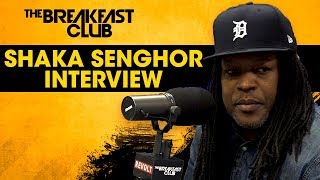
This is a Breakfast Club interview with Shaka Senghor discussing his 1991 homicide conviction, 19-year prison term including nearly eight years in solitary, and subsequent redemption work mentoring at-risk youth. He describes trauma (being shot, compounded PTSD), prison mentorship and self-education, barriers to reentry (employment, housing, high recidivism), and his media connection with Oprah and role on the docuseries "Released." The conversation also touches on sexual abuse in youth, the cultural glorification of crime, and restorative/ethical questions about accountability and victims' families.
You're watching the Breakfast Club.
Morning, everybody. It's DJ Envy, Angela Yee, Charlamagne, Tha God. We are the Breakfast Club. We got a special guest in the building. I don't know how to pronounce his last name, but I'll just go with Shaka.
Shaka. Senghor.
Senghor. Senghor.
Senghor.
He said Senghor.
I attempted. You attempted. Okay.
It's all good.
Welcome, brother.
Thank y' all for having me.
We got a show coming on own called Released.
Yes, sir. It's like a docu docuseries, eight part docu series. So super excited about that. It's the story of five men, one woman coming home from prison, their first 90 days. And really it's a story of family and what it means to come back to community. And it's such an important subject in our community. And we wanted to really offer this up as a means for people to really connect around this issue. Now you were locked up for murder, Second degree homicide.
Second degree homicide. What happened?
So I got into a drug related conflict. July 1991, that conflict escalated relatively quickly and I shot and tragically caused a man's death and was sentenced to 17 to 40 years in prison. I ended up serving 1979 in solitary confinement.
Was it self defense or just.
It wasn't self defense. It was a conflict that escalated. But one of the things that I talk about through my work is how we're impacted by PTSD. Like I got shot like 16 months prior to that. And when I got shot, I was 17, got shot, processed through the hospital, no treatment after being shot. And basically what I did, I started carrying the gun. I started making up in my mind that if I got into a conflict, I'mma shoot first. I'm gonna shoot first.
Cause you was paranoid. You didn't never wanna feel that feeling of being shot up again.
You don't wanna die, definitely. And you know, I mean, it's tragical all around, you know, and even as I'm expressing that, I don't use that as an excuse because at the end of the day, I made that decision and I did the time that came with that. And you know, one of the things I always tell young people, don't let a 30 second decision produce a life sentence, you know, so, yes, don't let.
Temporary, what they say, don't let temporary emotions lead to permanent.
Permanent outcomes. Yeah, without a doubt.
Now, of course, redemption is one topic that you discuss frequently and you discuss going to jail and knowing that you did something wrong. You served your time for it. But then what happens when you're in jail to prepare you for when you get out of jail?
Well, the reality is our system isn't set up to prepare you for life after prison. And fortunately, I met some incredible mentors. These are men who are currently serving life sentences. Some of them have died in prison, some of them are going on 40 years in prison at this point. And they saw something that was redeemable in me and they introduced me to literature and that's how I started writing and really getting into the space of understanding, like how I made the decision, like I was an honor rolled kid, I had all the potential in the world, ended up on the wrong path. And they saw that and so they did what was necessary to get me back on the right path.
I just had this conversation with somebody yesterday about the corrections facility. I was saying that, you know, they need to offer trades in the correctional facility. You know, people who don't have a diploma degree should be allowed to get their diploma, at least an associate's degree while they're in jail, something.
I bet you could get an associate's degree.
No, we used to could until they passed the crime bill once. Clinton, President Clinton, when he was in office, he passed a crime bill that took college out of prison. At that time, I was averaging a 4.0 in college. And so, you know, you look at that and the impact that that has on people coming home because people are not giving, giving us employment opportunities. So one of the things that I did, I just created. I'm an entrepreneur because at the end of the day, I sold drugs and it's the same business model. But I took that, those lessons I learned and just applied it to a legitimate enterprise. And you know, that's one of the things that I kind of encourage people to do is if you're incarcerated, take the skill sets that you did, learn from the life you was living and apply it to something legal when you get out. Because it's hard to find employment, it's hard to find housing. And you know, you'll see this within the show. Like when people coming home, it's so important that they have a support system in place to actually help them with that transition.
Did you get a lot of backlash from some of the things that you're doing now? Because you did commit murder. And so now you're coming out, you're on own. You did the interview with Oprah. Do you get backlash? People saying, that's not fair, it's not right, he should be this. He should be that.
No, I mean. I mean, in anything you do, you're always going to get your fair share of backlash. But for the most part, I've been very transparent about my experience, and my work speaks for itself. You know, when I got out, prior to, you know, the Oprah interview, you know, I knew I had a responsibility in the community. And so I immediately started mentoring, working with young men and women, because, you know, as an OG in the hood, you know, and that's a term that goes through hood to hood, I knew that I had a responsibility to try to guide these kids down a different path than I took. And so, I mean, you get backlash here and there, but for the most part, it's been positive. Cause my work speaks for itself.
Now, you speak about PTSD after you got shot, but what about after you actually took a life?
Yeah, I mean, it's one of the things that I struggle with. I was just having this conversation the other day, is that it's compounded ptsd. You know, when you go through getting shot and. And then you're the person doing the shooting, then you're in this very volatile environment. You're dealing with all the emotional turmoil that comes with that, with no help, helpful outlets. And for me, fortunately, again, I had those mentors who had been through it and was able to lead me to books and things that kind of helped me with processing what I had experienced. But unfortunately, one of the reasons the cycle continued to repeat itself is because we don't have enough systems in place to help guys process that. And what we don't think about a lot is that 90% of the men and women are coming home. 10,000 people are paroled every week coming back to society. And a lot of times they don't have the things in place that they need to sustain their lives out here. And so this is one of the things that we feel the show is really gonna help people see is, like, what are those processes that would be helpful? And what are some of the things that stand as an impediment to people successfully transitioning?
Cause within five years, they said, a lot of people end up going back to jail.
And figured out, yeah, we have a 70% recidivism rate throughout the country. And that means that seven out of 10 people who get out eventually comes back to prison. And a lot of those things can be disrupted. One of the things, we have a severe mental health crisis inside our prisons. Out of the 19 years that I did, seven of that was in solitary confinement. And when I was in that environment. The things that I witnessed happening to those with mental illness was just unbelievable. And then they're expected to come out and readjust to society. And, you know, it's why these stories are so important. It's why the film 13th was so important, because it's helping us really pay attention to an area that was kind of a blind spot for a long time.
By the way, solitary confinement can drive you to mental illness, too. It can definitely make you crazy.
They say within the first 90 days, most people actually go crazy from being in that environment. I mean, I witnessed it. I watched guys who, you know, appear to be normal in general population lose it after being in that environment for so long. And I was just fortunate that I had the ability to read and, you know, I had an outlet, you know, in writing to kind of help me deal with that reality.
So they give you books in solitary confinement? I thought they didn't give you nothing.
No, you can get books. You can get books from the library. If you have books in your own personal collection, you can get those. And, you know, you can have family and friends order books. And it's restrictive. You know, they try to limit what type of information you can get. But, you know, books was my saving grace.
Now, what was the longest? Solitary confinement?
Yeah. What was the longest?
So the longest I did was four and a half years straight. And that was the last time I was. I was 1999 to 2004.
Is that illegal now to have that much consecutive time in solitary?
On a federal level? It is state by state. It varies. But that particular stint was for an assault on a staff member, me. And we got into a conflict, and that escalated to a fight, and I ended up in solitary confinement.
A CO. Yeah, we just had some COs up here yesterday talking about this same stuff about how they be getting into it with the inmates.
Yeah, I mean, it's a lot of testosterone. You know, you got a lot of racial dynamics that are very unhealthy in that environment. You know, you got abuse of authority and abuse of power, and, you know, it happens, you know.
Now, let's go back a little bit. Now, you said you were a grade student, honor roll student. What got you into selling drugs?
So I grew up in a household that, you know, my mother and I had some major conflicts. She was abusive toward me and my other siblings, and I ended up running away. And this was like, you know, when I got into the drug game, it was like when crack first began to penetrate the Midwest, like around 86. So I was just a naive kid. You know, I ran away. The first couple of weeks, I was like, homeless, nowhere to go. Sleep in the garages and basements. And what happens to a lot of young people is you get older, seasoned street veterans. It's like, yo, come do this. And, you know, it's a place to live, a place to make money. And that's how I got pulled into the culture. And it's actually one of the things that inspired me to write, Write my memoir, because I really wanted people to see how so many young people end up in these spaces. You know, we're very judgmental of the young generation. We're very dismissive of their experiences.
Same way all people was to us.
Exactly.
You know, but the circumstances behind how someone ends up in that lifestyle.
Yeah, but it seems like they glorify drug dealing a lot, you know what I mean? Which makes. Seems like they do, you know what I mean? Which is.
I mean, American culture, that's what American culture is. Glorification of the outlaw, the bandit.
Goes back to the westerns.
Yeah, it goes all the way back to the westerns. And the reality of it is, you know, when you think about why it's glorified, because it's like, here's a person who comes from nothing and figure out how to make something out of nothing. But we don't think about the collateral consequences of that when we're watching film and things like that. And, you know, sadly, you know, they try to place all the burden on hip hop, which I think is unfair, because these things been happening since, you know, like I said, the westerns, television, media, you know, you go back to the Al Capone days and all these things, and I just think that's part of American culture, you know.
Now you also talk about rape and how a lot of times men don't want to admit that they were raped or they don't even view it in that way. Yeah, and that's something that you had an experience with also. When you were. How old were you?
I was like, the first time I was dealing, I was about 13, 14 year old. Dealing with a grown woman who. We don't talk about female pedophilia.
I got you beat.
I was eight in our. In our community. Yeah, he's eight.
He doesn't feel like it has traumatized him or anything in any way.
Well, I think that my experience made it difficult for me to deal with young women of my age group after I had that experience. And it's one of the things that really, you know, Began to emerge on a heavy level within the drug culture because there's that exchange of drugs and money for sex for young guys. And emotionally, I didn't have no connection to young women when I was growing up. Cause I was dealing with adult women who was all about fulfilling sexual desires that a young kid had. And it wasn't until later that I was able to really recognize that disconnect.
I like older women too.
I don't know.
I'm about to start going to therapy just because I feel like it's good that we all go to therapy. Because I feel like the brain is a muscle that we all need to keep just rejuvenated. But I like older women too. But I never looked at the correlation.
Yeah, definitely. Like I had. I was really kind of going back and looking at my life like, okay, why? After that experience that I actually pursued older women. And I write about that in one of my pieces. But it's a real correlation there, you.
Know, and some people look at that as. It's a positive thing. Like they're, oh, I had sex with my teacher. I had sex with this older woman. And they look at that like for men or for young boys. That's great.
Yeah. And I mean, that's how it was celebrated for us growing up. It was like, yo, you know, get with old girl. She gonna get you. Right? And you know, when you. It's real. I mean, it's real though, right? And then. But you know, as a father of a young son and as a mentor to these young men, and I see like the impact that that has on their life, their emotional development. And we don't really think about that until you're in a position where you're like, you know, what would you want this to happen to your child? Like, when we deal with it happening to young women, we like, oh, my God. As a father, I know what I would, you know how I would feel if it was my daughter. Right. And I think that we have to feel the same way about our sons in terms of their emotional development and well being. Because what happens is that begins to impact your daughter, you know, and our daughters. Because there's not an emotional connection there.
Yeah. Cause it's still predatory behavior, regardless.
Without a doubt.
Regardless of if it's a man or woman. Now you coach at risk youth.
Yeah.
Mentally, how do you keep them from thinking that your past lifestyle was cool? Because they do listen to rap music where it does glorify the shooting and the killing and the drug selling. How did you get them to realize that what you did wasn't cool.
We have honest dialogue, you know, and there's no areas of my experience that's off limits. And I always let them know, like, you know, the pain that I experience in that environment is something that I would never want another human being to go through. And it was different levels of it. Right. So when I first went in, it was just the pain of not being free because I was young and thinking about all the things that, you know, you do when you're young. But as I got older, it was like I'm a grown man with somebody else telling me to go to bed on their time and feeding me and treating me and dehumanizing me in ways that, you know, human beings shouldn't be treated, you know. And so I subjected myself to that. And what I found is that if you really empower young people to understand that if they take all excuses off the table, they can have the life that they want, and if they master their thinking, then they can think themselves through any situation or circumstance, and they love it. You know, it's just a real connection. You know, we talk about, you know, the things that a lot of times we're not comfortable talking to our young people about, but we need to. You know. And the other thing that I do is I listen more than I talk, Right? Yeah.
That's what I try to do in interviews, like. And also, too, man, people. Kids don't understand the consequences of the actions. Like, even when you tell them you went to jail for 19 years, I don't think they realize how long 19 years is.
Yeah.
Cause it's difficult because you were in.
Jail for the same amount of time that you went in for when you were alive. You went in at 19, came out.
In 19, came out, came out in 19 years.
But people don't understand it because they see it so much in music videos and movies and everything. And it's just like, all right, I got a gun, you got a gun. We shoot each other. But they don't see. They don't understand the consequences, you know.
And I mean, the reality is, like, you know, I always tell the young kids that, you know, you can listen to these guys talk about, you know, they did a bit or they did time in the industry, and the reality is these guys doing one year, two years, three years. And that's not to say that that's not. Cause, I mean, it's so much that happens in life over that time, but it's a very different series. Like, it's correctional Facility and it's prison. Prison is a whole different experience. You know, correctional facility is kind of you processed in. By the time you adjust, you back out on the block. And I think that that's the part we have to stop celebrating is like, it's nothing cool about that. You know what I mean? And if you people make decisions that they have to make, but when you're in a position where you already winning, why take a loser's chance?
Yeah, it makes no sense that we glorify every single aspect of the criminal lifestyle. We celebrate the crime, then we celebrate the incarceration. We wear the badge of incarceration like it's like we went to college.
One of our great ancestors, Amos Wilson, said that we perfected the craft of being the worst at being the worst. I mean, the best at being the worst. And it's largely because of the lack of power that we've had in this country. And so when you're dealing with the street element and the criminal element for years, that has a sustaining factor in our community that we can't deny the money from that pays rents, pays bills, things like that. And so it's kind of like this duality there that we've had to deal with. But I just feel like we're in a different position now where we can no longer justify those actions when there's other alternatives.
Now, you talked about everybody that, you know, you were selling drugs with in your crew. Do you speak to any of them now? Did any of them hold you down while you were in jail, send you money or anything like that?
No, none of them kept it 100, you know, and that's another thing that I really talk to young people about is like, you know, you have. You rarely have genuine friendships in the street, you know, I mean, two broken people can't fix anything in the reality, especially each other. Yeah. You know, and so what happens is, soon as you get locked up and cuffs go on, everybody bailing on you, it's very rare that you get somebody that sustains you, you know, Fortunately, I had my father who held me down. He's an amazing guy. Came to every prison where I was at, you know, no matter how far away. He was a sustaining force in my life. But, you know, your family falls off, you know, they may be in sporadically. Most friends just fall off, and it's really left with you, you know, and so those are the consequences, you know, and you have to be real about it. So when I came home, I didn't come home with that anger. And Bitterness, like, I knew what I wanted to do with my life. So I've ran into old people I hung with. And, you know, to me, you know, if I'd have came home in the first five years, it probably would have been a bunch of anger, you know, but the reality is success is the greatest form of revenge, and you just keep it moving.
The funny thing about all these conversations is my father used to tell me that constantly. Used to be like, yo, these same dudes you running with, when you go to jail, they not gonna come visit you.
Yeah, no doubt.
You know, when you end up in the hospital, they not gonna come to see you. So it's just like we're just repeating the rhetoric that we learned from our elders, and we probably didn't listen to them. I know I didn't listen when he was telling me. I'm like, oh, my boy's gonna be there for me. Yeah, until you go through it.
Yeah. It's interesting. When you watch the series, you'll really see, like, the women in the family really holding guys down and really being there. You'll see that connection between family that's really committed. And, you know, it's those conversations about friendship. You'll see that a lot of times, people just don't have people that's there for them throughout the duration. But the ones who are there for them are the ones that you tend not to listen to. They're the ones that's gonna hold you down.
Now, the young man that you killed, I know I must probably eat with you. So how did you make it right with his family if you did?
Well, the reality is it's something that I'll live with for the rest of my life. You know, there's the prison sentence, which is one thing, right. But there's the lifelong sentence that I'll forever serve because that's the life that I can't bring back. And the reality of when you take somebody life, you know, that's something you'll live with forever. You know, if you have any sense of humanity in you, you'll live with that forever. And, you know, when it comes to the family, you have to let their process be what their process is in terms of their healing. So we've had kind of ups and downs where, you know, we thought we was in a place of healing, and then it reverted to something else. And so what I've learned is that as a human being, my responsibility is to respect their process. And so it's a mixture. You know, some people who was in his Life? Yes. I have spoke to his wife and.
How old was he when he died?
He was grown. He was 33, I want to say.
He had kids.
Yes, he had kids. He has three kids.
You feel any responsibility to them, like, you know, because I'm sure you're making money off your books and the TV show and stuff. Do you give them money? Money or No, I don't feel.
I don't feel like my responsibility was to serve my sentence. Like, that was what justice was. That was required of me. When you get sentenced, there is that option for them to say, serve your sentence. In addition to your sentence, you owe this amount of money, restitution or whatever. And I took care of everything that I was responsible for as part of my sentence.
Now, what about your son? What was it like reconnecting with him after 19 years? I know you guys did keep in contact.
You had a son at 19. How old was your son when you went in?
He was born after I got arrested.
Oh, so she was pregnant?
Yeah, she was pregnant. It's been very difficult. It's been probably one of the hardest parts. I have a son and a daughter, and it's been the hardest part of my life because when you lose that amount of time, it's almost impossible to reconnect in a way that's parental.
Those are the bonding years.
Yeah, most definitely. Yeah. And not just the bonding years. And that's one of the parts of the show that really, you're gonna see this, like, deep. You know, you're gonna see these families, and you'll see the collateral consequences of what it looked like when they went away for all these years and then try to come back and connect with their kids. And their children have, you know, issues that they're dealing with, you know, as a result of their absent parent. And this is what makes this so important, such an important docu series.
And why own like this seem like this don't seem on brand?
You don't see the Oprah. The Oprah Connection?
Yeah, no.
Well, I mean, Oprah said that he was one of the best interviews she's ever had.
You did Super Soul Sunday.
Super Soul Sunday.
I missed that one when that came out.
Yeah, it came out last March.
Oh, I gotta go back and listen to that. Yeah, I listen to her apologist to the Super Soul podcast, like, religiously.
Yeah, no, Oprah and I have an amazing connection. She's a phenomenal human being. And when we did the Super Soul episode, we just really connected, you know, and she made connections to, you know, when you ask about getting caught up in the streets. There's a part that she speaks about in our interview where she made that really connection between how a young person can end up in that space when they feel hopeless. But, you know, we connected around the issue, and it really. It was transformative for her, you know, And I think largely because what I expressed to her is once I got out of solitary, like, you know, I ran a joint, I wasn't just like a model guy, you know, And I don't want to. I don't want to mislead people into thinking it was just like, you know, here's a model guy that did some positive things, got out. I was like, running a joint. I ran all the hustles in the joint, you know, from loan sharking to drug trafficking to dealing with the violence and the conflicts. And once I made the decision to do something different with my life, I had to figure out, how do you resolve conflict in this environment? And one of the things was, I realized that if you're in conflict with a person, if you can see the broken child in them, then you'll have empathy and compassion. And that was a point that her and I agreed upon. And we just started thinking about different ways to really talk about such a deep, deep issue in our community. You know, like, mass incarceration has deeply impacted us in ways that, you know, a lot of times we're not honest about, you know, and, you know, once her and I had that discussion, we just started figuring out what made the most sense. So when this project came up, her team just reached out to me and was like, she really wants you to be a part of this as a consulting producer. And, you know, it's just been a phenomenal experience working with her.
How did you even get on her radar?
She ended up getting my book through one of one of her producers, a sister named Andrea. We had been in a space where I did a talk. And after that, she ended up reading a book. And she shared it with Oprah. And Oprah, first Basie was like. Cause this wasn't the original cover. So the original cover I self published, I was off the trunk with it. And, you know, it was a little more street, edgy. It was, you know, me, prison behind me. And she say she moved around her house literally multiple times. And then finally was like, you know what? I'm gonna read this book. And after being about 60 pages in, she was like, I wanna interview this guy.
How did you feel when you was around Oprah? Did your attraction to older women Kick in.
No, man. I mean, I really look at her like. Like a sister, you know? Like a sister. She's just a beautiful soul. You know, I could say the thing that I experienced when I first had the interview was a real soul connection. Like, it's just so genuine. And the way that she listens is like something that, you know, is you. Once you had that experience, you will realize why she has the impact on the world that she has.
Oh, yeah. When you listen to Super Soul Podcast or watch her interviews, you can tell the reason she's a great interviewer is because she's a great listener.
Yeah. Yeah.
What about Gail? You ever been around Gail?
I've been around Gail.
Did you know attractions for you?
Gail's a beautiful sister. Gail, Pop it. Yeah.
Come on now.
I don't think Gail is that much older than me either, though. Like, you know, I'm not a young. Super young cat.
How old are you?
I'm 45.
Yeah, Gail's in her 50s. Yeah. That jail preserve you, though? You look like you in your 20s. You just got a little salt and pepper beer.
Appreciate you, bro.
Like, 30s.
I gave me. I appreciate that. No, Gail. Gail's a beautiful sister, though.
Do you still keep in contact with anybody that you went to jail with?
That I went. That was in jail with you? Yeah. I hold my guys down. Like, that's really important. It's an important part of my work. The work that I do is inspired by the men who raised me and mentored me. They call me, they shoot me these email letters through. I don't even want to plug the company, but they shoot me email letters. I'm in contact with their families. Their families reach out. So, you know, to me, I always tell people this is, you know, friendship doesn't end when you walk out of the joint. You know, These are my friends. We spent, you know, I spent two decades with these guys. So, you know, I have a responsibility to the ones who I develop those real connections with.
My final question with you, man. I wanna ask you about the tweet you put out about Ray Lewis. Protest his name. Cause you used a word that I ain't never heard nobody use. I'm talking about. Not ti. Not Stephen A. Smith. You said, dear A. Lewis. I can't even pronounce this. It look like a dinosaur. You're pusilluminous.
Pusillanimous.
What the hell is that?
You're cowardly.
Cowardly.
Yeah.
Okay. You're p. What's it say? Cowardly Solomon, your cowardly justice today during the Ravens game is insulting to the men and women in this country fighting against injustice. It is opportunistic of you to conveniently kneel on a day when you knew the national spotlight would be on the protest. Your self serving criticism of Colin Kaepernick makes you one of many talking heads that can't be trusted. And it cuts off.
Cause you had your chance to. And then it cut off.
Yeah, yeah, I mean, I got, I mean, you know, the reality is when you, when you're in front of these mics, you have a responsibility. I agree. And he's, he's basically, you know, dogged a brother out for taking a stance. That's really important right now. You know, police brutality is real in our community. We know, we know it's been happening before social media. The first time I was assaulted by police, I was like, you know, 12, 13 years old. And so to try to make a guy not stand up for something, when we come from a legacy of great athletes who took real stances against issues that was important to our community, to me that's just a cowardly act. And then now that you know the national spotlight is going to be on it because of the current administration, and then now you want to like take a knee. Like, I just thought that was whack, you know.
Well, he's going to say he was praying. I guarantee it. I guarantee he was saying he was praying.
And I'm like, at this point, we don't need prayer. We need real action. You know what I mean? Like, we need people that's willing to stand for something. And if you not gonna support it, then just don't support it. But don't, you know, dog a brother out who is standing up for something, you know? So, yeah, I just wasn't feeling that. And it's just, you know, it's the convenience of the times. A lot of times people are doing things for, you know, what feels popular, what feels current, what feels cool. And I'm like, these are real lives. You know, when you don't go in the hood, you know, you can't speak for the hood. You know, you're not out here on these blocks with these guys are really hurting and suffering. And you have to think about it. I mean, I'm a successful man at this point in my life. I still have that fear when that police car pull up behind me though, the outcome can be. Yeah, I mean, and that's real. I just not imagine. It's not like we making this up.
Bad anxiety.
Yeah. So shout out to Katman for leading the charge on this issue.
Well, we appreciate you for joining us. Saturday, September 30th on own 10pm Shout to Sengor. We appreciate you for joining us, bro.
Appreciate y' all for having me. Thanks. Shout out to the club, man. This is what it do.
And shout out to Troy. You got to say, what up, Doe 110.
What up, though? Y' all know what it is, man. You know I'm a real D boy. I always rep the D, no matter what, man. Cause our kid suddenly just named us the number one crown, which is sad. So I try to show a positive light by repping the D hat everywhere I go. All right.
It's the Breakfast Club. Good.
Sat.
More from Shaka
Joe Rogan podcast Shaka Senghor #shakasenggor #podcast #joerogan #interview #jre #jreclips
Surviving a Shooting at 17 Joe Rogan X Shaka Senghor | Joe Rogan Podcast | #shorts