Shaka Senghor Explains How He Survived 7 Years of Solitary Confinement
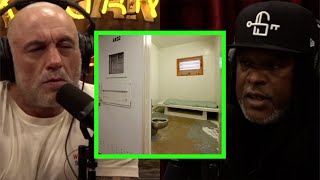
Shaka Senghor recounts being sentenced at 19 (judge gave 15–40 years for homicide plus two years for a felony firearm), ultimately serving 19 years in prison including seven years in solitary confinement. He describes solitary as brutal and chaotic—23-hour lockdown, violence, biohazards, extreme deprivation—and gives vivid examples (feces weapons, colostomy-bag threats, flooded tiers, restricted showers and batteries). To preserve his mind he treated each day like school: reading philosophy, history, inspirational texts (Nelson Mandela, Invictus, As a Man Thinketh), journaling to examine his past and trauma, exercising, and setting a concrete goal to write a book in 30 days using improvised materials.
Questions this video answers
15 to 40 years for the homicide and two years for the felony firearm.
19 years.
Seven years.
11 different prisons.
Oaks Correctional Facility (principal solitary time 1999–2004).
The Joe Rogan experience. And you know, when I went in front of that judge, I just remember standing there and listening to them walk through that night. You know, the prosecutors telling what happened that night. And it was the, it was a one dimensional telling of that story. It was the, you know, it was the very factual, like, hey, this guy, you know, shot, killed this man. There was no context to none of my life. And when the judge sentenced me, you know, he said 15 to 40 years for the homicide and two years for the felony firearm. At 19, I thought my life was over. Like, I thought that was it. Like at 19, I couldn't even imagine, you know, 17 years down the line. You know, at that age I couldn't even imagine like two weeks down the line. It felt like a lifetime. So when he sentenced me, I was like, this is it, man. Like, my life is over. And so I started my prison sentence with the mindset that I was never getting out of prison. How much time did you wind up doing? I did a total of 19 years. And out of that 19 years, I did seven of those years in solitary confinement. What is that like? It is the. When I tell people it is the most barbaric thing that we do to people in this country. And it's a combination of reasons of why I believe that. One, a lot of people who are in solitary confinement have pre existing mental health challenges, meaning that they have diagnosed, you know, bipolar schizophrenia. And it's 23 hour lockdown, you know, 23 hour lockdown five days a week, 24 hour lockdown, the other two days a week. And it is the most chaotic environment you can imagine. The guys there, you know, to wage war with each other with just like the Steel Foot locker, they would bang it for hours. Like these guys would just have, I mean, the endurance to do that for hours to antagonize a person next to you. They would have what, what is full on shit wars, like where the. I call them weapons of ass destruction because these guys would like concoct ways to throw feces on each other. So if they get into a beef, like the way that they would go to war is they would literally. I mean, there's an ingenuity that happens in prison that's unlike anything that most people can comprehend. We can make weapons out of anything. We can make, you know, tools out of anything. So these guys would literally figure out how to get feces into a toothpaste tube, which means that they would like have to like literally go in the toilet, pull this stuff out, stuff it Into a thing. And then they would smuggle it out to, like, the cages, right? So five days we would go out to these cages. It's like, just imagine a dog kennel. Like a dog run, right? It's like kennel after kennel after kennel. So that's how they would take us out. And, you know, you're in a cell, they come and they handcuff you to these handcuffs attached to a leash, and they walk you down a tier, take you out to this dog kennel, and they let you out. And so they have to give you at least an hour of that a day. And so these guys come out and they would be, you know, beefing with their neighbor. And now it's a full on. They're just squirting shit on each other like, it's fucking insane. And there was this one guy, man, I remember this one guy, he had a colostomy bag. I mean, this was like the equivalent of having a fucking AK47. He's like, this guy and me, and we were like, cool. So he would tell me today is like, don't come out. He would like, send me a note over like, don't come out the yard today. I'm about to shoot this bitch up. I'm like, dude, what are you talking about? So he, he would like go out there and whip the colostomy bag off and just literally take the yard hostage. Like, don't nobody say shit. You say something, I'm gonna stow shit everywhere, right? And so that's how they would wage war. And so that's what that was, the chaos of the environment. And then, like, you know, we get into it with the officers. Guys would like flood the cell blocks, so they would put sheets in the toilet and just flush, flush, flush. And now the whole tier is just flooded. And so it's definitely a biohazard issue at minimum. Your health and wellbeing being threatened by, you know, I mean, you get. I think we got three showers a week. And the showers are like, they're just back to back. So you're not like, they're not cleaning them out in between showers. So you're literally handcuffed. They take you down to the shower cage. You go in there and it's fucking snot on the wall. And it's fucking, you know, somebody's shaving because they, they will give you like the little razors to shave. And then you got the guys who. We call them cutters. So these are guys who like self maim, um, and they would take, I Mean anything you could think of, they would take and just kind of carve up their skin, you know, swallow. Like one guy swallowed batteries. So they stopped us from like, even getting. At one point, we could get like, a little tape player, and a guy ended up swallowing the batteries. So they banned all batteries. So then we couldn't listen to music anymore. And so it was just like complete chaos. And, you know, it's one of the darkest places, you know, in the world. And I've been in different solitary in prison. Out of 19 years, I was transferred a total of 19 years to 11 different prisons. And so I've done solitary in, like a super old prison, more the modern prison, but the one I did the most time in, which was from 1999 to 2004, was called Oaks Correctional Facilities, one of the more modern prisons. And so, you know, in the midst of that chaos, I decided, like, I got a. There was a couple of things. So one, I had read this book about what's supposed to happen to your mind when you're in that environment. And it talks about, like, how it will cause you to hallucinate. It talks about how it will cause you to not feel like you have, like, any agency over your life. It affects how you communicate because in order to talk, you got to lay on your floor and, like, scream under the door and try to hear a guy, or you got to kind of talk through, like, the electrical socket. So it's all these different things that I kind of knew going in. And so. So I set up for myself because I didn't want to. Like, the only thing I feared about being in prison was losing my mind. I was never worried about my physical safety. You know, I grew up fighting. I grew up with brothers. You know, I grew up on the east side of Detroit, so I knew how to, like, take care of myself. Losing my mind was the one thing that I was like, that was. I was afraid of that because I saw guys who were like, normal guys and five years in, they're not the same. You know, they're not the same. And you see this, like, glossed over look in their eyes, and it's the scariest shit ever to see somebody start to hallucinate, start to make up a life that, that. That, you know, is not true. And so I set my days up like I was at university. And I always say this, Joe, this is like, super important. I was lucky. And I was lucky because I was literate. And, like, the average reading grade in prison is about third grade. And I wouldn't Be here with you right now. If I didn't know how to read, like, I would not be the person that I am today. And so because I knew how to read, I was able to really structure my days. Like I was at a school. You know, I would study philosophy in the morning, I would study world history, I would study African history. And then I would just like read for pleasure. But I was always like, you know, every day I'm figuring out, okay, how do I keep my mind moving forward? And if you keep your mind moving forward, you can actually survive. And it's, you know, it's no different than any other hardship you got to go through, but it's really like, can you keep your mind taking one more step? And then there were some days where I was like, I don't, I don't like, yo, this shit is too much. Like I'm, I'm feel myself like physically, like, I can't take one more day. And in those days I would just grab a book man of somebody who inspired me. You know, sometime it would be Nelson Mandela. He had been through like 27 years. And I would just like open it up and like, let me just start reading something. I would read the poem Invictus. Like that poem always just kind of brought me back. Like you, the master, your own fate, you know what I'm saying? You're the captain of your soul. So I would go back and read that. There's a book called As a Man Thinketh by James Allen. It's about 60 something pages. I would literally, my version of that was so dog eared, but I would like literally just open it up. And any page was about if you master your thinking, you can master your environment. And so it was like things like that would keep my brain just going forward, you know, Obviously I would work out, you know, do push ups and calisthenics and roll up. I used to roll my mattress up and you tie a sheet, one sheet around it and you put the other sheet through it and you make your handle. And now you could do your curls, you know. So I would do that, take that mattress, put on my back. I would do squats. So I would run my routine in there. And just running that routine is really what kept me like, you know, put one positive thought in front of the next, you know. And I mean, at that time I still was like, you know, I wasn't, I wasn't like a model prisoner, you know, I don't want the listeners to be confused by that because it's a little different, right? It's somebody who follows the rules and just stays out of way and get out of trouble. Like, I was. I was. I was. I was into bad shit in there. You know, I was not. I didn't ever think I was getting out. So I was like, I just got to run the environment. You know, I got to be in control in this environment. I got to, you know, make all the moves to have agency over my life in that environment. And so initially, while I was in there, I was just. I was only focused on getting out so I can finish getting into shit. It was always these moments of like, I'm going to do right this time. But it was never about me. It was always like, I'm gonna do right so my dad doesn't have to come see me in jail or come bail me out or my friends don't have to come, you know, try to get me out of trouble. It was never a real thing. And so when I started journaling, I started with this essential question of, like, man, how did I end up here? Because up to that point, I didn't. I didn't think of myself as a bad person. Like, I didn't think of myself as, like, angry. I didn't think of myself as, like, I didn't even think of myself as violent. I thought that I had just got into some situations that people provoked me in. And so I asked this question of, like, man, how did you. How did you get here? Like, you're the smart kid, you know, you're the kid that want to be a doctor and an artist, and how the hell did you get here? And so I started going back and I started asking myself questions based on when was the first time you got arrested and what led to that, you know, and then what happened the second time? And when was the first time this thing happened and that thing happened and who was responsible? And what I was able to do was I was able to go back and realize that I had all this trauma. I had all these traumatic things that happened to me as a kid, but also had caused a lot of hurt. And I did a lot of things that really was like, no, actually, you probably are a bad person. And so as I began to write and sort those things out, I realized I had never accomplished. I never finished anything. I started a bunch of things. You know, I never finished high school. I was like, probably one of the smartest kids in the class, Went to job corps, got kicked out before I finished that. Was going to go to the military, never followed up to take the test. So I was a consummate quitter. You know, I started some stuff and would never finish. And so I said in my journal, I said, listen, if you're going to turn your life around, you have to finish one thing. You have to challenge yourself to finish one thing. And so I'm looking around the cell and I'm like, okay, what can I do? I've done all the push up challenges. You know, you could do it in solitary. And I was like, you should write a book, but you got to write the book in 30 days. If you write this book in 30 days, you can change your life. If you don't, you're going to die in prison. And that was my, that was my charge to myself. And now I'll tell you, like, in solitary, there's no, like, you don't have a word processor, typewriter. You can't even have like a regular ink pen because you know the skid's gonna like sink somebody or stick somebody. They give you this little flimsy plastic pen. And so I remember getting a pen, I got like a little pad of paper. I said to myself, like, there's no way possible you're going to write a book in 30 days with that pen. This is not possible. And I remember saying to myself, this is what you always do. You always make an excuse. You always make a way to get out of being accountable. What are you going to do? Are you going to turn your life around or are you gonna bullshit the rest of your life away? And so I sat there for a while and I was like, what if I roll this pen up and some paper? And I literally took some paper and I started to roll the pen up so it was firm enough and it was like the size of a regular pen. And I wrote that first book in 30 days. And I knew I would never go back to prison if I ever got out, because at that point, I still didn't know if I was getting out.
More from Shaka
Joe Rogan podcast Shaka Senghor #shakasenggor #podcast #joerogan #interview #jre #jreclips
Surviving a Shooting at 17 Joe Rogan X Shaka Senghor | Joe Rogan Podcast | #shorts