Shaka Senghor: How to Be Free
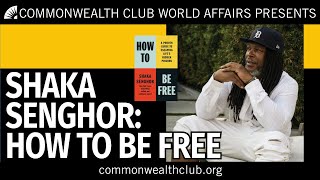
Recording of a Commonwealth Club World Affairs interview (author event) with Shaka Senghor about his book How to Be Free. Senghor recounts growing up in Detroit, involvement with street/drug culture, being shot at 17, and a homicide conviction that led to a 19‑year incarceration (including seven years in solitary). While imprisoned he found mentors, read widely (Malcolm X, As a Man Thinketh, Plato), began journaling and meditation, and developed practices for emotional freedom (forgiveness, vulnerability, gratitude exercises). The conversation covers self‑love, parenting, creativity, leadership, and changes needed in the justice system; includes audience Q&A on solitary confinement, family relationships, and therapeutic supports. The book is described as widely distributed to incarcerated people (given to ~1,300 prisons; ~1 million people have access) and noted as a bestseller.
Questions this video answers
19 years
7 years
2020
"17 and 40 years" (he said he was sentenced to 17 and 40 years)
One month into his 19th birthday (arrest occurred one month after he turned 19).
Foreign.
Hello and welcome to tonight's Commonwealth Club World affairs program. I'm Virginia Chung, co chair of the Social Impact Member Led forums at the Commonwealth Club World affairs and co founder and vice president of of the Give a Beat Foundation. Tonight, I'll be talking with Shaka Senghor, author of the new book how to Be a Proven Guide to Escaping Life's Hidden Prisons. A few reminders before we get started. This evening's program is being recorded, so we kindly ask that you silence your cell phones for the duration of our program. If you have any questions, please fill them out on the cards that are on your seats or if you are joining us online through the YouTube chat. Now let me tell you a little bit more about our speaker. Shaka Senkor spent 19 years in prison, including seven in solitary confinement. It was there, he says, alone with my thoughts, my regrets, and my deepest fears that I began the most important journey of my life. He was released in 2020, and he's now a resilience expert, inspirational speaker, entrepreneur, and author of the bestselling books Righting My Wrongs and Letters to the Sons of Society. He's here to talk about his latest book, how to Be Free.
Yeah, I'm excited. Yeah. Which is also a bestseller two times in a row. So, yeah.
Congratulations, Shaka, Welcome.
Thank you so much for having me. I'm super excited to be here.
Great. We're going to start with the big question. So what does it really mean to be free?
That's a great, great question. A great philosophical question. I think it is something that everyone has to kind of discover through their own processes. But ultimately, what it means to me is to have complete agency over your thoughts, your feelings, your reactions to things that you don't have control over. So how do you show up in the world? How do you ensure that you're being proactive in terms of, like, self governance and really, you know, aspiring to our agency? I think we give up so much of our selfhood to things that really don't matter and things that don't that we can't control. So, like, we can't control yesterday, it no longer exists. We can't control tomorrow. It hasn't arrived yet. And sometimes we live so much in those two worlds that we forget to be present. And once you really understand the power of being present, you start to really understand, like, what it means to ultimately be free and to show up fully for yourself.
Excellent.
Yeah. Thank you.
Thank you. Well, we would love to learn a little bit about your journey and how did you Find freedom. Can you describe the moment you decided to break free from your past, your pain or limitations?
Yeah, that's a great question. How y' all are doing tonight? Y' all are quiet and like very cerebral in a moment. This is very interactive here. Now that's a really great question. So as you mentioned in the early introduction, so I grew up in the city of Detroit, hence my ever present Detroit hat. You know, I grew up as a kid in a very tough household. Ran away when I was about 14, got seduced into the street culture. And the reason I specifically use the word seduce because sometimes when we see young people navigating the underbellies of the street, we think, hey, they're committing crimes. And we don't think about how they got there and what happened to them. For me, I was seeking safety from my home life and found myself seduced into this culture. Ended up being deeply immersed in drug culture. Experienced all the horrors that come with that. The high levels of gun violence, gun trauma. Was shot when I was 17. Tragically and unfortunately, 16 months later, I shot and caused a man's death. I was sentenced to 17 and 40 years in prison. One month into my 19th birthday when I was arrested. And so when I walked into prison, I was bitter, I was angry, I didn't want to accept responsibility, I didn't want to be accountable. And I found myself just getting in more and more trouble. And I was really fortunate. So I was fortunate one, and I was lucky for fortunate because I met some of the most incredible mentors in the world. These were not like the typical people coming in from business or your local faith based environment. These were men who were serving extremely long prison sentences and life sentences. And I was lucky because I happened to be literate. The average reading grade in prison is third grade. I went in literate. And so when those two worlds kind of collided, meeting these incredible mentors who guided me to books, I was able to receive those books. But it wasn't like an overnight success story. I didn't have a come to Jesus moment. I had a lot of come to Jesus moments. But it wasn't like a singular event. What happened is as I began to embark on this very arduous journey while I was in solitary confinement, I started with this essential question. How did I end up here? I was reading a lot of philosophy and Plato's Republic, and I was reading an apology when Socrates said, unexamined life isn't worth living. And when those two worlds kind of collided again, I started to journal and just try to Answer that question of how did I end up here? And it was through that process of journaling and getting just super real with myself. I call it my right or die moment. That moment where you just have to get super real with yourself and super honest. And even now, when I journal, I only journal at the point in which I'm just ready to be really, really raw, really just kind of super vulnerable with myself. And it was through that process of journaling and really getting into all the murky things that I started to discover the beauty of my own mind. And that was one of the liberating moments for me, was really understanding that even though I'm in this captivity, even though I'm in this environment that seems like there's no end to it, even though they're telling me that I'm going to die in here, if I've freed my mind, I can become a different person even in the midst of this hell that I was living in. And that's how that journey began.
Amazing. Yeah. You talk about books and the writing. Can you tell us a little bit more about the supports or tools that you have had in prison that help you begin your journey?
Yeah, it's really interesting. Back then, there were not a ton of tools. There was a moment when I first went to prison, we still had access and resource. I was one of the last students when they took college out. I was averaging a 4.0 at the time. When they took college out of prison, most of the resources was kind of self organized. It was the men I was around, it was the study groups and so these wise men, you know, whenever they would give me books, it wasn't just kind of like, here, take this book and read it. When I would come back to the library, we would get into these deep philosophical debates. They had questions, you know, what happened in this chapter? What did this person mean by that? And so that really helped me to begin to sharpen and develop kind of like my critical thinking skills as well as my oratory skills, my debate skills. And I didn't realize back then that they were really preparing me for life after. And then when I was in solitary, the writing tools, it was crude. Like we didn't have access to laptops or, you know, even old school, like a word processor. For some of y' all who are like baby boomers or Generation X, we didn't have that access. You just had pen and paper, and it wasn't even like a real ink pen. In solitary confinement, they give you this very flimsy little thing that's nearly impossible to write with. But I wrote mine up in paper. I had, like, experience rolling stuff up in paper, which was, like, it worked out. It was some practical application there. And then he just caught up with that back there. But that's what I would do. It's so interesting now because I still have a lot of my journals and my original writings in my home. And if you ever visit some of my friends over here, like, Matt's here. He's been in my home in Sandia. But there's an interesting thing that if you observe the ink, the writing pass that I have at home, sometimes my writing is very vertical. And that's usually the times when I can actually just write with normal lighting in the cell before they would cut the power off. Other times it's very slanted because when they cut the power off, I would just stand, like, literally at the door and. And write from that little crack of light that would come in. And so I would have to turn the pad a certain way to write. And, you know, it was one of those things where what I inherently believe is one of the reasons I wrote this book is it was those moments of realizing, not only with falling in love with my mind, but whenever you're going through something really difficult, you have to keep your mind moving forward. And for me, writing was that process. It was very meditative of, like, let me just keep my thoughts moving forward, let me keep my feelings moving forward so that I'm not entrapped into this. This world.
Amazing. When did you decide that you wanted to pursue a path of healing?
You know, I think the. The healing process is. Is one that. I don't know if there's this one definitive moment where I knew that that was a path, that it was actually a long, procedural thing versus, like, one moment where you're just like, you know what? I'm over this arduous life. I'm moving on to something different. You know, for me, it was a matter of realizing that I was suffering, and I had been suffering for a long time. And it was getting to a space of being that, you know, I'm worthy of more than that. I'm worthy of more than the pain and the trauma. One of the applications I have in this book, that's probably one of my favorite things, exercise that I provide, is to ask yourself this question. Who am I without my pain? Who am I without my suffering? Who am I without the trauma? Then imagine that life for yourself. And so for me, that's kind of what it was. It was this process of just going through it. And as I was going through it, it started to. You know, it started to feel good to think of, I can see a life that's different from the one that I'm living in. And that was. It was hard work. It was like, you know, the first time I started journaling, you know, I wanted to just tear those journals up. I didn't want to look at it. I didn't want to face it. But the more I kept processing through it, the lighter life began to be. And then I had this kind of epiphany, and I realized that I was incarcerated before I ever stepped foot in a prison cell, and I was free before I ever got out of prison. And it was because of that ability to kind of just keep my mind moving forward and realizing that I had agency in terms of how I feel and how I thought about myself. And the more that I did that, the better I started to feel. And then it was like, oh, this is what I'm after.
Let's go back a little bit. You talked a little bit about your childhood, and I happen to have worked in early childhood education. We talk a lot about how trauma can be passed down, even in our DNA. And I went to a conference where someone said, you know, showing up authentically can help liberate others. What was a defining moment in your childhood that set you on your path?
That's a great question. You know, for many years, I had described it as the moment that I decided that I had enough of the abuse and I decided to run away. And it wasn't until I was. I was actually in an interview with Oprah, and she asked me this question about when I was 9 years old and I came home from school. I was super excited. I was a smart kid. And I came in with a great report on the test that I took. And when I attempted to show it to my mother, she turned around and threw a pot at me, and with such force that it literally shattered the tiles on the wall behind me. And that moment, you know, when I reflect back on it, it was really one of the most painful childhood memories, because it was unprovoked. Like there was no. You know, at nine years old, you can't even make sense of this, you know, but what I've realized now, you know, as an adult, when I think about my role as a mentor and as a dad and what children are seeking more than anything is safety, Just the ability to just be. And that was taken from me. And I've never felt safe in Our household after that, you know, and I'm not even sure if I felt safe before that, but it was definitely very clear that this was not a safe environment. And, you know, it's really. You know, again, when I think about the work in this book and the conversation I'm having as I'm out on tour with people from all facets of life, all age groups, all socioeconomic classes, I'm finding thematically that there are so many people who are navigating things from their childhood. Some of it extreme violence and trauma, and some of it just extreme disappointment and disconnection from what should be a stabilizing force, which is what I think parents are designed to be. But we can fall short of that.
Thank you for sharing that. As trauma can be passed down in our DNA. What do you feel like you may have inherited from your parents or your ancestors?
Yeah, that's a great. That's a great question. You know, I think about these. I think about these deep philosophical questions often, right? Especially when I think about brilliance, like, where did I inherit that from? You know, so there's a. Always a duality to how I think about life, right. Like, it's easy to over index on the traumatic events of my life. But then when I think about, I'm actually a brilliant artist, I'm a great strategist, I'm an organic intellectual, and I'm like, oh, how much of that came through my DNA? And so, you know, you go back to the history of humans as we know it. I think all of us are, you know, experience the same thing. We come through that human history is traumatic in and of itself. Our inability to get along with each other, our fellow human beings. But when it gets down to the more molecular level in terms of, like, childhood, you know, there's a chapter in how to be free called vulnerability. And that chapter centers on two conversations that I was lucky and fortunate to have with my parents when I asked them if I could interview them. And, you know, what came out of those conversations was like, some of the deepest understandings of who my mother was and why she was the way that she was, and that she couldn't have been anything other than who she ended up being because of the things that happened to her. So whether that is a biological passing down or a cultural passing down, she came from a rich history of abuse and neglect and all the things she eventually did to her children. But, you know, I knew I didn't want to raise my children like that. And, you know, I think the same with my siblings. So there's disruptions that can happen at any given time. And fortunately, was able to break that cycle. But we also. I know how privileged I am to be able to go back and have those conversations. So what I would say is, to anyone who still has their parents with them or their caretakers, elders, siblings, friends, aunts, uncles, whoever you spent significant time in your developmental years with, if you're fortunate, and you could just, like, interview them, ask them questions, and not like a Barbara Walter style kind of like interrogation of first 48. But you learn so much about how you evolve in your thinking and experience. Experiences and. And, you know, those are gifts that are just like some of the greatest keys to personal freedom that you can. You can have access to.
Thank you. Like you said, freeing yourself can make you the cycle breaker.
Absolutely.
How did you begin to heal with your parents and family?
Yeah, you know, prison. Prison in and of itself, like any other isolating event in our lives. Right. You know, most people in this room will hopefully never set foot in a prison cell unless you're going to volunteer. But we all have our hidden prisons, and those hidden prisons can be very isolating. And the healing journey for me is always about understanding. If I can understand how someone arrived at a particular juncture in their life, it's easier to be empathetic and compassionate. And it's not easy to do, you know, because you can have. Like, with my mom, you know, there was a point where I thought that I had really forgave her, and then I realized it was conditional that I forgive her. If she acts this way, if she can become the nurturing mother that I craved as a kid growing up, then all is forgiven. And if she can't, then I can take it and bring it back and forth, and I can have all these different moments. And when I got to a space where I wanted to be completely free and I wanted to be liberated, and I didn't want to be subject to that anymore, I knew that the forgiveness had to be full and complete. And the same thing with my dad. It was like. Because it really was, for me, it wasn't about them at that point. And I think that's one of the things we grapple with. And why forgiveness can be so difficult is oftentimes we make it about the other people. You know, who will they be? Who will they be? If I extend this grand gesture of forgiveness? Right. We get a chance to play the kind of wizard or the godlike authority or moral authority. But in actuality, if you really want to be free in anything, it has to be centered on your own sense of being.
Thank you. Speaking of emotional freedom, you describe fear, shame, guilt, and anger as life's prisons. How did that revelation come to you?
You know, the way that this book is structured, I'm really tackling early on some of the most difficult prisons for any of us to get out. And what I mean by that is, what is standing in a way of you living the fullest, richest, most meaningful, amazing life possible for yourself? One of the questions I asked my dad was, what was his dream for me when I was a kid? And it was really interesting to hear that he had this idea what he thought that that would be. But what I realized that was most important was what is my dream for myself, and how do I get to that? And what does that process look like? And it's a. You know, it's one of those moments of, like, what do we think we're worth? You know, we're constantly in a state of, like, measuring our sense of being against external things. But to me, all of this is a. Is an inside job.
Well, in early child development, we talk a lot about social emotional development. How did your understanding of emotions evolve over time?
Oh, that's a great question. How do they evolve? Well, I grew up with suppressed emotions. So there's kind of like a duality there. There's the traumatized little boy, but then there's also the culture of what it means to be a male in society where we can access anger. That's like one of the things that we've always had the access to. And so how it's evolved for me over the time is really understanding that I'm just a fully evolved emotional being and that all emotions matter. Sadness, disappointment, anger, love, joy. And that took a process of really getting to a space where understanding, like, I'm worthy of that. You know, with anger, you know, it's not a. It's not a measurement of your self worth. It's more like, okay, can you protect yourself? Can you protect those around you? But with love and joy, that's a matter of worthiness. Do I feel worthy of these other emotions? And what is it about those other emotions that makes it hard to access or to see value in them? And for me, it was largely because I didn't see value in myself. And so once I started getting to a space where I started to fall in love with my mind first and started to think, like, man, you're worthy of more than this prison cell, you know, you're worthy of more than this arduous life you've lived, what's on the other side of that? And that's when it was like, you know, you have to have access to all of your emotions and to demonstrate that, you know, like, one of my favorite things at this stage of my life from a parenting standpoint is that my 13 year old son still comes and asks for a hug and eventually that'll go away. We know how that happens is hormones change and then they get other interests. But for now, like, what it signals is two things, is one that I've modeled for him, that care matters, that comfort matters, that love and affection, that those things matter and that he's worthy of those things and he should be able to access them whenever he wants to. And that's something that I'm always reflecting on that because I never felt that comfort. I never felt that safe to even say, I need a hug or I desire a hug. And so that's what it looks like to evolve and like your emotional outlook and to have other friends. I did a talk about two and a half weeks ago in Detroit and in the crowd, and the crowd was about five or six men I served time with. And the time they served ranged from like 20 years to like 40 years. And the first five minutes I cried, I couldn't even get like a full sentence out. I was like a hot mess up there, you know, but it was beautiful. And I didn't even try to suppress it because there were so many other young men in the audience who are looking for guidance and they're looking for a model and they're looking for an example. And it was authentically how I felt. I was literally overwhelmed with the emotion that these were the men who first read my books. These were the men that read my books when they were on notepads and they were on the back of envelopes and they were just ideas in my head. And these were the men that said, I believe that you can do something different. I believe that you can accomplish all these crazy goals that you set for yourself. And so to be able to have that experience in a real space, it was incredible. It was like. And it was literally, you know, when you're talking about feeling liberated, like, that was the essence of what that feels like. And I want everybody in this room that had an experience like whatever is holding you back and you feel like, man, I know that there's another level of life that I can get to. There's no time limit, there's no age limit, there's no economic limit. On it. It's really about this internal process of getting to the ultimate self freedom.
Thank you. I hope my 10 year old never stops asking me for hug.
Well, you're a mommy. It's a little different. I think y' all get some bonus years. Yeah, dad's not so much.
Well, if you could go back, what would you have wanted for a young Shaka?
I really wanted that green machine. That's what I wanted. I didn't get that. That's what I. Yeah, if I can go back, you know, what would I have wanted? Really just the care that I think all children are deserving of, you know, and it's really like, you know, when I think about this book and I think about the legacy of this book, you know, I think about the people I've had the pleasure and the grace of being able to meet over the last 15 years since I've been out of prison. And I think about the heartbreaking stories, I think about the joyful stories. And what I want is what I would want for that version of me is what I desire for all of us, which is that inner being, that inner child that never goes away. It literally never goes away to be loved, nurtured, and ultimately to be safe.
That leads to the next question. How do you think that the justice system can evolve to better serve our young people?
That's a great question. I don't think. I think it's a matter of. A really good friend of mine, when we had these conversations, you know, he almost describes it as like man versus the gods, right? And the system being this authoritarian figure that is immovable and likely to go unchanged. And so what really matters is like, how are we showing up as human beings? You know, when I think about the people who are incarcerated. When I kicked off my book tour, the first place I actually went in the inner in the States was to Rikers island. Because I wanted to make sure that the men and women incarcerated have access to this work. In fact, we gave the book away to 1300 prisons. Close to a million people have access to it. Because it's that important. This work is that important to me. And the reason I do these things, like at one point I was like, I'm never going back into prison. I never even saw that as part of my. This part of my journey. I was like, once I left, I thought that would be it. But I find myself back in often. And it's because I know that ultimately what happens with people who are incarcerated is our responsibility. The system isn't going to Fix it. We can change it. We've changed a lot of things. We fought hard to get some bills changed. We fought our hearts reduced the prison population, shut down juveniles, like, you name it, we've been doing it. But the reality is that you can take and tear down the building, but if the person is destroyed in the process, what have you actually accomplished? And so the way that I think about it is, like, what is our collective responsibility? That means everybody in this room, like, 90% of the people who are incarcerated, will come home. And we get a chance to decide how they come home. Do they come home and healthy and whole, or do they come home further destroyed? And I think we've done an incredible job at destroying human beings. And so I think we have the opportunity to really reimagine what's possible for anybody. And, like, you know, again, I was lucky. You know, have you ever heard, like, you can be born into a lucky zip code or, like, you know, you'll be born into a lucky family of wealth, or, you know, if you. If you got the genetics of, like, a kid who would eventually be 6, 5, 240 pounds, maybe be LeBron. You know, my luck was that I was literate in an environment where literacy isn't the norm. And because of that, I'm just. I know that I'm sitting here. I know that I get a chance to do all the incredible things that I do. And I wish, you know, idealistically, that that was access for everybody, but it's not. And so it's like, what are the things that we can do to ensure that we create just healthy pathways for people to not only come back to society, but to restore their sense of what it means to be human?
Yes, absolutely. Well, let's get into the juicy stuff.
Oh, man. Juicy. Being fun. Fun and joyful. We all deep and philosophical in here. Everybody looking all serious. It's good.
Well, let's switch over to love. And as you mentioned, vulnerability and fear switching up a little bit. You know, what. What does love mean to you now?
It's a great question. So a couple of years ago, I went on a personal quest. And that quest was to go and have some relaxation and just kind of like, you know, I never take vacations. I'm just, like, hustling and grinding all the things. And, you know, I went to this place, I looked it up online, but I didn't really, like, do a real deep dive into it. I was like, oh, this place is in Malibu. It looks amazing. This should be pretty straightforward. And then I got there and I realized it was like a luxury boot camp. But the boot camp part was real. Like, it was like arduous hikes every day for, like, a lot of miles. And at the time, I was smoking cheap cigars, so I was definitely not trying to hike anywhere. But I went there and I remember on the drive over, I was thinking about, what am I going to give up? And so I was like, you know, I knew I wanted to give up cigars. And that week it was like, you know, it's all healthy eating, all clean, all vegan. And so for a week I did that. And then I thought about it. I was like, man, this is the first time for a whole week that I've literally treated my body with care, like, ever in my life. And, you know, there was something powerful about that. And I thought about, like, what was my why of taking care of myself? And it was because I was still, and still am in a process of learning how to love myself deeply. And, you know, when I think about self, love, that is literally the foundation of all love. And, you know, at the time, you know, it was like, I'm in a relationship and we're about to get married, and I'm a dad, and there's like all this incredible life left to live. And in order to show up fully in those two worlds, I really had to show up fully for myself. And so it's self acceptance. It's like a deep self acceptance. But what happened when I left that place? As soon as I got in my car, as soon as I got to the first gas station, I went and bought cigars. And I had this moment where I was, like, really disappointed with myself. And I was like, man, do you really love yourself? And then what I did in that moment was found what I think is one of the greatest levers of love, which is grace. And I had grace for myself. And I didn't erase that beautiful seven days. I just said, hey, those seven days was magical. It was caring. And now I get a chance to start over. And I think that that grace, that moment of grace, it extends to all relationships. And, like, that's what love is. Love is grace literally under fire. It's one of those tough moments when you're, like, challenged by something within. And you don't beat up on yourself. You don't pile on. You don't, you know, throw away all your wins, all the moments where you did show up for yourself, all the moments where you did show up for your partner, for your children, for your friends, that Grace is really what to me real love hinges on. And if you can tap into that, then you'll be free to love at any given time.
Beautiful. In your book, you mentioned that love is a mirror. How does that show up for you as a leader?
Oh, man. So in terms of leadership, I think the way that it shows up is reflected in the friends that I get a chance to work with collaboratively. If you're talking about in terms of like the social impact part of my work, you know, I have been fortunate to, you know, do just incredible work with amazing people. And the way that is mirrored back to me is in the moments when I see them doing work in the world and that moments where we're reaching out to each other and say, hey, I'm trying to really help this region over here, I'm trying to help solve this problem. Can you lean in? And there's without doubt a question, a yes on the other end of that. And that commitment, that dedication, you know, my network of friends are problem solvers, they're world changing leaders. And I get a chance to bear witness to that. And I've grown as a result of that. And I'm sure that they would say the same. So that's how that mirror. And then in the household, obviously my beautiful wife is here and we have an incredible son. And just seeing the work that they do in the world, the work that she does in her philanthropic space and how she shows up, and it's one of the things that when I think about our relationship, it was because we was able to see each other in that way and just connect like that unspoken language of like, I see you fixing the world and I love you for that. And the same with our son, who is now emerging as a leader in his own way and getting a chance to see those values reflected back. And like, those are like the greatest mirrors.
Amazing. You talked a little bit about vulnerability and how that builds resilience and heals. How do you define vulnerability?
So when I talked about earlier, that ride or die moment, that moment when you just get so real with yourself and you don't put on the mask, you know, and you're willing to say, you know, I'm going to lean in and this may hurt and this may be uncomfortable, this may challenge me in a way that I haven't been challenged, but I know what's on the other side of that is amazing. That's what it means to be vulnerable to me. It's like when you could just get so real with yourself that the only Way you can show up with anybody else is authentically that's a superpower. And it's one of the things that I think we are. You know, we're taught to be afraid of that. Right. You don't want to be exposed and get hurt or cause harm or allow somebody to cause harm to areas of your life where you worked hard to protect. To me, I cast Crossing to the Wind a lot because I do believe in a greater good, of what it means to be human. And if there's a risk to be taken, that's one I think I'll always take, is the risk in terms of, like, if what I share in my life, which my work is very exposed. Right. It's like my worst moments are always on public display. And the reason I'm able to do that is because I know how it impacts the decision that other people make. And so that really matters. You know, I think about criminal justice work and how we were able to change a lot that for a long time seemed unchangeable. Nobody ever thought that we can reduce the prison population. Nobody ever thought that we would be in a space to where people can walk in and companies will say, we're not doing a background check. We're going to give you an opportunity based on your talent. Like, that doesn't happen without showing up and saying, hey, here's my worst moment. I described this to a friend the other day. I said, you know, we were talking about where I'm at at this stage, right? So I walked out of prison 15 years ago. You know, I'm hustling books out of the trunk in parks in Detroit and, you know, gentlemen's clubs and local bars, and, you name it, I'm selling books there. I was a starving artist like any other artist. And, you know, and then over time, just the consistency of work is showing up and making things happen. My life started to look different. And what I said to him is that there's a small handful of us that had to be extraordinary so people could see the ordinary and other people were incarcerated. And that's what vulnerability is. It's like when you rise to that occasion and you say, you know, I'm going to force through all these obstacles, all the nos, all the check the boxes, and it's going to be painful, and it's going to be an arduous journey, but if we get to the other side, then they'll actually be able to see the humanity of other people who are incarcerated. And we were able to achieve that. And, you know, I Would not have been able to do that without great friends. My friend Matt is here. We've had so many incredible stories, like getting locked out of the White House. That was wild. Sandia is here. We've done incredible work with reducing the prison population. And the reason I'm able to do that type of work is because they stood by my side. Like, when me and Matt went to the White House, they invited me. We were flying in from New York. I think we took a train. First. We hijacked a limo. No, seriously. We didn't, like, steal it technically, but we basically hijacked a friend of Van's limo. And then we took this crazy train ride to D.C. then we ran to the streets. Cause we was running behind. I had a suit on, which I never wear. It was about 85 degrees humid. And we get there, and after we checked with them, like, multiple times, am I going to be allowed in? They literally was like, you can't get in. And it was not only embarrassing and dehumanizing and degrading, it was inconvenient because it was really hot in that suit, in the sun. And I remember telling Matt, I was like, matt, go ahead, go in. I'll figure it out. And Matt was like, I'm not going in without you. And, like, that level of, like, support in those moments, like, that's the difference. Because then we can laugh and joke later on and all the things. But if I would have had to handle that by myself, like, to be able to sit out there with that embarrassment and not be seen, like, do you think I would show up and do that again? And so you can take that risk over and over when you know that people have your back. And so that's how we change systems, by having each other back. Y' all can clap for that. That's amazing. Interactive crew here.
Yeah, you wrote that fear is a compass, not a stop sign. How can we learn to use fear as a guide rather than a barrier?
Yeah, I mean, you know, I think that, you know, we are the wisdom of how we were created. You know, there's a healthy sense of fear that should serve as a guide of, like, hey, maybe you don't want to go that far out in the ocean without making sure you're a great swimmer or that you have a life raft or you have some protections. There are these guiding moments. Right? Even in the world of social impact workers, we're thinking about, how do we do this work in a way that requires us to step beyond our own comfort? So stepping into these spaces Requires a certain level of courage. But the wisdom is that we have to be able to do this work in a way that doesn't cause harm to us, to ourselves. And so when you're talking about going into spaces that's fearful, the compass part of it is what is the wisdom I need to exercise as I embark on this journey and how do I stop that fear from not allowing me to take risks? When I think about the work that I do in the world today and the effort that I put into it, you know, it's a lot of risk taking. You know, it's a lot of, you know, really trying things that haven't been tried before. But the wisdom part of it and what allows it to be accomplished. I know that there are other people who've tried things much harder than I've tried before, and they've succeeded at it because they really relied on the people around them to help them get to wherever they were trying to go. And that's how you remove those barriers, is when you really one, inform yourself of what the, what the task is and make sure that you have a coalition of people that can really support you and your efforts. No, you don't have to go it alone. You know, there's people in this room right now, like, we're all here because we're researching and we're seeking and these are allies, you know, in self healing and personal freedom. But that's how you get to that. It's like, you know, information strategizing support systems and knowing, you know, when to be wise about how you're moving forward.
Thank you. Well, I, I really appreciate, in your guidebook, I feel like it was more of a guidebook. You, after each chapter you include an exercise or a guided meditation. How were you introduced into your practice?
That's a great question. So I, I was actually introduced to meditation in 1992. I was in solitary confinement and they would just pass out whatever random reading materials. And I remember just getting this little pamphlet and it was like, I saw this word meditation. I was like, what is that? I thought it said medication initially. And I was like, what is this? What is this about? But I started reading it and it talked about the process and the practice. And I was in deep suffering at the time. I was young. I was like 21 in a 23 hour lockdown in a cell that's literally about the size of this stage right here. And I was trying to find my way out, you know, I was trying to find my way out of my own suffering, my own hurt. And so I remember laying there and trying to do the practices, the breathe in and the exhale and to let the negative energy go. And it was the most frightening thing ever because all of my worst memories were the first thing to surface. And so it took a long time before I was able to start to sit with myself and to do that practice. But that's when it started very early on. And, you know, it's. It kind of shift over time. I'm not like, I know, like, some people really need like a lot of structure and a lot of kind of like, you know, a lot of heavy frameworks. I'm not like that. It's more like, does the idea make sense to me and then I can adapt it into my own practice. And I encourage that for everybody. Cause sometimes that ends up being the impediment to us getting where we're trying to go is we get so caught up in, like, is the process right? Like, is the temperature in the room right? Do I got the right candle, the right incense, Do I got the right all the things, the right. Right, right. And then you never do anything, you know, and so for me, it was like, let me just try this and let me keep trying it and let me not, you know, if it's not perfect, let me not freak out and throw it all away. But that's how it started.
Excellent. You've said that many people don't believe they're worthy of freedom, literal or mental. What is your secret sauce for helping others find their self worth?
Yeah, I've done all the hard work for people. That's the secret sauce is like, I've done the hard work. You know, I served 19 years. Seven of those years was in solitary confinement. And I dared to dream of having the most magical life possible for any human being. And then I came out and did it, and I continue to do it because I think we give up so much of our agency to fear, to indecisiveness, to systems that don't care about us, to guilt. You know, sometimes we can want something and then we'll feel guilty. And so for me, it was like, you know, I'm going to remove every barrier I can to achieve whatever I'm interested in. I'm curious. And so I've done all type of, like, wild and amazing things as a result of that. And most of them is because I just remove the fear of, like, what is somebody going to think when I say that I want to teach at the University of Michigan? If I'd have leaned into the fear. The first thought would be like, they'll never let you teach there. You're a convicted felon. But if I lean into the idea of, like, how can I teach there? Then maybe it'll happen. And it happens. And so what I try to do is model the things that I talk about. You know, I think sometimes these kind of books where it's like, you hear the word self help or professional development or personal development, and I have a whole shelf of them because I just love those books. They're like, great reads. But a lot of times the people who wrote them haven't lived what they're writing about. I wanted to, like, be a model of, like, listen, you can live the most liberated life imaginable. You can live the most amazing life. You can dream bigger than your heart can even possibly contain, and then you can actually do it. And because I've really showed up like that, I don't even. I don't even think about limitations, you know? I was having a conversation this morning with a friend of mine that I've known for 15 years. I met him when I first came home from prison, and we were talking about a. About his experience of becoming my friend. It's something, when I tell you I had never thought about it. He said that everybody around him was like, why would you be friend with this guy who just got out of prison for 20 years? Are you crazy? And I never thought about that because I never thought about that being my identity. I just thought of myself as like, I'm an amazing friend and I'm a fun dude. We're going to go on these ventures. But I never thought about that. And it's a rational question for anybody to ask. Like, I understand why people asked it, but I laughed so hard when he told me. The people who asked him that question back then, because they're friends of mine now, and they were just like. They thought he was crazy. Like, yo. And I'm like. And the funny part is I just saw his daughter about two weeks ago. She's in college in New Orleans. I just saw her. And then I laughed even harder when I thought about that. I was babysitting his daughter, like, fresh out of prison. And this baby mama, it was his wife was probably like, dude, you are unhinged for a parent. You're like, just like, throw our daughter to the wolves, right? And so. But because I never thought of myself as anything other than someone worthy of living his most aspirational dreams, I would have never considered those people's opinion.
Well, how do we preserve our freedom when the outside world feels threatening?
You preserve because freedom is really an inside job. And that's the part that, you know, we talk about the way that agency is given up. Sometimes we just. We find ourselves. And not that. Not that we shouldn't consider the things that's happening in the world, but they impact all of us collectively. Like, none of us get through this life alone. But I think that we don't do enough protecting of our inner peace. We don't do enough protecting of our agency and really understanding how much power we really do have to change the world around us. Sometimes we get so fixated on what's happening far, far distance from us that we forget there's a magical world right around us that we can be impacting every day, including our own inner world. And so to me, freedom is an inside job. And we have a responsibility to protect that as much as we can. And so just some practical things I would say is, you know, one, give yourself some grace. You don't have to have it all figured out. No generation before us has had it all figured out. Otherwise we wouldn't be having these repetitive conversations. You can lean into and lean out of the news cycle, and I promise you, it'll probably be the same tomorrow, but you'll be okay. But you have to take care of yourself if you're trying to get to this other way of experiencing life. And it's magical and it's amazing, and we're all deserving of that.
Well, as an artist and writer, how have the arts and humanities supported your journey to freedom and leadership?
That's great. Now we get into the fun stuff. I love being. I love even calling myself an artist now at this stage of life. When I was a kid, I wanted to be two things. I wanted to be a doctor and a visual artist. And, you know, what I've landed on at this stage in my life is I only want to do things that align with my creative ambitions and desires and goals. I think creativity is really what makes the world magic. I think it is one of the solutions to a lot of our problems that we don't lean into enough, you know, whether in our own lives or externally. And for me, like, living in that energy, like, my brain is fired up. When I'm anything creative, my brain is literally on 100. You know, whether that's listening to music, whether it's creating art, it is just, to me, the most magical place to live because it is one of the freestyle ways to express life. And so I'm always excited about anything art oriented and anything creative. And, you know, how do we align that with. Because you can have do things that are purposeful but still be creative with them. Like, you know, you got the design of the book. Like, if you look out there right now, you can see that book from a mile away. That was, like, intentional. You know, the beauty of it is, like, I want people to feel good when they hold it. When you open up, there's elements in the book, like, there's a doorway in the chapters about digging deeper. Like, that's a creative, artistic design perspective that I really wanted to bring into something that's a serious matter, but still to have an element that has usability in it. So, yeah, I'm always thinking about how to be more creative in life.
Excellent. We're going to come to our last couple questions before we head into our Q and A. You said that people often see success as the finished product. What barriers did you overcome to publish how to Be Free, and what does success look like now?
That's great. What was the barriers I would say, with publishing how to Be Free? The one barrier was shifting my writing voice. So I'm very like, I love language. I love the beauty of language. You read my other works, they're very poetic. And, you know, that ability to fall in love with words and a metaphor and a simile. And, you know, with this book, I knew that my intention was for it to be more accessible to people who may not be literary readers. So that was tough to, like, rein in that poetic part of me and still write something that's beautiful and meaningful, but accessible in a different way. So that was a fun exercise in understanding myself. And then what was the second part of that question?
What does success look like for you now?
You know, success to me is, you know, when I wake up in the morning, am I aligned with my purpose and am I moving deeper into what I know I was called in the world to do? And so being in this moment that we're in right now, this is the most successful I'll ever be because it's truly an embodiment of what I was called to do.
If you could describe yourself or give yourself a title in one word, what would it be?
Dope. That wasn't even hard.
Let's get into our Q and A. I have.
I literally thought that was some checks. I was excited. I was like, yo, they brought me checks. I was like, they now ain't just buying books. Y' all dropping off checks. We winning out here.
Deposit these Questions?
Yeah.
What do you think of solitary confinement in our prison system? Is it ever appropriate? And if so, how could it be more in line with rehabilitation versus ret retrieval?
I think that if we as a human species are incapable of creating a system that does not maim and harm people in the most barbaric of ways, then we've just lost that life. You know, you think about, we couldn't lock a dog in a cage the way that we lock humans in, because we know that dogs don't deserve to be caged in that manner, which means humans don't deserve to be caged in that manner. You know, I think that there's times where people should be isolated and separated and, you know, in our carceral system. And I'm not. Like, I'm not. I just want to be clear. Like, I'm not one of these people who are like, just throw the doors open and everybody should go home. I think that we have to figure out how to make society safe while also not maiming and, you know, permanently harming people. And it's tough to figure out. You know, it's a very tough, you know, thing to navigate and to figure out. I mean, there was a point in my life where, you know, seven years into my incarceration, you probably wouldn't want me to be sitting on the stage with you. And so there was healing that had to be done. There was things that I had to work through. And so we have to create space for that. Like, to me, that's the optimum thing, is to recognize that it's not criminal orientation. It's people who have been hurt, harmed, traumatized, who repeat that. And what do we do to disrupt that and to support an alternative way for people to exist?
Second question on here. Yes.
Thank you.
What is your children's relationship to your parents, and how do you navigate that?
Yeah, so my. My youngest son lives in la. My parents live in Detroit. He gets to spend time with him whenever he's traveling there or whenever they've been out here. And, yeah, they. They love. They adore him. Like, he's. He's their guy. Then my oldest son, he has a stronger relationship with my dad and my stepmom. They had their own relationship. He's an adult, so I don't try to intervene or figure that out.
Next question. What does forgiveness towards your parents mean or feel like for you?
Forgiveness toward my parents really feels like emotional freedom for me. I didn't want to be tied up to, like, oh, anger or old disappointments or, you Know, anything that just doesn't serve where I'm at at this stage of my life. And so I think when you hold on to anger or you hold on to bitterness with people in your life that still is in your life, you do yourself a disservice. And I just didn't want to do that to myself. And so it was a matter of, like, I'm going to forgive these people. They were humans, you know, I think the other part, in addition to, like, those conversations I had with them, was really going back and understanding that they were really kids trying to raise kids. So, you know, again, that Grace piece works well when it comes to forgiveness.
Next question. Were there particular things you read in prison or ideas you were exposed to that helped start you on this journey?
Yeah, I put a whole reading list at the back of the book. So if you don't buy it to read it, you should buy it for the reading list. It's great. It's well curated. But, yeah, I read tons of books. I would say a few of them off the top of my head. That definitely had a profound impact. Malcolm X's autobiography, that was a model of what transformation looks like and what intellectual curiosity looks like. A lot of people talk about Malcolm. They think about him as a humanitarian activist and all the things which all those things were true. The thing that was most striking to me was his intellectual curiosity. There's a book called As a Man Thinketh by James Allen. It's a small pamphlet, a book you can read in, like, one day. It's one of my favorite because it really talked about self mastery and really understanding that, you know, the things that you. The seeds that you plant in your mind will assuredly blossom. So whether they're beautiful, amazing flowers or weeds, whatever you plant, they will blossom. So those two are some of my favorites.
So you write about getting a letter from a man who had shot you in your youth. What was your reaction to receiving that letter?
That's a great question. And that means that that person has read the book, which is amazing. So when I was 17 years old, I was shot multiple times standing on the corner of my block. And literally 40, 30. No, 30 something years later, I got a letter from the man who shot me. And like, our interaction was like literally 20, 30 seconds. I had never really saw this person. I didn't know him. And when I got that letter, you know, it was one of those gut check moments of, like in life when you say that you aspire to be something or that there's a philosophy that you have inevitably you're going to be challenged on that. And you know, I believe that people are worthy of second chances. And there was no greater challenge than for the universe to put Lily in my life. The man who shot me and triggered a chain of events. And so my initial reaction was anger. Like all that anger that I felt as 17 year old boy came back and what I landed on was this is that one that was so courageous for him to write me a letter because he was in a very vulnerable position. He's in prison, very influential in prison. And you know, I thought that was courageous and I thought, I think it takes courage to say, hey, I was wrong about this thing or I did something that I know caused profound harm and I'm sorry. And so when I got the letter, my instinct was to write him back. And then I just decided that I didn't owe him that because that's not what forgiveness really is. Forgiveness was about me and how do I feel. And so instead of writing him back, I ended up writing a letter to my mom and I shared with her some thoughts I had based on a visit that we had spent together. Excuse me. And then I also looked him up because I just wanted to see what he looked like because for all those years, like he was just like a ghost running in the back of my life. And then once I was able to like put that to rest, I was like, I'm good. I hope he has an amazing life, whatever his life outcomes are. And I can just move on with my life because I've been able to close that chapter of the past.
Did you ever send a letter or connect with it?
No. Yeah, and that's the thing, you know, even with forgiveness, like sometimes there's this kind of After School Sunday special that people, I mean, after school special that people think you have to like now validate their feelings and all their things. And it's really not, you know, forgiveness truly is for you.
Follow up to that. How did you negotiate your relationship with folks that you have harmed?
Yeah. So whenever, whenever an opportunity has presented itself, I apologize with no expectation that they would accept the apology. And you know, it's a very complex thing, which I write about actually in my first book is receiving a letter of forgiveness and not being emotionally mature enough to even understand the power of that particular gift and then to be forgiven and then have that forgiveness retracted, which is a different, different thing to navigate. And how I've navigated that is to say that they have a right to not forgive. You know, they have a Right. To change their mind. And that, that's their, the keys to their, you know, hidden prisons is really up to them, you know, and like, I don't, it doesn't change how I see them or how I see the experience. I understand, you know, and that's also the grace I was talking about earlier.
So from YouTube.
That should have really been a check if it's from YouTube.
So nice. From YouTube.
YouTube make a lot of money.
Have you had psychological therapy to assist in your evolution?
Oh, man, that's a great question. So here's what happens with me and therapists. I end up being their therapist. And so after a while I was like, you know, I'm not gonna keep paying you to come in and do your work for you. But so I have, I've done therapy before and I've had some decent experiences with it. Not amazing experience. And I'm realistic. It's a very tough, it's a tough thing to be like, someone like me's therapist who's done so much deep introspective work, but also who has a very unique set of circumstances that most people are probably not walking into a therapist's office with. And my last therapist, like, you know, I think he was, I thought he was good, but he was too enamored with like, how did I survive seven years in solitary confinement? And I was just like, I don't, I can't keep doing that to myself. So I still, I dream of having the right therapist, somebody who really has the skill set and the bandwidth to actually sit with what my life really has been. But I haven't found that person yet.
Maybe that's your next calling. What's one daily practice you recommend for someone beginning their healing journey?
Just find three things to be thankful about, you know, so one of the ways that I try to start my mornings and my days is like, what are three small things that I'm thankful for? And they can't be like the big obvious thing. They can't be like your home or your cat or your, you know, your car or whatever. It got to be like small things, you know, do I have matching socks today? You know, did my son leave me a squig of orange juice in the refrigerator? Just like small things that it's easy to kind of go past and not think about in our day to day lives. And what it does, what it does for me is it actually forces my brain to move in a very intentional way to think about what do I really want out of this experience called life and how Thankful I am, you know, I'm really, you know, when I think about my journey, I'm thankful for the wisdom that I've acquired. I'm not thankful for the hardship that led me there, but I'm thankful, you know, for it. I'm thankful for my mind. Like, that's something I'm like, really my curiosity, you know, my intellect, like, those things are like, they're really special to me, you know, but it's those small things that help me actually really appreciate how amazing it is to come out of an environment like that with a lot of my being intact. Not all of it is intact because no one leaves those environments without scars. But to come out with optimism, like, if there's one thing I feel like, you know, I didn't let the system strip me of is like, I'm still optimistic, you know. So, yeah, find three things that you can be thankful about. And really small things like force your brain to work. You know, it can be something like, you know, I'm thankful that I got a pencil, you know, or a stamp to mail a letter, or, you know, I got a house shoe, you know what I'm saying? Or both of them. But whatever that, whatever the small things are, it really will force your brain to, like, activate around. What does it actually mean to live life in a spirit of gratitude.
And with that, Chaka. Thank you for sharing your story and your spirit with us tonight. Your journey reminds us that freedom begins from within through love, self awareness and community. We're so thankful to you. The author of how to Be Free, a proven guide to escaping life's hidden prisons. He'll be signing books in the lobby right after we close. It's filled with many nuggets, as you can see from my tabs here.
I love it.
And for more information about membership or upcoming Commonwealth Club world affairs programs, please visit commonwealthclub.org I am Virginia Chung. Thank you and good evening.
Thank you so much, Sam.
More from Shaka
Joe Rogan podcast Shaka Senghor #shakasenggor #podcast #joerogan #interview #jre #jreclips
Surviving a Shooting at 17 Joe Rogan X Shaka Senghor | Joe Rogan Podcast | #shorts