Shaka Senghor: Letters to the Sons of Society: A Father’s Invitation to Love, Honesty, and Freedom
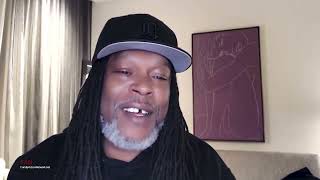
Recorded conversation (public speaker series) between Shaka Senghor and Lali Bowin about Senghor's life, writing, and his new book Letters to the Sons of Society. Senghor recounts his 19 years in prison (including seven years in solitary), how reading and journaling led him to writing and redemption, and how fatherhood shaped the new book’s letters to his sons; the discussion centers on vulnerability, masculinity, literacy/education in prison, co-parenting, and the practical barriers facing formerly incarcerated people.
Hi, good evening, I'm Lani Stoneich, the executive Director of fan, and I'm honored to welcome you to tonight's conversation between Shaka Senghor and Lalibowin. Thanks for attending. FAN is a nonprofit organization that presents a high quality speaker series offered free to the public on a wide variety of topics including human development, mental health, education and social justice, among others. We have over 175 videos of past events archived on our website and our YouTube channel, so please be sure to explore. Now for introductions. Shaka Senghor is a lecturer at universities, a leading voice on criminal justice reform, and the New York Times best selling author of Righting My Wrongs, Life, Death and Redemption in an American Prison, and of course, the brand new book Letters to the sons of society. Mr. Singer is a former MIT Media Lab director's Fellow, a former fellow in the inaugural class of the Kellogg Foundation's Community Leadership Network, and a member of Oprah's Super Soul 100. In the decades since his release from prison, he has started and worked with nonprofits seeking to lift people up, visited the White House, been interviewed by Trevor Noah and Oprah Winfrey, given award winning TED Talks, and tirelessly worked to help create the personal and societal change we need for a more inspired, just fulfilling future. Lali Bowin is a writer, an award winning journalist and community storyteller, she currently manages the journalism portfolio with the Creativity and Free Expression team at the Ford Foundation. Before joining Ford, she curated the media and storytelling portfolio at the Field Foundation. Ms. Bowin worked as a general assignment reporter at the Chicago Tribune for more than 15 years and had a particular focus on urban affairs, youth culture, housing, minority communities and government relations. And now let's welcome Shaka Senghor and Lali Bowin.
Thank you.
Thank you so much.
Yes, thank you Lonnie for that lovely introduction and thank you all. I see the numbers of participants just continuing to go up. Shaka, all these people who have joined us. Before we start talking though, I want to let me just tell everyone that I'm appearing to you today from Chicago, Illinois, which is located on the traditional unceded homelands of the Council of the Three Fires, the Ojibwe, Odaw and Potawatomi nations. Many other tribes also called this place home. You should also know that I'm appearing to you from a city that the first permanent resident was a black man named Jean Paul Point DuSable DuSable was born in Haiti in the 1770s, migrated to the area near the Chicago river in Lake Michigan, which is now one of the wealthiest communities in downtown Chicago. It's such a pleasure to be with you all today. Welcome, Shaka, and congratulations on the publishing of your book.
Thank you so much. I am really excited about tonight's conversation, and I could not be more excited to be in conversation with you, Lale. So thank you. And thank Lonnie and the team, Ann Marie, for hosting us tonight.
Absolutely. Before we kind of jump into talking back and forth, I'm just wanting to know how you're doing, how you're navigating these sort of uncertain and ever changing times during this pandemic.
That's a great question. I am currently in New York doing a bunch of media stuff related to the release of my second baby. So I'm really excited right now. And also, you know, just being really cautious and being mindful that, you know, we are in a global pandemic. And so being kind of holed up in a hotel, except for when it's time to take care of business. But overall, feeling good, feeling strong. You know, this pandemic has provided many of us with a great reset, you know, if you will. And I'm one of the many who are, you know, just kind of recalibrating life and thinking about what the future looks like.
Yeah. It also has given us a lot of time to read and write. Right. So you've made the best use of some of this downtime. I know that. Tonight we're here to really discuss your beautifully written and just really deeply honest book, Letters to the Sons of Society. But before we dig into that book, I just want you to talk a little bit about your own background. I'm sure everybody, everyone who has joined us knows that you served 19 years in prison for murder. But I wanted you to tell us sort of in your own words, what brought you here, your journey, not just, you know, through your past and your teenage years, but also your journey to evolve as a writer.
Thank you so much for that question. And first of all, I am going to hang on to the beautifully written part. You know, I think I've always been a writer in my being. I didn't know it took years before it manifested, but when I was able to go back and kind of look at the breadcrumbs of my writing trajectory, I was like, oh, I've actually had this in me all the time. But as you mentioned, I grew up in very tough circumstances that led me down a path where I made some decisions that were really unfortunate and tragic and caused the death of a man named David. And I was subsequently sentenced to 17 to 40 years in prison and eventually served 19 of those years. Seven of those years was in solitary confinement. And it was in that environment where I began to assess my life through a very different lens of what's possible, what's on the other side of this tragic experience. And it came to me from reading, reading philosophy, and I was reading Socrates Apology and he talked about how the unexamined life isn't worth living. And so that inspired me to journal and to really unpack all the things that had led me down the pathway to prison. And, you know, it was heartbreaking to go back on that journey because what I discovered was this beautiful, innocent, very talented and intelligent kid who had, you know, run up against so much trauma early on in my childhood. And so I began to work, do the arduous work of repairing some of that damage and charting a new course for myself. And so one of the things I did is I challenged myself to write a book because I had never completed anything. And so I wrote my first book in solitary confinement and I gave myself a very aggressive deadline to complete it, which was 30 days. And so I wrote my first book, which is a novel. A lot of people don't know that I actually write fiction, and it's my first love when I think about my love of writing. But I wrote that first book and I shared it with some men on the tier and they gave me some incredible feedback and it gave me the confidence to pursue a path as a writer. So that's how my journey began. And you know, once I got out of solitary, I typed those books up and self published in prison, got sued by the prison, navigated that legal reality, and a couple of years later I was actually paroled and freed. And the first thing I did when I walked out of prison was sold a book in the parking lot. And 12 years later, I'm still selling books. So that's just kind of the journey in a nutshell.
Yeah, yeah. So it's like you found a new life through writing. You also found redemption and through journaling was able to find and kind of examine your life. As you mentioned earlier in your first published book that was sort of widely published, not the one that you self published, Righting My Wrongs. You write mainly about your journey toward redemption, but now in this second book, you concentrate specifically on fatherhood. Can you talk about what does fatherhood mean to you? Both when you became a dad at 19 years old and now that you look at fatherhood and writing from this more mature perspective, I'm also curious to hear you talk about what your relationship with your own father was like both when you were a teenager and now as again, more seasoned man.
Yeah. Thank you so much for that. You know, fatherhood to me is one of the most sacred gifts that we are afforded. You know, the opportunity to shepherd a young life, the opportunity to be a nurturer, to be a teacher, to be a wisdom guide. And it's something that I hold sacred and dear to my heart. You know, when I. My oldest son, Jay, who I write about in this new book. Jay is now 30 years old. He was born six months after I was arrested. And so my parenting experience with Jay was one of letters of visits, you know, which my dad brought him up to see me, and infrequent phone calls. And what happened in that experience is that I began to create a narrative around what our relationship was. And the reason that I, you know, when I. When I reflect back on, and I think back on this, this narrative and how it was created. You know, when you're in prison, you tend to hold on to things that lift you out of that space, right? So one letter can carry you through a whole year. And so basically, the stories and the visits and the phone calls, I had contracted those into a neat little bundle of an idea I had about fatherhood. And when I got out of prison, I realized that could not have been more further from the truth than if I had made it up in Alaska somewhere. And so I had to begin to unpack that and unravel that as a dad. And now as the dad of a 10 year old who I've been fortunate to be on this journey with from the time he was conceived, I really understand how much was lost for my older son Jay, but also for myself as a dad. And when I was writing this book, one of the things that I did was I went back and read the letters that my dad wrote me. For the 19 years I was incarcerated. My dad wrote consistently. He wrote these long, beautiful letters. Sometimes they were very complex. You know, they were full of wisdom. They were also full of questions to some, you know, I mean, answers to some questions that I had posed to them. You know, we debated each other, we argued, we agreed, we disagreed, but they were all consistently full of love. And recently, when I was really reading those letters, I realized that my dad had sacrificed the years of his life where he was supposed to been kind of riding off into the sunset, enjoying being liberated of all his children, being old enough to take care of themselves. And here he Was now being a father anew. And it really helped me to deepen my appreciation for my dad and his role in my life, but more so enroll in my older son Jay's life. And it's also part of the inspiration for the book. You know, the book cover. Those are letters from my dad, his handwriting. And to be able to honor him at this stage in my life has just been a beautiful experience.
Yeah. You know, you talk about this romanticized view that you had in terms of your relationship with Jay. You were able to kind of concoct a relationship in your head, probably in part because you weren't dealing with him every single day. Right. You weren't dealing with the ups and downs of a teenager or the ups and downs of a young, developing man. I'm wondering, when you were serving time, Shaka, did you ever discuss fatherhood with the other residents who were there with you? And how did you approach conversations or how did you sort of manage your feelings about being a young dad? Because I'm sure there were a lot of fathers who were right there alongside you, and I wonder if those conversations were ever broached or approached at all.
Yeah, actually, in prison, we talked about fatherhood a lot. You know, I think it was one of the things that helped a lot of us, you know, grasp the gravity of what we were faced with and what we had forsaken and given up. And it also challenged us to grow as men. And, you know, I was really fortunate to have a group of men who I call my accountability partners. And then I also have a group of mentors who were the older men who I met when I first went to prison. And they looked at some of us, like their sons and their nephews, because they had been in prison for 15, 20 years before we got there. And we would put together groups where we would study, we would talk about things we wanted to do with our children if and when we got out. And so the idea of seeing so many young men being processed through prison and recognizing that we were kids when we went there, I mean, I was at a prison called the mystic reformatory, where the age range was from 16 to 21. And, you know, this is 1500 young men who had lost their freedom. And many of them were young fathers. And so, you know, as we began, you know, specifically as I began to grow and evolve, I became the older guy, and I became the mentor and the guide. And some of those guys were like my sons. And so it kept me, like, you know, focused on the idea of what fatherhood looked like when I got out. And, you know, again, you know, I don't think it was the absence of the day to day struggles of watching a child grow into a teenager that was the most challenging part of, you know, kind of constructed the narrative. What happens is in prison is that it distorts your reality and you cling to anything you can to get a sense of hope and a sense of grounding. And for me, that was letters from home, pictures from home, and phone calls that helped me at least feel somewhat connected to a world outside the dull and gray bars of prison.
And so what were your expectations when you came out of prison in terms of forming a relationship with your oldest son, Jay, knowing that you had been thinking about it, you'd been having these conversations, and that you have been evolving in your own sort of mental process, in your own mental vision of what a father should be and could be. What was your approach when you were released?
When I was released from prison, I had this idea that I was going to come home, wrap Jay up in the biggest hug, and we were going to go off on the adventure of a lifetime. You know, we were going to run businesses together. We were going to do all the things that I had dreamed of as a father that fathers do with their sons. We were going to go to games and movies and concerts and explore the world. And what I realized through the writing of this book is that I've never asked Jay for his permission to go on yet another journey with me. And I think it's something that parents often do where we sign our kids up with things that they don't approve of or we haven't asked their permission to join us on. And so as I've grown and evolved, in my perspective of fatherhood, especially now as I'm raising Sekou, is I have adopted the mindset of egoless parenting, where I don't have my ego attached to outcomes as it relates to Sekou or as it relates to Jay, and that I'm ensuring that I'm more inclusive when it comes to decision making that's going to impact their lives and the quality of their lives. And so I had to unravel that and unpack that post incarceration.
And so you were able to evolve even further in your definition and your vision of what a father is after you came out. So you had this one vision, but you had to be kind of flexible and fluid. I want to kind of dive into the book now, and in some ways, we already have. You start off this book with a letter to Jay. And it really struck me that you write that you felt like a fraud and that you hadn't been a good father to him. What led you to those words into that summation? And why do you think you decided to start the book with that type of confession?
I think it's important as a parent to be honest with our children. And I think that one of the greatest gifts we can give our children is access to the full range of our emotional experience as it relates to parenting. And so I knew that I wanted Jay to understand exactly where I was coming from. And the reason I felt like a fraud is because I know what it feels like to parents, say, cool. When there's a deep emotional connection, when there's a deep human connection, and where there's an openness in the way that I'm able to love him, show affection to him, guide him, allow him space, to really be a free, evolving human being. And I know that Jay was deprived of that. And so to be a father to me is to be a steward. It is to be a nurturer, a teacher, a guy. And as it related to Jay, I was none of those things. And so in calling myself his father, I felt that I was being unfair to what that title means to both he and I, and to really challenge myself to reimagine what fatherhood looks like given our unique set of circumstances.
And what does it look like given these unique set of circumstances? I mean, you came out of prison, and essentially the son that you had was a grown man. He was no longer a boy. How do you develop that type of connection? The emotional bond, the nurturing? Did you have a desire for it then, or do you just have a desire for it now? And how do you start to sort of manifest that in real life?
Yeah, that's a great question. And I just offer a little bit of pushback. When I came home, Jay was on the cusp of turning 19 years old, so he still was a child. And I think that's important only because oftentimes young boys, specifically young black boys, are pushed into adulthood before they're even mature enough to actually be adults. And I think it's important for us to honor the innocence of youth and the innocence of childhood. And so, for me, coming home, what I really just imagined was a world where there was this deep connection and that there was, you know, a real sense of relationship and relatability. And, you know, unfortunately, we didn't have those things, because I just inserted myself in his life, and I realized we were strangers to each other. I mean, over the course of 19 years, I may have seen Jay on a visit maybe 10 times. And, you know, everything else was basically letters or phone calls. And it's impossible to build a true, deep, and meaningful relationship without that connectivity.
Yeah. And thank you for pushing back and making that point, because you're absolutely right. Particularly for black boys and black girls. They are adultified at young ages. And when we look at our children, we know what we're seeing, which are children. But too often, our counterparts look and they see adults, and they're not. They're still developing young people. In the book, and I've told you this before, Chaka, you're so vulnerable and honest that you dissect topics and approach things like racism and grief. You write about isolation and even toxic masculinity. I'm curious to hear you talk about how you speak and spoke, you know, both present and past, to Jay and Sekou about your past and about your experiences. You know, I know you write in the book that Jay found out about your past from his mother, and that compelled him to write a letter to you. You know, I wonder how that shaped his opinion of you finding out from his mom versus finding out from you. And then how do you talk to Sekou, who has a completely different experience with you, about your past life? And what questions does Sekou raise?
That's a great question. You know, with Jay, the way that that happened was really frightening to me because I didn't know the context under which his mother had shared that with him. I didn't know if she had shared it with him out of anger or out of a sense to try to scare him across, you know, down a different path, or had she just shared it with him as, hey, this is where your dad is at? And when he wrote me the letter where he talked about his mother telling him why I was in prison, that letter just broke me open. And it made me recognize that not only had I deprived my son of fatherhood, I really deprived him of a choice to navigate life with the protection and support of a present father. With Sekou has been a little bit different. I had an experience when he was in kindergarten, and, you know, because of my life is public facing, you know, I'm very mindful of how, you know, I navigate the world with Sekou, and I try to create that space where, you know, when I'm home, I'm just Dad. Like, it's not the person out in the world doing all the things. And we've tried to create life to where we can have some sense of normalcy. And unfortunately, there was a moment where Van Jones was on CNN interviewing Oprah, and she spoke about our friendship. And when I saw that, like, my heart literally stopped in my chest, because I figured that some of the parents may possibly have seen that episode. In true to form, the next day, when I went to pick him up, one of the mothers approached me, and she was like, hey, I seen you on, you know, CNN last night, et cetera, et cetera. And I was like, that means if the parents know, the children will eventually know, because parents just have conversations, and, you know, they're not thinking about what the children are hearing. And so I called Sekou's mom, and I told her I think it was just time for me to share with him what my past was. And we sat down, and I just walked him through and answered his questions. You know, he was in kindergarten at the time, but he asked some really good questions. And over the course of time, as he's continued to grow, he knows my work in the space of criminal justice. He's aware of my writing and many other things that I do because he's often gone with me to do some of these things. And so now we're just able to talk very candidly, very openly about anything. And he's interested in justice in general. He really cares about people. He wants people to have equality. He wants people to be treated kindly and with love. And he understands that, you know, some of the systems that we move in, whether it's the criminal justice system or whether it's the educational systems, he understands that a lot of them are problematic and that they need a lot of work. So he's up for the task of helping us fix some of those things. But Sekou has tons of questions. You know, he's just a fun, inquisitive, smart kid.
Yeah. I always see your face light up when you talk about Sekou and your relationship and the connection that you have and the affection that you're able to share with each other. You know, as I. I got the privilege of being able to talk with you before about the book. And so for this interview, of course, I kind of dug a little bit deeper and read the book again with a new lens and kind of new eyes, it felt like. Because the first time I saw certain things, and this time I saw other things, and this time as I was reading, I really wondered. I know that that conversation that you've had with Jay, there have been some really difficult ones, but I wondered, what were the tough Topics to broach with Sekou, particularly when it comes to the letters in this book. I know you spent some time in the book explaining why you and his mother split. And I wondered, too, why you decided to include that in this book. And how did you talk to Sekou about, you know, this evolution in your. Your relationship and moving?
That's a great question. You know, I grew up in a household where children were to be seen and not heard. And culturally, I think that kind of extended beyond our household. And, you know, I knew that I wanted to parent different. Sekou's mom and I, we discussed parenting different and being more inclusive in the household to ensure that, you know, his views, his opinions, what he's experiences that he has knowledge of that we can walk him through, anything that he has questions about. And when Ebony, that's his mom's name, when her and I separated and eventually broke up, it was heartbreaking in the sense that, you know, I knew that we were destabilizing our home life and everything that he was accustomed to. And so in writing the letter, I really wanted to give him, you know, a memorialization of what that experience was as he evolves and grows and gets into relationships and potentially has children of his own. But understand that even when things end, you know, you can still find beauty in the ending of things because something new is born. And we've been able to navigate parenting in a way that centers on our love for our son and to create space for him to ask questions, you know, and to be present. And, you know, I think the idea of a household, that's the traditional model, obviously, that's been kind of, you know, pushed on people as the only way that you can raise healthy, thought evolved children. But I think it's more about presence and intention and communication and openness. And so that's what we've tried to ensure is always available to Sekou as we navigate the reality of co parenting.
Why did you decide to include that story in that letter in the book? Because, again, you have to write to him or you choose to write to him about police encounters, about police brutality, about being isolated and forms of being alone. And I'm just curious, you know, was that a difficult letter to write and why you thought it was important to include?
I don't think of any of the letters as difficult to write. I think of the letters as honest, you know, and, you know, truthful and from a place of deep introspection. And one of the reasons that I was really inspired to write it is because my own experience with my parents and not quite knowing what broke their marriage up and what really happened. And I think a lot of parents try, in their best attempts to shield their children from their own decision making without understanding that they actually caused more harm. Because children are smart, and they pick up on it, and they recognize energy. And so I believe not only was it important to write, I believe that we owe our son an explanation as to what happened, you know, with our relationship, because it impacts his life. And so I just really wanted to make sure that he had an understanding of what happened and that he didn't have to go through life trying to figure out what happened with dad and mom or blaming himself, because a lot of children actually internalize those breakups as if they were the cause of it. And I wanted to ensure that he wasn't one of those children who grew up like that.
Yeah, and that's what I wondered. Because this time, again, when I reviewed the book, I saw that parallel between you having this flashback moment of seeing your own dad pack up his crates and move out and put his records into these colorful crates, and you had this sense of wondering, but that you didn't want Sekou to have that same sense of wonder. You wanted him to have a concrete answer, and so you decide to be very boldly honest with him. Another thing that you write about, particularly Tiseku, is you write about grief. You write about moments when you have to navigate life alone. And you may feel alone, but you also write about crying and expressing emotions. And so much of what you write about really pushes against this tough guy image that is often promoted as the vision of manhood. And how do you think we can teach more young men like Sekou that honesty, humility, and vulnerability are traits of masculinity and traits that should be sought after and even celebrated?
Yeah, I mean, I think it starts with conversations like this. Right. You know, when I was writing about the greatest gift my dad ever gave me was his tears and the ability to express himself. And, you know, there's a chapter when I talk about when the tears of black men, specifically, are acceptable. And it's typically in these public spaces where one of our heroes have died or, you know, something of that nature. And, you know, there's this kind of collective grief that happens, but in those quieter, more isolated moments where we're navigating how we actually feel, the only narrative that's been pushed out is the narrative of us being able to express anger. And, you know, I think it's important for young boys to have full access to all of their emotions. And I think one of my greatest responsibilities as a dad is to model that, but also to ensure that there's a safe space for Sekou to express all of who he is. And it doesn't, you know, to me, I've never interpreted as soft. I've been confused by my emotions, you know, in the past, and confused by the narratives that. That are attached to the emotions of, you know, sadness or grief or whatever, the, you know, other things that come up to make people judge, you know, us as vna. You're soft if you're that. But I also know that I have a distinct advantage. I don't think there's anybody that can question my toughness at this point in my life. So I know that I walk through the world with that understanding of, like, I've been through the most difficult things that, you know, a person can really encounter from the time I was 8 or 9 years old up to now. And so for me, it gives me greater responsibility to express all of the emotions because I know that the young men that I mentor, they find safety in that. They find confidence in that, because they can trust that it comes from a authentic space and not a manipulative space. And it's not just the stories that they hear from men. Oftentimes the stories come from women, their moms, who interpret what masculinity is based on their experience with the men that they've dated or bore children with. I just think it's a collective conversation that we all should be having about how we think of emotional expression for boys and how do we create space for it to be holistic and authentic.
Yeah. And so this is a sort of area where we all have to reframe our expectations and what we think of as masculinity in the expression of emotions.
Absolutely. And I think it's, you know, one of the things I've been talking about lately, you know, especially with narratives right now, as so many of the social impact movements have risen to the forefront of our conversations. You know, we're often hearing, you know, we need to change the narrative around black men specifically, and men in general. And lately, I've been really pushing back on that, because I don't think that gets us to the truth. I think we need to expand the narrative, and I think we need to include all aspects of who we are and the complexities of who we are, as much as I ensure to provide a tender, soft space to land for my son. Also like to watch football and watch people run into each other and watch UFC fights and, you know, the mayhem that ensues from that. And those things don't have to be mutually exclusive. I think it's important for us to be open to embracing all of who we are. I think the idea around masculinity has been weaponized in a way that has not allowed us to grow and evolve the understanding of what it means to be masculine and to acknowledge or recognize that energetically, some of us are just wired different. And it doesn't mean that we're somehow not okay or that we're limited to just that part of who we are when there's so much more complexities to us than we're given credit for. So I think it's important at this point is to really think about how do we expand these narratives to include other behaviors that are healthy and whole.
Yeah, because people are dimensional and men are dimensional, but so many times we view them from a very shallow and singular lens. So part of what you write about in what you're saying now is about expanding the ways that we receive stories, expanding the narrative, the visuals, so that we can see men in their full complexities. I want to talk about a letter that struck me in the book this time, and it was a joint letter to Jay and Sekou. And you describe a scene when you were in prison and Jay came to visit, and you write that he was a bit cranky as a toddler and that he ran away from you and found comfort in the lap of another woman who was in the visitor's room Again, this time, as I reviewed the book, this story, this anecdote, really stood out to me. And I wonder why this particular memory of Jay sat with you, why it resonated with you, and why you decided to write about it and chronicle it.
Yeah, I thought it was really important for, you know, Jay to understand the complex nature of trying to be a father up under those circumstances, but also when a society understand how these systems really impact families. And in that moment, there was nothing more crushing than seeing my child in need of comfort and knowing that I could not just get up and walk and pick him up, and that I was denied the agency as a father. When I was writing that piece, it really struck me that typically in the world of parent child, children see their parents as the ultimate authority as an agent that's in control of all the things that provide their safety, their nurturing, and things of that nature. But in prison, you see a parent that's shorn of our agency, that we don't have Any autonomy that we can't just go to the rescue of our child. We can't sit our child on our lap and tussle their hair. We can't do all the things that are instinctive to parenting. And, you know, especially when you're a dad. I don't know how it is in women's prisons, but I know in, you know, male prisons, it's very hard to be a nurturing parent, and it's counterintuitive to what parenting is. And even that narrative of, like, you know, dads as only providers and protectors isn't quite true, at least in my experience. My dad was a nurturer. My uncles are nurturers. All of. All of my friends are. Excuse me, all of my friends are incredible dads. And they nurture. You know, they feed, they clothe, they bathe their children. And so those stories don't get told. And so to be sitting in a visiting room where a complete stranger has the ability to nurture my son when I can't, like, that was heartbreaking. And I was thankful. I was in the spirit of gratitude that this strange woman was able to comfort him. But it was also heartbreaking as a dad because I wanted nothing more than to pick him up and console him. And so I think telling that story really helps us understand the impact of prison on families, specifically children with incarcerated parents who often don't get talked about, but also how fathers on the inside are disenfranchised when it comes to parenting.
Yeah. And so there are rules and regulations that prohibit you from being able to comfort your child or just grab them and hold them the way that you may feel compelled to, Right?
Absolutely.
And so, you know, while we're talking about some of the rules and regulations that you had to navigate, both as a, you know, as a parent, I'm wondering if you could talk about the writing that you were able to do. Was writing allowed while you, you know, at any moment, were you able to just turn to writing as a resource, or were there limitations on your ability to be able to write? Was that kind of, you know, regulated as well?
Everything in prison is regulated based on resources and the scarcity thereof. So some of my earlier writings, they're on all type of stuff. They're on the back of envelopes and scrap paper, and. Because there were times when I didn't actually have money to buy a notepad to write on, but if you had the resources, you know, you can buy notepads, you can buy typing paper, and eventually I was able to use My little word processor. I'll never forget it. It was an ML Brother 500. And that's what I typed up all my early books on after I hand wrote them on different notepads and stationary. We were allotted, like, 10 pieces of paper a month. You know, prison bought stationary, and then you can buy writing pads if you had the money. So I wrote on all those things. I wrote late at night, standing by my cell door, the little sliver of light that would creep in, and I just maximize what I had at my disposal. When I first started in solitary, you can't get a typewriter. You can't even get a regular ink pen. They give you a real flimsy pen. And so I ended up taking that and rolling it up in some paper. So to be firm. And I use that as my writing apparatus to write my first few books.
And in many ways, it was the writing that you were able to recover to redeem yourself. When you think about your own redemption story, do you think that it's something that could be replicated or taught to others who are serving time now? Or does every inmate. Does every prisoner have their own, you know, story and journey?
I mean, I think all humans have their own story and journey. And I think redemption is really subjective and relative. There's some people who probably will never think I'm redeeming. In fact, most systems don't even believe in our personal redemption. There are still things that I encounter to this day, and I've been out of prison for 12 years, that most people can't even imagine. For example, you know, getting life insurance, getting house, home insurance. You know, if you have a felony, it's very difficult to get those things. Something as basic as getting tsa. I mean, I'm a professional who travels a lot for a living. I work at a travel company, and I can't get TSA approval because I have a felony on my record. You know, if you're a parent, you know, oftentimes you can't be a chaperone. You can't go on school trips if you have a felony. There are over 40,000 collateral consequences of having a felony on your record. So, you know, when I think of redemption, I also have to think of those realities in terms of the barriers that are in place. And I think about the personal redemption, reconnecting with family, reimagining a life for yourself beyond the shackles that once held you. And for me, you know, it's been a journey, you know, and writing was a part of it, but it wasn't the only part of it, it was a series of things. One was being literate. I was blessed. I was privileged. You know, we talk about privilege a lot. Being literate is a privilege that, you know, oftentimes doesn't exist in prison. The average reading level is third grade, you know, and that's being generous. And so I was privileged to have the gift of reading and to have been able to meet mentors who guided me to great books, which challenged me to think differently, challenged me to grow, and inspired me to process my life through the written word. And so, you know, that was just that combination of things, of great mentors, literacy, and then ability to actually express myself through the written word.
Yeah. And speaking of being literate and being able to express yourself as a writer, what level of education did you have when you went into prison? And can you talk about the education that you sought for yourself while you were there in order to build your literacy, in order to build your writing, your thinking, your business?
I mean, it's actually a very complex question because I always ask, like, how are we measuring intelligence? And, you know, if we're going back to just a traditional model of what level of, you know, institutional education I achieved. I had a GED when I went to prison. I took some college courses prior to the 1994 crime bill or 96 crime bill that eradicated college in prisons. At that time, I was averaging a 4.0 in class, and so I was a great student. But I think of education differently. I think of it more through. To me, education is all about learning that empowers you, learning that challenges you, that helps you develop critical thinking skills. And a lot of that came from my peers, us reading books and challenging ideas and, you know, really thinking through what we wanted to accomplish in life and being able to, you know, see if it worked out and figured out. And I'll give you this quick example of why I think of education different. I was a fellow at MIT Media Lab. And, you know, if you can imagine, this was very early, you know, after my release from prison. I had been out about two years, and I was actually a fellow at MIT Media Lab. And during that fellowship, I did a prison hackathon where I created these five design challenges because I really wanted to understand the. I really wanted to understand the science behind how we survived in prison. And I gave this to faculty staff in three hours for them to solve these five design challenges. And they couldn't design. They couldn't solve any of them. And my goal in saying that was like, you Know, when we think about genius or intelligence, we have to be mindful of who's defining it because we know that these systems have been very discriminatory. They have been very, you know, isolating and non inclusive. And so for me, my learning has come through just challenging ideas, reading more, being in just great groups of people who, you know, are great critical thinkers. And even now, you know, I've taught at the University of Michigan and I still only have a ged, but, you know, I've taught at a university and, you know, so I think about education a little bit differently.
Yes. And thank you for that. Thank you for, you know, that full explanation. Because you're right, it is really complex and complicated. And I mean, based on not just what you've written, but even what you started this conversation out with, a quote from Socrates that you were able to self educate and, you know, teach yourself and learn from the people that are around you. So you're right, it's a really kind of complicated equation. And some of us look at education as so limited. Shaka, because we're in this virtual environment, so many times at these book readings, we don't get to hear the author actually give life to their words. And I was wondering if you would be so kind to read a selection to us and then I'll follow up with a question on page 160. I was hoping that you could just read an excerpt and then, you know, we can hear you speak in your own words.
So that means the audience has to hit that link in the chat and go order their book so we can get into this in the after hours now. Yes, you said page 160, correct?
Yes.
Okay, on page 160. This is from a chapter titled Addiction and it says, I knew that shame when I left prison. I spent the best part of two decades having every decision made for me. I had zero agency, zero whim or will. And then suddenly I was free. At least that was how it looked to the world in my head. I was still inside. I had a new addiction, one that mirrored the child's addiction to power and money. I committed to late nights, to partying, to women, to alcohol. The things I couldn't enjoy when I was inside. That was the PTSD and trauma of being free. I was a boy man trying to navigate adulthood. Stuck in the mind of a 19 year old kid who had never learned to moderate because everything had been decided for him in a brutal place. And now I was in my 30s with adult resources powered atop my lack of maturity. I carry with me A huge backpack filled with survivor's guilt. Already two of my nephews had been shot, and I still had a lot of friends in prison. These are the pressures our community faces. We feel guilty over our successes, knowing that our friends lie dead or in prison, the weight of our ancestors like burdens around our necks. Even when we're technically free, there are forces at work that keep us on the train line of pain, violence, imprisonment, poverty, racism. Even when we make something positive of it all, we're just a second away from being pulled over and having our records brought up on the little evil computer in a cop car. My forebears had gone through hell to survive, all for me to end up in prison at 19 for the murder of someone. How would I ever escape those burdens? This, then, was the lethal mixture of pressure and shame I faced in the years after I left prison were almost lethal, as you'll see.
Thank you. How did you escape the burdens?
You know, it took my friends in prison actually demanding that I share with them what my experiences on the outside were. And what I mean by that is when I first came home from prison, you know, I was intentional about making sure that my friends can call me because these are my friends. You know, people would say, well, why would you. Didn't you leave that place? Why would you want to talk to these guys? We spent two decades in there. We went through the loss of loved ones. We went through births. We went through, you know, graduations. We went through all the things that friends go through. We were each other's shoulder to lean on. These were my friends. And when I came home, when they would call and they would say, hey, how's it going out there? And I'd be like, oh, it's all right, man. You know, I'm just trying to get a job. And I would keep these conversations very basic, very simple. And they started pushing and saying, no. How was your actual day? What did you do today? What did you have for dinner today? Who did you spend time with? Tell us about that chakra. Share that with us so that we can have hope of what's possible for us when we get out of prison. And so I began to open up, and I began to send them pictures and share magical stories and the beauty of life and all the things that we all imagine for ourselves on the other side of the pain. And that really helped me grow and evolve into being more appreciative of the moments that I exist in, but also more thoughtful in my sharing with my friends, who some are unfortunately still Incarcerated.
Yeah. I know that letters have played a big role in your transformation in building relationships. Did you write letters to them as well?
I still write letters to them, fortunately. I don't know if it's fortunate, but they have a technology platform called JPay. And so I literally write my friends like it's almost like texting or email. But I still write them to this day and they call me almost every Sunday. I've tried to reserve that day to take their calls, largely because it's a quieter time of the week for me and it's more easy for me to be available. But yeah, I'm still in contact with all my friends.
Yeah. Because those letters and that contact means so much. Yeah. What, you know, you're a reader, you're a writer, what did you read? And what books do you send to your friends that you find inspirational and, you know, transformational? And what are you reading now?
Yeah, I read a ton of books. I used to read everything from history, world history, black history, philosophy. You name it, I read it. I mean, I was reading, you know, Socrates one day and then I'd be reading Jackie Collins the next day. You know, I'd be reading Zora Neale Hurston. And then I turn around and read, you know, Sydney Sheldon or Stephen King. And, you know, I just kept my mind, you know, wired. So just like, take in as many stories. I used to love old westerns and all type of books. So I was reading everything and I just try to send my friends, like culturally relevant books, self help books, inspirational books. It's really hard though, in prison because they censor a lot of stuff and a lot of their censoring is very culture specific, which. Which is frustrating, as you can imagine. So. Yeah. And today, what am I reading right now? The last book I started was Will Smith's memoir. So I'm reading a little bit of that. And I am reading. I'm simultaneously reading what Happens to you, which was a book by OPRAH and this doctor, Dr. Perry, talking about, you know, uprooting trauma. So I don't read as much because I'm writing it so hard to like, you know, if a book is really good, then it makes me want to go. Right. And if it's really bad, then I start editing in my head. Like they should have moved this around. So a little difficult to write these days.
Yeah. It's a good exercise, though.
More from Shaka
Joe Rogan podcast Shaka Senghor #shakasenggor #podcast #joerogan #interview #jre #jreclips
Surviving a Shooting at 17 Joe Rogan X Shaka Senghor | Joe Rogan Podcast | #shorts