Shaka Senghor On His Journey Through Parenting, Repairing Relationships, Honesty, Freedom + More
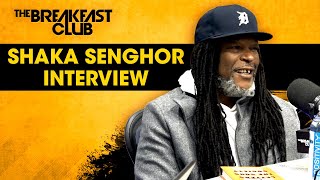
This content was created by Shaka Senghor. This content was uploaded by Shaka Senghor. This is a YouTube video titled "Shaka Senghor On His Journey Through Parenting, Repairing Relationships, Honesty, Freedom + More" featuring a conversational interview recorded in January 2022. The discussion involves Shaka Senghor as the primary guest along with hosts Charlamagne Tha God, DJ Envy, and Angela Yee on The Breakfast Club. The conversation covers Shaka Senghor's experiences with incarceration, solitary confinement, mental health, fatherhood, repairing relationships with his sons and father, and his new book "Letters to the Sons of Society." The dialogue explores themes of trauma, healing, parenting challenges, and expanding narratives around black men and fatherhood.
Wake that ass up.
Early in the morning.
The Breakfast Club.
Morning, everybody. It's DJ Envy, Angela Yee, Charlamagne, the guy we are the Breakfast Club. We got a special guest in the building.
Yes, indeed.
He's back. The brother Shaka Senghor.
The good brother, Shaka Sengkor.
Oh, man. Thank y' all so much for having me. I'm excited to be here.
Now, welcome back, brother.
First of all, how are you doing.
With COVID and everything that's been going on in this crazy world?
I'm blessed. Just, you know, taking it one day at a time. You know, I think I got a very unique experience that kind of prepared me for these isolated moments. So I've been good, man. Just really taking the opportunity to be more creative, more thoughtful about life, more present with the people in my life and taking it one step at a time. But I'm ready for it to be over, to get back to living freely.
I don't think it's ever gonna be over.
The world, as we know, is never gonna be the same.
Well, let's flashback. Cause Chaka was here before. He was talking about his book Riding My Wrongs. And now he has another New York Times bestseller. Yes, Letters to the Sons of Society. And when you reference Covid and isolation, I saw you were talking about how when you were locked up in seven years, you spent in solitary confinement. And the comparison to Covid.
Yeah, I mean, you know, I think it's very different. But I think one of the things, and I actually talk about it in the book that's similar is the kind of disorienting effect of not knowing when something is going to end or normalize. And people was like, well, how would you compare those two things? But when I was in solitary, my senses was indeterminate, so they never told me when I was getting out. And I think the same thing has kind of happened early on. We was like, oh, we'll be done with this in a couple of months. We'll be done maybe six months. And, you know, we're almost two years later and we still don't know. So it just kind of makes it hard for you to put your feet on solid ground. And I wanted to be sensitive to the reality that people were facing with so that people can get themselves grace and understand that it's a real thing. It's not something that they're imagining is difficult. It really is difficult.
That makes perfect sense to me. Like, it sounds like the perfect analogy.
Yeah, absolutely.
I mean, but I guess if you've Never been in solitary confinement. You don't understand it.
Yeah. I mean, this is not quite solitary. You know, we still can get real food and all those things, but I think psychologically what happens. And I mean, you know, you talk a lot about mental health, which I really respect, but mentally, what goes on is the most important part. And, you know, I tell people all the time, like, I got free from prison mentally before I ever walked out of prison. And it's one of the reasons I'm able to do some of the things that I do now, because that recognition that the worst prison will ever be in is our mind was something I was able to acknowledge early on in my incarceration, and that helped me get through. Mm.
Well, you have a new book.
Yeah.
Letters to the Sons of Society.
A Father's Invitation to Love, Honesty and Freedom. What does that mean?
I mean, you know, as a dad, I've had two very unique experiences, which.
Is crazy when you think about it. It's wild.
Yeah. When I was arrested, my oldest son's mom was still pregnant with him. So he was born like six months after my incarceration. And so I only experienced fatherhood with him through my dad bringing my son to visit me, you know, so basically, I kind of made up this narrative about being a good dad and being a present dad. And because I was able to write letters and get phone calls, but I wasn't able to really spend the time that's necessary to nurture a child through the world. And, you know, now I had this wonderful experience of raising my now 10 year old son, Sekou. He's a young entrepreneur, he's creative, very intelligent, and it's dramatically different, you know, but I'm also different too, as a man. Like, I'm a grown man. When I went to prison, I was a 19 year old kid. And so, you know, this book really is a reflection of those experiences, but it's actually a little bit deeper. You know, I mentor young people all over the country. You know, you go through what I've been through with prison, where I spent 19 years of my life, and most of the guys I spent time with were kids. And so for me, you know, working with young men across the country, I'm like, this is the book I want to write. So I start off like letters to my hip hop sons. Letter to my. My young entrepreneurial sons. And then I realized between all the young men that I get a chance to mentor existed my two sons. And I felt the intimacy would come through more if I just wrote directly to them about life and what I've experienced, but also what I wish for them and dealt with some of the issues that we're faced with.
What is your oldest son? How is your relationship with him? Because, you know, him being older now, he's looking at you and your younger son right now and how the fact that you could be there and that you are at his games and you are helping him with his homework and all those things. But I'm sure he feels like, damn, I didn't have that part of my dad. So how was your relationship?
I mean, it's very complex. You know, my oldest son is now 30 years old. And when I came home and I talk about it, one of the most impactful chapters, I think, that people are really going to resonate with is the first chapter, because it really explains the complexity of coming home to a young man and trying to insert my life and myself into his life as his dad. And really, I came home as a mentor. Yo, this is how we gonna do it. We gonna make these things happen.
Then I don't gotta listen to you.
Yeah. And it wasn't fair to him. You know, it wasn't fair for me to come home because the story I had was contracted to the reality of being in prison. And so it's been a very difficult. It's probably been the most complex part of my life and the hardest thing I've ever had to confront as a man. And that's where the honesty and the title comes from and is, as dads, oftentimes, we're not honest, whether it's honest about the things that are positive or honest about our shortcomings. And I really wanted to create space for fathers to really have honest discussions, especially when we think about what's happening with black males in our communities.
Let's talk about what you did do when you came home and your son obviously felt like, well, you can't just come and change my life and tell me what to do now, because you haven't been present as a father. So a lot of people have had to deal with that when they get out of jail, because we don't even think about that. Right. What is that relationship like? Can I just step back in 19 years later as a dad and tell you how to do things when you've been doing things your own way? So what advice do you have for fathers out there who are trying to get back into their children's life?
My advice is always to take the, you know, the guidance of the child, because you, you know, we Owe them. They don't owe us anything. And I think it's really important to be patient, to give yourself grace, but also to acknowledge that, you know, it was your decisions that took you out of their life and not their decision to not be present. And so what I've tried to do is just be patient now and be, you know, allow him to kind of set the tone for our engagement with no expected outcomes. And I've really detached my ego from parenting, not just with him, but also with my younger son now.
What about with the mom, too? Because that's also an issue. Because now you want to make sure that you have this time. And if, you know, at first your son isn't comfortable or certain things are going on. Cause we've had people call up here with issues like that. Well, you know, the mom has a new boyfriend. She's moved on. She's done this. And I need this to happen for me with my son, and she's not helping with the relationship. How did that dynamic work?
I mean, I think that one was a little bit more complex because my dad really stepped in and kind of filled the gap, so to speak. So he and my oldest son's mom, they kind of had almost like a parent child relationship. You know, he stepped in, you know, as a. As a. My dad is just incredible. He's a really incredible human being. And so he kind of raised her, you know, so by the time I came home, my son was grown, so we didn't have to have as much engagement. But there were moments, you know, and again, I talk about it in that first chapter where I had to reach out to her, like, hey, this is what's happening with me and him. And. And I'm not trying to go back to the old way that I was living, but I will if, you know, if I get pushed to that point. And so just being able to have that understanding with her was really important and helpful.
The old way you were living, what you mean?
Yeah, I was super triggered. We had a very intense moment.
So your son wasn't going down the right path and you was.
Well, no, we got into, like, a real conflict. And it happens often, you know, especially with guys coming home from the joint. Like, I've been in the joint on the yard, thugging it out, going through all the violent realities of that and that experience. And what I didn't account for is I hadn't healed from that ptsd. And so there was a moment when me and my son got into a conflict, and he physically threatened me and I told his mom, like, you know, you need to holler him. Cause otherwise I'm gonna take him over here and leave him in his field. And if something actually happened where we thought that's what went down with my son. That's what I talk about in that first chapter. It was real.
I got a bunch of questions I want to ask you about that real quick. How long did it take you to get out of that survival mode of fighting? Like, I gotta protect myself at all times. How long did it take you to get out of that?
Actually, that experience with my son was the first time I had really realized that I hadn't fully processed all that out of my system. You know, when I did that last stretch in solitary, I just came out focused on life at the prison. And I didn't. First of all, I didn't know if I was ever getting out. But I had wrote down all the things I wanted to manifest in my life, because I believe you attracted to your life, what you think about the most. And so I started living my life in that way. But it's still the big yard, and I still was who I am on the yard. So I had to navigate that first. And I was fortunate, you know, like, I had reached that status of respect where I didn't have to deal with all the conflicts. But. But it also set me up for the reality of what happens when you get home. And nobody cares about your transformation when you're in the hood. Nobody cares that you're thinking about peaceful resolution as opposed to taking it back to the block. And so after that experience with my son, I really was like, I actually need therapy to really process, like, what I had been through, because a lot of it was being covered up with achievements. Right. I got out, I was successful relatively early on. You know, I've achieved, you know, probably an exceptional level of success in pretty much all the endeavors I set out to do. And that covered up what was actually, the reality is that I was in prison for 19 years. I was in solitary. Nobody leaves that place without scars. And it doesn't matter if you've been in there for one day or 10 days or 10 years. That place scars you in a way that shows up in different areas of your life later on.
And you're retelling those stories over and over again, like you said in interviews and talking about the book and reliving it all the time.
Yeah, absolutely. You know, when right and my wrongs came out, you know, I was on tour, I was doing all the things I had you know, the conversation with Oprah and, you know, all the things that come with promoting a product. But then I also was a sought after speaker. I had did a TED talk in like, 2014, and from there, universities and schools. And so I'm just constantly talking about what I actually went to prison for, which was murder. And I had never reconciled that, you know, and so I found myself in this. In this real dark space, and it kind of culminated with me driving down the wrong side of the expressway drunk one night, and I was like, yo, I'm about to throw it all away. And that's when all the things just started coming back. Like, yo, you. You've been traumatized in a way that you haven't been honest about, because who the hell talks about ptsd? Post incarceration, we're just happy to get out, celebrate, have the parties, get back to living or, you know, this dream we concocted. But the reality is a lot of us come home deeply scarred, and it's really, you know, you think about those stories of somebody coming out and then they create or commit a heinous act of violence. We're like, see, we should have left them in. But the reality is we have to ensure that people are getting the therapeutic treatment so that they can come home healthy and whole.
Could you tell people how important it is for folks who have done, you know, a lot of prison time to get mental health treatment? Cause I always say they call these facilities correction facilities, but you're not correcting nothing in there.
No, I mean, it's, you know, in order for a person to get out and not just operate out of that survival mentality, they need help, you know, and we have to destigmatize what mental health treatment looks like, especially for black males. It's not a weak thing. It's not something that makes you a sucker or you soft. It's really healthy to be able to process the things that you're thinking about in a way that isn't harmful to your community, is harmful to your family. And, you know, when you come out of an environment that violent, you know, you've been affected by that. You've been, you know, you're on edge. Like, I mean, my first part of my incarceration, I was at the Michigan Reformatory. It's called the gladiator school. You know, my first week, my first actual day in prison, a guy gets stabbed in the neck and he keep it moving. I'm like, okay, well, this is what it is. This is where we at. This is the Land of the lions and the lambs. And you make a choice early on. And, like, that doesn't leave just because you walk out of prison. Like, it doesn't leave just because you get paroled. Those realities are still there. And so, you know, I think it's exceptionally important for anybody who's been through that to get, you know, psychological evaluation, first of all, to then mental health treatment.
You know, you said something earlier that, you know, when your son was older, you figured that you would have to fall back for a little bit.
Right?
And, you know, I have two sons. And what made me really think about that is, you know, as a kid, when your dad tells you to do something, like, you're mad, like, why is he making me do this?
Right, right.
Then when you get older, you understand why, you know, but you know, what scares me sometimes is, you know, thank God I went the right way where I didn't have to. I didn't have to learn why he was telling me no so hard. Does that ever scare you with your kids? You know what I mean? Because, yeah, you have to fall back. You gotta let your son learn on his own. And one day he'll get to the age he'll be like, I understand what my dad was doing, but it's always that fear of, what if he goes the wrong way? You know, what if he goes. That takes that wrong turn or does that stupid thing? You know, he might not get that grace, that empathy.
Yeah. I think, you know, the way that I've approached parenting is I honestly have egoless parenting because I realized that whatever outcomes my son has in life, those will be based on choices that he make. So my responsibility as his dad is to set up all the resources necessary, the guiding principles. But ultimately, he's going to have to choose. And I based that on my experience with my dad and knowing that my dad wanted the best for me and he wanted the best for all of his kids. But there were things that had transpired in my life that my dad didn't even understand how to help me process, which led to me running away, led to me getting caught up in the streets. And, you know, one of the things that was really important with me and my dad was for me letting him know that he wasn't responsible for the decisions I made that led to me being in prison. And that was a liberating moment for both of us. And so with my son, I just do egoless parenting. Like, you know, I provide the resources, the opportunities, and ultimately he's gonna have to make the Decisions and, like, I don't have any ego attached to his outcomes. Why.
Why is the relationship with our fathers so complicated? Cause that's the one thing, you know, for me, even when I started going to therapy for anxiety and depression, realizing all these father issues I have. Why. Why is that so complicated, that relationship?
You know, I think there's a few things that has happened specifically with black men. For one, our narrative has been shrunken to us only being capable of providers. And if there was any struggle with provision, then that's a direct attack on manhood. And any other male figure is a threat to that. You know, with my dad, my dad, when he met my mom, she had three children. He is just out of the Air Force, 21 years old. So he went straight into provision mode. And then they had three more children. And I have a deeper appreciation now as I have one son and just realized how hard it is to be a provider. But I think because that narrative has been so limiting, it hasn't allowed us the opportunities to have real meaningful conversations. And what happened with me and my dad is probably about, you know, four or five years into my incarceration, I started really maturing, and we were able to just have deep, meaningful conversation. It was all through letters, which is the inspiration of the book. And these are actually my daddy. My dad. I'm like, my daddy. My daddy's letters at the end of child talking. Yeah, no, right. These are actually his letters on the book because I really wanted to honor how he showed up in that meaningful way. But, you know, I think that the more honest we are with what our emotional needs are, but also what our ability to provide beyond, you know, finances and discipline. I think the more we open up those conversations, the better relationships become between fathers and sons.
Man, I think you hit it right on the head. Cause I, you know, growing up, it was just all discipline, you know, it was your father teaching you how to do things because those things would make you earn money, because he was just trying to teach you how to provide. You never got no emotional. Never poured into. Well, my dad never poured into me emotionally. That's why I always think it's weird when people think it's strange that fathers hug their children now or kiss they children. It's like, you know, how many of us didn't get that growing up?
Yeah, and I see the impact, like my son, my youngest son say, cool, bring it in. He's very. Yeah, that's his thing. Bring it in, daddy. Bring it in. He like, I need a hug. And you need a hug. And, you know, he's my barometer for where I'm at. Like, I was the head of an organization called Anti Recidivism Coalition. And we work. It's one of the dopest organizations when it comes to helping men and women come home from prison. But I wasn't happy in the work because I was just too proximate to some of the trauma. And one day, I'm sitting there, my son was like. Like, dad, you're not happy. I was like, what? Like, what are you talking about? He like, you're not happy. And I assessed that, and I literally quit and just left my position and moved into a different field of life, because that's how connected we are emotionally. And even now, I had these moments where we sit on the couch, I'm watching the game, he comes and lays on the couch and he chilling. And I'm like, man, I didn't do that with my dad. You know? And the things I remember most about my dad are those moments of affection. And they weren't as consistent as present as what my experience is with my son. So I think it's dope, man. To, like, be affectionate with your children is something that they need. And, you know, when you watch how he moves through the world, like, that's the confidence. Like, the hollering and fussing at him, like, that doesn't build confidence. That destroys confidence. But knowing that he can get a hug when he needs it, knowing that he can process all of his emotions, you know, he gets angry. He's a kid. He gets sad, he gets excited, and he needs space for all of those things. So that's my responsibility to make sure that he has that, the resource and space for all those things.
Chaka, can you talk about how instrumental your father's support was for you while you were in prison? Because imagine not even having that.
Yeah, you know, I mean, my dad was my primary supporter. We don't. We don't hear that story. You know, for 19 years, my dad came to see me at prisons all over Michigan. I think the farthest I've ever been away was about 12 hours. And he and my stepmom, they would travel up to see me. You know, he wrote me consistently. I still have all his letters. You know, he took those phone calls. You know, he, you know, was present with the real conversations. You know, there was a lot of hurt that we both shared. You know, there was a lot of areas of life where I felt, you know, he hadn't stood up. You know, the way that I thought he could have to protect us and make sure we were good when it came to things that was difficult in the household. And he was just man enough to listen and to give us a perspective, which gave me a perspective, and we were able to talk. And so, you know, I celebrate him in everything that I do. You know, that's my guy. The proudest part of this book is just having his words, like, to my son on there, you know, and. Cause I think dads deserve their flowers, you know, and they deserve more than the big piece of chicken.
What did you learn about your relationship with your father, you know, from the letters he sent you while you were in prison?
Man, you know, I learned that I had broke his heart, you know, and that was crushing to me. Like, I was an honor roll scholarship student. I was smart, very charismatic, like all the things, you know, you would want in a child. And I really learned that I broke his heart. And that was the hardest thing for me to navigate, you know, as I've matured into a man and especially as I've grown into a dad. And, you know, I think about moments with my son where I'm watching him, you know, navigate life, and, you know, I'm thinking of all the promise that he has, you know, And I think about my dad and what that experience was like for him to watch his first biological son in an environment where he couldn't protect, he couldn't help, he couldn't do anything other than listen. And I remember this one moment when I. When I was in solitary, I wrote this letter home, and I told my dad, you know, I was in solitary for assaulting an officer. And, you know, I told my dad, I said, you know, these people said, I'm never getting out of prison. And they said, I'm never getting out of solitary. And I believed it because my neighbor across me had been in solitary for 20 years. My neighbor next door had been in solitary for 10 years. And I told my dad. I was like, man, you know, I really just want you to go on with your life and take care of Jay and, you know, take care of family, and I'll figure this out in here, you know? And my dad wrote me back. He was like, I'd never leave your side, you know? And so, you know, as a man, as a dad, now, I understand exactly what that meant, you know, And I understand how heartbreaking it was for him to have to be in a situation where the only thing he had was the letters that he could send me to nurture me and support me. And I read those letters over and over, man. During my toughest moments, I would just go back to those letters and read him.
So what kind of man was your father? Cause, you know, like, sometimes my father was the type who was in the street, and, you know, he got in trouble a lot. So when he saw me going down that wrong path, it was like a mirror. So that would really drive him crazy, you know. So what kind of man was your father?
My dad was the responsible one out of him. And my uncle. My uncle's now deceased, but, you know, my grandmother had two sons. He has other siblings from my granddad's side. They're younger siblings. But what I grew up with was my dad and his brother. My dad was always the responsible one. He was in the air Force, you know, as I mentioned, when he met my mom, she had three children. He raised those three. He raised, you know, they had three more together. Then he got remarried. So my dad's raised a total of nine children. Always reliable, you know, one of the most reliable people I have ever met in my life. If you say he gonna do it, it's done. You know, I used to think of him as, like, bigger than life. He was in the air Force. He was in, you know, in the air force for 35 years. So, you know, as a kid, you see your dad as. My dad is actually not that tall, not that big. But in my mind as a kid, that's what he was. And that's, you know, that's who he still is to this day, you know, but he's reliable man, and he's principled. He doesn't present himself as, you know, as a tough, macho guy like my brothers, we all grew up in the streets, so they're, like, rough around the edges and where they used to be, they, like, they didn't got old heads. No. But, yeah, my dad is just really a present person, man. Really thoughtful. I think that's the. If I think of any characteristic he has that I really appreciate and value is his thoughtfulness, you know, like, he's a really thoughtful person. He still write letters, he steals cards, and he's just a thoughtful person, man.
So when you went to prison, did he feel like he failed?
Oh, absolutely. It was hard, bro. He felt like it was his fault. He felt like there was something that he didn't do or something that he missed. And I think, you know, all of us as parents played Monday morning quarterback, where we kind of go back, like, you know, oh, if I would have did this the outcome would have been different. But, you know, we had a moment. I think it was 1995. And this probably was the hardest visit I've ever been on with my dad. I was in solitary for something different at that time. And they had me shackled up. Like, the handcuffs on, but also the shackles on my feet. And I'm literally walking up to the window, and I see my dad looking at me, and I see him trying to hold it together, you know what I'm saying? But his heart is breaking. Like, I'm literally, like, shackled up. Like, I just got off, you know, a ship, you know what I'm saying? That held our ancestors in slavery, you know, and, you know, just watching him process that and try to figure out how to bring me a sense of peace, you know, the little jokes, the little conversation, you know, so that it was during that visit that we had the conversation where he thought he was responsible. And I was like. I was like, nah. Like, you know, there was a series of things that happened. Like, I was dealing with PTSD. I got shot 17 months before I ended up shooting and taking somebody's life.
What about the art of writing letters? Cause you said your dad still writes letters to this day. What would you say to people? Because it's not something that people do too often, but it means so much.
I think it's one of the greatest forms of communication. You know, I think the intimacy that's required for you to really sit and be present and think about what you want to share with another human being is just so powerful, you know, because it allows you to reflect deeply. And, you know, when I first came up with ideas, I mentioned I was thinking about writing to, like, all the sons I've encountered. But when I sat down and I started writing, you know, I saw the faces of my boys. You know, I heard their voices, and I thought about little mannerisms and, you know, the beauty of who they are. You know, I closed the end of it, you know, the book out with one of the passages I think is one of the most beautiful. And it just talks about how the swagger of their, you know, their nature and how they walk the earth, you know, And I think it's so important for black boys, especially in these times, to really hear that from their dads, you know, and from other men, and that we have to affirm them and lift them up. And so that. That intimacy of writing, you know, it was really refreshing, you know, and it was actually healing for me as well. Because what I realized is that we Always hear we have to change the narrative around black men. And I don't believe that to be true. I think we just have to expand the narrative to include all of who we are. That's right. Like not just, not just our negative moments, you know, One of my mentors, Traben Shorters, he always talks about how we have to start asset framing each other and thinking about what is the most positive aspects of us. And in my experience, like, all my friends are dope dads. You know, the friends I talk about in the book, My guy, Fame, I think I tell y', all, he came to your car show, he brought that big red Caprice. Okay. Yeah, yeah, yeah. My guy Calvin, who I met, my best friend I met in prison, he.
Was putting big ass rims on it.
Yeah. Yep, yep. My guy Calvin, who did 24 years for a crime he didn't commit, you know, he's been out now. So these are, these are my guys. They're like dope dads, you know, my brothers, my cousins. So I'm used to seeing men who show up. And so I just think we have to expand the narrative, include all of us. Because if you think about this, right, what if my story would have stopped at 1991, right? You know, I wouldn't be one of the only C suite tech execs in Silicon Valley. I wouldn't be one of the only formerly incarcerated investors, a best selling author, you know, a dad, a community builder. Like, I wouldn't have been none of these things if my narrative would have stopped back when people was okay with defining me. From that moment, you know, I've lived tons of life in the 11 years I've been out, you know, so my narrative has expanded and I've been able to contribute in a, in a real way. And so I think we have to just expand the narrative for black men and especially amongst each other. Like seeing each other as more than what we've accomplished, you know, seeing the humanity of who we are and all we're capable of. And so that's what, you know, I really wanted to present in the book.
I wonder how much us turning our trauma into culture has to do with that. Because for so long, you know, we've only expressed a few things, you know, celebrate the drug culture, glorify the gang culture, especially in the music and everything else. We didn't talk about the things we're talking about now for at least 20 years. It seemed like, I wonder how much that plays a part.
No, I think, I mean, I think, you know, sadly, we live in a culture that's very voyeuristic and very opportunistic, you know, and you think about, you know, even the things that we're working to fix and solve, there's monetary allotments attached to that. And it's very problematic. You know, it's problematic where, you know, our trauma is where people think we have to lead with, you know, when I was doing the book tour for Righting My Wrongs, and I wrote about that experience, after I came out of that, I was like, you know, I have to think about how to tell these stories different because my friends are actually in prison. Like, I'm not just doing it because I want to reform the system. I'm like, my friends are. And I grew up for 20 years in an environment, and I'm not leaving my guys, you know, on the field by themselves when I know that I can help. But, you know, I also realized that I'm much more than that part of my narrative, you know, and we get a chance to, you know, chop it up. And, you know, it's important for young people to see, like, where you start at isn't where you have to end at, you know, I've done so much fun stuff, man, since I've been out of prison, but it's all been guided by a belief I've had in myself. I wrote down exactly what I wanted my life to be when I got out. Because here's what I believe. I believe that we attracted to our lives, the things we think about most. And I grew up with that negative narrative that you're gonna be dead. You're gonna be in prison. And I started living that. Like, I lived my life based on that narrative. And I started questioning myself, and I was like, okay, if this is absolutely true in a negative, then it has to be in a positive. And so I wrote down all the things I wanted to manifest into my life if I ever got out of prison. And the first step I had to take was writing a ward and to get out of solitary. And so I was like, if this law of attraction is real, I'm gonna write this ward, and I'm gonna get out, you know? And I wrote him what I believe is probably one of the most compelling letters I ever wrote. Cause I basically told him, I'm a man of my word. When I came in prison, I said I was never following the rules, which means I'm a man of my word. And you don't have to like the things that I share, but if you respect the Truth. Everything I tell you after this, you have to honor that. And I told him if I got out, I was going to take writing serious. I was going to live a different life. And that's what I've done, you know, And I wrote down what I wanted to manifest. So, you know, I think we're in a space now where celebrating our success that's not attached to our trauma. Like, that's really important. That's part of that expansion of the narrative.
And you opened the book talking about your first pair of Jordans, you know what I mean? Talk about how that was a story. What was that story about? On valuing things.
No, definitely. So my dad, you know, my dad, I had came to him. He had just bought me a pair of sneakers right before the Jordans dropped. And, you know, back in the day, it wasn't. You know, you get one pair of sneakers when school start, one during Christmas, and probably one during your birthday, if you're lucky. And with six kids, we wasn't always lucky. So, you know what I mean? But he relented and he bought me a pair of Jordans, and I got the Jordans and I went to school, and I hooped in them. And then I hooped in them a second day, and they was done in, like, two weeks. I brutalized them, you know, and so my daddy was like, I know that's not the shoes that I just bought you, you know, And I was like, yeah, you know, week later, I come home from school, he's like, yeah, I got you a pair of sneakers, you know, and, you know, I go in the bedroom here, I got some pro wings, and they was the knockoff Jordans, you know, and he was like, I'm not buying you another pair of shoes because you don't respect, you know, the sacrifice I have to make to provide for you.
So Jordans aren't really made to play basketball.
I mean, they are, but not when you're from the hood. That's a luxury. But that was a Lux. You supposed to still have old shockers right now, man.
I done bought me a couple pair to hold on to now.
Yeah, man, look, the book is out right now. Make sure you pick it up. We appreciate you for talking to us, man.
Yeah, I think you so. Yeah, you so necessary, man. You wallow. You know what I mean?
Love. Wallow, man, Wallow. Jason Wilson.
Yeah, Jason.
Oh, man. I mean, there's some dope people who are out here doing work, you know, that's been out of prison, you know, wallo. Sister named Topeka, Sam.
Oh, I love Topeka, Sam.
Topeka Lewis, who, you know, you know, Lewis. There's so many just dope people who come out of that environment, and they're just really adding value to society in a meaningful way. So always celebrate them.
And Jamila Davis.
Yeah, Jamila.
Jamila. Salute to Jamila.
I told Jamila I was supposed to get up with her when I was out here, but Covid is tripping right now.
So I always wonder. I know, you know, you gotta go. I always wonder, you know, what do. And we talked about this a little bit, but what do people like you think about this cancel culture that we live in?
I think it's so trash. I think it's weak, you know, I think that, you know, we in a space now. You know, when I was thinking about writing this book and some of the things that I talked about, you know, as a father, as a man, you know, the narrative around black men, like, people are so quick to just write us off, you know, kick us to the side. And I think, you know, there's obviously some people who legitimately need to be challenged on certain things. But I think capsule culture is really. Has been monetized. You know, people have built their social equity off of, who can I knock down today? Who can I knock off a pedestal to make myself feel bigger and better? And I don't think it's going to change until people actually stand into their true purpose. Like, when I. When I walked out of prison, people was like, man, don't never tell nobody you've been in prison. Especially don't tell them what you've been in there for, right? And I've been the victim of a lot of things related to having a felony, like not being able to get home insurance, not being able to change life insurance.
That's wild that they do that with home insurance. They see your credit, they see your.
Like, that's wild. But it's crazy. Life insurance, employment, that's wild that they can do that. But I chose. I was like, you know what? I have to stand in what my truth is. And I was really fortunate to have people that just believed in me. And when I did that TED talk, that shifted the conversation around what it means to be human in those experiences. And so my thing is, like, my past is probably worse than most people's past. And the things that we're counseling people are don't even come close to the things that I've done. And I know I've been redeemed and I've given myself A second chance, first of all. But people who are proximate to me really understand that and respect that. They've been able to honor and support that and even in my work. And I just want to talk about this briefly. So I'm a tech exec at a company called Trip Actions. We're like the. We're like the super dope company. And, you know, when we were talking about how do you bring people into Silicone Valley, we started with talking about how to get people who were in prison into that space, because I believe that some of the most creative, innovative minds come out of that environment. And the CEO of our company was like, you know, let's figure out how it worked. This. Before I joined the company, this was actually what inspired me to join, because when I was working as a consultant, he was open to that idea of giving people a fair chance to contribute their talent to a space that, you know, we think is going to be groundbreaking, to change the world. And I think once we get that mindset instilled in spaces where people can employ you, can give you opportunities, then cancel culture becomes irrelevant.
Yeah. Because, I mean, life is all about, you know, right and your wrongs. And it's weird that, you know, I always say the story of Malcolm X didn't change everybody's perception on, you know, what can be accomplished, you know, as you grow, but also through incarceration. And everybody you just named, none of those people would be here if they didn't go through those experiences. We wouldn't have y' all now in this capacity if y' all didn't go through that.
Absolutely.
What does your sons have to say about the book? I did want to ask you that.
Sekou is so hyped up. So last night we had a. We had. It's been. It's been wild. Rolling this book out has been crazy. So we had a few people that had to reschedule because of conflicts with interviews.
And.
And so I had my 10 year old interview me last night on IG, and it was just brilliant to watch him. You know, he's so hyped up. When he read the first chapter, he went crazy. He was like the pro wings. Like, he's just like a little kid. And I'm like, you don't even really know the context. You ain't even had that struggle trying to get one pair of shoes, let alone, you know, two, in a short amount of time. But, you know, he's super proud. My oldest son, Jay is kind of. He's kind of neutral. He's kind of cool on it. Nothing bad. He's just like. He like, dad, that's your life, you know, do your thing, you know, And I just respect it, you know? And, you know, I love them dearly, you know, I love all the sons of society. I love being a mentor probably more than anything else that I do. And so, you know, it's one of the reasons that I feel so power so, you know, excited about sharing this book. And I think this book is gonna have a powerful impact on the culture.
How would you define yourself as a father?
Oh, man, I'm a dope dad, bro. Like, I'm really dope, you know, I am fun. I'm, you know, I'm intentional, you know, about the nuances of life. You know, I really. I'm curious about life. So that keeps my son curious, you know? But I'm also, like, just, you know, I think children are, man, way more intelligent than we give them credit for. So a lot of times I'm just in awe as a dad of watching him learn different things and navigate life and reflect that back to me, man. But I'm super intentional as a dad about being egoless in my parenting oshaka.
Let us to the son of society. As far as invitation to love, honesty and freedom, we appreciate for joining us, brother.
Man. Appreciate y', all, man. It's been love.
You got some fantastic blurbs, too. Oh, yeah, yeah. We got Kenya Barris, Angela Rye, Ben Horowitz, Van Jones.
Yeah, my guy, Ben. Shout out to Ben, man. That's my bro, man. That's who put me onto the Silicon Valley vibes, you know?
Yeah.
Well, it's the Breakfast Club. Good morning.
More from Shaka
Joe Rogan podcast Shaka Senghor #shakasenggor #podcast #joerogan #interview #jre #jreclips
Surviving a Shooting at 17 Joe Rogan X Shaka Senghor | Joe Rogan Podcast | #shorts