Shaka Senghor on "Writing my Wrongs" | Extended Interview - American Black Journal
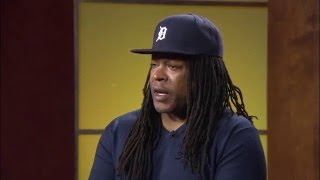
Extended TV interview (American Black Journal) with Shaka Senghor about his memoir "Writing My Wrongs" and his journey from scholarship student to incarcerated individual. Senghor describes discovering writing while in solitary confinement (hand‑writing journals), the circumstances that led to a fatal shooting and a 17–40 year sentence, and his work mentoring youth and supporting returning citizens in Detroit. The interview also highlights systemic reentry barriers (employment, housing), cites figures he gives ("upward of 40,000 collateral consequences," "70% failure rate"/recidivism), and notes the book's publicity (book released March 8; Oprah interview).
Questions this video answers
March 8.
17 to 40 years.
In solitary confinement, hand‑writing journals and drafts (transcribed later).
Upward of 40,000.
About 70% failure rate (recidivism).
Shaka Senghor, welcome back to American Black Journal.
Thank you for having me.
I was saying before the interview, you are a much bigger star now than you were when the first time you came onto the show.
Yes.
We were talking about returning citizens and what that's like for people here in the city of Detroit. And now you've written a book that sort of chronicles that. I really love the title of this book. It was released recently, Righting My Wrongs, Life, Death and Redemption in an American Prison. And it's writing W R I T I N G. Talk about where that title comes from and talk about the book.
Yeah. So the title of the book comes from my very personal experience of understanding the power of literature and what that did to help me transform my life. When I was incarcerated, I was a very avid reader. Read pretty much everything you can imagine. And once I began to write, I realized how therapeutic it was. And so literally, the title just came to me one day. Like, this is really what this is about. It's like going through the process of journaling, writing, and sharing and helping me kind of, you know, look at where I went astray and how I went astray.
Yeah. Talk about that process of writing in prison. What's that like, where do you do it? What do the other inmates think about the fact that you're writing all the time? Is that easy to do?
No, it's actually not. So when I first started writing, I was actually in solitary confinement, and I didn't have access to a typewriter or anything, so I hand wrote all of my books. And so in solitary confinement, they give you a really flimsy pen. So what I would do is I would wrap the pen in paper until it was, you know, thick, like a regular ink pen, and I would literally just write, you know, on anything I could get my hands on. Notepads, back of envelopes, scrap paper, because I would have to wait for, you know, whenever they brought commissary to actually get new notepads. But, you know, when you're a writer, your story doesn't wait for the commissary.
Put it where it can go. Right.
So it was a very tedious process. And then once I got out of solitary, I had to transcribe that all to another, right. To a word processor.
What was it about solitary that made you want to write? Is that what got you in the frame of mind to put your thoughts down?
Well, actually, it wasn't really solitary. It was asking myself tough questions about life. You know, I had to ask myself a Question of how did I go from scholarship honor roll student with dreams of being a doctor to serving all my most promising years in solitary confinement. And I knew in order for me to answer that question, I had to kind of go back and look at how I landed there. And so I started kind of journaling. And I discovered along the way that I had never accomplished anything of significance in my life. And I challenged myself to write my first book in 30 days or less. And so that was kind of like the pathway toward taking writing serious.
Yeah, let's talk about how you ended up in being incarcerated, as you said. Went from a scholarship student to that. Talk about that path. As a young man, when I was.
Around 13 or 14 years old, I ran away from home. I had a very difficult relationship with my mother at the time. And like, you know, most young, naive children, when I ran away, I had absolutely no idea how I was going to take care of myself. And like a lot of the vulnerable children we see in the city of Detroit and other cities like it, older, more seasoned street hustlers, they prey on that vulnerability. And so I ended up getting seduced into the crack cocaine trade at a very early age. Within the first six months of being in that culture, I experienced every imaginable horror that comes with it, you know, from childhood friend being murdered to being robbed at gunpoint and then beat nearly to death and left for dead in a crack house. I also became addicted to the drug at a very early age. And fortunately for me, I like making money more than I like being addicted to drugs. So I was able to break that addiction on my own. And which was, you know, in hindsight. When I began writing and journaling, I realized that that was one of the moments where I recognized that I did have the strength to turn my life around if I wanted to. But fast forward. A couple of years later, I got shot multiple times on the west side of Detroit and rushed to the hospital. They extracted the bullets in a pretty kind of gruesome way, patched me up, and I was right back to the same neighborhood. What I didn't realize is that I was suffering from post traumatic stress disorder, which we don't talk about when it comes to urban cities, but when you have children who grow up in extremely volatile environments, you carry that back, usually.
Witness.
Yeah. And so for me, I had no outlet. Nobody counseled me. Nobody told me that I would feel this sense of paranoia, this fear, this apprehension anytime a car rolled up, you know, and at 17 years old, that's just a lot of Emotional baggage to grapple with. And so, unfortunately, I reacted like most of the young men in the environment. I began to carry a gun every day. And I started making it up in my mind that if I got into a conflict, that I would shoot first, because in the hood, it's better to be the shooter than the person getting shot. And unfortunately, around 16 months later, I got into a similar conflict and fired what turned out to be four fatal shots that tragically caused a man's death. I was subsequently sentenced to 17 to 40 years in prison. And, you know, that's how I landed into that space.
Yeah. When you go back to that time and think about that day, that changes your life and somebody else's forever. What are the things that you would want to say now to yourself then about the choices you were making, about the circumstances you were in?
Yeah, I always think back to, you know, that time and not only just changed my life and destroyed one man's life and destroyed two families. And it's one of the things that I would go back and tell my younger self is understand that this decision is the type of decision that's not only gonna destroy your life, but it's gonna destroy multiple lives. And also, you know, one of the things that I, you know, when I'm mentoring and I'm working with young men and women, you know, I always remind them that a split second decision can cost you, you know, the rest of your life. You know, and it's a burden that I will carry for the rest of my life. Like, I can, you know, if I take something from somebody, I can repay them or, you know, purchase it over or apologize. But once you've taken a life, you can never repay that. You know, you can never replace that. And so it's an extremely harsh burden for any young person to bear because it's something that stays with you for the rest of your life, but it's also something that stays with the victim's family for the rest of their life. And so, you know, no human being should have to bear that type of responsibility. So I just try to caution young men and women to make smarter and wiser decisions. Yeah.
You mentioned the mentoring that you're doing here in the city of Detroit. What do you see among young people in the city about hope versus despair? What do you see in terms of how they feel about the city that they're growing up in? Is it the same as what you experienced? Is it better? Is it worse?
I think it's even harder now. You know, one of the Most startling things I experienced when I got out of prison is the prison I walked out of was in better condition than the first school I went to mentor at. And when you think about the pathways.
That children face, think about the priorities that get all screwed up that make that true.
Yeah. That we're investing more in prisons than we're actually investing in education. But you also think about the pathways that children take to school. And I had, you know, I have an opportunity to talk to children all the time. And what I do is I try to listen more than I talk. And we know what some of these neighborhoods in the city of Detroit look like. So you imagine a young, vulnerable child at, you know, six in the morning having to take this pathway to school. Like, you can't walk into a school building with a healthy sense of purpose after you walk through such a traumatic environment. Right. You know, and then just the level of police presence at school, you know, it's hostile environment for a lot of these kids. So, you know, it's hard to really function, you know, at your highest level when you have so much, you know, that you have to deal with just to get to school. And it's one of the reasons that I commend the students that show up, you know, because it's evident that they really want to be there and they really want to learn. And I think we just have to do a better job of wrapping our arms around them and caring enough to say, you know, we have to reprioritize our investments.
Yeah. Do you come across kids who you think, boy, that's me at that age, but for what I'm doing, that person might end up in the same circumstances.
I come across them all the time, and it's what drives my work. Like the mentoring work I do and the outreach work I do. That's not my job. That's my passion. This is what I do because I genuinely care, because I care about the little boy that I was, and I wish I had that type of intervention. So I just try to do whatever I can when I'm home to really work with young men and women in schools. I also go to the juvenile every year. I adopt a pot at the local juvenile. And I spend time, like quality time, you know, I spend time sharing literature and talking about writing and reading, because when I went through that system, we didn't have that. So I just think it's important for our community to understand that men and women returning from prison are assets that we can use to help ensure that the next generation doesn't end up in prison. We just need to do a better job of supporting those guys, men and women coming out who want to do this type of work because they really care. Because when you screw it all up, you realize you don't want nobody else to go through.
Yeah, yeah. Let's talk about returning citizens and what you're seeing in terms of how they are managing the city. Lots of people in our city, of course, are in that situation. There's not a lot of support. There's not a lot of help.
Well, it's one of the reasons that I felt compelled to right righting my wrongs. I wanted people to really understand the collateral consequences of having a felony. And there's upward of 40,000 collateral consequences according to a few government officials. But the ones that stick out to me the most were the ones that I was greatly impacted by. The difficulty in finding employment. You know, you can't expect a person to turn their lives around if nobody's willing to give them a chance. But also housing, you know, you can be legally discriminated against. If you have a felony, there's nothing you can do about it. And so oftentimes, you know, men and women who really want to get a fresh start, they can't because they can't go rent an apartment outside of the neighborhoods where they've come from. And the thing that's really unfortunate about a city like Detroit, which in Michigan the majority of the prison population comes from, is we just don't have as many resources outside of, like, Goodwill Industries, you know, and a few smaller church groups who are trying to do their part. But on a larger scale, we just don't have many organizations that helps re socialize men and women back to society. And that's scary to me, you know, because, you know, I'm fortunate in the sense that, for one, I was literate when I went to prison and I had developed a skill set that allowed me to kind of navigate life on the outside. And it's been very difficult for me. So imagine what it's like for somebody who's only coming out with a third or fourth grade education and no type of support or skill set, because prisons are just big warehouses right now. And so we're doing a horrible job at, you know, reintroducing men and women to society without, you know, it's almost as if the.
I mean, the way it's structured, it's almost as if the expectation is the people who are incarcerated won't go back out into society. There's no sense of well, let's get them ready for a different life.
Yeah. I mean, you know, prison is the only functioning big business that I know of that has a 70% failure rate. You have 70% of men and women who recidivate will come back. Yeah. And so instead of, you know, really addressing that at the high level and saying that you're completely failing not only the system, but you're failing society, you're. Because you're not preparing men and women to actually come back as assets instead of liabilities. And so, you know, my role with writing the book is to, like, raise awareness about why this is really happening and what we can do about it. And the thing is, so, you know, when you hear politicians talk about it, they say, oh, well, you know, we'll try to get, you know, non violent offenders out. But the reality is 90% of the men and women who are incarcerated will come out irregardless to whether they're vital or nonvioting offenders. And we have to decide what kind of men and women we want to return. Do we want healthy human beings who are ready to contribute to society, or do we want men and women who come out with a sense of hopelessness that feel like they have no other alternative but to go back to the streets?
Yeah. So the book came out March 8. You have been on the Oprah, you had an interview with Oprah Winfrey. Did you ever imagine starting to write this book in solitary confinement, that this, this would be the place you would end up?
Well, with Oprah, yes. With some of the other things that happen, no. And I say that because I'm a firm believer in the laws of attraction. I'm a firm believer in intentional thinking, and that if you have a dream, you have to commit to really, you know, talking that into existence. And so when I began to write, I was always inspired by, you know, Oprah's love for literature. And I have such a profound respect for her, you know, appreciation for the written word.
The book club that.
Yeah, the book club. And just, you know, introducing the world to amazing writers. And a lot of those writers I ended up reading. And so I believe that if you want to be great, you know, the ultimate test is to, you know, share your work with people who appreciate greatness. And so from the very beginning, I had the dream of being interviewed by her about my writing. And so when it happened, it was just an incredible experience and one I'll never forget.
Yeah. All right. Great inspirational story. Jonathan Gore, thank you very much for being here on American Black Journal.
Thank you so much for having me. Appreciate it.
More from Shaka
Joe Rogan podcast Shaka Senghor #shakasenggor #podcast #joerogan #interview #jre #jreclips
Surviving a Shooting at 17 Joe Rogan X Shaka Senghor | Joe Rogan Podcast | #shorts