Shaka Senghor: Solitary Confinement, Finding Your Voice, And Manifesting Success
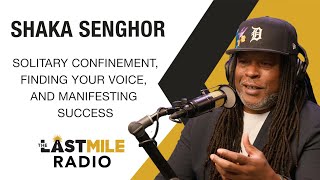
Interview (2024) on Last Mile Radio with Shaka Senghor, Raining Game, and Chris. Shaka recounts growing up in Detroit, early trauma and entry into the crack trade, being shot at 17, and a conviction that led to a 17–40 year sentence. He describes transformative reading and mentoring in prison, four-plus years (1999–2004) in solitary confinement where he began journaling and writing, and using manifestation/visioning to map goals (Oprah, NYT bestseller, film/TV, etc.). Released June 22, 2010 after serving 19 years total (seven in solitary), he hustled self-published books, later became a bestselling author, producer, Grammy-nominated collaborator, criminal-justice advocate, and corporate executive (VP of corporate communications at Navan). He emphasizes personal accountability, the power of literature, and ending long-term solitary confinement.
Foreign.
Yes, yes, yes. And we are back. We are back. Welcome to the Last Mile Radio right here on Sirius. XM is going down. It's going down. And I'm excited to announce our next guest. Chris is going down. Who we got in the building, man?
We got Shaka Senghor and he is a legend.
Absolutely phenomenal.
Oh, y' all are far too kind. But say more, say more.
Poet, author, you feel me? The cosign from Oprah. Come on, man. Come on, man. He in the house. Like teeth in your mouth. It's getting real. Gotta cite my source on that, too. Got that from my boy Mezro. Shout out Mezro. But yeah, man, it's going down. How you feeling, man? Welcome to the Last Mile.
I'm great. I'm super excited to be here. You know, this is special. This is a special one. And I'm proud of everything that y' all are doing with this work and telling our stories in a meaningful way. So this is going to be one of the highlights of my day.
That's what's up. That's what's up. Definitely one of mine as well.
Well, we so appreciate it. You and I have have a bit of a history and we've known each other for a while and there's so many parts of your story that are so incredible. Your background, what your transformation has been and it's been well chronicled. But we got to go back and tell a little bit of that story. You might get tired of telling the story. I'm not sure, but it's so amaz amazing. And part of the reason that we it's important to tell that story because those that are listening, our family have incarcerated. People are incarcerated. And your story definitely gives people hope because you came from a point of no hope.
Yeah.
So can you take us back a little bit in the origin story for yourself?
Yeah, that, you know, that's a great question and I agree with you. I do at times get tired of telling the story. But I think it's, you know, one of the things that I recognize it's an important part of my journey is the ability to articulate what that experience was, not just for myself, but for so many others who are currently in those experiences. You know, I grew up in the city of Detroit, hence my ever present Detroit Tigers hat detail in the building. Yeah, I always got to represent for where I come from, but I grew up in a household that on our side looking in really was like the model for working class, middle class America. My mom was primarily A homemaker. My dad was a. Worked for the state in mental health. He was also a reservist in the Air Force. And, you know, so when you look at that model, you think, oh, man, this is the great environment to ensure a safe passage through life. And unfortunately, there were some very complex issues in my household, including physical abuse, but also my parents separating back and forth and eventually divorcing. And when I ran away, I was about 14 years old. Growing up, I was an honor roll scholarship student with dreams of being a doctor. And unfortunately, like many kids who leave their households for a variety of reasons, I found myself, instead of being welcomed into a loving and nurturing environment, I got seduced into the crack cocaine trade. And this was when crack cocaine first hit the Midwest. Like, 86, 85, 86 somewhere in there. And within the first six months, I experienced every traumatic part of that culture. You know, my childhood friend was murdered. I was robbed at gunpoint. I was beaten nearly to death. And one of the things that, you know, I never forget is the time when I was beat is laying on the cold bathroom floor in the pool of my own blood and asking this question, you know, what kind of world do we live in where this happens to children? And sadly and unfortunately, I've never received an answer that made any sense to me, you know, and despite those early, you know, adverse experiences, I continued on in that culture. And about three years in, and I was 17 years old, I got shot multiple times standing on the corner of a street on the west side of Detroit at the time. And that moment, what I didn't understand that I know now really inflicted, you know, psychological and emotional dam. It's what, you know, people call it PTSD now. But I was processed through the hospital, bullets extracted, patched back up, and literally sent right back to the neighborhood where I got shot at with no support. There was no psychologist, no psychiatrist, no emotional support from anybody in that environment. And, you know, I was left with the reality of a kid trying to navigate this traumatic, traumatic event. And what I left with from the hospital with was this volatile recipe, a recipe that's very familiar to, you know, urban centers when we're talking about gun violence and what's happening in our communities. You know, there's this recipe of, like, paranoia, anger, frustration, and a narrative, you know, and that narrative said that if I found myself in conflict, I would shoot first. And 16 months later, I got into a conflict about 2 o' clock in the morning, and I shot and tragically killed a man named David. I was subsequently Arrested, charged with open murder, and sentenced to 17 to 40 years in prison. And in Michigan, you know, the way our sentences are structured is your minimum. Like, this is the minimum amount of time you serve, but your max is the only time that you are guaranteed to serve if you don't, you know, get through that environment unscathed. And so I went into prison angry, bitter, frustrated. And I was fortunate that early on, I encountered what I call one of my three miracles. And this was, you know, these incredible mentors. And they weren't your typical mentors who come from the outside world with message of redemption and the hope. These were actually men who were serving life sentences. And these men saw something redeemable in me even when I didn't see it in myself. And we bumped heads a lot. You know, I was the young guy, I think I was the youngest guy at maximum security at that point. And, you know, I remember turning 20 years old in maximum security around all these adults, and, you know, they would just come to me and be like, youngster, you know, if you don't do this, you're going to end up serving life. And in my mind, I was already serving life because, like, you know, at 19, you can't even imagine, like, two weeks down the line, let alone, like, you know, two decades. But, you know, they were. They. They were persistent, and it took them a while, but these guys were so crafty and so strategic in their thinking that, you know, they figured out a way in. And the way in for me was reading. You know, they introduced me to writers like Donald Goins and Iceberg Slim and the stories that they was writing like Pimp and Dolphin. And, you know, these books were telling the story of environment I was, you know, familiar with. And so once I started reading those books, what I didn't realize was that those books would run out relatively quickly because back then, you just didn't have a ton of authors who were writing about the urban experience. You had, you know, some of the great philosophical bodies of work by black authors, you know, the Baldwins and things of that nature. But I wasn't primed for that yet. And once those books ran out, I was like, man, all right, what am I going to read now? And so I found myself reading basically everything. You know, Sidney Sheldon, Stephen King, Jackie Collins, Westerns, you know, you name it, I was reading it. And eventually that reading led me to Malcolm X's autobiography, which I believe is one of the greatest, you know, testimonials of human transformation. And so at that point, Malcolm became kind of Like a guiding light, you know, and not so much in terms of like his, you know, religious or spiritual philosophy, but more so in terms of his personal accountability and transformation. And I'll never forget when I read that he actually had read the dictionary from A to Z, I was like, wow, this is like crazy. And so I started off on that journey. So I do have an assortment of words that are like, weird and not typically used within conversations. But that discipline and that approach to turning his life around was something that resonated with me. And so I began this journey of transformation in that environment.
That's big. That's big. It's so much that I could relate to. Man being incarcerated at an early age. The urban books actually was one of my ends as well to overall reading. And ironically, the Autobiography of Malcolm X was a huge turning point for me too when I was in CYA Bruh. And that was one of the things that ultimately made me divulge in like deeper content type reading, you know what I mean? Right after the Autobiography of Malcolm X, I read Roots and started getting into like more like self help books and all these type of things. So I could definitely relate to that. Bro, that's deep, man. That's big. Real talk. It's a trip.
And also, you know, we talk a lot about OGs and you experience that same issue. The first positive role model you experienced was an old Folsom, a level three prison, which isn't this place you'd expect to definitely not to get a positive role model, right?
Definitely not. Definitely not. But it's a trip to see, you know, ultimately that influence through reading out of all things, you know what I mean? I think that's something that's unexpected in our experience for people that's unaware with these type of experiences, you know what I mean? Like a lot of people just feel like when you go to prison, you just getting deeper in criminality. Are you sitting on a bunk twirling your thumbs? Like a lot of people don't understand how the origin of growth really begins, you know, when that gets sparked from being enriched with new things, you know what I mean? And taking that chance on ourself from getting out of our comfort zone to be willing to try something different and try something new. And then we realize we find things that we like that we never would have thought we would have, you know what I mean? And it just continues the journey.
Yeah, you know, I think it's really important to underscore the impact of literature in that environment. And I also think it's important to underscore why so many of us discover it when we're in that environment. When I was growing up in school, like, they just didn't have books that spoke to a reality that I was familiar with. You know, I didn't get introduced to Malcolm until I was actually in prison, which was crazy. You know, when you really think about, you know, this man who's, you know, so much a part of his journey Parallels what's happening in the world today, you know, and when you talk about, like, literature is. One of the things that inspired me to become a writer is. Is I realized that if you can. If you can give kids books or young people books that are reflective of the world that they come from and they can see themselves in those books, It'll inspire them to, like, start reading more, you know, I became extremely curious after I read Malcolm 1. I was super impressed by his intelligence, and I was impressed by his curiosity. And so Malcolm was reading everything. So I found myself reading everything. Philosophy, world history, culture, you know, you, name was reading it. But I never would have got there if it wouldn't have been for Donald and Donald goins and iceberg slim, who was really writing about a world that I was familiar with.
Definitely. The transformation is real, man. The transformation is real. One thing I want to know, man, like, how do you emerge in a society that's so unforgiving? Like, what are you doing now to help with that?
Yeah, that's a great question. You know, when I was preparing to get released from prison, I was super naive. You know, I thought I had served my time, I would come home, and that there would be opportunities for me to redeem myself. I thought it would be easy to find employment Given that, you know, it seems to be like, a labor pool shortage in the world. I thought it would be easy to navigate a lot of the things that just come with stabilizing your life after incarceration. And when I got out, I found the complete opposite to be true. There were so many barriers to reentry. And, you know, that that was. That was one of the most difficult reckonings I had to face was like, wait a minute. This world does not give a damn about people coming out of prison. You know, like, they just don't care. Right? And, you know, where I was fortunate at was one to be literate, One, you know, to be determined. You know, like, there's a determination that has to happen. And I'll say this to the families who have loved ones incarcerated. The work has to start in prison. Like, you can't wait till you get out and try to turn it around, you know, So I had done a lot of the tough work. You know, from 1999 to 2004, I was in solitary confinement. And when I was in that environment, I began to journal.
One more time. You said from 99 to 2004?
Yeah. So about four and a half years straight, I was in solitary confinement. And. And in that environment, I began to journal. And that was inspired actually by Socrates and the apology. Socrates said, the unexamined life isn't worth living. And so I started with an essential question. And that question was, how did I go from an honor roll scholarship kid with dreams of being a doctor to being in prison for second degree murder? And what I did is I began to journal. I began to go back and I began to unpack the early traumas that I had experienced in my life. And. And then what I found was there was a theme of so many traumatic events in such a short window of time that it was impossible for the outcome to be me becoming a doctor. And once I began to kind of unravel those themes, I was like, wow, I had adopted a narrative based on the traumatic events in my life. If somebody can beat me and leave me for dead, I didn't feel like my life had any value. If I can get shot up and then process through the hospital like, you know, a car in an auto factory like that lack of emotional connectivity to what my true needs were meant I was of no value to anybody. And so I began to journal and assign value to the things that, you know, I found meaning in, you know, so I began to assign value to my ability to read. And then I began to challenge myself, you know, and one of the first challenges was, if you are intentional about turning your life around, then you have to prove it to yourself. Like many young people who go through these carceral systems, which typically start at an early age, you know, I would tell myself that story, if I get out of this one, I'm never getting back into trouble again. But that really wasn't for me. That was for my parents. That was for my community. And so I knew that whatever I had to do, I had to do it for me. And I had to do it in a way that challenged me. And so my first challenge was to write a book in 30 days or less. And I mean, you know, more than more than most, that in solitary, there's no laptop, there's no, you know, you know, word processor. It's literally old school pen and pad, but setting very clear parameters that I'm going to finish this in 30 days was the challenge to myself that if you're serious about turning it around, you have to make a commitment to something that you're going to honor. And if not, then you're not ready to turn it around and you'll end up serving out this whole entirety of this 40 years, you know, prison system if you don't die first.
That's deep. That's deep. And you listen to Chaka Senguar in the house with us on the Last mile radio on SiriusXM is going down.
So you, you read all these books and you put this idea that you're going to write a book in 30 days. What was the motivation there? And was, did you consider that like a one off or did you consider this something that could become maybe an avocation, turning an avocation into a vocation?
Yeah, early on, you know, it was just a proof point that I can finish something. So when I was journaling, what I realized was that I had started a lot of things, but I had never completed any. You know, I started college when I was in prison and they took college out, so I didn't complete my degree. You know, I had started to go to the military prior to going to incarceration, but I never followed up. You know, I was, you know, kicked out of high school. And so for me it was about completion. Can I actually finish a thing that I start? But once I began to go on the journey, I fell so madly in love with the written word as a art form and the ability to impress myself and say, wow, you can articulate stories and describe with great detail and description in a way that's comprehensive. Like, that was mind blowing to me. Even now when I go back and read some of my earlier works, I'm like, God damn, you can write.
And by the way, I've been to your house and I've seen all of those manuals that you have. Literally paper and stacks. Yeah, that's just an archive. That's really incredible.
Yeah, I mean, I have books that are unpublished that I wrote 20 some years ago. And I'm actually in the process of reimagining some of those books now. I'm a much more advanced writer. I really understand the editorial process a lot more profoundly. But for me it was love. It was like Lily, love at first sight. And so I wrote that first book.
Did you write that in prison?
I did. So the first one I wrote handwritten or typed it? No, handwritten. So the first one. Those are the manuscripts that Chris got a chance to see in my home. I still have those.
And remember, you were the little golf pencils, right?
Yeah. You had a little flimsy ink pen. Like, it's almost like, wait, this one.
You in a hole.
This is solitary. Yeah. Wow. Yeah. So I wrote the first one, and then I had this moment where I was, like, first I was, like, super excited and, you know, jumping in the air, like, damn, I finished a book. And I was like, well, a book isn't a book until you send it to somebody. And, you know, I put it on a fish line and I sent it to a guy in the cell across from me. And I remember the heart stopping feeling I had once that book slid under my door. It was my only copy, right. And if anybody who's a writer, it's like, you know, what you write originally, you'll never go back and reproduce in that manner. Right. And so I was nervous, you know, like, is this guy going to get my book back? We're in solitary. There's nothing I can do if he doesn't until we get to the big yard. But he came back to the door and he was like, man, this is one of the greatest books I've ever read. And initially, I got, like, so excited, you know, and then I thought about it. I was like, well, he's in solitary confinement. It's not like he has tons of options to entertain himself. Of course, it's fascinating. But it challenged me to write a second book because I believe that all of us are capable of doing something great once or something good once. But I think the mark of greatness is the ability to do something good over and over again. If you think about, you know, some of the greatest, you know, athletes in the world, like, I'm a big sports fan, you know, you think about what makes, you know. Jordan. Jordan, right. I'm from Detroit, but, you know, I don't really like Jordan in that way. Love his sneakers, though. But what I've always appreciated is the ability to execute good over and over, which is what makes him great. And so I wrote a second book, you know, and I was like, man, I'm really onto something. I started a third one, and then I fell into the deepest bottle depression that I've experienced probably up to this point in my life. And that depression was sparked by the realization that I had this gift and I had no way of giving birth to it. You know, I'm sitting in solitary, I'm like, I got these manuscripts. What Do I do with it?
Right.
You know, and so when I fell into that bottle of depression, I went back to reading the books that I actually had. So I would just pick up random books and read through pages for encouragement, you know, and one of those books, as a man think of, talked about thinking into existence, the reality that you want. And so I was like, okay, all this, you know, this kind of, like, philosophical foo foo, like, what's really here? Right. And so I just challenged myself, like, to think about what do I want my life to be? What does it have to look like, and what are the steps I need to take? And I realized that, you know, in order to give birth to this dream, I need access to a typewriter. And I needed the ability to type these manuscripts up so I can send them out to the world. And so that meant I needed to get out of solitary confinement. So there was a thing of, you know, questions. I asked the universe to bestow upon me the opportunity to get out of prison. You know, out of solitary and out of prison.
What does that look like, asking the universe questions?
Yeah. So for me, it was like, you know, we're gonna have this agreement, right? I want to manifest into my life the things I believe.
Is this, like, verbally spoken? Absolutely. Or is it like this in your mind and your heart?
Absolutely.
So it was verbally spoken, but also written down. Oh. And how I drew this conclusion was when I was doing the journaling, I went back and I realized that I thought myself into prison. And it's something that. Especially in the work of reform, we don't talk about the personal accountability. And it's not to say that there's not structural and systemic racism, like all the things that lead us down this path or the abuse and ptsd, but there is a part of it that we don't talk enough about, which is personal agency. And that journaling, basically, I was able to see so clear how I had programmed myself. Now, there were traumas, traumatic events that led to that programming, but nonetheless, it was a programming. And so I'm like, oh, I thought myself into this environment. You know, I can't even tell you how many times where I said that I'm gonna shoot first. If I get into a conflict, there's an outcome of that. Right. I can't tell you how many times that I had heard growing up that I would be dead in the jail. And I believe that, you know, that was the cautionary message that I received. But it also was a affirming message that this is the only Outcome that my life can.
Have you signed that contract?
Absolutely. And so once I began to reverse engineer that, I began to question universe and say, okay, well, if this is absolutely true in a negative, then it has to be absolutely true and a positive, right? And so the first thing I did was to start the journey. I wrote the war in the letter. And, you know, I wrote the war in a letter to ask to be released from solitary. But I posed it as a philosophical dilemma. And, you know, I was reading Socrates and Marcus Aurelius and like all these philosophers. And so I started with the essential thing of do you believe that, you know, I'm a man of my word? And I explained to him that when I came into prison, I had no plans on following the rules. In fact, I was going to be disruptive. Up to that point, I'd accumulate about 36 misconducts that range from dangerous contraband to assault on inmate, to assault an officer. And if you believe me to be a man of word, you know that I've been truthful the whole time because I've always rebelled against the rules. And if you believe that the truth is essential to this, then everything I would ask you to do is to believe everything I'm about to tell you that if you give me an opportunity to get out of solitary, I'm going to type these books up, I'm going to send these books out to publishers, and I'm eventually going to become a great writer. And it was the first and probably the only time I've ever got a letter back, a response from the war. And you know how that goes in prison. You can send a grievance, you can send a kite and say, hey, we need this toilet fixer. We need this thing. You never hear back, right? And he just basically said, you know, despite my gut instincts, I'm going to advocate for this opportunity for you. And he did. You know, and it still took about two years because they had to go through a series of different, you know, approvers. But just him writing back to me told me that the universe was aligned to what I believed I was capable of. And so when I got out of solitary, I took those handwritten manuscripts and I typed all of them up. You know, at that time it was like four of them. And I began to, like, get them printed out, and I would just send them to public. I didn't know, you know, you needed an agent or any stuff. I would just blindly send them out. I even sent one to Jay Z when he was the president of Def Jam. And I Still have the letter. I kept a copy of the letter, and I sent Jay Z this letter, and I said, you know, y' all should start, like, Rock Rockefeller literature, you know, and let me be the voice of the street coach, because this is where I come from, you know? And I never heard back from him. But here's the thing that I believe about Manifestation. I've actually met Jay on two different occasions. And so all of those things I believe that I started to write about and to think about began to manifest. But then it was like, okay, now I'm out. Now I've written these books. What's next? And so I just wrote down everything that I wanted to happen with my work. You know, where did it need to be? You know, I've created this body to work. What do I want to happen with it? You know? And so I wrote this list of things down. That one. I wanted Oprah Winfrey to read one of my books. I wanted to be a New York Times bestselling author. I wanted to turn my books into film and TV and to do all these things. And I want to write across every platform that a writer could write on magazines.
You wrote this down while you're still in prison?
Absolutely. That's deep. Yeah. And then I began to, like, write down in detail, like, what kind of car I want, what kind of house I want, what kind of partner I want. Like, all these things became Manifestation tools, you know? And it was so mind blown to people when I got out of prison, the way that I executed the things that I've executed. And people would always ask me, like, are you surprised this happened? And I'm like, actually, no. Like, because there was an agreement with me in the universe. The same way when it was in a negative. Like, I wasn't surprised I got arrested. I wasn't surprised I ended up in prison. Like, that was a narrative I created. So why would I be surprised that I become successful if I've created that narrative as well?
Come on, man. It's raining gaming here, man. We chopping it up with Shotgun Sing Gore on the last mile Radio is raining game. That's real, though. That's real for sure. Manifestation is everybody think. You just think it into existence, but you gotta work, you know what I mean? It's a lot of thought, but like you said, you write it down. That's part of the works and absolutely the footsteps, you know, the actions to get there, you know what I mean? Ain't just you thinking, and it just magically pop up. It ain't Magic. It's definitely a method to the madness. That's game, though.
Yes. Turning the vision board into an action board. You know, like, anybody can cut a bunch of things out of the magazine and say, you know, here's the life I want to manifest. But then you got to take the action steps. And I think this is, again, why, you know, what I've always loved about the last mile from the first time we've encountered. I remember even just coming up to open up the lab is there were action steps. You want to be a coder, okay, you got to do the work. You want to build a website, you want to build a business, you got to do the work. And sadly, we just live in a culture where not even people who are system impacted or incarcerated. I just think out here, everybody wants the big dream success. They want the cars, they want the things, but they don't want to go from, you know, they don't want to get into that action board. They don't want to go from a vision board to an action board.
Right.
Because that's the tough work. That's when it gets real. That's when you become grossly insecure. You know, can I actually do this thing? You know, can I accomplish all these big ideas that I have in my head? Can I turn them into a real thing? And what I, you know, I try to do in my life is like, help people. People see that is really possible, you know, but you got to believe it. Like, you got to believe it. Like, you believe in your next breath.
Absolutely.
Yeah. And that's a good point, because you had this vision board, you had these manifestations that you believed in.
Absolutely.
But it took a journey to get there.
Oh, no doubt.
You did become bestselling author. You did get on Oprah. Oprah interviewed you, which is frigging amazing. Right?
Huge, bro. That's huge.
But again, like, you were in.
You were.
But really, when you had that manifestation, you didn't have a date, right?
Yeah, no. So I was actually told that I was never getting out of prison because what I was in solitary confinement for was assault on an officer. And for anybody who's been in prison, it's literally one of the worst things you can do in prison. You can actually kill another person serving time and do less time in solitary than I actually did and not get charged with a new crime. So I got charged with a new crime, received in addition to of two years. And, you know, when I went up to the parole the first time, I got denied, which I kind of expected you know, it's kind of like this. This unwritten rule that we kind of have in our minds if you. If you serve a long time. When I went back the second time, I felt there was a glimmer of hope because the parole age lady who interviewed me, like, me and her had a whole cool banter going, you know, she was flirtatious. I was flirtatious. I'm like, okay, she voted. How about this joint? You know, Whatever it takes. Yeah, whatever it takes, you know? And she did vote for me. And then the person who didn't interview me voted against me. So I went to a third party who hadn't interviewed me as well, and he sided with the guy who didn't interview me. And so at that point, I was like, man, they're probably never gonna let me out of here, you know? And I soaked and went through all the things, you know. And I remember going back to the cell block after that, and I had got one of my. The galleys for one of my first books, which I self published from prison. And I just remember, like, seeing these guys on the yard with my book, you know, and they was passing it around and sharing it, and I was like, you gotta get outta here, you know, you gotta get outta here and you gotta stay in the fight, you know? And so, you know, at the time I went back to, you know, I went on a visit, I think the day after I found out. And at the time, I was dating my son's mom. And, you know, I just remember telling her, like, I don't wanna send my family through this. You know, at this point, I had 18 years and I know how to serve time. I just don't want to send her. I try to break up with her on a visit and just kind of tell my parents, like, look, don't worry about me. I'll survive in here. Y' all just live your life, you know? And she listened. Patient. Yeah. You know, I'm in the middle of the visiting room, like, bawling in tears, you know? Cause I'm, like, hurting watching them hurt, right? You know, like, watching her. I remember sitting in that visiting room and I'm watching her being processed in. And I'm like, at the time, you know, she's an incredible doctor. You know, she has, you know, a full life ahead of her. And I'm like, I don't want to hold you hostage to these people. Not going to let me out, you know? And, you know, even my dad had came up on that parole interview, was actually on his birthday. You know, so we're like, man, you know, he sought exchange with me and the lady. And so I was just like, you know, I don't want them to go through this, you know. But she was like, no, you gotta stick with it, you know. And so I went back, and third time was the charm, you know. And so I got out of prison June 22, 2010, one day after my birthday. So my last full day in prison was on my 38th birthday, you know, And I get out and we go to, you know, got to go report to the parole office. And I had told her I was like, bring some books with you. You know, bring my books to you. I want to start, you know, it might be somebody here who's going to buy a book, you know? And literally the first book I sold was to this guy named Prince Montgomery. We had met during my last 60 days in prison. I was telling him what I was coming home to do. And, you know, you don't come home with a lot of money. I mean, this guy probably had $50 to his name. And he was like, man, I want to buy one of your books. I want to support you. And so he gave me a 20 bill. I didn't have any money to give him change. His books were like 15. He was like, man, keep the change, you know. And so that was the beginning of my journey, man. And from there, it was like full on hustle. Like, I was selling books out the trunk.
Go mode. That's what we call it. We call it go mode.
Go mode. Yeah.
Me and Chris talk about go mode all the time.
Yeah, I mean, man, I was hustling the books out of the trunk. I mean, you name the place I was there, you know, places. I wasn't even supposed to be on parole, but I was like, yo, I gotta get these books. I'm selling books in the park. I'm selling books at neighborhood bars. You know, I'm going to the gentleman's club and, you know, I didn't have any money to make it rain, but I'm like, I got these books you swap out.
But that's dope, though, for several reasons, right? Cause reading, unfortunately, in our community isn't that popular. You know what I mean? Like, you get roasted for being. I know I did like being a geek and stuff like that. That was some of the things that kind of deterred me from deeper reading and stuff like that as a kid. So, like, to bring that and for it to be received in that type of way. Cause, you know, especially in the Hood people ain't gonna just spend their money on anything, bro.
Absolutely.
You feel what I'm saying? So it's like that is such a display, man, of the power of your journey, you know what I mean? But ultimately of the belief that the people had in you. Cause that's quite literally shifting the culture, you know.
I'm also a good salesperson. There's that part of it. I mean, I remember hitting this park in Detroit on the west side called Rouge park, and it's like one of them parks that be popping.
Yeah.
And I hadn't been out long, so I'm already hesitant to be here. Like, I'm like, I don't know if I should be in this environment. It pops off. But I was trying to hustle books, and people was like, what are you talking about? Like, I didn't buy no books. And I remember this group of brothers who was just standing there was like three black men standing there, and they, you know, they got the. They got the hood mask on, you know, they looking hardcore. And I remember walking past and the brother was like, man, what you got there? You know, like, what's up? And I was like, man, I got these books, you know? And the guy, and I told him the quick story, like, yo, I just got out, been home a few days, blah, blah, blah. And he was like, man, I'm gonna support you. I'm gonna buy, you know, I'm gonna just buy the books. He's like, I'm probably ain't gonna read them, but I'll buy em, you know. I was like, look, I don't care what you do. You hold your furniture up, give them to your girl, whatever.
Where am I cop these joints, you know?
And he actually bought them. And that brother read those books and he began to spread the word. And, you know, it's the coolest thing. It's like every year photos pop up on Facebook, you know, from 12, 13 years ago. And these guys who bought my work, you know, and they still rocking with me. And, you know, I still stay connected to, like, everybody who supported the early part of that journey because it was so integral to my success.
Definitely. Definitely, man. First and foremost, I gotta thank you, bruh. I gotta give you your flowers. I'm real big on that. I'm pretty sure you already know. But a lot of times, man, people get they flowers when they dead and gone, and they get it on they grave. That's when everybody want to give you credit and all that at the funeral. So I'm going to give your Flowers while you can smell it, bruh. Real talk. I got to commend you, bruh, for your journey, for your work, the impact that you've had on the community, on the culture, you know what I mean? Like Quite literally contributed to shifting the culture for real. So that's big, bro. So I got to give your flowers on that, man. Real talk and presence is priceless. For real.
So I want to, you know, with the time we have left, I want to really talk about what you're doing today because you've gone from, you know, being a successful author to being a criminal justice advocate. Now you're in the business community now you have impact on that. Can you talk a little bit about what you're doing today?
Yeah, that's a great question. I mean, I'm in my third role at a company called Navon and you know, I've been with this company now for about three years. I started as head of dei, helped build that department out. Then I joined the sales and success culture team, which was like super fun for me because it's like I get a chance to combine all the wisdom from growing up hustling in the streets to this incredible sales team. And basically we make travel and expense easy. Right? So everything related to your travel, our platform performs in the most optimized way for people to get around the world, especially business travel. But you could also do personal travel. And now I'm the VP of corporate communications, so I get a chance to work across the org to help tell our story to the world, you know, and it's fascinating work. You know, it's one of them things where, you know, growing up in the streets, you really, you know, you understand a hustle to survive which is very different from hustling to thrive. Right. And you know, there's this romanticized idea that, you know, people in tech are just a bunch of, you know, spoon fed babies who were fortunate to have a trust fund. And that couldn't be further from the truth. In my experience, you know, the team that I'm fortunate to work with are some of the most, you know, innovative thinking, outside the box entrepreneurs and hustlers. I mean, the hustle in silicon is unlike anything that I would have ever imagined. You know, so it's non stop, go, go, go. And I just feel fortunate, man, to have been, you know, a part of this amazing company. You know, we're coming up on our eighth year. We're still, you know, we' late stage startup at this point, you know, but to see it grow as a rocket ship company. And then to see it bottom out in 2020 with the pandemic to where we went to zero revenue and to watch and work with, you know, colleagues who, I mean, built it back up to the point where now, you know, our valuation is 9 billion. You know, this is a testament to grit. That's a testament to determination and all those principles, you know, that I live by, you know, manifestation, visualization, you know, writing it down. I see all of that in my day to day work now. So that's what I'm up to. I'm also an investor as well and I'm still producing content. I produced 60 days in last season. I produced a film called God Said Give Him Drama Scenes, which we premiered at Tribeca last year. You know, a couple of bestselling books under my belt. I was on an album with Nas, a Grammy nominated album, so I forgot to mention that. Yeah, I'm like a Grammy nominated artist, so that's dope, you know, and so, I mean, the accolades are just crazy at this point. Blessed, but I take it all in, man. I'm always in the spirit of gratitude. Like, you know, when I was able to do the song with Nas, like, you talking about a dream come true, you know, and quickly I heard Illmatic. I was on about my third year in prison. I immediately went and got a tattoo of Illmatic on my arm. And it's the worst tattoo in the world, but it's meaningful. Yeah, absolutely. And actually like, the. Because it's the worst tattoo is how I actually met Nas. Cause I told a friend of mine about the experience and he introduced us. And you know, Nas is just such a real genuine person. And so when he reached out, he asked me to be a part of a song. And, you know, this is in the middle of the pandemic. I'm sitting in my office at home by myself and I get this text from Nas. He's like, yo, would you do something on the song? And I was like, what? Like, in my mind, I'm just like, what are you talking about? Absolutely right. And then I asked him, like, when did he need. It was like. And I. And he was like, I'm actually in the studio right now. And so I was like, shit. You know, and so I went and I just did a straight voice recording of it, you know, and just like send it back to him in about 45 minutes. And then I literally didn't hear back from him till like, you know, a couple of days before the album dropped and I was sharing my book cover at the time because it was the same color as the album cover. And it's like, yo, how crazy is this? You know? And he was like, oh, yeah, just wait till you hear our song. And I was like, what? Like, I made the cut because I didn't know if I made it it, you know, which I, you know, honestly, when I. When I think back, like, you know, having made it is the. It's literally the best fit in the world. But even if I hadn't, just the thought that Nas would ask me to be on an album, to me was one of the most validating things outside of Oprah saying my memoir was one of her favorite of all times. Like, those two things from two of the, you know, one of the greatest readers and then one of the greatest writers of all time is like, man, the best feeling ever. You know, so tons of success, you know, post incarceration. And I'm still on my journey, you know, I'm still building things and figuring things out and learning. And so I'll just say this. I think that my success has been a matter of talent, meaning curiosity, meeting humility, and the willingness to challenge myself on the things that I don't know.
Right.
And I'm like, if you combine those four things, like, there's nothing you can't accomplish in life.
That's so powerful, man. And that's. That's a message that people really need to hear. So one last question before we wrap. We like to ask people who, especially who have been just as involved and really understand the system, if there's one thing, there's many things that need to change, but one thing in your mind, from your experience that you could change in criminal justice, what would that be?
Oh, man, that's such a powerful question. It's not one thing. But I would say for me, you know, even as I think about my work now, the thing that's always been really important to me is ending the long term abuse of solitary confinement. Yeah, I know that I am anomaly in a sense of, like, I survived something that was intended to break me, intended to break my soul. Like, like solitary confinement is the most egregious and most barbaric and inhumane thing you can do to another human being. And so for me to know that there are people who have been in solitary for, you know, 5, 10, 15 years, you know, it's one of the most criminal things that I think that our system does to people. And if we can end that, you know, I think it will force us to address one, the Mental health challenges that a lot of people who end up in solitary, you know, have. You know, that's part of, like, why some of the people stay in for so long. But that would be the one thing that I would just end, is the abuse of, like, keeping people held in the cell for. For 23 hours every day. And. And to the listeners, I would say this. While you may not be able to empathize with what it's like to actually be in solitary, I believe Covid showed the world what it means to be isolated. And, you know, people were challenged, you know, during those times. Like, people were lonely, they were suicidal, they were, you know, confrontational. Like, so many things came up during the pandemic for humans because the reality is we're social beings and we're meant to be connected to our humanity. And when you isolate people, you begin to kill the essence of what it means to be human.
Wow, that's powerful. And 100% agreement on this side of the table, for sure.
Definitely.
So, Ashaka, you know, really appreciate it, you doing this for. With us. And, you know, we've been on a journey. We're going to continue that journey together for sure. And so we really appreciate you coming down and doing this.
That's truly honor, man. I think this is, like, so incredible, you know, to have a platform where we can come in and tell our authentic stories in a space where we can just be and, you know, speak hope into other people who are going through it. So, you know, to my peeps who are currently on lockdown, I promise you, I am a testament that anything is possible. I served a total of 19 years, seven of those years in solitary confinement. And, you know, I'm here, you know, I'm in the world doing things. And so I say read those books, journal, meditate, and be present with yourself and know that, you know, something is possible on the other side of the pain.
Most definitely. Most definitely. Gotta say it again, man. Presence is priceless. So thank you for blessing us with your presence, man, and coming here raining game like this, bro. Real talk. It's been an honor. It's been a pleasure. For real.
For real.
And thank you to you who's tuning in listening to this. This is the last mile radio on SiriusXM. It's going down. We was just chopping it up. Shaka with and gore. It's getting real, but stay tuned. We'll be back shortly.
More from Shaka
Joe Rogan podcast Shaka Senghor #shakasenggor #podcast #joerogan #interview #jre #jreclips
Surviving a Shooting at 17 Joe Rogan X Shaka Senghor | Joe Rogan Podcast | #shorts