Shaka Senghor: Why your worst deeds don't define you | TED
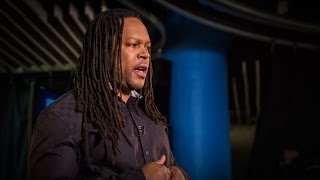
Shaka Senghor spent decades in prison, including 7.5 years in solitary, after shooting a man at 19. A letter from his son and mentorship changed him. He now advocates for prison reform and argues that your worst deed doesn't have to define your entire life.
Questions this video answers
19
Three times
Seven and a half years
2.5 million
2010
23 years ago, at the age of 19, I shot and killed a man. I was a young drug dealer with a quit temper and a semiautomatic pistol. But that wasn't the end of my story. In fact, it was the beginning. In the 23 years since, there's a story of acknowledgement, apology and atonement. But it didn't happen the way that you might imagine or think. These things occurred in my life in a way that was surprising, especially to me. See, like many of you growing up, I was an honor roll student, scholarship student with dreams of becoming a doctor. But things went dramatically wrong. My parents separated and eventually divorced. The actual events are pretty straightforward. At the age of 17, I got shot three times standing on the corner of my block in Detroit. My friend rushed me to the hospital. Doctors pulled the bullets out, patched me up and sent me back to the same neighborhood I got shot. Throughout this ordeal, no one hugged me. No one counseled me. No one told me I would be okay. No one told me that I would live in fear, that I would become paranoid, that I would react hyper violently to being shot. No one told me that one day I would become the person behind the trigger. Fourteen months later, at 2am I fired the shots that caused the man's death. When I entered prison, I was bitter. I was angry, I was hurt. I didn't want to take responsibility. I blamed everybody, from my parents to the system. I rationalized my decision to shoot because in the hood where I come from, it's better to be the shooter than the person getting shot. As I sat in my cold cell, I felt helpless, unloved and abandoned. I felt like nobody cared. And I reacted with hostility to my confinement. And I found myself getting deeper and deeper in trouble. I ran black market stores, I loansharked, and I sold drugs that was legally smuggled into the prison. I had in fact become what the warden of the Michigan Reformatory called the worst of the worst. And because of my activity, I landed in solitary confinement for seven and a half years out of my incarceration. Now, as I see it, solitary confinement is one of the most inhumane and barbaric places you can find yourself. But find myself I did. One day I was pacing my cell when an officer came and delivered mail. I looked at a couple of letters before I looked at the letter that had my son squiggly handwriting on it. And anytime I would get this letter from my son, it was like a ray of light in the darkest place you can imagine. And on this particular day, I opened his letter. And in capital letters he wrote, my mama told me while you was in prison, murder. He said, dad, don't kill. Jesus watches what you do. Pray to him. Now, I wasn't religious at that time, nor am I religious now. But it was something so profound about my son's words. They made me examine things about my life that I hadn't considered. It was the first time in my life that I had actually thought about the fact that my son would see me as a murderer. I sat back on my bunk and I reflected on something I had read in Plato's Republic, where Socrates stated in apology that the unexamined life isn't worth living. At that point is when the transformation began. But it didn't come easy. One of the things I realized was part of the transformation is that there were four key things. The first thing was I had great mentors. Now, I know some of y' all are probably thinking like, how do you find a great mentor in prison? But in my case, some of my mentors who are serving life sentences were some of the best people to ever come into my life, because they forced me to look at my life honestly and they forced me to challenge myself about my decision making. The second thing was literature. Prior to going to prison, I didn't know that there were so many brilliant black poets, authors and philosophers. And then I had the great fortune of encountering Malcolm X's autobiography, and it shattered every stereotype I had about myself. The third thing was family. For 19 years, my father stood by my side with an unshakable faith because he believed that I had what it took to turn my life around. I also met an amazing woman who is not a mother of my 2 year old son, Sekou. She taught me how to love myself in a healthy way. The final thing was writin'. When I got that letter from my son, I began to write a journal about things I had experienced in my childhood and in prison. And what it did is it opened up my mind to the idea of atonement. Earlier, in my incarceration, I had received a letter from one of the relatives of my victim. And in that letter, she told me she forgave me because she realized I was a young child who had been abused and had been through some hardships and just made a series of poor decisions. It was the first time in my life that I ever felt open to forgiving myself. One of the things that happened after that experience is that I thought about the other men who were incarcerated alongside of me and how much I wanted to share this with them. And so I started talking to them about some of their experiences. And I was devastated to realize that most of them came from the same abusive environments. And most of them wanted help and they wanted to turn it around. But unfortunately, the system that currently holds 2.5 million people in prison is designed to warehouse as opposed to rehabilitate or transform. So I made it up in my mind that if I was ever released from prison, that I would do everything in my power to help change that. 2010, I walked out of prison for the first time after two decades. Now imagine, if you will, Fred Flintstone walking into an episode of the Jetsons. That was pretty much what my life was like. For the first time, I was exposed to the Internet, social media, cars that talk, like Kit from the Knight Rider. But the thing that fascinated me the most was phone technology. See, when I went to prison, our car phones was this big and required, like two people to carry them. So imagine what it was like when I first grabbed my little BlackBerry and I started learning how to text. But the thing is, the people around me, they didn't realize that I had no idea what all these abbreviated texts meant, like, lol, omg, lmao. Until one day I was having a conversation with one of my friends via text, and I asked him to do something and he responded back, K. And I was like, what is K? And he was like, K is okay. So in my head I was like, well, what the hell is wrong with K? And so I text him a question mark and he said, K equals okay. And so I tapped back F you and then he text back and he asked me why was I cussing him out. And I said, lol, F you, as in I finally understand. And so, fast forward three years, I'm doing relatively good. I have a fellowship at MIT Media Lab. I work for an amazing company called BE Me. I teach at the University of Michigan. But it's been a struggle because I realize that there are more men and women coming home who are not going to be afforded those opportunities. I've been blessed to work with some amazing men and women helping others re enter society. One of them is my friend named Calvin Evans. He served 24 years for a crime he didn't commit. 45 years old, he's currently enrolled in college. And one of the things that we talked about is the three things that I found important in my personal transformation. The first being acknowledgement. I had to acknowledge that I had hurt others. Also had to acknowledge that I had been hurt. The second thing was apologizing. I had to apologize to the people I hurt even though I had no expectations of them accepting it. It was important to do because it was the right thing, but also had to apologize to myself. The the third thing was atoning. For me, atoning meant going back into my community and working with at risk youth who were on the same path, but also becoming at one with myself. Through my experience being locked up, one of the things I discovered is this. The majority of men and women who are incarcerated are redeemable. And the fact is 90% of the men and women who are incarcerated are will at some point return to the community. And we have a role in determining what kind of men and women return to our community. My wish today is that we will embrace a more empathetic approach toward how we deal with mass incarceration. That we would do away with the lock em up and throw away the key mentality because it's proven it doesn't work. My journey is a unique journey, but it doesn't have to be that way. Anybody can have transformation if we create the space for that to happen. So what I'm asking today is that you envision a world where men and women aren't held hostage to their past, where misdeeds and mistakes doesn't define you for the rest of your life. I think collectively we can create that reality, and I hope you do too. Thank you.
More from Shaka
Joe Rogan podcast Shaka Senghor #shakasenggor #podcast #joerogan #interview #jre #jreclips
Surviving a Shooting at 17 Joe Rogan X Shaka Senghor | Joe Rogan Podcast | #shorts