Talking Criminal Justice Reform with Shaka Senghor
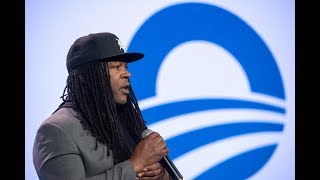
Shaka Senghor delivers a personal keynote tracing his journey from involvement in the crack trade and a near-fatal shooting (1990) through a 1991 homicide conviction and 19 years in prison (including ~7 years in solitary). He describes a transformation while incarcerated, repeated parole denials, release on June 22, 2010, and subsequent leadership and public-facing roles—teaching, fellowships, a TED talk, a New York Times bestselling memoir, media appearances, and becoming Executive Director of the Anti Recidivism Coalition in 2018—framing the talk as an argument against accepting punitive narratives about men and women of color.
We're excited to start off with a leading voice in criminal justice, Shaka Senghor. Shaka is the Executive Director of the Anti Recidivism Coalition, consulting producer of the own docu series released, and a New York Times Best Selling author for his memoir, Righting My Life, Death and Redemption in an American Prison. He is also selected as one of the 24 icons being featured in the upcoming Smithsonian Traveling Exhibition service entitled Men of Change, debuting in fall 2019. And he's here to share a gripping story with all of us. Please put your hands together and welcome Shaka to the stage.
1986 I was 14 years old and I thought I was going to die. I was deeply immersed in the crack cocaine trade when I found myself beat nearly to death, childhood friend murdered and eventually addicted to crack cocaine in 1990. March 8, I was standing on the corner on the west side of Detroit when I was shot multiple times. I was taken to the hospital, they took two of the bullets out, left one in, patched me up, and I was right back in the community. Not one doctor, psychologist, social worker, nurse, or adult extended to me what I believe is a universal sign of compassion, empathy, a simple hug to say, you'll be all right. So instead, I returned to my community with this volatile recipe that's all too common in communities across the country. I was angry, I was bitter, I was paranoid, and I began to carry a gun every day. Sixteen months later, July 1991, at nearly 2 o' clock in the morning, I got into a conflict and I fired several shots, tragically causing the man's death. I was subsequently arrested, charged with open murder, and sentenced to 17 to 40 years in prison. When I entered prison, I was bitter, I was angry, I found myself getting more and more trouble. By 1999, I was beginning what turned out to be a four and a half year stretch in solitary confinement where I remained on 23 hour lockdown five days a week, 24 hour lockdown the other two days a week. But despite this, while I was in that environment, I made a commitment to myself. I didn't know if I was getting out of prison, if I was ever getting out of solitary confinement. But the commitment I made was to actually stand in service of young men in my community who was growing up with the same type of traumas that I had experienced. 2008, I go up for parole, they deny me, they send me back a second time. 2009, I go back up for parole, they deny me again. And finally, after three tries, June 22, 2010, I walked out of prison for the first time in 19 years after enduring seven years of solitary confinement in one of the most barbaric and inhumane environments one can imagine. On the way out of the door, officer told me this. I'll see you back in six months. But here's what actually happened. I came home committed to mentoring young men in my community. In 2011, I was nominated for the Black Male Engagement Leadership Award. In 2012, I won that award, even though they said I would be back in prison six months. Later on, in 2012, I began a part of an MIT Media Lab fellowship, even though they said I would be back in prison in six months. In 2013, I started teaching at the University of Michigan, where I started a class that is on its sixth year, even though they said I'd be back in prison in six months. I won a Kellogg fellowship that same year and followed that up in 2014 with a talk at TED's 30th anniversary, which currently has over 1.5 million views. Even though they said I would be back in prison in six months. In 2015, I get a phone call. Woman's on the other end. She says, hey, Shaka, what does your schedule look like in June? I said, well, you know, it's pretty flexible. She calls me back the next day and says, you know, I was calling to ask you about your schedule because Oprah Winfrey would love to interview you, and I just wanted to know if you were available. I was like, let me check this out. See if I can slide Oprah up in there. I do an interview with Oprah that was supposed to be 45 minutes. It turned into a three and a half hour conversation. She went on to say that it was not only one of the best conversations in her career, but but it was one of the best interviews in her life. Then she went on to text me that out of 37,500 interviews, I was in her top five. I mean, you know, because Oprah do be texting me. On March 8, 26 years after I got shot, my memoir debuted on the New York Times bestseller list. Even though they said I'd be back in prison for six months. A full circle moment for me happened exactly at this time. In February of 2017, I was in San Francisco on book tour when I was hanging out with one of my friends who was supposed to be going to dinner with President Obama. And instead he decided to come to my book release party. That's a real friend. But the next day, he said, well, I at least want to go pay my respects to the president and his team, which he did. And I joined him. I was sitting in the car, waiting, and then I was invited to come inside. And I remember thinking to myself as I took those steps, walking inside about this journey of redemption. And I walked in, and there was the President. And he was like, so I heard you got a book. I was like, well, well, Mr. President, I do have a book. He was like, so the president can't get a book now? Listen, I'm from Detroit, man, where we hustle hard. And of all the days that I did not have a book, it would happen to be that book. But guess what I did yesterday? Gave him that book. I want to close with this. In 2018, I assumed the position of executive director of Anti Recidivism Coalition, an organization that serves men and women coming home from prison. Out of 54 staff members, 68% have been system impacted, meaning they've been in prison from anywhere from three years to 31 years. They are some of the most incredible human beings I know. They stand in service of young men and young women of color with a peer to peer model because we have the real lived experience. So even though they said I would be back in prison in six months, here it is. I'm able to serve my people in a meaningful way. And as I close out, there's a couple of things that I want to tell you about in regards to the reason why I just shared all that information. Some would consider it bragging just a little bit. Every now and then, you got to flex on them, let them know what this is. But I share that because the narrative around men of color, young women of color, has been misconstrued. And I believe that our journey of tragedy, to triumph is something that's important so that every young man of color in this room can understand. No matter where you start at, if you make a commitment to lifting yourself up and lifting others as you climb, that you can produce very different outcomes. And secondly, don't accept somebody else's narrative. Because even though they told me I would be back in prison in six months, eight and a half years later, I'm standing here serving my people. Salute y'. All. Appreciate y'. All. Thank you. Thank you. Appreciate y'. All.
More from Shaka
Joe Rogan podcast Shaka Senghor #shakasenggor #podcast #joerogan #interview #jre #jreclips
Surviving a Shooting at 17 Joe Rogan X Shaka Senghor | Joe Rogan Podcast | #shorts