Writing my wrongs: Shaka Senghor at TEDxMidwest
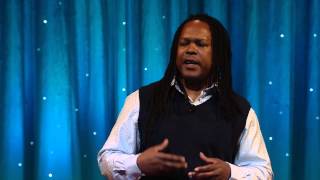
Shaka Senghor recounts his journey from childhood abuse and street violence to incarceration and eventual redemption. Through prison literature, personal mentorship, and the support of family and his fiancée, he transformed his life, founded a literary mentoring project for youth affected by violence, and calls for empathy, hope, and investment in education to break cycles of violence.
12 years ago, I was sitting in what's imaginably the worst place that we have in our society. I was in a solitary confinement cell, locked down for 23 hours a day. And on this particular day, I was pacing myself as I normally did. That's how I kind of worked through my thoughts and thought about things. But I was also waiting on something. I was waiting on an officer to pass out mail. And it was a little secret of mine that what I used to do when I waited is sometime I would kind of inch up to the door and peek down the hall and hope that by the time he made it to my cell, he still had a couple of envelopes with some type of message from my community, somebody from my family, or whatever the case may be. And fortunately, on this particular day, I got a few letters. So I grabbed the letters up, rifled through them as I often did. And one of the letters was from a friend who was in another prison at this time. We was allowed to communicate back and forth. You can no longer do that anymore with other inmates. One letter was from my father, who had been my staunchest supporter over the 19 years I was incarcerated. But the third letter was from my son. And the most amazing thing was, anytime I would get a letter from my son, it would just, like, light up my world. Prison is a very dark, very lonely place. His letters would always just, like, make me feel great. So when I get this letter, I open it up, I'm excited, thinking he's going to give me an update about some of the things he's doing as a kid, some of the things he's learning. He loves art and how he was doing at school. But instead, I got a letter that changed my life. When I opened up the letter in the top right hand corner, these were his words. He said, my mom told me why you were in prison. He said, because of murder. Dad, please don't kill. Jesus watches what you do. It's a sin. When I read those words, it crushed every idea I had about myself. It was devastating because I grew up in an environment where murder is an everyday occurrence. In Detroit alone, we had 379 murders last year. Chicago was over 500 murders. It's the consequences of living in the street life. So having those experiences, I had never really sat back and thought about the consequences of my actions, how that would impact future generations, how that would devastate my child. And I thought about something I had read in Plato's Republic, when Socrates said, the unexamined life isn't worth Living. And so I sat back and I had to ask myself, how did I go from wanting to be a doctor to sitting in a solitary confinement cell? And how did the rest of the young men that I was around go from having these brilliant dreams to being incarcerated for the rest of their lives? And so I went back, because the reality is no child grows up with ambition to be incarcerated, to wreak violence on somebody else. So I had to go back and examine things. And I went back and one of the first things that I really thought about was the physical and emotional and verbal abuse I had endured at home and how that ran me into the streets. Because whenever my mother would beat me or whoop my ass, as we say in the hood, I would run away. And what happens to our kids is that more seasoned veteran hustlers, they take advantage of that. They seize their vulnerability and they manipulate it for their personal gain. And so when I ran away, I had no idea where I was going, how I was going to survive. Day to day. The naivete of being a youth is that you don't really think things through. You just do it and kind of just roll with whatever the consequences are. So I had no idea how I was going to take care of myself. I went to the grocery stores and helped people carry their bags and things like that. And so what happened is this older guy, he was like, hey, listen, I got a great opportunity for you. You won't have to worry about having nowhere to sleep, no clothes to wear, you'll be able to feed yourself, you know, just, hey, come over here and sell drugs. And at the time, crack was new to Detroit. It's around 86. So I had no idea of the magnitude and the devastation that that drug would cause our city, nor how that would affect me on a personal level. Six months into settling drugs, I was robbed. And when I got robbed, it was like the worst experience I had ever encountered in my life. It was two drug addicts. They manipulated me out of the drug house and basically robbed me and put a gun in my head and told me they would blow my brains out and kick me down this flight of stairs. Several months later, I was beaten nearly to death in the crack house and left in the crack house. And I remember just laying on the floor like, damn, how could somebody do this to a child? And so what was happening is that my heart was becoming hardened to the harsh realities of the environment I was growing up in. Within the next month, childhood friend was murdered. A couple of months later, my older brother was shot. Then my Oldest brother was shot as well. And then at the age of 17, I was shot three times while standing on the corner of my block when I got shot. And this happens a lot in inner cities. And this is one of the things that keeps the cycle of violence going, is that nobody came and said, you know, you're going to have these certain kind of feelings. Nobody hugged me. Nobody told me I would be all right. Nobody said to me that when you return to your community, you're going to be fearful, you're going to be paranoid. And so I didn't know what to do with all these feelings that I had built up. I didn't know what to do with the fear, with the sadness, with the anger. And so I returned to my community worse off than I left. And 14 months later, in a similar conflict, I made the faithful decision to shoot first and tragically caused somebody's death. I was subsequently sentenced to 17 to 40 years in prison for second degree murder. And it was one of the most devastating things, as you can imagine, for not only myself, but for my family as well. When I entered prison, I was angry, I was bitter. I felt like not only had my family structure failed me, but that the educational center system failed me. Because I grew up, I was like the honor roll student. I was the smart kid. I was the kid that was supposed to went off and been that doctor that I dreamed of being, but that didn't happen. So entering prison, I didn't know how to react to that. I didn't know what to do with all those feelings, with all those emotions. And so I lashed out. I got in trouble. And prison is like a breeding ground for trouble. It's prison. And so the thing about it is that as much negativity as I experienced, I would always have these very human moments. And those human moments evolved around literature. Like when I got incarcerated, even though I had 17 to 40 years, I had mentors in prison who saw that I loved to read. And so they would always give me books. And they would always tell me, at some point, you're going to get out. And when you get out, you got to be prepared for a society. But I also had these different types of exchanges. For example, I met this guy named Will. And when I met Will, he was ostracized in the prison. Nobody wanted to talk to Will, Nobody wanted to deal with Will. And I'm not sure if people know, but in prison we had, like, this little moral code. So we do have principles and values and things that we live by. And so nobody Wanted to deal with him. And I was inquisitive as well, because he was a very quiet guy, didn't bother anybody. And what I discovered is that Will was convicted of killing his mother. And in prison, the code is, you don't harm women, you don't harm children, you don't harm seniors, and you definitely don't harm your mother. But when I started talking to Will and learned his story, I realized that Will suffered from post traumatic stress disorder that he had been going through as a veteran of Desert Storm, and that he mistakenly had shot his mother, thinking that it was an invading army. And so when he told me his story, I still was kind of a little hands off, but the human side of me saw that loneliness and saw this person who everybody had ostracized. He was serving life in prison, so he's never getting out of prison. And so I reached out to him with books and literature, and I would share literature, and we would talk. And the thing that I found about that is when I got ready to depart that prison, you know, he hugged me and, you know, we talked. And I figured out that it's the small things that sometimes mean the most. And then I learned so many great lessons, but sometimes they didn't even come from human beings. Like, one of the lessons I learned was from a rat. And not a rat as in, like, the person who snitches on everybody to get their self out of trouble, but like a real rat, like this big rat. Like, he was like a. Like big, like a dog, like that type of rat. And I mean, I might be exaggerating a little bit, but it was like a big rat. But we called this rat food loaf because he was the only person who would eat this concoction, that prisoners who were being punished would get fed this concoction called food loaf. And so they would just take it and throw it out on the tier. And he was the only one who would eat it, because, I mean, it was like all the food from, like, the whole week mixed into one, and they'd bake it into this brick and be like, here, eat that. So foodloaf. He was this resilient, very resourceful. He was a rat. I mean, that's what rats do. But the thing was, everybody loved him. Everybody in the cell block absolutely adored him. Like, he would come in cells and he would eat food, and, you know, and people would be just, like, chilling with him, you know. So the thing I realized is that prison isn't always a physical space. Sometimes prison is like the mental Limitations that we put on ourselves. And what I learned from fool off is that sometimes you have to make the best out of a very bad situation. And that's what I began to do. And it wouldn't have been possible without having these amazing people come into my life. My father, even though I grew up in a household that was very turbulent and very controversial, my father, he. He taught me love. He taught me what real love is. And as a man, he taught me that the strongest way to express love is being man enough to apologize. And so he apologized for those areas of my life that he felt he had failed me in and that meant everything. But he also gave me one of the tools that I think is the most important. And he told me, he was like, no matter where you at, if you educate yourself, you will always be free. And early in my incarceration, I didn't want to hear that. But as I started growing and just evolving as a human being, the more I learned, the more compassionate I became and the more I just saw the bigger picture about life and that I didn't feel like it was over. But the second person who really gave me some real profound life lessons from my fiance, and she's actually here in the audience. Hey, boo. But she smuggled contraband into the prison. And I mean, not like weed or alcohol or a key to help me escape, but she smuggled love and hope, which isn't smiled upon in our society when it comes to guys who are incarcerated. She's a very well accomplished woman. And so it was like people was like, well, why would you date this guy when he's incarcerated? But she always brought these things and she just always reminded me, like, you know, you are lovable. You know, you are a human being and you're worthy of being loved no matter what. You know, one of your decisions may have been, you're still lovable. And the best way to express that is. During my parole hearings, I went to the parole board three times. First time I got denied, and I kind of expected. I didn't expect to get out the first time. The second time I got denied, I was devastated because I saw the impact it was having on her. I saw the impact it was having on my family. And I called her when I got the news, and she was like, I'm on my way up there immediately. And fortunately, I wasn't too far from home at that time. And she came up to see me, and soon as she walked into the visitor room, I just broke down in tears like a baby because I just Saw the suffering that my life was having and how it was, what it was causing her. And so I told her, I said, you know what? I'm not going to the parole board anymore. And she was like. She listened. She's shaking her head. I'm like, I'm not about to put you through this. My family through it. It's not going. I'm going to just die in prison or whatever the end consequence is and deal with it from that. And she looked at me and she said, oh, you taking your ass to that parole board. I didn't put in too much time, you know, for you to just give up. But the thing was, she was like, don't give up. And that was one of the most important lessons, is that sometime in life, we give up far too easy. After being seeing the parole board for that third time, I was eventually released from prison on June 22, 2010, one day after my 38th birthday. So thank you. Thank you. And so I had spent half my life in, half my life out. And one of the things that I learned about prison and about mass incarceration and about the gun violence we're seeing in our cities is, is that hurt people, hurt people. And that's how the cycle repeats itself over and over. And I think that if we can start looking at things a little differently, it'll change. Also, realize that literature is one of the greatest transformative tools we have at our disposal. You know, now, because we live in this tech world, sometimes we forget about the power of literature to inspire us to be the best people that we are. But we also forget what literature is. It's the written word. It can come in the form of text. Inbox, Twitter, all those things are valuable, and they can be tools that can transform the way that we see each other and see life. And then the third thing was that the majority of humans, no matter what they've done, are redeemable. And when I think about redemption, I think about the work that I've been doing since I've been released from prison. I started a project called Live in Peace Digital and Literary Arts Project, where I work directly with kids who are suffering from high levels of violence. Growing up in these communities and doing that work, I meet so many amazing kids who have so much potential, but who society has given up on. And one of the things that I found that was the most devastating is that most of our schools are in worse conditions than our prisons, and that should be devastating to anybody. And so, working as a mentor, I've been able to Work with, like, great kids and hear their stories. And, I mean, I deal with students who. What I do through my project is I have them write about issues that are very common in our community but aren't talked about a lot. Child abuse, sexual abuse, gun violence, drug abuse, things of that nature. And so that's how I started the project. And I meet these kids who just have amazing stories, like this young man named Jakari, who was on the wrong path, grew up in a dysfunctional household, and I just started working with him. He wasn't the strongest writer, but he eventually became very confident in his ability, and he went from wanting to live that street life to actually going to college. Now he's a student at the University of Western Michigan. And that's what makes the work so impactful and so meaningful. So I say to you today that here are some things that you can do. I think one of the first and most important things you can do is to look at everybody you encounter as a child. Like, look at the child in them. When you can see the child in the person, it's easier to be empathetic. Like, take me, for example. Beneath these dreadlocks, this tough exterior that Joy talked about, it's just a child, a little boy that wants to be loved, that wants to be hopeful, that wants to be helpful. If you can see that in everybody that you encounter, we live in a very different world, and things will be better. And I want to close by saying this, that hope is one of the most important tools we have at our disposal. It's the one thing that you can extend to anybody at any given time. So today, I just ask that as you move about, offer somebody a little bit of hope, a small lifeline, and you'll see how impactful it is. Thank you.
More from Shaka
Joe Rogan podcast Shaka Senghor #shakasenggor #podcast #joerogan #interview #jre #jreclips
Surviving a Shooting at 17 Joe Rogan X Shaka Senghor | Joe Rogan Podcast | #shorts