Shane Mac on Communication and Formative Collaborations
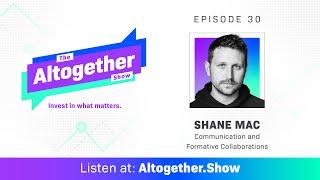
Shane Mac, co-founder of XMTP Labs, built Gist to 100 million users and sold it to BlackBerry for $40-45 million in 2009. He now runs Squared Away, a personal-assistant service with 950 customers generating $10 million annually, and is developing XMTP, an email-like messaging protocol for Web3 wallets.
Chapters
Welcome to the All Together Show. I'm your host, Eric Satz. And with me today, that is Shane Mac. Hey, buddy.
What's up?
How are you? Welcome to the show.
I'm good. How are you doing?
I am really well and super excited to have you on. So for those who don't know, Shane is co-founder and president of XMTP Labs, an Andreessen-backed startup company, which I'm sure we're going to hear more about in a little bit. But before we go there, Shane, in your own words, who is Shane Mac?
You know, I never like to give bios of myself, but I would say Shane Mac, if I spoke in the third person, is a very curious human who grew up in a small town in Illinois and got really curious about the internet and I had started building since I was about 10 years old, things on the internet, uh, little software products to marketplace ideas to selling things on the internet and have just always been fascinated by the ability to communicate and connect with anyone in the world online. And, uh, that curiosity has led me to many different things and many different people, but I'd say I'm, I try to be a pretty simple person. I try to hold my word and be accountable and also just work hard and also have some fun.
You know, I think within the first sort of 10 to 12 minutes of meeting you, I was pretty confident that if I looked up the word entrepreneur online, I'd see a picture of Shane Mac there. So, Let's go back to the beginning. When and where were you born?
Uh, Peoria, Illinois. It's a town outside of nowhere. It's about 3 hours south of Chicago. Caterpillar, the big tractor company, is actually headquartered there. So that kind of made the, the, uh, city and the ecosystem. I grew up in the town that was actually Bartonville outside of Peoria, but no one's ever heard of that, of about, uh, about 8,000 people.
What year?
Uh, 1986.
You're a young dude who has done a hell of a lot in a very short period of time. So, um, tell us about your parents. What'd your dad do? What'd your mom do? And, uh, were you an only child?
Um, so dad was a steamfitter, which means basically plumbing but with huge pipes that carry steam instead of water. At the Caterpillar plants. So he did that his whole life, worked for the same company his whole life named O'Brien Brothers, uh, family-owned steam fitting company. And then my mother was the secretary at a local chemical plant called Lonza in Mapleton, Illinois when she was 18 and never went to college, ended up doing some classes later. My dad never went to college either, and she's literally coming up on her 45th year there. Wow. And, um, is now a pretty, uh, successful sales executive there. And they're one of the biggest, like, biochemical, biomedical companies in the world out of Switzerland. They make the base products for, like, every cancer drug in the world. So it's a pretty cool, pretty cool company that had some random, you know, by the river factory in Mapleton, Illinois. And my mom kind of has been with them for that long. And then I'm my mom's only child, but my dad actually has two other kids. So I have a half brother and a half sister, and we all have different mothers. So it's a long story if you want to go into it.
We can save that for another time, but it sounds very interesting. So, but actually let's touch on for just a second growing up, were you the only child in the household or Were your, I'm just gonna call 'em your brother and sister, uh, were they in the house too?
My brother was, my sister wasn't. Um, and my brother's about 10 years older than I was, so he was always kind of like, you know, giving me the countdown timer to run and get him sodas and doing all the chores for him. I'd always remember being upstairs in the bedroom and he'll be like, listen, I'll give you 50 seconds. I'm like, all right, let's go. You know? And it just, maybe it made me really competitive, but he would always just get tricked me into doing anything for some kind of, uh, time or reward or whatever. And so I just remember him and his friends always hanging out. And, you know, when I was 7, he was 17, so he was being a rebel in high school. I was like, what is going on? And so I was pretty young. And so, uh, yeah, he was always way older, but we were always very close. And then he came back when he was about 28 years old. He had moved out of an apartment in New York, was in between jobs, and he came home my second semester of my senior year of high um, or my senior— my second semester of my senior year of high school. And we got to spend time together when I was 18 in the same house, living at my parents' house in Bartonville for that second semester. And it was probably one of the most impactful semesters of my entire life. And being able to spend it with him, become close to him, and, you know, later on down the road, he's the reason that I left home. He came back and said, hey, like, there's bigger things for you out there. You should, you know, move. And I mean, he was in Seattle 4 years later when I got outta college. And that bond we had kind of is the reason he got me to leave home and try a different city and move away.
So let's rewind maybe just a little bit earlier into your high school days. You were a baseball player.
I was. It was the sport my whole life.
You're a pretty good baseball player. What happened your senior year with baseball season?
So it's, it's interesting to look back on it because, you know, I was also thought I was hot shit in high school. I was pretty good at baseball, uh, and I'd played my whole life. I was a catcher, had the best batting average on the team, and the coach's motto was, if you hit, you'll play. And so I had the best batting average of the team I was going to go to college and play baseball and there's no way I can't make the team. I'm the best player here. You know, like your ego can get a lot of you in that situation when you're just young and dumb. And I went to the tryouts. I don't remember if I like tried hard. I always try to remember back to like, did I actually not try during tryouts? Like, I don't really remember it, but I remember the day that I went to the gym class at 7th hour and the whole coaches, very small town, very gossipy. And the coaches were all kind of in on it together. And the football coach, he didn't really like me either. Um, or I don't know if the baseball coach didn't like me, but the football coach, he was always just kind of like snarky to me. And I quit football my sophomore year because I didn't— I just didn't like it. Um, and he's like, you should go check the cut list. You should go walk down and see if you made the team. And he set me up to walk down the hallway all the way through the high school halls, and I was one of, uh, the only players to get cut out of— and they even kept all the reserves. Like, I was like the poster of we cut this person, and I got cut from the baseball team my senior year, uh, and kind of changed my whole trajectory and path to go to college and play baseball, or what was next, to go to a D1 school versus, you know, now I don't have a scholarship. So it changed the whole trajectory of what I thought was the path forward.
What, what did you pick up in place of baseball?
Choir.
And, and yeah, tell us about that. How did that I mean, how did, how did this cut, if you will, impact your life, do you think?
It, it was one of the greatest things that ever happened to me. It was, uh, this moment where, you know, everything you thought, and you think like stats run the world, and you know, a very small town, you can be one kind of track-minded, kind of like blind to, uh, everything else. Very self-centered, not curious about everyone else. Um, and I remember I was in the hallway just like humming a song. I don't remember what I was humming, and I was just kind of— I was kind of loud, still kind of loud. I talk a lot. Um, and the choir teacher was like, you should join choir. She's like 26, so she's a new choir teacher trying to get jocks to join choir. And I was like, no, I'm not going to join choir. Like, that's just not my thing. She's like, what do you have 6th hour? And I was like, I have physics. And she's like, do you like it? I was like, not really. And she's like, well, if you drop it, I'll give you a credit and you can join choir and you'll have a free credit. I was like, that's a, that's a great deal. And it was one of those moments where it was the most insecure, uncomfortable, weird thing I'd ever done. And I ended up truly just loving it. And I remember the first day I walked into choir, I met this guy named Brian Beach. and you know, no one really accepted me either. I was the total jock, and they were like, why is Shane— why is this guy coming into choir? Like, why is he trying to steal our show? And Brian was just like that as well, and I ended up becoming friends with them, uh, and he really just kind of took me under his wing. And I, I was terrible. I remember sitting at the piano, and she was like, all right, I'm gonna see if you can do this, la la la la la la la la la. And I was like la, la, la. Like, I couldn't sing, and she just believed in me. And having someone who really believed in me that much and stayed after school with me and really tried to help me do something that I felt really, really uncomfortable to do, um, was a special moment to make me more open-minded. Brian was my first gay friend in my life. Like, he's now on Broadway in New York. He's an— he was incredible too. He was a pretty phenomenal actor and also singer and dancer, and then just got me to get out of my comfort zone and be more open-minded and be a better human. And it really did change kind of the entire trajectory of being, uh, I think, a better person to society.
Did you play an instrument at the time, or does that come later?
Uh, right around the same time. So this is right when my brother moved home, and he played guitar, and so he would sit upstairs and kind of play guitar all the time. And I was like, man, I wish I could play guitar. And so he would try to teach me. And I remember he taught me the Sweet Home Alabama lick, and everyone kind of learns that their first guitar. It's like the first thing everyone learns on guitar, you're like, and so I was like, oh, that's cool, but it's not, you know, it doesn't— I can't do anything else. And so he just kept teaching me every night, play G, play C, play D, kind of play these chords. Uh, and then we would sit up there and we would— it was funny, we were drinking this old bottle of Delirium Tremens. It's this old beer, it's like a Belgian beer, and he loved it. And he always loved craft brews. He's very, he's very just like, um, cultured, you know. He always really knows the up-and-coming bands and he knows the best beer and the craft beer. He doesn't like, you know, mainstream kind of crap that's just, you know, Budweiser or whatever. I'm not saying Budweiser's crap, but he really kind of taught me music. And I just sat upstairs in my room for hours, and he left for like a few weeks, and he came back. And I remember I played Tears in Heaven by Eric Clapton, which is a pretty complicated song. And I probably spent 5 hours a night for 3 weeks just learning. And like, he came back and he's like, whoa, And I remember it being like, yeah, I can play. Like I was getting there. And that was the start of it. That's how I got into playing guitar was at the same time I was kind of joining choir and changing my whole identity of how I saw myself.
We're gonna get to Nashville later, so I'm not gonna, I'm not gonna go there just yet. I actually wanna stay in high school. So around 18, you're, you're in choir, you're learning to play an instrument. You're also really involved online. What are you doing? What have you found? How are you making money?
It was actually before this. It was my, I think, 8th grade year to freshman year of high school, but it played into a little bit later. I had found eBay. This is, so this is '99 to 2000, and I had this little printer up in my house. And I was playing baseball. And so I realized that from 10 years old to 12 years old to 13 years old, I was 13 at the time, so I just got done with this transition of going through 3 different leagues. You get 3 different bats. So you go from a 19-ounce, 30-inch bat to a 19-ounce, 32-inch bat to a weight limit bat in the big leagues. And you can only have a 3-ounce difference. Well, that means you get 3 $300 bats every year for 3 years in a row. And so I asked, I had 2 bats to sell, so I was like, I found eBay, I made a little page front store, I created this little store, it was like called the DL, the DL to sell to you or something. I remember the username back then and I sold them for like $150. And back then you could do like shipping and handling for like $48.99. You know, it's like 25% of the revenue was from shipping costs. That was only, you know, $15. And so I, I was like, this is kind of crazy. And I started asking my friends like, hey, do you have your old Mustang League bats? And they were like, yeah, I don't really use that bat anymore. I was like, can I pay you like $15 for it? They're like, yeah, sure, whatever. And so I just started arbitraging bats from everyone, and then everyone started talking about it, and they'd just tell them, yeah, they have more bats, and that Shane will buy your bats. And, you know, people caught on to it. I ended up, I think, paying $50 at a bat or so at the end of it because everyone realized I was reselling it. But I had this little printer at my house. The UPS truck would come every Tuesday, Thursday. They had those triangle boxes and actually they'd come and they fit a bat perfect. And the guy would come on Tuesday and be like, how's your dad's business going? I'm like, it's great. And they had no idea that like it was my thing upstairs in the closet. And I used my dad's credit card to start a PayPal account and ended up selling a lot of bats. And I think I had like the Power Seller Gold Star on eBay at the end of it. And it was a crazy experience. I was making thousands of dollars a month. I mean, I bought like my first, all my like, you know, first four-wheelers and stuff like that. I got to buy fully with my eBay earnings.
So when do you make the jump from e-commerce to messaging?
Facebook, 2004 or '05. It was really, I was in college. I remember going from my freshman year to my sophomore year And I was on MySpace a lot. I was, 'cause I had a band in college then and I was trying to play. So we had the Summerstone Band and I'd made these, um, kind of MySpace pages back then. And then it, Facebook came out and for me I was like, I had this directory where I could message anyone on campus. I could see everyone on campus. It was really like this superpower that I'd never seen. And so I, I instantly was like, there's something with this. Social thing that's fascinating. And so I just started messing around with it, started building. I, I taught myself how to code in college. That's kind of how the whole, you know, getting onto the internet, building tech companies started. And that around 2005, 2006, there wasn't messaging yet. It was just social and a directory. And then the feed came later. But then Twitter happened in '06, '07. '06 was SMS, '07 was like they built a little thing you could use on the, on the web. TWTTR was what it was called back then. And that was the light bulb. It changed everything I thought about the internet. I was like, I can now send a message to anybody in the world without permission, not a college campus. I could ask them anything. If I'm meaningful and helpful and valuable, they can respond. And it just come, whatever it was about it, that moment in time really clicked for me. And maybe it was that I was in Macomb, Illinois at this college, Western Illinois, that's kind of a, you know, just public skate school and no one was talking about the internet. My marketing teacher, I argued with about, he was still doing direct mail and like, I was like, I think the internet's kind of big. Like we were kind of in that moment of things shifting. And I felt like people around me weren't curious or talking about the things that I found exciting. And this thing, Twitter, Everyone was so passionate. There was an early community of developers. Everyone was building. Some of my best friends today were that core group. My co-founder was number 300 person on Twitter, and I met him in that whole like kind of world back then. Now, right, Matt, this is almost 20 years later. And so like, it was a magical time. And I was like, this is fascinating. I didn't even think of it as messaging then. It was like microblogging at the time, but it was this ability to talk to and communicate to anybody in the world, um, in this short format online, which kind of just for me looked, felt like a superpower, and I think it turned out to be true.
How does this lead to the first startup that you get involved with, and who do you get involved with, and where do you get involved? How does that happen?
Yeah, so, you know, Twitter was a small little kind of world growing quickly on the West Coast, not really where I was at, and I was trying to build a little thing that would allow me to take a Twitter photo or a Facebook photo and put it on top of an email address because I wanted to see who I was emailing. I mean, that's how the internet works today, but back then it was super creepy. People were like, what? Don't put my LinkedIn next to my Facebook. Don't put my news search next to my Facebook. Like, my Facebook's my family. That's my personal life. Don't talk— like, it was very much that. And everyone had this very, I can control the silos of the internet. And I'm like, I don't know if that's true. I think we can aggregate it all together and have one identity that pulls all of your different kind of things associated with you. And whether people liked it or not, that's into what ended up happening. And this leads me to meet this, um, lady, Jen, who is working for a guy named TA in Seattle on Twitter. And she's like, hey, what you're building and like what you're thinking about and what you're talking about on Twitter. And you know, back then we just share screenshots and we were just sharing kind of ideas. Here's a link to what I built. She's like, I think my boss would really like that. and then long story short, I end up meeting this guy named T.A. T.A.'s building Mindbox, which is a news search based on the inbox. So he's sitting there trying to say, hey, if I'm a business person and you've emailed me 3 years ago and there's news about you today, there, I'm actually can get an email and say, hey, there's news about Eric today. You should reach out. He did a big deal with XYZ. Um, and I was like, that's cool, but I come from college. There's not news about anybody. There's social data about everyone. Why don't we just use social data? And he really saw the future. He's like, social on top of the inbox will make people smarter. It's better for relationships. And with news, social and news could come together to be like the next future CRM. Um, I just kept sending him feedback on his product every month. I would literally email him these zip files, and I, in the subject line of the email, I would say, I hope this is helpful. And it was like 30 days of work. Like, I could— I had to have overwhelmed the shit out of him. And I'd be like, hey, here's the thing. And I'd have like mind maps and product sketches and flows and like, this sucks. I was really like a kind of overly confident and ignorant at the same time. So I'd be like, this thing doesn't work. This is dumb. I don't know what this means. But it was like genuinely I was so passionate about the problem of like, how do you make the internet more social at the time? Like, how do we add the human layer to the web? And then finally he was like, you know, why don't you just come work with me? Like, why don't we just go build this together? And I remember being like, you know, I don't know what a startup is. I don't know what venture capital is. I know I make $32,000 a year doing QuickBooks at the local theater. Can you pay more than that? Um, and like that kind of led to this moment. He's like, yeah, like I'll pay you more than that. I'll give you some equity and like come do this company with us. And that ended up, uh, the company was gist.com. It ended up becoming a, well, at the time, a social CRM. And social CRM ended up being a pretty big category in the moment where we were aggregating all the social data. And he— it was a funny story— is he was actually mining Paul Allen's inbox, the founder of Microsoft. So Paul was our first million-dollar check. Brad Feld from Foundry Group was our A round. And back then, an A round that was a good one was like $3.5 million, right? Um, and, uh, I remember being like, this is, this is crazy. And we had like, you know, ended up like 10 or 12 of us in Seattle. We had this little office downtown, a ping-pong table. It was like this fun place to work. Um, we did work from home Thursdays, and I was like, what a radical way to work. You know, it was like, it was, it was wild. Like, I'd never thought of like a keg in the office, and you get to work from home one day and all this stuff. Um, 2 years later, we grew it about to about 100 million people in under 2 years and sold it to BlackBerry for about $40, $45 million cash in 2009. That's a, that's a great story.
So when you said, when you said, I'll give you some equity, did you say, what's equity?
Oh, I mean, I just, I trusted TA and You know, I, it turns out if you meet the right people, it works. And he's an, he's an incredible human. He's actually coming here to Nashville to stay with me in 2 weeks. Nice. It's gonna be here for, it's gonna be here for 3 days and he's just coming to stay and I wanna meet T.A.
Shane.
Yeah. Y'all, we'll definitely get together and we'll get together for morning coffee or play some pickleball or even have dinner. Um, cuz he's just gonna come and I'm gonna try to schedule him a really cool 2 days. But he's one of those people where, you know, you have those long-term people in life that you're— do you keep around? And he said it to me the other day. He said, Brad Feld is that for me, and you're one of those for me as well. And I was like, that just made me feel good. And if the feeling's mutual, he's a, he's a special human. And it's really cool when you go from being a mentor relationship to a partner. We do a lot of deals together now. We respect each other and how we think differently. We couldn't be more different, to be honest. Like, T.A., he's the most like methodical leader in the world. Sitting next to him was the greatest time of my life. but he'll have like 3,000 rows of a spreadsheet trying to come up with like the right name and thinking through everything. And I'm like, mm, I think this is the name, you know? Like, I'm like all gut, no, like, mm, I don't know. I think it's probably this.
And so we're like, what's your age difference?
Uh, I think he's probably 50. I, I, if he listens to this, I'll feel bad.
He's probably 15 years older. Yeah, that's it. That, that, that sounds good. That's it.
But super fit, like 50. I mean, we're talking he swims like 5 miles across Lake Washington every day. He won the America's Cup in '92. He was a professional sailor for like 10 years. He ran the company like that too. And I learned a lot from that. He's like, listen, there's 11 seats on a sailboat. You're the best person at cranking the right winch. Everyone knows their role. And if we do that correctly, we win. And he very much has that ethos of like, we can control what we can control. We can do the things that we can hold ourselves accountable to, and that's being on time, that's shipping every 2 weeks, that's setting a roadmap, that's XYZ. He's like, I can't control the market, the wind, all these things. And I just learned a lot from him and the leadership vibes that he brought to the table, and I just really, really respect it.
I had a soccer coach who used to say, you can't control the field, the weather, or the referees. Yeah, totally. All you can do is what you do. For sure. So, you know, you talked about work-from-home Thursdays, ping pong tables, kegs in the office, things that, and we'll get to San Francisco in a second, but things that became known as perks, like employee perks. I think you have some strong views about this. How they tie to the value of time as a benefit.
I'm curious to, to hear those. Totally. And, you know, I don't like to say that any way is right or wrong. This is just a personal preference, and one that also for me, uh, has become a way that I think about company culture and building a mature company. And I think it probably comes from being an insecure young founder when I was 25 and I stepped into being a CEO of a young startup. I think you do a lot of dumb things, or I did, and you—
I still do a lot of dumb things.
Yeah, for sure. We all do. It's just trying to be more self-aware about it so that you can be honest about it and then make it kind of change. But for me, it, you know, it's tied into the San Francisco experience because when we were doing the startup, when I moved to San Francisco, it was called Zarli. We raised a ton of money. We had a sick office downtown. We were in Mint Plaza. Jack Dorsey lived next door. Every meeting happened in Mint Plaza. Every company that you could probably name in 2010 was probably invented in the plaza. Like Ubers were there, Lyft was there. We were Lyft's first users because they walked over with ice cream the day they launched and were like, use our new app. Like, and Logan was an investor in my last company, the CEO of Lyft. Like this, this was the plaza. And I think we ended up spending so much money on this office and we had a skeeball table and we had free lunch every day. And then 2 and a half years in, You know, none of it worked. We weren't Lyft, we weren't Twitter. We didn't create the next successful thing, and that company failed miserably. We blew almost $45 million. And I remember feeling like, one, I created this culture, I'm responsible for it. I was leading product, so all engineering and product rolled up to me. I didn't really know what I was doing. I was 24 at the time, um, and like, I wasn't also self-aware and I remember looking around and everyone in the office was miserable, and we had everything in the office you'd ever want. We had skeeball machines and free lunch and beautiful seats and Herman Miller furniture and the view of San Francisco and all these things. And I was talking to who then became my co-founder later, Robert Stevens, who's the founder of Geek Squad. One day when I was struggling during that time, he said, listen, if you want to make people people happier, you can just make them more productive. And you're spending so much money trying to solve a problem that is actually a self-awareness problem, a leadership problem, a communication problem, and your own faults of insecurities of not like explicitly creating a culture in which you have accountability amongst everyone else of your team. And for me, it was like one of those one of those moments of like, fuck, like I was like, you know, this, this was a lot. Um, and so I just started to think about like, how do I give people time back? How do I give people back time? And then I started to think a lot about what do I don't know? How I'm a white dude in San Francisco who's young, who has no kids. I don't know what it's like to be a parent or a woman in the workforce or an underrepresented minority. And I really started to take into account like this vibe of curiosity and thinking about everything that I don't know, understanding my bias, understanding what I can't see, under— and asking better questions so that I do see it. And really quickly it became clear, yeah, me sitting in the office in a little loft in San Francisco till 9 PM every night isn't going to attract the greatest employees in the world who are like, I'm going to go home because I have a family. And so it— everything flipped for me. And I switched to At Assist where I was like, we're gonna focus on giving people time back, making people the most productive versions of themself, and every perk we do or benefit we do will work for everyone equally regardless of whether or not you're in an office, you're working remotely or not. And so I was always thinking about that. I was like, people sometimes work from home. We have some remote employees. They don't get all the perks that are in the office. Well, like, why are we spending $12,000 a week on lunch? You know, what if we distributed that in better ways? Um, so yeah, I've come up with a lot of different ways in my mind, uh, to help people do that better. I'm happy to go into all those if you want. I don't want to make it like a pitch session.
Go into Squared Away right now. Cool. Yeah.
So one of the perks that I wrote about, I wrote this blog post in 2015, you can go read it. I said, let's get real about perks. And I, because I started to shift my thinking, how do I make it about the individual? How do I make it about every person in the company can choose however they want to spend their money, how they want to spend their time, how do they want to spend their, their benefits? I don't want to tell you how to eat lunch. Even the idea of giving free lunch is telling someone how to eat. And I was like, so I really got radical of like, how do I make it about individual choice and empowerment? And so I gave everyone a personal assistant, and I also allowed, um, everyone to use it in their personal and professional life because I was like, I don't think your life stops when you come to work. So If you have to book an Airbnb or book a flight or book a babysitter or order groceries, like all these things are services online now. Just use an assistant to do that so you can be focused on work. And so I started doing all these kind of like different ways to think about benefits and time. And I did a, a reverse commute. I would let people stay at home and work till 11, come into the office at 11, and just try to, try to start rethinking everything of why we had all these assumptions. That led to someone emailing me being like, hey, what's that perk in the blog post about these personal assistants you offer? And I I had just called my assistant Michelle, who was a military spouse, and asked her, hey, do you have any other military spouses that I can offer as an assistant to like 5 to 7 employees? So if I had 5 assistants, I could cover like 30 employees. Um, and she's like, yeah, military spouses email me every week and they want legitimate work with great companies and to work from home, but it's meaningful. Because a lot of work from home jobs back then were kind of like, you know, it could be shady and kind of not really work from home jobs. and I was like, well, call him up. And so I started doing it. It worked really great. It was like $150 per employee per month. So it was actually the most affordable perk I'd ever done and the highest value of what people perceived the value to be. And so everyone, and they didn't have to use it a lot. They used it twice a month. They're like, this is incredible. You know? And so even teaching leadership philosophy, giving away control, things you don't want to do, and focusing on what you're great at. It was a muscle I wanted to teach in the culture as well that was bigger than just like having a personal assistant. That time though, I get this call from Felicia's Ventures. I don't know if you ever heard of them. They're a venture firm out of SF, and they're like, hey, do we— can we hire one of those assistants as a perk? And I was like, hmm, interesting. And then like 10 founders emailed me after I wrote the blog post, and they're like, who— what service is that? And I was like, fascinating. And so I called Michelle. I remember this. I was drinking whiskey at South by Southwest 2016 in the Four Seasons lawn, and I'll never forget it. I called Michelle and I'm like, hey, people keep asking me for this service that isn't a service, but it's you and me. I said, I'll be the first customer. I'll help fund it. I'll take care of you, however, so you don't have to worry about like, you know, the company failing or starting a company, not being able to fund it. And I'll go get the customers just from writing a few blog posts. And let's just see if like it kind of takes off. And Squared Away was born. And back then, you know, it was military spouses who are your executive assistants and team assistants. And it's the same thing today. It's 5-year anniversary was on Veterans Day. Yesterday was the first time we passed $10 million in ARR as a company. We have 300+ assistants and just over 950 customers.
Congratulations. I love that story.
Yeah, it's just— it's honestly, it's such a special one. Like, to watch Michelle, who was my assistant, go from being my assistant to the CEO of a company who's never raised any money, that's doing $10 million ARR, um, and like $3 million in profit— like, not like a bad-run company either— uh, is just the coolest thing ever. Like, the mission's incredible, everyone wants to support it, uh, it's, you know, that's life-changing for her. Hell, it's fucking life-changing for me. You know, it's like, it's a very like impactful company. And every Friday there's someone on the call that is just crying or like so grateful to have a job that they actually care about. And I think, you know, having the like premier offering with the higher caliber talent, military spouses are so educated and smart. And the companies we work with are all great. So we're in tech and venture and kind of the best companies in the world. And it's been a super inspiring accident. I would say. And, um, you know, one of those ones where like I'm— I can't take credit for it. I'm not the CEO. I'm behind the scenes. I just try to make sure that I'm there to support Michelle, be a good board member, and, uh, I've tried to bring in my people I know behind the scenes to help with finance and tech and all that kind of stuff.
At the end of the day, I think most people would really enjoy the opportunity to make a difference both in their own life and somebody else's life. Uh, and I think Squared Away does that really, really well.
Totally. Thank you. I, I appreciate that. And, you know, in the past I'd be like, oh no, you know, but I, I— it does, it really does. It's my most proud thing I've ever been a part of. It's, uh, it's a special company. I hope that it lasts forever. I hope that we can keep operating it well. And, you know, I, I love having someone also like Michelle who really is like, I just want to do this forever. Like, she's like, this is my company and I just want to make sure that we make decisions. And we've actually learned— I've learned more from her than I ever thought I would, and she's learned more from me. And we've struggled to change your relationship from a, I'm the CEO, you're my assistant, that's a virtual assistant, to I need to support her and not tell her what to do and not, you know, be in her hair and come in with all my ideas. Like, 2 or 3 years ago, you know, her and I talk about it a lot now. Like, I was a— I was not— we were, we were, we were tense, you I was like, I was like, 'cause things were, it was, you know, we, we went down all of a sudden. We weren't profitable every month. And in a, in a business like this, Zirtual raised $11 million and went under in 3 months. Like, if you're, it's really fickle. If you're in this business, what I've learned a lot, um, it's a very fickle business in these marketplaces of labor and little tweaks. And if you're not really line by line on the operations, those costs can just go. And if it starts, the demand starts going and the operational goes more exponential. It— they blow up fast. And so I was, you know, I was— but I learned a lot. I should have been more of a coaching mindset, asking more questions, being more helpful, just doing the work. And instead I was like trying to be like, hey, do you see what we got to do? Instead of really trying to help her see it and help her kind of make the decisions.
It's really hard though to flip that switch and, and go from, hey, I'm CEO operator, I have all these ideas, I can see the path forward, to I'm a board member, advisor, help by asking questions instead of stating and doing yourself. I mean, it's a hard switch to make. Yeah, very hard. So, so you're in San Francisco at the time. What, what takes you from San Fran to Nashville, which is where you are now?
Getting drunk and escaping. Um, you know, Nashville was my escape while I was super stressed running the messaging company Assist, and we had an office in SF, New York, and I would fly every month, do a week in New York, stayed next to the office, and then I would come to Nashville because I had friends here who weren't really in tech. They were just in music. They were fun. They were doing stuff on farms, and we were just out there riding razors, and, um, we'd go listen to music and drink and just have a great time. And so about 2016, '17, I started doing this New York route a lot. I'd stop here every month, and I just always loved music ever since, you know, back in the day playing in bands and, um, being in, you know, the choir and doing that early on in my, in my life. And it was very much close to my hometown, so a lot of my hometown friends and my family would come to Nashville and meet me, and it was very central. I could get to New York or get to SF, so I felt like it was like a little router town. It was very central and I could get anywhere quickly on a flight. And so I would fly here every Thursday night. I'd land, I'd work from here on Friday, I'd hang out all weekend, my buddy's farm down in Franklin, do, you know, farm stuff, shoot, shoot guns and ride four-wheelers and just do whatever. And then, uh, I'd fly home. There was a 5:30 PM flight every Friday, every Sunday night. I'd be home by 8:30. I'd go to home, sleep, be back in the office Monday morning. And I did that for 3 or 4 years and I just loved it. I really loved coming here. But I didn't realize at the time, I was definitely coming here to escape because I was so stressed with work and it just gave me this kind of like ability to just take a day off every Saturday once a month and just unwind and kind of forget about how stressed and hard it was to like run a startup.
So, you know, I think that's, that's interesting in a couple of different ways. You've talked about anxiety and addiction and imposter syndrome previously. Can you tell us some more about that?
Yeah, anxiety, you know, I think all stigma words, even back to the baseball days, right? When you're young in a small town, everything is so stigmatized that you hear words and people think they're so crazy and then you never think, yeah, that's probably me. Like, when I heard the word anxiety growing up, you're like, people with anxiety, that's those— who are them? Who's that? You know? And, um, turns out I'm like the most anxious, anxious person ever. I think I was good at like channeling my anxiety into like almost manic energy. And very much like, I would sit in a room for 10 hours and I would just literally learn something for 5 days straight and not stop, 130%. It's probably like ADHD plus anxiety. Um, and I could just manically focus. And then you keep going up and you keep getting in these roles when you're young as a founder, and you aren't self-aware, and you're trying to level up, and you're in San Francisco, and everyone's talking these big numbers. And in the front of the house, you can do things, we can raise money, and you can have all this money in a bank account. But back of the house, you're like, I don't know what I'm doing. And you're scared to tell people that. And that insecurity plus expectation and no one around you to help you be more honest with yourself, to help you understand what you don't know and give you the confidence to raise your hand and ask for help— I didn't really have that, I didn't feel like. And I think that really fuels really crippling anxiety. And for me, that really manifested what was already there, which was a very like manic energy, not taking care of myself, just working, you know, non-stop and drinking a lot. And so the, the anxiety kind of was always there. And it wasn't until about 2013-14 when I started working with Robert, you know, he's just very wise. He's 20 years older than me and he's one of my best friends. And, uh, he's just that wise one. And he's like, You know, that's how I'd be explaining to him, like, how I felt about, like, thinking about the future and what I'm unsure about and, like, the things of the company and, like, what behaviors it's driving into me. He's like, that's like crippling anxiety. And I'm like, oh, I always thought anxiety was shit other people had. You know, like, I, like, never even thought about it. And then, you know, it turns out it's like, oh, that's what it is. I was like, I thought that was like, uh, focus, you know, like you can use words for whatever you want. And for me, I think language to describe things and then, um, not really understanding or having someone explain it to you in something that under— in the way that you can understand it to be like, oh, actually that's what I have. Uh, it's nothing I just never knew. I mean, I like, this is weird, but my teeth, my eye teeth, I have no eye teeth anymore cuz I grinded my eye teeth to like flat, right? Like, and my dentist is like, uh, are you anxious? And I'm like, nah, uh, no, I'm fine. You know, he's like, I think you might be super anxious or stressed. Uh, and so it's, uh, you know, you, you learn by being more open, uh, and feedback.
So, um, by the way, we'll cut this out. Hey, hey, Kate. Hi, Kate. Shane. Shane. Kate. How are you?
I hear that we're going to play pickleball.
Oh yeah, I got to make contact with the ball first.
You and me both. Eric will just smoke us.
No, no, no, no, no, no, no. Um, so, you know, I saw, I saw a, a flash of, uh, a little metal on your left wrist. Earlier in the podcast, and I know the story behind it. Can you actually move it over a little bit into view? There we go. Yeah. So, it's a Rolex watch, but it's so much more than a watch, and I'm hoping you'll share some of that story with the audience because I think it speaks to, um, well, I think it speaks to some really important things that I'm gonna let you share.
So editor, whoever your editor is, I can't— the reason I did this in the newsletter and it's not on my blog or anything, I can't really talk about this publicly about work, about working with Rolex. I could talk about like something else, but I, I, it's a very weird, uh, promise that we're not, we're not, we're not gonna do it.
I'm not gonna put you on the spot.
That, that'll be our little secret then. Yeah, yeah, I'll, I'll forward the email on to friends and stuff, but, uh, yeah, yeah, I'm not. And I, you know, I imagine that this gets turned into content, and so, yeah, okay, so we're, we're not, we're not gonna do that.
So, um, you, you come to understand with the help of Robert sort of what anxiety is. I, I'm curious, how do you structure your days today to help combat that feeling? It's a great question.
Uh, so there's structural things and I think there's behavioral things. So structurally, uh, I designed my day where nothing starts till 11. That doesn't mean I don't do anything till 11. Just nothing starts. There's nothing on my calendar. Every day is blocked off till 11. It allows me to work out in the morning when I want. Usually it's at 7 AM playing pickleball.
Um, never heard of it. Yeah, silly sport.
And then, or go have a meeting with someone from Nashville, uh, in town, go have coffee or something, or read or write. Just not diving into like the calendar meetings. And usually I don't do email either. And I'd never had that before till probably like, I don't know, 2 years ago. I always thought the mornings were when I do my most creative work. So the only morning I can do that is a Saturday. And then I realized all the inflection points in my life have happened on a Saturday. And I'm like, why don't I do more things like I do on a Saturday?
I know the feeling. And so I—
and until I structured my day like that, I didn't. And now, but 11 to 5, I always thought, I mean, I feel distracted from 11 to 3 every day. I've always felt that way. And so I just basically, I'm like a full 30-minute sprint of meetings from 11 to 4 every day. Um, and then I try to just be a lot more present in the evening with, you know, I have a girlfriend and a dog, um, and doing things. And I, I really try to practice, like we cook at home a lot. We do a lot of things. Um, with like hosting other people, and I love to kind of like bring people together and have conversations. I drink a lot of tea. I do a lot of like mindfulness stuff now. And I think for me, the structure of the day was good. The behavioral of the day, honestly, I quit drinking. The, the most impactful thing I ever did for my anxiety. And then you realize that anxiety is actually one of the biggest reasons people drink. And then it's a self-perpetuating cycle of hell, right? And I, I lived that. I drank almost every day for 15 years, and that thing fuels itself. And the not drinking and being sober is like that superpower. It's this thing of like, I'm so grateful and lucky now that I don't drink because I am— 80% of my anxiety is solved, and the other 20%, I'm so aware and more in touch with my emotions and understand how I'm feeling, to be able to address when something's unaddressed. My girlfriend and I do these check-ins, and we're like, want to do a check-in? And we do a check-in. You know how it starts? Every dude ever, I say, I'm good, and then 10 minutes later I'm just still talking, you know? Yeah. And like, that's how it always happens. And so like, just really having someone around you as well who's so in tune with like, um, kind of like mental exercises mental health, having conversations of stigmas, and also struggles with anxiety. And so it's just been, I don't know, designing the, the perfect day that I do every day, as well as changing a lot of the things that, you know, were causing it that I ignored for a long, long time.
So you said you cook a lot. Do you all have a go-to meal? I'll rephrase that.
My girlfriend cooks, I do dishes. Um, she loves cooking. Yeah, I love clean— I like, I like repetitive menial tasks. Like, if you give me a hammer and a thousand nails were laying out, I would knock all of them in. Like, I'm just like, oh, I can— this is whatever it is for me. It just gives me the sense of—
it sounds a little bit like your pickleball game, by the way. Yeah, why?
What's that mean? Um, what, what it, it, it, it Never mind, we'll skip that.
Um, so it means you're really good at hitting where you want is actually what it means.
So the meal that we've been making that we really love is cauliflower gnocchi, because it's really healthy. You get it at Trader Joe's. Cauliflower and palmini noodles are like the secret, I think, to all fitness and health, because like there's— it Tastes like pasta. Uh-huh. There's no calories and the sauce is everything anyways. So Rao's sauce. And then we've been doing a lot of like cauliflower gnocchi with sausage and Rao's sauce, or we've been doing this like salmon palmini noodle artichoke type, kind of like stir fry almost. Um, but without pasta with the replacement of cauliflower noodles or palmini noodles. And that's just like Yeah, it's great. You feel hungry, you feel stuffed and everything, but it's like a quarter of the calories. Trader Shane MacLeod. And I still don't have a six-pack. I still don't have a six-pack. So I think that pickleball doesn't work, but, uh, whatever it is, it's, uh, it's, it's, it makes me feel better.
So, all right. I love the, I love these meals, by the way. But when you filled out the questionnaire, you said that your last meal would be Taco Bell. Oh, for sure. There's so many options at Taco Bell. I need you to be more specific here.
Crunchwrap Supreme. I don't know what it is about a Crunchwrap Supreme. It's probably not even Taco Bell. I mean, the more you do like therapy and, you know, get into talking about, uh, sobriety and you're going to meetings and stuff, the more you're like, oh, everything's just triggered from like childhood traumas and shit. And so I think something happened to me in a Taco Bell once, and it was probably a great moment. I probably went on a date in 7th grade and I had a chalupa and a chunk Crunchwrap Supreme or something. But I just love Crunchwrap Supremes because maybe it's because I don't eat them anymore because I'm like, I should not eat this crap. Uh, but when we go to Taco Bell, you always feel terrible, but God, it's delicious.
You just can't help yourself. You can't.
And then I get like 900 sauces. Maybe that's actually it because we, we always joke that like we make dinner, we actually start with what sauce we want and then we just fill in the food because we love sauces. Our whole fridge is just like every sauce you've ever imagined. And so maybe it's cuz Taco Bell has so many like fire sauce and the, the mild sauce and the taco sauce. And so, so what's your, what's your go-to spicy sauce?
Cuz I know you like spice.
We have this Trader Joe's Sriracha is probably my go-to. Yeah. It's so good. Um, but it's a little sugary, so it's, you know, you don't wanna eat too much of it. And then, uh, I, I'm, I'm pretty basic on that front. I love Cholula.
Yeah. I love Cholula too. So, so I have both of those. I've got that Sriracha, I've got the Cholula. I've been doing some stuff with some, I think it's Che Fico, like a Calabrian something or other, which is really fun. Actually, I'll send you a picture of it. I took a picture of the label the other day when I was throwing it out because I didn't want to forget. It was really good. So two things that I want to talk about before we go. First is, XMTP, can, you know, so we're talking about Web3 here, we're talking about the future. Can you talk about XMTP and what you're doing and what the vision is?
Totally. And I think one of the coolest things about XMTP is that the future kind of looks like the past. And so XMTP, we're trying to be the communication protocol for Web3. And what that really means is that wallets are the center of identity and how you store tokens in Web3. So if you have Bitcoin and it's stored on your wallet, you have a wallet address. And it was a couple years ago, we were kind of exploring ideas and really quickly, Robert Leshner, who's the CEO of Compound, which is a big DeFi protocol in Web3, he's like, listen, I have $11 billion in a smart contract. I know every single person's wallet address who owns it, and I can't send a message about a new thing I'm offering and a new governance of our protocol to 90% of the users because there's no way to send messages to wallets. And I was like, interesting. And so Matt and I started talking, we started asking other people, and if you look back at email, it's the same thing. And so SMTP is the protocol that allows Gmail to send to Hotmail. So XMTP, the Extensible Messaging Transport Protocol, that's our protocol. It's just the ability for a Coinbase wallet to send a message to MetaMask wallet. But the wallet address is the address that is the new thing. And whenever there's a new identity, aka address, like an email address associated with a URL, or like SMS number that's now mess— messageable, there's a new communication medium or protocol or network that follows. And so we're just trying to be the basically SMTP to email for the wallet kind of Web3 movement.
I love it. When can we expect, can we expect sort of a launch at some point here? Totally, in the next few weeks.
I mean, we've been really heads down and, on like the production-ready list. I mean, we're about ready. The new websites are done. The xmtp.org is done. Everything splits into the protocol. So it's an open-source project. Everyone can be an owner of it. Um, anyone can commit to it. Anyone can fork the code. It's fully open-sourced, uh, even at the client level. Uh, and some of the biggest developers are now building on top of it in the early access program. And so, you know, you can imagine in the future, less than 12 to 18 months, you're not going anywhere else. If you have a Coinbase wallet or a MetaMask wallet, or you're checking Etherscan, or you're checking your DeFi yields on Compound, or you're looking at your NFTs in your Rainbow wallet, there's going to be a little inbox tab just like you see in every other app. And now the person who sent you the NFT, you can message back to them and say, thanks, you want to trade something else? Um, and it'll live right inside the wallet and we'll probably be invisible. I think if we're successful in this, we always joke we're like the Bluetooth logo. We'll be like the Bluetooth logo that's like, "Oh yeah, the little X, that's how it makes the message get from point A to point B." But we're just the interoperable layer that allows that to happen.
I love it. I can't wait for this. So actually, your hat, Logos. And tattoo. And tattoo. So tell us about Logos Fund and what you do. And if people want to find you maybe on AngelList, you want to tell us a little bit about that?
Sure. You know, I've been doing a little angel investing over the last like 5 years. And Logos for me, my brother actually was like, hey, you know, you love the written word. You love writing online. Writing on the internet is how my whole career happened. Like, I started blogging, people started reaching out, and still to today, like, the, you know, the story you were talking about earlier, it's just an email that I write on a newsletter on a blogging platform. Um, but the amount of people that write back to me, I mean, it's crazy now. I just, like, I write that email of that story. I got on a call today with Herman Miller. They're like, oh, that story you wrote this week. And I'm like, I forget you're even on that list. You know, it's like, it's kind of crazy. I always forget, like, The Power of Writing Online. And so Logos to me is the power of the written word. And I do think that like great writing is core with just great leadership, great communication, and really creating influence in the world. And so Logos Fund is, um, it's a rolling fund with AngelList, which is a super cool product that allows anyone to invest in it with us. And you only have to subscribe per quarter. So if you want to invest $25 grand, you would invest $6,250 a quarter. Every quarter. We invest in about 20 to 30 companies a year, probably about $2 to $3 million a year. We were focused mostly on remote work, but now we're focused on remote work infrastructure as well as Web3, just like future of work, future of living type category. And, uh, it's been great. You know, we've had a couple unicorns, we have a couple more coming. A couple of the unicorns are about to raise the whatever they're called rounds. The net, whatever's after that. Uh, so it's, uh, you know, it's all markups and nothing, you know, not like a cash return yet, but overall it feels good. We focus on backing obsessive storytellers who are founders that we want to be in business with. And that's kind of our, you know, from the ones that have really worked, we really think that like looking for that superpower is such a powerful thing. In markets that are really able to kind of grow and scale exponentially. Like if you take like a Remote.com was one of our first investments and you know, it's crazy when you get the updates from a company like that that just raised, you know, $1.5 billion and probably is going to raise a lot more. You know, you see it coming like these forces of like the workforce going global and Job as a CEO or Job as a CEO and like how great he is at communicating and just his vision for the company and It's great to find that legendary of founders and CEOs and operators that are able to capitalize on such a big shift in the world.
So with respect to logos, by the way, and the written word, I just want to tell everybody that I actually think you, Shane, are a fantastic writer. Fun to read, logical, easy to follow, make things very understandable, and I encourage other people to look for you online and whether it's Twitter or elsewhere, AngelList, sign up for your blog and have a read. I think it's definitely time well spent. I have one other subject before a final question. The other subject is what's your vision for Nashville? You and I have talked about this a little bit. I'd love for other people to hear your vision for Nashville? Huh.
You know, it's the first place that feels like home to me. I never felt like that in San Francisco. I, I actually loved San Francisco. I think all the hate for San Francisco right now is such a kind of, um, easy cheap shot, but San Francisco is amazing. It's an incredible city. The views are incredible. The people are awesome. The culture is so open-minded and actually great. So I actually sad to see a lot of things happening. But when I was there, I was living to work, and that's all I did. And I'd never felt like this is my long-term home, this is what I want to invest in, etc. And when I came here, I was like, I didn't feel that at all. I was like, this is a 20-year play. I want to invest in this community, and I want to make this work. Um, and so for me, I love connecting dots that are disconnected. I love the music culture here. I love there's healthcare here. I love that there's now a lot of founders here, and there are already a ton of founders already here. And I kept meeting with people, and everyone would say the same thing to me. They would say, Nashville, it has great people and great founders and great, uh, kind of entrepreneurial scene, but it's all disconnected. And I'd be like, interesting, like, where do people go? They're like, I don't really know. And so About 2 and a half years ago, I met this guy named Ben Wepren, who is the Graduate Hotels. He designed and built the Soho House in Chicago. He just designed the Soho House here, or built it, not designed it. He like, he's a real estate developer, and he's like, I'm turning around all of Wedgewood, Houston, which is about 5 minutes south of downtown. Um, and he's like, this is gonna— let's make this the hub. And I really spent some time with him, and he's an inspiring person. He's awesome. And his vision is like insane. He's doing a 3-phase project over 10 years. I think he's raised like a billion dollars for it. They just finished phase 2. And the thing that I learned from San Francisco is that the density of numbers of people running into each other in the coffee shops in a 5-block radius— I mean, Airbnb, Uber, Twitter, Hotel Tonight, Lyft, Postmates, We were in the same coffee shops every day for 5 years, bouncing around there from 2009 to 2015. And that density is, is the magic. And I think putting a stake in the ground and saying, let's bring people together that are already here and let's use Nashville because it's a central hub that is a direct flight anywhere, even to Europe now, to London. As a really amazing place that's like this switchboard router city. And I really see Nashville as like, it's not about post-pandemic, hey, move to Nashville, it's better than Miami. It's if you're in Nashville, we're really connected to Miami and New York and Austin and Chicago and London and SF and Seattle. And we're this switchboard hub. And also it's the killer place to visit that everyone wants to come now. So as it becomes a good place to live and build companies, anyone coming through here, we can bring them to a central area, a place where everyone's spending time, and they're like, wow, this scene is like really happening. That's different from the Broadway scene that's just drinking, going out, partying every night. They're like, this other part of town is really ambitious companies being built. And the thing that switched, I think, is the capital now wants to be in every city, not just in SF or not just in New York. And that flip is everything. Because all of a sudden now, last week, I just invested— person that you know, you know, we just invested in their, their, um, seed round led by Chris Dixon from Andreessen. She's here, the CEO's in town, and we're gonna like, you know, spend all our time working together in Wedgewood, Houston. So I just feel like we can create an incredible culture, blend together music, entrepreneurial, and capital that is from outside or even here to help build greater companies and help great founders raise money and kind of build them here.
Amen. We're going to make that happen. No doubt about it. Final question. Two people I should have on the show. Who?
Christina Mallon. She's in New York City. She the head of all accessibility at Microsoft and one of the greatest speakers, my favorite. I interviewed her for a podcast like 5 years ago and she blew my mind and, um, She has a, um, a disease that is— it took over her arms like 5 years ago and her arms became totally paralyzed. And now she operates living alone in New York and she can't use her arms. And she really talks about the future of work and how people who have a disability are actually the true innovators that innovate almost all of the future of technology. And she talks about a lot of like the, I don't know if you even know, like the keyboard was actually invented for a lady who was blind because she couldn't see the lines to write. And like, that's how the keyboard started. Siri was actually invented because of disabilities. And so a lot of the greatest inventions in the world came from actually people with a disability trying to do something and then building the kind of tools and software. And she always says to me like, I'm not disabled. The World Makes Me Disabled. And she's just like this incredible human and speaker and, uh, one of those ones that opens your eyes to kind of think about, uh, you know, how to be more accessible and inclusive to the world. That sounds amazing. Number 2 would be Rachel Horowitz. She was the head of comms at Coinbase, then she went to Andreessen Horowitz to be the head of marketing, and now she's the CMO at Katie Haun's New Venture Fund because they all left to go start Katie Hahn's new fund. Um, she's just fun, she's energetic, but she's down to earth, and she really understands, uh, communication at a level most people don't, uh, which is great.
Amazing. Shane, where can people find you?
Uh, Shane Mac everywhere. ShaneMac.com, Shane Mac on Twitter, Shane Mac on Google.
Uh, that's real names. Shane Mac. Hey buddy, thanks for spending the time with us. Really appreciate it.
Thank you for having me, man. It was great to be here. The Altogether Show is brought to you by Alto. Alto knows that achieving true portfolio diversification means investing in more than just stocks and bonds. That's why Alto developed a streamlined platform to make it easy and cost-effective to invest tax-advantaged retirement savings in alternatives—assets like real estate, venture capital, and crypto—that are outside of the public markets and available through Alto's growing list of investment partners. To learn more, visit altoira.com/alltogether.
More from Shane
Sold His Company for $50 Million, Now He's Changing Messaging with Blockchain - Shane Mac - ECS EP35
Sharing the triumphs, trials, and invaluable lessons of being a founder with Shane Mac
Decentralized Messaging: Changing the Game | XMTP (Shane Mac) | Builder Series