Sharing the triumphs, trials, and invaluable lessons of being a founder with Shane Mac
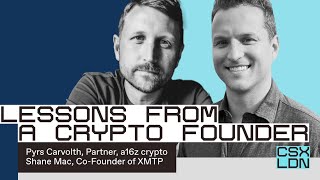
Shane Mac, co-founder of XMTP, traces his path from Gist.com through failed ventures like Zarly to building messaging platforms. He emphasizes product focus over horizontal ambition, the value of mentorship from Robert Stevens, and using weekly dispatches to maintain trust with teams.
Chapters
We are incredibly fortunate to have Shane Mac, co-founder of XMTP, joining us today. I very intentionally use the word fortunate because it has this really sincere sense of both luck and gratitude. For those of you who don't know, Shane has like this incredible wealth of entrepreneurial experience to draw from. But Shane is also like one of the most introspective people that you will ever meet. And so where I, I and we are very lucky and grateful and therefore fortunate to have you with us today, you know, those two things that I just mentioned, wealth of entrepreneurial experience, deeply introspective, like it comes to fruition in this coalescing of like remarkably personal stories about life and relationship building and business. And so everyone, please join me in welcoming Shane Mac to CSX London.
Thank you all. I'm really glad to be here.
I want to caveat what I'm about to say is not just lip service because we're on the stage.
Sure.
But you have this profound ability to really not only recognize but appreciate create these moments where your perspective like totally changes. And I realized walking around London yesterday together, you have like this little slight tell when those things happen because you will slow down, look me right in the eyes and be like, and that is literally everything. And so I wanted to, I wanted to ask you about the moment of everything that led to you being here as the founder of a decentralized messaging protocol and maybe starting with, your experience in Twitter?
What a small question. And I don't— I, I'm really grateful to be here. And I'll try to start this off in the beginning, just in showing my arc. And I think when you say Twitter, you know, I was in a little town in the middle of Illinois. There are 800 people in my town. And I went to Western Illinois, which is a state school that no one ever knows or cares about. And I was messing around on the internet in 2005 and Facebook came to our college. And at the time I was actually in a band. I was playing music and I was emailing a lot of people to book shows and I was trying to get a photo to show up on top of email. And, and at this era of the internet, it was really creepy to tie together your online persona from LinkedIn to Facebook to Google searches. You kind of felt like you had different silos. You didn't think offline and online could be discovered. and it was really weird. And so aggregating an email address to a Facebook photo felt really creepy at the time. And then Twitter happened. And for me, I saw Twitter and I thought, I can text anyone in the world. And I felt like I grew up in a little tiny town. I was always on the internet messing around and in chat rooms. And it was this group of developers that were so passionate about an open protocol to build communication. And it was all based on SMS. Twitter didn't start on the web, it started as an SMS protocol. And for me, just to be able to throw ideas out and I started throwing ideas out of, hey, what if I put a Twitter photo on top of my Gmail address and next to my Facebook photo? And I was teaching myself how to code and I was working on that. I get this random tweet one day from Jen Pitts. I'll never forget it. And I was like, is this online dating? Like, I didn't really know, like, what was going on. I'd never met anyone off the internet. And she's like, hey, my boss really loves what you're building. And she's like, would you want to meet him? So Long story short, I meet this guy, T.A. McCann. He ends up being a legend in Seattle. He was the like founder of building Exchange at Microsoft. He was the head of Outlook and he was building a new startup called Mindbox, which was about news search based on the inbox. And he goes, I think social data on top of email will make people smarter in the future. And this is actually a big idea. And, you know, I want to understand what you're doing. So we talked a lot. I flew out to Seattle, I met him. And, you know, we spent time for 3 months talking about social data, email, etc. And I was just really passionate about the social internet. I didn't know what a startup was. I didn't know what venture capital was. I didn't know what any of this stuff was. I was a QuickBooks manager of the local theater in my hometown and just, you know, basically faking doing QuickBooks all day. And at the time he was like, I'll pay you more than you make now. I'll give you some percentage of this company and we should go do a startup. So it became Gist.com. We were one of the first API partners ever with Twitter. We were pulling social data, created a social address book, became the fastest growing social address book I think ever went to 0 to 100 million people in under 2 years. And in the '08-'09 era of social, it was like, what can we do with all this social data? And as a developer on top of social data, it was so inspiring. And at the moment of that part of our career, it was, what can we do with all this data? Zuckerberg was like, do whatever you want with Facebook data. And Jack was like, we're going to be an open platform and we're going to help people and you can do whatever you want and you can use all this and show us what you can do and we'll be great partners. And we're gonna commit to you, and developers first, and developers, developers, developers, and all this stuff. And we grew it, and we got acquired for $50 million in 2010 by BlackBerry, and I got to go work on BBM. And everything started changing. Messaging started locking down, messaging started growing, social started growing. And my next company was called Assist, which was about business messaging and chatbots. And we were the first API partner to ever launch on Facebook Messenger. 2014, Zuckerberg demoed 1-800-Flowers, you'd never have to talk to a human, and we were the powering chatbot platform of that. But over that whole era, I became obsessed with messaging, and I was always a dev platform on top of the protocol. And I never realized it 'cause I just stumbled into it. But I realized that my entire relationship for 15 years of technology was built on fighting these platforms who told us one thing and fucked us over once they changed their mind on it. And my whole career was getting rugged. The Twitter API changed, we, $700,000 a month bill came. The Facebook API changed. We lost all of our partnerships. The V2 of the Twitter DM changed. We couldn't do broadcast anymore. The entire Fortune 500 who use our platform no longer could reach everyone on Twitter. And my whole career was being their best partner and getting screwed over by them. It was this love-hate relationship because they also built our business and we had like very lucky outcomes. And for me, when Matt came to me, my co-founder, and we were just exploring identity on XMTP, and what happened was Robert Leschner came to us from Compound and he's like, I have $11 billion in a smart contract. I know every single person's address. I can't message 95% of them because I have no other way to reach them than their wallet address. Why can't I send them a secure message? And that was the light bulb moment, 2019 DeFi summer, 2020. And then creators started happening and NFTs. And then Mike Shinoda from Linkin Park was like, why can't I have a blockchain that is all my audience and I can own my audience? And then why can't I just message them and not have to worry about ever getting rugged by these platforms? And for me, it led to here. I met Matt on Twitter back in the day. We lived next to each other in San Francisco for 10 years. Both of us built the first kind of social companies. His was called Social Thing. Ours was called Gist, pulling social data out, but both of us had spent our whole careers basically getting rugged by Web2 social. And for me to build a platform where thousands of developers can build on a permissionless protocol, can build on an open messaging network that can last forever because a company doesn't own it, is the thing that drives me every single day. Because actually you can build more meaningful companies, you can think longer term, you can understand the rules because they're in code and they're actually out there public. and to not have to trust me is to be able to trust us. And for me, that, that drives me so deeply because I spent so long not being able to ever trust, but wanting to trust. And it wasn't their fault. The only business model of social networks was attention. And the only business model was arbitraging the app and just cutting out the developers. And it just played out over and over and over and over and over again. And I think to this day, if you, can't see it in the protocol and someone's telling you to trust us, you shouldn't. The—
I told you you would want to wake up for this, right? Like, if you're not ready to run through a brick wall, like, I don't know what's wrong with you, but my heart's racing. Yeah, I'm like, I'm ready to go. We'll get back to XMTP again. On many measures or metrics, XMTP is a success and trending in the right direction. And but I think for— and you have such a, you know, again, this like wealth of entrepreneurial background to pull from. And I think for this group in particular, it would be really beneficial to start with something that didn't work, and that's Xarli. And for anyone who doesn't know, Shane is a prolific writer and we can— we're going to get into that as well. But you have a blog post called The Best Way to Kill Your Startup and What I Learned Doing Just That. So I want to kind of talk about Xarli and hope that you can, you know, walk a little bit through, you know, the blog post and unpack some of what you learned killing Xarli.
Yeah, in between Assist and Gist is the one I always like, oh, I didn't even forgot about that one. There was a 3-year period where I was the head of product and founding team of a thing called Xarly. And, you know, it's funny, people say to me, XMTP is successful. XMTP is not successful yet. We have a lot going for us. We've had over 100 million DMs send the protocol. We've had a ton of spam hit us though. We have major partners. We have 1.9 million identities activated on the network across DNS and Farcaster and Lens and all of the things made it where we have not had a killer use case that millions of people are going to use and love. We have not found the group experience that's really an economy running in groups. We're not there yet. We just have a lot of early momentum. We've raised $50 million, which plays into, I think, a lot of the story I learned at ZARLY. ZARLY was a local marketplace, and at the time, this is 2010. So this is Uber, Postmates, Airbnb, all that era. We're all in the same little 3-block radius of San Francisco. I live down there. Logan from Lyft's my friend. It was called Zimride, pivoted to Lyft. Boom, Lyft. And all of a sudden we were the local marketplace that wasn't going to be verticalized.
It was—
you could ask for anything. You could ask for a ride, you could ask for a coffee delivered, you could ask for a dog walker, you could ask for a baker. And it was a reverse Craigslist. We raised $35 million in under probably 18 months. We raised $25 million of it in under like 6 months. It launched at a random hackathon at Startup LA. It was like a crazy thing. And in a weekend we actually built a product. We had a killer CTO. Ian is still my best friend. He lives in Nashville with me actually, and we built this product. And you could just say, hey, I'd pay $500 to rent someone's Lamborghini out front. It would ping everyone in the room and everyone in the room be like, all right, that's my Lamborghini. Boom, made $500. And the demos were so magical that it was a drug and it led us to the wrong path. And what happened was we went horizontal, not vertical. And the biggest thing that happened was our egos, our lack of self-awareness, and our inability to actually think smaller to go bigger. And at the time, I didn't know. I'd never really done a marketplace. I didn't really have the Silicon Valley experience. I didn't understand consumer technology at that level. And I was wondering, I thought about this the other day, like, why did the same investors who won in the first wave win again in the second wave? It's because they knew this secret. And we would sit in the office and I remember this guy, Alex Sharp. He said one day, we're not going to be a dog walking app. We can do dog walking and a lot more. And I'll never forget it. And he tweeted, you could go find this tweet today. His name is AJ Sharp. Search this, Postmates. He tweeted at the Postmates founder, Bastian, and he said, ha, you're just gonna deliver coffees? Yeah, good luck with that vertical. And I don't know how much Postmates sold more, sold for, but I will tell you it was more than us. I remember that because internally our arrogance was sitting there being like, we're not just a vertical app, we're bigger. We're better. And you know what? VCs bought that shit. We were down there in Silicon Valley and I watched this guy, Bo. He's fantastic. Friend of mine. This guy, I mean, if he was a, if he was a televangelist preacher, we would be bigger than Joel Osteen. And he was pitching and he believed in it and he was like, we're creating a new economy. This is a new economy. It's a local economy. It's a reverse Craigslist. It's this, this, this, this, this. But the product only kind of worked. It worked 50% of the time. We were arbitraging a lot of it manually behind the scenes. We had a whole team on Craigslist arbitraging Craigslist. But that's what Airbnb was doing. That kind of works. But we were across so many verticals that everyone was arguing about what the right vertical should be. I remember the day when Meg Whitman walked in the room, the CEO of eBay, and she's like, this reminds me of eBay. Every time we added another category to eBay, we made more money. We shouldn't be a vertical company. We need to make sure we can, you know, go to more verticals. And she was awesome, but also her experience was built on Web 1. Right? And you gotta be careful who you listen to and/or take their advice and then think about the customer. What is actually changing? And what was changing is that we couldn't have picked a small enough vertical to build a great experience around. And once we nailed that, we maybe could have got lucky enough to build something else. But it turns out Wag, the dog walking app, is a $5 billion company. We couldn't have picked a small enough vertical. The reason is, is because the community you build, the suppliers you build, the evangelism you build, the way it spreads word of mouth, the product experience. I mean, Wag is amazing. You know why? Because when your dog goes on a walk, you can see where it shits. I'm not kidding. Like, and to build that nuance of product, that map where you can see, oh, took a pee, took a poop, how many long? Oh, wow. And then the community around it, if the market's big enough, dogs, people like underestimated animals. The Airbnb for dogs, also billion-dollar company. They all merged, Rover. But the key insight was our ego to, and our pride to want to think more horizontal and bigger was the thing that actually, that's not what any of the investors want. They want you to actually win with real stats and real growth and make it work. And it's not actually from going broad, it's from actually going less. And then if that doesn't work, switch the, switch the vertical, or maybe you need a bigger vertical, but adapt from there. But the bloat we got, like the experience you got from Uber and the map and the car and the driver and the rating and the past rides and the badges you get are so related to rides that it made rides magical. But us trying to do rides and Postmates and Wag and Cakes made our experience mediocre or bad. And to me, we didn't have the self-awareness to sit in there and say, is this not working? Why is this not working? Actually, only 43% of the time do we actually get it fulfilled. And it's because we manually have 100 people in the Philippines reaching out on Craigslist doing this this thing, and it's not real time, and it kind of works, and it kind of is just like— but we could always justify it. And we did so much justifying. And I think the lesson in it is it came from our insecurity and our ability not to look at the team and say, I don't actually know if this is working yet, but we believe in it. We can work on this if we think smaller, if we get more focused, if we do less and actually feel if it's working. Is it working? Is it not? And if it's not, had I said, it's not working, but that's fine, we can make this work, We would have won, but I didn't. And 3 years in, what happened was every employee— we had 45 employees sitting in Mint Plaza, downtown San Francisco, all the money in the world, fancy-ass office. Jack Dorsey lives next door. We're so successful. We were like, wow, we live above Mint Plaza. We can get amazing coffee whenever we want.
Free lunches.
You know, the most successful thing we ever built was Blue Bottle Cam looking down out of our office at the fucking coffee shop, literally. And like the whole— if we would have— if that would have been an investment, like special purpose vehicle from that camera, every single person in that 4-block radius used Blue Bottle Cam and loved ZARLY for the camera. Zara. Yeah, no one fucking used Zara. People just used it to know if there's a line at Blue Bottle. We would have invested in Square and Lyft and Uber and Twitter, and we would have been— I would not be here. And what's fascinating about it, though, is had I just been okay saying, I don't know, and I actually, I do know this, I don't think it's working yet, the team is more motivated. And holding that secret and thinking you can't share when it's not working or asking those questions together, is the thing that ultimately leads to the culture you don't want when you think you're protecting the people. But the truth is you don't want the people early stage that you have to protect. And getting that wrong is really tricky. I think that that lesson is something I deeply think about. Even XMTP, when you say we've been— we're successful, I'm like, we're not like— we have a lot of good things going for us. It works. I use it every day. We're not a billion-dollar company like WhatsApp. We're not a user company. Like, we're not there yet. Yeah, but we have a lot of great things happening. Subscribes work and Jamie uses it. Use it, lots of developers use it, Coinbase. Sure.
Well, I think—
but not, not yet.
What's interesting about the, the way that this conversation has kind of shaped around Zarali, and you— again, I've said this in the beginning, like, deeply introspective. Um, and so you have another blog post that's called How I'm Lying to Myself. And so for— again, like, I think this is so valuable for the audience to hear. Like, that blog post really dives into the mechanics of, like, how do you fix those things? Like, how do you become more honest? How do you talk about the hard things. So in the blog post, How Am I Lying to Myself, there's like different examples and I'll just give you one as kind of like a prompt here because I think it's really applicable to everyone out, out in the audience building. And the lie is if we push harder, we will get there. There's another one. Our culture is struggling because of X. There's another one. If we just add more, we'll find what works, which I think is potentially, you know, reminiscent of Xarli. How are you keeping yourself grounded every day with this concept of, you know, I'm not going to lie to myself about these anymore. I'm going to be upfront with these. Like, how does that come to fruition for you, whether it's in your personal life, whether it's at XMTP today? How are you continuing to, like, institute that?
Yeah, I think the tricky thing about lying is that we all do it, but we actually believe that we don't. And we think that we're aware of it when we do. And actually, the worst lies are the ones you can't hear. And so being able to create space that allows you to listen and there's tactics on figuring it out. So look at your last investor update and look at what you didn't say and then ask yourself, what did I not say? What am I scared to say? What do I think if I actually told them that it wouldn't— probably it might be really scary to say, or you're really worried that they might actually not invest or whatever. Right. And I think figuring out what those are for you and how to understand that leads to something that I say, which is like, if you want to go into a VC pitch meeting and you don't want to get shot, then just commit suicide. And I don't mean actually commit suicide, but if you start the meeting with the thing that you're so scared to talk about, Take user growth. If you don't have user growth, start the meeting in that area and say, you then own the story. Listen, we don't have, we're not focused on growth. We're focused on retention. If we have a leaky bucket, then it doesn't even matter if we have growth and all we're doing is product and it's just trying to iterate on product. And this is the thing I would love your feedback on. And you can lead the conversation there and build honesty around them. And you have that authenticity from the conversation and then you end the meeting on a high. Versus ignore that. And at the end of the meeting you get shot and then the meeting ends on the— you're like, you know, how's growth? And if you can look at and be more introspective and figure out like how we lie to ourselves— and lies may be an extreme word, but you know, the more work you do, the more you realize that like that's how we deceive ourselves. And you learn to ask questions of like, how is it not working? How, how does the team perceive me? Right. And when I was at Zarly, like, I learned that they thought we were so confident and full of shit. And really what I deeply thought was I was protecting them and I didn't want to share that like we were running out of money and I didn't want to share that we were burning so much. And I just kept talking about the use cases that were working while being deeply scared that we weren't. And I just leaned into the thing on the other side while then being confident on the mission, where we're going, how to focus, what, what can we control, what are our weekly rituals, and you can control the ways in which you ship, the ways in which you analyze things, and the way that you create a space to ask honest questions. I don't know. I think there's a lot of different things in that, but just the language and the questions by which you can ask yourself or create space to listen. It's hard to do. It actually— it's so easy to just go scroll another tweet and scroll another feed and talk to your— talk, talk, talk. I've never learned anything by talking.
Yeah, well, it's interesting. So like one of the things that came— what I just heard you kind of saying is this concept of like through honesty you control not only the narrative but the environment in which you're like operating. And so I want to talk about another blog post. So like there's a theme here, as you could tell. Shane is a prolific writer. I highly encourage you to follow his, his blog if you aren't already. You tell this story about, about how language drastically changed one of like the most important partnerships you've had and it was with Apple. The post is called The One Question That Almost Killed Our Biggest Deal with— our biggest partnership with Apple. Can you talk a little bit about the audience for this concept of like change the question, change the environment, change the outcome?
Totally. So this one for me is everything because all of you are going to go build teams and you're all going to go build companies and you're going to go build culture. And culture to me is the language and the rituals by which you do things that creates the space for others to know what to do. You. That's it. And I had used the wrong language my entire life until I met a guy named David Marquet. Alex talked about him earlier, the Navy captain who was the head of the Navy. He's actually been my coach for the last 10 years, one of my best friends these days. And I was lucky enough to have him join me for the largest launch we'd ever had at my last company, which was a messaging company that was doing chatbots on messaging. And it was with Apple. And all the executives from Apple flew out. We were at the Phillies Stadium. And imagine the Phillies Stadium. Every single seat in the stadium has a QR code. This is 2018, so pre-COVID. So everyone thought QR codes were silly, but Every seat had a QR code. iMessage was opening up to brands for the first time ever, and you could scan the QR code, tap 2 Bud Lights and a Yuengling and order beer to your seat with Apple Pay and fully reorder automatically with no human, fully automated, all in iMessage. And so it was actually— it seems easy to do. It took me about a year of planning to do this. And there was another partner there. I won't say their name because they were not fun to work with, but But they didn't really do anything, but they were like, had to be part of the conversation because of the way that Apple had set us all up and we were in the room. And their technology started failing. And I had told the team 6 months earlier, imagine the live chat agent software fails 'cause they want us to fail and build the same thing so that if at that moment that day when they say their shit doesn't work and this whole thing's at risk, that we have an agent platform. And this guy Carlo, he's my favorite engineer. About 11 a.m., I get this call. Hey, Shane, the live agent software isn't working. The connection doesn't work. The bot doesn't actually work. And it's blocking the whole— this is 6 hours before we go live. The whole Philly stadium is lined with QR codes and the Apple team has no idea. And they're all out there. Tim Cook's email, I'm like, we love this use case, you know? And we're like, what's about to happen? And so I go, Carla, did you build 6 months ago? And I said, imagine we get screwed here. And build the backup plan. Did you build it? And he goes, he smokes a cigarette. That guy's a true Italian. He's Italian. Of course, the boss. And he turns it on and it actually looks better than theirs. It has a full POS system and he's just smoking a cigarette. And I was like, hey, Amanda, we gotta go train all these, all of these beer delivery people on the person here that's sending the orders. Hey, B75. And they're just sending it from the back room, beer out. We got to train them how to use this software because they were trained on this other software. And this whole story is happening at the moment. David flew in. He's like, I'm going to fly in for this launch. I'm going to record it. I'm going to put it in my book and I'm going to show how, like, great leadership leads to great outcomes. Everything.
No pressure.
Everything's screwed. Nothing's working. The whole thing's collapsing. Me and David haven't even talked. He's sitting back here taking notes like, this looks like a chaotic mess, you know? And I was like, hey, you want to go to lunch? And I was like, Amanda, are you good? She's like, I'm good. I'm good. I'm like, are you sure? Do you need me here right now? Like, we're just going to train these agents. It's our new software, whatever. Whatever. She's like, yeah, I got it. Cool. So I go to lunch, David and I sit down, and I sit down at lunch and David and I get a water and we're looking at the menu and Amanda calls me and I'm like, oh man, it's calling. I said, hey, what's up? She's like, Shane, the live, the other live agent team is all like really mad and they're kind of like really pissed at us. They think like we're trying to screw them over by replacing it with our software, but like our stuff really works and they want to try to plug theirs back in. And I was like, tell them absolutely not. And like just train our agents. Do you know how to train our agents? She's like, yeah, yeah, I know how to train our agents. Like, can we do that? Yeah, yeah. Do you need me there? No. Like, I'm telling you right now, like, if you need me there, I will come back right now. I'm only 10 minutes from the stadium. I'm like, are you sure? She's like, yeah, we're good. I said, are you good? And she's like, yes. And I hung up and David looks at me and he goes, what'd you do wrong?
The silent observer.
And I was like, I mean, I felt really empathetic. I felt like she knows I'm really there with her. I felt like I was really telling her, like, you know, I'm the CEO and I'm listening and I can be there in a second. He goes, call her back. And when you call her back, say, on a scale of 1 to 5, how much do you wish I was there? She's like, hey. I'm like, hey, I just have a question. On a scale of 1 to 5, how much do you wish I was there? 5. And I learned in that moment that if you don't change the question and you don't change the environment, you will get a different outcome. And as you become leaders and as you become the people running your meetings and as you become the people running your companies, our blind spots and our egos and our inability to ask binary questions and realize that the highest performers in the company, the people at the highest performing level, will always default to the less friction to the boss, the less friction to the boss. And so your best person, Amanda, she was the best person in the world. She was so good at her job on a level that I would be like, I trust Amanda with anything. And she couldn't tell me I need help. Help until I created the environment for her to say it. And you need to think about that. And a trick to do this is to never ask a binary question. Use the word how. You can't ask a binary question if you start the sentence with how. How could this go wrong? How much would you like me to be there? But if you say, do you want me to be there? She will say no. And if you think about this in the language within everything you you will get different outcomes to your meetings, to your people, to your leadership, to your feedback, to your company, and to the whole thing. And had that collapsed and not went off, it could have killed the whole company. And that's the reason we got acquired. Everyone wanted to buy us after that moment. It made the Apple earnings call. Tim Cook's on the earnings call like, we just launched it, the Phillies, business messaging is amazing, Apple Pay is awesome, and the Assist team just blah, blah, blah. And that was a moment of the company. And we were 3 hours away from that. Probably kind of blowing up. And I'll never forget that moment. And David Marquet asked me to write it for his book. And actually he got the best story ever, which is that story, right? And so the story in the book is about using the word how and not asking binary questions in that if you change the question and you change the environment, you will change the outcome. And if you're not aware of it and you're not sitting there thinking about it or asking it in different ways, I think about it in every single meeting I'm in, and it leads to relationships and trust at an executive level that I've never had. And that's what you need to do within your companies. And that's what we all have to do if you want to have a self-aware, honest, and a company that is able to see the problems for what they are and not bullshit around and actually flex and act like we don't need to help each other.
I want to definitely take questions. So Shane is— has very kindly flown here from Nashville. He is here with us. So So definitely use your time with them.
The one of the stories you talked about, you, I think transparency was a theme and I just want to know how you feel about transparency in the way you conduct yourself. In what way? Personally, professionally, investors, like in what context? Professionally, I think. Do you find, are you completely transparent when you are talking with people or do you hold some amount back for negotiation purposes? How do you think about that? Even? It all depends on who you're talking to. My goal is to be open and transparent with everyone in the right moment. And let me break them down because I think they're very different. You have internal culture, right? You have partnerships, you have investors. And if we just look at like that or partners, right, for like the public stuff, we're very open. We're an open protocol and we try to be as transparent as possible and write publicly and vulnerably. I think vulnerability leads to kind of feeling transparent. There's always things we're not saying, right? It's how you say it that actually leads to feeling like you're transparent. And I think just the ritual by which you communicate is important. So I always think of setting the expectation of when I'll communicate so that people feel that I'm being transparent. And I learned this the hard way in the past because too transparent can be chaotic. When I was I'll be transparent, I'll share everything. I scared the shit out of my team because I was chaos, right? Versus actually what we do now. This is our 147th week at XMTP. The day I started the company, I told Matt, here's what we're going to do. Every Tuesday at 10:30 a.m., we're going to write a dispatch. It's going to be an intro from me or you, and we're going to do it every other week. So we hold each other accountable. We're never going to miss a week. It's going to say this week, last week, and key decisions. And everyone can look forward to our communication weekly. And then we can be as open as we want in that email. And the cadence of which that is, we've never missed a week. We're 147 weeks in and it drives a weekly ritual of execution at our company that we work in week everything, week sprints, week thinking, week planning. Like that's how we think. And that leads to them feeling like we're very open, like we're very open in that I'm very vulnerable in all hands. If I've had to fire people, we've had to group, group layoffs, I've gotten the team wrong, I had to change the strategy. But those strategy moments, I think I'm fully open at exec with everything. And I let them know that everything I say is not a decision. It should lead to the next meeting where we have the conversation, but we should keep exec conversations tight until we know how to communicate it in a clear manner to the company. And compounding clarity is the thing I look for now because I used to create compounding chaos and rapid-fire communication of openness is actually chaotic. People can't comprehend it. It's hard to think, even if it's well-intended. And so a ritual for your partners that is set, a ritual for your team that is set, and then be chaotic with your most trusted partners on the exec level that can help you be more clear to always think about how to then go out with it. And then publicly, like, mystery makes history. So, you know, hide some shit and drop some shit.
So my thing is I'm like, I come from a very technical background as well. And, you know, being a first-time founder, I feel like there are other people like me who don't understand or know the language with which you are communicating to us right now, where you are using Excellent terminology. Uh, almost like—
Am I using jargon? I was trying to be jargonless.
No, no, no, not jargon. Effective terms of business that I have never had to encounter before.
Listen to your heart?
Well, that's a good one.
I like that one. I'm just kidding. Like, like what would be an example of that?
Um, for instance, when talking to investors and they start asking questions about your valuation structure and the funding and things that you haven't yourself been educated in, you're not considered about, and you need to be able to to, you know, transparently, but also not give a— transparently communicate with them, but not give away the game. Do you know what I mean?
It's—
I know this is a very open question, but it is very much what is the most effective way for us to learn like that, those terms, those business things? Hopefully reading a lot of books, but, you know, I'll take whatever you can give me.
Do you mean around like the actual fundamentals of venture, starting a company, raising money?
Absolutely.
Yeah. Yeah.
Yeah. Well, there's a lot of VCs in here.
Yeah, I know, right?
They're really good at talking like this.
Let me answer it in just a general term and just you can tell me if it's bullshit or not.
Okay.
I think that being a first-time founder is awesome and there's a lot of hijacks the second time that you're like, God, I wasted so much time having to learn that. You're just going to have to learn that. There's books, there's mentors. Like, that's all the general advice. I would say that there's a thing you can do that is the greatest leverage in the world. That actually allows you to learn at the same time. And that is a philosophy I call doubt is your greatest leverage. So if I'm in a VC meeting and we're arguing, they're, they're choosing yes or no, not because of your valuation. They're choosing yes or no. And VCs are binary. Once they choose yes, then we're just debating a bunch of shit, right? So your belief in yourself, your belief in your mission, and then your ability to not say shit you don't know about, right? Like, oh yeah, I was thinking, you know, we're doing about 3 on 12 and you just make shit up. Don't do that unless you've already thought about it. You've planned it out. That's 2 years in the bank and actually you were there and I want to dilute 10%, whatever. But you could also say, you know, I, I'm trying to think about as a first-time founder, like, how do I only dilute 10% at this level? Like, look at our product traction and look how far it's going. Like, and go get some other VC conversations happening and ask them to help you think about it. That's what they do for a living. And actually the doubt is authentic and you're asking them for input without saying anything. And at least in that moment, because it is so nuanced at this stage, right? Some people— I walk in, I'm like, listen, we're raising 10 on a 50. And you're like, you know, like, great. But if you don't really know it and you haven't done that work and it's early, learn the signals by using doubt as a way to actually get leverage. And doubt is the greatest way to let someone else help you. And it's not a bad thing. And I think if it's, if it's authentic, if it's authentically done because you actually don't know, not like manipulating it, I think it can be really valuable. Yeah, that's great. Right? Yeah.
I mean, I think it also lends to your comments about and your blog post about how am I lying to myself, right? Like, totally. That open and honest conversation with yourself about where you're your knowledge is and asking these types of questions in an open forum and now, you know, having the subsequent conversations to go fill that knowledge gap.
Because the great VCs like an Andre, this level of VC wants to help and they know what they're doing. They see deals all day, every day. There's no— if you ever think you're going to win a negotiation with the VC, you're high. Like all they do is this. And so actually ask them like, you know, meeting with Jay, like ask them what is the best way to structure this? What are the 3 different scenarios? Can I raise more than less? Like, I don't, I'm not really sure here. If you kind of have those relationships, I wouldn't walk into a first-time VC and it's the big pitch meeting and kind of maybe have that strategy, but maybe you shouldn't be pitching at that meeting if you're kind of in that much doubt. So that's kind of my philosophy there.
I'm Lisa, I'm from New York. I'm one of the founders of Roux.
Yeah, it's the recipes that get forked so you can remake and remix recipes as many times as possible so that everyone in the world can get value from the recipes from Essential Recipe.
Nailed it.
I'm just kidding.
He listened to your elevator pitch.
That was great.
A lot of the founders that go up on that stage at some point mention a mentor in their lives. One, maybe many. You've done the same. Can you tell us a little bit about either the time in your life or the context that was happening around what that relationship looked like, how it started? Was it something that you went out and sought? Was it someone that dropped into your lap?
What'd you say? I didn't hear that. Of what moment?
When a mentor, like a very important mentor, when you started a relationship with a mentor who proved to be very important with you, you know, I would say Robert Stevens.
So Robert was my co-founder of my last company, but I'll share like what I learned. There's two lessons I learned. He was the founder of Geek Squad and, you know, and he built a multibillion-dollar company that I haven't done. And he was the CTO of Best Buy for 10 years. He became a mentor before, and I met him on Twitter because he was the CTO of Best Buy and he literally was on Twitter all day. And I was like, how's the CTO of Best Buy like just on Twitter? And I just messaged him. Messaging to me has changed my life. Like, the reason I love messaging is actually everything in my life has happened from digital messaging since I was 13 years old on eBay. And Robert, I DM'd. He was like, I'm moving to San Francisco. And I was already there. And I said, if I can help you, let me know. And I started having dinner with him and his wife. And he's like this brilliant thinker. He's kind of like Rolex. He's— he thinks completely differently than everybody else. He's like the Wizard of Oz. I would go to these big meetings and I would walk in and Robert never— I mean, probably just the joke of like, you be CEO, you know, I'll just sit back here in the corner. And I'd go to these meetings and they'd be like, I'd have all these Robert stories and Robertisms and they'd be like, can we ever meet the wizard? I'm like, probably not, you know? And like, him being the Wizard of Oz was actually the secret of it all. But he's now my best friend in the world. And I think two things happen. You have a mentor who came in Shane, and he told me at the time, he said, your ego is so big, you need to stop saying— I would say at the time, messaging is the future of search. And that ability to not have my pride run my life and run around chest to pump chest in Silicon Valley VC speak changed everything because I would've failed Assist had I kept doing that. And I was saying messaging is the future of search. Where'd it go? He goes, just by saying that, you're actually telling the team we're not gonna be able to deliver next week. Week. We can have a big external vision. He's not saying don't do that. He's like, but on a day-to-day, let's talk about actually we're just going to make a chatbot via 23232 book a haircut at Great Clips and let's do it by next week. And at the time, the thing that you should bet on— this is like Chris Dixon, everything starts out looking like a toy. What that actually manifests as is you have to be confident building something that people think's a joke. That's the hard part. The hard part's not, oh, everything starts out looking like a toy. It's that when you're in it, you're like, I don't just want to be a meme platform. I don't just want to be a dog walking app. And Robert said to me, we should kill all this live chat support, which should kill this messaging app. We should just build chatbots and let's just be an automation platform. And I was like, chatbots? That's a fucking joke right now. It's funny. Here we are 11 years later, you're like, yeah. And somebody asked me today, how'd it feel to know that you guys built the first chatbot on messaging? I said, it feels like I'm not a billionaire. And, and he said that though. And I remember the time he said that. And a true mentor and I and what he gave me, what a real mentor gives you is the ability to not seek validation elsewhere and to believe in yourself on that thing. And I— everyone thought it was a joke. Our investors thought it was a joke. You can go read the TechCrunch article. Assist has no app and launches with with 13 services on 23232. And VCs were like, man, you had the best designed app I'd ever seen. You killed the app. What are you doing? Like what? And no one got it. And that post, Robert gave me that confidence. Literally the CEO of 1-800-Flowers saw it. I get a call. He goes, hey, this is Chris McCann, I'm the CEO of 1-800-Flowers. I'm like, oh, Chris, what's up? He's like, I saw you integrated FloristOne API for your chatbot. Why did you not use 1-800-Flowers? I'm like, well, I don't know if you have an API. He goes, yeah, we don't. I'm like, well, why are you calling? He goes, because I want you to build that chatbot for us. And I was like, at the time we weren't an enterprise messaging platform yet. We were trying to be consumer. And that actually, that moment, Robert gave me that confidence to step off the ledge and put out something that's kind of a joke. Not a joke. We integrated it. He literally got his haircut at Great Clips. Still to the day, he only does it because of the queuing system of efficiency. And he'll get a shitty haircut because he can book it faster. That's fucking crazy. Like, that's how robotic he is. And the first thing we integrated was you could text "cut." It would text back, here's the nearest 3 great clips, 12 minutes, 19 minutes, 24 minutes. You would say one and you would show up and your name was on the screen and it'd say Robert Stevens. And he was like, this is it. This is the future. This is chatbots. We don't even need to use the internet. The fucking websites suck. Long story short, the CEO is like, we'll pay you $100 grand to build this chatbot because I want to build a messaging service where people don't have to call when they want flowers. At the same time, Zuckerberg is planning to launch Facebook Messenger platform. David Marcus calls, hey, we're thinking about flowers as a use case for messaging. We saw this like thing you're doing. Do you have any other partners? And he thought we were using FloristOne. And I was like, well, actually the CEO of 100 Flowers— he goes, 100 Flowers, I think we could say on stage something cool about that. And then we started working together. 9 months later, Zuckerberg gets up on stage and says Messenger is now open for business. And he says— and Zuckerberg calls 24 hours before the demo and says, do you think the CEO of 1-800-Flowers will care if I say because of Facebook Messenger, you never have to call a phone number again? And I was like, his business is named a phone number. I don't know. And call Chris McCann. And Chris goes, Shane, my whole career is built on being first on the platform shift. We were the first person to sell on a 1-800 number. I was the first person to sell on CompuServe in 1993, and we're going to be the first person to sell on Messenger. And I don't care what he says. Enterprise. And he came and he sat in the front row and we sat there together with Sheryl Sandberg and Zuckerberg demoed it. And literally it— and then we became the largest enterprise, you know, bot platform with Facebook for the next 7 years. I was CEO and Robert became one of my best friends and my true partner. And I think the best mentors in life are the ones that become partners. It's hard to work with. I'll be honest, like working as a co-founder with Robert at the first few years when I was seeking validation from Robert is hard. You're like trying to always ask him and he's like, hey, you're the CEO. Like, you know, figured out. There was times when it was hard to deal with that. And then, you know, I think self-awareness, honesty, being vulnerable leads to being able to figure out how we're very different. And now, you know, we're true— I talk to him every day. Every time I get in the car, I call Robert and we get to talk every day.
So my question is about writing. Um, talk to me about your writing process and, you know, distilling down these big ideas and, and putting them into something that, you know, people can reference and carry forward and revisit over time?
In what aspect? Like, are you asking about the process, the insecurity I go through before I hit publish, the framework? Like, I'm curious, like, what would be most helpful to you?
Yeah, I'm curious how, like, when you have an idea, like, you have the idea for something that's going to turn into an essay, right? Or maybe you don't, right? It's really kind of an open question about, you know, your writing process and how you kind of approach getting like this thing on paper? Yeah. And articulating what you might think you want to.
It's a good question. And I think I'm probably more of an artist and a creative in this sense. And the business founder CEO of me has learned over time how to put a gate up to know how to contain this, to be creative in an engine and then know when to publish. And in the past, I don't think I had that as much. I would very much like would just completely write and hit publish, which I talked to like I think compounding chaos was the thing I use versus compounding clarity. I'm way more of I have infinite thoughts. My brain is just like a pinball machine. I spend a lot of time trying to, you know, calm it down, trying to be more present, trying to listen to things I can't hear. That's come over time. And when I have these thoughts, I always have a note on my phone as thousands of titles. And just Apple Notes. And there are moments when things hit me where all the dots connect. And the way I think about writing is connecting disconnected dots. And the stories that are interesting aren't like— I don't— the reason I tell stories is because if I came here and said like, you know, like, I don't know, whatever YC would say, just generic advice, like I could come here and just talk about— I could read Paul Graeber. I always say like, Listen, I can read the book. You know, this guy, the worst VC I ever had in the world, is terrible. And the reason he was terrible is because he was actually insecure himself and he really treated us like shit. And one day he called our CEO and he's like, I don't know if Shane should be the head of product. He went to Western Illinois. I'm like, Jesus, fuck you, right? And he went to Stanford and he was at Kleiner and it was all this stuff. You know, anyone know Kleiner? Oh, you do? I thought Andreessen kind of took the fire. And Kleiner was great. Like, I actually love Kleiner. Ilya and Mamoon, I love them. And it was a junior partner. But the reason it was bad is because when he would come in, he would always say these bookisms. He'd be like, oh, this is what Amazon does. I'm like, listen, dude, I don't care what Amazon does because you've never worked at Amazon. Like, I can read the book. Just tell me what book you need to buy to, like, do that. And so for me, I try to write about the stories that connect dots that are disconnected because that's what makes them unique. So when I think about writing, I'm always trying to understand what are the things that I see in the world that don't seem connected, that actually pull a story together. And then I usually write in one sitting, always on my phone. I never write sitting at my desk. I almost only write and I always set up the environment. I always— I'll like travel to a hotel. I saw a hotel yesterday I'm going to go to tomorrow morning because the inside was beautiful. And if I go sit there long enough in a notebook and just scribble, I'll end up writing about a couple of topics I'm thinking about right now, and it'll all be on my phone. It'll all come out at one time. And then I know not to hit publish. And then the next 3 days for me are just like these manic editing spirals. And I get down to like just removing sentences and rereading it 100 times and just— and I wrote one called How to Build Shitty Products like 8 years ago, and people still internally reference it all the time. And at the end of it, it said, hey, like, I want to show you this product. It doesn't do much. And I think people think that they need to write for output versus impact. They need to build product for output. You're paid to do a job, more work, more features, more stuff. And actually internally, my writing, I try to show the lesser of it, the simplicity of it, the editing of it. And I talk about that with the team. We do a thing on Friday. It's called What's the Smallest Show and Tell. And then I always congratulate in our culture the smallest demo of the show and tell because you want people to share. You want people to share the small things. You want people to get over the insecurity of putting it out there. And so for me, it's that box of creativity and finding the environment by which I know that the dots connect. And usually it's spaces that I'm not usually in where I take ideas that I've actually been thinking about. And, you know, I throw it and I throw shit on Twitter all the time and kind of just see what sticks. That's what Twitter— Twitter's always just been like a All right, well, think about— think about one right now called blockchains are the future of communication. I dropped it this morning. Brian from here, you like— and this already has tens of thousands of views and like 50 people have already retweeted like, oh, this. And I've been testing this because I went to CNBC Squawk Box 2 weeks ago for this talk for like a prep interview. And all the things around messaging and blockchains and crypto and NFTs and identity, they don't give a shit about it. Didn't care. Not one thing, swap, bridge, blah, blah, nothing. And I said, what if it could protect us from AI? They're like, that's a story. They're like, what do you have on that? I'm like, what if you have network-level consent? What if email and SMS actually can't protect themselves? And as bots go exponential, there's no way to have proof of human in this entire world. And if an immutable ledger of identity can actually protect your inbox so nothing can get in it except a human, if you want, what if you could do that? And they were like, huh? And I was like, what if it exists today and I could show it to you? To you like, huh? And like, and so, and I just been testing it. That's a story I want to write, you know what I mean? Then like, I just kind of been throwing it out there.
And that's a very good example of speaking to your ICP, right? Like, Shane totally adapted everything that— well, not everything, like, because, you know, obviously you have a great mind for these things, but like, right, he reached for his typical tool and it wasn't going to work, so he pivoted. Like, that is what we all just talked about with the ICP.
I think the other secret I'll share with is every time I publish an article, I edit it publicly for the next fucking 4 years. And every time before you publish a book, this is what we teach a class at Georgetown and we make the students publish a book. They thought they were coming to an entrepreneurship class and we make them published authors and it changes their lives. They get a job because of the book, not because of the degree. But everyone goes through the same doubt spiral right before they hit publish. And it's just like launching a startup. Up. And it's just like writing a blog post. And we're all like, my parents are going to read this. It kind of sucks. I've been working on this for a long time. It's dogshit. It actually isn't good anymore. We literally every time I still do it every day and you never get over that. And the, the reason you can be a founder, the reason you can be an author is because you, unlike most other people in the world, will step off the ledge. And that moment is the moment. This is why business school is shit for becoming a founder. Because you learn all these fucking spreadsheets and shit. Sure, that's how to optimize. And actually, business school people are great at growing your business, but they don't learn how to deal with the vulnerability and the insecurity and the feeling of incompetence. And your parents are like, what have you been doing in the basement for 2 years? Is this real? Like, I don't know. Like, because they're actually validated by you working at Coke, right? Or CAT or Facebook. They're like, my son works at Facebook, right? That's what your parents want. Fuck that. You know, my mom's been like, I have no idea what my son does, but he seems to be doing all right. You know, that's what she's been saying for 17 years now. And I think that's the difference. That's what you don't learn. And that skill is learned by that act. And that's what actually putting yourself out there in that moment, it's for the pitch, for the writing, for the book, for whatever. And it's never right. And just edit forever. And what you really learn is that no one fucking cares about you. At the end of the day, like what you actually learn in all this. Someone said the other day, like, don't worry about imposter syndrome because everyone's too busy worrying about themselves. Like, and like, you're like, yeah, actually, why do I think anyone cares about it? Yeah, right. And that actually there's a, there's a thing called insignificance theory that Tim Ferriss kind of talks about a lot. And I think it's in that if you realize that, like, I mean, we're just a little rock in a big thing just floating here and we're all just, you know, out of this shit worried. We're all worried. And so then you're kind of like, who cares?
Yeah, right.
And those posts, the who cares, you know, I've had posts that had millions of views and changed my life. Co-founders, workers till this day, almost every single person we hire says, I read Shane's writing and that's why I want to work here. And it's the ones that actually aren't great, but they're vulnerable and real and honest. And I still, I still edit them. I go back, I change it and whatever.
Again, I already plugged it once, but I highly recommend subscribing to Shane's blog.
And I don't write a lot. I think to your point, I'm not a, oh yeah, every Monday I publish. That's just not my DNA. Some people can do that. I'm— I just, I do it with the digest. But the way I did that is something for founders. If you don't send an investor update and you're like not accountable to it and you're actually not creating the story every week, create the system by which you will. So I told Matt at the beginning, we're going to do it every other week so that I can yell at you and you can yell at me. Right? And it worked. We haven't missed one week, 147 weeks in. And now we let our whole executive team do it. So we have 7 people on the exec team. And I think that kind of system is how you keep yourself accountable. If you do have to publish every week, what are the 2 or 3 things that, that you did that really got you to your Series A, that got you the traction? Build something people can feel. And if you can do it with someone in the industry that actually has, you know, the impact of like, I mean, Coinbase, not everyone can, but in this space, the bar is so fucking low for consumer experiences that are great. Build shit that people can use that is awesome. That is simple. We— everything's there now. Some smart wallets and the app UX and all this stuff. You want to raise a round, just build something that actually is usable. Like, and I don't— I mean that lightly because I actually believe this is my final— I'll end on this fucking rant. The whole space validating ourselves on fees and swapping fees and meme coins and all this stuff versus great products, great experiences, real networks growing with value and utility. I think we've got lost. And I think all the words and jargon of this space need to go. Swap, bridge, L2 fees, wallet addresses, seed phrases. No one cares. And I think the magic is actually the L2 of the future that wins, or the L3, or at this point an L6. Someone's going to build the great consumer experience like a messaging economy that drives microeconomies that no one even has to know that that's happening. And when I watch this on Converse, they're, they're an app on top of— it's like the WhatsApp for XMTP. It's a real simple app. App, but he built the ability to send money, USDC, globally, instantly, for free. Cash App can't do it, Venmo can't do it, Apple Pay can't do it. They can't pay across borders. And what it was, it's all built on crypto rails, right? But it's using Base, an L2. It's using USDC as the token, so it feels like dollars. And it's— what's interesting, he uses Privy as a login. And all these things came together, and it's the first time I experienced sending money globally for free where I never had to know anything about crypto. And I truly believe that the future, if we want this space to work, has to be in that vein. And when you start building experiences that people love to use with all these primitives, smart wallets coming online, account abstraction, Privy, all this stuff, that, that will raise all the money in the next 3 to 4 years. All this short-term fee abstraction, if we get lost in like pump and dump stuff again. I mean, I think there's a lot of cool primitives. I think it's interesting to watch the meme coins. I think there's fascinating things happening of like social dynamics and incentives with tokens and all these incentives. But I'm— I think it's all going to die. I think it's going to blow up. We're in the same pump and dump cycle. It's going to be this old hype. People are going to lose a bunch of money. And I'm not here to lose everyone's money every 3 years. And I think we all need to like build better companies and actually build things of value, build real networks and consumer experiences, and quit this like short-term pump and dump game where people get fucked over. And we should build better companies and better cultures that are long-term thinking and building things of value. And you will raise all the money if you do that.
That was awesome.
I need to stop. I'm fucking hyped.
Everyone, thanks. Thanks, Shane MacMillan. Yeah, thank you.
More from Shane
Sold His Company for $50 Million, Now He's Changing Messaging with Blockchain - Shane Mac - ECS EP35
Decentralized Messaging: Changing the Game | XMTP (Shane Mac) | Builder Series