Honoring Herstory: Women Veterans Celebrating Life and Crafting Legacies with Qwynn Salazar Galloway
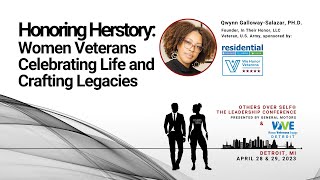
In this presentation, Qwynn Salazar Galloway (known as Dr. Quinn), an Army veteran, end‑of‑life doula, death educator, and oral historian, shares her personal journey from a difficult civilian transition to founding In Their Honor LLC. She explains how her PhD research revealed that women veterans’ stories were largely unheard, prompting her to collect and preserve oral histories. She highlights the stark under‑representation of women in veteran archives (only 6‑8% of the Veterans History Project) and memorials, and stresses the need for visibility. Dr. Quinn introduces the death‑positivity movement, advocating for open conversations about mortality, legacy‑building tools (e.g., “mommy boxes,” written narratives, artifacts), and tailored end‑of‑life care for women veterans, noting the scarcity of research focused on them. She shares case studies, including the late Dr. Kate Hendricks Thomas and a Gulf War veteran named Kim with glioblastoma, illustrating the emotional and practical aspects of dying with dignity. The talk outlines community outreach initiatives: cleaning veteran cemeteries, virtual kitchen‑table gatherings, collaborations with PsychArmor, a visiting scholar role at Virginia Tech to train K‑12 educators in oral‑history methods, and the development of hospice‑focused educational courses. Throughout, she calls on the audience to share their stories, contribute to oral‑history collections, and help shift societal narratives about women veterans and death.
Chapters
Foreign.
Session that Dr. Quinn is going to take us through is called Honoring her story, Women Veterans Celebrating Life and Crafting Legacies. A little bit about Dr. Quinn. She is an army veteran and an end of life doula. She's an educator and the founder of In Their Honor llc. For more than two decades of dedication to enhancing the quality of life and well being for our nation's military heroes and veterans, Quinn has acquired a deep understanding of how military experiences can have long term impacts on one's life and the lives of loved ones. I'm pink in the cheeks for you to be with us today, ma', am, and jealous of your height. Ladies and gentlemen, Dr. Quinn.
Good afternoon, everybody. It is so awesome to be up here again. Shelly called me Dr. Quinn, like seven or eight times. However, comma, in this space, I'm Quinn. Hey, y'. All right? I often tell people to say it one time, that's it, I'm a part of your tribe. I am what it looks like to be on the other side of transition. When I think about my transition, probably similar to many of you all, it wasn't a cakewalk. No one understood when I walked into my very first interview and I was trying to explain what I did in the military and how it would translate over to the civilian workforce. And I was stationed at Fort Bragg, y'. All. Anybody else ever been stationed at Fort Bragg? And I worked in a World War II barrack. And I walk in, my MOS was finance. And I walk into the civilian interview for a finance job. I get into the building, there are popcorn machines and margarita machines and people are riding around on scooters. And I'm like, y' all know that there's like a war and people are okay, but they didn't understand me. And I didn't pay enough attention to taps. Anybody else pay attention in taps? No. You got your bags and your free stuff and you were ready to go back home and transition. So I remember sitting in that interview and I remember saying to myself, at some point along this journey, you're going to do something about that. To ensure that other women veterans like yourself and other veterans like yourself never have to experience this again. So went to school a few more times, made the decision to get a PhD. My PhD is in industrial and organizational psychology. And I had this great idea that I was going to educate civilian employers on how to educate veterans. But as I was working on my dissertation, I started realizing some things. I started to realize that one, my population that I was working with for my dissertation were women. Veterans post nine, 11 women veterans that had transitioned within the first five years, I realized they had stories to tell and that no one really was listening to their stories. And they wanted to share what their military experience was like and what it felt like to come home to. To a society that did not understand their service. Primarily because when we close our eyes and we think of a veteran, do we see us? No. And so I realized how powerful that was, and I wanted to have this voice in a space where I could amplify my fellow women veterans. So along that journey of writing my dissertation, I had this amazing woman that came alongside me by the name of Dr. Kate Hendricks Thomas. Has anyone ever seen Kate? No. Kate's story. We lost Kate to stage 4 metastatic breast cancer last year. Kate was a woman veteran. Kate was, excuse my language, a badass Marine. And along my journey, Kate would spend time with me on a monthly basis and share with me how important it was for women veterans like us to share our stories. When I made the decision that I was going to step away from working in the suicide prevention space, because that's where I was full time before making the decision to build my own company, I sat with Kate one day and I said, what in the world, Kate? Why is the universe pulling me to this side? I have worked my tail off to be in the position that I'm in, but the universe is telling me that I'm needed somewhere else. And I watch Kate's health decline. And Kate said to me, when the two decades that you've been doing work to support service members, veterans, and their families has prepared you for this next leg of the journey. And people like me need you. And the 642 veterans, 600. 642,000 veterans that die each year, is going to need someone like you. What a hell of a charge, y'. All. So she encouraged me to, one, tell our stories. And two, when those moments when I feel like, why am I in this space? To remember that all those who wander are not lost. Shelly shared a little bit about who I am. It's me in a nutshell. And I am so honored to be sponsored today by residential hospice. I cannot thank them enough. I have been on tour for four days. Four presentations in four days. When I get home tomorrow night, I don't want to talk at all no more for about a week. But it is all good. So, yes, I am an end of life doula. I am a death educator. I am also an oral historian, which means I collect the stories of women veterans. But I want to take a minute to get to know who's in this room. Have we done a roll call? Did we do a roll call yesterday morning? All right, are y' all good for a little bit of good down home military competition? Where my Air Force at? My army sisters, where are y' all at? Any Coast Guard, Marines, Navy. That's what I'm talking about. Any space, space force. Okay, that's fine. So we are well represented in this room for the most part. There is nothing like having a few objectives, however, comma. Yes, there are objectives here, but my main objective today is to inspire you all to go out into your communities, wherever you live, and to tell your stories. I also want to create this safe container in this room to allow you to be empowered to share your story. Since you shared a bit about your story, tell me your name. I'm sorry, I caught you mid drink. I'm Cheryl Brown. Cheryl, thank you so much for sharing a bit about your story. Here's the beauty of what happened. You opened up the space in this room to allow a sense of vulnerability to come into play. Not only did you allow a sense of vulnerability to come into play, you saw what a sense of community looked like. You saw what a sense of belonging looked like. And for many of us, when we come home, we don't know what that looks like. We feel alone, we feel abandoned. We feel isolated. And some of those things happen simply because we don't share. We don't want to be judged. We don't want nobody in our business. But the only way that you can receive support, care, compassion, and love is by being transparent and being willing to share a bit of who you are. Okay, next slide. We are women veterans, y'. All. Throughout history, almost 3 million women have served. And even though we don't hear about that often, that is no small feat. No small feat when you think about the things that we've done. We have played an essential role in the tapestry of our military and our veteran community. And we've dedicated our lives to serving and building our country's freedom. And many of us, like Shelley, like many of the volunteers that are in this space and working, you continue to serve after service. How many of you all are continuing to serve even though you took your uniform off? So before you took your unit, right when you were taking your uniform off, did you kick it to the side, say, I'm done. Me, too. And then guess what happens? There's this. There's this thing that's ingrained in us that says you will continue to Serve, Right. It's a part of your purpose, something that we learn in the military. So, yeah, we may have kicked the uniform off and shoved it to the side, but we still show up in our communities and in our state and in our work to do this work. Next slide. When we started out in the military, we had this thought that our careers were going and our trajectories are going to be like this, And it looked like this. Now, what's not included in this picture is the icebergs and the dams and the sharks and all types of other things that get in our way along our journey. Last year, 2021, September, to be exact, I had this great thought that I'm doing this doula work. I'm in my community. I'm serving veterans that are at the end of their lives. I need to make more of a presence for myself to show that I'm in this end of life space. So I volunteered to clean up a veteran cemetery. And I'm scrubbing a tomb of one of our fellow women veterans. And her name, to be exact, was Diane K. Zenoli. Diane K. Zenoli. On her tomb, it read Vietnam, but it also read that she was the first female paratrooper. What an honor. So I took extra, extra care in cleaning her tomb, her headstone. But the researcher in me, when I got home, I wanted to know more about Diane. So I googled her. Do you know what I found? Her obituary. I did not find anything related to her service. And that set me on fire, y'. All. She's buried in a veteran cemetery. So I'm going to make the assumption that there is some truth to that, because they do the check to make sure that you are, you are through your DD 214s and such. And so I started wondering, what does this look like for other women veterans that are aging and dying? So I became this accidental oral historian where I started collecting stories of women veterans to ensure that they would be preserved way past any of us. And one of the very first ones that I collected was Dr. Kate's. The week before Kate went into hospice, Kate reached out and said, quinn, it's time, and if you're going to do this, you're going to have to do it now. And we did, and we did our interview in March 2022, and Kate passed away that following month. She shared a powerful story on what it was like to be invisible. She shared another powerful story on the fact that she was the face of the PACT act. And very few people really wanted to hear her whole story. She shared what she wanted the world to know as her legacy. And that set me ablaze because it caused me to say, how many of us actually can sit and say what I want my legacy to be? Having the opportunity to share what your legacy is going to be allows not only for your family to know some of the things that you did, it allows our communities to know what you did. It also affords our nation the opportunity to reduce that cloak and to see women as visible. It allows our communities and it allows our nation to say, there are unique challenges that women veterans face and we want to do something about it. But our communities and our nation cannot do any of that without us being willing to share. So places like the Veteran, like the Library of Congress, for example, hosts a collection of oral histories of veterans called the Veterans History Project. Of their collection, only 6 to 8% are of women veterans. When you think about the Military Women's Memorial at Arlington, you can register your service there for free. 90% of our stories are not in there. We talk about how much we want society to see us. We have got to acknowledge that we have a story to tell. Whether you served in the military for two years or whether you served in the military for 35 years, you have a story to tell. Everyone has a good story in them. I interviewed one woman veteran, and we got on and she was like, I really just don't know if I have anything that's going to be of quality. Two and a half hours later, I'm literally sitting there and I'm like, oh, my goodness gracious, my stomach is growling by this point. And I'm just like, you know, the show must go on. She needed to feel a space of safety where she could share her story. She needed to feel a space where her story was worthy to be told. And she had one heck of a story, as so do you. So I want you all to think about your stories and speaking honestly about your experiences and how it can shape the way you live, the way you continue life. How do I roll that into death? And D. Is taking a moment and looking at your own timelines from as far back as you can remember to where you are today. If you all can just close your eyes for a moment, think about moments that really mattered that impacted the trajectories of your lives. Maybe it was losing your first tooth or winning your first game, or when you enlisted in the military and you had to do the duck walk across the room, or raising your right hand, or being the first in your family to join the Military or continuing the legacy of service in your family, the careers you've had, the firsts you had the opportunity to be, the people that impacted your journeys, the wins, the lessons, not only the positive experiences, but what are some of the experiences that changed your lives? Maybe in a not so positive way, but you found ways to show your grit and your adaptability and your persistence. Yes, I used your gap, Shelly, and do an acronym to it. Think about those moments in your life and what are some of those moments that you feel willing to write about. You don't have to write a 300 page book about your life, but you can write a few pages about your experiences. You can add some pictures to it, you can add some quotes, and it can tell a fine story of who you are. The death Positivity movement is one in which I support wholeheartedly. And I think I shared on the stage yesterday that when I tell people that I'm a deaf educator and an end of life doula, the thought is, I'm like the Grim Reaper and I'm going to hasten your life. Truth of the matter is, it's not about hastening your life. It's about talking to you to the point where you intentionally choose to live your life, not only focusing, not focusing so much on the quantity, but the what, the quality of your life. The death Positivity movement is formed to say, we don't have to look at death in such a way that's stigmatized and negative. We have the opportunity to control some of our narrative and show up and play a part in it. Death and dying is a natural part of life. Please forgive me if I offend anyone with what I'm getting ready to say, but it is the truest thing that I can share. We may desire to be rich, we may desire to drive a fancy car, to be the best photographer in the world, but there is only one guarantee that we have in this life. We are all going to expire at some point, as hard as a pill to swallow. Hearing that is it is the truth. Laverne says, I see you in the back. Just nod in your head. It's the circle of life. Yes, ma'. Am. Yeah. We spend a significant amount of time, especially those who, those of us who've experienced trauma, having some moments in the past. And for many of us also, we spend so much time trying to live in our future without spending the time actually living for today. In our present, when we embrace death positivity, we do ourselves such justice and we do our families such justice and if you've experienced the death in your family and there was no plans made, the level of distress intensify. You beginning that grieving journey, it extenuates because you're trying to figure out, what would my loved one want? Let me tell y', all, I have a 19 year old daughter, I have a 13 year old daughter and I have an 8 year old daughter. They know where mommy's box is. That says everything that I want to be done if something was to happen to me. Because it's not a what if, it's a when. And I don't want that burden to be on my family to try to figure out what to do. So if it's nothing more than getting how many of y' all still collect shoeboxes or your shoes in the fancy plastic bins? Now y' all got a shoebox or two somewhere, get one and start adding stuff to it. Starting off, you have GD214s. Add it. Anything you want your family to know about your final wishes, add it. Be willing to have conversations, open conversations with your family to say, hey, if something happens to me, I don't want to be and this is your decision. I don't want to be in the hospital if I find out, my doctors tell me my prognosis and I am going to have a terminal illness. I want to be home where I can be loved on by my family. And that's where organizations like Residential hospice comes into play. When we hear hospice, it's like, oh, no, no. But 80% of people would rather die in their home than in a hospital bed. So why not educate yourself on what supports and services are available to you? I have an amazing woman that I'm journeying with right now, and her name is Kim. And I talk about Kim every opportunity that can. Kim was a Gulf War veteran. Kim was diagnosed in January with a glioblastoma. Does anyone know what a glioblastoma is? Can you share with us? Absolutely rare. It is an aggressive form of brain cancer. And Kim and I meet every week. We send each other videos. And Kim just recently had to shave all her hair off because her hair was falling out. Kim realizes that there is a time, a definite timeline on her life at this point. And so she's truly choosing to live the hell out of it. So her hair was shaved off. And I was showing Leah a picture of her this morning, and she had this artist create this beautiful masterpiece, this colorful masterpiece on her bald head. She knows that she's dying, but while she's dying, she's choosing to live. And she's asked me, quinn, would you collect my story? Heck, yeah, I'll collect your story. Because her family is already starting that anticipatory grief. And for many people who know that they're dying, the first thing that they're really worried about, oftentimes we think they're worried about themselves. No, they're worried about their families. And so we share with each other and we share what her story is like, and we share what this journey is like, and we share how painful it is to know that you're dying. Her goal is to be able to be a pillar of education, because guess what? When we look at the research of end of life care for our veterans in the last few years, there is only one article, one scholarly article that has been done that's focused on women veterans. So primarily, the care that we receive at the end of life has been built around males. And so it's important. How do we change that? What do we do to shift that paradigm? You got to tell your stories. Some of the experiences we have in the military and some of the experiences we have transitioning and going back into society are not the same as our male counterparts. So we've got to be willing to help that narrative and help shape it by sharing with our providers and sharing it with researchers and storytellers what our experiences have been like. When we spend talking about the benefits of death positivity, when we're actually embracing the fact that at some point our journeys will end, we have this opportunity to focus on what matters. My mom is 80 years old and I'm the baby out of six. And I have had an amazingly colorful, vibrant career. And my mom doesn't care what city I'm in, what state I'm in. I better call home at night or she's going to call me, y'.
All.
I'm 40, and for a long time, it would bother me that my mom expected that level of control over my life. However, when I stepped into this space of end of life, I realized at some point I won't get those calls. So I've learned to focus on what really matters, and it is spending the time and opportunities with my loved ones that matters. So, yes, I'm going to be on the phone with my mama at 9 o' clock and she's asking me, did the people like you who gives me to my baby? And I'm just like, oh, my God. And then my dad's in the background texting me because he's watching his the basketball game. And he's like, I'll talk to you tomorrow. But when you realize and you embrace the death positivity movement, you realize that there is a reality to this life and that there will be a moment in time where our loved ones cease to exist and there will be moments in time where we cease to exist. While we served, we demonstrated such a level of resilience and courage and leadership in our military service. Let's do the same in accepting that final journey in our life. By embracing death positivity, we can continue to inspire others. We can empower others. We can leave a legacy that honors not only our service, but our contributions and our sisters contributions to our nation. In your communities, be willing to say we have a community center down the street, we have a library down the street. Let's connect with Erica and see what we can pull off in getting women veterans to come together. Last March for Women's History Month, I hosted a virtual kitchen table. I had a woman veteran from Vietnam, Liz Esther Brooks, who was the former associate director for the center for Women Veterans, who's a Gulf War peacetime veteran. Two veterans from OEF oif. One is Melissa Bryant. She's pretty up there. At the va, we had a trans woman veteran. And we sat around this kitchen table, y', all, this virtual kitchen table, and we talked about our experiences. One thread that was apparent in all of the stories was that feeling of not being visible. I remember before we got on our Vietnam veteran, and her name is Joan Fury, and Joan Fury was the very first director for the center of Women Veterans, she said, quinn, can I invite all my other women veterans that served with me in Vietnam? And the hairs on my arms stood up because historically we think about the men who served in Vietnam and how they were treated when they came home. But how often do we hear about the women who served in Vietnam and what they felt like when they came home? They were already invisible. And then they came home to a society that did not show them any love or a welcome home. So those women veterans from Vietnam came on there and they were strong. And it was an honor to hear her share her story and the other women's veterans stories and have a community rally around them at this virtual kitchen table. You can do that anywhere in this community. There's healing in telling your story. There's closure in telling your story. As a doula, we have this method where it's called rugs. We have regrets, unfinished business, guilt, shame. I added the last one, the desire for forgiveness. When you start Sharing your stories, you're able to work through some of that stuff. Find a safe space to work through some of that stuff. But those are the things that really come up at the end of life. Did I show love and was I loved? I served on the combat field and I left someone on the combat field. Am I forgiven? While you're living, work on that. Too often we get to the end of our lives and those traumas come back up, that moral injury comes back up, that survivor's guilt comes back up. While we're breathing, have the opportunity and take the chances to work on it. Craft your legacy. Whether once again, whether it's just writing something down in a small notebook, craft it. Tell someone in your family where it's going to be. Get that box and let them know, don't open this box. It's going to sit in my closet and I'm going to tape it up and I'm gonna know if you open my box. But this box is specifically here when I'm no longer here. My box has pictures of me in my uniform. My box has pictures of me and my kids that my kids have never seen. My box has pictures of me and my parents that my kids have never seen. It is a true reflection of how I've lived my life. And you all can do the same thing. When you know better, you do better, right? But when we look at the television and we see death and dying is just grotesque. We fear what we don't know. Be intentional. Set some things up so that you do know. Anyone here have heard of PsychArmor? Psych Armor Institute? I see some hands. So this fall, actually the week after next, I'm flying into Psych Armor because I've created a project with them where we're talking about end of life. And so we're going to educate communities on what caring for veterans through the end of life, what that looks like. We have one course for everyone. We have another course for caregivers and loved ones, and we have a third course for providers. The provider one is real because in the medical community, death, someone dying is a failure. And instead of showing that bedside manner, we talked about it yesterday. Putting your clipboard down and just hearing someone's story and being present and empathetic and actively listening to what they have to say. That's medicine. Holding someone's hand with permission, holding someone's hand, giving someone a hug. I talk about hugs and a lot of times people laugh. People are starved from touch. Sometimes people just need a hug. You would be amazed to find out how many people have not had a hug in a long time. And I can feel them because when I lean in, it's almost like they get rigid. Like, oh, baby, just lean on. Just put your head right here. You need a good hug. And if you need to cry it out, just go ahead and cry it out. Do what you need to do. But that's what it takes for someone to be seen, someone to be felt, someone to be loved. So as you go home and you think about this amazing last two days, think about it all. We've heard the greatness from all the things we heard yesterday to today, where we're focusing on trauma and business, We've heard all about different life experiences. But take a piece of your time and write something about your life and your experience. So this June, I have the distinct honor of being a visiting scholar at Virginia Tech, where I will have the. Thank you. Where I have the opportunity to educate K through 12 educators throughout this nation on how to collect oral history interviews of women veterans. I'm going to ask you all to be a part. Are you willing to be a part? Everyone has those little color papers at the ends of the tables. I want you all. I'm sitting here the rest of the day so it doesn't have to be immediately, but I want you to take some time and think about it. What do you want society to know about your service and your legacy? If you're willing to share your initials or even your name? If you want to leave it anonymous, feel free to leave it anonymous. But we have an opportunity in this space to make change and to shift paradigms, and I can't do it by myself. And so to be able to take a little bit of you all with me to share a little bit about your stories that will help those teachers go back into their classrooms to empower their students, who are our future leaders, to be able to interview women veterans with a sense of cultural sensitivity and humility, a level of knowledge and awareness and curiosity of how we've served in the past and present and how we can look at service for our future. June 12, 2023 marks 75 years that women have been integrated into our armed forces. Did y' all know that? 75 years that women have been integrated in our armed forces. And so one thing that I love to do everywhere I go is y' all know the saying, give her her flowers. Give her her flowers. I know we have a few gentlemen that's in the room, so hopefully they'll plug their ears for a second, because women don't necessarily like to tell their age. But I'm going to ask us to be brave enough to do just a little bit of that in this space today. I want to be able to honor the oldest woman better. You.
More from Shelly

How to Get Time Back as a Coach or Creator: The 5 Tools I Use Every Day, ep 68 Hardcore and At Ease

ep67 “I’m the Eighth of Nine” How Listening Became a Superpower | Catherine DeDecker

How to Respond to "You're So Busy" And What to Ask Instead | Catherine DeDecker Hardcore and At Ease


Your Big Moment Runs on Private Work | Drag Racing Lessons, Hardcore and At Ease

Show Up Anyway: What to Do When You Feel Like You Don't Belong | Ep65 Hardcore and At Ease

How to Become a Lived Authority Without Anyone's Permission, Ep64 Hardcore and At Ease

Michigan's Defense Leadership, From Two Different Chairs: NDIA Scott Davis and AUSA Chuck Cogger

The Leadership Job That Never Clocks Out w/ Brig. Gen. Daniel Kramer, Ep 62 Hardcore and At Ease

How to Write a Personal Manifesto That Holds Steady When Life Won't, Hardcore and At Ease

What Advancement Demands of the Person Leading It, Hardcore and At Ease, ep 59 with Stacey Eeman SME