How to Win Government Contracts Through Collaborative Excellence
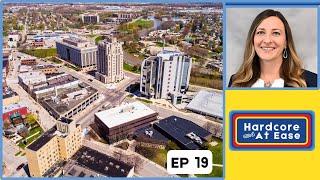
Vicki Rwinski, who spent 12 years building Macomb County's economy, explains how the region became a $6 billion defense and aerospace hub. She credits collaboration between Detroit Arsenal, Selfridge Air National Guard Base, and companies like Boeing, plus workforce programs like AS9100 certification. The key: lower transaction costs, align incentives, and build connector networks that act as extensions of businesses.
Chapters
This show is powered by others over self. Hit that subscribe button to keep training your brain.
We've got such unique assets in Macomb county, but I always say, like, we're kind of like a small dog in a big world. And in order for us to be a big dog, we've got to make sure that we've got the partners that help us fill the gaps. And that's where that connection piece comes into play.
From others over self. It's hardcore and at ease.
A show about people who are keeping
their edge without going over the edge.
I'm host Shelly Rude and today's guest is Vicki Rwinski, who has spent 12 years transforming Macomb County, Michigan into a $6 billion defense and aerospace hub. While building the Detroit Regional Defense Coalition, we explore how she generates momentum through authentic collaboration.
Her connector strength that makes partnership feel
natural instead of forced. And why expecting excellence doesn't mean doing everything yourself.
This is hardcore and at ease.
Here's the difference between a leader who generates momentum and a leader who just generates exhaustion. One creates conditions where excellence becomes self sustaining and the other becomes the bottleneck. I see this pattern constantly with ambitious leaders. They've got the vision. They know where excellence needs to be. They can see that opportunities that just no one else seems to be able to see. And they're exhausted from feeling like they're the only ones who actually care enough to make it happen. The instinctive response can be to work harder, to be more visible, to touch everything. Personally, sometimes we can become so critical that nothing moves without us. And I get that. But that approach doesn't get true results. So here's the question worth asking. Does it generate momentum or does it create dependency? Real momentum, the kind where teams actually step up, where partners want to work with you, where excellence spreads instead of staying contained in just your department. Well, that requires something completely different. It requires understanding, something that's really easy to miss. We don't generate momentum by pushing harder. We generate momentum by creating alignment between what we need and what others need. And when those two things become the same thing, movement becomes natural. Today's guest has spent 12 years proving this principle at scale. She's built an entire economic ecosystem, not by controlling everything, but by becoming what she calls an extension of businesses. By making their success and the region's success identical. Whether you're leading three people or coordinating three entire counties, the underlying mechanics are the same. And what you're about to hear is the lived proof of why generate momentum and expect excellence. Work the way that they do in the hardcore and addies framework. Pay attention to the pattern, not just the incredible stories, because understanding why this works will change how you lead. Let's talk with Vicki Rowinski.
So for us, we are going into a very busy week. Next week is the AUSA annual exhibition in Washington, D.C. and there's a whole contingency. A lot of our defense Detroit arsenal partners will be there, defense contractors, primes. You know, it's one of the largest ground vehicle conferences in the United States. And for us, it's a big deal. We host a reception that evening, which I think you've been to our reception before in the past at the Army Navy Club, inviting, you know, 150 of our best top premier Michigan companies, but also inviting a lot of our companies that aren't in the Michigan ecosystem to hear about why they want to be here in Michigan.
It is unique to me, Vicki, to hear that my county, my chamber sends a delegation all the way out to this major conference because I don't think
that that's very common. And as a planning and economic person
for the county, could you share with
me, is that common practice?
Are you seeing other delegations going down to conferences?
Yeah. So we actually have a sweet spot on the showroom floor. Actually, the state of Michigan will have a booth this year. The trip to D.C. is always fun because as soon as we get to the airport, we're surrounded by so many that are involved in defense. We all hop on that same plane to D.C. you know, whether they're exhibiting on the floor or visiting or networking, a lot of them end up tag teaming and getting back together at the arsenal of innovation reception. And then after that, you know, we all fly back. Usually on that Wednesday morning, we all fly back to Michigan. But what I love about this conference is Michigan comes full force. It is a strong contingency, a strong message. And hopefully the businesses that we meet with realize that they've got to join the Michigan party to be a part of us.
And that is really the entire purpose of you going down there, is to help attract and retain top talent into Macomb County, Michigan. Can you share us for our listener that's perhaps not very familiar with Macomb county, just what makes us, I mean, why are we even talking about defense and the army and ground service vehicles?
Sure. And that is important. Like I live, eat and breathe, sleep Macomb County. So it's always good to take a step back and say, who are we? So Macomb county, we are actually north of the city of Detroit. About 20 miles north here in the county, anchored by the Detroit Arsenal, we've got the US army, which actually has a whole history and roots back to World War II being an old tank plant that really vamped up for tank production. Well, over the years, you know, that tank plant has slowly evolved into a very high tech, highly sophisticated Detroit arsenal where we have a lot of our ground vehicle technologies tested and prototyped, not necessarily built here anymore, but that's what our supply chain is for. And then just north of that, in Macomb county, we have Selfridge International Guard Base, which is home to our 127th wing. Major announcements there where we'll be receiving some KC46Xs that will replace our KC135s, as well as a big announcement that we'll be getting some F15EXs which will replace our A10 fleet.
That was a lot of our conversation with the F15 arrival last time. Can you share with me, is there still just as much buzz about it? Are people starting to doubt? Are you like, oh, no, we are well underway for what's coming down the pipe.
Right. Well, we know what we're staring at is a once in a lifetime. You know, it's not every day where you've got an Air Force base that says not only are we getting a new refueling mission, we're also getting a new fighter. And with those two missions come some major upgrades that need to happen at the base. So a lot of the focus, the conversations we're having today with our partners at the state as well as those within the Salva Area National Guard Base is what does that infrastructure need to look like? We're talking about a Runway extension in order for us to bed down the fighters. Looking at some hangar upgrades, a lot of dollars, construction dollars towards the upgrades at Selfridge need to take place between now and 2027, 2028, when those planes arrive.
So, Vicki, with the F15s coming in, you already talked about 300 plus households potentially relocating here. All of these prioritizations happening for the growth.
What can the local businesses do?
How, you know they want to get involved in these projects?
We're building houses, we're building infrastructure.
What's your best course of action for
local businesses that are like, please don't leave me behind? Yes, absolutely. So yesterday we had a really great conversation during the Macomb Chamber Aerospace and Defense Committee meeting where we talked about that proactive position. And we know that there's going to be some military construction dollars, major A and E architecture and Engineering design that needs to go into all these improvements. At Selfridge, the conversation is hosting some type of industry or supplier day where whether it's a company that's involved in the design aspect or the build or the construction side, that there is an avenue for them to look at. Those build bids may perhaps get on that pre approval list. So that's in the works. And that's going to be something that we work really closely with our partners at Apex, Apex accelerators as well as our chamber partners to make that come to reality as these things start to roll out. But letting them know that there's an opportunity on the supply chain side. When we look at the, the planes. Actually back in August we did get an opportunity to Visit Boeing in St. Louis. We got to see where the SIU and are going to. Yeah, that was a very, one of those like, pinch me moments like we're actually here where these planes will be coming to Macomb County, Michigan. Great, great facility. You know, we look at the improvements there from a business attraction perspective. We would love to have Boeing here in our backyard. The likelihood of them moving that assembly plant out of St. Louis to, to Macomb is very little. But the conversation was looking at what is the supply chain. And you know, they had a great slide up there that showcased, you know, about a billion dollars of their production of the F15 is actually locally built here within our supply chain in Macomb County. So happy to see those dollars, that local impact already. We want to see those numbers continue to grow. And then Epps. Absolutely. Still having that conversation with Boeing saying you've gotta, you've gotta be here. You know, love St. Louis, but even if it starts off as a small program office, we'll start there for them to see the opportunities for expansion.
Absolutely. Share with us those numbers one more time. So the local, excuse me, the supply chain from Boeing, how much is in Macomb county right now?
Right. Over a billion dollars. Over a billion. And this isn't just their defense. Defense assets. We're not even talking commercial like what you see out in the sky when you fly Delta. These are your defense assets. So the, for example, the KC47. We also have the KC46 as well as the F15s ex major defense aerospace platforms.
Now, Vicki, I know that you recently visited Savannah, Georgia, which is another historic river city that has a strong military presence. What did you observe there that inspired you about Macomb County's potential as this waterfront destination and defense hub?
Oh my goodness, Shel, you bring me Back to a fantastic little vacation I took. So Savannah. If you look at the history of Savannah, there was a huge. The power plant district. And what was really unique about their redevelopment strategy was how do you take the old and bring in new? And so where the old power plant used to stand was a highly industrial corridor. Probably some environmental issues there as well, but they did a great job of cleaning it up. But where that power plant stood is now a JW Marriott, one of the premier Marriotts out there. The district is very walkable, very social. You've got very unique restaurants, bars, dining. It becomes a destination for. For many who want to visit Savannah and stay on the district. But then you have the amenities of your water, that it's a major port city, which, you know, here we don't have the. The port access, but we do have boats. A lot of similarities. You know, just getting that outdoor dining close to the water so that you're enjoying the natural features as well as the beautiful landscape.
Absolutely. That waterfront dining, to me, is like nothing else in the world. And just to live in a town where I can take my husband or a child that doesn't want to sit still at the table and actually put them in front of a river, and you can watch the boats go up and down. There's geese. There's all kinds of life around you. And it's such a different experience than just sitting inside in a restaurant.
Oh, absolutely. Anytime you have the ability to be outside, right, you just be in the natural environment. And we have that, you know, you like. I look out my window right now here in downtown Mount Clouds, I'm like, our water assets are phenomenal. It's just now, you know, getting up to par with the vision of where
we want to be with it. That's really what it's all about. You know, it's the one thing that you can't make more of is waterfront property. And it's so exciting to me that I was raised in a town that has so much waterfront coastline and that I will continue to live here and to see my community investing back into itself is really very special. Now, one of the companies that we've been following recently is Sapa Sapa, and they're a huge success story for Macomb county, and we are featuring them in our October newsletter. They did a $143 million expansion, and our story in the newsletter is going
to go into that.
But when you meet companies that are considering Macomb county, what's that argument that kind of gets them a little Bit closer or over that hump from just being interested to taking that leap like SAPA and saying like we are invested in what we're doing here.
Right. And this kind of gets back to the ecosystem here that we've got with our aerospace and defense. SAPA had choices. They did not have to choose Michigan. Even though their customer is here in Michigan, they had other states courting them. We brought them in early under the international landing zone where they were able to land at a physical location, have an office, a US address as they were trying to set up that the US entity. It was a long courtship, about six years in the making. You know how government contracts work sometimes, like there's a plan and then there's delays or maybe perhaps there is something that prevents them from really expanding. But it took about six years for them to really get the contracts figured out. And then it, you know, you were just there, Shelly. We had actually 30 some students from Kettering visiting their facility because their needs beyond just the foot footprint they have right now in Shelby Township will be looking at growth and expansion, but hiring local workforce. And so we're trying to also get ahead of that, knowing that they're going to need to vamp up pretty quickly, making sure they have not only the space but the people in line to build out that next transmission for some major systems for our army.
Now you said you just have to be there, right? We were just there. But that also wasn't an accident. You know, you did a phenomenal job with your team of really positioning the county to make sure that they knew we are here for you. And we do have a plethora of resources and a networking connection that we would love to bring you into the fold. To me, as a small business owner, that's very exciting to know that I'm not completely alone in trying to grow and expand my business, that there are legitimate partners out there that want to see this brought into our backyards.
Absolutely. And I say, like when you look at the services that we provide within planning and economic development, you know, the best asset that we're able to provide is that an extension of these businesses. So we become their Rolodex. You know, we become their connector as they're trying to navigate the waters, try to figure it out. If we can't solve their problem in house, we will find the the right partners to bring to the table to get to the solution where they need to be at.
And that's so important because we do have these major success stories like sapa. We've got Some submarine manufacturing work with Macomb Community College, which is going to be highlighted here in a little bit, and Selfridge. But what about the businesses in between? You know, they've got maybe 20 to 50 employees. What specific opportunities do you think that they should be really exploring. Exploring. Are looking into that they might not even realize exist within Macomb County.
Right. And that is really the sweet spot. When you talk about some of these smaller employers, the ability for them to be very nimble, you know, to go from one program to the next or, you know, stop production here, start production there, that is one of the greatest assets that they've got. Part of our conversation is helping these businesses understand diversification. So you talked about some key industries. Right. How do you go from being a ground vehicle defense manufacturer to getting into aerospace and then now into Navy? These are three different languages that, you know, different acronyms for all. And there are certain levels of certifications that are required. And so for a defense contractor to say, all of a sudden I want to be aerospace, they've got to be looking heavily into getting their AS9100 certification. On the, the naval side, maritime side is even more difficult because if they want to become a maritime welder, that process looks very different than your typical AWS standard. And so for them to be put some skin in the game, get these certifications, you know, help them with that diversification aspect of it. Where the county comes in with our partners is, you know, linking them to other like companies who've done that so that there could be some peer to peer learning as well as looking at some of these organizations that provide that expertise to become certified.
That is so critical because we're talking about submarine manufacturing, F15 maintenance, transmission production, all happening in the county. These are very different skill sets. And so this workforce gap exists of this skilled labor that needs to happen. And it sounds like the strategy of peer to peer connection and networking is really the best fit that we could have for them. Can you share with me, Vicki, what would be like a really good step for a company that just is ready to just get started and they're like, you know, I really feel like I want to align myself. What should they be doing?
Yeah, and this is where that networking aspect comes in. You know, doing the initial reach or touch point is great, but you know, getting involved like with the chamber and committee, you know, Kelly Lovati is growing that so that it has a greater representation of small businesses around that table. You know, what they go through on a day to day, we don't necessarily know until they start, start to share that, but then they can also see some of the other resources that they can tap into the other program. And I think, you know, the model with this M3 program at Macomb Community College is how they are targeting whether it's high schoolers that, you know, are looking at maybe perhaps getting into this type of career after they graduate from high school or the working individual that wants to upskill. The little caveat there is they've got to find jobs within the defense industrial base or the maritime industrial base, and we want to keep them here. But having that partnership, knowing that our college is working with economic development and that we're also working with our Michigan Sinclair workforce team, that is all hands on deck.
Well, you have a beautiful oversight because you get to back up and really look at the planning aspect of it. This is a lot of stimulus growth, right. That's ramping up in our area. Are there infrastructure investments or improvements in the county prioritizing to make sure that, you know, we can handle this success?
Yeah, yeah. So we actually are. We've completed a phase one of a comprehensive development strategy here in Macomb County. So just a little fun fact. Macomb county, third largest in population. Right. So we've got Oakland County, Wayne County, Macomb County. And then when we look at land mass, we are ninth smallest. So we have a lot of people, 880,000 people living in a pretty small county as far as land, land usage. And so we're undertaking a comprehensive development strategy looking at, you know, a lot of our assets, especially when you see what's already been developed. The southern portion of Macomb county, highly industrial, big footprint with automotive, defense, aerospace, as well as it's a bedroom community for many that choose to live there. So we've got to be very, very smart around some of the assets we've got there, looking at redevelopment. And then when you go north, a lot of our land use, about 20% of our land is still farms. And so we've got a whole preservation effort in place. You know, it actually, it becomes an issue of national security, of where does your food come from. So we want to make sure that we keep those farms as is. But looking at it from an element of smart growth, being very comprehensive, making sure we've got a road plan that we're working with, our public works, looking at our water and sewerage and waste and all that in between. But, you know, other elements that we layer in DTE and consumers with our energy partners and Then our broadband.
So now you mentioned how some people who work for other companies, they get attracted into here or they choose this as their business growth, but once they're here, like me, they don't want to leave. So you've got this fresh perspective from your visit to Savannah, a city that really markets its lifestyle. How are you evolving the why live, hear message? I'm very familiar with the slogan, make Macomb your home. That is gold. I think that's incredibly smart of the county to stand behind that phrase.
What is it that we're doing to
drive that forward and attract engineers and program managers and the skilled workforce labor that these defense projects genuinely need?
Yeah, and this is kind of coming on the cusp of us hosting these Kettering students. We have a. A talent attraction campaign. And really looking at the colleges and universities that aren't located in Macomb county, you know, where are they? And then where do their graduates go? And what we do realize is that there are so many that choose to either land somewhere in Michigan, but there's a whole handful that chooses out of state. And so with the pilot with the Kettering students would be about 20 some students, all engineering majors, was to showcase the defense assets that we've got in the region. So the day started off with sapa, where they visited each of the stations at sapa, got to learn a little bit of the variety of assemblies that take place there. We hosted a luncheon, invited 15 of our defense companies and contractors to have conversations one on one with these students so that they could have more opportunity to see where their skill set, what they're learning at Kettering, could apply to their job, their next job. And then we finished off at BAE Systems, which is a phenomenal employer, very heavily R and D engineering quality. And so the students get to see perspectives from Sapa, who's just really getting their footing. About 55 employees, they're going to be ramping up to 400 to BAE. Highly established, very great programs that they've got under their belt and a long history. So they got to see kind of both. And then in between, we did the luncheon. But for us, we want to continue that where it's bringing them into Macomb county because it's something that you almost need to see it for yourself. We can sit there and pitch Quality of Life. We can say we've got the most beautiful lake here. But the minute they see that and they really then begin to understand that this could be home for them. You know, what are some of the other Amenities that come in, you know, how far does their dollar stretch? What does our housing inventory look like?
How long does it take me to drive to get to work?
Yes, yes. All those things that actually make it very attractive. We finished the day with the Kettering students at Blake's Apple Orchard. And so I don't know if you've been out to the Blake's. Perfect weather for this. But we wanted them to also see, you know, here you have this local farm. They're actually hiring industrial engineers. You know, they went from, you know, being an apple farm to not just cider, but hard cider. And they've got a distribution network worldwide, you know, getting their product out there. But all that happens in this cute little small town called Armada, Michigan. And wanted to give the students a flavor of what that looks like as well.
And I would imagine you do have students that are wanting that small hometown feel, but you've also got some engineering students that might want that, like downtown Detroit kind of feel also. And Macomb county is so uniquely positioned to be able to offer both.
Shelley, you know, I had a chance to actually ask the students that question. I said, where do you see yourself living? And, you know, I think that there is like this whole push that, you know, they all want the city life, that walkable downtown, but the majority says, you know what, we want to live out here in the country. You know, like this is so different than what we saw with the earlier, like that millennial generation. But I think, like you said it best, you know, within a 30 minute ride, you can go from city living to being out in the water to being out in the country.
And you don't have to spend your life in a car driving. I know my travels have taken me to some of the most incredible cities, Atlanta, and, and just hours and hours and hours in the car just to go 30 miles. And I am always blown away when I can travel so far so quickly. In our area.
Absolutely. Yeah. I mean, that is like, when we talk about, like, what, what matters to you. It's. It's time. Right? Where do you spend your time? And I'm, I'm glad that we can provide more opportunity for you to stay. Stay local too.
So let's fast forward. And a whole year has gone by. If everything goes according to plan, what is going to look different in Macomb County? Not just in terms of jobs and contracts, but in terms of how we're recognized nationally. What's the reputation that we're building toward?
Yeah, so we. One of our big Undertakings this past year was actually to take a different approach to how we market our defense assets. You know, Macomb county, we know, we know we're the epicenter. The dollars show it, the, the amount of business and economic impact really showcase that. But looking at it from a region, it's giving us the ability to really market us differently. So when we travel on business attraction type missions, you know, I say, I'm from Ocombe county, that really, you know, just goes over their head. But when I say, oh, the Detroit region, they really understand then, oh, where on the map are we located? And we formed a coalition, the Detroit Regional Defense Coalition, that is a partnership with Macomb County, Oakland County, Wayne County, Detroit Economic Growth Corporation, as well as our partner, the Detroit Regional Partnership, who's leading this effort, really signed together a MOU with our county executives and city leaders on what does this coalition mean and what is it that we're going to bring to the table? Looking at some of that collaborative marketing, a big task for us, a big undertaking. But we brought on an executive director who is ready, ready for the position, ready and started running on day one. That's Vicki Selva, if you're familiar with her. I know Vicki, excited to have her on board. There's so much that happens when we look at the region and even the numbers speak to that. You know, part of, part of our coalition building was to look at, you know, outside of Macomb county, where are some major defense contract, defense assets, you know, where's the workforce coming from? And we know that we're stronger together.
Absolutely are. Now you've been in this role for 12 years and I know that we don't want to stick too hard on the numbers, but please, Vicki, don't be shy, tell me what those numbers are because you've been moving the needle economically for years now. What does success look like in terms of numbers? Sure.
So Macomb county, our GDP when we look at the defense industry is right around 6 billion. Almost double is automotive, is about 12 billion GDP. That is all the products and services that we provide, that we sell or provide either in state, in county or even national. Internationally, we're half of the GDP with automotive. And so what success looks like for me is to continue to raise those numbers within aerospace and defense so that it's more than, you know, let's say 7 million, 8 million. And those are very realistic and tangible. You know, as long as we continue to stay on this path. I always worry about what does it look like when you're so industry centric and you've only got one industry that keeps your business going, that we continue to pitch that message and showcase that there's opportunities elsewhere and then activity begets activity. And so the more activity we can bring here really showcase. What does the Detroit Arsenal represent? What are we today? Where are we going tomorrow? We're already seeing that with Selfridge, with some major investments and some of the new planes that are coming there. But I see doubling the numbers, doubling down. Shelley?
Absolutely. It's so exciting to me to hear this forward thought, because I was just listening to another take on the automotive industry, you know, and instead of just people building robots, now we have robots building robots. I mean, manufacturing has gone so far and beyond where so many of us initially had envisioned it to go. And I love being a part of a community where we're not afraid of that. Like you said, we are doubling down, we are investing it. We're not going in with our eyes closed. We've got our arms open and we're saying, how can we do more with this? It's amazing to hear our success in automotive and. Yes, right. We've always known of our success in automotive and we're not stopping there. And we are building submarines.
Right.
We've got a maritime effort that's coming out here and there's just such an incredible push to support the defense of our nation. And I'm never at a loss for excitement when it comes to what the county is doing on our defense half.
And it's non stop. Right. We just keep. We keep moving forward. And, you know, you bring up automation and robotics, which is actually one of our targeted industries, because we know that one is industry agnostic. You know, it hits distribution, it hits your farms with their food processing, automation and what we saw with the assembly line perfected it. But now we're able to kind of spread that into other areas. I was just reading an article looking at some of the army strategy and, you know, they look at it from the five domains, but the one area where we're probably going to see some major tremendous growth and it is an opportunity for us as a state, is looking at unmanned aerials, drones, robots, how they all come into play to really protect us as a nation. And we've got a ramp up pretty quickly.
I. Laughing a little bit, yeah, because, you know, my background's military intelligence and so much of it was unmanned aerial vehicles, which are the UAVs, which is exactly what you're talking about. And there's been such an explosion in drones and the usage. And I had the unique opportunity to go out to Northern Strike a couple of months ago, and we've got some pictures of that that we're going to share. And it's such an incredible learning opportunity because I get to see firsthand that I'm standing next to those college students who are part of these collaboration opportunities with these larger companies, and they're out there with airmen and soldiers directly flying the drones themselves.
They've got hands on, they're breaking them,
they're trying to learn the flight patterns. And it's just an incredible opportunity to see it in action.
Right. And I think one of the things you also saw at Northern Strike was, you know, a lot more of these startups, these drone companies, you know, that typically are in the. In the focus of Department of War, where now perhaps they're actually getting elevated because they've come up with a technology at a much lower price point than some of your traditional defense contractors. And I think that because they're locally, we're going to see that growth happen organically locally, and then it's definitely going to balloon from there.
Vicki, can you tell me, from a professional development standpoint, I know that you are a former past president of WID Women in Defense, the Michigan chapter. Can you share with us a little bit more about just your own take on the importance of collaboration and where you, in your life and your professional career, you've made that a priority?
Yeah. So cool question. Right behind me. The little color chart that you see there, those are actually my strengths. I don't know if you're familiar with this, this exercise called Strength Finder, where you take a test and they tell you, oh, these are your top five strengths. I've done it twice, 10 years apart. The one strength that comes back every time for me is connector. And for me, it's so natural. And I just thought everyone was like that. But maybe, perhaps this is where I bring that strength to that collaborative or team environment where I am able to see the connectivity of individuals and organizations, you know, who needs to be sitting at the table and who's missing from the table to help us fill some of the gaps. We've got such unique assets in Macomb county, but I always say, like, we're kind of like a small dog in a big world. And in order for us to be a big dog, we've got to make sure that we've got the partners that help us fill the gaps. And that's where that connection piece comes into play with Women in Defense. You bring up that particular organization, which has been so great to me individually and really has helped me develop professionally as well, you know, giving me a platform to really exercise some of my strengths when I was the president. But now, you know, as an advisor, I get to take a step back and see all of the amazing things that organization does and provides for women that are in an industry that's still underrepresented and give us a voice as well.
There's so much that you have done over the last, I don't even know, decades of professional service to your county. What about you as a human being? How do you stay at ease in all of this? Because you very easily could have, you know, pushed yourself too far. Not to say that maybe you haven't over the years, but to me, every time I see you, every time I interact with you, you're just so wonderfully polished and put together, and not in a false way. I mean, in a very authentic leadership way. So please, please tell me your secrets. Vicki. How is it that you stay so. Eddie.
I could. I wish I could, Shelly. You know what they say, like, okay, you know, to be able to put a balance to all of this. I think I'm terrible at that. But for me, work doesn't feel like work, and that is the truth. It doesn't feel like I'm working because every day I come in and I know what. We're pushing an envelope, we're moving a needle, we're making an impact. And there's a phenomenal team behind me as well. I would like to say that I know I've got people in my life that help keep me grounded, where it helps to take a step back and say, okay, really, in the midst of all this, whether it's chaotic or not, what's most important? And it's like, always just remembering, like, where's my North Star? I'm, you know, keeping myself grounded and just. Just knowing, like, when I rest my head at the end of the day, you know, can I say, did I make a difference today? Even if it's a small difference, did I make a difference? And it's those little exercises, a little mental exercises, that I think really help me be who I am.
And who you are is widely celebrated in your community. Vicki Rwinski, thank you so much for joining us today, and thank you for everything that you give to the county. Before we close out, is there anything else that you want to say?
No. Amazing work to you, too, Shelley. You're an inspiration for many as well.
All right, so here's why what you just heard in that conversation matters for your personal leadership development. There's a specific pattern that makes generate momentum actually work instead of just sounding really good on paper. And Vicki's 12 years of results prove the pattern. The first principle, momentum, requires lowering transaction costs of collaboration. Here's what I mean. When Vicki said that they become an extension of businesses, she's not being metaphorical. She's literally reducing the friction of doing business in her region. SAPA didn't have to figure out Michigan alone. Boeing doesn't have to navigate workforce development alone. The Kettering students don't have to discover defense careers alone. Why this works. Every time someone has to figure something out from scratch, the momentum stops. But when the path is clear, when connections are obvious, when resources are pre mapped, movement becomes natural. It's easy to believe that generating momentum is about inspiring speeches or setting really aggressive goals. But what if it's actually about just removing obstacles so thoroughly that the default action is forward movement? Because that's what I've always seen in Vicki Rowinsky. The second principle is that excellence spreads through aligned incentives, not demands. Notice what Vicki didn't say. She didn't say we made them choose us. She said that they created conditions where companies wanted to be there. Where their billion dollar supply chain already existed. Where their success and Michigan success was identical. Here's the counterintuitive truth about expect excellence. You can't demand it into existence. You can only create environments where excellence serves everyone's interests simultaneously. The word incentive is not a dirty word. When Vicki talks about diversification from automotive to aerospace to maritime, she is not lowering standards to attract different industries. She's raising the entire ecosystem's capability so that excellence in one domain transfers to the others. And that's how standards inspire instead of intimidate. Our third principle is that sustainable momentum requires long term thinking and short term execution. A six year courtship with Sapa, 12 years building the ecosystem. Students visiting now who might return in five years. This is trust, the process in action. Maintaining absolute belief in positive futures even when immediate results aren't visible. Here's what's worth considering. What if we abandon our momentum building strategies too early because we don't see those instant results? What if we return to the exhausting push model because at least that produces immediate activity? We get that instant gratification even when we know that activity isn't the same as momentum. You see, momentum compounds and compound effects take time to become visible. When Vicki talks about doubling GDP from 6 billion to potentially 7 or 8 billion. That's not wishful thinking. That's the mathematical result of 12 years of aligned incentives, reduced friction and compounding relationships. The final and fourth principle here is that the connector strength isn't personality, it's systematic relationship architecture. She mentioned being a connector as her top strength, and here's what makes that valuable in economic development. She doesn't just introduce people randomly. She systematically maps who needs to be at what tables, who's missing, what gaps exist. VatS generate momentum as a designed system and not just a personality trait. And this is the pattern worth seeing. Momentum generating leaders don't necessarily work harder than everyone else. They work at a different layer, the systematic layer, where they're designing how value flows, how connections form, how excellence becomes the path of least resistance. So here's the application for your leadership. Instead of asking how do I get my team to care as much as I do, what if you asked what systematic changes would make caring about excellence the obvious choice? Instead of trying to be indispensable, what if you built systems where excellence persists whether you're in the room or not? That's the difference between pushing and generating momentum. And that's exactly what the framework teaches you to build. So here's what I want you to sit with this week. Vicki's results aren't accidental. 12 years 6 billion GDP coalition building across multiple counties. That's not luck. That systematic application of principles that transfer to your leadership regardless of scale. You might not be attracting fighter jets, but you are trying to generate momentum in your team, your department, your organization. And the same principles apply this week. Identify one place where you're pushing instead of designing. Where you're working harder instead of working at a systematic layer. And ask yourself what would have to change for forward movement to become the path of least resistance. If you want to follow along with the work that Vicki and her team are doing in Macomb county. Building coalitions, attracting defense contractors, creating the type of collaborative excellence that we talked about today. Then subscribe to Macomb intel and it's an Aerospace and Defense Briefing. It's a quarterly Macomb aerospace and defense newsletter where you'll find the most up to date and important information regarding aerospace and defense in Macomb County. Tap into real world application of these momentum building principles in action. And if today's conversation resonated with you, then join the free community@join.othersoverself.com you'll find leaders like us who share your commitment to excellence, who understand what it means to keep your edge without going over the edge. And the fact that you're here listening to conversations like this one says something important about who you are because you're not settling for surface level leadership advice. You're looking for deeper patterns, the principles that actually work. That's exactly the kind of leader who builds the things that last. So keep listening. Keep learning from leaders like Vicki who are proving these principles work in the real world. You are part of a community of mission driven leaders who refuse to compromise
on excellence while also refusing to burn out in pursuit of it.
I'm host Shelly Rude and you can count on me returning next week where we dive into what it means to really trust the process and maintain faith in positive futures when even immediate results aren't visible.
I'll see you next Tuesday and until
then, stay hardcore, be at ease and trust the process.
You're listening to hardcore and at ease. Keep the conversation going@join.othersoverself.com.
More from Shelly

How to Get Time Back as a Coach or Creator: The 5 Tools I Use Every Day, ep 68 Hardcore and At Ease

ep67 “I’m the Eighth of Nine” How Listening Became a Superpower | Catherine DeDecker

How to Respond to "You're So Busy" And What to Ask Instead | Catherine DeDecker Hardcore and At Ease


Your Big Moment Runs on Private Work | Drag Racing Lessons, Hardcore and At Ease

Show Up Anyway: What to Do When You Feel Like You Don't Belong | Ep65 Hardcore and At Ease

How to Become a Lived Authority Without Anyone's Permission, Ep64 Hardcore and At Ease

Michigan's Defense Leadership, From Two Different Chairs: NDIA Scott Davis and AUSA Chuck Cogger

The Leadership Job That Never Clocks Out w/ Brig. Gen. Daniel Kramer, Ep 62 Hardcore and At Ease

How to Write a Personal Manifesto That Holds Steady When Life Won't, Hardcore and At Ease

What Advancement Demands of the Person Leading It, Hardcore and At Ease, ep 59 with Stacey Eeman SME