Michigan 2021 WW Series Region 5, Lansing Workshop | Others Over Self®
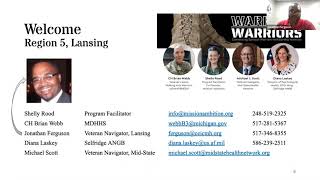
In this segment of the Warriors with Warriors regional workshop, speakers—including a social worker, chaplain, and mental‑health professionals—discuss the unique mental‑health challenges faced by Michigan’s Guard and Reserve veterans and their families. They highlight trauma, PTSD, TBI, substance‑use disorders, chronic pain, survivor guilt, and the high suicide rate (22 per day) as core crisis issues, emphasizing how stigma around “invisible wounds” prevents help‑seeking. The conversation outlines concrete suicide‑prevention strategies (the ASK‑HEAR‑ESCORT model, warning‑sign identification, means‑restriction) and resilience‑building practices (self‑care, free mobile health apps, the four‑pillar resiliency framework). The speakers then shift to actionable guidance for faith‑based organizations: establishing veteran‑military liaisons, offering personalized cards and care packages, facilitating peer‑support groups, and participating in community events. Jonathan Ferguson shares his role as a veteran navigator, illustrating how churches can directly assist with benefits, paperwork, and referrals. The segment closes with a call for participants to share their own best‑practice ideas, reinforcing the workshop’s goal of connecting faith communities with veteran resources.
Chapters
Okay, good morning everybody. Welcome to the Warriors with Warriors regional workshop. We are here today representing our spiritual warriors and helping connect all of us with our earthly warriors, meaning our military families and veterans. This is the Mid-State Region 5 workshop. Focused specifically on the Lansing area. Today is the 22nd of July, 2021. My name is Shelly Rood. I am going to act as your host today. Thank you all for joining us. We do have quite a few others that have registered for this session, so we will be looping them in as they come on board. With that, we're going to move on to our agenda. We're opening the morning with a prayer, which would be fitting for a faith workshop. Letting everybody understand more of the idea of where this program is coming from and what we hope to bring into our communities. Some training on military cultural competency, training on crisis awareness and intervention, connecting with best practices and local resources specific to the state of Michigan, and finally making sure that we have some really solid action steps to take. To empower those around us to better support our military families and veterans. My promise to you is that we will be on time and we will have phenomenal content. So thank you very much for joining us, and we will wrap things up just before noon today. This is meant to be an interactive, interactive workshop. So some housekeeping items. Please do not feel like you have to write down and scramble every single word that is being said. If you registered as a participant, you will be getting a print packet mailed directly to you. It is also going to have specific customized information for the area that your address is located in, and an electronic version will also be mailed out to you so that you have that to refer to and share out to people who are interested in receiving this training themselves. We do encourage sharing and networking, so please make sure that if you have the opportunity to turn your video on, I would like to encourage you at this time to do so. We love the spiritual connection that the face can bring to each other. And I want to encourage you to keep your phone handy because we're going to pop up some phone numbers and some contacts. And I hope that you take the time to go ahead and put them in your contacts in your phone. If you are joining us virtually, I would like to ask that you go ahead and introduce yourselves in the chat. In your control bar for the meeting, somewhere maybe along the top or the bottom of your screen, there's a button that says chat. Click on that. Tell us your name, the organization that you represent, some contact information if you're willing to share that out to the other participants in the group. And also, I would like to know what is it that you would like to take away from today's session. So we're going to come back to that question in just a moment. Because we can't go any further without having a little bit of prayer. So with that, I'm going to ask our Chaplain Brian Webb to step up to the hot seat here and invite the Lord into this room. Chaplain Webb.
Good morning. Thank you for being here. And like Shelley said, as a faith-based approach to veteran care, you know, prayer is an important part for each of us who consider ourselves people of faith. So if you would join me in a brief moment of prayer. Father, thank you for a beautiful morning. Thank you for the opportunity for another day of life. And right now, Father, we think of those who are still deployed in our ranks across our globe, their families that are here. Father, we think of those who have returned and yet struggle with some of the repercussions of their service to this great republic. Father, we pray that as a faith-based group here today, that we would work together to find ways to reach those within our congregations, within our formations, that we could address them not only in the social, physical, mental areas, but also in the spiritual areas. Father, right now we just want you to open up our hearts and minds to maybe new approaches as we look at the opportunity to address the spiritual part of each one of us. Father, we thank you for your love for us, and it's in your holy name that we pray.
Amen.
Wonderfully said. Thank you so much, Chaplain Webb. Okay, so at this time, I would like to introduce these incredible people that are surrounding me. We're going to go one by one. Since you've already heard my voice, my name is Shelley Rood. It's my honor to serve as the program facilitator for this, the Warriors with Warriors program. I am the co-founder of Mission Ambition, which is where a lot of your communications are coming from. And it, it's important for you to know that I am on a journey myself spiritually. I am a full-time student in seminary working towards my chaplaincy licensure. So hopefully that will happen in the future. And I'm looking to Chaplain Webb and the rest of you that are with us today for some spiritual guidance and mentorship. With that, next up I'm going to actually toss to Chaplain Webb again, have him come over here and take just a quick minute to introduce himself.
Good morning once again. I'm Chaplain Brian Webb. I'm the veteran liaison for Michigan Department of Health and Human Services, and I'm kind of the project lead for the Walking with Warriors program and get to work with and amazing group of individuals that serve alongside of each, each other today. So I'll be talking again to you in a few minutes regarding more details.
Thank you. We are playing round robin with our video today, so up next to my right sitting here is Mr. Michael Scott. He's going to come up, and then directly following Michael is Diana. So Michael, I'm going to pass to you.
Good morning, I'm Michael Scott. I'm the veteran navigator for MidState Health Network. I cover 21 counties in the state of Michigan. One of the big things I do is teach military cultural competency within our provider network, and I'll be talking to you a little bit more about that later. But I am a veteran myself, 9 years in the U.S. Army, 2 combat deployments, and I look forward to talking to you more.
Thank you, Michael. And while Diana is getting seated, I'm actually going to ask Jonathan Ferguson, go ahead. We have your beautiful picture there on the screen. Tell us who you are, Jonathan. Oh, Jonathan, I think you're on mute, sir. There you go.
Good morning, everyone, and thank you all for attending. My name is Jonathan Ferguson. I am the Veteran Navigator for Clinton, Eaton, and Ingham Counties in Lansing, Michigan. I am also a mental health— a licensed mental health therapist. I served 7 years in the United States Army doing a tour of combat in Iraq in 2004 and 2005. If you all have any questions of me, my email and contact information is listed right there in the photograph there. But I'm glad to be here, and thank you for hosting this event, Shelley.
Thank you, Jonathan. Diane, on to you.
Hi, good morning. My name is Diane Alaski. I'm a social worker out at Selfridge Air National Guard Base. I'm the director of psychological health there, and I'm just very, very grateful to be part of this program. I'm a veteran myself, but I actually never had to go deploy because my husband is also in. Actually, he just retired May 1st, so I have a whole new man at home with a beard and everything. So it's been, it's been a different chapter, but very exciting for our family. But he was always deployed. So I was kind of more serving at home on that aspect. We have 4 girls. So that was always an interesting, interesting, you know, challenge. But I did grow up as an Air Force brat as well. So lots of military background and everything, but this is just so important to me and I'm just so glad to be part of it.
Wonderful. Thank you, Diana. And I suppose I should have mentioned also that I did serve in the military. Whatever, you don't need to know about me. This group of people is so unbelievably humble. It always just shocks me, really. Okay, so about the program, we're going to take a pre-knowledge check. And before we do this, I would like to interact with those of you that are joining us today. So please have your fingers hovering over that mute button because I would like to ask you the question that we started with, and that is, what would you like to take away from today's training? So I'm going to ask Kristi Koons. I'm going to put you on the spot. Please tell us who you are and what would you like to take away from today's training.
I'm Kristi Koons. I am the state regional veterans coordinator for the Walking with Warriors program.
I've actually gone to this course twice already, so I'm just kind of here to support you all, and maybe I'll learn something new today that you didn't teach in the last two courses. So I'll be waiting. Wonderful. Thank you, Christy. And you absolutely will, because each regional workshop is specific to that area. How about Mr. Qian Wakefield? Qian, please say hello and tell us what you'd like to take away today.
Hey, good morning, everyone. I'm here. Sorry, I don't have my video on. Last time I did a Zoom while traveling, I got pulled over, so I'm keeping my camera off so I don't get pulled over, but I'm fully engaged listening. Thank you all for being here today. I'm excited to learn from all of you, and I think what I'm specifically looking for is understanding how the spiritual community or the church community can help and better engage the military and veteran community, specifically when it comes to issues of whether it's substance abuse, homelessness, PTSD, and a whole crux of issues that the veteran community faces. And I just think, you know, with all the different knowledge in the room here and spiritual background in the room, there should be some good solutions and dialogue. So I appreciate the invite. I'm looking forward to it.
Wonderful. Thank you for joining us, Jan. How about Michelle? Michelle Cruz, is that how you say it? Would you like to tell us hello and what you'd like to take away?
Yes, that's me.
I am Michelle Cruz.
I am an art therapist and psychologist. I work at Selfridge Air Force Base with Eisenhower Center and the VRC program. I am not a veteran, and so I'm just here to learn more about the culture and to hear more about the religious aspect and the spirituality part of things.
Wonderful. Okay, thank you. So at this point, I'm not going to go through everyone because we don't have enough time. However, if you would like to answer that question, feel free to utilize the chat function. What I am going to do right now is pop up a poll. So there should be a poll in front of you. It is a very short 8-question poll. I'm going to read the questions out loud just in case anyone is joining us by phone. Number 1, spiritual is a pillar of health recognized by the U.S. military, true or false? Number 2, which option lists the Warriors Warriors Program values in the correct order? And those options are the 3 words of country, faith, and family. Number 3, what's the name of the Roman soldier who was considered the first Gentile convert to Christianity. Number 4, it's okay to say, "I wish I would have served," to a veteran. True or false? Make sure you guys are voting and clicking the answers of how you would answer this yourself. And it is anonymous, so don't worry if you get it wrong. Number 5, saying, "I'll pray for you," is the best response when talking with a military or veteran? Number 6, what's the current alcohol rate use amongst military veterans? And I'm not getting any poll results coming back in. So if there's an issue, somebody can type it in the chat or just unmute yourselves and let me know. Number 7, what's the current depression rate amongst U.S. military veterans? Number 8, the current suicide rate? Number 9, you should never ask someone, are you having thoughts of killing yourself? And number 10, the name of the Lansing Veteran Navigator is— Okay, we're gonna give 20 more seconds. Go ahead and answer all 10 questions, and then we're going to do a review by percentage of how everybody answered. And we're going to close the poll in 3, 2, and 1. All right, we're sharing the results on your screen. So number 1, spiritual is a pillar of health recognized by the United States military. That is, Michael?
True.
True. That is true. That's something we're going to learn today. Number 2, the options of the correct values in order: faith, family, country. Oh, I'm going to leave this as a cliffhanger. We're going to find this out pretty shortly. Number 3, look at that, everybody got it right. Cornelius the centurion was the first Gentile convert to Christianity. Number 4, is it OK to say, I wish I would have served to a vet? Michael Scott?
I would refrain from saying this. It can be taken negatively by some veterans. I wouldn't say every single veteran you speak to, but if you're trying to build rapport with a veteran, a good portion of them, this is not going to be something they're going to want to hear because they did stand up, they did serve, and it could ruin any rapport you might otherwise have.
Very interesting response to that. Thank you. Not something that we would think of, and we're going to touch more on that in our military cultural competency training. Okay, saying I'll pray for you is the best response. Everybody said false. Oh, I love you all. You're correct. It's false. We'll talk about that. Okay, what's the current alcohol rate use? It's pretty high. I'll tell you that. Number 7, what's the current depression rate use? Also pretty high. Okay. Number 8, current suicide rate amongst vets, 18 to 19 or 20 plus? Yes, somewhere around there. We'll talk about that. And number 9, you should never ask someone, are you having thoughts of killing yourself? False. Very good. What do you think, Diana?
Yes, exactly.
Very good. And number 10, oh, everybody got this one right. Who knows who Fergie Jenkins is on the bottom? Anybody unmute, answer. He's a baseball pitcher. I only know that because I Googled it. Jonathan Ferguson. I was hoping that you might give us a little Fergie dance. Is that not going to happen?
I thought about that because Jenkins is the surname on my maternal side.
Oh, look at that! Do people mistake you for a famous baseball pitcher all the time?
No, no, that's a good one.
All right, so we are going to share just a little bit about the program. I'm going to ask Chaplain Brian Webb to come back up and help us understand the big picture of what we're trying to do here and why this program is even a thing right now.
All right, good morning again. Well, Shelley really raised the expectations for me now, so I'm going to be really— I'm a super pragmatic guy, um, really simple, break it down. You know, as faith leaders, it's a daunting task, you know, in our congregations to take care of people, and that's what you have to do all week long, every day, not just on Sunday morning. I know as faith leaders, many people think that Hey, all the preacher does is work on Sunday morning, and we know that that's not true, that you work hard all week long and take care of people. And so in this project that we started in 2016, that's kind of what we're doing. We're taking care of our veterans and their family members, and we're taking care of them every day, um, not just Veterans Day, not just Memorial Day, but every day of the year. And so, um, we started this program basically in a broad sense to, um increase the awareness of their struggles and to increase their ability to self-advocate. We know that if we present an environment where veterans can reach out for help and can ask for that help and they find success in that process, that they're going to be more likely to ask in the future. That's really just a pragmatic look at that, real logical, makes a lot of sense. We know one of the things that veterans tend to be is a little proud and and don't always reach out for help because they've been told for so long what to do, where to do it, how to do it, how fast to do it, when not to do it, when to stop doing it. And then they leave that environment and they're told, oh, just go on your way now and figure it out. And so many of them struggle with figuring it out. So in our program, we want to look at ways to help them become better self-advocates and to lower suicidal ideation. Obviously, at the end of the day, we want them to have hope.. And we know that in the faith-based side, that is what we do a lot, is that we provide hope. And in this case, when we're looking at the spiritual side of people, we want to encourage, you know, in our cases, for most of us, eternal hope in God and in other faiths and what they look to for their guidance. I'm gonna look a little bit through my notes here. As a full goal, the Veteran Navigator Program addresses veterans and military families struggling with mental health and substance abuse challenges. Right now in Michigan, there are approximately 18 Veteran Navigators that span the entire state. We have some peer support specialists. We have a female vet— Women Veterans Strong program that Shelley actually coordinates with Amy Batchelder. They do a phenomenal job of working with our female veterans. We have a faith— this faith-based program that Shelley has helped to design. Michael Scott, who you've heard from and we'll hear from again, he really kind of wrote our military cultural competency program for us. And then we have a recreational Healthy Habits program that we've been facilitating for a year now, and we're looking forward to some great things happening in the coming years. Just a couple more. Things, really the faith-based approach here. What we want to do is to affect reciprocal relationships between you all and our veteran navigators and those on our team, so that when they run into veterans that may need a connection to the community, that you may obviously provide that connection. Or on the other side, when you have veterans and military family members in your congregations that need support,, you'll have just a quick contact to reach out to and to call to maybe answer some questions, maybe connect that veteran to, so that we can kind of take them to the next resource when you may— that may be beyond your ability to reach them. So that's just kind of an overview. I just wanted to share one, um, other point is that, you know, we talk about, um, the spiritual side, and many times people find that difficult to talk about. In the greater care of people. But one of the facts on suicide is that people of faith are only 3.4% of all completed suicides in America, which is a very, very low number. So that demonstrates how important this process is and how important what you all do is to this process, because that's a very low number that we see. And our military numbers, you know, the 22 a day we hear, the 20 a day, those are very high numbers. And so addressing that hope, that eternal hope, is vital to the lives of our veterans and their military families. So with that, I'll turn this back over to Shelley, and we'll move forward. But thanks for your time and looking forward to the rest of the day.
Excellent.
Thank you so much, sir. So a little bit more at the narrow part of the funnel regarding program design. We have recognized that there is this deep impact that the faith community has on their military families and veterans. We are really focused on what we call the 4 Cs. So we're connecting faith leaders with the veteran navigators. We are providing cultural competency training, we're providing crisis awareness and intervention training, and we are dedicated to giving really good content delivery. So we're talking about resources and guides to help us navigate these waters. The program reach— what I've noticed going out into the faith community is there's always this question of, oh, it's a grant program, well, how long are you going to be around for? There's like this question of, should we really dedicate ourselves and drink the Kool-Aid of the Warriors with Warriors program? And the answer is yes, you absolutely should. Why? Because we're here to stay all the way through the year, the fiscal year of 2024. We are starting with the 3 regions of 8, 5, and 9, which you can see on the screen in front of you. We have already trained faith leaders in Macomb County. We have trained faith leaders in Oakland County. Right now we're focused on the mid-state. So today we're focused specifically on Lansing, and I already mentioned towards the end of August we're going to shift up to the Saginaw Bay area with another training. Next year we're talking about the UP, we're talking about Lapeer, St. Clair, and you can see for the next 3 years running where we're going to be shifting our focus. And just a little bit specific to Lansing, because today we're all about Lansing. In Lansing proper, meaning the city, there are 5,400 veterans, and there are 161 Christian faith organizations that are registered. That's only in the city of Lansing, Lansing proper. When we start to span out past that, you are talking about thousands and thousands and tens of thousands of veterans. So what we do has the opportunity to make a significant impact in our nation's capital. And with that, we're coming up to our very first training module, and it is my honor, honestly, to bring up Michael Scott. He is such a humble person. You wouldn't know it, but he is a real-life American hero walking up to this microphone right now. So I do hope that you will give him your undivided attention and listen with a keen ear to things that he has to say about how to interact with people who have been things that perhaps you can't even consider that they've been through.
Mr.
Michael Scott. Thank you, Shelley. For the next 20 minutes or so, I'm just going to talk about the military culture and what's different about the military culture, how that impacts people as they leave the military, and why we see these readjustment issues within our veteran population.. And then I'm gonna talk to you as faith leaders. How can you reach out to veterans in your, in your community, in your congregation? Because you might be the first step to helping them get the help they need. And we want to go a little deeper than just saying thank you for your service. There's certainly nothing wrong with saying that, but if we can form a conversation that's a little more informed and build that rapport, you're certainly going to have a bigger impact on that veteran. So the first thing we have to talk about is, you know, what's different about the military culture. And I like to start with who is it that typically joins the military. And when we look at the people that join the military, it's typically people between the ages of 18 and 21. When they join the military, they take an oath of enlistment. They take an oath of enlistment. They're indoctrinated into this new culture. That's what basic training and your AIT is. So we spend weeks being indoctrinated into this whole new culture. We leave our individualism behind. And we, we start to act as a team. And we look at, uh, rather than taking care of our own needs, we take care of the needs of others around us. And we become part of this collective group that is much different than the society we come from. So when we leave that and we reenter into the civilian world, that's when we start to see these issues that creep up within our veteran population. Because they lose that sense of camaraderie. Uh, they come back into the civilian world and simply feel like they don't fit in anymore. And we'll talk some more about that in just a little bit. But as we look at the history of our nation, um, one of the reasons we see this growing divide between our civilian world and the military is that if you look back in World War II, 1 out of every 2 men, 50% of the men in the country served on active duty at some point. And over the next 35 years or so, we still had an active duty military of about 3 million. Men were drafted into the military and even In this time period up to 1970, about every 1 out of 3 men had served in the military. So when they came home, they went back into the workforce. There were people that understood what military service was, and our nation as a whole was much more closely connected to our military machine. After the Vietnam War, we ended the military draft, and this is where we start to see see this steep decline in the size of our military. We immediately went down to a military of about 2 million. We had a much larger population. So by the time we get to 1992, we have another steep decline in our military because of some treaties we signed with the Russian bloc countries. And people in my age group, Gulf War veterans, we are only about— men are only about 10%. Veterans. Uh, so you can see as we've gone along that the percentage of our population who have actually served is getting smaller and smaller. Now, if we fast forward to today's military, uh, at any given time, less than 0.5% of our population is on active duty. If we add all the reserve and guard, we're still talking less than 1% of our population— that serves in the military. So, when we look at the age group 18 to 34, both men and women, we're only talking about 3.5% of our population that served in the military. So, when they come home, when they leave the military, they come back into the civilian workforce, there's just very few people who understand what that military experience was. And how difficult it is to make that transition. So this is why we're seeing so many of those readjustment issues, not only because of losing that camaraderie, but also just the disconnect between our military and civilian cultures. So this slide here, you know, speaks to that. A lot of veterans come home, they simply don't feel like they fit in anymore. And, and the research shows us that that first 3 years after leaving active duty or coming home from a deployment is when we see the highest level of readjustment issues. So here's some statistics about those readjustment issues. When we're talking about negative social outcomes, you can almost double it for the veteran population, whatever you're thinking of. Suicide, we have almost twice the rate. The 22 a day is a statistic from 2012. It's still cited quite often and it really hasn't changed much. It came down slightly to about 20 a day, but the initial numbers coming out of COVID-19 look like we're moving back up towards that 22 a day. So, A big problem in the military obviously is suicide, but it's about twice the rate of the civilian population. Same with our homelessness. Even though we're only about 6% of the population, we make up 11% of all homeless, even though there's a ton of resources available to veterans. For whatever the reason, we're really bad at looking, seeking help and, we still see an incredibly high rate of homelessness among our veteran population. Both PTSD and depression, overall veterans, uh, have twice the rate of those as well as other behavioral health issues. Uh, there's certainly things that put people at higher risk. Uh, people who are actively involved in combat do have higher rates of PTSD. It's almost 4 times the rate as the civilian population. But one thing I always try to tell people is, uh, don't think, uh, just because, uh, somebody served in combat, that that's the only risk factor. When we look at veterans who have never deployed, they're just as likely to have these, uh, depression, PTSD, homelessness. So there's something about military service, uh, our training, The higher rates of trauma that we're exposed to, even if we haven't been combat deployed, puts us at these higher risk for all of these. So I always caution people, don't think just combat veterans are going to be the ones that are having a hard time. Substance use among the veteran population, drinking in the military is just like in college, but even, even more so. So the military culture, drinking has always been a part of that. And our younger veterans, especially when they're coming out of the military, we see much higher rates of substance use in that younger veteran population. And it's often co-occurring with many of these other issues such as depression or PTSD. And then I always like to talk to people here in the state of Michigan. We don't have active duty bases. We are what's considered a National Guard or Reserve state. And it's a little counterintuitive to our thinking, but people are actually at an increased risk for all of these issues if they are a National Guard or a reservist. Uh, we would think it would be easier to serve in those, but we actually lack the supports that would be available on an active duty base. Uh, we, we don't have the medical support. We don't have the mental health support. We don't have quick access to a chaplain if we want to talk about our issues. And when we leave our drill or we come home from a training or a deployment, we immediately go back out into the community and we lose that camaraderie that we have with our fellow soldiers or fellow military personnel. So there are studies that show the closer you live to a military installation after you leave the military, your outcomes are actually much greater. So Again, it's a little counterintuitive, but keep in mind that serving in the Guard or Reserve actually puts people at a higher risk for all of these issues. So I said we would talk about how we can form a conversation with a veteran in our congregation or community, and the first thing is to understand a little about what the military looks like. When we look at the total force, both, both active duty and reserve, we have about 2.4 million people within our military. And each one of these is going to have a different goal, a different mission. So when you ask somebody what branch of service they were in, that's going to mean a lot to them. For me, I was in the U.S. Army. I consider us to be the biggest and the best, and I always will because there's a part of me that will always be a soldier. Um, you know, but if you talk to a Marine and you call them a soldier, you're instantly going to lose rapport with that person. Uh, so understand that each one of the services has a little bit different subculture, and that's because their mission is different. Uh, so likewise, when you meet someone in the Air Force, you would call them an airman. Someone in the Navy would be a seaman, and then in the Coast Guard, they would either be called a guardsman or they also go by Coastie. So again, it's important to us if you find out we've been in the military, one of the first questions you should ask is what branch of service were you in, because that means a great deal to us. The second question you should ask ask somebody once you find out they've been in the military. And again, we're going deeper than that, just thank you for your service. But we want to ask them, what branch did you serve in? The next question you would ask is, what, what rank were you? The rank structure in the military is very difficult. It's not something you need to understand completely, but we do have a very strict hierarchy within the military. I try to break this down into a civilian workplace. And when we look at officers, these would be your administrators, your salary personnel in a corporate environment. If we look at the officers here, each rank is going to have a different name depending on the service. Sometimes they're the same, sometimes they're not. So again, this can get very complex. But if you look at the 06 row there, In the Army, Air Force, and Marines, an 06 would be known as a colonel. In the Navy or the Coast Guard, an 06 would be known as a captain. So even though the name and the rank are slightly different, they're equivalent in their place within the Department of Defense. So again, you don't need to know every single rank, every single name for that rank, but this kind of gives you an idea of where they would fall within that rank. Structure. And then we have warrant officers. They make up a very small portion of the military. The Air Force does not have warrant officers, but these would still be like your salaried personnel who have a special set of skills. So they typically are not in a command position, so they're not necessarily administrators, but they, they do have additional training which makes more valuable and warrants a higher, higher rank. So in the civilian world, you might think of somebody who's an engineer or an accountant. You know, again, they have higher level of education, but they're not necessarily in charge of people. In the military, this could be in the intelligence field, or it could potentially be a helicopter pilot, somebody who has valuable skills but not necessarily in charge of other people. But the vast majority of people you meet in the military, when you ask them what their rank is or was, they're probably going to tell you that they were enlisted. And again, if you look at this chart, there's dozens of different symbols, different names, different ranks. So I don't think any of you want to try to memorize this whole chart. It would be very difficult to do after 9 years in the Army and working with the the different branches, I still get confused by, by many of the other services. So the first thing you can do is ask them what their rank was, and if you don't understand what that means, then you can ask them what their pay grade was. And for instance, they would say E-6. When you look down that, you know, you have Staff Sergeant and then you have all kinds of different names, Petty Officer, First Class, I think.
No.
Anyway, again, I, I don't even know all the ranks, but an E-6 gives you an idea of where they fall within that organization. So again, ask them what branch they served in, what their rank was. These are all things that will help build that rapport. And then just like anyone in the civilian world, you can ask them what their job was in the military. I won't get too far into MOSs or skill qualifiers, but many of us work a vast amount of different jobs within the military. The infantry is actually a very small portion of the military. It's certainly what people think about, but a lot of people in the military go to work every day. They, they're nowhere near any kind of weapons. So anything from infantry to HR to a chaplain, There's thousands of different jobs within the military. So, keep that in mind and it's certainly something they would love to share with you if you ask that question. So, we've already asked our, our veteran what branch they served in, what the rank was, what job they did in the military. You might also be able to ask them what unit they served with because unit identification is often very strong for us. For me, I was in the 1st Infantry Division. That's what I— like my alma mater. So if you were from Michigan State and you're a Spartan in the military, that's often how we feel about our unit that we served with. You look at that second picture there, this gentleman loved the 82nd Airborne so much that he decided to have it tattooed on his, on his arm. So You can kind of see how much this means to people. So again, you don't have to understand the difference between a corps and a battalion in the Army. The corps is the largest and then they get smaller as you go to the right. Same with all the other services. You don't have to fully understand what it means when somebody tells you I was in the 1st Marine Division, but know that that's important to them. And you're welcome to ask more questions about that because We certainly know that most civilians don't understand what that means, but know that it means a lot to that individual. So I've just given you a few questions you can ask somebody once you find out they are a veteran or they've served in the military. Stick to those basic questions. Ask them what branch they served in. You know, what was their job in the military? What was their rank? What unit were they assigned to? All of these questions are going to show that you understand a little bit more than just saying thank you for your service, and it creates a more genuine conversation. It shows more interest than, than just a simple handshake. Oftentimes when I hear someone say thank you for your service, it's, it's no different than just saying have a nice day. This These 4 questions alone will help you build a much deeper rapport and deeper conversation with that individual. Don't be afraid to ask questions that you don't understand. If a former Marine— of course, you should never call a Marine a former Marine. Once a Marine, always a Marine. Again, here's a cultural thing. If a Marine tells you that they were in the 1st MARDIV, that's not going to mean a thing to you. So, you can ask them, what does that mean? Well, that's the 1st Marine Division, you know, and again, that may not mean a lot, but know again, that's the unit they served with, that means a lot to them. Whenever you're talking with veterans or someone who's serving in the military, I would always avoid politics or any recent news that's going on about conflicts overseas. It's going to differ with every veteran, but you could again quickly lose rapport with somebody if you say the wrong thing. I had a lot of very well-intentioned people that used to tell me how much they hated the war in Iraq and how we should just get out of there and we never should have been there in the first place. But to me, for someone who's spent months of my life there, you know, giving food to little children who were starving, It doesn't really resonate with me when you say that, even if your intentions are good. So be very careful about projecting your own views on any conflicts, because again, some of these people will take that the wrong way. They've spent portions of their life there. So I would just avoid this altogether and you will avoid any of those issues. And much like we said when we started, stay away from saying, I wish I would have served. Some people, again, are going to be a little bit offended by this because they did stand up and take that oath of enlistment. They did join the military. So saying, I wish I would have done that, really doesn't mean a lot to them. And then one thing I always tell people, if you're not used to working with veterans, we're very direct. In the military, we get to the point. We don't tend to circle around the issues. So if you know somebody who's coming back into your congregation, you think they might be struggling and you want to talk to them, get right to the point. That's probably going to work more often than not for veterans. It's just part of the way our culture is. We don't have time to worry about feelings. We like to get right to the point. So that's probably going to work very well for you when working with a veteran. Now I know I gave you a lot of information in a short period of time. This is really just scratching the surface on military cultural competency, but you're welcome to reach out to me if you would like to learn more about the military culture or if you would ever like to have a 1-hour presentation of military culture for your organization. I am the veteran navigator at MidState Health Network, and I know it's a bit of a trick question because we asked you who the the veteran navigator in Lansing is. Jonathan Ferguson is actually the veteran navigator for CEI in the Lansing area, but I do cover a wider area as well. So feel free to reach out to Jonathan as your local veteran navigator as well. And at this time, I will turn it over to Diana. Wonderful.
And actually, before we go to Diana, I'm going to put Michael on the just for a minute. Do you happen to have that piece that you showed me just a minute ago? So here's military cultural competency in action. Michael, when you were in the military, what branch? I was, I was in the Army. In the Army, okay.
And what was your rank?
I was a Staff Sergeant when I got out. Staff Sergeant when you get out. And if I asked you for, you know, your MOS, what would you say?
Well, I would say I was a 37 Fox, but that wouldn't mean most to anyone in the civilian world. My actual title would have been Psychological Operations.
Okay, so now I'm going to switch seats with him because I want him to be in front of the video again, and now you're going to see what this really means.
Like, Michael, what did you actually do in the military? So, uh, Psychological Operations is quite complex. We work with local populations to influence their behaviors. So my last deployment was to Africa, and we worked primarily, primarily in Somalia and getting people to understand what the idea of having a government was. They went 30 years without a structured government, so the idea of nationalism was foreign to the Somali people. So we had several different lines of influence. We had billboards, we had radio, And one of the things we actually did was create a series of comic books that went out to schools. So every 2 weeks, the students in Bella Duane would get to read the adventures of Ali and Hoda, and it helped them to understand what Somalia as a country should look like and to use the local police force as their source of resolution rather than tribal warfare. So it's again, not something you would think about joining the Army and making comic books, but we don't all carry a rifle every day when we're out there.
And comic books that have information in there, such as what to do when one of the characters happens to find an unexploded ordnance.
Yes. So the overall theme was trying to teach nationalism, but every week, every 2 weeks the series came out, there would be different topics such as finding a hand grenade or possibly being recruited by al-Shabaab. So again, it was trying to influence the youth in a way that they would choose to use the Somali government as opposed to warlords.
Excellent. Thank you. I do apologize for going off script there, Michael, but you did a wonderful job. All right, now we're going to shift into our next portion of training. For the next 20 minutes, Diana Lasky is going to give us what it means to be aware of crisis situations and a little sneak peek at the types of intervention training that are available to everybody out there right now. Diana, tell us one more time your title and your background before we get into the training.
Okay, I'm usually not so great at doing that at the beginning, and Please give me some grace also. Online is not exactly my preferred method of giving presentations. I like to see people and interact with people as a social worker. So, you know, obviously we've had to do it this way for, you know, COVID reasons and all of that, and I'm so glad that you were able to join us with all of your Zoom fatigue that everybody is feeling, I'm sure. But anyway, going forward, So I am the director of psychological health at Selfridge Air National Guard Base. So just like Michael was saying, you know, for especially Guard bases, there's very, very limited resources for mental health. So I do anything pretty much out there that deals with anything mental health and wellness. So this really goes along with it because, you know, the four pillars that we I talk about whenever I do get to see members, if they need to come in and talk about anything that's going on with them. We do talk about the 4 pillars, which are mental, social, physical, and spiritual. And, you know, we talk about how it's like a table. If one of those legs are off, then, you know, you're going to be out of whack and it's going to cause anxiety and all kinds of mental health stuff. And everything is connected, just like that circle in the right-hand side there of your screen. But I, I've been a social worker now for about 15 years. Always, always been in, had my fingers in, even if I was out doing more community work. I was always trying to do and do things and be involved in the military community as much as possible, just because that's really where my heart is. It's where my background is. I really felt like that's where God was kind of leading me to. And being a faith person myself too, I feel like I've come full circle with this program. My dad was a chaplain also. So, you know, it's just kind of, kind of brings me back to my background and my future and my husband. So, and our family. So this just means a great deal to me. But so when we're moving forward and we're talking about crisis awareness, I want to make sure that there's certain objectives that, that you guys get out of this. Recognizing risk factors, of course, is a big one. Of course, like Michael was saying, the unique military mental health challenges, there's a lot of those, of course, because of all the reasons why he had said. And How to help people encourage help-seeking. One of my biggest things I do out on the base right now is I'm trying to encourage a culture change of the stigma of mental health and how physical health and mental health should be just as equal and just as important because they affect each other so much. But, you know, especially in military environments, we tend to, you know, we're trained adapt and overcome. And we're the ones that have to be strong for everyone else, which, yes, that's true, but we're also people, and we're also broken, and we're also— we all of us have had a rough year, so we're all just trying to get by, right? And it's okay to come forward and seek help when you need it. The ACE model and the Go Slow model, you know, when you do any type of suicide prevention training, trainings. There's all kinds of different ones out there. These are the models that the National Guard has chosen to use for their models. So I'll introduce those to you just so that you're familiar with them a little bit. And then some of the strategies for increasing connect— connection to military members and some of the coping strategies that, that they tend to use or, or that are useful for them. So in In mental health statistics, just along the US, again, some of this is repeating Michael's information, but, you know, because there are still either 20 or 22 too many suicides that are completed every day, which sometimes I'll, when I'm doing my trainings, I'll say, oh, like every month or every year, because that just comes normal, but realizing it's every single day, that's, it's a war that we're losing. And so trying to make sure that everybody is on the same page and doing as much prevention as possible, because it's just so heartbreaking that the numbers since 2012 are just staying kind of stagnant with the 20 or 22 a day. But 1 in 5 US adults do experience mental health illness, and that's just in regular society. Of course, you know, coming from a faith perspective and from being a mental health professional, there's so many people that come into my office, even when I was doing outpatient therapy outside the military, where people are just losing hope. You know, God is being taken out of everything. You have to be very careful with what you say and what you stand for and that is really influencing our youth as well, especially down there at the bottom where it talks about the second leading cause of death among people that are aged 10 to 34. That's especially heartbreaking. I worked in the emergency room as a social worker for a few years, and, you know, in springtime, I remember graduating. I was graduating as a broken person and had moved out when I was really, really young, But I was excited to start my life. And these are youth, a lot of them, they don't have that hope to lean on. They don't have the foundation to go off of. So they're, they're just going into the world and thinking, oh, if this is what it's going to be, I'm, I think I'm done already. And we would see a huge increase of teens that were suicidal. And that goes along with the veteran population because most people go into, into the military around that age group. They start when they're, you know, at the end of their teenage years, beginning of their 20s, and that's really a big population of suicide. So just keeping that in mind as you're moving forward. Of course, I thought this one was important because as we're kind of coming out of the pandemic now. It obviously has really affected not just military but general public of symptoms of anxiety, depression, and both of them together because not, not that one of them isn't horribly traumatic to have to deal with on its own, but then they tend to feed off of each other and it's kind of a snowball effect. You start feeling anxious and then that makes you depressed and then being depressed makes you more anxious, so a lot of the time they're coexisting and can be completely debilitating, and that is definitely on the rise now after COVID. So, since I can't see anyone or as many people as I would like to, I try to stay a little bit more interactive, so within this this box. I just wanted to know, especially when you're talking about working with veterans, and I'm sorry for anybody that can't see, what words would stand out to you, that stand out to you, especially when you're thinking about working with veterans, and why would that be?
You can answer in the chat or unmute yourself and talk if you would like. Jonathan Ferguson has in the chat the words trauma really standing out to him and also the word life.
I think, Jonathan, for me, one of the biggest ones is always trauma. Also, just, just, you know, again, being military, we do deal with a lot more trauma. Than, than most of regular society. And then going forward and feeling like we can't get help for that, we just kind of try to deal with it on our own until we just can't anymore. Yep, and stress, exactly. You know, speaking from experience, being a kid having to move all the time, I loved it because I got so many experiences and got to live in so many different places and Every few years I would make all my friends mad at me so I didn't have to say goodbye and I get to start over again. And sometimes every few years I'm like, huh, I think it's time to go. Like I'm ready to, I'm ready to go somewhere. But it is a very different and very stressful life. And again, most of our, our environment around here in Michigan, they're not active duty. So dealing with those extra issues of being around a guard base and reserves where everybody has limited resources, not as much support. They're even at a higher, higher stress level than normal. Thank you for participating in that. Okay, so of course, again, I know this is a little repetitive, but main veteran crisis challenges are substance use and abuse, TBI, which is traumatic brain injury, PTSD, post-traumatic stress disorder, and the 22 suicides a day. These are the things that we're mainly dealing with when we're talking about crisis awareness. Of course, you know, I also, with trying to change that culture with the stigma, it's interesting because, you know, you can talk about anybody's physical brokenness. Now, somebody breaks an arm. I just asked a complete stranger in Meijer the other day what happened to her foot because she was on crutches and had a big boot on. So people can talk about that all the time. But when you have the invisible wounds and you know that somebody's struggling with mental health, that stigma can really get in the way and affect people feeling like they're isolated, that nobody understands what's going on with them. And it can cause even more depression and anxiety and, and all of those physical symptoms that can go on with that. So when you're working with anyone in veteran community, again, it's very unique. They have all the specialized training that you normally wouldn't get in, in your regular society. Chronic pain is a huge one. Pretty much anyone that's ever been in the military for at least about 10 years, they're dealing with constant foot pain a lot of the time. I don't know if you guys have dealt with that because of, you know, walking on concrete all day long, either on the flight line— excuse me, again talking about Air Force because I'm Air Force. So we deal with planes a lot, so a lot of our people have a lot of chronic pain associated with walking on hard concrete, wearing boots every day, and shoulder issues, back issues, lots and lots of surgeries. Chronic pain can really contribute to mental health because it can contribute to not sleeping. Everything is worse when you can't sleep. We all know how that feels. So that's one of the big ones that people don't really think about when they think about veterans. You know, they're gone a lot. It's really hard for them to stay connected. It's very difficult on their relationships and with their families. They may be having some survivor guilt. Again, you know, they're used to being told where to go and when to go and what time and how long and all of that. So going into a civilian world is very, very different. Veterans have that camaraderie that a lot of people in the civilian world really don't have. So again, that kind of contributes to a lot of the stress, the extra stress for, for the veterans that are serving in the Guard. And they're a very resilient and very humble group of people. A lot of the time my husband would say, I'm not going to the restaurant, I can't meet you right after work because I can't wear my uniform I don't want to draw attention to myself. And not that it offended him or anything when people would say, oh, thank you for your service. We had a guy one time pay for our entire meal, which was very, very thoughtful and appreciated from us because of course we're so— our family is so proud of my husband, but he would be embarrassed. You know, he'd be like, oh, I don't need any extra attention. I don't need any extra recognition. This is just my job. This is what I do. And I don't need anything extra. So, of course, if we're not coming forward and talking with people, because there's a huge stigma that if a military comes forward and says that they're struggling at all, of course, depending on what their job entails, it may have an adverse effect to their career. So, of course, you know, what is— what can they do to help with their stress and something that's legal because, you know, we can't do anything illegal either. So, what can we do and what's acceptable? And that would be alcohol. And it's very culturally acceptable. You know, you can get it from anywhere. And a lot of people, again, that go in the military are already broken. A lot of them come from families that have substance abuse. Disorders, and they're already more susceptible, so using that alcohol can, can just lead to some uncontrollable alcoholism and substance abuse disorders. This is just more of a chart of how alcohol affects veterans so much more and has been at a higher rate and higher number than just people in regular society. And then when we're talking about PTSD, again, not just for anyone that's been in combat. You know, I had to— I watched a video one time of when my husband was deployed and we were ammo. So, you know, with the bombs and all of the munitions, and the Iraqis had been able to blow up our bomb dump. And normally you are supposed to evacuate a certain number of thousands of feet. Couldn't do that, so he just was kind of sitting there and recording it because, you know, what else are you going to do? And there was a lot of commotion and, you know, watching everything. It almost gave me secondary PTSD of what he was going through because I kept thinking, how is that affecting— how must that have felt for him and everyone else that was on that base? So 50% of outpatient mental health patients, especially military, have some form of PTSD. And I have all the resources of places that can do specialized training. For that if you're looking for that anywhere. And why do they suffer from untreated PTSD and mental health conditions leading to suicide? Obviously, all of these reasons that are listed, so many risk factors for suicide. And most of the time with, with the veterans and with people that are within society from the hospitals that I would that I would see if they had attempted suicide would say, you know, it's not that I really wanted to die, I just, when I looked towards my future, I didn't have any hope, I didn't see any way out, and I just didn't want to feel that way again. I couldn't think of waking up another day feeling this way, but they didn't know any other option. So a lot of the time, you know, and it's such a specific way of mourning for people that have lost someone to suicide too, because you have a lot of anger. There's so much confusion. Sometimes people don't feel like there are signs, you know, that you have all these risk factors and there's specific signs to look for, but sometimes that's not there either. So again, just another, just another chart. No, it's not a military-ish briefing if you don't have a bunch of charts and numbers. So, just another way of saying we definitely need to help our veterans. But not necessarily just veterans. Faces of suicide are everyone, and it can affect anyone within society, any age, any socioeconomic class. I'm sure everybody recognizes at least one person in the screen there. It's just It spans over everyone and affects everybody. Some of these are the warning signs I was talking about earlier. So looking within people, maybe within your congregation or within your family or yourselves, just trying to look out for these things, especially extreme mood swings, especially if it's out of character for somebody. Misuse of drugs or alcohol, if they're starting to talk about dying or suicide, but especially if they're posting it on social media or kind of taking extra steps with that, that's a big warning sign. So these are some of the strategies for suicide prevention that the National Guard has put all of their resources and time and money into. It's kind of good to see it all together, like, okay, this is, you know, they're really trying to do what they can, whatever they can do to prevent this from happening. So these are the, again, the acronyms that they use for their models. Ask, Hear, and Escort is the first one. You know, trying to make sure that people are asking very directly. Are you having thoughts of killing yourself? Which isn't always the most easy question to ask, but most of the time, if people are feeling that way and having scary thoughts, they're more likely to answer yes if somebody asks them than to come forward and say, oh my goodness, I'm having these thoughts, especially as a veteran or someone that's still in the military. And if you're— while you're asking, make sure you're conveying that you care. And make sure that you remove the access to means and escort. Don't leave them alone. Statistically, if someone is under distress and they've been contemplating suicide, it only takes 5 minutes for them to decide to go through with that. And because firearms are the preferred method of suicide for especially veterans, this go slow. They're just making sure that there's gun safes, guns are locked, or they're outside the home for any, any veteran that feels like they're under distress or feeling very overwhelmed and they don't trust themselves around their firearms. Building resiliency is a huge strategy for all mental health, but especially for suicide. Again, there's those 4 pillars that, that we as wellness and mental health professionals within the veteran community, we try to make sure that veterans are taking care of themselves. And it depends on, you know, what their specific mission is and what their specific job is within different shops on the base. Of course, like maintenance, They work extremely hard and lots of long and long hours, and making sure that they're having that balance is important. Here's some of the things that we kind of try to encourage everyone to make sure that they're doing. These are some things that you could actually, as faith leaders, make sure that they're, you know, making time for themselves. If you use the word self-care, A lot of veterans know what that is. They don't necessarily practice it all the time, but they're, they're aware of it. And here's some of the free mobile apps that are given out by the Defense Health Agency. So they're completely free. And, you know, we all have our phones constantly with us. So these are ways that veterans and the regular population, but they're, they're very, very useful. Mobile apps. And again, I have all these resources and, and you're going to get them as well, but reach out if you need any more of them. And this is just kind of a summary of what I do out there. And I, again, social worker, lots of resources, trying to be a liaison really between the base and the community. So if you ever need a point person for the base and you're trying to, you know, get out there to try to do any, any services with the veterans, just please reach out.
Does anybody have any questions or comments or anything?
Excellent.
Thank you, Diana. So we are going to have questions available in the chat. You know what, I, I'm always stricken by the fact that Diana is the Director of Psychological Health and yet she is touchable. She's somebody that you can just call, send a text to, message her, and she'll respond. That's, that's really a special thing. We're going to take the last 15 minutes of our presentation here, and we're going to focus on the last C goal, which is connecting. So it's time for us to all be connecting with each other. This portion focuses on what we call best practices. There are faith organizations all across the state of Michigan that are doing incredible things. So I want to give the microphone over to those of you that are joining us virtually today, and I want to ask you, what are you doing to serve veterans and military families? You can go ahead and type it in the chat. You can raise your hand or just unmute yourself and start talking. And I'm asking because we are building a best of guide statewide, and I want to make sure to include your organization. And I'm going to pause until somebody else talks. Jonathan, I'm putting you on the spot because I know that you have a faith organization you're working with.
I do. Well, thank you for that. I'll piggyback off what Brian initially said when he gave his introduction on the role of the navigator and how we're here to assist veterans, whoever, or veterans or current service members and their family who may have recently been discharged from service or may need information on how to acquire some benefits and so forth. I admire that simply because of, as a Christian and as a social worker and as a, well, whatever my professional titles are, I'm a strong believer in 1 Peter 3:15, always be prepared to give an answer for anyone who asks for the hope that's inside of you. And when it comes down to our veterans or, and it comes down to civilians or people in general, I need to be prepared to give them that hope on— because I was once in your shoes like Ezekiel. I sat where you sat. So I think that I have to be intentional and in some instances roll the red carpet out for the individual because these are benefits that you have earned and these are benefits that are available to you. And your veteran family member that served who may no longer be with us. So whatever I can do, whether it's at my local church, whether it's directing someone to a local food pantry, whether it's getting them involved with their local Veterans Affairs agency, sitting down and filling out some paperwork with them if it comes down even to child custody orders and stuff like that. I'm available as a veteran navigator because this is life, we all are experiencing it. And truth of the matter, as a therapist, everybody's experiencing something, it's just that's different from somebody else. So what can I do to help? And one thing that I believe, I can't recall her name, but she just spoke, help me remember.
Diana.
Diana, yes. What's interesting is I'm a social worker before I'm a therapist. It's kind of like when you're in the military, you're a soldier before you're whatever your MOS is. And so it's imperative to be hands-on, it's imperative to be out in the community and just be someone that's teachable, reachable, and understanding. So, and that's my, take on what I do as a veteran navigator, what services I provide, what am I currently doing for my military veterans and family members, and I encourage, you know, everyone that's on this panel to, you know, to do the same because there are a lot of veterans that in the tri-county area and across the state of Michigan that we have yet to reach.
Yeah, thank you for that, Jonathan. So that is actually an incredible challenge to everyone joining us today. And what we're going to do is show you a few amazing options of what's already being done in the state so that even if you are not able to maybe take on another initiative in your own organization, you can be that person to say, hey, point the finger and send them to a direct resource. So one thing that we're seeing is this development of a military liaison, having a member of your organization who has actually served in the military be that liaison, making sure like, hey, you served in the Marines. Hey, we have somebody else who served in the military and put those two people together. It's always best if your military liaison is somebody who served in the military themselves. I'm going to say that again. It's always great to have that first tier has personal military service time. If you don't have someone like that in your organization, then it's okay. For it to be a military spouse or child of the service personnel, but always go for direct veteran service time first. The military liaison can stay connected with us. We would love to train them, stay in touch with them, let them know about all of these amazing events that are happening in their area so that they can disseminate it out to the veterans that you have and military families close to you. Another option are personalized gifts and cards. You don't even have to pay for them. There are grants available through something like Thrivent Financial or other local resources that we can help you discover that covers the cost of the supplies. So what you're looking at is a picture of Trinity Lutheran Church in Clinton Township, Michigan, and they create all of these beautiful handmade cards and they give them to us to disseminate to service members. Custom care packages, same thing. Instead of just getting a box of dollar store junk and sending it out to our American heroes, let's up that challenge just a little bit, right? So consider sending a box of photos of your organization members. They could be holding up signs of genuine appreciation. That has a deeper level of meaning behind it. Peer support groups are a phenomenal way to show your military families and veterans that you care. Peer support care. If you don't have one in your organization, you don't have to start one from scratch. There are proven peer support organizations out there that are already ready to go, and they're willing to host in your location. And also calendar events: Fourth of July, Armed Forces Day, Memorial Day. Consider organization— your organization being part of a parade, and if there's only a few of you let me know and I'll connect you with someone else in your organ— in the area that has a larger organization that you can help bolster their efforts. On this Women's Veterans Recognition Day, there was a 5K hosted this year that we were supportive of, and this is a very unique opportunity where you could have a team. Maybe it's only 3 people or 5 people in your organization willing to run a 5K together.
Amazing.
What a beautiful way to honor our military people. And the last one specific here to the Lansing area is something called Vet Fest. It is coming up on the 7th of August. You will see many of our pretty faces there. It's going to be in Fowlerville. It's free, but you do have to register for those military personnel. So get your own crew from your organization and attend Vet Fest or get a sponsor table there, and/or make sure you at least know about this incredible event so that you can point your veterans and military families to participate and have a great time here. And the last section that we have for you is military resources. This is a very short section. Why? Because it's all printed and getting mailed to you. There is a new national suicide hotline number just like you can dial 911, within the next year, you will be able to dial 988. That is mandated throughout the United States, which is absolutely incredible. As I mentioned, your participant packet is being printed and mailed to you over the next 7 to 10 days. So you are going to have full resources available at your fingertips to hand out to your military and families. Why? Because there's too many. There's too many, we don't expect you to do the hard work. That's what we're here for. Let us do it. And one more reminder that Jonathan Ferguson— I'm so thankful that he had the chance to talk just a moment ago. He gave you some insight into the type of person that he is. And I hope that you do continue to point your people that you're coming across with military experience directly to Jonathan. You just heard how deep of a spiritual person he is. He's very easy to talk to, nonjudgmental. He'll handle that handoff in the absolute best way that you know how. We also have a Lansing chapter of Women Veterans Strong. If you happen to meet a female who has served in the military, it is very unique. We are a very, very small percentage, and that means that we need support. So if you would like to host a chapter local in Lansing, or if you meet these women and you want them to be a part of this, the website is up there for you to learn more about it. Military resources. This is a simple printout of what is going to be mailed to you. We're going to send you options. As Qian brought up in the very beginning, he said, I want to know what resources I can have that talk about suicide, that talk about substance abuse, that about even domestic abuse. Here you go, Chan, we're giving it right to you. It's going to come in the mail. And the next steps, this is where we are. So we learned today our invocation. Thank you, Chaplain Webb. I always learn so much from your invocations. And you're speaking, you're giving the invocation at the Michigan International Speedway coming up in August, right? So we're going to get a chance to watch that live on TV. I'm excited. We learned about what this program is, that it's part of the larger program of Walking with Warriors for the state of Michigan. We learned about military cultural competency. We had some crisis awareness training. We now know the acronyms ACE and GO SLOW, and we learned about some local resources within the Lansing area that will help us make sure that we're not just patting our military people on the back and saying thank you for your service, right? It's about that deeper connection. Save the date for Saginaw. If any of you have contacts in the Saginaw Bay Area, please introduce them to me. I would love to invite them to this regional training specific to them. It's coming up on August 26th, and that is the final one until October. Okay, we're gonna pop up our poll one more time. The poll is on the screen in front of you. We're going to do this as a group. Spiritual is a pillar of health recognized by the United States military, true or false? True. Excellent. Okay, not everybody at once. Which option is our values in the correct order? The answer is faith, family, and country. Very good. The name of the Roman soldier who first converted from Gentile to Christianity? Cornelius the Centurion. It's okay to say, "I wish I would have served," to a veteran? False. Don't do it. Michael Scott will pop up in the backyard. I said don't say that! Saying, "I'll pray for you," is the best response? No. Nope, there's lots deeper conversation that we can be having in that moment. The current alcohol rate amongst US military veterans is greater than the civilian populations, as is the current depression rate, as is the current suicide rate. You should never ask someone, are you having thoughts of killing yourself? True or false? False. Definitely ask that question. And finally, the name of the Lansing Veteran Navigator is Jonathan Ferguson. There we go. All right, ladies and gentlemen, within your influence, connect your vets with your navigator. Ask them to be familiar with the Warriors to Warriors program. And we are sending you in the mail a certificate and a seal of training completion. We're also going to give you an incredible tactical bag and lapel pins so that you can hand them out to your military families and veterans as a way of genuinely supporting them for their service. Points of contact one more time, and that concludes our training today. Thank you, everybody. The meeting is gonna stay open for the next 2 minutes for anyone who would like to network.
More from Shelly

How to Get Time Back as a Coach or Creator: The 5 Tools I Use Every Day, ep 68 Hardcore and At Ease

ep67 “I’m the Eighth of Nine” How Listening Became a Superpower | Catherine DeDecker

How to Respond to "You're So Busy" And What to Ask Instead | Catherine DeDecker Hardcore and At Ease


Your Big Moment Runs on Private Work | Drag Racing Lessons, Hardcore and At Ease

Show Up Anyway: What to Do When You Feel Like You Don't Belong | Ep65 Hardcore and At Ease

How to Become a Lived Authority Without Anyone's Permission, Ep64 Hardcore and At Ease

Michigan's Defense Leadership, From Two Different Chairs: NDIA Scott Davis and AUSA Chuck Cogger

The Leadership Job That Never Clocks Out w/ Brig. Gen. Daniel Kramer, Ep 62 Hardcore and At Ease

How to Write a Personal Manifesto That Holds Steady When Life Won't, Hardcore and At Ease

What Advancement Demands of the Person Leading It, Hardcore and At Ease, ep 59 with Stacey Eeman SME