Michigan 2022 WW Series: Region 7, Wayne County Workshop | Others Over Self®
The video records a 90‑minute, faith‑based workshop hosted by Chaplain Shelly Rood for the "Warriors with Warriors" (WW) program, a component of Michigan’s Walking with Warriors initiative. Held on July 28, 2022 for Region 7 (Wayne County), the session follows a structured agenda: a brief invocation, program overview, two 20‑minute training modules (military cultural competency led by retired Brig. Gen. Doug Odie Slocum and crisis‑awareness led by veteran‑social‑worker Diana Lasky), interactive true/false knowledge checks, and a closing segment on best‑practice connections for faith‑based organizations. The workshop introduces the WW leadership team, explains the role of veteran navigators (e.g., Chris Brown for Wayne County), presents demographic data on Wayne County veterans, and provides a concise primer on U.S. service‑branch identities, rank structures, reserve/Guard components, and common veteran challenges (suicide, PTSD, substance abuse, survivor guilt, anxiety, depression). Participants engage in a true/false pre‑check, discuss mental‑health statistics, and learn the ACE (Ask‑Care‑Score) and “Go Slow" suicide‑prevention protocols. Facilitators outline five actionable best‑practice recommendations for faith organizations (appoint a military liaison, create a cup‑and‑flower fund, design custom care packages, host support groups, schedule calendar‑event outreach) and share resource contacts (988 suicide‑prevention line, apps, local VA/Community Mental Health services, grant opportunities). A substantial portion of the workshop is devoted to a candid conversation with veteran‑navigator Chris Brown, who describes concrete barriers faced by Wayne County veterans—housing instability, limited transportation, rural‑urban divides, and community stigma—that impede access to services. Attendees receive certification, slide packets, and a mailed resource binder, and are encouraged to maintain ongoing communication with the WW team.
Chapters
All right, ladies and gentlemen, welcome. We're gonna go ahead and get started. We're officially opening the warriors with warriors regional workshop. This is Region seven, if you didn't know which is Wayne County. Depending on who's in charge, the region numbers do change, as well as the locations. So for the purposes of today's program, we do consider everybody here to be Region 7. Today is 28th July, 2020-22. That was a weird date. My name is Chaplain Shelly Rude. It's my joy and honor to be presenting with you all today. I'm playing hostess to an amazing crew of presenters and leaders. We're gonna get to meet everybody one at a time, both virtually and in person. Today. We always start, because this is a faith based initiative, with a moment of invocation. And so I will be leading us today in prayer. If you do not mind, please bow your heads. Dear heavenly Father, Lord, we come here today as your hands and feet. We ask you to dwell among us in this room and all the lives that we touch. We ask that you open our hearts to the messages. Let our ears hear what you need us to hear today. And most importantly, God, we ask that you stir our hearts to take action so that when we walk out of here, we know what you need us to do to make a difference in your world. In Jesus name we pray.
Amen.
Here is our agenda. We are military personnel, which means that we love timelines, and so we are going to stick to it. We have 90 minutes of fun packed in here today, so we're already within our five minute introduction. We have 15 minutes of a program overview, why we're here and what we do. We have 20 minutes of training. Our first training module is on military cultural competency and reintegration. And your instructor for that is the gentleman that used to lead, Doug Odis Locum, our retired Brigadier General. Followed by 20 minutes of training module number two on crisis awareness. And your instructor for that is Ms. Diana Lasky. She is a veteran herself, as well as a licensed master social worker. And we're going to close with 20 minutes of connecting, which means we're going to learn best practices of how we can serve military people within our local communities. And we're going to take a look at some local resources that can help us do just that. And finally, we're going to take a look at action steps that we should take in order to put some feet behind our words today. A couple of housekeeping items. If you're here with me in person, you can see all of My swag. So. So what happens after today? You have a notepad that you can take notes on. You do not need to take rigorous notes today because you're going to get copies of all of the slides mailed to you in a full three ring binder participant packet. It's also going to come in one of these bags so that you can always have something cool sitting in the corner of your office. People will see it, they'll say, what is that from? And then you'll have an opportunity to share with them the good news about the warriors program. And after you complete your workshop today, you are going to be officially certified. So you're going to get a really fancy certificate with a gold seal in the mail. We would encourage you to frame it, hang it in your office, stick it on a wall again so that other people. Yes, you get one, too, Chris Brown. So that people can see, and they'll ask you, what is that? That is so cool. And you'll have an opportunity to open that discussion. And all that is heading in the mail to the mailing address that you registered with. So if you gave me a fake address, let me know. This is your leadership team for the warriors with warriors program. On the left, we'll start with Chaplain Brian Webb. He is the head of the program with the Michigan Department of Health and Human Services, and he oversees something called the Walking with Warriors program, which we're going to talk about in just a minute. Next to him is our first instructor. Excuse me. Is our second instructor, Ms. Diana Laski. Next to her, you see the double face there of General Slocum. And next to him, you see my beautiful face. Shelly Rude. And I serve as the program facilitator statewide. Your local contact?
Oh, yeah.
None other than the Chris Brown of Wake County.
That's totally awesome.
So because this is a regional workshop, we want to make sure that you have a local person to connect with. This is it. So take your phone out, snap a picture of the slide. I will have his contact information up for you again later on. Chris is taking a picture of his own picture, of course. It's always a good time. I might have to get a cardboard cut out of that, huh?
I'd like to have one in my house. Right at the stairs. People are coming upstairs.
All right, so let's start with a little bit of interaction. Here in front of you, you have two cards, green and red. One says true and one says false. I'm not going to tell you the answers. This is just our pre check. We kind of want to know where you're at in your head. So for question number one, and no cheating by looking around. Just kidding. Just answer what you think. Is this statement true OR FALSE? Over 65% of United States veterans are currently eligible for VA care. Is this true or false? Everyone in the room has false. I'm not going to tell you if that's right or not yet. Okay, on to number two. 25 out of 100 veterans have post traumatic stress disorder, PTSD. Is that true or false? 25 out of 100.
The latest.
Okay, so I have some mixed cards in the room. And we're going to move on to question number three. Spiritual is not one of the four pillars of health recognized by the Air National Guard.
I don't know about that.
That's a trick.
I heard trick question. All right, we've got a bag of cards again. So by the end of today's training, we should know the answers to all three of these questions and much more about the program.
So.
So warriors with warriors is the faith based initiative that falls under the umbrella of the Walking with Warriors program. Now, under Walking with Warriors, we have representatives all across the state of Michigan. Chris Brown, as you just saw, is one of our veteran navigators, and they service different parts of the states. Chris Brown is your local representative for Wayne County. Now, what does a veteran navigator do? We're going to hear directly from Chris in a few minutes here. And he helps us to navigate really all of the different ways in which we can service veterans. The navigator program was originally designed to assist both veterans and military families in all of the areas and discharge types. Why is this important? When we get to the crisis awareness module, Ms. Diana Laski will inform us a little bit more about what that definition of the word veteran actually means. And so what people like Chris Brown does is work to connect these military people to all of the federal, state and local resources that they are entitled to be able to connect with. And for the purposes of our program, when you say the word veteran, we qualify that meaning you stepped foot one day in military service. Maybe you didn't even graduate boot camp. If you were there for one day, you signed your name on the line. That means that you qualify for any of the things that we talk about today. So with that, we're going to move forward and talk a little bit more about warriors with Warriors. Now, this initiative is faith based, which means that we are looking to connect with pastors, preachers, Bible study leaders, really, anyone who considers themselves to be a person of faith. We are non denominational centered, which means all faith based religions and belief systems are welcomed. What we do is connect with people of faith and concentrate on delivering the four Cs. We want to connect faith leaders with our veteran navigators to support military families and veterans. We want to provide people of faith with military cultural competency. We want to provide people of faith with crisis awareness training so that they can see what's happening within their own organizations. And we also want to deliver really good content to people of faith so that you feel lifted up and supported in your efforts to serve military people. Our program is statewide. As we mentioned, we did focus on regions 8, 5 and 9 last year, which took us basically through the middle belt. This year we're focusing on 6, 7 and 10. So we're going to finish up that thumb part of Michigan. Next year we're going to reach over to the western side and get the rest of the state. And the year after that, in 2024, we're going to circle back to the areas that we first started in and see what further we can do to support those people. Now today we're here focusing on Wayne County. So there's a few statistics here about Wayne County's veteran population. You can see on the green map that there are anywhere from 70 to 120k Veterans in Wayne County. And Chris Brown, I'm put you on the spot and say, do you have a more specific number for us? I've heard 148, 148 just within Wayne county, which would make sense because this is a map from 2020 and the red map is what is a heat map of a percent of county population. So that means by the number of people who live in the county, how many of those people are veterans? And what's interesting to see here is that we are the lightest color for Wayne County. So the takeaway from what you're seeing is that Wayne county has the highest number of Michigan veterans within its county. And when you look at the percent of county population, the less people within the state of Michigan, the less people within the state of Michigan, the more veterans. So this map is included here to show you what we're looking at specific to Wayne county and also from a statewide focus. Why is it important that our program reaches statewide and not just centered on one or two areas that have the higher populations? The further north that we go, we actually can reach more and more and more veterans. Do you think that veterans don't like other people? That's kind of what I'm seeing here. All right, so we're going to start here with our first 20 minute training module and we are talking about military culture. It is my joy and honor to introduce to you Mr. Doug Odie Slocum. Odie is his handle and he is a retired general, Brigadier General from the Air Force Garrison Command. Right, sir. You are the garrison commander of Selfridge
Air National Guard Base, left and right, aren't you?
Well, correct me so that I know how to better speak about military jargon, will you, sir?
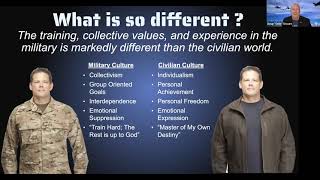
You bet. You bet. Shelly, thank you so much. I appreciate it. It's great to be with you all today. Sorry I can't be with you there in person, but it's great to be able to talk. And as we, as we chat today, please, if you have questions, just holler out everything and we can address things as we go. When I first talked to Shelley about being involved with this program and I knew Brian, I knew Shelly, they both have army backgrounds and Shelly was just taking some pokes there because she was speaking a non Air Force lingo at me and she's doing that on purpose. As I said, when I met the two of them and talked about this program, I said, well, the first thing I understand is I bring diversity to this because when it comes to inter service diversity, we have to be able to talk across the lines and to relate to people. And how the army does stuff is different than the Air Force and the Navy. And I want to talk about that just a little bit because what we want to be able to do is establish connections with our veterans by talking their language and having a little bit of understanding so that we can build that level of comfort, that level of trust, so we can establish communication and figure out what the needs of the veterans are and meet those needs. Next slide please. So go ahead and click both, if you will. For me, what's different between military life and civilian life? And I don't mean to oversimplify this a little bit, but it is culturally significantly different how we approach life. And I think it's one of the reasons that today the military is having a hard time recruiting because I think the difference in our society and the military is actually continuing to widen. What do I mean by that? Today's society we spend a lot of time talking about individuals, about what you do personally, about expressing your emotions and then like I said, individual achievements. Well, in the military it's just the opposite. In a lot of cases, it's what we do as a team, it's how we get together, it's how we identify as a group, you don't have, for the most part, you're supposed to suppress those emotions. We're supposed to be emotionless. You work hard. You know, we have the terms that we find in the military, the things like, suck it up, buttercup. You know, it's just one of these things that you put up with it for the greater good. So there is a difference of how we approach things, I think, between the civilian and military. It just sets up a difficulty sometimes in being able to relate back and forth. Next, please, next slide. What also is hampering us being able to get the communities and the military to understand each other, is there are fewer and fewer people serving in the military, as you can see on that little chart there. This is essentially Since World War II, right after World War II, we had the Korean War, then we had Vietnam, then we've had the Cold War, and we continue to dwindle down to have the fewest number of active duty military that we've ever had in our, you know, since the World Wars. And we didn't have a standing army before the World Wars. So when you talk to people who have relatives who are in the military, know somebody who's in the military, those are getting to be fewer and fewer and farther in between. So people don't have that intimate knowledge, that firsthand understanding of what it's like to be in the military. So we're getting sort of a. Just a demographical disconnect between the military services and the communities that we serve. And it's basically just based on the numbers. Next slide, if you would, please. Mike wrote this nice book, and there's a quote that he has, and I wanted to leave this in the curriculum, just to footstep the fact that most of the time who veterans can relate to are other veterans. They're not always available, they're not in the network. And like Shelley was pointing out, just demographically, when you get into areas where the veteran population is more dispersed as we went up north, you know, obviously more rural, higher percentage of the population, but there's just not that much of the population around. So there's not necessarily that support network available of other veterans. So what we want to do is give you just a basic understanding of the military services so that we can establish that connection with those veterans to help connect them to this, to the different types of support that are available. Next, please. There are a lot of issues with veterans, and I think most people in the room are familiar with some of these, obviously military veterans and those Serving in the military have a higher than the general population risk and statistics regarding suicide, depression, homelessness in a lot of cases. The PTSD information statistic that Shelly threw out there to start a little bit, substance abuse is a big issue with a lot of our veterans. And all of these issues depend on so many different things. There's no cookie cutter approach to being able to deal with these because even within the services, you know, what the army goes through is way different than what the Air Force goes through, which is different than the Navy experience. But even within each of those services, each career field and path that these individuals took in their career are going to be significantly different. So we have to be able to dwell down and find out what the issues are. What is unique is, and you're going to hear me say this a number of times, Michigan is a National Guard and Reserve State. National Guard and Reserve. These are, let's call it part time individuals who can spend up to 100 days a year at home being in service, but then they can also deploy them for many months at a time and then come back to their civilian jobs as opposed to being full time in the military. It adds unique problems and issues, let's call it challenges for us to be able to adequately address what's going on because it could be masked. It can be taken care of in different ways than an active duty counterpart. Next slide please. So when we look at the services and all about half of the active duty military well it's actually all reserve and active duty are about half is the Army. They have the preponderance of individuals that are in army where the green their main we'll get into the individual. What the army does here just a little bit more. Second biggest is actually the Air Force. The statistics up here on this slide are a little bit messed up right now. But look at the portions on the pie itself will give you the best indication. The Air Force deployed all around the world. And then you have the Navy with the ships that are everywhere, mainly coast concentrated on the coasts and deployed. The Marines also on each coast make up about 10% of the population. And our our fledgling new space force that's out there when you round up are still exactly 0% but they are rapidly growing as a portion of the new service that we have in the military. And each are unique and different. So let's look at each one briefly. Next please. For the Marine Corps, most of the folks in the Marines and once again how they identify is going to be based on where they were stationed and who they were stationed with. I think most of them would identify with either the location where they were or the battalion or the regiment that they're serving in. The Marines, their job is to basically fight in the littoral. This is from the water to the land. So a lot of these areas, for example, in the Pacific and along coastal areas, where the Marines get tasked a lot, and almost in a Special Forces kind of a way, in a lot of instances, the Marines have a very rich history. When you talk to a Marine, that's how you address them. They are a Marine. They're not a soldier. They're not an airman. They're not, you know, anything else. A Marine is a Marine, and they take great pride in their rich history of the U.S. marine Corps. Next, please. In the army, this is where we talk about a soldier. I'm involved with a charity called the Fallen and Wounded Soldiers Fund. And I always kind of joke with them that that eliminates about half of the people serving in the military, because they're not all soldiers. But the fact is that's what they are in the Army. And once again, very much like the Marine Corps, it's based on which organization that they're assigned to. And I think most folks. And I'll even turn this around as a question, Shelley, how would you define, from the army perspective, what is your organizational identity most of the time? Your unit, which is any of those different levels?
Yeah, any of those different levels.
Okay. Which is a little different than the other services here. But once again, the army, you're going to find pretty much everywhere they have. They are the land component. So when it comes to being able to wage war, to defend the countries and everything else, oversees the land component. Lots of vehicles and a pretty significant aviation arm, which is pretty much rotary wings. So this is your helicopters. So vehicles and helicopters and individuals on the ground is the focus of the US Army. Next, please. The Air Force, near and dear to me. This is where we would refer to somebody as an airman. Folks in the Air Force are going to identify with either where they were stationed or their squadron. Most of the time, they identify with that fighter squadron, that airless squadron, whatever they happen to belong to. But that squadron level, which can be up to 100 and some odd people in an organization. Air Force obviously is focused on air power, but most of the folks in the Air Force don't touch airplanes. There's a lot of support. There's a lot of other things that go on in the Air Force besides necessarily flying the airplanes themselves. Next, please. Our Navy, we have over 300 ships in the Navy. And most of the folks who serve there, once again, they'll wear the label of being a sailor, but they identify with the ship that they're assigned to. But the Navy also has a very large air component. They fly fighter jets, all sorts of other airplanes, as well as rotary wing. So that group of the Navy would identify with their squadron. But for the folks on the ships they will normally identify with, I served on the. And then they're going to name the ship in that particular case. Navy, once again, is pretty much coastal. A lot of times they'll talk about it, whether they're east coast or West Coast Navy, and that's where they're based in the. Within the United States. But we also have a significant number that are based out towards Hawaii and even in a number of overseas locations. Next, please. And then our newest, our Space Force, once again, they are just getting established in terms of organization. And I think they pretty much identify like the Air Force does by the identity with the squadron that they serve in. The Space Squadron, they are geographically dispersed around the United States in a number of locations. But primarily when you're thinking Space Force, it would be Southern California, Colorado and some on the Gulf coast area. But they continue to grow in terms of the numbers and the organizations as we take those space functions out of the other services and concentrate them in the Space Force. Next, please. You heard me talk about the Reserves, and it's an important footstep, I think, when we talk about the Reserves, they make up over a third of the total number of people who serve in the military. So these, for the most part, are, you know, back to the term I use, part timer. I never would call a reservist or a Guardsman a part timer to their face because they always are people to wear the uniform. But they have other jobs and they're, you know, balancing school, life, work, all these things, and they continue to serve their country in uniform. Those are the six main reserve component branches right there. The top two are the National Guard. And each state and four of our territories have a constitutionally established militia of the states, which we call the National Guard. There is the Air and Army portions of that. But those state militias, if you will, answer to their commander in chief within the state. So the Michigan National Guard, there's an adjutant general who's politically appointed, who answers to the governor of the state of Michigan. So until they're put into a federal status, the National Guard's job is not only to be ready to be put in federal status and help defend our country. But they also work partnerships that we have with countries around the world. And they also have a role with domestic response for terrorism, for natural disasters and things like that. And then each of the four services has a reserve component which is statutorily, by law, organized differently. But these are individuals. Then they can step up into the roles of the active duty components and be able to fill and bolster their strength. And it does it in a more economical way than having a full time standing military. Next please. Shelly kind of hit on this at the start as the number of Michigan veterans. One of the interesting things is if we look at the veteran population, because we have fewer and fewer people serving, as time goes on, the number of total veterans that we're going to have is decreasing. Not only has it decreased, but it is also showing a trend of going down over time. In the future it'll be interesting to see how this plays out because once again we have that conflict of disconnecting between the community and the military services themselves. Michigan does not have any operational active duty military base at this point. There used to be in the past, but we are primarily a Guard and reserve state. Most of the organizations, most of the facilities that we have that are military related in the state of Michigan belong to the National Guard or Reserve. When we talk about our veterans, you know, Shelly touched on that, you know, one day in boot camp can make you a veteran there. Very small portion of our veterans actually get to be retirees. Traditionally we've known that as the 20 year service, drawing an annuity type of an individual. Most of the folks have touched military service at some point for some length of service, and then have transitioned into civilian life and are doing other things. So very few of our veterans are actually retirees. And you can see the number of female there is less than 10%. That number will go up as we go into the future because our military right now across the board is about 20% female. Across the different services, most of the veterans are elderly. When you look at Vietnam era veterans, Korean War veterans, about half of all of ours are over the age of 65 years old. And then the other one, when we think of veterans, we think of using veteran services. But once again, it's not a majority of our veterans who have even exercised a lot of their rights and benefits that they've earned as veterans. In fact, less than a quarter have actually ever even stepped foot inside of a VA facility. Next please. In the military, we have two different rank structures, the enlisted and the officers, the officers, percentage wise, less than a fifth of the total population. This is the group that is normally in charge. They are what's called commissioned officers, which is actually a different obligation that they have while they're in service. But if you ask somebody their rank and they start explaining that they're an officer, it means that they're normally the ones that have been in charge. They have a tendency to have a higher level of education. Not always the case, though. And the rank that they wear starts off with bars and then goes to leaves, to birds, to stars, as I say it. So it starts off with lieutenants through captains. Then you have your majors and lieutenant colonels. And those ranks at the top are pretty common, except all for the Navy. I still get confused with Navy ranks also. But they normally have ranks on epaulets with a number of stripes up here that are the equivalent ranks to the other three services. And then the army has a small group they call warrant officers, which is a small population. Next, please. Most of the folks who serve in the military fall into what we call the enlisted. And this is easiest way to identify. And it's how most people who serve identify. They ask them what rank they are, and they'll be able to tell you. And it gives you an idea of where they were within the hierarchy of the organization. And it's identified by stripes. The number of stripes go up, and then eventually there's stripes with stripes on top. And most of them end up with three or four stripes on top being the highest rank within the enlisted corps. So most of the folks that we talk to in the military are going to fall into this category right here. The bread and butter. Those who make up the capabilities of our military services are enlisted. Next, please. So when we meet somebody in the military, what can we do? What are some of the basic steps we can take to help establish that connection and build that trust? I gave you just a little bit of background. You'll get copies of these slides to be able to go back and review. But there's some very basic questions you can always ask. I don't ever start with. And I love it when people say it to me. They say, thank you for your service. And that's a great sentiment. But if we're with an organization of faith and we're wanting to establish a connection, we need to go beyond a statement. And what we want to do is draw them into that discussion, open that dialogue. And we can do that by asking them about their service. And the first four, real simple, which service Were you in, you know, you Marine, Air Force, Army? What was your job, what was your specialty within there and let them explain what were your rank and what unit were you with. And these are all things that they identify with and it's going to help, the more they talk about it, that's going to help establish a connection. And then the last big question always is, how can I support you? What are things I can do for you? The big thing with veterans a lot of times is they don't know what they don't know, which means they're not sure what it is. Maybe they haven't identified the need yet, maybe it's something they haven't been able to come to terms with. But that's what opening this dialogue and having that discussion will help us to identify. We want to stay away from controversial topics. You know, what's going on with politics, what's the latest in the news? I stay away from a religious type of discussions most of the time unless they want to talk about that. You know, we can talk about their service and things I always figure out you can talk about is you can ask about their families and you can ask about their animals, you know, what kind of pets they have. And that's normally a very easy way to open communication. And it's non controversial. The other thing is most of the folks in the military can be very direct. When I was working the suicide prevention programs at the national level, it was working with the directors of Psychological Health and Diana Foots. Not this one for you, that just being direct. A lot of times, not only in our communication, but if we want them to do something, simply say, I'd like you to do this or do this. We're very hierarchically organized. We like checklists, things to do. The military can do that. And the directors of Psychological Health, which were civilians helping take care of the military. It was so funny in Salt Lake City when she finally figured out is I quit asking him to do things and I just told him and I gave him a checklist and I told them when to come back to me, when they'd done it and they did it. So a lot of times that's just the mentality that we have be direct military is used to that and it's going to be an effective way to communicate. Now I've used a term that I got checked on the other day, it's twice now I've been talking to you and I use the term foot stomped. I've always assumed that that was a generic term. But in my 35 years of service. Apparently it's not. When we used to teach classes and if it was important, it was going to be on the test. The instructor literally would stand in front of us and stomp his or her foot on the stage. Which meant, pay attention to what I'm saying right now. It's like, oh, you'd wake up and take a note whenever they would stop their foot. So that's my terminology. Shelly was kind of poking the bear a little bit when she was talking about In Garrison and my handle, because those aren't Air Force terms. I was the commander at Selfridge and Odie is my fighter pilot call sign. You know, you have Maverick and Goose and all those types of things. And I have Odie, the little dog who doesn't speak and get kicked around quite a bit. So just to strike the fear into the heart of the enemy a little bit. But that is a very short version, hopefully, how we can connect with our military that we can establish that communication, establish that trust and open the channels to be able to better serve those who have so awesomely served us. What questions do you have for me? Dead silence.
How did you get your call sign, sir?
Oh, okay. When I joined the Arizona Air National Guard, I didn't have a call sign. I was an instructor pilot for F16s and I hadn't been there very long when they gave me the job of being the briefing room officer, which is about equivalent to being a janitor. So my job was to keep books up to date, to clean up after people. It's where the fighter pilots would go in and do their briefings and debriefings from flights. And they had a tendency to throw garbage everywhere. So my job really was to kind of keep all that up to date and cleaned up. And it was a young lady who worked in the command post. I had done that job for almost two years, I think. And she said, I always did that dirty job without ever complaining about it. I'm like Garfield's little dog, Odie, always getting kicked and never complaining. And she looked at me and she went. And there are still people in Tucson to this day that will greet me with that. Basically going, arf. But when she said that, Odie stuck from then on out. So there you go, the story of Odie.
Appreciate that, sir. Thank you so much. I have one other question for you. Does anyone in the room have a question for him?
I'm just curious. How many missions did you fly in the F4 Phantom?
I got about 400 hours in the F4 Phantom as my first love, my first request out of pilot training. I ended up converting from there to the F16 while I was still a lieutenant. But I got to fly a lot and I wouldn't have traded it for the world.
What year did they stop flying?
The Air Force continued to fly F4s, even in the drone program until probably, I think it was seven or eight years ago, the final flight of the Phantoms. But operationally they'd been late 90s. I think it was mid to late 90s. I'd have to look up the exact date.
I didn't realize it was that long. I was a weapons control systems technician for the F4 Phantom D aircraft.
I flew Ds at Homestead hard wing, when real men would fly airplanes without those slats.
Excellent. Thank you so much, sir. Can I get a round of applause for the general? All right, so next up we have Diana Lasky. Diana is a dear friend of mine. She is a veteran herself. She is a licensed master social worker. And when it comes to the hard work of getting into the hearts of military people, I don't know that there is anyone more qualified than Diana. So with that I'm going to go ahead and turn it over to her. Ms. Diana Lasky, ladies and gentlemen.
Thank you.
Well wishes, General. I hope that you're feeling better. You sound like you're doing well and everything. Are you kind of on the back end of it?
I'm very much on the back end of it. I'm not sure. I guess it got shared to everybody. Yeah, I'm on. Should be my last day of quarantining for Covid. I've made it. I know, five years without getting sick at all. And I've never gotten Covid before and by golly, it caught up with me.
Of course my in laws both have it as well and they were able to stay away from it this whole time. So just it comes around, you know, virus. But thank you for the introduction, Shelly. And I think she over exaggerates a little bit, but that's okay.
I love her.
I also am able to have the honor of not only can I am I on this part of the warriors with warriors, but I'm also the Macomb county veteran navigator, so I'm Chris, but in Macomb county, so and, and when you are able to gain the trust and you're opening that communication with your vets, it's so important to be able to know those resources because of course as a veteran and my husband just retired from Selfridge a year ago, and my dad was in the Air Force, and that's how I grew up, going all over the place. So he was a chaplain. So this actually makes me feel like I'm coming full circle, which is nice because as a Christian, you know, I'm able to. To be part of this. But. But when you're. I know from all of those experiences that when you tell somebody in the military or. Or anybody that's ever served that you're going to do something, it's so important to follow through, because that's one of the biggest things that they're looking for and that they get frustrated with. A lot of the time when they're asking for help is that they just don't. It's not followed through. And that that kind of gets them, you know, to where they're just going to try to do things on their own, which is why we have the higher levels of suicide and depression and all of that. So I'll lead in. Oh, you're going to do it for me?
Okay, thank you.
All right, so this is just a little. A little screen that just talks about some of the things that we'll go over very quickly. Every time I get done with this training, I always feel like I'm talking really fast and I'm speeding through it. So if you have any questions as we're going, please feel free to stop me and ask any questions that you might have. So mainly just a general overview, again, about some of the risk factors. I know we've talked about some of those already, but some of those resources that might be helpful, how to encourage them to help seek. If you open up that trust and that communication. And they say, okay, well, what do I do now? Just some ideas of how to go about that in a way that they would understand. And it's easy for you to do as well. So strategies, all of those things. So here are some mental health statistics. I think that there. This was back from 2018, possibly. So it might be a little bit outdated, but. And this is just. This isn't just for veterans alone. This is for the civilian population as well. But really heartbreaking numbers. And it just keeps going up. It seems like even though 1 in 20 adults experience some type of serious mental illness, there's still so many. This is just the numbers of people that are reporting. So even also with the veteran population, there's so many of them that are struggling in silence and trying to do it all on their own. And it just makes things so much more difficult. When we isolate, of course, but that's the tendency that we tend to do when you're going through something hard and don't know how to get help for it. And of course, the pandemic. Lovely Covid. Does not help with things. There were a lot of people that I knew that said, you know, normally they're, they're more closed in people anyway and they're okay with spending time alone. And so this way it just made it normal. They were able to isolate and it wasn't weird. But for now that people are kind of coming out of it and they're realizing that they have social anxiety and a lot of people are having a hard time reconnecting in society. And so now the anxiety and depression is even up higher than it was before. And that's. Those are just some of the statistics that are starting. And I. The. So the program that I work with, with warriors, with warriors, normally the grant is taken under by Community Mental Health. So I work under Macomb County Community Mental Health. And just from them I know that we have at least a two month wait for just intakes for people that call in and need help. So now they're waiting two months. Sometimes once they get the intake, it's even longer to see a psychiatrist if they might need medication. So it's just, it's a very trying time for mental health at the moment, even more than before. So I like to be interactive. So just out of all of these words that are up on the screen, what kind of stands out to you when you're thinking about maybe people that you have known or if you've experienced being in the military yourself? What are some of the, the words that kind of stick out? Go ahead.
Sadness.
Sadness, okay.
Depression.
Depression, sure. Is that personal experience or just kind of one of those things that you. It just kind of sticks out. Yeah.
Anxiety.
Anxiety. It's. It's interesting. I have struggled with anxiety most of my life. I didn't know until after I was in the Air Force that I had anxiety and that it was a thing. I just thought I was a nervy person. Mental health wasn't really talked about much in my family, but now it's. It's so prominent and it seems like almost everyone I talk to deals with anxiety in some form or another. It affects everyone differently, but especially within the veteran population it can be even more prominent. Like a lot of these other things that we know about and why. And anxiety is one of those things where if you've never experienced it, it can be extremely debilitating and Sometimes we'll say, oh, it's just anxiety, but man, it can be powerful and very unhelpful. So learning some of those skills and things of how to deal with that is very helpful. So this is a repeat, really, of what the general was talking about, how there's a lot of challenges that mainly veterans, you know, collectively, we tend to kind of deal with these things a lot more, especially since our population is lower. So statistically, we have almost double the numbers of suicides from general population. Same with ptsd. But the wonderful thing that I've learned working with vets, through mental health and everything too, is that PTSD doesn't mean that that's where you're going to be stuck forever. If you're able to get really good resources and support and everything, you can actually have post traumatic growth, which means, you know, you go through all of this trauma and you're having a hard time, but you can go beyond that and learn from it and be able to grow from it. So doesn't mean that if you work with someone that has ptsd, that that's just how they'll be forever. So that's, that's just a side note. Obviously, a lot of the wounds that you may see in some of your people that you work with that are vets are invisible, which make it a lot more difficult, which is another reason why it's so important to be able to talk with them and gain their trust so that maybe they might be able to share some of the struggles that they're experiencing. It's a busy slide because there are so many complications and extra challenges that veterans and their family members experience. Obviously, you know, I said, my husband's a veteran also, and he went on multiple deployments and the frustration of them always being gone longer than they're supposed to, stuff, always breaking when they're gone. Nothing like that ever happens when he's home, of course, but. And as a, as a social worker, master's level social worker, when my husband was deployed, first day he was deployed to Afghanistan a few years back, and our house flooded and our, you know, something always happens. But I thought, okay, I am a social worker and I know what I'm doing and I know that there's resources, but how do you access them is what is so difficult. Sometimes you know that they're there, but you don't really know who to call or how to get that help. So another reason why it's so important to know who you're veteran navigator is or who those resources are within Your areas, which you'll get that information from Shelly. But, you know, this is just a long, short list of some of the extra complications that we tend to have, but especially the survivor guilt. I've really found that that one, it adds so many different layers of shame and depression and feeling isolated, and it's really hard for them to really talk about it because it's something that they just. They feel guilty for having survived certain things and their comrades didn't. So veterans and substance abuse, I mean, obviously within regular civilian lives, I mean, alcohol is a legal drug, and it is usually culturally acceptable in the military. It definitely is. It's one of those things that when I was in Korea, everybody drink all the time, and it was a social thing, but also a way of kind of dealing with your stress that you're dealing with. You're missing your family, you're out of your country. And a lot of us were. That was my first duty station. A lot of us were still underage but legally allowed to drink there. So, you know, then you're like, oh, I can actually drink. So it was one of those things, too, where you're trying to be like, oh, I'm serving my country, and this is something new, and I can do all of this. So there's a lot of things that happen and why it's culturally acceptable through the military, but it also can cause problems, too, especially if you're kind of using it as a. As a crutch to help with your problems when you get back and you're trying to readjust to civilian life and everything. It's not okay to completely get obliterated every night. So because, again, being a guard and reserve state, people are coming back and having to go back to their normal jobs, and that's not acceptable. So, you know, it's causing a lot of people losing jobs, losing families, lots of money issues. And of course, when you're like, when I get calls, I'm sure Chris can definitely account for this as well. But when we get calls for, you know, say someone is going to be homeless, one of our vets, it's usually attributed to some type of substance abuse and mental health. Usually it's never just one thing, so it just kind of contributes to all of that. So PTSD, again, we were talking about that earlier. 50% out of all outpatient mental health patients, just from the general population, so 50% of them have some form of PTSD, and it can be caused by so many different things. And there's also secondary PTSD where you don't even have to experience things yourself. You can hear about it. My daughter had. Her very best friend's mother died in her arms. And so my daughter had secondary PTSD from listening and helping her friend go through that trauma. So it's. Things like that can happen, but again, a lot of it just is not either being reported and treated or we know about it, but it's hard to get them the help that they need. And why do so many suffer from ptsd? This is just another list of reasons why that first bullet on the left that I can personally contribute to that one. Because when I went in the military, I had trauma already and didn't realize it. And once I got in and I was having to adult and be a military member, and then I got married and started having children, and so I was just compacting trauma and things were just happening and I needed help. I went in young and broken. And a lot of people do not always. There's usually a lot of. Most people that go in, it's because they want to serve their country, go to school. You know, there's all these different other reasons, but sometimes this is what happens. Of course, fear of coming forward, that stigma from working out at the base, that is still very, very real. Mental health always has a stigma behind it, but especially if you're still active in the military in some way, they're very, very afraid that if they come forward and talk about it, that it will affect their career adversely. And, you know, of course, we're trying to get away from that and try to do more early intervention and get that support where it needs to be. But a lot of the time, it's just very, very hard. Even some of the leadership will still say, oh, don't go see anybody, because you might not be able to still do what you're doing. So it's. It's a process. We're getting there, slowly but surely. Relationship issues, of course, especially for Guard and Reserve. They even have a higher risk factor of suicide and substance abuse, most likely because there's a lot less resources available for them as opposed to being active duty, where you have the whole base and everybody lives together and everybody has that sort of support. You don't have that as much at a Guard and Reserve base. So if you're dealing with things, it's really hard to find those resources. So this number, the 22 veterans a day, does every. Has everybody heard of this number? Pretty much everybody in the room. Right. You haven't heard. Okay, so there's a statistic that came out in 2012, where it was, you know, with the numbers and the population. And there are 22 veterans that die by suicide every day. It fluctuates. It has fluctuated from 2012 to now. It'll go anywhere between 22 to 20. I think 2019, it was down to 19 a day, but still way more than it should be. And we're doing everything that we possibly can to try to make those numbers less, but it's still right at about 22. So, you know, you can recognize a lot of people in the picture, probably all of them. Unfortunately, we'll have to add Ms. Judd to the picture now. And it doesn't matter if you're. If you're, you know, famous and you have all the support and money that you can think of, it's still. Suicide has a way of just crossing those barriers. And it doesn't matter where you come from or who you are, it can affect you that way. So some of the warning signs you can look for within the people that you're working with or even within yourself. Sometimes isolation and withdrawing, of course, feeling hopeless, that's one of the things that we always try to instill, is making sure that people have hope in something. If they feel like a burden, if they're talking about dying, obviously, that's a big red flag. Any questions about any of these? So this is some of the strategies that I know as far as the Guard Bureau. They're throwing all of these programs and everything into trying to prevent suicide. Lots of money and lots of resources going into that. I used to have to do all of the trainings to every single person on Selfridge, because every year they had to hear the same things and know how they can approach people and how, you know, if they're feeling a certain way or anyone else is hopefully catching it before. So one of the strategies that they use on the base is called ace. There's a lot of different. If you've ever been to any suicide trainings or any little certification classes or anything like that, there's always these acronyms that people use to make it more helpful. So if you come across somebody that's definitely going through something and you need to ask them, you can just think of ace. So this is the one that they utilized. So ACE stands for Ask Care in A score. So first you would ask somebody, and again, like Odie was saying, you want to be as direct as possible. It's not going to help anybody. You're not going to put any thoughts in anyone's head. That's a myth. You can just say, hey, are you having thoughts of killing yourself? Or sometimes people that are feeling suicidal. It's been a process. It's not happened overnight. So sometimes you can even just say, is this the worst that it's ever been for you? And when you're asking, obviously be genuine and empathetic, listen to what they have to say. Because they may say, you know, if I just don't wake up tomorrow, that'd be fine. That's not the same thing as saying, I have a plan to kill myself. It's a completely different thing. And sometimes it can be really difficult, but just needs to be asked. And you may at one time be that person that has to ask somebody. And then making sure that they. You remove the access, the means to them being able to hurt themselves in some way and in that way making sure that you're escorting them not to ever leave them alone. And then go slow. So there's ace and go slow. So go slow was created because the majority of the time the way that veterans especially choose to kill themselves is through firearms. Because so many veterans I know we have tons of guns in our home and a lot of veterans tend to. So just making sure that you put time and space in between them being able to use that on themselves. So making sure they either have a safe or that the guns are removed from the home or that they have gun locks, I always have tons of those. I know a lot of, like through the va, you can get a lot of gun locks ordered for free just to be able to hand out to people if they need them, but just to cause at least a few minutes. Because statistically if someone is considering suicide, it's usually something will happen and then it takes about five minutes for them to make that decision of, okay, I've been thinking about it and now I'm just tired and I can't do it anymore. And remembering also that most of the time when people do talk about suicide or are considering it, it's not that they're being selfish or that they are just doing it for attention. A lot of the time it is something that they're considering because they have lost all hope and they feel like they just can't do it anymore. A lot of the time they're just hurting and don't want to feel that way anymore. So trying to build resiliency in them is such a huge process and an important strategy that we all try to maintain within the veterans that we work with. Shelley had mentioned for that quiz, the Four pillars. So, you know, there's one of them spiritual. So there you want to make sure it's kind of like a table. If you have the four pillars or the four legs and one of them is off in any way, then obviously the table will topple over. So it's trying to make sure that people have that healthy balance and everybody needs that, really. But especially vets, if they're, you know, especially if they're, they're changing, trying to adjust or they're moving from retirement or they're separating from the military, it's. It takes a lot to adjust back into regular civilian life. So these are just some of the ways that you can help people that you might be working with build resiliency as a strategy. Never take yourself too seriously. For sure. We use, I think, I would say for military, we use humor a lot to kind of deal with things, so that's okay to do. And expectations versus reality is huge because a lot of people think, like my husband, for instance, when I retire, it's going to be so great. I won't have to do anything anymore. But, you know, all this stuff happens. And okay, now he's like, okay, what am I going to do with my life? Because I'm only 46, but I was just working on multimillion dollar planes, and now what am I going to do? Like, it's, it's an identity thing and all of that is happening. So building that resiliency so that they can come back to that is really, really helpful. So this is just a summary of when you're working with military people. Remember, they have very unique challenges and it's okay to not know everything, but it is important to build their trust and to make sure that you follow through with things that you say you're going to do. Also remember that a lot of the vets that are suffering with a lot of these challenges may not have ever been in combat. A lot of them may have experienced things while at home or while they were in basic training or in schooling or just things that happen with them when they're out doing their weekend stuff. So that's important to remember as well. And then just reiterating the ace and the go slow, just a way to remember how to approach people and help them if they're in a crisis. Excellent.
Thank you so much, Ms. Diana. We really appreciate that.
Anybody have questions?
Any questions?
Any questions? We'll come back for question.
I want to know if Shelly has her ace card on her.
Do I have my ace card on me? No, I don't. I have it memorized. All right, so hopefully everybody feels a little bit more trained up. We just experienced 20 minutes of military cultural competency. That is officially a 90 minute course that is certified from the Michigan Department of Health and Human Services. So for our representatives of faith organizations here in the room, we do want to offer to you that we will come to your organization and you can have Military Night and we will teach a full 90 minute course or even just the abbreviated 20 minute course at no charge for you. We're happy and thrilled to be able to offer that to you. And the same thing with crisis awareness. We do have certified instructors for crisis awareness training available at your disposal. We would love to come out and offer that to your organizations.
Are these slides going to be available?
Yes, sir. Yes, absolutely. And so we're going to take just a few minutes here and look at your organizations. What are you doing within your own organizations? Let's talk about some of the best practices that organizations of faith can put into practice to serve military people. Oh, look at that. Time to stretch. So I'm going to put five minutes on the clock and we are going to network interactively. And the question here is, what is your organization doing to serve military veterans and military families in general? And if the answer is nothing, that's perfectly fine. So then the question is, what is your community doing to serve veterans and military families? All right, so we're going to tip into five best practices that we as a leadership team have recognized for faith organizations. The first is to establish within your organization a military liaison. So this is one person, a real person, a real name, somebody ideally who is first tier, meaning they themselves served in the military. If you don't have somebody like that, then a second tier military liaison would be a family member of service personnel. So somebody my father served, my mother served, my aunt served, that would be considered second tier. Now, the best liaison is somebody who is willing to be public with the fact that they. They are actually a liaison. So your World War II veteran that doesn't have a Facebook is probably not going to be the best military liaison for your organization. Right. Because we already saw the statistics. The numbers of veterans is changing. So you just want to make sure that it's somebody that is really, really willing to be open and connected with the community. And that's not to say that that is a bad military liaison, but perhaps we should think about partnering them with somebody or who does have, you know, those social connections. The best practice number two is to have what's Called a cup and flower fund, sir. General Slocum, do you know what a cup and flower fund is? Is that Air Force lingo? No, he says he's shaking his head. So in the army, we have cup and flower funds, and that's where everybody makes a donation. And we use that fund of money to celebrate milestones in somebody's life. So within your organization, if you have a unique fund of money, and it can be $100, it doesn't have to be very much. But if you just earmark something in a line item specific for military people, then military people will be serviced with that money. And sometimes that's all it takes to make sure that they're serviced. So a recommendation that we have for you, There are lots of grants out there, smaller grants, even Thrivent Financial offers funds that can help offset the cost of supplies for even handmade cards. So one of our awards that we gave out last year was to Trinity Lutheran in Clinton Township. They have a group called, I think it's Hugs, Paper Hugs, the Paper Hugs Crew. And they create handmade cards. They donated hundreds of these beautiful cards to our women veteran, strong peer support program that we still use. We have some leftover for this year. And so what you want to do with any of these items is you want to create a really strong distribution point. This can be sometimes the biggest sticking issue for organizations. Well, great. Now we have all this stuff collected. Who do we give it to? So you want to work with us to have a strong distribution point such as self, Ruger, National Guard base, Fort Custer, any of the reserve or national Guard units, or even service organizations like the Foreign Legion or the VFW post near you. If you don't have a direct introduction to somebody at a distribution point, we can serve as that for you. The third best practice is a custom care package instead of just doing a drive for socks. I mean, aren't veterans worth a little bit more than some dollar store socks that you picked up? Let's try to have some really customized care packages put together. So you could put together a box of photos of members of your organization that are holding up signs that say, thank you, we appreciate you. You matter. That's something that's next level. And we can help you come up with creative ideas for what type of care package you could put together. Hosting a support group at your organization is an amazing way to provide support to military people. You can either start your own advocacy group, we can help you do that, or there are established approved groups with care curriculums already in place. That are just looking for a facility or they're looking for somebody to lead a new chapter in your location. So consider that. And finally, let's talk about calendar events. People love to serve around calendar dates, right? We all feel patriotic on the fourth of July. Good. Let's take that to the next level. If you didn't know there's actually something called women Veteran day here in the state of the Michigan. And so consider your organization marching in the parade, maybe the Memorial day parade in St. Clair Shores. Every year you can have your own organization with your organizational shirts showing that you support military people. That type of initiative goes a really a long way with military people. And hosting a unique event takes a lot of time, takes a lot of effort, takes a lot of resources. That's awesome. If you want to host a unique event, are you ready for it and can you do it consistently? Ms. Diana said that keyword consistently. So don't just give us a one and done amazing thing. Let's be there year after year to support our military people. All right, let's tip into our resources. And at this point, we want to highlight the new national suicide hotline. Just like you can dial 911 for physical help in your home, you can dial 988 and be connected to the national suicide prevention lifeline. This is also good to know you do not have to be the person who is in need of that help. If you are the caregiver, if you see your spouse having some issues or battling some negative thoughts, you can call 988 and you can say, listen, I'm hearing some pretty scary things from one of my loved ones. What do I do? And they can talk you through it. There are tons and tons and tons of resources out there for supporting military people. In fact, there are so many, it is overwhelming. We encourage you to connect with us directly. There are apps that you can have free mobile apps. If you are of a younger generation, you have millions and millions of apps on your phone. If you are of an older generation, maybe not so much. I'm. I'm over. I'm part of that older generation that has not so many apps on her phone, but there are some really cool things that are out there. And actually, I do want to highlight the efforts of General Slocum, because when he was commander at Self Regier National Guard base, he did actually help the 127th Wing put together an app specifically for the wing. And he said that that was instrumental to connect with the younger generation. Reminder that a printed copy of our session as well as a expanded section of local and national resources is being mailed to you at the conclusion, I should say, at your graduation of today's course. And it's going to include things that look like this. All right. The best resource that you have is here in the room. Ladies and gentlemen, Chris Brown. Can I have you slide over here next to me? Mr. Chris Brown, I have a couple questions to ask you.
Well, certainly.
So the first one is specific to Wayne County. We see some issues up here on the bottom of the slide like health care and housing. When your phone rings, what issues are you most of the time dealing with in Wayne County?
Oh, well, it's buried. But I mean, since COVID obviously during COVID it was a lot of ppe, people kind of stuck in their houses, needing food, needing money, eating, just general resources, oftentimes needing someone to talk to. I spent a lot of time talking to veterans, sometimes on the phone, sometimes 30 to 45 minutes, just going through some stuff and just kind of being there for them, someone to talk to, because they're just kind of stuck in their house, which is, you know, it's still common. I mean, it's still. That's one of the big issues in Wayne county is a lot of veterans are kind of stuck where they're at. It's difficult to move around. It's difficult to get where you need to go and get the services that you need because you're stuck where you're at.
Now, I find that really intriguing because we saw that Wayne county is the highest number of veterans. So how can they be so isolated and stuck?
Right. Well, I mean, if you see the county's huge, you know, you got a very, you got a very urban part of Detroit and that kind of surrounding area. It's very, you know, you get the bus lines, you have those. There is, there is community, there is a community transportation option. Once you get outside of that, any, any outside city limits, then you got miles and miles of open land. We got country in Wayne county, just like you got country up in Oakland. And it's, it's just as rural as any of the other counties side of the county. So it's a very different part of. It's a whole other really slice of Wayne county, you know. And so, you know, like downriver is very challenging to get people where they need to go and get the resources that they need.
So what I'm hearing you say is don't assume that just because somebody's in the city of the highly populated Wayne county, they're going to have access to things like public transportation or good Internet.
Right. And in some cases, even, like just recently, I was just with a veteran and certain resources won't even come into the neighborhood. They're like, no, we don't go there. I mean, it's just. They won't go there because. Well, because it's a dangerous place. Yeah, there's a lot of, there's a lot of shootings. There's a lot of going on. You got to know where you're going and know what you're dealing with. And so, you know, and of course I, you know, I was like, really? I mean, it was a really nice neighborhood. Really. I mean, everyone was out. They were, what their family was working on, their house. You know, it's just, it was just a regular neighborhood. I'm like, what's going on?
So there's a stigma attached to Wayne
county within, particularly to the city limits too, of course, because people see this, particularly if you're looking for people on the outside who are willing to give resources to people in Wayne county but not Detroit. I mean, it's kind of synoptic sometimes.
Wayne county, but not Detroit. That's interesting.
So, I mean, so, I mean, that's just, that's just one aspect of it, but it's, it's there. So, you know, there's, there's racial issues. There's, you know, there's just a lot of, there's a lot of income spirits going on that needs to be rectified. And like I said, to try to get people in, to help in certain areas, it's just really hard.
And that's what you do. I mean, you are the connector. You're the one that knows all of these resources. Can you. You've been doing this for how many years now?
Four years.
Four years. And so in those four years, you've connected with hundreds of vets, I'm sure. Can you think of a time that just really made an impact on you, of why you continue to do what you do?
Yeah, I mean, there's ways when, you know, there's times I, like, I feel very successful with certain people. But yes, there's times when I'm feeling kind of like a saying. It's like you're just, like you're just hitting brick wall after brick wall in some cases when you're trying to work with people. And, and, and then you, you hear, oh, there's so and so's got these resources or the VA's got these resources. Well, as we know, every you know, everything's contingent upon certain things, you know, you gotta have in order to qualify for services. You have to have, you know, maybe this level of income. You have to have this experience in the military. You should have been, you know, maybe you were, you should have been injured in the military or, you know, all these kind of contingencies that they put in place. Really, I feel like sometimes just to prevent us from helping people, sometimes, I mean, it seems like more of a barrier to say, oh, we're going to put as many barriers as we can to keep people from getting what they need, which may or may not be true. But that's kind of what it looks like to me. And that's what a lot of veterans tell me. And so.
So that's what we say, Veterans trying to get through all these barriers alone.
Yeah.
Unsuccessfully.
Right. And even with my help and with the help of other people, I mean, I work with a lot of local organizations and that even with all of that, it's still challenging. And we still have. I have a number of individuals, individuals that I've been working with for, for more than a year, just with layers and layers of things that they need to be, that need to be taken care of. And of course, then new things come up along the way, especially if the old things weren't completely taken care of. So then new things come up that you have to deal with then because, you know, you just, you know, a lot of it's just waiting around for agencies to say, you've gotten this, we've, you've been approved for this, you're going to be able to come to this apartment complex, you're going to be able to get these services. It's a waiting game oftentimes. And that in itself is kind of frustrating. And we, you know, we're working with people, so I'm calling somebody, we're getting them the services that, you know, we're saying, oh, we're going to call this this and this agency and that. And then it's a waiting game. And they may or may not get back to me. I might be able to get back to them. I always ask them, you know, can we got to reconnect so that we can let me know if this isn't working for you or if it worked for you, please let me know. And, you know, get a small percentage of people that do that.
Well, wait. Waiting alone is dangerous, right?
Well, yeah, well, usually the, and then usually the, you know, of course, the big success things, you'll always get a phone call on that, you know, but if things don't happen or aren't happening the way they expect, expected, then you may never hurt their back.
And that's the important.
They may not answer their phone again. Yeah. So it's just. It's a struggle. It really is a struggle. And it's disappointing in some cases that, you know, you have these men and women who've served and they, you know, they have to work so hard to get any kind of just basic help just to live. I mean, housing, food and income. I mean, just the basic things. Every veteran should have those things.
And I can hear the passion and your voice for serving this population. And you served yourself in the military, is that right? What branch? Let's do military cultural competency here. What branch did you serve in?
I was in the army for four years, 85 to 89.
Okay, and what was your job?
I was a 63 Yankee. I was a track vehicle mechanic.
Track. What's a track vehicle?
I worked on. Well, it's a tank.
Okay.
I drove a tank and I worked on tanks, and I was a tank wrecker. I drove a tank wrecker, a 578 for a couple years and then went to El Paso to six, six military intelligence. I didn't have any intelligence there. I was just. In fact, I didn't get any clearance to even look at any of that stuff, But I did get to fix their tires and tracks and those kinds of things. I stayed on the outside of the vehicle. Sensitive things around the inside.
So, last question. To get to know you a little bit, why did you join the military?
It was a mixture of kind of probably the broke. You know, I was a knucklehead and I was looking for a way out and had been in a little trouble and. And also I wasn't doing too well in college, and so. And my dad had been in the military and his brother had been in the military and said, he's like, hey, let's give this a shot. Maybe this will help him out a little bit, give him a little boost and maybe help him grow up a little bit. Which it did. And it was really like, after four years of being in the military, I was ready to use my brain and ready to go to college and ready to get out there and be successful, which I was wonderful.
Well, we're honored to have you as part of our team course. Thank you so much. Really appreciate it. All right, next steps. We're going to finish out our workshop here today. So how did we do? Here's our agenda. We Knocked everything out.
Hua.
Excellent. Oh, get your cards out. All right, here we go.
I'm sorry, Shelly. What's this whoa stuff?
Well, what do you say? In the Air Force, Odie, zoom, zoom.
Not in the A10 world. It was just burp, burp.
All right, so Hua is very army. I know the Marines say hoorah. I probably totally botched that. I'm gonna get an email on somebody who watches this online, but HUA is like, yeah, okay, Roger. Got it. Move on. Okay, so get your cards out. True or false. Number one, over 65% of US veterans are currently eligible for VA care. Is that true or false?
Boom.
Look at that. All three at the same time. It's all false. So 60% of United States veterans are eligible for VA care. Number two, only eight out of 100 veterans have post traumatic stress disorder. Anyway, that are the reported numbers, right? And number three, spiritual is definitely one of the four pillars of health recognized by the Air and National Guard. And that is important because I want to encourage our organizations and our people of faith. Spiritual is recognized, Spiritual is real. Spiritual is important. I know I totally skipped over my own introduction because I don't like to talk about myself, but I did serve in the military as well. I served 16 years in the Army Reserves, mostly an army career in intelligence. I was branch transfer to become a chaplain when I was discharged. And so here now I find myself as a civilian chaplain with a heart to serve military people. So thank you from the bottom of my heart for being here along my walk as I'm trying to figure this out for myself as well. Okay, take your phones out one more time. Snap a picture of this. Make sure that you have all of our contact information. I know Chris is like the rock star of the day.
I didn't know.
I didn't know it was going to be like this.
Just how hard do you.
I would invited more. I would have invited more people.
You should get your girlfriend one of those for like Christmas or something.
Oh, I'm going to order 50 of them and just send them out to
all of the teammates.
I think every.
Every night we meeting. We should.
We should. All right, thank you, ladies and gentlemen, for joining us for. Watch your snail mail for your certificate of completion so you can frame it hanging on your wall and your full participant packet with all of your resources. On behalf of the warriors with warriors and Walking with warriors program and the Michigan Department of Health and Human Services, I'm Chaplain Shelley Rude. Thank you tremendously for what you do to serve Michigan's military people. See you soon.
Thank you, Shell.
Bye, Mr. Odie. Thank you.
More from Shelly

How to Get Time Back as a Coach or Creator: The 5 Tools I Use Every Day, ep 68 Hardcore and At Ease

ep67 “I’m the Eighth of Nine” How Listening Became a Superpower | Catherine DeDecker

How to Respond to "You're So Busy" And What to Ask Instead | Catherine DeDecker Hardcore and At Ease


Your Big Moment Runs on Private Work | Drag Racing Lessons, Hardcore and At Ease

Show Up Anyway: What to Do When You Feel Like You Don't Belong | Ep65 Hardcore and At Ease

How to Become a Lived Authority Without Anyone's Permission, Ep64 Hardcore and At Ease

Michigan's Defense Leadership, From Two Different Chairs: NDIA Scott Davis and AUSA Chuck Cogger

The Leadership Job That Never Clocks Out w/ Brig. Gen. Daniel Kramer, Ep 62 Hardcore and At Ease

How to Write a Personal Manifesto That Holds Steady When Life Won't, Hardcore and At Ease

What Advancement Demands of the Person Leading It, Hardcore and At Ease, ep 59 with Stacey Eeman SME