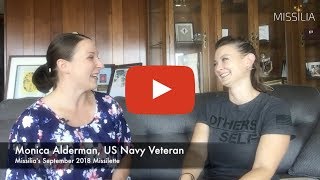
In this interview hosted by Shelly Rood, founder of Mission Ambition and the Massilia Project, veteran Monica Alderman shares her journey from homelessness to enlisting in the U.S. Navy, serving five years as a machinist's mate aboard the aircraft carrier USS Dwight D. Eisenhower, and confronting the difficult transition to civilian life. Monica describes the limited and overwhelming Transition Assistance Program (TAP), the challenges of navigating VA benefits such as the Post‑9/11 GI Bill, BAH, and Chapter 31 Vocational Rehabilitation, and how lack of knowledge contributed to continued housing instability. She eventually returned to school, earned a psychology degree, and is now pursuing a master’s in clinical mental health counseling while working at Macomb Community College’s Veteran and Military Services Office, where she helps other veterans access resources. The interview highlights her recent sponsorship by financial strategist Rick Shaheen, who provided a year‑long subscription to the Massilia Must‑Have Box, and underscores the mission of the Massilia Project to celebrate and support women in uniform.
Chapters
Hi everybody, thank you for joining us. My name is Shelly Rood. I'm the founder of Mission Ambition, and we are the home of the Massilia Project. Massilia was created as a community for women who kick butt. We are female firefighters, police officers, military, and, and we're just coming together to celebrate and share the stories of each other. So with me today, I have Miss Monica Alderman. Monica is being featured as our September Missalette. She's our feature woman of the month, and she has just an absolutely incredible story. Thank you so much for joining us, Monica. Why don't you just take a few seconds and tell everyone where you've come from?
Yeah, so, um, I was in the Navy. My decision to join, um, came after I had just been evicted, so Winter was coming. I was going to have to live in my car again. And I had no food. So there was a recruiting office about a mile and a half from where I was staying. I walked there in the only shoes that I had left, which were a pair of very uncomfortable heels. And when I walked—
At least you had heels.
No, I'm sorry. Bad joke. It's true. When I walked into the office, it was a really hot day. I was sweating, and I think the recruiter took me seriously when I said I wanted to join the Navy as soon as possible. And about a month later, I was on my way to Great Lakes, Illinois to start my career in the Navy.
And how long did you serve for?
I was out in Virginia for 5 years.
5 years. And now, I'm not familiar with Navy because I'm an Army girl, but in the Navy, it's my understanding that you spend a lot of time on ships. Yes. So tell us about that and what kind of job you did.
Yep, I was a machinist's mate. I was stationed on CVN-69 Dwight D. Eisenhower.
That's a lot of numbers.
I have no idea what that is. CVN means carrier. It's a carrier, one of the really big ships. It has a flight deck, so we had F-14s mostly on the flight decks. I spent a lot of time under the ship, so I like to say that engineers were the first ones on and then we never left. So I didn't get to see very much except the coast of Florida once. Once.
Once. So Monica, you're not in the military anymore, right? Correct. So she's been out for just a handful of years here. We're not going to go into details, but a lot of people think that's an easy transition, or you just come out and find a job, everyone loves to hire vets. That's actually not the case. Share with us some hardships that you faced.
Yeah, so the program that they put you through, or that the Navy put me through when I got out, was called the Transition Assistance Program, or TAPs.
They—
it's basically a week-long program, and the idea behind it is to get you prepared to transition from military to civilian. But what really happened to me was I had a week where I showed up in a classroom, and they gave me a book like this big and said, sit down and don't ask questions. Inside the book, this very thick book, had everything that I needed to be successful. But it was so overwhelming, and the process of getting out—
and you were in your 20s at this point?
Yes, I was in my early 20s, so the process of getting out was, was difficult.
A lot of self-taught, right? Yes. Now, when it comes to veterans benefits, most people think that we have awesome benefits, and don't get me wrong, our country provides a lot of incredible things for us, but this system is very difficult to navigate, and if you don't have someone to help you through it Good luck figuring out how to take advantage of your benefits. So Monica, what I love most about your story is that you didn't let that keep you down. Please share with us what you're doing now to spread this out into the world.
Yep, so where I'm at now took me a long time to get. I started in 2011.
I start—
I went back to school. I used my post-9/11 GI Bill. I got my undergrad in psychology and And now I'm in a master's program at OU doing— getting my degree in clinical mental health counseling using another education benefit called Vocational Rehabilitation and Employment, Chapter 31, also known as voc rehab. Me knowing about that did not come— I don't even know about all those things. Did not come easy. I work at Macomb Community College, and when I first started working there, I worked in the Veteran and Military Services Office. So I learned all about the benefits and resources that were available. When I started working there, I had already been out of the military almost 10 years, so I didn't know about everything that was available.
And here you are 10 years later, finally taking advantage of the benefits that you could have been taking advantage of from the beginning, right?
Had I known about how Post-9/11 works and the BAH that you get while you're going to school and all of the career service opportunities— I have a service-connected disability, disability, so all of the resources that are available to me just for having that rating. Had I known about all that, I wouldn't have been homeless as much as I was after I got out of the military.
Well, Monica, thank you so much for being with us today and sharing your story. I know that there is going to be somebody out there that watches your interview and is just encouraged and inspired to make sure that they really do take another look at their VA benefits. And if you don't know them, please, I want you to call my company. We're Mission Ambition. The phone number, website, missionambition.org. We will get you connected with a resource that will help make a difference in your life. Before we go, I want to say thank you so much to Mr. Rick Shaheen and his staff at Shaheen and Associates Incorporated. They are financial strategists, and you know what, they have the most generous hearts out there. As soon as Mr. Shaheen heard Monica's story, he didn't hesitate. He said, yes, I will sponsor her for a year. So thanks to Mr. Rick Shaheen, Miss Monica is taking home a full 1-year subscription. That's 12 boxes of the Massilia Must-Have Box. These are hand-picked items by me, some of my favorites, everything from pocket knives to bug spray, and I'm not going to spoil everything that's in there, but they ship out at the beginning of every month. And if you'd like to learn more about that, please join us at missilia.us, M-I-S-S-I-L-I-A dot U-S. Until then, Miss Monica, thank you so much for joining us today. It's my absolute honor to spend some time with you. Thank you. All right, and for more information on who we are, check us out at missionambition.org and shellyroode.com. Yeah, let me hear you say yeah.