Trust the Process: When Letting Go Is Your Most Strategic Move
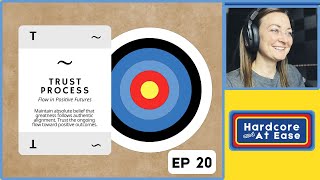
Shelley Rude introduces the final element of her TARGET leadership framework: Trust the Process. Ambitious leaders often hoard tasks out of fear, creating burnout and toxic culture. She offers a four-step challenge to let go: identify a task you're holding, test whether your worry is fear or fact, hand it off using a tool like Loom, and evaluate the outcome from outside the system.
Chapters
This show is powered by others over self. Hit that subscribe button to keep training your brain. The highest form of leadership is building something that doesn't need us for day to day operations. It's creating a mission that carries on because the systems are sound and the people are empowered and the culture self regulates towards excellence. From others over self. It's hardcore and at ease. A show about people who are keeping their edge without going over the edge. I'm host Shelley Rude and today we tackle the fear that taking a break means losing momentum. We explore what it means to really, truly trust the process and what Roosevelt understood about leading through fear versus faith. We'll discover why we can't evaluate the system from inside the system. And the lighthouse principle that makes excellence effortless. This is hardcore and at ease. Here's something that I've noticed about ambitious leadership. The very thing that makes us exceptional can also become destructive if we don't learn this final element. Maybe you've been working through the elements that we've already covered in previous episodes. We're getting clear on our values. You're aligning what drives you with where you can really make an impact. You're figuring out how to maximize what's already in front of you and building collaborative momentum, setting standards that are inspiring. You're doing all the right things and yet still unable to sleep at night, still convinced that the moment that we step away, everything will crumble. Well, here's what I've seen in my own leadership and what I've observed coaching hundreds of leaders through this same pattern. See if this pattern sounds familiar. Teams stop bringing solutions and they wait for us to provide them. Partnerships become one sided because everybody knows, well, you're just going to do the heavy lifting. And people stop asking, when are we going to be home? Because they've already learned that the answer is after I handle this one more thing. And our bodies, sometimes our bodies are screaming at us internally through exhaustion, through constant stress, through this knot in our shoulders and uncomfortableness in our stomach that just keeps saying, I can't keep doing this. But we do, don't we? We keep doing it because we believe that we have to. So let's talk about the real problem. And this isn't time management. This isn't about delegation. This is about something far more fundamental and far more vulnerable. Here's the hard truth. If we cannot step away and have faith in a positive future, we cannot lead others well. And I don't say that to be harsh. I say it because the people that we lead deserve better. They deserve leaders who believe in them. They deserve leaders who build systems that work without constant intervention. They deserve leaders who move forward in hope, not in fear. And here's the hardest truth. When we operate from fear, when we can't trust the process, we become the source of negativity. And that's the negativity that we're trying to overcome. So let me give you a tangible example of what this looks like. It's when a boss says she's going to send that final email and then pack it in for the night. What that does is it allows us to treat ourselves in the same manner. And it teaches and it shows us what self respect and boundaries look like. When we operate from fear, we can't step away. We're teaching everyone around us that healthy boundaries don't exist, that rest is a form of weakness. I'll rest when I'm dead. We teach other people that trust is dangerous. So let's think about what message this sends. When we're always the one fixing things, when we're always the one that has to be involved, when we are the ones who just can't step away. What does that communicate? Well, it communicates that others aren't capable, that we don't trust them. That excellence requires our constant supervision. And that's not leadership, it's control masquerading as commitment. Today we're talking about the sixth and final element of what we call target. It's an acronym that we use to remember the six elements of the hardcore and Eddie's framework for everyday excellence. And this final T stands for Trust the process. If we're visualizing that shooting target, you're looking at six rings. And if you're following us in our video podcast, you can see it on the screen. Today's show is the white ring. Trust the process. It's the one at the outermost. It's the largest one. It's the one that encompasses everything else. And here's why that matters. Trust the process isn't just another element to add on. It's the strategic vantage point that makes everything else sustainable. This is the ring that says, I have built something authentic. I've established systems, I've developed people. Now I have the confidence to step back and let it work. We define trust the process as maintaining absolute belief that greatness will follow when we consistently hit our authentic bullseye. It's having faith in positive futures. It's the unshakable confidence that comes from knowing our systems and our people and knowing that they can handle Things, even when we're not micromanaging. And here's what many ambitious leaders discover. This element is perhaps the most important, because without it, everything else becomes unsustainable. Burnout happens, teams burn out, and the mission, the very thing that we care about moving forward the most, suffers. So today, let's deep dive into where this principle comes from and why it matters so much. Kicking things off. Today, we're going to talk about leadership through the lens of faith versus fear. Because this is not a new lesson. It's something that historical leaders have been dealing with for a very long time now. Throughout history, leaders have either understood this principle or been destroyed by ignoring everything about it. Franklin D. Roosevelt stood before a nation gripped by the Great Depression, and he said, the only thing we have to fear is fear itself. But notice what he's really saying. Fear paralyzes. Fear makes us reactive. Fear keeps us from trusting the very symptoms and the very people that we have spent years building. Roosevelt wasn't telling people to be reckless. He was telling them that leadership in crisis requires faith in positive futures. Trust that if we work the process, the outcomes will follow. Now, let me connect this back to military leadership, because, you know, that's my background. But there's a principle here that we live by, and that's any decision is better than no decision. When we're paralyzed by fear, when we can't trust the process enough to make a call and actually move forward, what we do is create more damage through inaction than we ever could have through a decision that might later need adjustment. Roosevelt understood this. Leaders operating from faith make decisions and they adjust. Leaders operating from fear. Freeze. Winston Churchill understood this during World War II. He built systems, established protocols, and then, this is crucial, he stepped back far enough to let his commanders execute. He didn't micromanage every battle. He trusted the process that he had established. And when things went wrong, like they always do, he adjusted the system. He didn't adjust his level of control. So now let's also take a look at some failures, because these can be equally instructive. Emperor Nero couldn't trust anyone. He saw threats everywhere. So he micromanaged his empire while Rome literally burned. Why? Because he operated from fear, not out of faith. He literally could not step back. He couldn't trust the process. And his paranoia destroyed the very thing that he was trying to protect. We see the same thing with King Saul in the Old Testament. A brilliant military commander, an anointed leader. But he couldn't trust God's process. He had to control Everything had to be. The hero had to prove his value. And it drove him mad. He, his inability to trust the process resulted in the losing of his brain. It turned him from a great leader into a tragic cautionary tale. And so that's the historical content behind what we're talking about today. So let's bring this mindset into modern day leadership. And maybe we're not leading nations or fighting wars. Maybe you just have a passion for, for what you're doing behind your desk today. And that's a beautiful thing because these are the missions that matter. They're our individual purpose in life. The principle is still identical. James Clear, in his book Atomic Habits, talks about the power of systems over goals. And he writes, you do not rise to the level of your goals, you fall to the level of your systems. And what James Clear is teaching and what we're teaching in the hardcore and Addie's framework, we're saying the same thing, we're using different languaging. Trust the process, build good systems and then have the confidence to let them work. I want you to think about this like a light switch. You flip it and the light comes on. We trust this process completely. We don't stand there worrying every single time about the electrons that are flowing through the wires. And we don't constantly check the breaker box just to make sure it's still working. We trust the system. But here's the thing. Every once in a while, yeah, you know it, that system fails and it could be the bulb that burned out. The switch might break the wiring, it gets damaged, even the power source can fail. And when that happens, we don't panic. We don't declare the entire electrical system a failure. We troubleshoot. We replace that bulb, we fix that switch, we upgrade the system if that's what's needed. And here's what's critical. We don't internalize this system failure as a personal failure. When that bulb burns out, we don't stand there thinking, gosh, I'm terrible at electricity, I'm a failure. As a homeowner, we just recognize that symptoms need maintenance. That's their nature. They need adjustment as conditions change. And this is what trusting the process looks like in leadership. We are not the power source. We're the maintenance worker. We're not generating the light. We're just maintaining the system that generates the light. And when the system needs adjustments, that's not a reflection of our value or our competence. That's just the nature of systems operating in a constantly changing environment. When that light comes on without us standing there forcing it to work. When the system operates smoothly in our absence, well, that's when we know that we've built something truly sustainable. That's when we've achieved hardcore and at ease. Now, this framework has been in development for years and I want to take you back to how I learned hardcore and Addie's lesson the hard way at our company Mission Ambition. We have worked with a state level government entity as a client since 2019. They continue to work with us year after year because we have consistently demonstrated the ability to foresee challenges, adjust systems and processes, all with the end goal of efficacy in mind. Are we achieving, actually achieving what we set out to do? We're not a deliver the system in a box type of company. We don't do small one year projects. All people focused work has to adapt and grow as society adapts and grows or it's not going to work as a long term sustainable program. Now, just past the one year mark of this particular project, I was chatting with the client, the man that oversees the funding in particular, and he pulled me aside and he said something to me that I'll never forget. He said, shelley, leading you in this project is like trying to hold a tiger by the tail. Now, as an ambitious person, I've always been really proud of my go for it personality. We lead fast and we lead hard. We make decisions, we reach higher than others. Do we do it with mitigated risk? Absolutely. But by all means, right, let's go for it. Let's dream bigger. And here's my client, the one whose vision that I had been entrusted to fulfill, envisioning me as a tiger. And suddenly I realized I was so focused on delivering the goal and raising the bar that I was virtually ignoring the person who was just trying to hold on for dear life. He's back there thinking, this is amazing. I don't know how long I can sustain this. For the first time, I had to stop and listen. He explained that while my passion for the mission was beautiful and what he wanted, and it was exactly what he was looking for, but he also saw burnout in our future together. Essentially, he asked me to calm down. And then he shared something really profound. He is a chaplain in the United States military and he provides spiritual care for thousands of service members. And in doing so, he had to love every single one of them very deeply, spiritually. Now, that type of care wasn't accomplished through speed and through drive. It was accomplished through focus and dedication. That moment for me created a shift in how we think about our program. It was like we gave ourselves permission to care deeper. A tiger doesn't care. It just runs and it goes and it survives. And I hated thinking that my incredible program might be burning bridges or even leaving behind those who can't keep up. I also hated thinking about this client with this incredible heart who wanted so desperately to be a part of something incredible. But here he was, recognizing that the rapid pace at which this was moving would soon equal destruction. So here's what I learned. Trust the process means slowing down enough to bring others along with us. And it's not because we can't move fast, but because sustainable excellence requires systems that others can maintain. Let's think about that for a moment. Sustainable excellence requires systems that others can maintain. When we're moving at tiger speed, my ambitious friend, we're not building, we're running. And running doesn't create the kind of sustainable systems that others can maintain when we step away. So let's shift here with that in mind. And I want to tell you about where I finally got it right. A few years back, one of the big three automotive companies came on board as a presenting sponsor for our leadership conference. It was a huge win. What an amazing opportunity to really be recognized and feel that honor of being good enough to have such a viable partner. We were invited to attend a partnership call, and they explained on that call what they were looking for in their community partners. So this is what shifted my understanding of trust completely. And I'm sharing it with you in full disclosure because I hope you can learn the lesson alongside me. This giant company didn't just want to put their logo on an event. They were actively seeking partners that were willing to craft an event around what they were looking for. Sometimes they needed to increase recruitment efforts, but other times they just wanted their leadership to serve as panelists. Being a partner meant truly being a partner, having conversations, being open to shifting and adapting operations in a way that suited all parties involved. And this is the key insight. This point of view applies even to silent partners, even those who provide support. Or slide a check your way in the mail and they say that they don't need to have a say. Well, guess what? They still have an opinion. And they should be asked regularly to voice that opinion. Now, trust the process. This ring includes an audit of all the pieces, of all the processes, no matter how clean or how dirty. Because we need to be inviting everyone to the table. We need to ask what's working, what's not. Where do you think we need adjustments? My 5 year old for the longest time was refusing to eat chicken at dinner. And for the life of me, I couldn't figure out just how to get this incredible source of protein into that kid's body. And this one question, what do you think would make it better? That one question has been a life changer for us. His answer is ketchup. I never would have put ketchup on the plate next to the chicken. But you know what? That chicken made it in that body. So let's be clear. Listening to all of these voices all the time, it doesn't mean that he's always going to win. Right? You can't always ask your kid what would make it better. And he says, chocolate sauce. And so you move forward with chocolate sauce and chicken for dinner every night. No, what it does mean is that we create the space for the voices to be heard. We're saving space. And simultaneously, alongside that, we need to have a system in place that performs due diligence on the voices that are spoken and the ideas that are being shared. Not every suggestion is going to move forward like chocolate sauce and chicken, but every voice still deserves to be heard and considered. And that's the difference between what's known as token listening and genuine partnership. Because here's the truth. People want to be a part of something meaningful, but they can only be a part of it if we give them the room to contribute. And if we're so fast, my tiger friend, if we're so fast running and nobody can keep up, or if we're in it and we're micromanaging every single detail, then we're not building collaborative excellence. We're just building this one person show with a supporting cast of some beautiful, resentful bystanders. Let's think about that deeper, just for a moment here. The difference between the tiger story and the partnership story. In one, I was the power source, and in the other, I was building a system where multiple power sources could contribute. That is the shift that we want to be making. Now. Here's why this matters. Strategically, we cannot evaluate the system from inside the system. Please hear me out. The absolute worst place to make strategic decisions is on the battlefield. When you're filled with emotion, when you're operating with a limited vision, when you're reacting to immediate threats, when you're on the manufacturing floor, that's where you make operational decisions. It's not where you make strategic calls. As leaders, my ambitious friend, we need to be able to step back. We have to gain altitude. We have to be able to See the whole picture. For the sake of the mission, we must give ourselves the opportunity to step out, to step away. It's just as dangerous as to never go on the floor as it is to never leave the floor. Stepping away isn't selfish, it's strategic. When we're constantly in the grind, we lose perspective. We can't see what's actually working versus what just feels urgent. We lose the ability to make strategic adjustments because we're too busy fighting the tactical fires and reacting to what is happening. When you're a leader in the middle of things, we can't scale our impact because we ourselves have become the bottleneck. We've talked about that in a past episode. And so here's this really vulnerable truth that we all need to face if we cannot step away. We're operating from fear not of faith. And fear based leadership creates really toxic cultures. And our teams can see it. And they can see when we can't trust them. They can see when we believe everything is going to fall apart without us. So what do they do? Naturally? They fulfill that prophecy. They stop taking initiatives because they know we're just going to redo it anyway. They stop bringing us solutions because they know that we're going to provide them anyway. They become dependent on us in the exact way that we feared because we trained them to be. This is the paradox. Leaders who can't step away create the very dependency that they're afraid of. And let's go deeper with this. What's important to understand is when I say step away, I don't mean forever. I mean step away with accountability built into the system. Leaders should always be circling back to their systems to ensure efficacy because everything is changing all the time. We're not abandoning ship. We're creating systems that can run without our minute to minute intervention so that we can focus on strategic oversight and adjustment. Let's really dig into this distinction. There is a big difference between the person who is doing everything, being the executor, and the person who makes sure that things are getting done with the end goal in mind. That is the shift that we're making. All right, this next part of our conversation today is a principle that has come from our very own General Doug Odie Slocum. He was in episode 10 and if you haven't listened to that one, I deeply, deeply encourage you to go back and listen to it because he has some incredible insights that have shaped how I think about leadership. And he's really helped us create the hardcore and Eddie's framework. So with that, we are going to talk about something known as lighthouse leadership. Now, here is what trust the process really gives us the freedom to celebrate the beauty in the weight. Sometimes we are so busy doing that we don't pause to appreciate the in between. We don't celebrate systems that are working. We don't acknowledge the progress that's happening without our constant intervention. That is something to be celebrated because this is where trust the process becomes transformative. When people are exhausted, when they're available at all times of the day, when they're unable to sleep, others can see it. Sometimes we're busy priding ourselves on being the solution. Do you feel a little bit convicted here? Priding ourselves on being the solution. And yet we feel broken or less than when others are looking at us as only a part of the process. Do you hear that in yourself? Hey, ma', am. Sir, do you know how important I am? If I step away, all of this is going to break. There's a deep level of humility here that we all need to gain because to truly live out others over self. This is the culmination of the mindset where others reign. First we give ourselves to others and our efforts to others. And then the work carries on. Think about a lighthouse. The lighthouse doesn't care if anyone sees it or not. It's just there. It's performing its function regardless of external validation. The lighthouse isn't chasing ships around the harbor. It's not micromanaging the navigation. It doesn't need applause. It just simply stands where it's supposed to stand. And it does what it's supposed to do, trusting that its position and its reliability serve the mission. That is what we're building with you, my ambitious friend. We are not building a one person show where we're the hero. We are a system, a lighthouse that guides others even when we're not standing there watching. So let's think about that image for a moment. The lighthouse doesn't get tired. It doesn't get burned out because it's not running around trying to save every ship personally. It's positioned correctly. It's doing its job consistently. It's trusting that ships will use the light to navigate safely. Who is using the light that you're giving out to navigate safely? So what does this actually look like in practice? Well, when we trust the process, we are free to see what's actually working instead of reacting to what feels urgent. We can evaluate our systems from this strategic vantage point and we can make strategic adjustments instead of just firefighting from a tactical level. We're not fixing problems in the moment when we're trusting the process. We're actually improving systems for the long term. And our teams can execute without waiting for approval on every decision. You have to be able to let go, lead from clarity instead of from exhaustion. We make decisions in the Hardcore and Addie's framework based on value and vision, not based on crisis and fires popping up all over the place. It's you, my ambitious friend. You're the one that has to step back and look within and choose to say, I'm not going to do this this way anymore. Let's think about ourselves as that maintenance worker, not the power source, not the third party contractor that we brought in to overhaul everything. All we are doing is replacing the bulb. If the system needs upgrading, we're putting the people in place to make it happen. But we ourselves are no longer the single source of the outcome. And this is the shift from being hardcore without being at ease. That's the tiger, that micromanager, the exhausted person. We want to be both hardcore and at ease. We want to be the lighthouse. We want to be the system builder, the one who can step away so that that mission can continue. And so with Trust the Process, we've reached the end of introducing all six of the elements of the Hardcore and Addies framework. We use that acronym target so that we can remember these six elements. And so real quick, we're going to go through them so I can show you how they all work together. Up on the screen once again, you're looking at our target. In the very middle of it, we've got episode three, your Tactical center. This is the yellow bullseye. It's our authentic foundation, our personal values and our mission. This is where we learned to hit our target from a grounded place. Next up is episode seven, Ambition Alignment. This is the red ring. This is how to bridge our authentic self with the organizational opportunities around us. This is where our tiger energy learns to serve the mission instead of just running. Now, episodes 11 and 13 took us through resourceful action and that's the first light blue ring that you see here. We maximize what we've been given. We build systems that are worth trusting. And in episode 16, which is generate Momentum, you're looking at that dark blue ring. This is collaborative excellence and it's about bringing partners into the process of what we're doing. We're learning who's going to be part of something meaningful. Episode 18 is Expect Excellence and that's the black ring. We're setting standards that inspire instead of intimidate. And it's here where we establish a culture that makes self regulation possible. And here we are now in episode 20, the final outer white ring. Trust the process. We have to have faith in positive futures and have the confidence to step away. I have a white scarf on my dress today because I'm waving the surrender flag. You have to be able to do that because this is where we become free. Do you see how all of these rings build on each other? And if you're shooting that target, if all you do is aim for trusting the process, well, guess what, you missed a whole lot in there. If you aim for the bullseye though, then you're going to hit every single one of those incredible steps along the way. It all starts with the bullseye, but it's completed by this outer ring. Today's lesson. Today's ring says, I have built something that works even when I'm not standing there forcing it to work. So let's think about the order of those rings, if you will. It's not necessarily a progression. It's a question of do you want to make the most out of your efforts? Do you want to get deeply fulfilled in your life? Then you aim for the bullseye each and every single time. And you start there. And I promise, I promise that when you aim for the bullseye, the rest of these incredible leadership lessons will fall. So here we're going to overlay the others over self mindset onto the target that we're using for this framework. Remember, others over self. It's a mindset. Others over self. But to get there, to truly and deeply embody others over self, you have to go backwards. You have to look at self over others. Self over others. That is the target. We are the target. Self over others. Take a look at this for me. When this target comes up, the innermost, the first two layers are self Self fully. We're looking at our tactical center and our ambition. Those are two self focused acts and layers. The next two of resourceful action and generate momentum. Those blue rings, those are our other rings. These are things that we do have some control over. But not all this is where we're working outside of ourselves. We're building systems and we're creating collaborative momentum. And then we get to the final two rings in the outermost and we're at the others expecting excellence and trusting the process. These are others focused. The outer two most rings are where we have the least control because we're empowering others to execute, to maintain our standards and to carry that mission. Forward throughout this framework, we've been building towards this moment. Because here's the truth. As long as we have to be the hero, we're not truly serving others. We're serving our need to be needed. So I want you to get to the mindset of others over self. And to do that, we have to start here with self over others. Because when we can step away, when we can trust that the lighthouse is shining through us, that's when we can truly put others first. We're saying, I believe in you and I've built systems to empower you. I'm so confident to let you execute without my constant supervision. This is an incredible next level of humility that ambitious leaders struggle with the most. It's like publishing a book and then letting go of the outcome. Well, who knows what somebody's going to do with that book. With ambitious leaders like us, there's often this really deep desire to be essential. We pride ourselves oftentimes as being the solution. We want to believe that our presence makes the difference, and it absolutely does. But don't miss that. The highest form of leadership is building something that doesn't need us for day to day operations. It's creating a mission that carries on because the systems are sound and the people are empowered and the culture self regulates towards excellence. That is when we move from constant urgency to strategic calm. That's when we keep our edge without going over the edge. And that's when we raise the bar and we really do go further together. So here's where theory meets practice. This challenge is going to reveal exactly where you are in being able to trust the process. Step one, you're going to identify one system or responsibility that we've been holding on to. Something where there is a genuine belief. If I don't do this, it won't get done right. What is in your world right now that you can insert that statement about? Let's identify that. And then it's time for step two. And we're going to ask an even harder question. Is this true or is this fear? Have we actually tested that others can't handle it or have we just convinced ourselves that they can't because it protects our sense of being essential, sort of job security, if you will. And then we're on to step three, which is create a test. You're going to pick the one thing, just one. It doesn't have to be the entire process that you're thinking about here, but pick one part of that process and give it to someone else to execute. Document their Steps, train them. And I have a super practical tool for this. You're going to use a desktop recording app like Loom L o O m. It's very inexpensive and we use it in our business on day to day operation. Let me give you a tangible example of what this challenge looks like if you're actually going to do it. So for us, we have members and we approve membership applications on the regular. This is definitely not a task that a CEO should be doing. So when I catch myself seeing a new membership application come in, it's really easy to think, oh, I just need to approve this real quick. And I could do that. But what happens is I do that real quick every day and before I know it, I'm a part of the system, right? So instead, if I don't have anybody else to do this system, or maybe I just haven't taught them how to do it, what I will do is I'll open Loom on my desktop, I'll hit record and I'll immediately start narrating the process while I'm physically doing it on my computer system. And then that's a training video. And I can send that video to the person downstream that should be taking over the task, or I can just categorize it and save it for the future so that when that person does come on staff that I'm ready for. I already have some tasks that I've already recorded how to do. And this saves so much time from having to come up with a formal training process. It's something that ambitious leaders can do in the moment. Document while you work and then step away. Not forever, just for a defined period and see what happens. Finally, our fourth and final step is evaluate. But don't do it from the floor. Evaluate from outside the system. After you've done this test, assess your results. What worked? What didn't work? Was the quality of the video terrible? Did I record the wrong screen on accident? Am I getting the outcome from my worker that I thought I was going to get? By stepping back to reevaluate our systems, this is how we build trust. It's not just by hoping that everything's going to work out okay, but by systematically testing, adjusting and improving until we have these systems that we really can lean into. Because there's a deeper level to this that we really need to be talking about. And it's about being able to trust the process before we can really, really do that and allow ourselves to go home and sleep at night. You can't trust the process if you don't trust yourself as an ambitious leader, chances are we're the ones that created the process. We built it, we designed it, we troubleshooted it. So then we struggle to trust it. And when that happens, what we're really doing is struggling to trust ourselves. It's not a bad thing. It's a really, really good piece of humbleness because it can be very difficult to imagine trusting ourselves. Or maybe this feels like Shelley. I'm just not smart enough to trust myself to come up with my AI bot. I didn't go to school for this. Go deeper. When you feel that type of questioning about yourself. If you can't trust your own knowledge on a particular project, I want you to trust the people that you've learned from. Trust the tools that I have recommended to you, that others have recommended to you. Trust the workflow that your mentor talked to you about. And if you can't trust yourself even then, then trust the sources of knowledge that are being poured into you. Because we can't lead others to excellence if we won't give them the room to achieve it. And so that right there is trusting the process. It's the final element that completes the Hardcore and Addies framework. We've now introduced all six elements. Tactical, center, ambition, alignment, Resourceful action, generate momentum, expect excellence, and trust the process. And in the coming episodes, we're going to go deeper into the application with our guests who've lived out these principles. But for right now, we're just going to sit and trust the process. Ask yourself this question, Am I leading from fear or am I leading from faith? Before we wrap up here, I want to share some incredible resources that will help you further implement what we've talked about today. First, if you haven't read Atomic Habits by James Clear, this is the book on building systems that work. We talked about this principle today about how you fall to the level of your systems. And so this book will show you exactly how to build those systems. The link to that is one of our affiliate links and it's in the show notes. And if you're ready to clarify your mission and build a foundation that makes Trust the process possible, then go ahead and check out all the other resources that we've made available for you in the show notes. Those of us who choose to believe in the others over self mindset, we believe that all things truly work out for the greater good in the outcome. That's what it means to have faith in positive futures. It's that belief that when we operate from an authentic alignment, when we build systems. And when we empower others, what we're really doing is knowing deeply that really good outcomes are going to follow. Even when we can't see the immediate results, even when we have to step away because of emergency or crisis, we have that peace, that ability to be at ease, to trust. If this trust the process ring is the most difficult element that you've been learning so far, that is a red flag, my tiger friend. And this should be your most important, important work right now. We're here for that conversation. You can connect with me personally@join.othersoverself.com you can also just be a fly on the wall and listen to the rest of us that are battling this idea of being a tiger and not feeling comfortable stepping away. Next week, my guest is Ms. Autumn Hartpence. She is an Air Force veteran joining us to talk about something that most leaders are terrified to do. She's finishing up her doctorate and she's publishing a case study about her own leadership failure. She forced herself to audit what went wrong and developed viable alternative paths to success. And let's take that one step further. She's sharing it publicly. Oh my goodness. This is a masterclass, entrusting the process even when the outcome isn't what you planned. And thank you so much for tuning in today for our lesson on trusting the process. You are a better leader today because you made the conscious choice to invest in personal and professional development. Cheers to you. I'll see you next Tuesday for the conversation with Autumn. And until then, stay hardcore E at ease and definitely trust the process. You're listening to Hardcore and at ease. Keep the conversation going at join othersoverself. Com.
More from Shelly

How to Get Time Back as a Coach or Creator: The 5 Tools I Use Every Day, ep 68 Hardcore and At Ease

ep67 “I’m the Eighth of Nine” How Listening Became a Superpower | Catherine DeDecker

How to Respond to "You're So Busy" And What to Ask Instead | Catherine DeDecker Hardcore and At Ease


Your Big Moment Runs on Private Work | Drag Racing Lessons, Hardcore and At Ease

Show Up Anyway: What to Do When You Feel Like You Don't Belong | Ep65 Hardcore and At Ease

How to Become a Lived Authority Without Anyone's Permission, Ep64 Hardcore and At Ease

Michigan's Defense Leadership, From Two Different Chairs: NDIA Scott Davis and AUSA Chuck Cogger

The Leadership Job That Never Clocks Out w/ Brig. Gen. Daniel Kramer, Ep 62 Hardcore and At Ease

How to Write a Personal Manifesto That Holds Steady When Life Won't, Hardcore and At Ease

What Advancement Demands of the Person Leading It, Hardcore and At Ease, ep 59 with Stacey Eeman SME