Why Women Veterans Keep Getting Misread: What 242 Just Told Us, the Wildflower Assessment
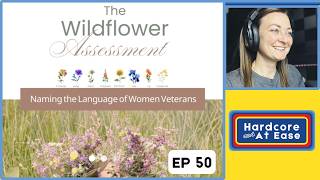
Shelly Rood presents data from 242 women veterans on the Wildflower Personality Assessment, mapping eight distinct operating patterns for the first time. A veteran at a barbecue instinctively took over logistics, showing the "hollyhock" pattern of proactive terrain-scanning. The work reframes women veterans not as problems but as individuals with specific relational and leadership styles that need naming.
Chapters
This one was more of just this feminine flow, and it just made me smile when you see the flower and the colors, and I was like, yes, that's me. That is so me. And thank you for reminding me of who I am.
This show is powered by others over self.
Hit that subscribe button to keep training your brain. From others over self, it's Hardcore and at Ease, a show about people who are keeping their edge without going over the edge. I'm host Shelly Rood, and if you're a woman veteran or you love one, you lead one, you work alongside one, well, this This episode is for you. 242 women veterans just answered 24 questions about how they operate, and the picture that came back tells us something about this demographic that nobody's mapped before. You are gonna understand a woman in your life or yourself differently than you did when you pressed play. This is Hardcore and At Ease. A few years ago, I invited a woman veteran to a barbecue. We wanted to do something nice for her, for the community. It was simple. Come over, eat, sit in the yard, let somebody else handle things for a while. That was the whole plan. And she showed up with catering boxes full of fried chicken. I'm not talking about a bucket. I'm saying catering boxes, plural. And gallons of condiments lined up next to them like she was running a mess hall out of the driveway. You just knew that this woman was someone who had already been working while everyone else was still deciding what they were going to wear. Now, nobody asked her to do that. Nobody even hinted at it. Most people would stop at the store and bring a bag of chips, and here she is with a full spread, because somewhere between getting the invitation and pulling into the street. She scanned the terrain, she identified a need that didn't even exist, and she solved for it anyway. So here's the thing. We were trying to do something for her, and that was the entire point of the afternoon, and she could not let us. She walked into the space where she was supposed to be the guest and immediately became the logistics coordinator, moving things, arranging things, making sure that everything was right before she would allow herself to sit down. Now, I've thought about that afternoon a lot since then because I used to frame what she did as a control issue, and I was wrong. Women veterans are not a problem to be solved. They're a person to be known and loved. And what she did was operate from her pattern. She anticipated what the terrain might need, and she acted on it the way that she's probably acted on things her entire life, in and out of uniform. She wasn't trying to take over. That's just who she is. It's how she shows up, and that's what she brings into every room that she walks into. The problem is not her pattern. The problem was that nobody had given her language for it. Nobody had ever handed her a map and said, did you realize that this is what you do? This is your operating system, and this is what it looks like when it's running. And here, for once, is a room where you're allowed to just be the guest. Well, 242 women just told us that same story in 24 different questions. They told us how they recover, how they lead, how they show up in a friendship, how they handle a room under pressure. And what the data gave us back is the first real picture of how this demographic is wired. I'm not talking about the label that the civilian world has been handing them, but their operating pattern, the terrain that these women need to function at their best, and what happens when the terrain does not match those needs. This is what we're talking about today. Now, before I get into the numbers, I want to tell you how we got here, because this episode is also a proof of trust the process. Trust the process is the final element of the Hardcore and At Ease framework, and I want you to see what that looks like when it's working. In January of 2025, my mantra was protect your joy. Joy is the evidence that you're living in alignment with your calling, and when joy is absent, the calling is compromised. I had been watching my gauge drop for a long time before I finally made a decision 2025 was Shelly's year of protecting her joy. I held the line on what the mission required and I removed what was pulling it off course. You see, I knew that I couldn't follow my calling if I didn't have my joy. At the end of that year, I asked the question that follows protection: Space for what? What single thing deserves the full force of what I had just protected? Build the one thing. Well, my one thing for 2026 is healthy platonic female friendships for women veterans. The deep, functional, terrain-based connection that women veterans need and haven't had the language yet to build. Because you can't build something that you can't name. And so this year we've been building that language. This podcast, the book in progress, the assessment. Everything that launched this year lives inside of that mission. And so here we are at the halfway mark. In January, I said we were building, and in March I said we were launching. Today I'm showing you what trust the process produces. A map, real data, 242 women who told us the truth about how they are wired. That is our report. And here's what you get to discover next. The Wildflower Personality Assessment for women veterans is built on one core idea: your pattern does not change, but your terrain does. Before I walk you into the data, I want you to hear from a few of the women who took it first. Do you remember what your flower is?
Oh, I do, the hollyhock.
I remember that I was predominantly a daisy.
A hollyhock.
I'm a daisy.
It's a goldenrod. That I remember.
My wildflower profile for the woman assessment that I did is a sunflower. I was excited when I saw that.
Felt like it sounded pretty on par because it was a— you're kind of like adaptable, you can thrive in a lot of different situations.
Your primary flower is the hollyhock, and I get a lot of that out of you. Your secondary bloom is the lily, which is almost the exact opposite. The lily, it does like a burst and then it disappears for a recharge. And that's the lily pattern. Do you see that in yourself?
Yes, because I get very excited. And sometimes I forget to balance my energy. I go in full force and then I'm like, oh gosh, I feel tired. Why do I feel tired? I should be able to keep going. And I was like, oh honey, let's take care of yourself too. So yes, I, I definitely see that.
And it even says in the, I'm looking at the comprehensive guide here. It says when Lily goes dark during recovery, it can feel like abandonment. Even self-abandonment. Do you feel that? Do you feel like, oh Kim, where's your spark? Like, are you kind of harsh on yourself with your internal words like that?
Oh gosh, you're gonna make me cry now. Yeah, absolutely, I really do. I mean, um, wow, you had said that perfectly.
The Daisy is somebody who's flexible and can fall into all of the places and kind of holds things together, like the glue for everything. I feel like I definitely need to own that flower because that encompasses me 100%.
One, I think sunflower is absolutely beautiful, just the flower in itself aspect of it, how they lean towards the sun. It says steady by design. I would definitely say that is me.
I really liked the wildflower analogy because because I'm a gardener and, and I appreciate flowers so much. So well done. They're pretty, so that there's like the beauty that pulls you in. I really enjoy gardening and being able to create a space using nature that makes me feel good. Um, when I can garden, I feel very connected to the earth. There's definitely like some therapeutic elements to it when you're just out there touching and smelling the dirt. There's also like a great sense of accomplishment when you can plant a garden and nurture it and then see it, you know, bloom and come to life and be what you were trying to make it.
It's a tool to understand how to interact with people a little bit better. There is definitely strength in working with someone that has different strengths than you do. Your assessment actually captured something a little bit different with me too, but is very accurate. I thought when I read through it, I felt like it captured how I do things behind the scenes too. And I'm an includer, and I had to learn that too, that I— because that's my natural tendency, but you cannot always include people. So, and being comfortable or understanding that, just pulling all of it together helps you to know yourself better and and help develop yourself too.
Sometimes we forget to stop and remind ourselves how special our gifts are. And through your Wildflower Assessment, it really reminded me how beautiful I really am and what I'm able to provide for the world. So thank you again for doing this because other assessments I have done has been great in allowing me to identify myself. But this one was more of just this feminine flow, and it just made me smile when you see the flower and the colors. And I was like, yes, that's me, that is so me, and thank you for reminding me of who I am.
You heard it straight from Kim. There is a difference between identifying yourself and being reminded of yourself, and the data shows exactly why. Before I give you a single number, I want to tell you what this data does for you. Most assessments will hand you a label, a color, a type, and then send you back into the same rooms with the same people and the same friction. You might have a word for yourself, like a color or a number, but the room still doesn't know quite what to do with you. And so you can leave that debrief session feeling seen on paper and still very misread in person. This data does something very different. It tells you why the woman next to you operates the way that she does, why she went quiet in the middle of a conversation that you thought was going well. Why she took over the logistics when nobody asked her to. Why she disappeared after the last gathering and you haven't heard from her since. And why the two of you keep misreading each other even though you both showed up for the same mission and you wanted the same things and you both deeply care about the same people. That is what 242 women gave us, a picture of how this demographic is wired. With a precision that most people in their lives have never had access to. It's time for us to listen directly to the women veterans. So now here's the numbers. Every one of the 8 patterns showed up across 242 completed assessments. All 8 flowers are present in the garden, distributed across the full compass, and the spread itself tells a story that we need to understand. The Daisy came in first. About 1 in 4 women landed Daisy as their primary bloom. The Daisy is the adaptable connector. She reads what the room needs and she moves towards it. She brought in the catering boxes. She created the need before anyone knew it was even there. Danielle put it plainly in the montage that you heard: the glue, and she owns that. But I want to be careful about how we read the number associated with Daisy, because here's the question that I keep having to ask myself: the military spends years training women to be adaptable, to read the terrain and respond to it, to fill whatever gap the mission requires and put the needs of the unit ahead of their own preferences. Adaptability in the military is not a personality trait. It's a trained reflex. It's what got her through. And for many women, it can become so woven into how we move through the world that we may have even stopped asking whether this is who we are or if this is what the mission demanded. So that question that I keep asking about Daisy, is she a Daisy or is she simply repeating her training? And when I see that 1 in 4 women veterans lands on the Daisy Pattern, I have to ask, is the assessment finding her flower, or is it finding her training? Now, I don't have a clean answer to that yet, but what I do know is this: the Daisy's opposite on the compass is Lily, and the most common secondary pattern in the entire dataset was the women who scored primary Daisy with a Lily running close behind. That is interesting. 7 women showed that combination within the 15% threshold that identifies a blend. The Lily is the burst-recharge pattern. Intense engagement followed by a genuine need to step back and recover before the next round. She goes deep, she gives everything, and then she goes quiet in a way that people can feel. It's almost like she's left the room even when she's still standing in it. Now what that secondary pattern might be telling us is that underneath that trained adaptability, there's a woman with her own operating requirements, her own rhythm of engagement and recovery that the mission never gave her permission to name. You heard Kim say it before I could: the Lily goes dark during recovery, and she feels it, like she said, it can almost be self-abandonment. That particular weight of knowing your own light has dimmed and not being able to explain it even to yourself, let alone anyone else, well, that assessment gives that a name. It's a terrain requirement, and terrain requirements are not character flaws. That question, whether she's a Daisy by nature or by training, is one question that the assessment invites her to sit with. The Comprehensive Guide goes deeper than just the primary result, and it asks her to look into her secondary pattern. The secondary pattern is the flower that sits just below the surface, the second one that she has a high percentage in, because that flower might actually be closer to who she was before the military told her who to be in service of the mission. That's not a flaw in the tool. That is the tool doing exactly what it was built to do: give her a reason to look more deeply into herself than she probably has been asked to look before. Now tied for second in the primary results, Goldenrod and Sunflower, each at about 13%. Goldenrod sits in the southeast. This is internal processing and independence orientation. Quiet strength. She does her best work when she is trusted to go deep without being interrupted. She holds things together in ways that don't always get named. And then we have Sunflower. I'm a Sunflower. Sunflower sits straight north. External processing, balanced between independence and connection. Steady by design. Sunflower leads from the center, and leans towards what deserves her attention the way that the flower can lean towards the sun. Jennifer said she was excited when she saw it. She said, "That's me! Steady, deliberate." Now after that was Iris. Iris came in at nearly 12%, Hollyhock at just over 10%, Lily at almost 10%, Primrose at 9%, and Violet at 8.5%. Every flower, every seat on the compass. Our garden is full. And here's what I want you to carry into every room where you have a woman veteran in your life. The hollyhock and the goldenrod are on opposite sides of the compass. The hollyhock is external processing and connection orientation. She's probably the first one you just thought of. She works things out by talking through them. She needs the people around her to be engaged and present, and in a hard moment, she's reaching for her phone before she's even finished her thought. The Goldenrod, opposite of that, internal processing, independent orientation. She works things out alone. She needs space, and trust has to be there before she can bring her thinking into a room. And in that same moment that she has gone quiet, You can almost feel how deeply she needs that. Now, when you put those two women in the meeting together with no shared language, they can misread each other very easily. The Hollyhock experiences the Goldenrod's silence as disengagement, lights going off, proof that Hollyhock is just going to have to do this on her own. But the Goldenrod experiences Hollyhock's need to talk it out like it's pressure to perform, and she's being forced to do some out-loud thinking that she's not ready for yet. Neither of these women is wrong, and neither of them should be construed as a difficult woman. They're two very different flowers in terrain that's never given them a name for one another. The Wildflower Assessment gives us names. It gives them that word so that we can say that that's a communication gap. The hollyhock and the goldenrod, opposite sides of the garden, they're either going to be best friends or worst enemies. And so when the garden has this shared language, our flowers can stop accidentally working against each other. So that's what 242 women told us about the woman veteran demographic. What it means for the book is the part I want to get into now. The book is called The Wilderness and the Wildflower: Naming the Language of Women Veterans. And the word that I keep returning to is naming. For years, the women in this demographic have been carrying a felt experience that nobody has given us language for. It's this sense that we don't quite fit in civilian rooms. The sense that we are too much or not enough, depending on which direction our pattern reads to somebody who's never served. We can have the label of difficult, cold or rigid or flaky. What this data tells me is that 1 in 4 women who took this assessment has spent years being the person who fills every gap in every room and never once had somebody named that with a specific pattern. With specific terrain requirements. She knew she was adaptable. We use that word a lot, but she just didn't have a map to show her what that adaptability can look like at full strength, or the soil that it needs to keep operating well, and what it looks like when it's not just temporary performance, but it's her full consistent bloom. So this is what the book does. The book has a 3-part structure. First, we frame the terrain, and then we name your flower. Finally, we nourish your flourish. The first job is to recognize the wilderness that we're in, to name it instead of diagnosing it. And the second is knowing your pattern while we're inside that terrain, to be understanding of what we bring to the terrain that's never been designed with us in mind. And finally, the third part of the book is building the conditions that let her bloom, which is a completely different project from simply enduring where you are. That third part is where this data really lives. Nourishing your Flourish. The dominant pattern in this demographic is Daisy, and the most common secondary pattern is Lily. These women are operating with a precision that the terrain around them hasn't been equipped to read. And the book that we're writing gives them that precision, that name and that map. And it's helping them give permission to themselves to embrace their uniqueness. When you read The Wilderness and the Wildflower, you will not be reading about a theory of a demographic. You'll be reading yourself. You'll be reading the 242 women who came before you and told the truth about their experience and how they're wired. And somewhere in those pages, you'll find the permission that you've been waiting for someone to give you, because your pattern is real, the terrain requirements are real, and peace is available right now inside of whatever wilderness you're experiencing. That's the book. And there's another element here. I want to tell you what comes next because this mission has one more major move before the end of the year. At the start of 2026, I said we were building two things. The Wildflower Assessment is live. The 242 women have taken it and that data exists. The second thing is launching this summer and her name is Digital Shelly. I've described her before as the trusted aunt who's not going to come pull your car out of the ditch at 2 in the morning, but she loves you and she knows your name and she makes you feel like you matter. That's what she is. Now, she's nicer than real Shelly. She's much more patient. She's much more concise. She is trained on the collective knowledge of this mission, which means when you bring her a problem at midnight, she's not starting from scratch. She has all of your chats saved. She knows the frameworks. She knows the terrain. She knows your flower if you've taken the assessment, and she meets you exactly there. She's not a replacement for human connection. She's what makes human connection possible for the woman who might not be ready for it yet. I have women telling me that they get more out of their therapy because they prepare for their therapy sessions. By having a conversation with Digital Shelly first. So now, because 242 women have completed the assessment, Digital Shelly has a richer foundation to work from than she would have had even 6 months ago. Those results are the language that she speaks, and it's the reason that she can meet a Daisy with Lily tendencies exactly where she is and offer specific guidance instead of just generic search results. The assessment mapped the terrain, the book names it, and digital Shelly makes it accessible every hour of the day in the exact moment that it's needed. This is what Build One Thing looks like when it's working. Every piece of what we've built this year serves the same mission: healthy platonic female friendships for women veterans. Built on a shared language and the truth that women veterans belong exactly where they are. Peace is available now inside the wilderness. We protected the capacity in 2025. We built the one thing in 2026. And this summer we take the next step. Before I close, one number that has nothing to do with the assessment data. This is episode 50. Five-zero. I have waited 8 years to launch this show because it wasn't ready, and then I launched it anyway because the mission couldn't wait for perfect. 50 episodes later, you're still showing up every Tuesday, and I want you to know that I don't take that lightly. I genuinely appreciate you as a listener. That is what trust the process looks like from where I'm standing. I am a Sunflower. I am dependent. This hasn't been a perfect launch. It's not a flawless build. But a Tuesday keeps coming, and a listener who chooses to be here is still here. The assessment gave 242 women a name for how they're wired. This episode gave you the data behind that name and the work ahead, the book. Digital Shelly and the Be Eddies Gatherings, the community at join.othersoverself.com. Well, that's the next step in a process that's working. So one more thing before we close this out. If you have not taken the Wildflower Assessment for Women Veterans, take it. It's $20 at othersoverself.shop. And if you want to attend a peer gathering as part of our community, then I will give you a coupon code. So that you can access it at no cost to you. Links to those are in the show notes. You will be 243 and a data point in the map that will shape the book. By taking the assessment, you will inform Digital Shelly, and you'll help the women who come behind you find their terrain even faster than you did. 242 women told us the truth. The map is real, the work is continuing, and you are exactly where you're supposed to be. So I will see you again next Tuesday for episode 51. And until then, stay hardcore, be at ease, my friend, and definitely trust the process. You're listening to Hardcore and At Ease. Keep the conversation
More from Shelly

How to Get Time Back as a Coach or Creator: The 5 Tools I Use Every Day, ep 68 Hardcore and At Ease

ep67 “I’m the Eighth of Nine” How Listening Became a Superpower | Catherine DeDecker

How to Respond to "You're So Busy" And What to Ask Instead | Catherine DeDecker Hardcore and At Ease


Your Big Moment Runs on Private Work | Drag Racing Lessons, Hardcore and At Ease

Show Up Anyway: What to Do When You Feel Like You Don't Belong | Ep65 Hardcore and At Ease

How to Become a Lived Authority Without Anyone's Permission, Ep64 Hardcore and At Ease

Michigan's Defense Leadership, From Two Different Chairs: NDIA Scott Davis and AUSA Chuck Cogger

The Leadership Job That Never Clocks Out w/ Brig. Gen. Daniel Kramer, Ep 62 Hardcore and At Ease

How to Write a Personal Manifesto That Holds Steady When Life Won't, Hardcore and At Ease

What Advancement Demands of the Person Leading It, Hardcore and At Ease, ep 59 with Stacey Eeman SME