Are You Aging Faster? Fix Your Sleep to Reverse It! Derm Approved Tips | Dr. Shereene Idriss
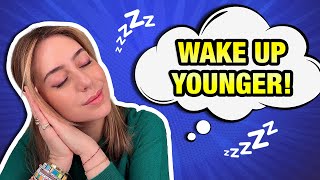
Dr. Shereene Idriss explains how sleep deprivation accelerates skin aging through hormonal disruption and shares practical fixes: better sleep hygiene, supplements, and the skin repair processes that happen only when you actually sleep.
If you feel like you're aging fast and you are not sleeping well and you're sleep deprived, this video is your wake up call. Because today we are covering how every hour of sleep lost affects not only your skin today, but how you age in the long run. Who the hell AM I? I'm Dr. Sherene Idris, a board certified dermatologist and you've landed on Pillow Talk Derm, where we do this thing every Saturday morning at 10am if you're new here, welcome. And if you're not new here, you little nerd, you. We love you. And I want to read your comments below as to what you want to learn about next. So today we are covering sleep deprivation and sleep loss because most of us are sleep deprived or running on fumes and we try to make up for that sleep loss during the week, on the weekends, where we try to get banking on our sleep for the debt that we've accrued throughout the week. But the reality is you are never going to make up for that sleep loss over the course of the week on a single night or two nights over the weekend. Because just like our skincare, with our sleep, it's about consistency over intensity. Going 12 hours one night a week versus three hours every night of the week is never going to make up for those hours lost in the long run. In fact, another way to think about it is you're like a sinking ship. Unfortunately, we are all sinking ships and we have a hole on one side of the ship and water accumulating on the other side of the ship. And instead of patching that hole, we're trying to shovel the water out and we will never catch up because the hole hasn't been fixed. And that hole is our lack of sleep on a weekly basis. And therefore we have to rethink how we're sleeping. Because skipping sleep in your 20s you can recover, but as you gain wisdom in your 30s and 40s and 50s, it's like you're skipping a basic step like moisturizer in your skincare routine. So what happens to your skin overnight as you go to sleep? Our skin goes into its most important mode, our recovery mode overnight is when we have our most intense repair and regeneration of our skin. And the term beauty sleep is a very real term. Consider sleep, your internal beauty treatment that allows your skin to regenerate itself. Because as you go to sleep at night, your body temperature drops. When your body temperature drops, so does inflammation. Cortisol levels are low at night and they peak early in the morning. So as you have that drop in cortisol and your inflammation goes down. Our blood is recirculated to our skin to send the nutrients to our skin so that we can wake up with a healthier glow and better hydrated looking skin. This is all a process that happens overnight, and if you don't sleep, it falls apart. There are three essential hormones that fluctuate at night that allow our skin to look its best, not just the next day, but hopefully in the long term, and that slows down that aging process. Number one, growth hormones. This peaks during our slow wave sleep cycle, earlier in the sleep cycle, allowing for our tissue repair to happen, muscle growth to happen, and overall recovery to happen. It is essential. The second one that goes up overnight and then drops earlier in the morning is melatonin. Melatonin allows our bodies to relax, allows us to go into a slumber, allows our bodies to fall asleep. Melatonin is also a very powerful antioxidant that helps to repair the damage of the day. So not only is it allowing us to go to sleep, but it's helping our bodies fight those free radicals that want to cause havoc in our system and our skin. And it's super important that you understand this because it peaks around 3 to 4am and then it drops when cortisol rises. Cortisol stays low overnight and it is at its lowest during the initial hours of sleep. Hence why you want to really fall asleep on the earlier side right around 9.10pm, ideally so that you can have a longer time of low cortisol levels in your system while you are off. And this is going to help minimize any sort of inflammatory response in your body. Cortisol peaks in the early hours of the morning as the sun rises, to help wake us up, to activate us and to get us out of bed. But when you are chronically stressed and your cortisol levels are always at a high, what happens? Our collagen breaks down, we start premature aging, we start swelling, etc. So the top five signs of lack of sleep, when your melatonin is out of whack, when your cortisol is out of whack, when your growth hormones are out of whack and you're not sleeping at all. Number one, dull complexion. And this is the number one sign of aging. Your skin tone is everything. Everyone thinks it's your fine lines or your wrinkles or your lack of volume that's going to age you the most. But it is your complexion. If you look, even if you look radiant, you look more well rested and I don't like to use this word, but you look more youthful and when you don't sleep, your complexion becomes dull and you start to look pale, less radiant, and overall just kind of like death. Number two, fine lines and wrinkles. As we do not sleep right, we have increased cortisol levels, we become more stressed, it slows our overall collagen production and we lose our skin's elasticity and bounce and youthfulness and we form fine lines and wrinkles. Number three, dark circles. Remember what I said about sleep and your body temperature dropping, right? And inflammation going down and cortisol being at its lowest. If you're not sleeping, that body temperature is not dropping, cortisol is going to going to be high, you're going to get inflammation, and our blood vessels are going to dilate, especially in our areas where our skin is thinnest, and we're going to look exhausted. Number four is puffiness. And so with inflammation comes fluid retention, and we start to look like puff balls. I certainly get extremely reactive around my upper eyelids and my lower eyelids, and you can tell in a second when I am exhausted and I have fluid retention in my face and my face looks swollen. And number five is dryness, because what happens when you don't have your melatonin and your growth hormones and everything? We don't make our internal hyaluronic acid, which is essential in holding on to hydration in our skin, and our skin starts to look dehydrated, we get flaky and we feel less supple. So what can we do then to improve our sleep? There's a couple of components that you can do. We're going to start off first with supplements, followed by hygiene tips, sleep hygiene tips, followed by a couple of bonus pro tips from personal experience. Number one, when it comes to supplements, especially if you're a woman entering your perimenopausal years, maybe starting in your mid-30s or even early 40s, is micronized progesterone. And this is super important because our internal hormones start to shift in perimenopause, and when progesterone starts to drop, we do not fall asleep as easily. So taking micronized progesterone can really help, especially if you are perimenopausal or in menopause, to help to reduce the time it takes to fall asleep, but also to increase the quality of your sleep. I would strongly recommend that you consult with an ob GYN or your primary care physician before you jump into this world, because again, I do not know your Full medical history. But if you're scared of taking it, I don't think you should be scared personally, but I do think you should understand your medical history and follow up with your physician. Also maca root, which is a effective supplement to help reduce stress as well as balance your hormones and it helps to promote your own progesterone production. Three is melatonin, which a lot of people take to help to reduce their time to fall asleep. But it doesn't necessarily increase your quality of sleep. And this is generally safe in the short term. Let's say jet lag, you're not sleeping very well because of work. Just in the short term, take it anywhere from 30 minutes to an hour before you want to go to sleep. Anywhere from like 0.5mg to 3mg. I took a 10mg once and I died the next day. Curable. And I will strongly advise you to avoid prolonged use because it will disrupt your own natural melatonin production and that can have longer term consequences that you do not want. Magnesium is another supplement that a lot of people swear by. I've recently started taking magnesium glycinate, which is a bioavailable form of magnesium. There's also magnesium citrate and they're less likely to throw off your own internal hormones and they help to just relax your body and improve the sleep duration and quality of your sleep. I've been on it now for nearly two weeks. I will tell you that I sleep better overnight because I was waking up throughout the night. L, theanine, ashwagandha, valerian root, all of these can help you go to sleep. But the biggest thing I will say is do not become dependent on these supplements. And ideally you're going to be helping yourself through your sleep hygiene patterns. But always, always, always talk to your healthcare provider. Going into sleep hygiene mode. And this is something that I had been working on over the past year or two. And if you follow me on Instagram, you probably noticed it because I used to do pillow talk derm late at night, like 11pm in my early 30s. And I've been doing this now for now nearly seven years. Even though I can make up with four hours of sleep in my 30s, in my 40s, it's much harder to recover the next day. So number one is turning off the blue light phones. Anything that is super stimulatory, at least 45 minutes to an hour before you go to sleep. Right? It is important that you make your bedroom your sanctuary, that you really create the Mood for yourself. Everyone says about the mood for romantic mood lighting, et cetera, but it's not about that. It's about being romantic with yourself and romancing yourself so you can go to sleep. Think of yourself like a baby. You're not going to blast music in your baby's room during bedtime. Same thing number three is create a consistent sleep schedule even on the weekends. So even though you want to stay up late on the weekend, you want to doom scroll. Maybe you don't want to, but you end up doom scrolling. Or even during the week, try to tell yourself I'm going to do this whole routine starting at 9:30 or 10:00pm, whatever it is, you want to go to sleep and really try to stick to it seven days a week because it will really help. And this is where the Oura ring comes in. So I have an aura ring. I'm not sponsored. This is not promoted by them. And I think OURA rings are kind of like those people who use the glucose monitors and they're not diabetic. I think a lot of people are either turned off by that or not. But there's a certain subset of people who need a visual feedback in order how to change know how to change their habits. We all know, for example, sugar is bad for you. We all know that drinking alcohol is going to mess up the quality of our sleep. But some people need a visual feedback in order to understand how their sleep is being affected so they can shift their own perspective. And so this is where the Oura ring comes in. And you can see that even before I took the supplements, my sleep was very choppy. After I've been on a better sleep hygiene routine and really trying to help myself go to sleep better. I really try to avoid alcohol at night. I kind of don't drink as much at all. I maybe drink once a month. My sleep has gotten much, much better. And it allows you to identify patterns that affects your sleep. So if you guys are interested, this is where the Oura ring comes into play. The other reason why I wear this more so in the summer so I can track my patterns of walking in the city. In the winter it's not so good, so I'm embarrassed to look at my step count. Exercising regularly obviously helps. Don't exercise at night, limit your caffeine intake. Don't try to drink any sort of coffee or caffeine after like noon to 3pm depending on what time you need to go to sleep. And really try to get 30 minutes of natural light exposure daily. This is a Bonus tip. Especially if you're perimenopausal or menopausal and you are sleeping with a partner or not. I love this mattress topper. It is called Sleep 8. It is a splurge but it lowers the temperature of your bed or increases it depending on your body temperature. So depending on how you're sleeping and what you like, warm or cold, it measures your own body temperature and it will reactivate into heating or cooling you overnight. It helps a lot. My husband was the one who got it and I shouted at him for wasting money and now I am obsessed with it and we don't have it. It's harder to fall asleep a little bit, but it is great. Especially if you're having hot flashes. I would strongly urge you look into it. Ask somebody to gift it to you. I don't know, but it's something that has changed the way that I sleep, especially as I've gotten hotter. Hotter yes, but hotter overnight, etc. Blackout curtains are something that I would suggest you guys look into as well. I like sleeping in a room that is not blacked out and it messes up my sleep. Noise machine, especially if you live in New York City is also helpful. So with that, let me know how this video has helped you keep receipts every single night of how you're sleeping because surely your skin is and if you need to send this to a friend who needs a wake up call, quite literally send this video to them. I will see you guys next week. Have a beautiful Saturday.
More from Shereene










3 Ways I Prevent Post-Menopause Skin Issues + What Really Helps Elasticity After 50