How to Achieve Even Skin & Whiter Teeth for a More Radiant Look! | Dr. Shereene Idriss
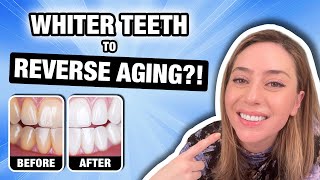
Dr. Shereene Idriss breaks down tooth whitening: why yellow teeth age your face, which DIY methods don't work (charcoal, lemon and baking soda), and what actually works (strips, whitening toothpaste, LED kits). She covers sensitive teeth, who shouldn't whiten, and her own routine.
Questions this video answers
6–10% hydrogen peroxide
About 30 minutes a day for 2–3 weeks
Approximately 2–3 shades
About 2–3 months
Pregnant or nursing women, people with untreated cavities, anyone with active gum disease, and patients with crowns or veneers
Chapters
Welcome back little nerds. Now if you've been following me for some time, you know that I believe that the number one sign of aging is our skin tone. An irregular appearance of our skin tone, hyperpigmentation, discoloration, brown spots, redness, etc. But did you know that the same applies to our teeth? Yes, they do. So today we're going to shift gears and talk about teeth whitening. Because just like the color of our skin and how the skin appears even or uneven, the color of our teeth can also affect how we appear in terms of the aging process. Who the hell AM I? I'm Dr. Shereen Idris, a board certified dermatologist and we do this thing every Saturday at 10am so feel free to like this video, subscribe and let me know what you want to learn about next week. But the color of our teeth is where we are focusing on today. So if you look at this picture over here, you could see how that instantly somebody's teeth, if they are whiter, brighter, etc, they appear more energetic, more youthful, more vibrant. But once you get older, they start to yellow because the enamel starts to to thin out and the dentin starts to appear. It doesn't just have to do with our habits in terms of drinking or eating coffee or smoking or eating a lot of acidic food. It is part of the natural aging process. But how our enamel thins out and how fast our teeth become smaller is really up to us and our genetics and our behavioral patterns. Patterns, patterns. Because grinding teeth also leads to shortening of your teeth which also contributes to the aging process as well. So, so we're not going to talk about the length of our teeth today. We're just going to focus solely on the color. Because I truly believe that you guys can control the color not just of your teeth but also of your skin. But before we jump in, let us bust some few myths together. Starting with number one, charcoal is going to whiten your teeth. No, it is not. Charcoal is very abrasive. But yes, it can work at removing surface stains. That is not however going to whiten the foundation of your teeth. So, so be careful. Number two, oil pulling is the best thing since sliced bread. And that is why my teeth are white. No it is not. Oil pulling might help with oral hygiene by removing surface plaque buildup, removing superficial stains. But it's not going to go and get deeper rooted stains or whiten your teeth. So just beware. Number three, lemon juice and baking soda are the best DIY for pearly whites. Absolutely not. Lemon juice is extremely acidic. That is going to erode your enamel and that is just not going to help your teeth. Whereas baking soda is a abrasive and that is going to scratch the enamel, Especially if you do it too frequently. You might ruin your gum health as well. The same way people should not use that on their skin, they should not use it on their face. And last, the results are permanent. Touch ups will not be needed. Nothing in life is permanent, absolutely nothing. So don't believe that. So over the counter options that you have for you, starting with number one, white strips, these guys over here, you want to look anywhere between 6 to 10 hydrogen peroxide as the active ingredient. It does have some bleaching properties and 6 to 10% is the sort of range at which you will find them in over the counter. Now, they recommend using it for 30 minutes a day for two to three weeks. And you can widen up to two to three shades in terms of your radiance and whiteness of your teeth and tips for maximum effectiveness. So a couple of things that I have learned along the years is do it at night, don't do it in the morning. Especially do it before you brush your teeth. At least 30 minutes or so before you brush your teeth because you want to do it on dry teeth. So, so what I like to do is maybe brush my teeth lightly with water, allow my teeth to dry, apply the whitening strips, and then once I take them off, I'll wait 30 minutes or so. So I'll usually do it while I'm watching TV and then I will brush my teeth. You do also do not want them to overlap with your gums because it will lead to gum sensitivity. I will link a few options below. There's a couple of other little tips and tricks when it comes to tooth sensitivities, which I will hit on towards the end of this video because I have very, very sensitive teeth teeth. Now, the second option that's available to you guys over the counter is these whitening toothpaste that a lot of people love. They are, however, a little tricky and I personally do not recommend them. But let's talk about them. They contain mild abrasives and peroxides. Abrasives help scrub the surface stains away, whereas the peroxide helps to do the bleaching effect of your teeth. But like I said, if you have thinning of your enamel or if you grind or if you have sensitivities, this can lead to worsening of sensitivities and it can also irritate your gums. Obviously, when we're brightening brightening, or brushing our teeth. You want to use this twice a day because you're brushing twice a day. And the results with the toothpaste takes two to three months, whereas with the white strips you can see it within two to three weeks. And some people recommend this for a maintenance routine. I, however, do not recommend it every single day forever because like I said, it could lead to increased sensitivities. And yeah, I would avoid the charcoal variants because those can be too abrasive and potentially wear down your enamel worse over time. I will link below some whitening toothpaste as a light maintenance option, meaning you should probably introduce it once or twice a week at most, but not every single day the way that they recommend it. Now, the third over the counter option that you guys have available are these LED kits where people wear these blue lights on their teeth. And everyone thinks that the light itself is going to whiten your teeth. But it's not the light that is whitening your teeth. The light is activating the whitening gel which contains an active bleaching agent like hydrogen peroxide or carbomide peroxide that is going to help bleach your teeth. You can whiten your teeth. It takes longer than as advertised. If you do this in office, at a dentist's office, it definitely works stronger than an at home kit. Again, because of the power of the LED lights, how fast it's activating the whitening gel and the strength of the whitening gel itself. But the most important consideration when it comes to whitening your teeth basically boils down to your sensitivities. Because if you have sensitive teeth, it is just not worth it for you to be suffering with the shooting lightning pain in your scalp, in your gums, in your head. I have very, very sensitive teeth. So this is how I manage my sensitivities. And I've learned this through various dentists and patients who are dentists over time. Number one, I stopped brushing my teeth with a whitening toothpaste because I felt like it made my teeth much more sensitive. So I'll reserve a whitening toothpaste to maybe once a week at most, if I remember. But I use a sensitive toothpaste with fluoride or potassium nitrates like Sensodyne to help strengthen my enamel. Number two, I do follow the directions on the white strips and use them for two to three weeks in a row. The way I do it is I use it maybe for two to three days every month. At the beginning of the month. This way, I'm constantly Getting something and something is better than nothing. And at least I am not putting myself through that intensity of whitening my teeth for two to three weeks and suffering in the process. So I take breaks between my treatments. Number three, I do this at night. Like I mentioned, I never do it in the morning. In the morning when I drink coffee. I used to brush my teeth after drinking coffee, but that's a really bad idea because your mouth is really acidic so you're going to make your teeth more porous. So after drinking coffee, I swish my mouth with water. I wait 30 minutes or so and then I brush my teeth so that my teeth do not become more sensitive. And when I whiten them, I do it at night, after dry brushing my teeth with a little bit of water, I apply the strips. And after 30 minutes, once I'm done with the strips, I will brush my teeth. Now, the duration of how long I keep my strips on, they recommend 30 minutes. I keep them on for 10 to 15 minutes max. Because if I try to hit the 30 minutes, even with one use use, I become more sensitive. I also avoid things that are very hot or very cold while I'm whitening my teeth. I also avoid things that are very acidic or that have staining properties like coffee, tomato sauce, etc while I'm whitening my teeth. So like the three days of the month, the last thing which I forgot to mention is I can't remember. There's something else that I do. Oh, my night guard. I do wear a night guard so that I'm not grinding my teeth. It helps with the length of my teeth and it also hopefully helps minimize the sensitivities. For all of you guys who've been masking, these are all real, they're not fake. Look how straight they are. Anybody who gives you veneers and makes them this straight should lose their license. Who should wait on whitening their teeth? Pregnant or nursing women? Your teeth become much more sensitive when you're pregnant. That's something nobody talks about. They also start to shift. I would just wait. If you have untreated cavities, you're going to probably irritate your enamel and make your cavities more irritated, which might lead to more sensitivities and more difficulty in managing. So wait. Anytime you have gum disease, hold off. And if you have crowns or veneers, they will never whiten with any of these situations, whether it is a whitening strip, an LED kit or whitening toothpaste, go back to the dentist who gave you your crowns or veneers and ask them to work on them and make them lighter. Other things you can easily do Use a straw. I'm not great at using a straw, but definitely use a straw and I see my dentist every six months so in conclusion, the best whitening method is going to be the method that you stick to at the end of the day. It boils down to consistency, consistency over intensity, even when it comes to your brightness of your teeth. So try to find something that works within your routine, whether it's two or three days a month or two or three weeks a year, whatever that is. Find something that you're going to be consistent with over the long term. And yeah, let me know below if you have any questions, comments or feedback. What have you tried that has truly worked for you? And like always, don't forget to hit that notification button when a new video comes up and subscribe to my channel and follow along. I will see you guys next week and I hope this video was helpful. Have a beautiful Saturday.
More from Shereene










3 Ways I Prevent Post-Menopause Skin Issues + What Really Helps Elasticity After 50