How to Get Rid of Sunken, Hollow Under Eyes — What Actually Helps from a Dermatologist | Dr. Idriss
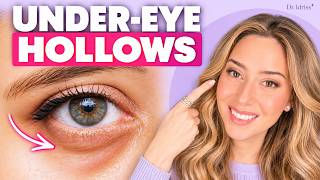
In this comprehensive video, board‑certified dermatologist Dr. Shereene Idriss explains why under‑eye hollows are primarily a structural problem and how to differentiate true volume loss from discoloration. She demonstrates a simple overhead‑light test to tell the two apart, then reviews realistic at‑home options (topical agents for redness and hyperpigmentation) and outlines the full spectrum of in‑office interventions. These include laser therapies (pulsed‑dye for vascular redness, Fraxel/IPL for pigment and resurfacing), conservative hyaluronic‑acid fillers with careful consideration of bone structure, bioregenerative approaches such as PRP/PRF and micro‑/nanofat transfers, and collagen‑stimulating microneedling with radio‑frequency. Dr. Idriss also discusses surgical options for fat‑pad repositioning and skin excision, emphasizing the need for a personalized, maintenance‑focused plan and warning against over‑aggressive filler use. The video ends with a call for questions and a reminder that understanding the underlying cause—whether one, two, or all of the contributing factors—is key to effective, realistic treatment.
Chapters
If you are someone who has struggled with your under eyes most of your life, let's say they look dark, they look carved out, they look sunken in, and you have been personally victimized by the question, "Are you tired?" despite the fact that you had 10 hours of sleep or you just came out of a spa day, this video today is for you because we are going to tackle under-eye hollows from A to Z. Who the hell am I? I'm Dr. Shereene Idriss, a board-certified dermatologist, And welcome back to Pillow Talk Derm, where we do this thing every Saturday morning at 10 AM. So make sure to subscribe and like this video and let me know your questions below as I do read through them. But under-eye hollows are— I'm going to just start off this video by being very blunt— a structural issue for the most part. There are some optical illusions that can apply, and we're going to touch on that, but it's definitely not something that a magical cream can refill. So although you may be coming here for recommendations that you could do for yourselves, I'm going to save you thousands of dollars right now. By telling you over-the-counter creams are probably not going to fix this structural element. We will touch on topical stuff that you could do that might help marginally because, hey, something is better than nothing. But I want to be very blunt and talk to you guys about the deeper things that we could potentially do if this is something that bothers you. So today we're going to talk about what under-eye hollows actually are, why they happen, and why they appear the way that they do. How to tell if what you are seeing is a true hollow or an optical illusion, what skincare can realistically do, plus most importantly, what in-office treatments can really truly help. So without further ado, let's jump in and understand what exactly are these bags under my eyes, because they're not Chanel. Chanel? Clearly I don't have one. Chanel. Why can't I say it? Chanel. When we are referring to the under-eye hollows, we are talking from the inner groove of your eye down to even a little bit onto your cheek. And this area can create a dip. It is an area that has multiple different things happening all at once, from deeper down your bone structure to further up your muscle, to above that your collagen layer, as well as your fat pads, to on top of that your skin. So when you take into account your own genetics and your structure, plus the implications of life and environmental change, as well as the aging process, multiple different things are happening all at once that can make this groove appear darker. You might start to look a little bit depleted, gaunt, older, and tired. And the most important thing to understand with the under eye is that it is not a one one-size-problem-fits-all. We are talking about fat pads that can shift down. We are talking about a bone structure that can get hollower. We're also talking about collagen that tends to thin out, in addition to the fact that our skin on the surface of the area starts to develop crepiness and fine lines from life. Hopefully you're laughing a lot and not crying a lot, but rubbing your eyes, allergies, you name it, that starts to also show as wear and tear over time. So the under eyes are truly a multifactorial issue.. And when we are addressing it, it's important that we understand this, that we can be better educated in terms of what we want to do in order to improve it. Think of your under eyes like a dent in a wall. You can paint over it, you can smooth it, you can buff it, you can soften it, you can moisturize it. But if that dent is still there, you will always see a shadow in that wall or in your under eyes. And that's pretty much what's happening with your own face. This is where you also have to understand the optical illusion of the dent. If your dent is darker in color, right? Let's say you have a dent in the wall that has a black scuff mark on it. That dent is going to look deeper. And if that dent has a little bit of purple underlying discoloration, that dent is also going to look deeper, maybe not as deep as the dark mark, but that color is going to give the optical illusion of depth. And this leads me to, are we talking about a real under-eye hollow or do we need to differentiate from hollowness, which is a structural issue, and skin color? What some people refer to as actual hollowing is actually discoloration. And when you think of discoloration, there are two types of colors that we can think of. One is a genetic predisposition where we have darkening and more pigment in this area in terms of hyperpigmentation and melanin. And it kind of looks a little bit darker. Some people have referred to themselves as having raccoon eyes, and this tends to follow certain genetic predispositions. Okay. The other type of color that one person can also think of when you're thinking of discoloration in your under eyes is purple and redness, which comes from your vasculature, your blood vessels, especially if, for example, you are somebody who has very thin skin over here, but you suffer from allergies or you cry a lot and this is now congested, or you just have a genetic predisposition to that, having that underlying redness and purple discoloration, even though it is not technically hyperpigmentation and darker pigment, it can still give the optical illusion of depth. The good news here is that when we're talking about color versus a real structural deficit, you can at least do certain things to try to help yourself. Especially when it comes to redness. So with redness, there are caffeine creams and I will link a few below. There are creams with vitamin K that work very nicely. The Depuffer by yours truly also helps, and it helps me when I struggle during allergy season to help to minimize the puff, but also to help to minimize the redness and that look of inflammation. Those are all things you could do for yourself at home. In office, laser treatment, the gold standard is the pulsed dye laser, hands down. It is one of my favorite lasers. But with laser, for redness, you're not curing the issue. Hopefully your heart is going to be beating for a very long time and that redness will probably come back in some way, shape, or form. But you can minimize it. When it comes to pigmentation, it is a little bit harder because that is your own genetic makeup. You can try to minimize that pigment from becoming hyperpigmentation and you don't want to, for example, rub your eyes. You don't want to be sitting in the sun. You can also make sure to protect that skin with sunscreen to minimize it from getting darker. Over-the-counter creams with kojic acid, arbutin, licorice root, niacinamide, vitamin C, like the Major Fade line, will help on the margin, but it can still at least help somewhat. It's not going to be a grand slam, slam dunk, whatever the sports expression is. So I don't want to mislead you. And in terms of in-office laser treatments, yes, it can help to lessen the effect of that hyperpigmentation with certain laser treatments, for example, like a Fraxel.. But again, it's something that's going to require multiple treatments and it may never be a one and done, and it might be something that you have to maintain over time. So before I jump into explaining the difference when it comes to structural hollowing, a quick test that somebody can easily do is take a light, and I have one here, and come overhead and look at your face with the overhead light. If all shadowing disappears, then you, my friend, have a structural issue, because when you're completely flat with light over you, making any sort of shadow disappear, disappear, then it's because you're looking, seeing the hollows and it's the shadows from above because of a structural deficit that you are noticing your under-eye hollows. But if you put the light over your face just like this and you're looking at yourself in a mirror and you still see darkness underneath your eyes or some sort of discoloration,, then it is more of a red/pigment problem. So that is a, you know, very easy way for you to kind of figure it out for yourselves. But in terms of structure, there's really two components. One is volume from collagen, fat, and muscle. As we age, that stuffing, right, of a couch, the feathers are going to get a little bit thinner. The fat pads are going to shrink and drop. Our collagen is going to gently break down. Our muscles are going to get thinner over time, and that's going to create less of a cushion. And so what's natural is actually going to happen. That mid-cheek that was supporting your under eyes is going to start dropping, and we're going to start looking hollower underneath our eyes. In addition, and this is the most important thing that I talk about to my patients, especially during a consultation, our bone structure, the frame holding our face, starts to get hollower and starts to slowly recede. Our cheeks get a little bit narrower and start to also push back. And so if the bony frame that was holding our face as we get older starts to get more nonexistent, then all of that volume sitting on that bone starts to shift, cave in, including your eyeballs, which become deeper set and drop. And so your bone structure is something that you're obviously born with. And some people have this from a very young age where their eyes are deeper set, they have darker hollowing under their eyes, and it is a pure genetic structural thing that you were born with. And so if that is the case, as you get older and you notice it getting worse, then you can attribute it to age. But if you've had it since a very, very young age, then it is also due to genetics. And so the question then becomes, once you figure out what is contributing to your under-eye hollowing, and for some people it's all of the above, then you better know how to address it. Which leads me to starting from the top down skincare. Skincare alone is never going to fix the structural problem. It is never going to save your bone structure. It is never going to help restore your muscle mass, shift your fat pad, or rebuild thick, deep collagen. It just isn't. Skincare from the top down is going to help on the superficial level with your collagen. For example, if you use a retinol. Volufiline, which claims to really build volume, is not going to build that deeper set volume for your under eyes, unfortunately. Will it help to plump your skin and thicken the superficial aspect of your skin? I do believe so. But if your hollows are very, very deep, I do not want you spending hundreds and thousands of dollars for a product that ultimately is never going to give you the outcomes that you are hoping and wishing for. Collagen. Collagen can help to hydrate from the top down, helping with the superficial crepiness. But collagen is never going to restore the collagen under your eyes unless, of course, you're using a collagen peptide cream, which again is going to work on the more superficial aspect of your skin and not deeper down. So if you have deep structural issues, it's still not going to help. Things that will help in terms of skincare. Are going to be products that target pigmentation. If you are somebody who is prone to hyperpigmentation under your eyes, a.k.a. brown spots, a.k.a. more melanin. So the Major Fade line, for example, because that is going to target how pigment is made. Prescription hydroquinone can also help on the margin. Retinol can also help as well to help to normalize your whole cellular turnover and to even out your pigment. But those are things that are going to help on the most superficial aspects of your skin. I have found it interesting that people with severe allergies do find a lot of relief when they use nasal sprays to help to minimize the congestion in this area, as well as when they take an oral antihistamine, especially during allergy season. But once you know that you are also dealing or only dealing with a real structural deficit in this area, then let's start talking about what can we do in office to help to really boost from the inside out the underpadding of our skin to minimize that hollowing. First things first is addressing the color like we just talked about. So certain laser treatments can be helpful. For redness, I really do like the Pulsed Dye Laser. It is a laser that is going to collapse the superficial blood vessels. But as long as your heart is beating, they are going to try to fill back up. So patients should usually do a series of anywhere from 4 to 6 treatments once a month in order to get your blood vessels to really kind of give up. That doesn't mean you're going to compromise your blood supply to your eyes and your vision will be fine. Do not worry about that. As long as you're doing it under the right hands and with a really highly technical physician. That being said, this is something that is going to require maintenance throughout life. If you're dealing with pigmentation, then a Fraxel laser or a Clear Brilliant or even potentially an IPL in the right candidate can also help with the pigmentation around the eyes. And so I just want to first just touch on the lasers for the color because I do think it's important to address. The third thing that lasers can address in terms of the issues around your eyes is helping to resurface the fine lines. If your fine lines are due to a loss of volume underneath, and so think of it like, right, fabric. If my structure is really tight and it's pulling my sleeve, look how tight my fabric is. But if I had a shorter arm, let's say, and now my fabric is crinkled, then this crepiness is due to underlying volume loss. And so there's nothing underneath helping to keep the fabric taut. Then lasers can help on the margin with the built-in lines, but it will not necessarily take care of all the crepiness because we need, we need now to look deeper in and work on deeper-rooted issues related to volume, which leads me to hyaluronic acid fillers. I have never been a fan of injectable under-eye fillers. I have been always on this side of being very conservative, and I've never dedicated a whole syringe, for example, just to the under eyes. I truly believe when you are looking at a face, especially when it comes to loss of volume under your eyes, you must take into account your bone structure in order to know how far you can push the limit. Because once you go past the limit of your bone structure, that's where you buy yourself problems. In addition, the under eyes are— is an area that is married to multiple different areas of your face that are actively shifting as well. So if you are just addressing your under eyes without addressing the rest of your face in terms of proportionality, you can start looking like an avatar-like version of yourself where you're just taking care of your under eyes, but the rest of your face is like sinking in. And that, unfortunately, is a terrible look as well. So fillers is something that I approach with a lot of respect And when you approach something with respect, you fear it a little bit because you don't want to push the limit. And it really is a case-by-case basis depending on your bone structure and how much your lower bony rim can potentially hold, plus the type of skin you have on top of it. If it's too thin, if it's too, if it's too, too crepey, if your bone is very hollow, it's something that you cannot really fight. And I would just tell you, forget about under-eye fillers, which then would lead me to what else could we do? Because let's say somebody doesn't want surgery. There are bioregenerative treatments as well, treatments that come from your own body. One of those treatments come from your blood, and that is known as PRP or PRF, EasyGel. And PRP and PRF has growth factors. So think of growth factors like fertilizer, and this fertilizer can help to strengthen the tissue, especially a ligament that we have under our eye that gets weaker over time. And that's why we start to develop this line right here as things get weaker. Unfortunately though, it is not a home run for everyone. Not everybody responds to the fertilizer, and the fertilizer can only fertilize as good as the environment. But it is something that I tell patients very honestly is worth a shot. If you are willing to risk losing money. And I say that with love. And I tell them very honestly, the most I will do is 3 treatments, 1 month apart, and then we are going to stop and truly wait a few months to see how you progress and how your under eyes develop. If you find that your under eyes look firmer and are less translucent and you have less, less appearance of hollowing, then this is a treatment that you can continue. As often or as little as you want. Once a year, 2, 3 times a year. You become the boss of your own destiny there. But if you find that it made no difference, we drop it like it's hot and we don't really repeat it again. The second bioregenerative treatment that we can offer from your own body is through fat. And fat transfers are very, very exciting, but also very scary because they are permanent. So your fat has two forms of fat. One is known as microfat, where we can give you back volume. The second type of fat that we would take out is that microfat that we then process and strain into a fat soup that is loaded in stem cells. And this is known as nanofat. When we are injecting fat, I personally in my practice, will only do a fat stem cell enriched fat transfer because the fat stem cells for me are where the money is at because that is what's going to help your skin regenerate slowly over time. The fat for volume that we are inserting into your face, about 50% of that is going to stick and you don't want to overdo it because you don't necessarily know which 50% is going to fully adhere. So you want to be very slow and steady. And so personally in my practice, when it comes to fat transfers, It is something that is always done under local anesthesia. So you are awake. It is still a surgery with liposuction, but you are awake where we numb your fat locally. That fat is taken out and processed within an hour max. And that fat that, that is processed is then injected into your face or your body, wherever else you need it. I will not store the fat to risk contamination. Also, the activity of the stem cells starts to decline over time. And so having that fat injected right away is going to optimize your results.. And I myself had my own fat transfer for the very first time at 42, 2 weeks ago. So it's a very exciting time to see how much we can evolve in this area. I did never inject filler under my eyes or on my lips. It was mostly on the sides of my face. I have only ever done PRF for my under eyes and my upper lip. And so for me, it was exciting to see how nano fat stem cells can really take this to the next level. In terms of a mid-face support. So as we lose volume and let's say we don't want to just address the under eyes, but we really want to address the rest of our face. This is where fillers can truly make a difference when done right, because you're not going to inject fat all the time. I would not do it more than once every 4 to 5 years because fat can start to look a little bit amorphous and it doesn't necessarily hold hold its shape very well. And so Sculptra is another biostimulant that can help to generate collagen. But that's not something that I was going to do in perpetuity because let's say one day somebody wants a facelift. So if somebody has real hollowing because structure is coming down from below and you're trying to pick up the sides of the face, filler in the right amount, in a conservative dose with precise placement, can help create creates an illusion of height in your face that minimizes the appearance of the hollowing under your eyes. It sounds like word salad, but I could share some before and afters here that showcase that difference beautifully where I didn't even inject filler under these patients' eyes. And let's say you do not want anything injected under the surface of your skin, but you are open to other devices that can help to stimulate your collagen. Then this is where microneedling comes into play. Microneedling is going to help to stimulate your collagen again, more on a superficial level because I don't want to go very deep as the area is very delicate and I don't want to cause too much trauma. And that can help to strengthen your tissue over time. For some people who have a lot of creepiness, again, under the right hands, you can marry that microneedling to radiofrequency heat at a very conservative setting to help to tighten the appearance of your skin. So that you don't have to deal with such redundant crepiness, especially if you are not somebody who wants to go under the knife. But ultimately, surgery is probably the gold standard in terms of repositioning your fat pads, plus getting rid of that excess skin that is becoming, like we said, redundant under the eyes. But once you reposition the fat pads on your bone structure and you tighten the skin, you're going to have better long-term outcomes, except for the fact that you are continuing to age. And so your bone structure is going to continue to hollow. So in my view, it's always good to think of how am I going to maintain the results of something that is quote unquote permanent, because even plastic surgery is not permanent. And so that is where it's really important that you find your provider that you want to grow old with, that you want to do these very subtle, tiny things along the way if this is something that bothers you and this is how you want to age so that you have a game plan in terms of how you want to maintain after surgery. So just to conclude, because this was a volume-loaded information overload video and I know it sounds a little complicated, but I hope it helped to clarify in your mind when it comes to the bags under my eye, which are not Chanel. I can say it now. Is it discoloration that is brown or red, or is it structural from my bone structure to my fat to the density of my collagen? Because once you then know where the problem lies, and it may be 1, 2, 3, or all of the above, it is much more realistic for you to be able to take control of your face and to help yourself through this. Process. I hope this video was helpful. Um, I am here if you guys have any questions, we can definitely dive in deeper, but please let me know below. And in the meantime, I hope you have a beautiful Saturday and I will catch you guys next week.
More from Shereene










3 Ways I Prevent Post-Menopause Skin Issues + What Really Helps Elasticity After 50