How to Grow Strong, Healthy Nails from a Dermatologist! | Dr. Shereene Idriss
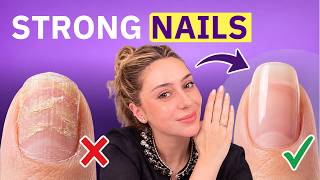
Dr. Shereene Idriss breaks down nail anatomy and what your nails reveal about your health: vertical ridges, Beau's lines, and discoloration can signal thyroid problems, anemia, or liver disease. Biotin supplements won't help unless you're deficient, which is rare. Focus instead on iron, protein, and proper care: file in one direction, moisturize with urea or petroleum jelly, wear gloves when cleaning, and don't cut your cuticles.
Chapters
Welcome back, little nerds. It is Saturday morning. It is time for a new Pillow Talk Derm, and today we are covering all things nails. You guys have been asking me about nails, and no matter what you're asking, you always come back down to the same answer, which is take biotin, which may or may not be the correct answer. We will get into that later on in this video. But you probably feel like your nails are constantly breaking, that, you know, they peel for no reason, they're turning yellow, they're getting cracked, they're getting chipped, and you can't seem to get your nails to grow past a certain point. And yes, you have Googled it, you've gotten 12 different answers, all of which go back to biotin, and it seems to be making zero of a difference for your nails. And so today we are going to actually answer questions instead of throwing supplements at the problem. And those questions are going to start with what's going on with our nails, why is it happening, what you can do about it, but also how your nails are an indicator of your internal health. Not to mention the fact that how you can strengthen your nails, for long, beautiful, healthy nails. So without further ado, let's get into it. So before we get into what is going wrong with your nails, let us understand the anatomy of the nails because the nail is really a 5-part system. Nail plate, we have the nail bed, we have the matrix of the nail, we have our cuticle, and then we have the folds around our nail including the hyponychium. Starting with the nail plate, the nail plate is the hard part of your nail that you see right here. It's the part that you file, it's the part that you paint, it's the part that you kind of pick at the tip when you're nervous. But that is the visible part that you actually feel. It's the hard part of your nail, and it is made up of layers of keratin. The same keratin that is in your hair is in your nails, okay? It is probably about half a millimeter thick, so it is very, very, very thin. It is really not that thick at all, and that is the nail plate. Now, underneath the nail plate, if I did not have nail polish, you would find the nail bed. This is the part on which the nail plate rests, and it is the part that you can see through your nail plate in terms of color. If you have good blood flow, if you don't have good blood flow, but normally it's nice and pink, and when you press down on your nail, it blanches, meaning it turns white because you are pressing on the blood vessels over there. Color changes are really the first thing that we look for when we are looking at nails, especially when we're looking obviously at your nail plate. We're looking at the color change of your nail bed. Now, the nail matrix is the part right at the base of the nail, and it's really hidden underneath over here, okay, before the nail plate appears. And the nail matrix is where every single nail cell is made. This is the factory of your nails. So if, God forbid, you get traumatized right here, or you're constantly picking back of nail back here for years, you might damage your nail matrix, which is what's going to generate your nail. And your nail might come out looking like this. Have number 4, your cuticle. The cuticle is the part that seals the nail plate to your nail matrix, okay? It is a sealant that is basically there to protect the matrix. It is meant to protect your matrix from getting any sort of bacterial infection, any yeast infection. It is a sealant that is protecting your matrix and covering it straight to your plate, so it creates a seamless transition, or it seems, unless you are a picker. When you cut it, you're removing only barrier that you have for protection, and we will get into that in a minute. And then you have your nail folds, but most specifically the hyponychium, which is on the opposite end of the cuticle over here, the inside part that is sealing the opposite end, meaning it is sealing your nail bed to the tip of your nail plate. Nails on your hands grow at approximately 3 millimeters a month. It might take 3 months to 4, 5 months to fully grow out. Onto what are your nails telling you about your health? Fun fact is that the color, the texture, and even the shape of your nails can reflect what is happening internally within your health. Starting with texture and ridges. Why do my nails have ridges? And this is something that has happened to me, by the way, as I've gotten older in life. And it's not just aging or dry, dry skin. It is also in terms of direction and why the direction matters. If you have vertical ridges, meaning you have ridges that go up along the growth lines of your nail plate, it's called— these are called onychorrhexis. And all of these words are very complicated, so I hope you've got a pen and paper. But these are usually normal, and it just means that the matrix of the nail, the part of the nail that makes your nail plate, is not as, you know, capable in producing keratin at an equivalent rate or as evenly as you age, and you get these ridges along your nails. Sometimes it's genetics. Like, I had a ridge, a vertical ridge on my toe since I was a kid. My dad has it. Apparently his dad has it. And basically it happens. But one thing to look out for, especially as you're getting older, is that if it suddenly worsens or changes, you might want to check your thyroid or have your iron levels checked. Number 2 are horizontal lines, also known as Beau's lines. So they're lines that are going across your nail this way. Matrix paused all of a sudden. So as your nail is growing out, your nail matrix hit a pause. There was something, there was some event that happened that caused your nail matrix to not be able to work as accordingly. Let's say a high fever, surgery, an illness, a car accident, a shock incident. Consider it a shock situation, and it is anything that is extremely stressful to the body that caused your nail matrix to go up And then basically that line forms, and then your nail plate continues to grow past it. But what you— what I find very, very, very fascinating is that because your nail plate is like a timeline of your life, think of it as like the rings on a tree. When you see those Beau's lines, you can measure how long ago that incident happened because your nail grows at about 3 millimeters or so a month. So wherever that ridge happens, right, 3 millimeters is probably like a month. 6 millimeters is probably 2 months. 9 millimeters is probably 3 months, and so forth. So it's kind of a cool way to tell time. Now, some nails don't have ridges. Some nails have spots. What do white spots specifically mean on nails? Oh, I know, I know, I know. I am calcium deficient, I need to drink milk. And that is almost always wrong. And this is one of those things that have just been perpetuated through generation and generation and generation. But the reality is white spots on your nails does not mean you're calcium deficient, and you need to put that myth to rest right now. But also, not all white spots on your nails are created equal. So if you have tiny little small white spots, this is known as leukonychia punctata, like little tiny punctums, right? And leuko means white, nykia, nykia is your nail. So white spots, tiny dots on your nails, they're scattered across your nails, and sometimes you see this on several nails, and it is almost always certainly some form of trauma. Where your nail matrix was unable to produce keratin evenly, and some of that keratin clumped into a tiny little white patch. And as your nail grew out, that is what you are visibly seeing on your nail plate. But it is nothing to do with being deficient. There is nothing to treat, and they more often— and I would bet a lot of money on this— will grow out and not necessarily come back. But the trauma could be from like an aggressive manicure. It could be from a knock, a pressure point, you name it, even picking at your nail matrix. And so you kind of have to be aware of what it is that you are also doing. If your whole nail turns white, this is called true leukonychia, not like leukonychia punctata. It's true leukonychia. It is rare, but it is associated with low albumin, um, and sometimes even arsenic exposure. So maybe you want to be getting checked. Okay. You hear about partners trying to do this to other people all the time. So just check your surroundings. Or make sure you're eating more eggs. Number 2, if the white proximal two-thirds, meaning this part from the nail matrix up to your nail plate, two-thirds of your nails are white and you have a pink band on the top, this is known as Terry's nails. Sorry, Terry, if you are listening or watching this video, but it's a sign of liver disease or heart failure or even diabetes. But if your nail is chalky, white, and crumbly, like literally when you try to take a pair of scissors or clippers and you try to cut your nail, it just crumbles, that is a sign of a fungal infection. And you gotta think fungus first, and there's a fungus among us, and it's in your nail plate. Number 2, why are my nails yellow? Yellow nails are probably one of the most, I would say, embarrassing complaints that people have when they come into the office, where they feel embarrassed at the fact that their nails are yellow. Most common cause of yellowing of your nails is a type of fungal infection on your nails, also known as onychomycosis, which is usually Trichophyton rubrum, and it is especially prominent on your toenails. And again, think of crumbly nails. It doesn't just have to be white, it can also be yellow, but the crumbly aspect of your nail is a key part in knowing if you have a fungus. It's super important that you get this checked and the diagnosis is confirmed because the treatment— you're never just going to prophylactically, meaning just in case, treat it with a systemic antifungal. Because in order to treat your nail fungus, you got to take medication orally. It can have some side effects, so you want to make sure that you are really confirming the diagnosis first and you're having somebody do a KOH prep, or they're sending a nail clipping for a culture. But you want to know what you're actually dealing with. Number 2, and this is maybe a scarier one, but if you have yellow nails and your skin is yellowing and the yellow— the white of your eye is yellowing, you want to make sure you're looking for liver disease. Is anything like cirrhosis, anything affecting that can be blocking any of the juices coming out of your liver that is being— that's going through your body to come out. If it's being blocked, you start to look yellow, or if your liver isn't working correctly. My grandmother, may she rest in peace, um, I don't really share this story, but I was the one who diagnosed her, um, back in 2015 with pancreatic cancer because I noticed that she had a mild yellowing of both her nails and the white of her eyes. I happened to be in Lebanon at that time. No one else in my family was there because I come from the family of physicians within my family. And she was very upset at me because the day that I dragged her to the hospital was the day that I was leaving at night. Anyway, I don't want to talk about it, but you got to make sure if you have yellowing of the white of your eyes, your skin, the bottom of your tongue, or a lot of your nails— what all of those things included go get checked, make sure to check your liver function. But you can also have something called Yellow Nail Syndrome, where let's say the eyes are not affected at all and your skin is not yellowing at all, but just the 10 nails on your hands and your feet are turning a little bit yellow. It is very, very rare. But if you also have swelling in your legs, you want to also make sure that there is no lung involvement. So swelling in the legs, yellowing of the nails, you want to make sure there's no lung involvement because you can have some lung involvement, and it's a rare triad— 3 symptoms that combine together. Lungs are involved, the nails turn yellow because there's not enough oxygen, etc. And so you need to make sure you are looking for that. But common things being common, right? Exogenous, outwardly things that can cause staining. Um, I also had these oil droplets on my nails when I was using a really harsh manicure known as— I loved it because they would dry in 5 minutes, dazzle dry, but I got these dark oil stains on my nails. So that's the dark polish that caused it for me. It was a chemical reaction. So when I stopped it, those oil stains left, but nicotine can also cause those oil stains. So if you smoke, I do not smoke, you can get those oil stains. Certain antibiotics like doxycycline, tetracyclines can also cause oil stains as well. The color will grow off or wash out and no treatment is needed. And last If you have psoriasis, which is a skin condition that gets plaques all over your skin, you can look at the nails to see if you're also prone to it by looking for pitting. Tiny little, as if someone took an ice pick scar and went into your nail, and you have tiny little picks on your scar on your nails. That is what you look for if somebody has psoriasis. That is why your nail can change colors, which leads me to why do my nails keep breaking? Your nails keep breaking, there are several different ways your nails can break. One is if you have brittle nails, two is if your nails keep peeling, and three is if your nails just break and snap. Different types of brittleness. Number one is if you have really dry nails and you get a dry brittle. Think of a dehydrated spaghetti, right? The spaghetti is really, really hard, and if you kind of just try to bend it, it snaps. That's what's going on with your nails. You're not getting enough moisture in, and therefore it is really, really, really rigid and it breaks very rapidly. So excess hand washing, heavy hand sanitizers, living in a very dry environment can all contribute. And quite honestly, putting Vaseline or even lip balm, which is what I do in the winter, like I'll take the blue lip balm and apply it to my nails and my cuticles throughout the day, helps tremendously. The second is on the opposite end of the spectrum. If you overwash your hands or you're washing your hands and they're constantly humid and you're going from wet to dry, wet to dry, wet to dry, you get a soft brittle. So you'll bend your nail, it doesn't want to snap, but it bends, bends, bends, and then it just kind of breaks because it just flimsily goes away. Um, that happens with that long wash-dry situation where you're alternating between the two. And the key here is to reduce wet exposure. And then the third is a chemical brittleness. Let's say if you're using a nail strengthener, right, which can help in the beginning with formaldehyde-based nail hardeners, but longer term they're going to dry out your nails and cause an irritation, and your nails are going to become more brittle because of the over-cross-linking of the keratin. So you got to be careful with that. Or if you overuse acetone and you're doing acetone strips, the natural oil that is holding the layers of your nail plate together. So nail brittleness— I can't say that word— can also signify something systemic. So hypothyroidism, because it will slow down your keratin. So think if you have hypothyroid, your hair also becomes more like stringy, your nails will also become more brittle. Iron deficiency anemia is also a big one that is often underdiagnosed, especially in women, and obviously severe malnutrition. So if keratin is a protein, if you're not even eating enough protein and you're severely malnourished, um, then the nail plate can definitely be affected. And that leads me to nails peeling. They start splitting into various different layers, almost like filo dough. This is known as lamellar onychoschizia. Um, again, I told you guys are gonna have to get a pen and paper. I'm gonna write these on the screen, but it is repeated wetting and drying that can break the glue down between the keratin that causes the layers of your free edge of your nail to separate this way. Other things can also cause it, right? Really harsh nail polish removers with acetone. Even non-acetone-based nail polish removers can aggressively strip the lipids holding your keratin together, But bigger things you want to look out for is iron deficiency and vitamin B12 deficiency. What vitamin deficiency causes weak nails? Everyone's answer is always biotin, biotin. I know this biotin, I'm going to take some biotin. But actually it's really not going to be biotin because biotin deficiency is very, very rare. And if you overtake biotin, the problem here is you're going to be masking your thyroid function in terms of your lab work. So I do not recommend biotin, and that's why if I'm going to recommend Nutrafol now, I love to recommend the vegan one because the vegan one has no biotin in it. The vitamin deficiencies that actually do matter are iron deficiency. And so this is the most clinically significant. So if you are anemic, if you're not getting enough iron in your diet, if you're not able to hold on to it, your nails will be affected. You want to really check your ferritin level, which is going to be measuring your overall level in addition to your iron, as well as your complete blood count. This is going to be the thing that is going to basically show up the most. And severe deficiency can cause something known as koilonychia, where your nail actually curves upward like a spoon. And it is pretty common in women, and it is often underdiagnosed. Protein is also a big one because I think it's one of the most underrated ones. If you're not eating enough protein, you're not making enough keratin, your hair is probably not growing, and your nails are being affected. I would make sure that I'm checking all of those things. It comes to nail care and protection, uh, we know now what's going wrong, but let's talk about what we can actually do to help our nails. And it's not that complicated, but the biggest thing that is required is consistency. Daily habits that actually move the needle in terms of how your nails show up for you is number one, how you trim. You want to get a really sharp pair of scissors, and I'm talking about proper scissors or really sharp clippers because cheap clippers, cheap scissors are usually blunt. And when it is blunt, it is going to crush your nail and it's going to split it before it has a chance of even being cut off. And you want to cut your nail straight across and round the edges slightly so that they're not sharp as they are growing out. Additionally, how you file is huge. People tend to go but that is not the right way to file. Because think about it, if you are filing back and forth and back and forth and back and forth, you're going to be separating the different layers of your nail plate, and the edge is going to get weaker, and you are going to get peeling. So you want to make sure that you are filing in one direction. It's the truth of the matter, and I don't think I've ever seen anybody ever file just in one direction. And you want to make sure that the type of nail filer that you're using is a fine grit, because a coarse grit— think of like sandpaper when you're trying to sandpaper your swing set or something. That's what I've done every single year. If it is too coarse, you're going to be gnawing at your nail plate and it's going to go pfft, and it's going to cause more damage per stroke. So you want a very fine coarse nail filer. And third, I mentioned moisturizing your nails. So you can absolutely use something like lip balm or petrolatum or Vaseline to help to seal your nail plate. But one of the best ingredients for your nails is actually urea at 10 to 20%, and urea is a great penetrator in terms of an ingredient on your nail plate, and it's going to help to keep your nails looking smooth as well. So after a shower, after you've washed your hands, not only moisturize your hands but moisturize your nail plates as well. Now, cuticle oil, It's the same, same idea. It's not going to hydrate your skin, it's not going to hydrate necessarily your nail plate, but it's going to act like a tiny bit of a sealant, especially around the nail folds. So that's not a bad thing, and it's going to help in that sense, but it's not usually what it's marketed for. It's usually marketed as a nail strengthener, it's usually marketed as something that's going to keep your nails hydrated, but at the end of the day, it is just protecting the nail fold, and there is a place for it. But again, knowing why you use it is important. So how else can you protect? For dishes, use gloves. If you're washing your hands, you can wash your hands but moisturize afterwards. And I think anybody who has strong chemical exposures, if you are somebody who's a nail tech or if you work with a lot of different chemicals, make sure you're wearing gloves. So how can I grow my nails faster? And this is a question that I often get, and I'm going to just be upfront: you can't. Okay, growing— the growth of your nails, how fast it grows, has to do with genetics and how fast their cells in your nail matrix divide, and no supplement can meaningfully change that. The real question is going to be not how can you grow your nails faster, but how can you hold on to your nails longer? It's really a retention question, and what actually influences the growth of your nails. So understanding that your nails are going to grow slightly faster for all people, right, in the summer because there's more heat, there's more vasodilation, there's more blood flow to your nails. Could you heat up your nail matrix? Maybe, but that's a little experiment for you to figure out. Your dominant hand, my right hand, my nails grow faster on this hand versus my left because I use it more, so there's more blood flow, there's more activity in this hand. With pregnancy, your hair, your nails grow faster, longer, a little bit stronger as well. And so enjoy that little bonus of pregnancy. Pregnancy was a very hard time for me, so if that is a bonus, find your bonuses and enjoy it. Um, and then if you correct an iron deficiency, of course, this is one of the few interventions with real clinical impact. But the real strategy is not looking for these options, it's how do I retain my nails longer. So filing it correctly, moisturizing like we talked about it, using protective gloves, all of those things can make a huge difference to stop the breakage. The last and probably the million-dollar question: should we cut our cuticles? This is something that nearly every single nail salon does, and some dermatologists disagree with. And I'm going to give you the clinical answer, and you could figure out for yourselves what is it you want to to do. But why cutting is a problem— so remember from the first section of this video, the anatomy section, that your cuticle is sealing your matrix to your nail plate. And because of your cuticle, your nail matrix is protected from bacteria, from yeast, you name it. And the moment you cut it, that seal is poof puff gone, and therefore your nail matrix is potentially vulnerable now to different type of aggressors in the environment. And so you really have to figure out for yourself if that's something that you want to Instead of cutting it, you do have options, right? You could soak your fingers first to soften your cuticle and then get that tool. I don't know what it's called, that soft tool that gently pushes back your cuticle. That's number one. There's also cuticle removers that are KOH-based formulas that will dissolve the dead tissue only and will not touch the living seal underneath, and that is much safer than scissors. The third is hangnails. Now, hangnails are the little tiny bits of dead skin that appear on the edges of your fold. They have nothing to do with your cuticle. You can absolutely clip it, just I wouldn't go too near to the cuticle or too near to the base because that can turn into a little infection, also known as a paronychia. And number 4 is moisturizing your cuticles regularly. Again, this is not something people talk about, and I'm not talking about a nail oil or an oil cuticle or cuticle oil. I'm talking about actual, like, urea moisturizer, or like we talked about, lip balm or Vaseline. But a hydrated cuticle will not crack as easily, and it won't hang, so you won't really need to cut it. And there you have it, we did our complete deep dive into nails. It's actually not that complete, there's so much more where this came from. And if you're interested, you guys can let me know in the questions below. Do you want to do gel manicures, regular manicures? What should we do? Things that show up on nails, like even melanoma. And applying sunscreen and wearing UV protective gloves is also a very important aspect in terms of hand protection. We can do a part 2 if you guys are interested. If you have more questions, let me know below. But in the meantime, have a beautiful Saturday, and I'll see you guys next week.
More from Shereene










3 Ways I Prevent Post-Menopause Skin Issues + What Really Helps Elasticity After 50