Inflammation–Aging Cycle Wrecking Your Skin? | Derm Guide to Redness & Longevity | Dr. Idriss
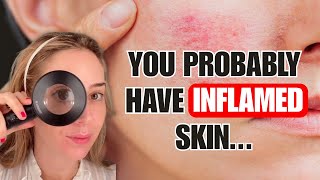
Dr. Idriss explains how chronic skin inflammation speeds up aging and what actually stops it. Rosacea, a damaged barrier, and post-inflammatory redness all trigger this cycle. Treatment ranges from lasers and ivermectin to azelaic acid, zinc, and omega-3s in your diet.
Chapters
If your skin is constantly feeling red, reactive, stinging, flushing, irritated, no matter what you do, and it doesn't feel as good as it should look, you may be dealing with chronic inflammation and no, it doesn't affect your skin. Just today, chronic inflammation affects your skin in the long run when it comes to your skin's long term health and skin longevity in terms of aging. Now, who the hell AM I? I'm Dr. Sri Idris. I'm a board certified dermatologist. My focus is on you and your skin. And today we are going to talk about how to recognize if your skin is infl. We're also going to talk about how inflammation accelerates the aging process. And then we're going to talk about how to support an anti inflammatory lifestyle not just through skin care, but also through diet. If you have never followed along, welcome. Like this video, make sure you subscribe and let me know what you want to learn about next week. Signs that your skin is inflamed is not necessarily easy for people to recognize. And I like to tell you that you, just like my patients and I see nearly a hundred patients a week, may have what I call redness blindness where people don't even recognize that they have that redness. But here's a very simple question. Do you find yourself, if you wear makeup, reaching for a BB cream, a CC cream, concealer, cover up more often than not to cover up that redness. And if the answer is yes, but you didn't know you had redness, then you may have redness blindness, a form and a reflection of something chronic going on in the background where your skin is always a little bit red and ruddy. Now chronic inflammation is not just going to appear in the form of redness. And that's what makes this video a little bit more confusing because people may not notice that they have redness or they do. And if you don't notice you have redness, my question then for you is, does your skin feel tight, dehydrated? Do you find yourself always feeling like you are stuck in your face or you get irritated faster than most people, no matter what it is that you're using and do flush relatively easily? Now, the answer there is yes. Then you probably also have redness, blindness and some form of chronic inflammation that is going on. Now, chronic inflammation basically means that your immune system and that inflammatory process never fully shuts off. Your skin is your largest organ. It is your largest immune organ. It is fighting everything as a first line of defense, okay? And if it is slightly off, it may be over Triggered. And that can create ongoing stress for your skin in the form of your. Your skin barrier breaking down, not feeling intact and smooth, being more reactive to anything that you put on your skin, blood vessels eventually making way, becoming more apparent on the surface of your skin. And eventually the premature breakdown of collagen and elastin, which can lead to aging and impact your skin's longevity, its long term health. And that's where inflammation becomes a true aging trigger. And people like to refer to it as inflammaging. And there is a lot of truth and merit to this, because if your skin is constantly in this fight or flight mode, you're going to break down faster, whether we're talking about your mental health or your physical health or your skin's health. And that leads to accelerated aging. So not only did we just learn about the weakened skin barrier, collagen, elastin breakdown, increased vascular reactivity, but this uneven tone is the first visible sign of aging for you and me. We may not necessarily see what's happening underneath the surface of the skin. The other thing that chronic inflammation can do to your skin is not just affect your skin color, it can also affect the texture of your skin. And I hear this a lot. My pores look huge as I've gotten older. And I say, throw your magnifying mirror, but I don't have one. True, you don't have one. And your peers look. And your pores look bigger when you have superficial swelling on your skin, right? You have blood vessels. Like, I'm going to use this just because I have it here. Okay? You can use this, any kind of blood vessel, any 2B things of blood vessel. You have blood vessels on the surface of your skin that are slowly expanding and getting bigger because you need more blood flow to the area. Because why? Because all of these immune cells are coming in to help your skin fight whatever it's trying to fight. As your blood vessels get bigger under the surface of the skin, we have superficial pores, right? But if our blood vessels are swelling under the surface of the skin, our superficial pores start to look bigger. When we get rid of that superficial swell and our blood vessels kind of go back, our pores start to look smaller. So that superficial swelling from chronic inflammation is going to make your face look more textural and your pores look bigger over time. And this is something that is particularly an issue, especially people with oily skin or combination skin, but it is something that I hear about all the time. So chronic inflammation is not just for redness. It's Also for superficial texture. And it is something that I hope you guys understood and I hope it clicked, because when you calm that inflammation down, not only will the visible color start to look better, but the texture will start to look smoother. In my practice, a lot of times when people do not want to adhere to skincare routine, let's say, or they do not know, or they're just not on top of that, but they will do a laser treatment, which I have issue with and I try to really talk them out of. Do the skincare first and then do the lasers dealing with the redness through redness. Lasers, like a pulse dye laser, can make their texture look better so much faster, especially the superficial pores. So I see it in my practice through treatments and you can make a difference at home through skin care. But redness, unlike brown spots, is a little bit more difficult because not everything red is the same thing. Whereas when you're talking about brown spots and pigmentation, they usually have the same root cause, DNA damage from sun exposure. That's or, you know, oxidative stress. But that is really, truly what brown spots are. Whereas redness can be due to a multiple of different things from medical conditions like lupus and seborrheic dermatitis and psoriasis, where you do need to go get medical treatment. 2. Redness from a stressed barrier response. Your skin barrier could be stressed because of your environment. Is it really cold? Is the air really dry? Is it low humidity? Is it just harsh wind? But it can also be stressed because of what you're doing. Are you over washing your face? Are you over exfoliating? Are you using harsh actives? And the worst is when it's the combination of the two. In winter, for example, when it's really, really cold outside and you think you need to go exfoliate 20 times a week and you've washed your face three times a day and you go walk in the frigid cold, your face is going to blow up and fall off and that is a stressed barrier response. But other things that can cause redness and redness that lingers in the form of post inflammation, AKA post inflammatory erythema. Erythema basically is a fancy word in medicine that means red. But piece that lingers for a very long time is a sign of an inflamed skin barrier and chronic inflammation too. Now people get post inflammatory erythema, AKA post inflammatory redness from many different things. From breakouts, from pimples, from eczema, from rashes, from cuts, from nicks, etcetera but if you notice that it is really, truly lingering way longer than average or what you used to normally respond to, then you may be having a delayed healing response from a compromised barrier. Now, rosacea is a very interesting topic because that is a third cause of redness. But rosacea is also not just redness. Now, a lot of people like to refer to rosacea as adult acne, and I kind of have a problem with that, because by calling it adult acne, you are oversimplifying it and telling the person that maybe salicylic acid and benzoyl peroxide is going to help, but a lot of people with rosacea cannot tolerate those, and it actually makes their rosacea worse. So when you're thinking of rosacea, there's really two facets. One is the color component, where we have this background redness, and most white people have it. But we're more prone to intense flushing. And eventually we develop broken capillaries on the surface of our skin, and it doesn't look even. And our pores can start to look more dilated and we can look more textural over time. And the nose shape and the skin on our nose starts to look thicker over time because of that oil production. And basically, the triggers for this are going to be all the good things in life. Alcohol, caffeine, chocolate, heat, maybe not stress. That's not a great thing in life. But stress, I would argue, at a very low dose, could push you to go do stuff. Exercise again, debatable if it's a good thing. But spicy food, all of those things can trigger that redness and that flushing. Now, the second aspect of rosacea is going to be the bumps that people like to refer to as adult acne. But you don't usually get blackheads, which is a differentiating factor between acne and rosacea. And with rosacea, you get these blemishes, these tiny little pustules that appear right here, here, here, and they can make your skin start to look really textural over time. And your skin can feel itchy and reactive as well. And it's the same triggers that can trigger those things. But you are having a deeper inflammatory process that does require medical treatment. But that doesn't mean that you cannot help yourself through lifestyle and diet. I'm not saying, though, and hear me when I say this, diet is not going to treat you. And I feel like my heart breaks when I have patients who come in who for years are chasing diet to figure out how to treat their skin, and they only end up getting worsening. Scarring on their skin over time because they were not able to take control over their skin. Food alone is not a cure. And that's why I say food alone is not medicine. But food is supportive. And it is an extremely important aspect of how your skin responds in terms of inflammation, in terms of reactivity, because food has function to help support your skin. And that is why it is not just medicine that's going to cure you and it is not just food that is going to cure. You can be on the best medicine but have the crappiest diet. Your skin is still going to be not great. And so you want to make sure that you are holistically looking at yourself as a whole and doing everything from skin care to medicine to diet to help yourself. And when it comes to diet, anti inflammatory foods can make a big difference for people who are very sensitive and reactive. And I'm talking about things with omega 3s, fatty fish from salmon, sardines, mackerels, etc, a few times a week be very, very supportive. Healthy fats in the form of avocados and walnuts are also very healthy and supportive. I'm not saying eat five avocados a day, but I'm saying incorporating it into your diet over the course of a week can be helpful. Vitamin C and antioxidants from citrus fruits and berries and leafy greens are huge adjunct that you should incorporate into your diet every day. In fact, I'm trying to eat berries more every morning. It's not my favorite thing, but I'm trying to add it instead of my color croissant. Now turmeric is known as an anti inflammatory spice. It is a great way to incorporate it into your diet. If you can put it at the dinner table instead of the salt, but put the turmeric next to the pepper. Turmeric and pepper together help better absorption of the turmeric and that will help with chronic inflammation in the long run. Green tea, when consumed consistently as well, can also block inflammatory pathways. So these are ways that diet and certain foods can help you minimize that chronic inflammatory response in your body. But I just felt the need to put that disclaimer that don't just chase food alone to help cure yourself. Because the sad truth is a lot of people do and I see them after many years in my practice and they've not gotten to where they wanted to get to. And it's really the combination of the two that makes the biggest difference. It's moderation and a mix of everything in the life that gets you to where you want to go now? Skincare can also be helpful. But let's say you're just using skincare alone like one ingredient and everything else is not working. Of course you're not going to clear so again holistically from both angles. But skin care can help calm inflammation. It can also help to superficially repair your skin barrier, minimize any sort of oil imbalance and hopefully help with your reactivity to the triggers. Right. And certain ingredients that I love for chronic inflammation and redness and rosacea are azelaic acid. I think azelaic acid is one that is often misunderstood. It does help with the look of redness. But another interesting aspect of azelaic acid is going to help your oil production. So incorporating it if you are somebody who is oily combination skin prone to blemishes and breakouts, if you have rosacea is a big one that you should have in your skincare routine. I'm going to link below products with azelaic acid. Full disclosure. I launched an azelaic acid serum on purpose that has 5% azelaic acid and 5% of its cousin form. So it helps with the redness and the oil regulation. In here I am dry, but since I've hit perimenopause this area tends to get a tiny bit oily. So I use it on my T zone area at night I do not find that it sits well on my skin as a dry skin on my cheeks cheeks. But at night I go and I put it all over because I don't really mind if it does pill because azelaic acid is known to pill. I like this one because it is relatively lightweight and I don't want to feel like it is suffocating anything on this area which is already a little bit on the oilier side. Now zinc is also interesting, but not all zinc is created equal. Zinc PCA versus zinc oxide are two very different things. Zinc oxide, which you guys know that I love for from diaper rash cream and I don't know where I put my Diaper rash cream is a great anti inflammatory type of zinc that helps with irritation. And that's why when you have a wind burn or a harsh wind issue or cold related issue in the winter, I like to face based with zinc oxide. But zinc PCA is also really good to indirectly help support your skin barrier by helping to regulate your overall oil production and to minimize the redness that comes from that. And so it does support your skin barrier and it also helps to keep your skin in check because when your barrier is out of check, you tend to get more breakouts, more blemishes, etc, even if you're not necessarily oily. I would know. And so we put zinc PCA in the calm back cream and I tend to face based in the morning and at night with this in the winter. So I was just skiing recently and I would use this over my hyper serum because I will never give up the hyper serum which is this, this guy. And I would use this at night sometimes even on top of the active seal to get that extra layer of hydration in my skin and to make sure that my skin doesn't become imbalanced. Because again, ever since I've gone into perimenopause plus an inflamed skin barrier, I tend to get a little bit more reactive. Now other ingredients that are soothing and calming. Colloidal oatmeal. Colloidal oatmeal is a great one that will help calm any sort of sensitivity. It will help the redness from a compromised skin barrier and it actively helps to repair and calm. We have it in here as well at 1% with panthenol. And it also has anti inflammatory peptides that I will link below other products that have anti inflammatory peptides that can help to reduce the look of redness as well. Centella asiatica is another one that people often use for redness. I like to combine it with arnica but this can help visible redness, even flushing and it can help to support your skin barrier. And if you are somebody who flushes and has visible redness and you get puffy, the de puffer has it in the form of a roller so you can roll away your swell and your inflammation. Hypochlorous acid is a nice adjunct if you're someone who's prone to blemishes and pustules. This can help to calm inflammation and potentially reduce bacterial triggers. It is react, it is useful for reactive and acne prone skin, especially if you have rosacea and you're prone to blemishes and then ivermectin topically, if so you have true rosacea and you have a lot of bumps and pustules and your skin feels very, very itchy, not necessarily irritated, then topical ivermectin is particularly effective for papulopustular rosacea, the redness with the bumps. So anyway, I will link below all of these products and others and I hope you guys have a clear understanding of what inflamed skin looks like because it is incredibly common. And once you've recognized it. And once you've seen it on yourself, it is impossible to be blind to that redness. But you're not doomed. And it can be turned around through the right supportive skincare ingredients, but also through lifestyle and diet. I hope this was a helpful video. I hope you guys have a beautiful Saturday and I will see you guys here next week. But as always, if you have any questions, leave them below.
More from Shereene










3 Ways I Prevent Post-Menopause Skin Issues + What Really Helps Elasticity After 50