Learn Your Skin Type, #1 Skin Issue, & Vacation Mode Skincare | Live with Dr. Shereene Idriss
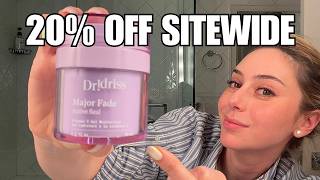
Dr. Shereene Idriss teaches how to identify your skin type with a 30-minute at-home test, explains why only hydration and pigmentation respond to topical products, and walks through her product line including a Vitamin C moisturizer, glycolic acid mask, and azelaic acid serum for redness. She covers how to layer actives with retinoids and offers vacation skincare routines for different climates.
Chapters
Are we live? Oh my God, my computer is so dirty. Hold on, I am doing this from my laptop. Better? Is that better? Is that better? You can insert ads. I don't want to insert ads. I don't know what I'm doing. Okay, good afternoon, it is Wednesday at 12:30. Happy Wednesday! We're going to give people a few minutes to join. I'm gonna go grab a glass of water. Um, hello Rainbow Traveling Yogi, hello Beatrice AU, hello Emily Ahrens, hello Frank James, Neri Letter, Sweetheart, Shreya Basu. Um, thank you for being here. We're gonna give people a few minutes to join because I hardly announced it on Instagram. Um, but give me a few seconds, let me just grab water. I'll be right back. Alright, so there is no water in my apartment today, so I pre-filled glasses and put them in the fridge. Um, so yeah, how are we doing? How's everybody doing? Hello Vincent, Gada, Monica, Zita, Beatrice. Um, excited to be doing this on a Wednesday at 12:30. Um, I saw your mammogram reel. How did it actually go? Thank God it was totally fine. Um, listen, it's like a— it's annoying, it's not fun, it's very uncomfortable where you're hugging the machine, but you have to get it done. I'm eating my dinner while watching. What are you eating, Cosmic Parks with Emmy? I'm starving actually. I need to order lunch. Um, we should order something that we can throw away without having to clean anything. Uh, all right, so welcome, welcome, welcome, welcome. I just recorded a video that I posted right now on Instagram about CNN putting out an article about sunscreen, which is so stupid. Um, and it's crazy that CNN is citing the EWG as a reference um, in 2026, which is insane. Rice with tuna and yellow bell peppers, that sounds yummy. Um, but yeah, I just posted it now, my reaction to that, which is just like, I, I don't know why, why, why, why are they using them as a reference? I don't know, but I guess it's still what a lot of media outlets are using. I don't know if they make money by linking them, I have no idea, but it's insane. And it is very hot in New York City as well, so if you are out and about watching this on your phone, I hope you're wearing sunscreen or sitting in The shade or the shady side of the street. So we're doing a live today because we have Memorial Day coming up in the US, and Memorial Day is a holiday in the US, and we like to celebrate it with a sale. And so there's going to be a 20% off sale all across Dr. Idriss site-wide until Tuesday. And so we are going to be posting this and pinning this, but there is a 20% off sale on Dr. Idriss happening now for everybody being out of office. And so it is very, very exciting. And I wanted to just talk you guys through it. I figured today we can just hang out, talk about how to identify your skin type, understanding whether you're oily, dry, combination, which one of my products work best for you and how to use them, how to identify your biggest skin concern, which is still a question I get asked a lot. And a lot of patients come into my office even though they watch my videos and they just want me to tell them about what their problems are, although even though I walk them through it, they identify it themselves. Which is really nice to see because it goes to show that they've learned. But I think they just need that reinforcement. So we're going to talk about how to identify your biggest skin concern and what you can use in the product line as well. And then vacation mode skincare. If we're going to the beach, what are we doing if we're dry, oily, after sun, and a couple of myth-busting as well. So we're going to kind of just go through a various of these topics. I am somebody who doesn't stick to the plan. So if I see questions that come up, I may actually jump in and ask you guys or answer some of your questions. But since you guys are here and we're still an intimate group— I feel like my hair looks so messed up today, like, what's going on? Um, I'm curious, what are things that you guys want to learn most about or see about? Or, I mean, I'm posting more on YouTube, I'm trying to be more active through the shorts and through the long format. I'm just curious in the comment section, what is it that you guys want to see more about? Is it about cosmetic procedures? Do you want to know more about my life? Do you want to know more about, you know, the ups and the downs? Because there's been a lot of that. Do you want to know about skincare ingredients. I'm just really, really, really curious, um, what you guys want to learn more about. Sandra Rogolino says, I want to learn more about fat transfer. Um, I am super excited to talk about fat transfer. I can even show you guys before and after right now on my phone. I haven't shared it yet because it looks too fake. Um, my life. Let me show you guys. Fine, you can absolutely use my skincare line if you're on Accutane. Um, After 41, I started getting these crazy oily breakouts on my nose that would linger for weeks with my periods, hormonal changes. So I started Accutane once a week. So I take it at a lower dose, literally just once a week. And I am still using my products. So do you guys want to see a quick before and after of a fat transfer? Hollywood facial, creatine supplement suggestions. I need anything educational, especially effective layering for the synthesis of ingredients. Okay, so you guys want more cosmetic procedures, is that right? Um, do we think we want more cosmetic procedures? Um, products are laser and cosmetic— I think you guys do want more cosmetic procedures. New proposed removal of financial assistance. Okay, yes, I'd love to get more into the internet ingredients, especially about percentages. We have a bunch of videos, my long format videos, especially when I started, was about percentages of ingredients, especially during COVID There's a million of those videos up. Um, skincare application order. So beginners, skincare for beginners, anti-aging for the hands. Um, oh Sandra, thank you, my products are the best. Okay, so I want to show you guys quickly a before and after, and then we're going to jump into the Dr. Idriss 20% sale. But this is her before and after, and she has given me consent to share this. Um, I have her in several angles. This is the painting that I'm making, but this is her side by side. Um, but we did a fat transfer to her face And we also did nano fat to her face as well. Um, can you guys— I think I'm holding it straight, just like this. Yeah, it's crazy. This is her at a 90-degree angle. Can you guys see it? Um, but obsessed, so obsessed. I definitely want to do my own fat transfer this year at 42. She's 43. She looks incredible. She feels incredible. And the only difference, because I asked her, did you change your skincare? Did you change your makeup? Did you change, um, what else are you wearing on this after picture? Because we cleaned her face for the most part. And she said, honestly, it's lightest bronzer. That's all I have in my after picture. And we did incorporate microneedling with her fat transfer when we did it. So it was like when I saw her back, I was just like completely floored. And I've known this lady for years. We have tried PRF, we have tried PRP. We don't do filler underneath her eyes and we've really tried to even do some tightening treatments. But this has been the absolute best thing we've done for her. And so for her, I am so excited. Like she came back and she goes, what should I do? I'm like, nothing. Go home. Like, your face looks great. Wait, let it do its thing, and then let's kind of reassess in like 6 to 10 months to see where you're at. Um, but yeah, I need to do a short video about that because it's truly incredible. Now, there's no miracle treatments, there's no one-size-fits-all, everybody responds a bit differently, but fat is truly probably in my world and in my opinion one of the most secure ways to look better, younger, faster. Um, okay, we'll go through a whole fat transfer video I'll do it. I feel like my hair looks really funky today. I don't know why. Um, okay, you guys ready? Are we ready to do the 20% off Dr. Idriss sale? Tell me if you're with me, and then I promise you I will talk about fat transfer and jowls, um, and all of that stuff. Uh, okay, we want a video on it. Okay, we'll do a video. Promise you I'm gonna do a video. I'll work on that today. Um, okay, so Let's first talk about understanding your skin type because I want to know— this is an interactive live in the comment section— do we still have trouble figuring out what is our skin type? Are we still a little bit confused about what are we and where are we and what are we doing for our faces? Because a lot of people shift, right? I am on the drier side, but come summertime, I do become a little bit more combination skin, especially in my T-zone. And I think people get confused about what they are, and they get really, really stuck. Now, unlike cosmetic procedures, where I will tell you, in the cosmetic world— again, I feel like I look like Amish today. I feel like I'm like— in the cosmetic world, you never want to piecemeal your face. You never want to inject only here and not look at your face as a whole. But when it comes to skin care, you need to understand that your face has different sections and you can piecemeal your face. So the best way to test or to see what type of skin you are is to wash your face with a gentle cleanser. I love my cleanser. I use my cleanser every single day. I took it off from the side of my, um, vanity. It is now 20% off on sale at the site. But I use a gentle cleanser that is not going to overstrip your skin because you don't want to create a fake environment for your skin. But wash your face with a cleanser. Then the way that I use this is I use I warm it up in my hands. I use lukewarm water. I wash my face and then I dry my face with a towel and I switch my towel every other day. I switch sides or I have 7 small towels for your face and then I let your face sit. Okay, let your face sit. Let it just be for a good 30 minutes. Don't use any moisturizer. Don't use any serums. Don't use any mists. Don't do anything. But after you wash your face, see how your skin does after 30 minutes. If you notice that your face feels really, really tight, if it feels flaky to the touch, if it feels rough to the touch— and I'm not talking about like acne scars, but I'm talking about that like roughness on the surface of your skin where you can feel that your skin is dehydrated and just not having any sort of oil production— you're probably on the drier side. Okay, you are on the drier side. So after washing your face, after identifying that your face feels tight and dry after 30 minutes, you're on the drier side. Now, being dry means that your skin probably lacks oils. Being dehydrated means that it's lacking water. Okay, dehydration can apply to oily skin and dry skin, but the surface of the skin, if it doesn't feel like it has any sort of slip and it feels really rough, you are dry and your skin is lacking oils. Okay, so it's on dridriss.com. I have pinned it below. D-R-I-D-R-I-S-S. This is my brand. For those of you who do not know, I do have a skincare brand. It is called Dr. Idriss. This is an I, okay? It's not Dr. Driss, it's Dr. Idriss. Maybe it was a mistake when I made the logo. Maybe we should do a video about that. But I am Dr. Idriss. Say my name, say my name, say my name. Okay, so we're gonna utilize these products to talk about how do you identify your skin type, And the first step in identifying your skin type is washing your face. And this is 20% off on the site right now. And after you've washed your face, you want to sit with your face for at least 30 minutes without any sort of serum, mist, essence, moisturizer, anything. Just let your skin be and see how it feels. Number one, if it's dry and rough, you are dry and you are lacking those oils in your skin. If, however, you notice within the 30 minutes to even an hour that you start to get really shiny, especially in certain areas on your T-zone, on your cheeks even, or your, your fingers start to slip as you run your fingers across your face within the first 30 minutes to an hour, you're definitely then on the oilier side. I'm not talking about sweat, forget about heat. I'm talking about the actual fats that come on the surface of your skin. And if you're on the oilier side, you tend to be shiny. It tends up to show pretty fast, more visibly when you apply makeup. It swishes and slides on your face. And this is why probably silicones are not great for you, because that makes it like move around more on your face because you have that layer of oil on the surface of your skin. And if you're oily, your pores do tend to be a bit more visible because they're more active, etc. And so that is something that you can notice after washing your face, that your skin gets really, really shiny and oily, and you can just kind of like ice skate across your face and swish and slide. If you are somebody who is only shiny here, you are probably combination skin. And this is kind of what I become in the summer. I am dry in the winter, but when it's really hot and humid, oof, especially now at 42, I'm combination skin here. And this is why I started taking Accutane once a week because I would get breakouts and I have like a little red dot right here from a pimple that was over 6 months ago that lingered for like 6 weeks. And so you want to make sure that you are really addressing how your skin is shifting with different weather patterns, different environments. Humidity plays a role. The dryness of the air plays a role as well. And so you want to make sure you are addressing your skin in that manner. But first, let's understand how your skin responds. And you wash your face first, you wait 30 minutes, you see how your skin reacts. Now, if your skin after washing your face feels very, um, reactive, tingly, burning, itchy, um, really, really— like, I do this when I'm trying to describe the word irritated. But if your face feels like it's a little bit alive and itchy and burny and this, then you probably have sensitive skin, okay? You are a sensitive soul. You probably have true sensitivities, and you have to really either go get patch tested, find out what you are truly sensitive to. A lot of people are sensitive, but they're not necessarily sensitized to certain ingredients. They're just sensitive and reactive. Other people are truly sensitive sensitive and they need to get patch testing. I am a reactive human, so when I apply my skincare, when you see me do my YouTube videos or I'm doing my skincare routine like this upcoming Saturday, you're going to see my skin get really red for the first like 30 seconds or a minute after I apply a product. It comes down. That is a reactivity. It's not a true sensitivity. My skin doesn't burn, it doesn't hurt, it doesn't itch, it doesn't tingle. If your skin tingles after just washing your face and not applying anything else and you feel that sort of itchiness or that sort of like burning sensation or that sort of this, then you may have a sensitivity and you probably want to consider seeing a dermatologist who specializes in patch testing to know what you are sensitive to. Um, Discoloration says, yeah, it's just like, I don't know, I hit 42 and then all of a sudden my hormones decided to be a teenager again. And I'm only— I only get breakouts like on the sides of my nose and they linger ever since I started the Accutane. Once a week, it has gotten better, but it doesn't mean that they don't— this one tried to come back with my period and it's just sitting a little bit there. Okay, so do we understand how to describe the different types of skin types? So we have dry skin where after 30 minutes our skin feels rough and textured and flaky and it's begging for moisture or something that is going to have a little bit more fattiness in it to sit on your skin. If our skin gets really, really shiny, slip and slide, slippery, it feels like you are like an ice skating rink, then it's probably more on the oily side and your pores are probably a bit more visible because they're just more— they're more productive. If your skin tends to just get oily here, but you feel a little bit tighter on the edges of your face, you are combination skin, which is what I become in the summertime when things get really, really humid. And then if you feel irritated, burning, stinging, any sort of redness, or this, then you are probably more on the sensitive end of the spectrum. And before you purchase anything, I, I will urge you, go get patch tested so you know for sure what you react to. Just a side note, patch testing, it's going to test you to various different categories and ingredients in skincare. It is a test that you do over 3 to 4 days where you have to go back to the doctor, and some people find out that they are allergic to nothing. And I tell patients, at least you're learning something and it's not gone to waste because you don't have to go down this crazy road of avoiding all these ingredients. At that point, it's probably something else. All right. Are we good? Are we good? I, I'm not— obviously I am. I don't want to lie. I am biased. I do love this. This is my product. It is great for sensitive skin. Again, depending on what sensitivity you have, you should get patch tested. But I love this product because it's great for sensitive eyes. I have the worst eyes. Okay, you guys, I used to be legally blind. I used to rub my eyes. My eyes get puffy, they get itchy. I have to use Pataday, which is an antihistamine eye drop. Um, I did LASIK surgery, and so now I'm dealing with dry eyes. But this helps very much to clean the makeup around my face and my eyes without burning my eyes. But there's a learning curve to this. Are we ready? The best way to use this is to apply it first to your hands and to warm it with water in your hands and to apply it to a dry face. If your face is already wet, it doesn't work as well. When you apply it to a dry face and you, you work it around your eyes, it really does work much better. Um, I would demo it, but there's no sink here and I don't have water today, hence why I had to pre-fill cups in my fridge. Um, but I'm happy to demo it another time. Okay, so that is how to identify your skin type. Do we have questions on how to identify our skin type before we go into how to identify your biggest skin concern. I'm waiting to read through the comment section if you guys are here, or if you're watching this on playback, I'm going to read some of these. I had arcade to the eyes in 1995. Dry eyes are bad, I'm telling you. I know you froze for a few seconds. Lo siento. We're not talking about knuckle pads today, but you can always exfoliate them with the Flash Mask, which we could talk about in a second because this product has a lot of hacks to it that you could use on your body. If you quickly want, we can talk about this as I'm talking. For the oily skin type, what's your question, Jerry Max Remy 6223? Um, I'm curious what you're asking me about for the oily skin type, but this product is great for knuckle pads or any sort of area where you have thickening of your skin. Um, any questions about oily skin, dry skin, combination skin? Um, anti-aging for your hands? Okay, we could talk about this. Okay, no questions. So I still want to take care of it. So normal skin is normal. Listen, most people are hopefully on the normal end of the spectrum, and I think most people want to fall into a category. But if your skin feels normal, great. You'll consider yourself blessed. You know, I don't want to call it normal skin. I think everyone else is sort of quote unquote abnormal, but we're all very sensitive nowadays. But dry skin, combination skin, hopefully you fall within the normal realm of the world when it comes to your skin and how your skin feels. Um, okay. All right, what does acne on your cheeks mostly— that forming— hold on, hold on, hold on, Ariba, hold on. Yeah, what does acne on your cheeks mostly in your early 20s that too in clusters form signifies? Pillowcase? No, I mean, if you're getting a lot of acne here, you're probably on the oilier end of the spectrum because oily people tend to be more acne prone, especially if you are in your early 20s. Um, okay. All right, are we good? I think we're good. This person is obsessed with knuckle pads. What's up with your knuckle pads? Okay, like we're talking about having thicker skin on your knuckles. I don't know what we're talking about over there. Okay, um, I think we're past the how to test your skin type question. Now when we're talking about what is your skin's biggest concern, I'm not talking about from an anti-aging perspective when it comes to the architecture of your face. Like, I have eye bags. That is a structural issue. It is not necessarily a skin issue. Okay, I have jowls. Structural issue, not a skin issue. Tiff, maybe we should do a video differentiating structural versus skin-related issues. But there are people, I think, tend to confuse skin versus structure. I am going to sag one day and I'm going to look like this, right? And you're going to tell me, why am I taking advice from you? You look like shit. The truth is, look at my skin versus my structure. Okay, you cannot change what your mama gave you unless you go through surgery, and that is dealing with structure. And even in-office procedures can only do so much, and eventually you have to get rid of the excess skin. But what are skin issues that we are dealing with? Are we dealing with redness? Are we dealing with pigment? Are we dealing with oiliness? Are we dealing with, um, capillaries on the surface of our skin? Are we dealing with breakouts? Are we dealing with scarring on the surface of our skin. Um, and so those are skin-related issues. They are not structural issues. Okay, so again, I'm gonna sound like a broken record, and maybe I'm not if you're new here, but the biggest difference that you can make when it comes to your face and your issues are number one, hydration when it comes to skincare, and number two, pigment. Those are the two things that you can make the biggest difference with in the now, today, and within the short term when it comes to how your skin appears. Did you hear me? The biggest things that you can make a difference with when it comes to your skin and your skincare routine in the short term and hopefully the long term is how you hydrate your skin, number one, and number two, addressing pigmentation. Redness is a different issue because redness can be due to structural changes underneath the surface of the skin where you have broken capillaries that are big and evident, where you have redness due to a broken skin barrier, where you have redness due to rosacea. So redness has multiple different angles that are addressed differently, but hydration and pigment, you can address this for the short term. Number 3 is fine lines and smoothing the very, very superficial part of your skin with tried and true ingredients like retinoids. But you're never going to buff your skin to perfection the way a laser can in terms of skincare. Okay. And so we have to be very realistic. And that is why I am obsessed with pigment, because as a cosmetic dermatologist, how many people here know that I am a practicing cosmetic dermatologist? I'm curious. Just say yes, no, yes, no. Did you guys know that I see patients 3 full days a week? I used to see them 5 days a week. I was burning out. I went down to 4 days a week and I'm now down to 3 because of the skincare brand and the social media content that I'm doing. Do you guys know that I'm a practicing dermatologist, that I see nearly, even in those 3 days, 100 patients a week? Thank God most of you here do know this, because it turns out some people just think that I am an influencer online, and I do not view myself as an influencer at all. I'm educating alongside you, learning alongside you, and growing alongside you. Okay, um, so thank God. So I don't have to say this. How many people here now, shifting gears, say hell yeah if you know, or sorry, no if you don't know that I have a skincare brand. How many people here know that I have a skincare brand? I'm just curious because today we are offering 20% off across DrIdriss.com, and I want to make sure that I'm talking to the right audience and I don't have to repeat myself. So you guys know— some people don't know that I have a skincare brand. Okay, so for the one person here who doesn't know— actually, two people don't know that I have a skincare brand. For those of you who do not know here, okay, Okay, most of you do know I'm a cosmetic dermatologist. I am a dermatologist by training. I did medical derm for many years. I focused within cosmetics. In the world of cosmetics, right, when you're talking about structural change or what people see when they see themselves, besides the wrinkles and the lines and those things that form on your face, the biggest indicator of you looking tired, older, worn out is your skin color. Meaning Do you have a lot of discoloration on your skin? Do you have a lot of brown spots on your skin? And Bad Bunny proved it perfectly well at the Met Gala that you see a lot of that discoloration on the skin as you get older and wiser in life. And that is where you can make a huge difference without having to spend thousands of dollars at my office through your skincare routine. But in order to address pigmentation, you have to be consistent with a routine that uses more than one ingredient because vitamin C alone is never going to clear your pigment. So that is the whole hypothesis of my skincare brand, Dr. Idriss, and that is the hypothesis of these 3 products. So the first way to find out if you are struggling with discoloration and brown spots is to wash your face. 20% off. Okay, wash your face. Do not apply anything. Take 20-30 minutes if you want to know what type of skin you have, and then take a giant step back from the mirror. Throw your magnifying mirror glass, magnifying mirror, whatever away. Throw the zoom away. No one is looking at you— look at my nostrils— no one is looking at you that closely. I'm gonna fall off the chair. Nobody is looking at you that closely. And for those of you who still wonder, there's no filter, okay? This is it. Look at your face from far. We look at the forest, we don't look at the tree. If you notice that you have some areas on your face that appear darker, that appear like it's pulling down, that appear ruddier, etc., then you have brown spots. If you notice that you look more red and flushed, it's redness. If you notice when you go from far that your skin just looks textural, be careful. Zoom in then, because oftentimes texture is amplified by color, and you want to make sure that you address the color first because texture is very hard to fix. And that does take a long, long time. And I would be selling you a lie if I told you skincare alone is going to help your texture. It will not. You need in-office procedures. And so you want to make sure that you are addressing the things that you can address and that you have the ability to control at home. And that is going to be your skin color. Okay. So, and then you obviously have the dryness factor versus the oiliness factor and what time of year it is and where do we live. Okay, somebody is asking a lot of questions. Hold on. What counts as texture? So what counts as texture? Like, okay, it's a very good question. Like, if you look at someone's face, right, and you're looking at their overall form of their skin, do you see a lot of small divots on the skin? Do you not see divots on the skin? Is it relatively smooth? Is there little tiny ice pick scars? Is there areas of the face that feel like they are like kind of more lax, right, where the texture is more emphasized because they're losing that underpadding? So when people get a little older and they have, let's say, acne scarring, sometimes the scarring looks worse as the skin becomes more redundant and kind of a little bit floppier. And so pulling the skin back makes the texture look better. If you pull your face back and your skin looks better, Does that texture disappear, quote unquote? That is texture. Was that clear? Did we understand what I meant by texture with that? Please let me know. I'm reading your comments as I'm doing this. Bumps are also obviously texture. If you look at the forehead contour, do we have a lot of tiny things that are popping out? Texture can either pop out or pop in. When it is dipping in, that is where color matters. And maybe I wasn't clear. When texture pops out and comes out, color doesn't matter as much because you're seeing that kind of pop off of your face and you don't really play with the optical illusion. Skincare can help with texture, but it's not as realistic in the short term. In order to really make a difference with textural scars that go in deep, right, you have to be on products like retinoids and exfoliating acids for years to see the benefits of what you're trying to achieve. And it's a long-term game, and it's harder to see that. It's almost like losing weight very slowly, which it can make a difference in the long run. Um, but if you're really trying to change that divot and make a dent in the divot and even out your skin and get rid of that texture, you need to combine it with in-office procedures. Okay, um, does that make sense? Who asked me that question? Hold on, hold on. Uh, Cosmic Spark with Emmy, did that make sense? Where are you? Cosmic Spark with Emmy. Yes, thank you. Okay, good. So texture, I think it is misleading for somebody to think that they are going to resurface their skin and have beautiful texture after just 4 weeks with a product. It takes much longer than 4 weeks. You're talking at least 6 months to really see a difference in your texture. But ideally, the best results come when you marry it to an office procedures because you're changing the architecture underneath the skin in order to improve the surface outcome. Okay. But number one, dark spots. So we're back to pigment. This is what I think ages you the most. It can emphasize lines. So everybody has a little ligament here that pulls your face down right here. Can you guys see it? And as you get older, look where the sun hits. The sun hits the high point of the face. The sun hits the high point of the face. So what happens? Brown spots tend to form right here. Whether or not you have melasma, they tend to appear here. They tend to appear here. You'll tend to get them on the sides of your nose. They'll tend to appear on the outer edges of your forehead and even your temples. And they will emphasize any line that you have. And so if you have an even skin tone, think of the fact that you are— you're wearing foundation, why are you wearing cover-up? You're evening out your color of your skin. It looks better. The goal is to try to look better with the least amount of makeup and have the makeup be like a cherry on top to boost your confidence, but not hide what you have underneath. Okay, and this is where the purple line comes in. So uneven color of your skin, also known as your skin tone, discoloration, brown patches, acne marks that have turned brown— this is your line. Starting with the Flash Mask, this is an exfoliating mask that is going to get rid of the cell, the dead skin cells on the surface of your skin. It does make your skin look and feel smoother. It's not going to help the deep textures of deep acne scars. But if you have superficial roughness, if you have superficial fine little bumps from like your skin not renewing itself as efficiently as you get older, if you feel like your skin is starting to look dull, your skin will feel smoother and look smoother quite literally overnight if you sleep with this. Now, most people should not sleep with this. It is a 15% glycolic acid mask. But if you do sleep with it, like I can tolerate it, you will wake up feeling much smoother the next morning. If you have deep acne scars, it's not going to get rid of your deep acne scars, but it is beautiful. Okay, hack for me. There's quite a few hacks of this product. It is a multi-use product. Number one, I use it overnight. I don't go too close to my eyes. I don't come here because it is too strong and it can hurt. And so I kind of keep it on the outer edges of my face and I don't go around my nose, but I follow it up with the serum and the moisturizer. And I learned that actually from a patient recently because I used to just sleep with it alone and not put anything on top. But I've noticed that when I let it sit for 5 minutes and use the serum and the moisturizer, it's a better outcome in the morning. And so I use this maybe 2 or 3 times a week. In the summer once or twice a week overnight, in the winter 2 or 3 times a week overnight. Okay, um, it also has lactic acid, it also has tranexamic acid. For those of you who don't know, do you guys know what tranexamic acid is? Do you guys care? Do you not care? Let me know. Um, anybody let me know. But this is 20% off of Dr. Idriss on the dridriss.com website. Again, everything is linked it. I have pinned it on the right. Okay, yes, you guys know what it is. I like to combine tranexamic acid— is a prescription, it's a prescription medication that we physicians, not me, have prescribed, mostly OB-GYNs, to women to minimize heavy periods and bleeding. But we found that it helps with melasma and it helps to fade dark spots topically on its own. Is it the best? No, because it doesn't directly act on the pigment pathway. It helps to minimize inflammation all around it, but it's great for post-inflammatory pigmentation, and it works even better when you marry it to an exfoliating acid. Um, so this is number one. You care, but it sounds like a lot of steps. It's three steps. It's really two steps. This is the duo that really matters. Exfoliating matters, but you don't have to do this that often, a couple times a week. The reason why it sounds like a lot is because there are over 13, 15, if I include this, active ingredients targeting pigment in just these 3 products. So let's go back to these 2. This is your simple everyday routine, morning and night. This is your vitamin C moisturizer now with glutathione, ceramides, and peptides. This is your powerhouse serum with kojic acid, arbutin, licorice root, niacinamide, diglycosyl gallic acid, glycerin, etc. Okay. And together I use these every single day, twice a day. Did you guys see that video that I did a few weeks ago where I stopped using all my products on this side of my face? Did you guys see that video and I showed you the difference of how pigment wakes up when you stop using your routine consistently? Yeah, that was like in the middle of April or early April that I did that. So I did a video where I showcased half of my face was aging faster than the other half because I stopped my routine on the right side and I had stopped using this on this side of my face. Obviously it's back to normal, uh, because I went back on it, um, but it really makes a huge difference. Pigment is always living living underneath the surface of your skin, no matter what lasers you've done, no matter what treatments you've done. And so you've got to keep it quiet, and these two products keep it quiet, and they're both hydrating, and I love them. Um, this is the Powerhouse Serum. I will show you guys. I also tend to use this a little bit underneath my eyes, um, to just help to hold on to hydration and to help brighten underneath the eyes as well. But this, I use 4 clicks all over my face and this is the Vitamin C Glutathione Ceramide Peptide Moisturizer that I use twice a day on my face. It has a form of vitamin C that you can use with a retinol. You can use this at night and not be worried about any sort of irritation as long as you're not irritated to this form of vitamin C. Again, everyone is different, but it is the better form of vitamin C for sensitive skin. And so, yeah, I use these 2 products every single day, twice a day, without fail. Okay. You have made the biggest difference to my skin. Your advice on rosacea. Thank you. We're going to get to in a second. And then obviously you want to protect your moneymaker with sunscreen. So this is not just a sunscreen. It is also a sunscreen that brightens. This is perfect for dry skin folks out there. If you are dry, if you live in a dry climate, this is the sunscreen for you. If you're very oily, it's probably not for you. If you live in a place that's very, very humid, probably not for you. If you're oily and humid, definitely not for you. But this is a great sunscreen for those of you who are really dry out there. It is a very, very hydrating sunscreen that also brightens. It's an SPF of 50 with both UVA and UVB coverage. Okay, but this also has an ingredient in here that also brightens as well. And so it continues on the story of Major Fade because Major Fade is never about a single ingredient story. And you can have 100% vitamin C, right? But it's not going to brighten you. It's just not. You need to marry it to other actives that are going to help to brighten your skin as well. And so this is what these 3 products are for. This is my staple. This is what I will not quit every day. This I do a couple of times a week at night. Now, in summer, I do use this on my feet because our feet are more exposed. I wrap my feet with the Flash Mask and I put them in Saran Wrap and I let them sit for 10 minutes before I wash it off and then I moisturize and it keeps my feet looking smooth, not crusty, not heavy, not flaky. I don't want to show you because no free feet pics, but it is a great hack for that. So the person who was asking about knuckle pads, you can use this on your hands and your fingers. You can even put like a little glove to do like a hand treatment a couple of times a week at night. And then wash it off. But make sure that you're applying sunscreen on your hands because you don't want to be more sensitive to the sun if you're exfoliating regularly. Okay, but that is a hack for this. So another hack for this, because I do not tan, I will use this, for example, on my elbows, around my ankles and my knees if I'm doing a fake tan because I don't need to streak. And it does allow your fake tan to go on more efficiently. Okay, um, dehydrated skin is lacking water, dry skin is lacking oil. When you're dehydrated, you don't drink a gallon of oil to hydrate yourself, right? So dehydrated skin is water, dry skin is oil. I am working on something for you oily people, okay? Um, so Emily Arends, just hold your horses. Um, any questions about the major fade line if your problem is pigmentation? Any problems? Any questions? No? Going once, going twice. Powerhouse, 20% off until Tuesday on Dr. Idriss. 20% off, usually retails for $58. Take out 20%, so take off $10. It's going to be for $48. Usually retails for $68. Take off $12. It's going to retail for like $56 if I just did my math correctly. Um, and yeah, take off $6 because this retails in the $30s. So take off $6 from this. It is all 20% off. Until Tuesday. Or the 40s, am I? I think this— the sunscreen retails in the 30s. 40s, thanks. Okay, money is not my forte. Okay, you guys, any questions there? Okay, if you have redness, let us now switch gears and talk about the Left on Red line. Okay, these two products— redness is not created equal. If you have really bad rosacea and you tend to get blemishes, especially over here, I would go for this one. This is your azelaic acid serum. It is called the Reducer Serum. It is great to help with oil control. It is a beautiful product that also helps to minimize the look of redness. But this is your product, especially if you have rosacea, and they are all approved by the National Rosacea Society. If you are somebody who is on the drier side and you have an inflamed skin barrier and you're trying to get your skin barrier more restored, calmer, cooled down, etc., then you're looking for the Calm Back Cream. Okay, that doesn't mean that you can't use both. You can use both, but this is the product for you. I use this in the winter when it was really, really dry. Do I use this in the summer? Not as much, but I would layer this with the Active Serum, the Hyper Serum, in the winter when I was skiing to help to hold on to moisture, to help to calm my face down because my My face was so effed up from the cold wind, um, from the mountains. And so this definitely helped. So if you live somewhere very dry, if you have an inflamed skin barrier, this is the product for you. But because pigmentation is my constant issue, I never gave up on these two, nor will I after seeing what it did to half of my face. Okay, but that is the green line. So rosacea, breakouts, oiliness, trying to control oil production, and you're red— the Reducer Serum 1001%. You can absolutely use this this underneath the Active Seal, and patients love to do that. But when patients have a lot of pigmentation and they have both, they go for both of these and this. Okay, if you are someone who has more of an inflamed skin barrier and you're trying to calm your skin down, then the Calm Back Cream is for you. Do you have any questions there? Any questions? Uh, what is a product we can use to cover up redness before applying makeup? It depends on your skin tone. You're going to be doing color theory. Tight belts around your waist, you probably have obviously post-inflammatory hyperpigmentation. At night when you're wearing something loose, I would probably exfoliate that area with the Flash Mask, and then I'll go for the Powerhouse Serum. I'll go for the Powerhouse Serum there. Um, forget face workouts, okay? Every day we're working out a face. If you are an emotive person and you are working out your face, you are working out Do we look younger? No! We don't— I know everybody wants to be told "Ah wow wow wow!" You're not looking younger. Okay so that is that okay. I did a video once where I was like brrr and then people got so upset. So upset. I was like do you look younger? Like do you look younger? No. Do I think lymphatic massaging helps? Yes, of course it does. But is it going to like make you stay looking like the young fountain of youth? No. How much time are you going to have doing facial exercises? Just be emotive, okay? Emote. Okay, uh, refill on Active Seal coming soon. Not yet there, but coming 2026. Okay, um, which one should we use it in the morning or at night if we're using tretinoin at night? You can use both of these in the morning and at night with tretinoin. So whether you're using a retinol— so how would you use, for example, a retinol with these two products? Number one, if you're not sensitive, go in with the retinol first, followed by the serum, then the moisturizers. So one, two, three. Okay, that's what I would do. If you are sensitive, then be careful. I would not marry the retinol to the nights that exfoliate. Okay, definitely not. If you're going to be exfoliating, don't use the retinol on that night because most people are sensitive. And unless you are a retinol veteran, I would not do that. So on the nights that you're exfoliating and using the serum and the moisturizer, there's no retinol. Now, if you are not sensitive, like I said, you go in with the retinol first, followed by the serum, then the moisturizer. Let's say you are on the sensitive end of the spectrum. I would use the serum and the moisturizer first so it creates like a cushion to buffer the retinol last. And I would use this as my third step. Um, is everybody's live freezing or no? You guys see me? Am I freezing? Am I freezing? No, you have bad connection. I don't know, Maha Queen. Okay, all right, so This is what you would use last. Okay. That is how I would incorporate a retinol into this routine. And the same thing applies if you want to include the Reducer Serum. The same thing applies if you want to do the Left on Red Cream. Okay. So we answered the retinol incorporation and how to incorporate a retinol into that routine. Now, if you're somebody like me who is extremely reactive, I am reactive to life, the pollen, the allergies, the salt, the alcohol, and I have puffiness. The Depuffer is your best friend. This can also be used for windburns. It's not the season. This can also be used to help calm any inflammation from like a post-burn. This can also be used around the eyes. It is safe to use around the eyes, um, and I keep this by my bed. I tend to use it at night and in the morning, especially when I wake up if I'm feeling very puffy and I can't open my eyes. It does help very fast. It's like a lymphatic facial. For your face in a bottle. Okay, so this is where the Depuffer comes in. And this is also 20% off across Dr. Idriss until Tuesday. Do we have any other questions about the products? Do we have any questions about the brand? Do you have any questions for me when it comes to the skincare products? Not specific questions about yourselves, but if you're asking me questions about the brand and the products and how to identify your biggest skin concern, Let me know because we're going to move on very quickly to vacation mode skincare because a lot of you guys are going to be traveling this weekend and I want to make sure that you are thinking about where you're going and how you're using your products. Can I use the Flash Mask overnight? You can if you're not sensitive, Ashley. You can use the Flash Mask overnight. The next best thing, which a patient literally taught me, was to apply the serum and the moisturizer after 5 minutes of letting it set on top of it and wake up and wash it off with water. You're going to see how nice your skin feels. Um, how to use a face wash correctly: use it on dry skin, warm it up with warm water, apply it to dry skin, then wash it off. I have a washcloth, I literally have 7 of them inside that mirror, um, that I use if I have heavier makeup. But if you're not wearing waterproof makeup, it's great. If your makeup is waterproof, you might want to use like a micellar water beforehand. Um, Uh, what if you have some brown spots and redness? The good news is, if you're looking for one product, the Hyper Serum— this product alone is going to do a couple of things. Number 1, it is going to help with brown spots. Number 2, it is going to hydrate your face. Number 3, it is going to act like an antioxidant to help to protect your face throughout the day. And number 4, it is also going to help with redness because there's an ingredient in here known as diglucosyl gallic acid. Which helps with redness. So if you have both and you can only get one product, it would be this. Otherwise, can you help yourself with stronger things in a combination approach? Absolutely. You could use this with this, especially like at night, and only this in the morning with this, right? Or you could do all three if you're not, you know, super oily and you can tolerate it. But that's how I would marry them. Smoking marijuana is probably not great for skin inflammation. I— that's what it's— it's not my domain of expertise, unfortunately, um, marijuana, but I would assume that it's probably not the best thing for your skin. Um, all right, uh, Left on Red is mostly for rosacea. Yes, it is. Um, can I use A313 with your products? Yes, you can use A313 with my products. Um, anything else that we have questions before we go into vacation mode? No. Going once, going twice. Do you want to know about vacation mode? The products I showed you can be used with tretinoin. Yes, they can be used with A313, they can be used with tretinoin, they can be used with a retinol. All of these are retinoids and they can be used. Um, How do I feel about retinol formulated in oil? Not my favorite. I don't think I've ever loved it. Like that, um, there was like the Sunday Riley retinol in oil. I never loved it. Okay, are we done? So number 2, vacation mode. Lisa, Lisa Johnston, thank you. Alrighty, ready, ready, ready. Let's say, and vacation mode for me is going to somewhere hot, somewhere probably more humid. Um, etc. Okay, number one, if you have dry skin and you are somewhere humid, right, you can do one of three— two things. You can use the serum and the moisturizer and the sunscreen. This is for the dry folks out there who are somewhere very, very humid. But if you are feeling like it's too much, then I normally say cut one of these two products out, but you cannot cut the sunscreen because you're probably going to be out and about in the Okay, but if you are somewhere very, very sunny and dry, like let's say Utah or Colorado or Arizona, you can use these 3 products back to back. If we are oily skinned and we are going somewhere like Utah or Arizona or somewhere really, really dry, then I would get away with again 2 products: serum and sunscreen. Those are probably the 2 that I would pick. Most people would probably go for the vitamin C and the sunscreen, but do not be fooled because this does have antioxidant protection as well. As well. So you could go for these two products in the morning, especially if you have a lot of dark spots. Okay, um, the thing about oily skin is you have to watch how you're doing. If you're somewhere very humid and you have oily skin and you really want to use my products, I would only use this. Okay, um, if you are somewhere really, really humid and you have oily skin but you have another sunscreen that you love and you are finding yourself totally fine with that sunscreen and you only want one product underneath, again, I would go for this one because it's the Hyper Serum. It is the powerhouse in terms of brightening. Okay, that is what I would do in terms of oily skin. In terms of after sun care, again, the Depuffer is great to help to reduce any superficial look of inflammation, swelling, redness, etc. Um, this is a Monica Kawatkins 8525. This is a live specifically for the sale So what you're watching today is specifically for the sale. Okay. So if you want to unfollow, adieu, goodbye. All right. This is going to help with aftercare for the sun. And then last myth-busting. Are we allowed to use a retinol in the summertime? Okay. What do you guys think? I'm curious what you guys think about using a retinol in the summertime. I'm 23, mom of 3, and my under eyes are hollow and dark. You're probably sleep deprived, um, and you probably have genetic issues as well. Um, thank you, Hannah 9510. Can we use a retinol in the summertime? Yes, but in nighttime. Yes, with sunscreen. Yes, it absorbs in 20 minutes. Yes, at night only. Absolutely. Okay, you guys are way smarter than a lot of people out there because a lot of people think you should not use a retinol in the summer. You can absolutely use a retinol in the summer. Okay. Absolutely. It does not mean that if you live somewhere sunny, you're not allowed to use a retinol and your face will melt off. Absolutely not. Using a retinol usually applies to the nighttime anyway, and it does get absorbed within the first 20 to 30 minutes. Like we talked about, the biggest issue with a retinol is that your skin can be a little bit irritated, a little bit inflamed. And if you're a little bit irritated and then you go out into the sun, that is going to potentially lead to any sort of post-inflammatory hyperpigmentation. So you need to just be careful when you are out in the sun that you are protecting your skin with a sunscreen, wearing a UV visor, staying on the shady side of the street, etc. Okay. But it doesn't mean that your skin is going to burn off because you use a retinol the night before. That's not the case at all. Okay. So you can absolutely use a retinol in the summertime. You can use it with the products that we described, that we talked about, that are all 20% off on Dr. Idriss. You can absolutely do that. And so you should not be afraid of using a retinol. Would I tell you to start a retinol in the summertime if you've never used a retinol? No, I would not, because if you run the risk of getting, getting irritated or inflamed from the retinol, I don't want you to have worsening of that inflammation or post-inflammatory hyperpigmentation because the UV index is so high. So if you've never used a retinol, I wouldn't tell you to start in the summer just to put chances on your side. Okay, um, but if you avoid the sun or wear the UV protection or wear the sunscreen and you know you're not going to be out and about, then sure, you can start the retinol in the summer. This is why it is a case-by-case basis. You have to know who you are. You have to be honest about yourself and your behavior patterns, and it's not a one-size-fits-all. But I think people tend to pick camps of black and white because it's easier when you're talking to the masses in terms of minimizing any risk. Okay, um, so no, I didn't buy that island yet. Yet being the keyword because we're still manifesting that. Okay, um, can you exfoliate if we are going on vacation? That's my second question. Are we allowed to exfoliate when we are going on vacation somewhere sunny? Yes, no, maybe so? Yes, no? Moody Tortoise, yes, yes. At nighttime and use sunscreen. Yes, yes, yes. Okay, you can exfoliate. Exfoliating will make you more sensitive to the sun, okay? Unlike a retinol, which will not make you more sensitive. If you're irritated, you will have more long-term outcomes of the retinol. But exfoliating will make you more sensitive to the sun. So if you're going to exfoliate, number one, only at night, only at night. You do not exfoliate in the morning. And this is something that I just do, by the way, throughout the year. I don't exfoliate in the morning, even if it's winter. So you're exfoliating just at night. Number 2, sunscreen. Whatever you're going to say, sunscreen. You have to protect your face if you're exfoliating because again, you're going to be more sensitive. Okay. And so you can definitely exfoliate, but you have to be careful. And if you're going to be doing the pedicure hack for your feet, You're gonna apply that sunscreen on your moneymakers, aka your feet, if that is what you do with your life. Okay, because you do not want your feet to be more sensitive to the sun when you're wearing beautiful sandals or walking around on the beach or doing whatever it is that you're doing in your off time. All right, and there you have it. We talked about how to identify your skin type. We talked about your skin's biggest concerns. We talked about the different products within the Dr. Idriss range. But really, The Duo, which is the powerhouse of the line. And then we talked about how to incorporate tretinoin, how to incorporate exfoliating, how to incorporate different types of actives, especially in different environments. And you said you can help— what? I'm not sensitive to tretinoin. Should I use it twice a day? No, tretinoin should just be used at night. It's going to not work well once it is exposed to UV light, so only use it at night. Okay. And there we have it. It. If you guys want, the link is here, dridriss.com, D-R-I-D-R-I-S-S dot com, where it is 20% off until Tuesday. For whoever wanted to unfollow me because I'm talking about my products and my brand, my success is my resistance, and I'm going to keep talking about my brand. And if you're not happy with it, go somewhere else. But I do try to answer every single question, um, in the live stream. I really do try to answer them. Do I not care about Black skin? Of course I care about Black skin, but skin is skin is skin. And when you are more melanated, whether you are Black or brown, you have to be more careful in terms of sun exposure, especially if you are exfoliating, because you need to make sure that you're not making yourself more sensitive to the sun, which can lead to worsening of post-inflammatory hyperpigmentation. We've talked about this in multiple videos, and so you definitely want to make sure that you are taking care care of your skin in a very diligent way. But that does not mean that you have to avoid glycolic acid. You can use glycolic acid. I would always patch test first. You can use a retinol. I would always patch test first. If you're on the drier end of the spectrum, maybe you want to space it out, but you want to still be consistent. So maybe 2 times a week over the course of time versus 4 times a week. And it's just about playing with the dose of different ingredients and different products over time. All right, perfect. Thank you. Um, I am accepting new patients in my office. I have an office in New York City in Bryant Park. Um, and I think we are going to wrap it up because we've been doing this for an hour. I need to go eat lunch. It's almost 1:30 here. Um, if you spent your lunch break with me, I hope you guys enjoyed this live. Um, I hope you guys— I'm only in New York City for a few months. If you can't come in to see me, you can obviously come in to see Dr. Fisher, who also works in my practice, and she's amazing. Um, and I work alongside her every single day except for Wednesdays when I'm here with you guys, and I am doing everything else for the brand. All right, you guys, I will see you guys later. Have a beautiful Wednesday. We will be saving this live so you can come back to it. Um, and I will catch you guys on Saturday where I will be doing my skincare routine for my husband because it seems like he can't do it for himself. But it is a man's skincare routine video where I'm trying to simplify it to the best of my ability. Um, so you guys can catch that on Saturday. He accepted to be part of that YouTube, which he has never done in the 6 years that I've been doing YouTube videos. So enjoy that. We're currently editing that video. All right, you guys, have a beautiful Wednesday. I will see you guys later. All right, see ya.
More from Shereene










3 Ways I Prevent Post-Menopause Skin Issues + What Really Helps Elasticity After 50