The Barrier-First Way to Layer Skincare in Winter (Dermatologist Explains) | Dr. Shereene Idriss
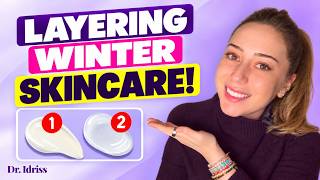
Dr. Shereene Idriss explains why winter dries out skin (low humidity and indoor heating strip water from your barrier) and how to layer products to fix it: hydrating mists, essences, serums, moisturizers, then rich creams or occlusives. Keep your treatments, just seal them in better.
Questions this video answers
January 4 (speaker states the Left Unread launch is on January 4th).
Lightweight hydrating mists → hydrating essences/toners → hydrating/targeted serums → moisturizers → richer creams or occlusives (e.g., Vaseline/Aquaphor).
Chapters
2026. Happy New Year. We are back in action. It is 11pm on January 1st. I need to pack because I have a flight to catch at 8am tomorrow. But I'm officially done leaving Europe, heading back to the US just to get back to life and to reality. But it's been very interesting because I have been in and out of the mountains for the past two weeks, and it is crazy how the climate affects your skin. So if your skin is feeling slightly dull, tight, suddenly reactive, the second winter hits, you're not imagining it. It is absolutely your skins. You with the climate, changing its needs, changing its wants, its desires. It's true. Now, a few weeks ago, we talked about building a foundational skincare routine based on your age, whether you're in your 20s, 30s, 40s, 50s, or beyond, all focused on skin longevity. Today, we're going to build on that foundation, but we're going to talk specifically about how to hydrate within a focused skincare routine. Because winter skin is not about doing more or doing something completely different, but it's about how to layer smarter on top of your foundation. So hit subscribe like like and feel free to comment below on your skincare resolution for the year. So, without further ado, why does winter need a different strategy? Well, it stems from the fact that the temperatures drop, the cold air is drier, and the indoor heating does not help. So the humidity comes down in the air surrounding us. And what happens then? Our skin loses water. And when it loses water, it becomes more inflamed, it becomes more prone to disruption. Our. It becomes just a complete mess. Now, the biggest mistake, though, that I've noticed from my patients is that they forget about their original skin's biggest issue and they throw it out the window and they just focus on layering in hydrating products, which is kind of right, but it's really wrong because they forget about their problems. And then what happens? Their melasma flares, their pigment gets worse, their redness goes unchecked, and they start now 10 steps behind. And so winter skincare is not about starting over or doing more, but it's about being smart in how you layer in hydrating products to support your skin and to support your skin's biggest issue. So it's about being smart strategically with hydrating products. And for the love of God, beef tallow is not necessarily a hydrating product. We need to reshift how we think about beef tallow and maybe leave it behind in 2025. But since we're talking about beef tallow, let's talk about history for a hot second. Do you guys even know the story and the origin of beef tallow? Because a lot of people do not. Humans have been fighting winter dryness long before hyaluronic acid or glycerin became trendy. And the chic thing to use. In fact, if you look at the indigenous Arctic communities, they were trying to survive the extreme cold and trying to make sure that their faces didn't fall off in the winter. And so what did they do? They got seal fat and popped it all over their face. And they used to use seal fat as a protective physical barrier on their faces to protect their skin from the extreme weather, from the harsh winds, the. From the cold. In other communities, that translated to beef tallow. And so these animal fats have been used for centuries as occlusives to protect our skin, as a physical barrier from the cold. And that is one of the reasons why I don't like to wash my face and strip the oils off my face in the morning. I just simply wash with water. I never use a cleanser in the morning, but I tend to be on the drier side. So that's a story for another day. So animal fats, let's say it had the right idea, they had the right concept behind the occlusion, but the reality is those fats were not. Are not up to the standard that we have today in 2026 when it comes to cosmetic stability, testing, preservation, formulation, etc. So it was the right principle. But today we have way better technologies and much safer outcomes. And not just that we can actually combine occlusives with humectants to make sure that we are holding and drawing the moisture in. But we can also comb it with other ingredients that are going to calm and soothe our skin in a way that beef tallow alone never will. Rule number one. When it comes to hydrating our skin for winter, we want to target our skin's biggest issue. That is rule number one. Number two. Number three. For me, my biggest issue has always been discoloration, and that's why I use the major fade solution system. If your issue is redness, you can use the left unread line, which is launching on January 4th. Now, I didn't want my first video of the year to be about this upcoming, upcoming launch, but I'm gonna slightly talk about it throughout the rest of the video, weaving it into hydrating your skincare routines. If you guys have questions, feel free to leave them below. But a lot of you guys have already asked me questions. On Instagram. So I'm going to try to figure out how to place this in the video without making this video about that. But hydration does not replace treatment, it only supports it. Okay, guys. So for those of you who asked though, can you incorporate major fade or left unread? If both concerns are prominent and the answer is absolutely yes. And I'll show you how at the end. But the five categories when it comes to hydration is very, very, very simple. When you start to think of it as getting dressed in the morning on a very cold day. When you get dressed in the morning and it's like but cold, freezing outside, you're going to start by layering in your thinnest layers like a camisole, followed by a thin long sleeve shirt, followed by a thicker sweater, followed by maybe a vest than your jacket. The same applies to your skin care products. There are, number one, lightweight mists, followed by hydrating essences and toners, followed by hydrating serums, followed by moisturizers, then richer creams or occlusives. And you do not need a product from every category. This is where you have to understand the role of each product in each category plus your skin's needs. But I hope this analogy has made layering in hydration feel less overwhelming. And I'm going to link products in the five different categories and give you guys options in the description below. So step one is a hydrating mist. And this is going to be the first step of your routine. We're going to use this on our skin like thermal water, like Evian, Vichy Avene, or you can do a DIY glycerin mist and this is going to be the first thing that you use. But a mist only works when you layer on top of it. Think of your lips. If you keep licking your lips, they get drier because you're putting water on top of your lips and the air is dry and it just evaporates and it's going to suck the water out and you're going to get drier and crackier and flakier. Same goes for your skin. So you never want to mist without layering something on top of it. Number two is our hydrating essence or toners. This is important that you guys focus on the word hydrating because not all essences and not all toners are hydrating. Some are exfoliating, some are doing other things. So I want to make sure that you guys are finding a hydrating essence or toner. I personally love the SK II Patera essence because this is Actually going to hold on to the water that you just added. And it really does help your products that follow work better. I think you can tap this onto your skin. You can just rub it on lightly. If you just splash it on, it might not necessarily be doing the full benefit for you. So just make sure that you are using it as a cushioning step in your skin, making it more receptive for treatments that are to come. Step number three is going to be a serum. Can you use just a hydrating glycerin based serum? Sure, absolutely. But you can also use a targeted serum that also hydrates. And that's why I love the Major Fade hyper serum, this guy right here, because it is a hydrating serum that also is going to target pigmentation and discoloration. So if that is your biggest issue, like it is mine, I love this serum because it has squalane and glycerin in addition to the pigment fighting actives. If redness is your biggest issue, I am launching a left unread red reducer serum on the fourth. This is a serum that helps to correct your redness and control your oil production, which can go out of whack when you are in a very dry climate. So this is more for the oilier people whose oil production is out of control in a dry climate. They're trying to control their oil production. The reducer serum is not going to necessarily be a hydrating serum serum like the hyper serum is. It's more of an oil control redness reducing serum. And it can help in drier climates when your oil control. When your oil production is out of whack. Step four is going to be your moisturizers. And this is the step that supports your skin barrier and improves comfort and tolerance, especially in the winter. And this is where you have options to mix and match. So in the morning you can use a very lightweight gel moisturizer like the Major Fade active seal followed by a richer sunscreen. And that is a lot for a lot of people, especially under makeup, and they're very happy. But if you need more, you can go for something richer in texture like a frosted thicker moisturizer like the left unread combat cream which I have been using for the past two weeks in the mountains instead of the active seal. And it has helped my skin hold on to hydration and stay more calm and controlled where I did not need to face based in the past two weeks. So in the winter it's okay to go richer. When the air is drier, it's okay to Go richer. But it's also important that you understand your skin's needs and your skin skin's type in order to ebb and flow with the climate changes. And step five is going to be a really, really rich cream or just a really thick occlusive layer like Vaseline Petrolatum Aquaphor. Think of it as icing on top of the cake if you will. But this is the step that seals everything else in and helps you prevent water loss while you sleep. One thing that I love to do when my skin barrier is completely inflamed is use diaper rash cream. Like triple paste, it has zinc oxide which acts more as an anti inflammatory. But if you are somebody who is prone to blemishes and breakouts and you're looking for something that can help more with bacteria control. The Left Unread Calm Back Cream is a really nice thick frosted moisturizer with zinc PCA in it that is calming and going to help as well. So you can use it on nights when you feel like you just need a little bit more cushion. You can add it as a final layer on top of your regular moisturizer or you can just use this as on top of a serum. So depending on your skin type and your environment, you can do all of the five steps like we talked about, or you can kind of tailor it to what you need. I have come up with this pyramid of hydration that I'm going to share over here. We'll link it below to Instagram and I might post it again on Instagram. You really have to think of your skin type in your environment. So that is how you think of hydrating and layering it in. And let's say you have discoloration and redness. For those of you guys who ask me, can you combine discoloration and redness in a routine? So I have the major fade line as well as the left unread line. The major fade targets brown pigment. The left unread targets redness. You can absolutely use them both together. I have been doing that for the past few weeks here in the mountains. And the way that I've done it is I have used the Hyper serum with the Calm back cream in the morning because I'm somebody who is not oily and it's not my biggest issue. And so I use the hyper serum of the combat cream in the morning because I wanted that thicker moisture layer on my skin. Now at night I would use the reducer serum on my nose because I was wearing a lot of the masks and I was getting a little bit clogged on my nose and my chin plus the active seal on my face and I have cushioned on top of that the Calm back cream to get that extra cushion and layer of hydration on top while calming any redness from the harsh cold winter mountain air. So that is everything. If you guys have left other questions feel free to leave them below. But winter skincare is not about going backwards. It's not about stopping everything. It is about supporting your barrier very intelligently and thinking about hydration very strategically. You want to layer it in around your foundation and not use it instead of your foundational products. And if you haven't watched my Skin Longevity foundation routine video yet I will link it below. Start there and then come back here. But in the meantime I hope you guys have a beautiful Saturday. We are launching left unread on January 4th and I will see you guys very, very soon. Have a great Saturday.
More from Shereene










3 Ways I Prevent Post-Menopause Skin Issues + What Really Helps Elasticity After 50