This Is Your Period & Skin Cycle in 10 Minutes – Dermatologist Breakdown | Dr. Shereene Idriss
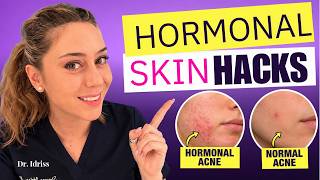
Dr. Shereene Idriss breaks down how your menstrual cycle drives skin changes across four phases. During your period, skin gets dull and dry, so skip retinoids and use barrier repair. The follicular phase is when rising estrogen makes skin glow and is the best time to start actives like vitamin C and retinoids.
Chapters
Welcome back, little nerds. It's Saturday morning, it's 10 AM, it's time for a new Pillow Talk. And in honor of International Women's Day coming up as well as Endometriosis Awareness Month, we are going to be talking about your period and your skin today and how your period affects your skin. And this topic is often overlooked or oversimplified. Now, for those of you new here, who the hell am I? My name is Dr. Shereene Idriss. I'm a board-certified dermatologist, also suffer from endometriosis and have gone through years of infertility in order to have my kids. I've had to go through IVF. What is endometriosis? Endometriosis is a condition that affects approximately 1 out of 10 women, and it is one of the most underdiagnosed conditions where women suffer in silence from extreme pelvic pain, extreme fatigue, uncontrollable painful periods, to infertility. And it is basically impossible to diagnose, although the Endometriosis Foundation of America has some exciting research surrounding this topic. So I'm going to link them below if you're looking for information for you, your loved ones, if you're looking for ways to help. It's a that I feel personally very passionate about. Without further ado, we all know that the week before our period, right, our skin starts to feel like it's falling apart. We get oily, we get breakouts, we get puffy, we feel like it is all sorts of out of whack. And everybody seems to talk about the luteal phase, but when I talk to patients in my practice, and I see patients every single week, it's mostly like, my skin is always out of control, it's never constantly good, because the luteal phase is just one phase, and your skin is in a constant cycle because guess what? Your period is in a constant cycle. So today we're going to talk about what happens in each phase, what's going on with your skin, what you could do to make your skin look its best, and what you could do to avoid causing a massive flare-up. At the end of the day, your skin is hormonally responsive, as you guys can tell, especially if you have a period. And even when you're going through menopause, your skin is responding to those hormonal shifts. So phase 1 of your cycle is between day 1 and day 5, and we're starting with our period. We're starting with our menstrual phase. This is the phase where we have uterine shedding, okay? And this is where the cycle begins. This is not going to be a pelvic OB-GYN course, but we understand what's going on down there. Our hormones in the forms of estrogen and progesterone are actually at their lowest. So this is why your energy is overall lower, your recovery system is lower, your body is making up for lost blood, and you're basically— your inflammatory system is elevated. So what are you going to see on your skin? You're going to have dull-looking skin, drier-looking skin. You're going to be more sensitive, more redness-prone. And if you think about low estrogen states and perimenopause or menopause, they're kind of linked to the time when you have your period actively. So what do you want to do? You want to focus on barrier repair, making sure that products have ceramides, cholesterols, free fatty acids like these ones. And I will link all these products below in order for each phase. You want to make sure that you're increasing the hydration in your skin, both with humectants, which can pull in water, like glycerin and urea, but also emollients that are going to help to soften and smooth in your skin, like squalane. And you want to use cleansers that are gentle. Sometimes during this phase, people feel the need to want to wash their face even though their skin is dry and they're not using the right cleansers, and they can overstrip their skin even more so, making their skin much more reactive for the next phase. One thing we do not want to do during this phase is start aggressive treatments because our skin is more sensitive, more redness-prone. We do not want to be over-exfoliating, we do not want to be over-cleansing, and we do not want to be starting a retinol when we are on our periods because it can actually make things worse and make the purge worse. We also, if we're thinking about in-office treatments, do not want to schedule something new like a brand new laser or a chemical peel or a laser that breaks your skin barrier because you're feeling dull. Now, Phase 2 goes between day 6 and day 13, and this is your follicular phase. This is really your glory days, okay? And they're short-lived, but they're your glory days. Your body is revving up to release an egg, and therefore your energy and resilience are steadily increasing, and your estrogen is steadily rising, and your skin is glowing. You have a boost in collagen production. Your skin looks more hydrated. You have enhancements in your skin barrier function. There is inflammation that was in your body that is now going down, and you're overall sleeping better, you're more energetic, and you're really getting revved up to get that egg out. So your progesterone— I'm like, I'm lisping today— but your progesterone is still low, so your breakouts are quieter, okay? And this is really your glory days. And if you think from an evolutionary standpoint, you and I, baby, are nothing but mammals, right? This is the phase where you're trying to be a peacock because you're running up for day 14, which is your day to procreate. It's really messed up, but that is how it is. And so this is the time when you want to schedule your treatments. If you're looking for in-office treatments, if you're looking for a laser, a chemical peel, a Fraxel, something that's going to break your skin barrier, this is a time when your skin is going to heal its best. This is the time when, if you're looking at skincare, you want to introduce actives you've never tried before because your skin is much more resilient and you want to try retinoids, vitamin C, exfoliating acids. This is your time to lean into it. And I will link products again below. Brightening agents, I love them. And I think because during your period you look so dull, but you're scared to introduce those actives, brightening agents like tranexamic acid, azelaic acid, this is the time to introduce them. One thing I would say is don't undertreat because of fear. I'm not telling you to go in for treatments and be like treatment-obsessed human beings, but if you're ever nervous out of fear, I wouldn't waste this period of your life, no pun intended, which is just like 6 to 7 days because you're fearful. I would actually utilize this time to test out treatments if you are curious. Phase 3 is a single day. It is the day that we are all meant to shine, or not. I never shined on day 14, but this is your ovulation stage where a baby is born. Well, not, not quite literally, but your egg is released and a baby can be made, and this is your peak fertility window. And many, many, many biological women look and feel their best around day 14 because they are in prime attract mate mode, okay? They are signaling reproductive viability. Yes, at the end of the day, we are all animals, okay? Mammals, animals, that's exactly what we are. So estrogen peaks, it is at our peak, allowing for our circulation to be at its best, to be at— to increase to its peak, to be at its highest level. Testosterone also starts to increase because now you need that testosterone to increase. And so you're going to notice your oil glands, sebaceous glands, their activity is going to rev up and start to get stimulated after this point. But day 14, you're a glow ball. You're glowing, you're peak radiance, you're plump, your blood circulation is higher, you're not feeling dull. Those of us who are naturally on the oilier side though, and this is why we cannot completely generalize, you may feel too oily and maybe you're getting more clogged. If you're on the drier side, you're like perfect around day 14. But again, we can't generalize, and that's why it really depends on your skin type. But this is an overall flow— again, no pun intended— of how things go throughout this month. So we want to maintain that plumpness, so we want to hydrate adequately. If we're very, very oily, we don't want things that are too heavy on our face because we know our sebaceous glands are going to start revving up. And if we're very dry, we can probably kind of stay within a gel moisturizer framework. We want to keep skincare consistent. We don't want to necessarily be jumping up and down, and we also want to be paying attention to early signs of congestion. And so if you're breakout-prone, this is where maybe you start to introduce a benzoyl peroxide active in the next phase, which we're going to get to in a second. But don't try to over-strip your skin, over-exfoliate, over-wash because you're getting a little bit oilier, because anytime you over-strip anything, your body then overcompensates and your body is naturally going into a higher mode. Which leads me into Phase 4, the luteal phase. The goal of this phase is really to prevent breakouts and calm inflammation. This is your PMS stage of life. Your estrogen is dropping, your progesterone is rising. You have to recognize that this is going to be responsible for increased oil production. Your pores are more congestion-prone. You have higher water retention, so you're probably looking a little bit puffier. You're getting a heightened inflammatory response, which is leading into your menstrual phase, and your skin turnover starts to slow down a tiny little bit. And that is why we get acne along our jawline, also known as hormonal acne. Even our dark spots start to look a little bit darker. We don't want to be picking because picking can lead to worsening of post-inflammatory hyperpigmentation, worsening of that discoloration, etc. We do not want to panic switch our skincare routine just because we start to notice a breakout. So we think we need more salicylic acid, more benzoyl peroxide. Hopefully you've started to slowly rev it in, but you don't need to go to extremes. And I think the goal with anything, if you're getting anything from any of my YouTubes, is consistency over intensity. When it comes to your skincare routine, when it comes to your retinol, when it comes to life. And you don't want to be going back and forth from extreme to extreme. Increasing exfoliation gently, maybe 2 to 3 times a week versus 1 time a week. A layer of sulfur can also help in the long run to stabilize your oil production. Staying consistent if you are on a retinoid is important because you don't want to get off it during this phase and then try to get on it when you're on your period. Behavioral perspective: minimizing salt. I am very guilty of loving salt, so I find this to be very difficult. But minimizing alcohol has been much easier. I try to drink once a month, if anything. As always, we want to support our skin barrier because when our skin barrier is not supported and we're going through this whole process, when things are more out of whack, things start to get worse. If over-the-counter treatments like sulfur, retinol, benzoyl peroxide, salicylic acid have not been helping, do not be scared to go to a local board-certified dermatologist or even an OB. Not all birth controls are created equal, and we can do a whole YouTube on the different types of birth control pills. I am not an OB-GYN, but I'm happy to dive into that world for you guys. And most of the time when my patients ask me, I will usually refer to an OB. But again, I'm happy to try to dive into that world to educate so we can learn together about the different types of birth control pills. But if you do not want to go on a birth control pill, like I didn't want to go on a birth control pill, spironolactone is a blood pressure medication that can also help with hormonal breakouts to minimize the breakouts along the jawline. And it can be very, very helpful as well. But if your blood pressure runs on the low side, you have to be careful with that. Plus there are other side effects that some people just don't necessarily want, like breast enlargements, and I have lived that experience as well, hence why I could not be on spironolactone. And so there is now a newer category of prescription topical medications like Winlevi. I'm not sponsored by any drug company, I don't work for any big pharma, so please do not think that I'm pushing meds, but I have seen beautiful results. Or even Dapsone when you are talking about specifically hormonal acne. And so there you have it. If you guys want me to go into a deeper dive on birth control pills, prescription medications, let me know. But your skin does change as your hormones change every single month. It's not just a menopause thing, a perimenopause thing, or a teenage thing. It is a life thing if you are a biological female especially. And so knowing how to approach your skin is very, very helpful so you know how to ebb and flow with the waves of life. Hope this video was helpful. I'm currently in my scrubs because I have a fat transfer upstairs. If you guys want a YouTube video on that, let me know. But I will see you guys next week. Have a beautiful Saturday.
More from Shereene










3 Ways I Prevent Post-Menopause Skin Issues + What Really Helps Elasticity After 50