Sid Yadav: Building A $200,000,000 Company | 272
Sid Yadav started blogging about tech at 13 in New Zealand, cold-emailed his way to a J-1 visa and a US engineering job, then became head of product at Teachable before co-founding Circle, a creator platform that raised at a $200 million valuation. He credits consistency, disciplined creation, and precise outreach for his success.
Chapters
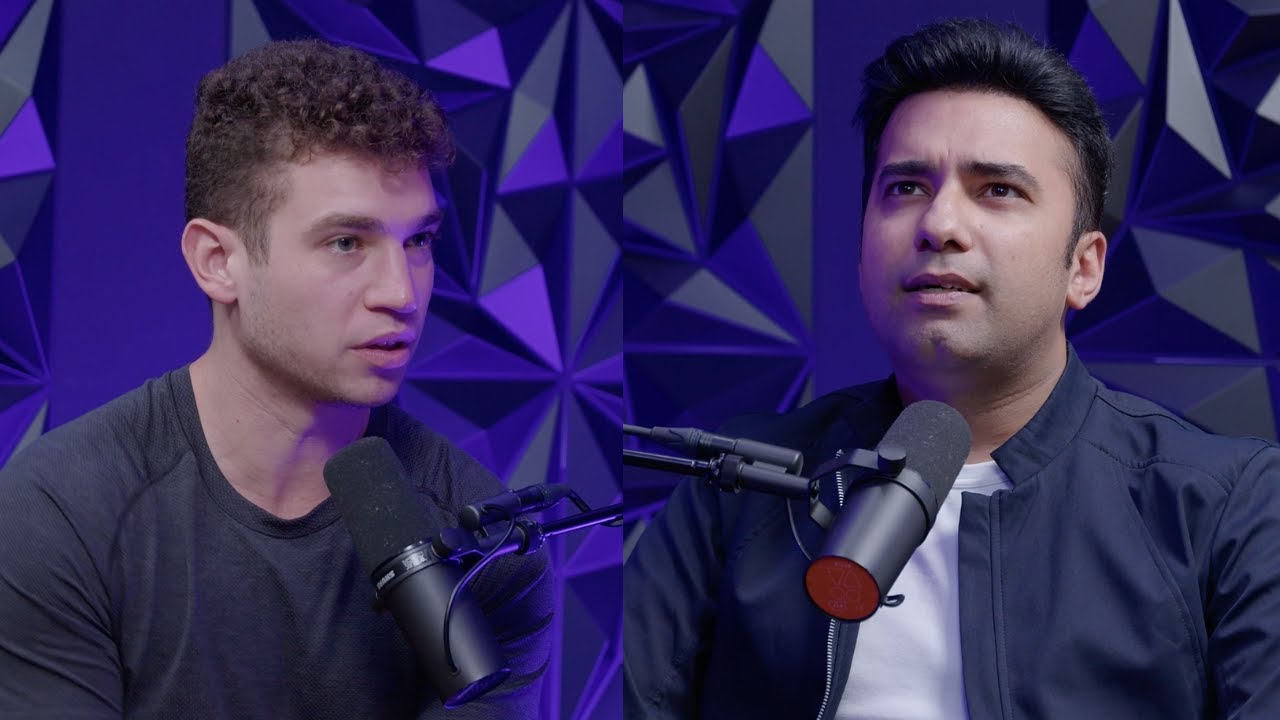
Sid Yadav, thank you so much for joining me here today. I'm really excited to talk to you. Somebody who— you've built a platform that has been used by a bunch of creators in our world, and I'm really grateful to not only break down this platform today for everyone, but also break down you and your story. So thank you for joining me.
Yeah, love the podcast, man. Thanks for having me on. I mean, you've had most of our— a lot of our main customers already, so it feels like I'm right at home.
Yeah. So let's start. We'll get into Circle and that journey, but first I want to talk about your early days as a writer, and particularly your tech blogs when you were growing up. I also had a blog when I was 13 years old, so we have that in common. And I'd love for you to break down why exactly you were interested in writing as the medium for you communicating with people, and also why technology interested you at such a young age.
Yeah, so, um, it actually goes kind of way back. So I immigrated twice I've immigrated twice in my life. So grew up in India. At age 10, my dad actually immigrated to New Zealand. He literally just went to an internet cafe, applied for a green card, New Zealand green card, got accepted, and we showed up. That too, not just New Zealand, but the southernmost point, tip of New Zealand, closest to Antarctica. So but in New Zealand, it's an amazing country, beautiful, scenic, et cetera. I was always into just computers. Ever since I got my— I think it was a Windows 98. I just loved it. We got it at a garage sale, like $5. And so started with, I think, like AngelFire, GeoCities. You had those website builders back then. And slowly, I think it was 2004 where I discovered blogging, like way, way early. Like the concept of an RSS feed, I was like, oh, that's pretty cool. I can write stuff. I can have a journal. And so I just started writing. I never revealed my age, obviously, as— I don't know what your situation was at age 13, but for me it was like, yeah, I got to put up a show. I'm no kid. So I would just write about startups. I would just get home from school, do like 5 blog posts a day. And I would write about startups that other people weren't writing about. So back then it was like TechCrunch, ReadWriteWeb, Mashable. These are some of the bigger blogs. I was actually Mashable's also. First writer, which is another story. But yeah, I would just get home from school. I'd be like, all right, what are the products that launched today? And back then it was insane, but it was like, oh, there's MySpace, Facebook, oh, YouTube launched. It was like every week there's something. So just started writing and grew a tiny following at first, but then that kept getting bigger and bigger, then started to get ad revenue. So like at age 15, when you have like PayPal payments coming in, a few K here, here and there. Like, it's like, it's insane. So that's, yeah, that's how I got my start.
How do you get people to the website?
Um, so initially it was just a lot of just kind of, uh, we called it, uh, was it, it's kind of like retweeting, but you're like reblogging other blogs. They'd be like, oh, Michael Arrington from TechCrunch just wrote about this, like, and quote, quote Michael Arrington and just like, here's my thoughts or whatever. And then a lot of times they would link back to you. Like they would notice that you did that and they would throw it back to you. They also had the— blogs also had the concept of a blog roll way back in the day, kind of like it's similar to Substack recommendations today, right? And so you'd have a blog roll, and the moment I got on someone's blog roll, I was like, holy shit, that person's reading me. So yeah, it was like gradual. You just write about stuff, you try to mention people who might notice you, you send them your article, and then sometimes they just pick up. My biggest post back in the day was I wrote about the iPhone, like, right when it came out, and I offered, like, a giveaway because I had, like, $1,000 in my bank account. I was like, oh, I could afford, like, $700 to do a giveaway. And so when you looked up, like, iPhone apps, iPhone app giveaway, like, way back in 2006, like, my blog was the first.
Oh my God.
And so that went, like, crazy. I was like, oh shit, I should do more giveaways.
Like MrBeast found out much, much later. Yeah, I totally get that concept.
Yeah.
It's funny how the internet kind of repeats itself. Like you mentioned Substack and I just launched my Substack and I'm like, oh wait, this is just like the Google Reader from back in the day. And like, yeah, I was like, wait, we're just recreating old things in new ways.
Same concepts, uh, except what's different is the distribution channel, right? So maybe back then when we were blogging in 2004, 2005, we didn't take like newsletters seriously. It's like, who wants a newsletter? Like I want to blog with an RSS feed, you know?
Yeah.
And, um, so that's what you notice. It's like, oh no, like ideas that, that had a lot of merit can just resurface and change one, one thing about it, like the distribution channel, give it a cool name. And all of a sudden, like everyone has a Substack.
That's true. So take me back to interviewing the founders of YouTube and some of the most notable people from that era. Yeah.
So I think my, my biggest advantage back then was like, I would write about products before anyone would write about them, right? So I literally discovered YouTube because they were doing a giveaway. I remember they were giving away an iPod Mini every single day for 30 days.
What year is this around?
2005. Wow. So, and this is like, no one knew about YouTube, right? But I was like, so I signed up for the giveaway. I was like, dude, I gotta win an iPod Mini. So I'd do that like every single day. I would like watch a video, rate it, and submit. My email. And over time I was like, oh, this is actually kind of a cool idea. Like, I'm watching all these videos without downloading MOV files and stuff, or WMV files. I was like, that's pretty cool. So I wrote about them. And then literally it was like 2 months after, everyone knew about YouTube. So at my school, everyone is using proxies and stuff to access YouTube. It was insane back then, just how, the right product, right time, could just take off.
What did the people around you say to you about the things you were doing online? If you're sharing, like, what did your parents say? What did your friends say? You were blogging and, and discussing the most innovative products and services online that existed, but did people recognize how early you were, or how prescient the things that you were discussing would become?
Yeah, it's so funny. I don't think anyone understood what I was doing. They just knew, like, I was semi-internet famous, right? Or, like, people read my stuff. So I think my dad had a vague sense of, OK, cool, he writes about technology, right? That's kind of cool. He's not just spending 8 hours after school gaming or whatever, right? But yeah, most people didn't know. But what's funny is I built a proxy for my school to let them get around websites. And I hosted it on my blog. So half my school would go to my blog to access the proxy to get through to other websites and stuff. So they knew about, like, my blog was called Rev2, so they were like, "Oh, Rev2, like, that's the way to access the internet." So, like, there was a massive disconnect back then, and now I think when I meet those same people, like, even my parents or friends, like, they totally get it. Like, it's like, "Oh, now we understand what you were doing back then." Wow, that's crazy.
And if you look at, let's— there's a lot of, like, 15 to 20-year-old people who listen to this podcast, and I'm curious where you think a similar opportunity is for those people who— let's say we were starting blogs back in the day— what would you be doing today if you were 15 to 20 years old?
Yeah, that's a good question, actually. So I think what's changed since then is like the barrier to creation has gone down a ton. For like, for me to get the blog up, I had to like learn about WordPress, learn about PHP. Actually, that's how I got into coding. I was like, I was managing a WordPress blog and I needed like the sidebar to look a certain way. So I'd like hack around it. So for like back then, the barrier to entry was insanely high, but it was also fun. Like whenever you figured something out, like you could do something that others weren't even looking at or thinking about. I think these days it's a lot simpler, but also kind of noisier because a lot of people can technically do, like, you know, technically start a TikTok or start a podcast, start a newsletter. I think These days, actually, we were talking about before, the critical thing that would make someone stand out is just to show up and to have the discipline. So whatever it is, it could be building apps, starting a TikTok, writing a newsletter, starting a community, whatever that is. I think the key differentiator for anyone these days is not so much the form or the tech. It's just getting into the ritual of creating and then sustaining that. So like we're talking about how you were, you know, over like 200 episodes, you talk about it a bunch. Like, I think that's actually what I'd focus on more than the specific thing, if that makes sense.
Yeah. And for you, why was it writing that called to you so deeply? And that was the thing that you wanted to do and you were naturally called to do?
Yeah, that's a good question. So I was always a, like, I was always like a writer in school. Like I would, you know, like writing short stories and all that stuff. I think what it probably was is when I started blogging, I actually had readers, right? Someone would leave a comment, maybe it's like 2 comments or whatever, but people would notice and you would start a dialogue with people because you'd see the same commenters, right? And so I always had the sense of, OK, I have an audience that's building up, and I know what my audience likes or doesn't like. And just that human connection, right? A kid in New Zealand, you know, south of New Zealand, like back then, um, it like— I'm sure it's gotten a lot better since, but like back then, like the state of technology in New Zealand was not very advanced, right? But for someone, uh, like me in that kind of a background, just to reach out to people like across continents and just to really like find my community, that's what called out. And then writing was just the way to do it back then because, you know, there actually weren't like, you know, YouTube wasn't as popular, and other mediums hadn't taken off so much.
Yeah, so you had this idea, you were in New Zealand and you were like, I'm going to go to America. Like, when I was doing research for this conversation, I found out that you had an idea in your head of what the United States represented.
Yeah.
What made you so attracted to the United States, and do you think that sentiment still exists for people living around the world of the United States being the place to go for technology advancement in the future?
Yeah, so a lot of it was through my exposure to the online world back then, right? So, you know, I would read up a ton about like Google, like what are Google's founders up to? Like, oh, so they all went to Stanford, like YouTube, also Stanford, like so reading about it and you just see the— obviously the technology made an impact in your life, right? Like your family and friends were using all of these products, right? And so back then, like, America was the name of the game. It was like every single thing, every single product. Like, I also remember just following like Obama's rise to presidency. Like, I didn't know anything that was going on in like New Zealand politics. I knew everything about American politics because I still kind of—
to this day, you see like British podcasters talk about the United States election and you see people all in Europe do the same thing. So it is interesting from that perspective.
Yeah, yeah, it's still there. Perhaps what's changed is back then it was like a monopoly, right? It was like you had to be in the US if you were in tech to be doing cool stuff. Like if I tried to raise like a seed round in New Zealand, like back in— I immigrated in 2011, but if I tried to do anything in tech, like it just wouldn't work. Like there's no access back then, right? There wasn't an economy of like angel investors and entrepreneurs and all of that stuff. So perhaps what's changed since is, you know, there has been that sort of semi-level playing field because it's almost like a trend that I was early to, right? Because I was actually doing it online. But for me, the perception was, no, to be legit, I have to, I have to immigrate. Like, that's where all the cool stuff is happening. And also just like when you read about America's principles and stuff, like It's just really cool, like a country that's built on freedom, entrepreneurship, capitalism. Not a lot of countries have that embedded in their DNA, but America certainly does. And I remember I once asked my dad, because when you grow up in Indian households, everyone expects you to be a doctor. So I asked my dad just offhandedly, I was like, what is Bill Gates' salary? And so we did a search and he looked it up and it's like billions of dollars. I was like, so I don't get it. Why does anyone want to be a doctor? Yeah. So America just has like, you know, shiny examples of products, entrepreneurs, the best sort of mindset ingrained. But I guess over time things have kind of equalized a little bit more, and that's probably a good thing, you know, net-net.
And what's it like for you when you take that jump to America? How old are you and what are some of the formative experiences that happen when you— I think you visited America for 3 weeks and then you randomly got a job that changed your life in that time.
Yeah. Yeah. So I was like 3 years into my CS degree in New Zealand. And so the plan was, you know, I'll get my bachelor's and then I might move to America for like a master's or try to get a job at a company that would sponsor an H-1B, like, work visa. So back then I was like, well, I have a 3-month summer break. I'm not doing anything anyway. Why not? Visit New York. I had a cousin who went to NYU, and he was like, yeah, my roommate's out in LA, you can just stay over for a month. I was like, oh cool, I'll do that. So I spent an entire month just like staying with him and just walking around New York City. Just every single day I'd be like, oh, let's go to Brooklyn Bridge, you know, let's go to downtown. So 3 weeks after that, actually 4 weeks after that, like literally the day before I was supposed to go back, right? He's like, hey, I'm actually interning for a startup, you know, like typical NYU finance kid interning, wants to provide value. He told the founders, like, I have a cousin who's big into tech and great engineer or whatever. So they called me in for an interview. This is like in Times Square as well, like very cinematic, right? The Times Square interview the day before I'm supposed to go back. My cousin was kind of a bit of a hustler, so I was like, I don't know if this is going to pan out, like, I don't know. So I walk in, have the interview, and they're like, oh, we'd love for you to start. I hadn't told them, by the way, I'm about to go back to New Zealand. And so they're like, yeah, we want you to start. Like, when can you start? I was like, well, actually, I'm wrapping up my CS degree in New Zealand, but if I can go wrap that up, I have like one semester remaining, I can then come back and work for you guys for here. Is it okay if I just work remotely for 6 months? That's it. And they're like, yeah, that works. I didn't talk to them about visa or anything. I was like, just know I can come back. Just give me 6 months remote. So I did that 6 months work remotely. My dad actually discovered— my dad's like a visa genius.
Well, he's immigrated twice.
Yeah, he knows like the ins and outs. So he actually discovered that there's a visa called the J-1 visa. Which lets anyone in— I think it's like Australia, New Zealand, Canada, US— anyone who's, I think, under 30 can go over to any one of those countries, live and work there for a year, but then they have to go back. And so I was like, oh yeah, that's way easier than convincing these guys to sponsor my H-1B, which is a long process and stuff. So I got the J-1 visa, and I just like accepted it. It was like, yeah, you can go over to the States, work for a year, you then have to come back. Basically, what I told the guys panned out. It was a very early startup, so I was like their first engineer, essentially. So I spent 6 months kind of working remotely, then they called me over. So basically, I was in New York for a year. And so I had that deadline, right? And this is another insane story, but actually, 9 months into that is when I met my wife, who's an American citizen.
Yeah, wow, that's crazy. And so what were some of the surprises you found from being in the United States that you didn't expect when you were living in New Zealand?
Yeah, so I think a lot of it was just as I expected. New Zealand felt very foreign to me because I was very immersed in this online world, but my physical surroundings were not like that. My friends were into water skiing and snowboarding and all that kind of stuff. So in a funny way, like the US, when I got plugged into the tech scenes, I would go to like every single meetup, you know, like just I was out and about in New York City, like everyone felt like super normal to me. So it's like, yeah, like I know these people because I've been interacting with them like online. So in a funny way, it wasn't that different. But the one thing that I did notice is like everyone was willing to like just talk to you no matter what their credentials were. So I'd written about a bunch of these guys that were now living in New York, like, during my blogging days, so I would just ping them for like, "Hey, wanna meet up for a coffee?" or what have you, and just everyone was down, like, and I didn't expect that aspect, so I thought, you know, move over to the States and then I'm gonna have to build up, like, a bit of a career before I can reach out to certain folks. And then the funny thing there, by the way, is like, no one knew my age, right? So whenever I met them, I was like, "Oh, remember me?" So I was actually 16 back then.
That happened to me as well. That's hilarious. So like, what would you say is the best way for somebody to get your attention or to grab coffee with you? Like, how should somebody who's, I don't know, in college or about to graduate, they look at Circle, they look at everything you're doing, they look at your career and they're like, all right, this guy Sid, he's gotta figure out, I wanna learn from him. What's the best way to approach you? What should they say? How should they do it? Because I think it could be helpful for somebody listening who's early stage.
And I can just go into how I did it, which is maybe just a broader way to think about it. So what I learned is I would send so many cold emails, right? So even before I got that job at— what is it called— Whispered, I would— in my blogging days, I learned how to send good cold emails. What I discovered is instead of writing 10 paragraphs about yourself, you have to be very precise in like 2 or 3 data points that you want to communicate and then maybe a question, right? So for me, what was very important to me. So for example, when I later in my career, when I first stepped into like a head of product role, I tried to meet as many head of products as possible. What was important to me is like to communicate to someone that like I'm in the in-group, that I like I'm at their level of knowing stuff. So I would look up like, you know, someone's background. So it's like, okay, this person's been like the product manager at Amazon and then, you know, worked at Facebook, blah, blah, blah. So I would kind of like really stalk them and get to know them. I was like, okay, what's the one thing that they would kind of find interesting or be inclined to respond, which they don't hear from other people because a lot of cold emails are so generic, right? And so I would find like that one or two paragraphs that really Tried to make me relate to who they are and vice versa, and then end it with, "It would mean a lot to me if we could just— if I could just have like 30 minutes of your time," etc., right? "Whenever you want." I was always like, you know, "I'll make it work, like, don't worry about the calendar," etc. So make it like as easy as possible for them.
Are there any notable examples of people saying yes to that that surprised you, or that you are surprised to this day that that person responded to you?
Yeah, so a lot of this was actually during my blogging days. You spoke about it. So like the YouTube founders, founders of— founder of Box, Wix, Weebly, a lot of that like 2007 era. Yeah. You know, I'd do the same thing with those guys, right, which is finding like 1 or 2 data points so they could tell that I'd actually use their product, which is very meaningful to an entrepreneur if you're someone reaches out like, hey, I have some feedback, or like, why do you do XYZ? So I'd use their product and I'd send them feedback and say, hey, would you be up for me writing about you? And by the way, my format back then was like, I would do like a 2,000-word, like, sort of exposé on like the entire product. So like every aspect of the product I'd like kind of break down. And so I'd kind of hint to them that like, you know, I know my shit, like I could really dig in if you want. And then this could serve as a piece to you to reach out to maybe bigger outlets like TechCrunch, right? So yeah, the founders of YouTube, uh, Box, Weebly, all of these guys, a lot of them actually weren't that famous too back then, but now billions later on, it's like, oh shit, yeah, I remember talking to them in like 2006.
I think you raised such an important point, which is that people who create stuff really care about their creations. It doesn't matter if it's a musician, it doesn't matter if it's an entrepreneur, it doesn't matter if someone has a podcast, right? Like They really, they're putting their time and energy into creating this thing, and they constantly want to see how does the market, how do people actually consume it, how does it land on them. And so it's such a good point to like do breakdowns or to create something from someone else's creation that informs their creation. It's a good way to get it.
The greatest gift you can give to anyone is your like precise attention.
Yeah.
Right? Whenever I heard that, when I heard that, I was like, Yes, like that's what it's about, like attention. So like everyone wants to be noticed, right? And I think even like guys like Elon Musk, like he wants to be noticed. So like especially when you sort of get further ahead in your career, like you're doing pretty incredible things. You're not even sure if anyone's noticing, right? So I think everyone's fundamentally kind of insecure, wants that validation. So it doesn't matter like who you are in your stature, but if you can give that to someone, I think anyone would find that sort of worthy to at least look at, right? What a lot of people get wrong when they do cold outreach or reach out to folks is they want to get, right? It's like, I need this from them. They don't think about, well, what am I giving to that person, which is interesting. So for example, if you're a 16-year-old and you're meeting someone, like a great entrepreneur who's in their 30s and stuff, What that person probably wants from you is like, oh, I'm meeting like a young person who's probably like ahead of the game. Like he probably knows like where things are headed. So I want that in, right? I want to be like with the in crowd, with the kids. So like that's what you have to offer to them. You just have to realize that, position yourself that way, and then you can go in for the one ask. And it doesn't have to be asked like in the moment. You can always just, you know, reach back out to them at the right time and be like, hey, 'Would you mind doing XYZ?' At what point in your career did you feel as if you were the least seen in what you were doing? Yeah, I think it's probably like in the early days of any startup, right? I always feel like the earliest days of any company are like the, the most like harrowing, stressful, fun, etc. Like everything is like turned up a notch, so For me, one of my first jobs, or my second job after immigrating to the US, was at a company called Teachable. I'm sure some folks might have heard of it. It's like a Shopify for online courses.
You could check out my interview with Ankur, the founder of that.
Yeah, so Ankur is the one who hired me at Teachable. So back then, in that first year, we were doing— an incredible amount of work in terms of like really trying to figure out like what are all these course creators not getting on platforms like Coursera, Udemy, you know, like your course marketplaces that we could offer. So we built like a Udemy importer, which got us into trouble. We would do growth hacks to reach out to as many YouTubers as possible and get them to create an online course. And so like that first year at Teachable also eventually at Circle, the startup I currently run. You're doing all this incredible stuff because you're just trying to break through and just find something that can help you get to the next level of product-market fit. And no one's noticing. No one cares. And then funnily enough, it's like those are the stories you speak about later on. But back then, it's like, yeah, you didn't mean anything to anyone. You were just trying to figure it out yourself.
Were you involved in Teachable when it was called Fedora?
Yeah, that's right.
Back in that— that far back?
Yeah, yeah. So the story of Teachable, I'm sure Ankur would have talked about it, is the first year I think he built the product himself in PHP, and the whole thing was like a giant like FTP server in which you would drag like PHP files. So there was no like Git repository, nothing. He's just like shipping.— but he has this incredible sort of, I think, understanding of like, you know, growth hacking, just really trying to get something off the ground. So he was an instructor on Udemy, he knew a bunch of people he could attract to build their own website, and the big pitch was, hey, instead of giving Udemy some insane percent as a fee, why don't you just let me host your course and you get to keep most of the money, right? So at Teachable, he basically built that initial product, but he knew it was like just crappy code. So he raised a seed round, hired myself and two other engineers, and so we were then rebuilding everything he'd built in somewhat less shittier code, in hindsight, in Ruby on Rails. So I think we were probably at like $2,000 or $3,000 in MRR. There's no growth, like there's no like broader sort of vision back then. It was just like, oh, this is a cool thing that some people may use and pay us for.
I just want to stop you for one second. You were there when something that I think was reportedly sold for over $250 million, was making $2,000 or $3,000 a month.
Yeah.
And like, you watch that whole journey unfold. What does that look like in— now with the added perspective of how far it went and how— what you saw in the early days? Like, what does that inform, and what could you tell us about like seeing that whole journey unfold?
Yeah, so when I, um, chose to join Teachable, I actually had other job offers at like Series A+ level companies, like established companies with raised rounds. I think Teachable had just closed their pre-seed, but like, um, back then it was called Fedora. No one knew about it. Um, so what I, what I was actually sold on initially was like, I met Ankur and I met two other engineers. So they had no process. It was just like, like five of us in a room talking for 3 hours. That was my interview process. And it just felt like a conversation, right? So after, after that interview ended, um, I was like, Wow, I just want to hang out with these guys. Maybe if I don't get the job, maybe I could ping them later on for a coffee or something, right? Or to grab a beer. And so what really stood out to me back then is these are probably some of the smartest people I've met in my time so far in New York. So I'm interviewing at all these companies. I'm speaking to recruiters. I'm speaking to senior engineers. But to meet an early team that just like, you know, sort of very open-minded, curious, like anything's possible. Also work, like, I think it was like 7 PM when our interview ended. So like, it was like just 4 hours of their day was like on it, spent on interviewing me. And so I was like, okay, that's the kind of group of people I want to work on. Back then I wasn't thinking so much about like, you know, the creator economy or like, you know, this thing is going to sell for a lot of money or whatever. It was just like, I like these people a lot, I want to work with them, and then I realized, what's the downside? Like, if I join this startup and it fails, in a year I can go work for, you know, MakeSpace or some other company that I was interviewing for back then. Like, there's literally no downside, but the upside is if I join and this thing takes off, for me back then it was like— I told Ankur this— I'm down to like start as a designer, engineer, like I'll do whatever it takes., but I want to start my own company someday. For that, I need to know and learn about product management. And so he was like, yeah, well, if you crush it as an engineer and designer and put in the work, I'll figure out a path for you to be in a product role, and then happy to invest in your next company. I was like, OK, cool, that sounds like a good deal. That's exactly what happened, by the way.
Yeah, I was curious about how you took it. You were clearly very entrepreneurial as a child. Where you're starting blogs and you are— I think you started an app at one point as well.
Yeah.
And so it's like you had this entrepreneurial itch inside of you and then you had, you know, these great opportunities to work for other people. Was that difficult for you to forego the entrepreneurialness inside of you to work for other people?
Yeah, that was actually something I thought about because I had had exposure to like insane successes at a very young age. —so like I knew what like good or success looks like.
Because of the blog and because of covering them. Yeah, yeah, yeah.
So I knew these— like I talked to these founders, I'd written about startups, so like I wrote about like, you know, Facebook's Series A round led by Accel or whatever, like— so I'd watched these companies grow, and for me it was like, basically the shift happened when I stepped into the engineering role, right? So like I got my CS degree, I actually became an engineer, and I built my own apps, and I was like, okay, like my blogging background doesn't actually matter, like as an engineer, like no one's looking at the articles that I wrote in 2006, like what people care about are the apps that I'm building, the code that I'm shipping, and so on, right? So for me, I just had to be very humble and say like, no, I'm like, I'm actually not a good engineer right now, like I want to learn from better engineers, I want to— but that said, I want to do it in an early startup environment because I know where that could go if this thing takes off, right? So for, for a few years, I was like, I have no goals around this. Like, it's just I want to be a part of an early-stage startup with people that I like working with. I'll do my best. I'll level up as a designer engineer. I probably don't want to do this for too long because I want to start my own company and so on. But in the meantime, like, I'll learn as much as possible.
And, you know, when you're talking, I hear so much of Vitalik Buterin as well. I don't know if you've thought about this comparison to yourself, but somebody who started being a Bitcoin magazine writer, then also learns how to code and then fuses them together to be able to create software that impacts, I don't know, eh, how many people, right? An absurd number of people. And so for you, like you also started as a writer, also learned how to code, and now you're fusing both of them to be able to help people at scale. And I think there's really something to that, that comparison of coding and writing and being able to do both. Do you see that as well?
Yeah, I actually think if you look at most successful people, they're usually synthesizing multiple skill sets that they have, right? Like, so if you look at Elon, he's synthesizing like his interest in physics with his curiosity, with his like engineering, like, you know, from the time from the days of like PayPal and all that. And I think that's what entrepreneurs need to do, right? Because when you start a company, like, everything is on you, right? Like, unless and until you raise some cash, even then everything's on you. But like, when you're like day one, you're starting a company, like, you have to do everything. So the differentiator for someone like me— again, I wasn't the best engineer— is like, but I could actually write, I could design, I could build an app like end-to-end. Then eventually I got better at selling my ideas and talking to customers and all that. I look at it as if you're a generalist type of personality, which I am, you're just picking up these skill sets. When you show up to the next thing, you're bringing with you that toolbox, which other engineers may have no interest in writing, may not care that much about what the app actually is. They just want to do their work in TypeScript or whatever.. And for me, it was like, no, like what the idea is matters and where this is going matters. And so it's really about fusing a bunch of things. And then in a really funny way, if you think about like Circle, we have like this all-in-one kind of pitch, right? We want to be the all-in-one community platform for creators and brands. It's the same thing. We're trying to synthesize like, you know, discussion, like posts and comments with events, we built our own live streaming product, we built our own payments infrastructure. So it's kind of the same thing, you're just putting a bunch of things together and that's your value add. So you don't have to be the best at any one thing, you can just, you can combine a bunch of things and then really simplify it for people.
Yeah, it's funny because I see Circle so much after talking to you right now, it's like, it's a reflection of you in a way. Yeah. As somebody who pulls from so many different areas and can help so many different people because you fuse all those different aspects of yourself to create something that only you yourself can create. So like, take me through the journey of building Circle. You started that, I believe, in January 2020. Yeah. And now it's 2 and a half years later. How do you reflect on the past? I don't know, 20 months. Yeah.
So the way Circle came about, I was 5 years into Teachable. I was promoted to head of product. So I ran a product team for the last 2 years. So literally everything I'd anticipated actually worked out. And the company had grown from $0 to $20 million ARR when I left. $20 million annual recurring revenue? Yeah. Wow. And from basically 3 or 4 to like 100 employees. So I was eventually managing not even engineers. I was managing like— and people that I hired— like 5 product managers, a design team of 4, a head of design, and I was an executive in the company, right? The thing that I actually fell in love with throughout the Teachable journey, which is actually a discovery for me— again, I didn't join because of this reason— was the creator economy and the idea of like serving creators who have a vision for themselves. So they have this need and desire to kind of express themselves, be an expert at something, make a living from it. And if your product can help them do that. I genuinely think it's like the best reward for any entrepreneur, as opposed to— and not trying to put them down— but like enterprise companies or like mass-scale consumer companies, because you're basically changing people's lives. And like at Teachable, we have like a Friday office hour where customers in New York City could rock up, and I would often just be like drinking beers with them and helping them fix bugs. And in the meantime, talking to them about like, oh, so what is your business? Like, what do you do? And learning about all these very interesting niches out there and these ecosystems. So the way Circle came about is after that experience, I knew that I wanted to build a company in this, in this space and serve creators. Like, I kind of see that as my life's mission is to serve creators. And basically I grouped with two of my best friends who are now co-founders. So one of them also had a journey like me at Teachable. He was the VP of marketing and growth. Also started about when I did, a couple months after I did. And the other I built apps with before I moved to the US. His name's Rudy. We worked together in Australia. And him and I are kind of like product partners or soulmates. Like, we really can like spend hours like deconstructing an entire product. And so with Andy, I had like— he had this expertise in like, you know, sales and marketing and all this stuff that I'm not the best at. And with Rudy, it's more just jamming together on product ideas. And he's also designer engineer, so make things come to life. So what's cool is Rudy actually had worked for Teachable and then had become a consultant for 30 course creators. Wow. So he had the insider's view of what a creator was thinking about or needed from like a stack perspective, from their strategy perspective, etc. And then from Teachable, I had the sort of like the product perception of like what we could provide or what was technically possible or how you scale, build and scale a product. So we basically grouped together just casually. So I was consulting for another creator startup back then, Gumroad, 3 days a week. So I was coding, I was designing features, etc. And then for the remaining 2 days, I was essentially just brainstorming with these guys, primarily back then it was Rudy, on just ideas we could build in the creator ecosystem. So we would get on like a 12-hour Zoom call. A 12-hour Zoom call? Yeah, yeah. Just start like a Thursday with like 'Alright, what are we gonna dissect today?' Did you know it was gonna be 12 hours when you started? No, no, it's just like, just, you enjoy talking, complete jam sessions, flow, getting excited, hyping ourselves up, then talking ourselves out of it. So we did that for like so many different ideas. It's so funny, like ideas we like, we wouldn't have any expertise in building, but we were just fascinated, right? It's like, okay, let's, let's like, today let's spend the day dissecting like the the payments ecosystem for creators. So we got like super into like fintech and loans and stuff. Today, let's dissect like educating creators. So we basically have these like insane jam sessions, super fun. So a lot of them would just like, you know, we'd get excited and then we're like, ah, that doesn't work because blah, blah, blah. And then over a bunch of conversations, we started developing a criteria of what a good idea could look like. So we got very honest with ourselves, like, yeah, we can't do content like we can't do fintech, like we're not finance people, but what we can do is like a very well-designed product, like something where we have the creator's perception or creator's view when we think of a product. So like we're not just looking at it as engineers, we're looking at it as they're looking at it. So what is it that we could help them with using our skill sets? And then I realized, well, with Andy, like he knows how to grow like a SaaS company. So like He's got SaaS down. So I was like, okay, it's probably a SaaS company serving creators. And so we would then have these conversations with actually a bunch of your podcast guests. So we spoke to Tiago back then, spoke to David Perel. Tiago Forte. Tiago Forte, building Second Brain. And so we would hop on a call and be like, hey, Tiago, just walk us through your stack. Walk us through your business. What are you struggling with? And just open-ended, right? We're just hunting for ideas.
And the reason why he was down to come on that call was because you had the name recognition of Teachable, and he used to—
he was a Teachable customer. So we knew, um, we'd actually talked, um, when he was a Teachable customer, uh, and, um, after I left Teachable, I was like, hey, I'm working on ideas, would you be open just to like to talk? I just want to get to know your business, so because I'm looking to start a new company. And, um, so he's very kind, uh, and he was like, and he's like, yeah, let me tell you about like how much I hate Discourse. Which is a community platform. And so he would like screen share, like walk me through. Like one day the server went down and I wasn't able to put it back up. I was like, yeah, that kind of, that sucks. And I was like, why do you use Slack? Why do you use this? So over a bunch of these conversations, what kept coming up again and again was like community. Like a lot of the people he spoke to are like, yeah, community is like really important to me. Like I'm trying to build up my own community. A lot of them were course creators, so the community was actually like a funnel for their online courses. A lot of them were into coaching people or masterminds, et cetera. And so it all sounded great in the abstract. I was like, oh, community, yeah, community is where it's at. But when you get down to, what are you using to make this happen? It's like, I found this one Git repo that plugs into Slack and makes me put together a landing page that that put someone into a Slack channel. I was like, whoa, that's super complicated. And so over time, I was like, yeah, could we just build a brand new community platform using first principles, the technology of today? So forget forums exist, forget Slack exists. What would the platform of today look like? And so throughout those jam sessions, we got into, yeah, we probably need to have events as a pillar stone. A lot of these people are now— sort of connecting with their members, not just on like async discussions, but through like Zoom calls and stuff. Probably needs payments. And we were also like, yeah, probably needs courses because a course is essentially like a live training session with a content repository.
All the breakdowns you were doing in those 12-hour sessions were then coming back into the forefront just a little bit later.
It's like, yeah, yeah, it's like you would get excited about an idea and you would then talk yourself out of it. So even the community idea, we spoke about it, but you're like, yeah, but Discord exists and there's other competitors and stuff. So yeah, like, let's not do it. Yeah, it seems like these guys have cornered the market, but we'd come back to it. It's like, well, what about that idea we spoke about? So, okay, fine. Like, let's actually use these products. So remember we did a deep dive into like all our competitors, like Discord, Mighty Networks, we just went all in and we just dissected the whole product and we were like, this is not great, this is super confusing, this could be better, that could be better. And then eventually we had enough conviction to say, okay, like maybe that is the, the next company, right? Because there's a massive opportunity for these creators who have an audience, so they've built up a following, they're now looking to more deeply engage and monetize, but they don't have a platform to do that. There's no one platform that everyone goes to. It's super bifurcated and fragmented. And so we could build that sort of all in one.
So looking back at the past 2.5 years, how does it differ from what you expected or where you expected to be at this point?
Yeah, where we expected actually were to— like, we did not expect to find product-market fit for like a year at least. And it happened right away? It's insane how it happened. So we started the company in like January 2020, right? This is right before COVID hit. By the way, we built, like, global remote, right? And so we were planning to do that anyway. It's like, oh yeah, with COVID it makes sense. So my co-founder Rudy actually lives in Portugal. So we start building the product. I think Sahil from Gumroad, who I'd worked with, just tweets out a link, or he retweets my tweet saying I'm going to work on a community product., and I build up a waitlist, literally overnight, of like 1,000 people who want the product. Oh, wow. And so we thought we'd spend like a year just like building—
To get to 1,000 people.
Yeah. And then launch, right? Like build the product, then launch, eventually when we're like not ashamed of the product. But now there's 1,000 people that are on the waitlist for Circle. And I showed our early prototype, which, by the way, we built like over a week. So we booked ourselves an Airbnb. We both have families, so booked ourselves an Airbnb in Santa Monica. And just like, just hacked together the prototypes. I showed it to Ankur, and he was like, oh, this is, this is amazing. Like, if you, if you, if you go all in, like, if you stop consulting and if you just go all in, like, I'm willing to write—
cut your first $250K check. Wow, $250,000. Yeah, just—
and by the way, like, I pitched other ideas to Ankur and other people, but none of the other ideas had that, that response, right? Wow. So we were getting all these signals, like, Thiago's super excited, Ankur's super excited. Sahil's excited. He's like tweeting about it. So all of these signals kind of came together and it's like, yeah, like we shouldn't be looking at this as like a slow, like, you know, let's start 2 days a week and then build a product and all that stuff. Like, we should probably just go all in. Total immersion. Yeah. And so Ankur had the $250K commitment and he was like, well, but you got to raise a real round. You got to all in, right? So I met another person, Brian Toble. Grabbed drinks with him at a bar. I pitched him the idea. He was like, dude, you gotta go all in. I was like, we probably only need like $500K, like, like to build, to build the initial product and just to see if it gets traction. I don't, I don't know if I want to raise any more than that. He's like, no, you gotta raise at least $1.5 mil, like trust me. And he knew a bunch of like angels in New York City and stuff. And so he was like, yeah, I'm gonna ensure you, like, don't worry about it. You got this. You like, you got on course, Shaq, you got this. And I was like, I don't know about this.
So why were you hesitant?
Uh, you know, people like make promises, right? They're like, oh, like I got you like the best idea ever, bro. Like I got you. And then you don't hear from them.
You've heard it all before in terms of like people's excitement about something. Is it really genuine until you have the cash in your— yeah, in the bank account?
Yeah. And so you can never trust your friends' feedback on a product, right? Because they're not a customer. But he liked the idea. But I get home the next day, nothing. The day after that, like 10 intros drop in my inbox to basically all the seed stage investors in New York City. It's during Christmas. So right after Christmas, I do a tour. I talk to all of them, and I'm walking in there now being like, yes, Ankur's willing to invest. He's got the $250K. This is December 2019?
Yeah. Okay.
Yeah, December 2019 going into Jan 2020. And basically the $1.5 million round is like, so So the $500K becomes $1 million. I was like, yeah, I guess we could do with the million. And then the million becomes $1.5, and then the whole thing gets oversubscribed. Wow. Within like 4 conversations, I was like, whoa, I didn't know like raising a round is like that easy. It could be this easy. Or could be this easy.
Do you think it was just because you had an amazing idea coupled with your amazing experience and the connections you had made?
I think so, yeah. I didn't realize what I had, but I guess, yeah, so I had the prototype. Which we'd built together. I had actually like 5 committed customers, like a Tiago, et cetera. So they were willing to use the product the moment it exists. It was like, yeah, like, I'm down. Like, I'll give it a try. And I had my Teachable experience. So I'd built products. I'd gone through the zero-to-one journey at Teachable. And I had someone like Ankur's backing, and also another Teachable co-founder, Conrad. He also put in $100K. And back then, these are like personal checks, right? Raised a fund or anything. So I had that going for me. So when I walked in, I was like, yeah, we're— not only are we fundraising, like, we have $350,000 in commitments already. So we're just looking to close. So initially, it's like, we're just looking to get to $500,000. And then it was like, we're just looking to get to $1 million. Oh my God. And so the round size expanded a little bit, uh, and then we ended at $1.5 million. And then first week of January, literally Jan 7th, we had the round closed. And Jan 14th we had our first 5 customers using the product and billing them via Stripe. The last thing I did was like set up Stripe so I could actually charge them.
It's funny because I think we, especially in like the tech community, we often celebrate the raising of money, but not as much celebrate the product being used and celebrated by the actual customers. So when you went to, did you feel additional pressure then? You've raised $1.5 million, now you got to deliver to people, and people really got to use this and like it and want it. And so take us through that experience of the customers using it and what that was like in the initial year.
Yeah, so I think startups owe so much to your first 5, first 10 customers. If you think about it, they have no incentive to use your product, right? Why would anyone use any product which has just launched and is trying to figure it out or whatever? Why would someone pay for it? So folks like Thiago— I remember there's another community, SmarterGerman. He was like, yeah, I'll move from one of the competitors over to Circle. And by the way, I'll give you login details, like admin login details to the other product. So we got full admin access. And then he told us what was crappy about it. Spy competitor, basically. Yeah, so we got full spy-level access, and also, like, basically a full feedback report of here's what sucks. And what we picked up was it's the structure of the community. So this other competitor is very opinionated in like how the community is structured. So it's like, here's an area for the discussions, here's an area for online courses, here's an area for events. And this person told us like, they were like, for me, the course is like one product consisting of all of this stuff. So there's the weekly events, there's the discussions. I'd like my members to be able to chat to each other. I want a directory of my members. So like, he's like, that's one thing for me. It's not multiple things spread across multiple places. We were like, oh yeah, so we can build around that. Let's introduce a concept called Spaces. So like, when you build a new space, you can actually select the type of space, um, and then you as a creator, you're actually grouping together, bundling together as you're building these spaces. So you're thinking through, like, I guess I could use a chat space type because I want my customers in this context to interact with each other like they're on Slack. Or I guess I could do a member directory. I guess I want an events calendar, et cetera. And so all of these insights came from the initial customers. And so I would then pitch it. So I was doing— I do 10 demo calls in the morning, like start at 9:00 AM. 10 demo calls, get it out of the way. So by 1 PM or so, and then I would code for the rest of the day and night.
Oh my God. So working like— why did you do it like that as opposed to the other way? Like, was it just personal preference of— because some people prefer doing deep work in the morning and then like to have their meetings in the afternoon, but for you it was flipped. Is— was there any particular reason why you did it that way?
I just found myself having more energy to talk to people at the start of the day when I wasn't like thinking about code. So it was like, no, like, let me have some conversations. And then when I get stuck into code, like, I don't want to talk to humans at all. I want to be, like, all engrossed, like, building the product, right? And so I think that was basically it. So I do the demo calls, and I tell them, like, here's what I'm building today, or, like, would you use X, Y? So I'd show them mockups. And it wasn't just me, by the way. Also, my co-founders were doing demos. And so we're going back and forth on this stuff. So we would show them, like, what we're building. And just get feedback through the demo calls, like through the sales calls. And we do the same thing with our existing customers. So like I started a weekly catch-up with Tiago's course manager, Will Mannen.
Yep, great guy, Will Mannen, guest on the podcast as well. Yeah, he's amazing.
So he, again, like the insider's perspective, right? He would tell me exactly what he needs for the next Building a Second Brain cohort to be successful. And he would walk me through how something we built is not quite right or lacks something. And then, yeah, I would just— I would respond to that. I would build that, whatever he asked for, as long as I had one rule, which is like, I'm never going to custom build anything if it's just for that one type of person. If I can envision like 80-plus percent of Circle customers like using whatever it is, I'll build it. Yeah. And so a lot of these initial customers saw the progress. So it'd be like, hey, Will, Remember that idea we're talking about? Here's a link, check it out, let me know what you think.
Yeah, this was such a fascinating thing that I noticed from afar. When I would see Circle, it would always be like, oh, Circle's got this new feature, this new feature, this, and it was just like every week it felt like, from my perspective, I was seeing something new from Circle. How were you guys able to iterate that fast and build new things into the product so consistently?
Yeah, I'd say it's probably, uh, been in sort of two different chapters or phases of the company. So first chapter for the first 12 months is just me and my co-founder and our early two engineers hacking away, right? No process, no structure, just building things left to right. Like someone would— one of our engineers would show up saying, hey, what do you think about single sign-on? I think we could do it this way with OAuth. Like, oh yeah, let's do it. Or custom domains. Like, I don't know anything about how to build custom domains, and I'd pitch it to one of our engineers. Like, yeah, I'll figure it out. And then —like, he'd pull an all-nighter and be like, oh, here it is. And then we'd try it. So in the first leg of the company, the first year or whatever, it was a lot of just the initial team just doing whatever it takes to make people happy. And so to me, it's very important. It's not just the building of it. It's like, you have to be able to show it to someone, and they have to be like, oh, cool. Wow. Awesome, right? So we had that feedback loop going on in the early days. Of course, what started to happen is as the company grew— so we got to $1 million in ARR by the end of 2020. So we launched publicly in September, very close to zero, probably had like, say, $10K ARR or so. Got from $10K ARR to $1 million on just Twitter buzz, Product Hunt, our customers, people like Thiago talking about the product, recommending it to other creators. Complete— like, we had no marketing team, no sales team, nothing. Just complete word of mouth. People just like the product.
What does that feel like from your perspective, that rapid growth?
So in a way, it's like nerve-wracking because now, like, this thing that you didn't anticipate is happening again. I told the team, like, 1.5 million, we got to make that last like 5 years because we might be in the wilderness for like a couple years, uh, right? So that's happening. And then all of a sudden, it's like every investor wants to talk to you, especially back in like 2020, 2021, peak of creator economy companies. Yeah.
And you— this was just a happy coincidence where you were starting this company at— and then in March of 2020, you see people flocking to creator economy startups and, and people end up building those just to get the money. But you had already built this in advance, and it just so happened that it connected with the timeline of people wanting to—
total dumb luck with a bunch of stuff. So communities were hot, creators are hot. Um, the— like, just raising a round is much easier. Yeah. So we raised our seed round in September. So we went from like— September of what? 2020. Okay. So Jan was the pre-seed. That was a $1.5 million round. I think that was at a $10 million, uh, post valuation. September, that was a $40 million valuation. Um, so we raised 4 on 40. A lot of them actually were our customers and, um, sort of individual angels and stuff. And so that was like a month after launching the product publicly. Wow. And so within 2 months of that, we hit $1 million ARR. Wow.
And then the company today, how does— how do those valuations change as the economies change? And did you raise more money in the future? How did that— how did from September to— September 2020 to present day end up looking?
Yeah, so basically, actually, if I step back, the second part of what I was talking about is actually then —like, not personally building features myself, but actually building a team, which is important. So obviously, with the funding now, we can hire, like, great engineers, eventually build out a marketing team. I remember, like, it was such a big moment for me when I was doing all of the customer support tickets, because that was also part of the ritual. It was like, OK, I have to answer, like, 40 tickets today. Oh my god. So when we had our first CX hires, OK, like, you do half, I'll do half, and then she could— step up and take over all of the tickets. So like that unlocked a lot of productivity. So these things just kept happening to me, right? Because initially you're doing every single job. So you're just like giving away kind of like parts of your job to people and then just trusting that they've got this. And what's actually— what helps if you're a generalist, going back to like picking up skills and stuff, it's like you've done every job. So like you can talk to someone about how you were doing it, how you're thinking about it. Ideally, they're a lot better than you because they're actually a specialist and they've got all the time, et cetera. So basically through that, we grew the team from I think it was about 5 or so folks at the end of 2020 to about 40 at the end of 2021. Wow. So went from 5 to 40 in a year. So thanks to the funding, thanks to the metrics, et cetera, also went from $1 million to $4 million in ARR. In 2021. Wow. And so again, times are good. Our metrics are good. We're 4x-ing. So in November of 2021 is when we raised the A round. That was at a $200 million valuation led by Tiger Global.
Wow. And so where do we stand in present day?
Yeah, so we're now a team of 90 people. So from 40 to 90? Yeah, from 40 to 90 this year. That's been 2022. Across 30-plus countries. So we have people in Europe, South America. We do 2 offsites a year. So our last one was in August in Portugal, and the one before was in January in Colombia. And so very fun, remote, international culture, like kind of getting back to my roots of early Bloggingdale's days. It really feels like that. Yeah. And the company is doing super well. So we're sitting on like 60-plus months runway. Wow. Doing amazingly well in terms of growth numbers this year. And really, my outlook for the next couple of years is I'm not expecting the macro to get any better than what it is. I'm fairly pessimistic in that regard. So for me, what's important is just to keep our focus and attention at our customers, our community, our team, and grow in a lean fashion. So we don't plan to 2x the team next year. Grow in a way that we keep our runway stable. We can always become profitable if we choose to, just by not hiring new folks, and just to keep building. Because I feel like in a couple years, once the economy turns around, things will be different. And it's more exciting right now anyway because it's getting us to really focus on what's important.
Yeah. Does it ever hit you where you're like, less than 3 years ago, this was just an idea in my head, and we were just hacking away, and we were just like trying to figure out the best way to present creators' ideas, like, and now you've got 90 people on your team. And what'd you say it was worth? $200 million? Like, it's crazy.
Like, in such a short period of time. Yeah, totally. It hits me constantly, but especially at the offsites, right? Yeah. Because I think with the remote international, like, you're just looking at people's avatars on Slack or Zoom thumbnails and stuff. You don't really process scale until you have like like 90 people all working together in a place that you booked out. And we were booking out restaurants, and we were booking out boats for offsite. And then my co-founder and I had a funny moment where we're on this boat. The entire company is on this boat in Portugal, and we're looking at people doing backflips. And we're like, man, isn't it funny? It's like all those decisions that we made and shit ton of luck, great people, etc., got us to a point where people are doing backflips off a boat and just everyone's coming out, coming up to us and saying, great offsite, you know, love the team, love the culture. Just constantly people are just very thankful, etc. And just great. Like, that's when it really hits you, right? It's like you almost get emotional that all of this, like all the all-nighters you put in and just like, you know, doing all the work yourself actually amounted to something that let you get customers, which let you fundraise, which now lets you continue to do the thing that you love to do.
Sid Yadav, it's been an absolute pleasure, like, getting to know this story at a deeper level and getting to know you at a deeper level. I like to end these podcasts with a challenge for people, and you've accomplished so much in a short period of time but also a long period of time. I think it's important to zoom out and look at all this started really when you were blogging, when you were 13, 14, 15 years old, and now this is the culmination of so much of that. But what's a challenge you can leave people with as they go on and do the next thing in their day?
Yeah, I would go back to what we were talking about before, which is you have to be consistent. You have to do something like reliably just for yourself, right? Like, like initially, like that first year of a startup, your first year as a podcaster, I'm sure. My first year as a blogger, like, no one's paying attention, no one gives a shit. That's okay. And you know what, like, you don't even deserve attention because, like, you're not that good anyway, right? It's true. So I guess my challenge would be, like, if you're in that early, like, zero-to-one phase, like, you cannot lose hope. Like, you have to have your intention set of— it's not like you're not trying to get to, like, like dollar amounts. You're not trying to get the number of subscribers. Like initially, I would say in the first year or two, like you should just stop thinking about outcomes and goals. Really focus on the process and your own craft, whether it's as an entrepreneur, like the quality of your product, the quality of your podcast, because those learnings will then make a better product, which will then make you worthy of actually having attention, having money will make you more responsible. And then that will allow you to reach the next leg of your journey.
Yeah, and I will also go so far as to say this is not just true for an entrepreneur. This is true for if you're going from zero to one. Absolutely. Starting your meditation journey or fitness or anything you're starting new. It's like you sometimes have to forget for one moment about the ideal and just focus on the reps that you're doing.
Basically, Zero to One has to be all about you. Like, you're getting better, you're getting into something. It can't be about anything extrinsic. Yeah, because you see all these people, they get into like crypto, they get into Web3 or whatever for the wrong reason, and then they move on, they give up, etc., because they weren't in it for like the fundamentals anyway, right? Whereas what lets someone like you, um, you know, move forward with like 200+ episodes of podcasts, like you actually just like in the process not only do you get better, you fall in love with the actual work, uh, and then you again, like, you— the attention is actually deserved. So imagine Elon, like, slugging it out over 2000, uh, was it 2002 to 2022 with SpaceX and Tesla, and no one cares, no one pays attention. Like, he's just like— he's trying to post in 2006 about how his whole vision, master plan, what it's going to look like.
No one's like— no, like, no one's celebrating that.
Like, everyone's shitting on battery battery-powered cars, everyone's shitting on sending rockets, like, but it's just because he's in it for the right reason, he can just slog through it, and eventually everyone pays attention, eventually everyone cares.
Yeah, beautiful way to come to a close. Sid, I appreciate you so much. Where should we send people to connect with you further?
I am Sid Yadav on Twitter, S-I-D-Y-A-D-A-V, and also Circles on circle.so. Linked below.
Thank you so much, my man. Appreciate you.
Thanks so much. Thanks for having me on.