Sid Yadav, cofounder and CEO of Circle | Founder Interview

In this Forward Thinking Founders interview, Sid Yadav, co‑founder and CEO of Circle, explains the company’s mission to give creators a fully white‑labeled community platform. He describes Circle as a modern, embeddable forum‑style product that lets creators own their audience, brand, and data, with features such as customizable spaces (similar to Slack channels), full website embedding, Zapier integrations, and a public API for automating member onboarding and tagging. Drawing on his prior experience at Teachable and Gumroad, Sid explains why the team focused exclusively on creators—seeing a gap in the market for a high‑quality, paid community solution that supports independent creators who want to move away from Facebook groups, Discord, or Slack. He outlines broader creator‑economy trends: the push for creator independence, the enduring power of online communities, and the need to convert top‑of‑funnel audiences into engaged fans. When asked about competition, Sid says Circle differentiates itself by targeting paid, white‑labeled communities, growing organically, and staying product‑focused rather than obsessing over rivals. Looking ahead, he envisions deeper video integration, reducing friction between email sign‑ups and community membership, and iterating on features that leverage new internet technologies. The interview closes with a practical ask: listeners should try Circle by joining the waitlist at circle.so and mentioning the podcast for fast‑track access.
Chapters
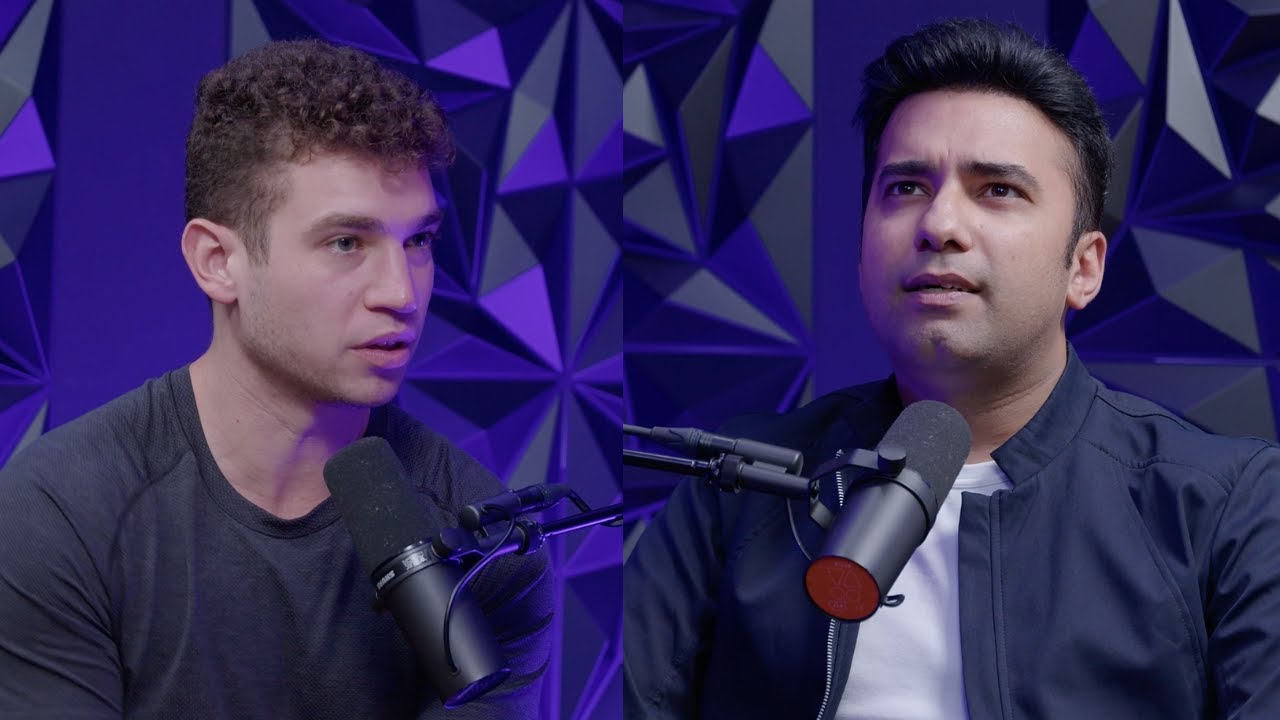
All right, how's it going everyone? Welcome to another episode of Forward Thinking Founders, where we talk to founders about their companies, their visions of the future, and how the two collide. Today I'm very excited to be talking to Sid Yadav, who is the co-founder and CEO of Circle. Welcome to the show, how's it going?
Hey man, uh, thanks for having me on.
Yeah, thanks for coming on. I, I've seen Circle buzzing, I feel like, all around the internet, so I'm excited to have you on and learn more about Circle. For people that don't know what Circle is, assuming we're not talking about just the shape, can you, can you tell the listeners in the audience what you're working on with Circle?
Yeah, so Circle is a white-labeled community platform for creators. You can think of it as like a modern spin on the forum or discussion board, almost like white-labeled Facebook groups. So where we sort of, you know, like to sort of set apart or really focus on is on the creator audience. So by creators, I mean podcasters, bloggers, YouTubers, course creators, anyone who has an audience and is then looking to sort of deepen that engagement on their own sort of independent, you know, community platform. That's sort of really where our specialization is, which, you know, hasn't been the case historically. So if you look at Facebook groups, Slack, Discord, they're all aimed towards specific segments, but not specifically towards the creator who really wants to own access to their audience and have their community live in their brand.
So let's talk about it. Let's say there's a creator that wants to try it out. Let's say me, for example. Can you kind of walk through what can someone do on Circle? What are some of the features? You know, why would I use a Circle versus like a standard, like a, you know, kind of like a boring Facebook group? Can you kind of walk a little bit into how it works?
Yeah. So, you know, as a creator, you kind of, you own the community, you own your group. So, you know, you start building it, it's actually, it feels somewhat like a site builder and somewhat like you know, let's say Facebook group, right? So everything you're building in Circle is completely owned by you. It's completely branded according to your brand. So, you know, as you're creating community, you're setting up the logo, you're sort of setting colors, you're creating what we call spaces, which are similar to Slack channels. And sort of where we then sort of start standing apart from, you know, the traditional community product is, you know, we're 100% white-labeled and we integrate and embed into your website. So, you know, you can embed Circle, the entire community on your website. You can embed specific spaces, you can embed topics, and integrate with your sort of, you know, end-to-end funnel. So, you know, we've invested a lot in building things with Zapier. We have a full API. So You can do things like, you know, let's say I have a product or let's say I have a course, you know, and I want all my students to be automatically added in to my community. Well, that's like, you know, a couple clicks in Zapier. And then let's say, you know, when they're added to the community, you know, I might want them to maybe get added to specific spaces, you know, maybe get a member tag, some kind of an identification in terms of where which cohort they're in. So all of that stuff can be sort of, you know, turned into workflow, which, you know, just is not possible with, let's say, like a Facebook group. It is somewhat possible with Slack, but requires a lot of sort of fiddling around, whereas with us, you know, we try to make that really easy. And lastly, I guess, you know, our big focus is really on engagement. So the way we look at it, it's like, you know, If you're a creator moving your platform off Facebook, well, you, you're actually like, you have a challenge there, right? Like Facebook has billions of people using it. And so your challenge is to kind of make up for that lost engagement. So that's kind of like the hardest problem that products like ours really have. So that's what we're looking to solve for with all the embeds, the integration. And just, you know, the way that we're thinking about community, it's all about sort of, you know, bringing that audience away from Facebook groups or away from one of these sort of discovery-oriented products into your own platform while keeping, or ideally ending up with, you know, even better engagement.
And how did you decide to start with, or just mainly target creators I feel like communities are in right now. And we'll talk about this in a little bit where, you know, I think that you seem to be pulling away, at least from my perspective, but like you decided to start with creators. Why creators and why not gamers or why not chefs or, you know, you know, why specifically internet creators?
Yeah, that's a good question. So, um, just to give you some background. So before Circle, um, you know, I worked for two other creator products, one being Teachable, Another being Gumroad. Teachable is really where I've spent the bulk of my career. So I was hired as a first designer, front-end engineer, back when it was just 5 dudes around it. We worked in New York, and so back in 2014. Teachable, for those who don't know, is almost like a Shopify. It's a site builder for the courses space. So similar to Circle in that it's also a white-label site builder, but it's more geared towards the courses space. Analogy, that would be like, you know, the Udemy or Coursera would be the more sort of the marketplace component. So, you know, spent 5 years at Teachable. My role evolved from, you know, an individual contributor to when I left last year as a VP of product managing 4 PMs and 4 designers. So really saw that company grow from 0 to like 25 million ARR and really sort of build a market focused on creators, specifically course creators. So in that process, I, you know, I fell in love with honestly like the, the audience, right? Like, I have, you know, I started coding at a very young age, so I always wanted to build a company. I actually immigrated from New Zealand to the US for that reason. And, you know, I was always sort of conflicted about building something that's too consumer-y because It's a challenge to get the billions of users to warrant a scale and your existence, and you're essentially then controlled by a mob, as we see with Facebook. And then on the other hand, you have the enterprise startups that focus more on sort of high-paying, higher-producer companies, and the risk there is you then have very few users. Those users have a lot of power over your product roadmap. And it's honestly not the most fun, right? So when, you know, in my experience at Teachable, I was like, holy shit, like this, this is a perfect persona to build for when it comes to, you know, what I'm good at and what I value. And the other thing with creators is, hey, like they're doing like the most, like the best thing possible, which is they're looking to, you know, make a living from doing what they love on the internet. So it just feels good, right? So, you know, long story short, after I left Teachable, I left wanting to start my own company. I was also contracting for Gumroad, which is another product, amazing product in the creator space. And in the meantime, you know, I teamed up with two of my sort of best friends, both also formerly of Teachable, and we started tinkering around with bunch of ideas. So Circle is probably our like fourth idea. And the way we ended up with Circle is like essentially realizing that of all the people we talked to in that sort of incubation period, like community is the thing that always came up and was the one thing that no one was satisfied with. So whenever we asked someone, say, hey, if we build this, would you use it? They'd be like, yeah, I'd give it a shot, right? And you just don't hear that in a lot of more, like, a lot more sort of mature spaces. So that was always a good signal. And B, it's just like, when we looked at what was out there in terms of sort of contemporary white label community platforms, we just didn't see any product that was really sort of up to the mark from a product perspective and was serving these creators well. So, you know, after, let's say, we probably had like, you know, 10 or 15 sort of conversations with multiple creators, we were eventually then just convinced that Circle needed to exist for them. And as you can imagine, when you're incubating a product with creators, that itself has its own kink to it. So it was never an option not to build for creators for us. It's actually like we started with creator first and then ended up with Circle.
So based on your experience and what you're doing now, Whether you would admit it or not, it sounds like to me you're like one of the, one of the authorities on, um, almost like all just on the whole internet on just creators and the creator movement and what the future of creators is. Um, simply because, you know, not because you've studied it or because you read about it, because you've built, you've built the platforms that these creators are getting started on. Um, and you're building another one, right? I'd love to hear What do you see happening in the creator world? What are some trends that are interesting to you? And just where do you see it going? You know, we had, you know, it's been, I don't know, I feel like YouTube, I might be wrong here, but I feel like YouTube birthed like the first generation of creators with Casey Neistat and whatnot. But now it's like really opening up with some of these other platforms. Where do you see the future going?
Yeah. So what's, funny to me about this space is that it's not like there's been a new movement towards creators. It's that it's more that the world is finally ready for creators. Right. So like 6 years ago when, you know, I was involved in starting Teachable, we used to talk about all of this stuff all the time. It's just the word creator just meant something else and just was not popular. Right. So that's been funny. I think there's two broad trends. That again aren't new, but are just, you know, are now finally starting to take off. So one, just the idea that creators should be independent, should own their audience, should own their platform, should own their brand, right? And this is frankly, you know, it's again, not a new idea. It comes from blogging, right? I think blogging was the ultimate platform for the internet. That really sort of got this moving. And, you know, with sort of more, more of the aggregators like YouTube, it kind of went in the other direction, but it's finally come back, starting to come back to the independent side of things. So, you know, by that, what I mean is, you know, you're not reliant on, let's say, you know, the transaction fees or, you know, the policies that a marketplace sets. Once you build that audience, you have direct access to that audience. So just that trend is, again, not new, but something that's finally starting to take off and something we sort of deeply believe in at Circle. And the other is just, again, not new, the power of online communities. Ever since the early days of internet, it's just been one of those use cases that's been That's defined the internet. That's arguably how the internet was built. That's not going anywhere. And what we see at Circle is sort of the blend of both, right? So what we frequently see is once creators establish a product and establish an audience, it's then about really investing in turning that top funnel audience into fans, into sort of people who really advocate for the product, into people who know each other. So a lot of these interactions are sort of customer to customer that we see happen within communities where the creator kind of lights a match and then everything else from there is more on the actual audience. And it's not something even limited to like the word creator in its traditional definition. Like, you know, it also applies to startups. If you look at Webflow, for example, right? Community was one of the first things that they tapped into and really helped define the product and their early customer base. So also applies to startups, also applies to any brands out there. I guess where we differ from, you know, the sort of broad status quo thinking is that we believe in the independent side of things, as opposed to, you know, letting Facebook own your community and be beholden to their policies. It's all about you. The internet finally lets it happen. So why wouldn't you wanna just own that?
Yeah, I love it. As a creator myself and someone with many, I guess, thesis, theses, whatever the word is, thesi, on creators and where things are going, I just think your perspective is awesome. And I think what you're building is needed, uh, and it's exciting for the creator world and just the world as a whole. I've one other question just on this, on this point, which I alluded to when we first started talking. So I feel like I've been pitched maybe 25 to 40, like, community platforms, um, not necessarily positioned like yours, but just people that are building platforms, um, uh, for community, to power community, to replace Slack, to replace Facebook groups. There's one that I assume you get on the podcast that I think is super legit called Geneva. Outside of all, outside of that one, everyone else just like doesn't, it just doesn't seem that different except for you. Like you kind of have a kind of like stood out from the crowd and I feel like you've become the crowd favorite. Um, and you're kind of pulling away from the pack slightly from my perspective. My question for you is how, How has it been dealing with, you know, working in a space that everyone's kind of trying to build for? And I don't know, like, do you feel that competition or does it not really matter because you're so niche and you know exactly who you're building for, you know, competition doesn't matter and it kind of takes care of itself?
Yeah, so what's funny is like when we started building Circle, I'd say we started talking about it in like July last year, there wasn't this big sort of hoopla around communities, right? So When we entered into it, we were like, oh wow, like we're really, you know, we're not doing something new here. We're really sort of going back in terms of how new the idea itself was, right? We didn't think it was a sexy idea, quite the opposite. And then I'd say, you know, I don't know what exactly it is that kicked off this trend, or maybe this trend always existed, but yeah, we started seeing other community platforms emerge. I think with COVID it's just sort of been very amplified, right? Because now there's this new audience of community builders who previously had sort of in-person events looking to then having an online presence. So that's amplified things. But for us, it's never really— competition is not something we talk about a lot because we're just so focused on this feedback loop that we have with our existing users that just keeps getting better every month. It's like my thesis, and I saw this at Teachable, I saw this at Gumroad, it's like, first off, the space is not zero-sum in any way. You know, Facebook Groups has, I think, over like 700 million groups. Like, if I thought that it was zero-sum, it just wouldn't have made sense to do anything in this space. Where we are focused on is sort of more in the, you know, the paid community product, right? It's like, there are plenty of free options out there, there always will be, but we want to build something that's really good, that's worth charging for, and from the creator's perspective is worth paying for, right? And so that's the feedback loop we're in. And the more we build the product and the more we hear from creator's perspective and the more people honestly talk about it, it's been 100% organic, which is something that's also blown us away. Like, you know, I have a VP of Growth, Chief Growth Officer, co-founder, who's also Teachable's former VP of Growth. He came into Circle thinking, well, you know, it's a product that you will have to grow, right? And what's been surprising for him is like, it's been entirely organic so far, and it's not something he's used to as VP of Growth, right? It's like when you're in charge of growth, all you think about is, you know, what are the many ways I can grow this product? And with us, it's been the opposite of it being all organic. So as long as that trend continues, I'd say We're not going to get distracted by looking at what others are doing. We're just very focused on nailing our product and making our paying customers super happy.
I feel like that's just the mindset of any winning founder or founding team. There's always going to be people in a space. Just stay focused on your people and it'll work out. So let's say you you keep focusing on the creators, you keep executing, you keep growing organically, and it just kind of works out. And you know, you look back in 10 years and you're like, holy moly, what have we done? Like, we built this giant company. I'm curious to wonder, what is the big vision that you have for Circle? If in 10 years or 15 years, however far you wanna go out, you accomplish everything that you want to have accomplished, what does that look like? And you know, how big is that? And I guess, what does the vision look like unfolded?
Yeah, so the idea of accomplishing a vision actually seems very sort of depressing to me because I just think the fun part is it like, you know, building up towards that vision. So we don't like— I don't think we ever talked about like the end goal with Circle. It's always been about these big drivers, right? The independent creator movement and the power building communities. And as big as that gets, is our end goal, right? Where we want the product to evolve into is sort of more, you know, is more the tangible thing that we think about where, you know, for example, we're not seeing community products do interesting things with the new internet technologies that are out there. So video, I think, is very underleveraged when it comes to community platforms like us. So that's something we're extremely excited about. We're also excited about just lowering the friction of what it takes to convert like an email list signup into an engaged member. I just think there are way too many hoops right now in the world where you sign up the mailing list, you follow someone on social media, it just takes many steps to finally turn into a fan. So something we think about a lot is how do we sort of tighten up that loop and really build something that's very interesting and unique from a product perspective. But the idea of accomplishing a vision is honestly not something we think about that much. I also think it's something that will continue to evolve. Right now I'm talking about these two big forces. Eventually, let's say a couple years down the line, it may be something else. I prefer to look at it almost from the iterative perspective than a journey to an end goal perspective.
And as you go about, you know, making that happen and just execute every day, you're going to need some help, right? You might need some more employees. You'll definitely need creators and customers. You might need more investors if you want to go to that route. And then lastly, you'll, you'll definitely need help from the Forward Thinking Founders community. So for my last question for you, what is something that the Forward Thinking Founders community can do to help you make your life a little easier, help you grow a little faster, I guess, what's an ask that you have for anyone listening?
Yeah, that's a good question. I would say the best way to help us is honestly just to use our product. It's a little cheesy, but if you're out there looking for a community platform, if you're a creator, if you're a startup, you've maybe looked around and aren't happy with what you've seen, Try us. So you can sign up to the waitlist at circle.so. And if you mention this podcast in the survey, you know, we can make sure to fast-track you. We do have a growing waitlist, but we're looking to open it up in the next couple months.
All right. Well, thank you so much. I just want to make sure the listeners heard it. You said it was circle.so, or what was the URL? And how else can they— Yeah, yeah, no worries. Yeah, how can they find the website? Do you have social media? Anything that you wanna promote link-wise, feel free to share and then we'll wrap it up.
Yeah, so the website is Circle.so. Our Twitter handle is Circle App. And if someone just wants to write in and say hi, write into hello@circle.so.
All right, well, thank you for coming onto the podcast and sharing what you're working on with us. It is very exciting. I, as a creator myself and knowing what's happening in the creator world, that this is needed. And I'm glad you're working on it. So thanks for coming on and best of luck making it happen.
Thanks for having me on.