The video records the 2019 Arrival Award ceremony honoring Sima Ladjevardian, featuring remarks from museum officials, community leaders, and family members, followed by an in‑depth interview with Sima herself. Speakers praise her role in establishing the Museum of Fine Arts Houston’s Department of Islamic Art, describing it as the fastest‑growing department of its kind in the United States. Sima recounts her family’s deep roots in Iranian civic life—her grandfather was a judge, her father a parliamentarian, and her grandmother a pioneering congresswoman who helped secure women’s suffrage. She describes the turmoil of the 1978 Iranian Revolution, her family’s sudden exile, and the emotional weight carried by children during such migrations. After moving to the United States, she pursued law at UCLA and San Francisco, initially aiming for international human‑rights work, but later practiced corporate, divorce, and mediation law while also consulting on business matters. Her marriage led her to Houston, where she embraced the city’s cultural diversity. Throughout the interview, Sima emphasizes the theme of unity—her lifelong effort to bring disparate groups together through museum work, legal advocacy, and community involvement. She offers advice to immigrants: work hard, seek education, engage in community and politics, and overcome fear. The segment concludes with heartfelt congratulations from her children, who credit her as a role model and cheerleader, and Sima expresses honor at receiving the award.
Chapters
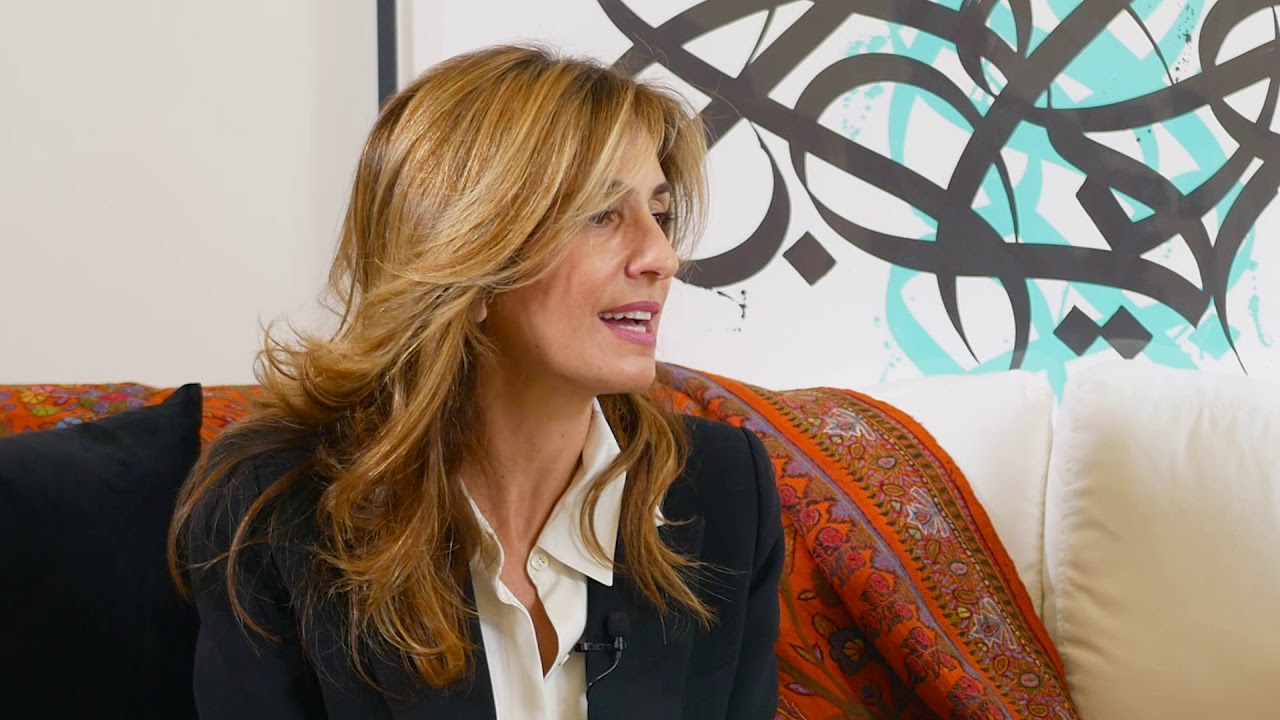
Just over 10 years ago, Sima led the charge to establish a Department of Islamic Art at the Museum of Fine Arts Houston. It is now the fastest-growing department in the museum, and in the country. She considers the museum the cultural home away from home for herself and many others who have left their homelands. And today, Sima's committee is one of the most active and diverse within the museum. We now have a full curatorial department for Islamic art with an active accessions program, exhibition program, and one of the largest growing collections in North America. None of this would have been possible without Sima's vision And leadership. Thank you, Sima June.
I wanted to say a few words about my very good friend Sima Ladjevardian and congratulate her on the Arrival Award. She really represents the best of this country, somebody who had to leave her home country, Iran, at a very young age. Her first language is Farsi and French, and then she moved to the United States, basically a stranger in a strange land, began anew and became incredibly successful in her life, from her academic career to her legal practices to her ability to bring people together from disparate and different backgrounds in common as Americans. I'm so grateful for the work that she does in the greater Houston community, so grateful for the work that she does for this country, and I'm so grateful for what she represents for the future of the United States of America. Could not be more proud of Sima Ladjevardian and the work she's doing, and so grateful to see what she does next.
I am so interested to hear about your story. Tell me about your family.
I was born in Iran, in Tehran, to Farideh and Mozaffar Jandaghi. I have an older brother and a younger brother. My father's— my grandfather was a judge in a city of Kerman. And my dad went to law school and started various businesses and eventually went into parliament in Iran.
Interesting.
My mother's family side was all very much involved in foreign policy, and majority of her family were ambassadors or were involved in politics. And my grandmother was one of the first women that got into Congress in Iran and helped passed the women's right to vote even before France had the women's rights to vote. So it was— they were all very civically engaged. I had a wonderful childhood. My mother just had— we have a very big family.
Okay.
And it was a very big deal for her to instill in me and my brothers to always be every weekend, every trip we went with cousins, with aunts, with uncles, I have just beautiful memories about being together as a family.
That was a huge part, it sounds like, of your upbringing. And so your parents kind of instilled that value that family kind of comes first.
Absolutely.
How did you choose what career you were going to pursue?
So again, both my father and my grandmother were big influencers in my life, and she always told me that if you want to make a difference, you have to have a higher degree. And the way you stand up for people is to be an attorney. Because she helped pass the women's right to vote. She understood how advocacy was so important.
Your grandmother?
My grandmother did.
Yeah.
So it— and then my father—
And how did she do that? How did she—
She was one of the first congresswomen in Iran. And there was a women's group that started back then and they were just advocating it. And it took a long time, but it passed.
That's fantastic.
Which was incredible. Yeah, my father and both my mom and dad were very encouraging that I should go to law school. And originally what I wanted to do was human rights. Yeah, so that's why I wanted to study and then move to Europe and then just work on international law and human rights. Yeah, and then I got married and I moved to Houston. Yeah, so I, I went into corporate law first, and then I, I've done a lot of divorce law actually, and then divorce mediation, because in a way I think that's also helping people through very difficult periods of their lives. Yeah. And I still do that, and I still do some consulting on business law, but I just think it teaches you to be a good advocate for whatever it is that you're doing in your life.
Yeah. Yeah. So what brought you to the U.S.?
So in 1978, A lot of unrest had started in Iran. You know, there were demonstrations going everywhere. There was martial law. We didn't really understand what was going on except school kept being closed.
How old were you?
I was 12.
Okay.
And sorry, I was 10 and a half. I was not 12. So school was being closed constantly so we would get to go home. It was fun for us, except one day we were sitting in the classroom, and our school was on one of the main streets in Tehran, and we felt like there was a big earthquake. Like, the school just started shaking and shaking, and we all ran out of the classroom. A very scary sight to see coming out of there. And I think that was the first time we realized, oh, there's something going on.
Wow.
And then my mother came to school and said, we're going to go to France for a few days.
Okay.
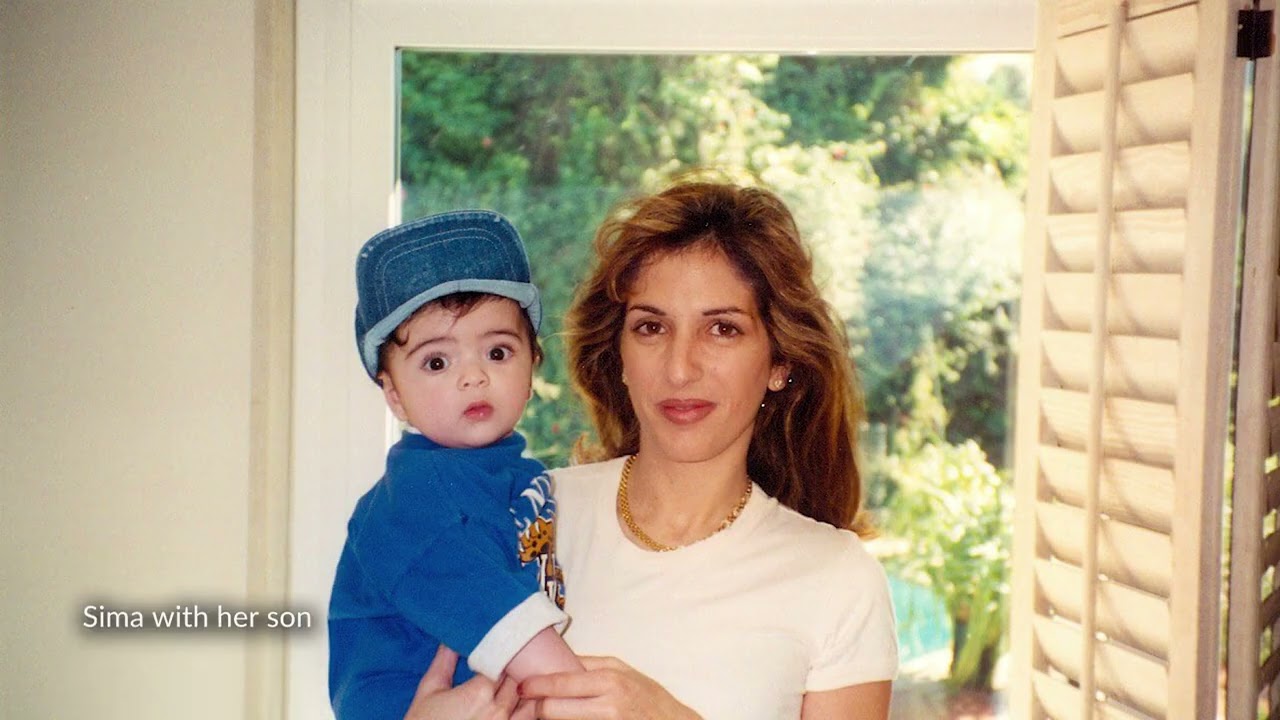
And it's funny, I went home and I was packing a little bag, and I had a really weird premonition that we're never coming back. So I took my lunchbox and I took pictures of my parents' wedding, of some of our childhood pictures, just whatever pictures I could gather, put it in the lunchbox, and I took it out with us when we went to France. And those are the only pictures we have left. I was too young to understand at all what the political repercussions of all that was. And I think part of it was that everyone still thought that there would be a change and we'd all go back. And after that, you know, I think that's when my father decided we're just not going back. And he had family, his aunt and uncle had moved to the U.S. like 30 years before in the '60s.
Yeah.
No, in the '50s. And they lived in Carmel.
You were in survival mode as a child.
Yeah.
Because I think a lot of times when we talk about this whole process of immigration, this journey of immigration, there's such a large focus on the parents. And I think sometimes we overlook the emotional burden that the children carry because really they don't know the whole story. They're really just following the direction of their parents.
I mean, having had—
Right? You didn't have a say.
I didn't have a say, but I saw how much they were struggling. I could hear pieces of conversation. They were listening to the news all the time, what's going on in Iran and what's happening later. But I think as children, and I see it in my own, we're a lot more resilient because it's not like we're so tethered to the past. You know, like my parents were so happy that I had brought those pictures up because they had no other pictures from their past.
Wow.
And, um, but I think we— yeah, I just think we had to do what we had to do, and we did.
And you did it.
And we did it.
How did you get to Houston?
Oh my God, that's a whole other roundabout way. So I went from UCLA to law school in San Francisco.
Okay.
And while I was in law school, I met my husband who was from Houston. Oh, so his, his family—
You followed for love.
I followed for love. I didn't know, I did not know where Houston was, so I'd gone to law school to study international law.
Okay.
Because I always thought, you know, I could make a difference because of all the international things going on. And when I met my husband and eventually moved to Houston, I mean, the he would tell me that Houston is like San Francisco.
Okay.
There's a beautiful blue river and there are palm trees.
I didn't know there were blue rivers.
And the first time I landed, I was— and I had the image of Dallas.
Yeah, sure.
It's all this dry. So I'm landing and it's all green and I'm like, this is interesting. And then we arrive, of course the bayou was brown and there were no palm trees. And he said, you can't believe it, last week there was a huge hurricane and, you know, the trees were gone and the water is brown. But it was fun.
So which of these values resonate with you the most? Unity, hope, respect, or justice?
I have to say unity because I think like what has been the focus of most of my life has been unifying various groups of people to achieve a purpose, whether it's to make a difference, whether it's to teach something, whether it's to Educate, gather, make— yeah, I have to say unity.
So what advice would you give immigrants?
I mean, based on what I've gone through is that I think the most important thing is that you come here, you work hard, and you get educated. And by doing that, you can contribute so much and advance, and you can pretty much do anything you want. The other most important thing to me is that don't be scared. Don't be afraid. Just reach out. If you have a question, if you want to belong to something, if there's something you want to do, there's, you know, get active in the community. Get involved in politics. Get involved in whatever because you can make a difference. Don't be shy and don't be afraid.
So Sima, congratulations for being a 2019 Arrival Award recipient. How does it feel?
So honored.
Mom, we are so, so proud of you. You have kept us both up on our feet since day one, and you've instilled principles in us that help us succeed today. I owe most of my achievements to you, and even today I still look up to you as someone who I see as successful and a role model that I even want to be like when I'm older.
And we're so happy that all the years you've put in raising us and, and being our number one cheerleader no matter what. Um, finally you get the recognition that you deserve, and we're really both so thrilled for you, and we love you so much.