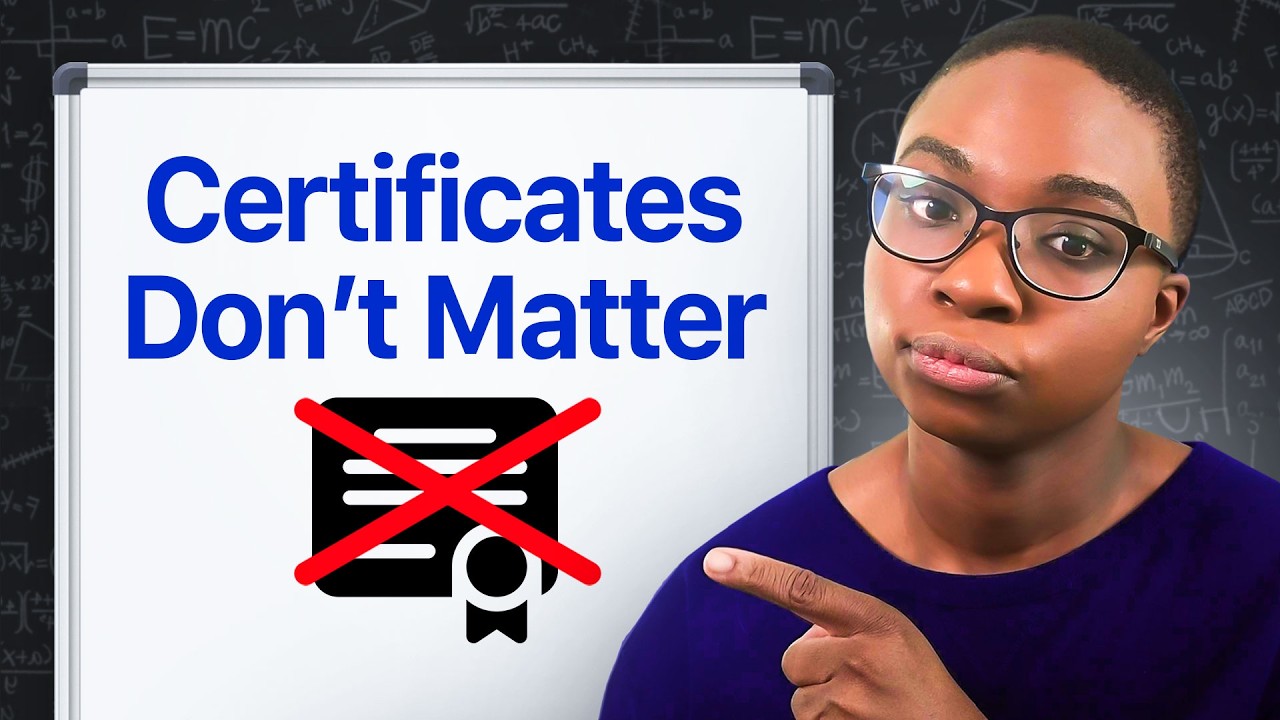
In this solo, first‑person YouTube video, Kedeisha Bryan recounts her rapid transition from delivery work to a six‑figure data analyst role and distills six hard‑earned lessons for anyone trying to break into data analytics. She debunks the myth that a handful of certificates or a single tool (Excel/SQL) guarantees a job, emphasizing instead problem‑solving ability, continuous learning, business‑focused communication, the reality that most early‑career work is data cleaning, the power of data storytelling, and the outsized impact of strategic networking. Each lesson is illustrated with personal anecdotes (e.g., building a Tableau dashboard, being asked to automate updates, cleaning messy customer data) and concrete recommendations (focus on solving a real business problem, master fundamentals that transfer across tools, translate findings into actionable language, showcase data‑cleaning projects, follow a narrative structure (situation‑complication‑question‑answer), and give free value to build a referral network). The video ends with a call‑to‑action directing viewers to a free training link in the pinned comment and encouraging engagement (likes, comments).
Chapters
Here is the biggest lie they tell you about data analyst jobs. If you just learn Excel and SQL, you're golden. Jobs are everywhere. Well, that's complete nonsense. 5 years ago, I was delivering pizzas and Amazon packages for a living, and in the past 4 years, I have made multiple 6 figures as a data analyst. But I didn't get here by following the advice everyone gives you online. I got here by learning what actually works in today's constantly evolving job market. And today I'm gonna share 6 critical things I wish I knew before I became a data analyst. 6 things Things that would've saved me years of frustration and probably would've added at least $50 grand to my bank account right now. Some might even completely flip your strategy upside down. If you're serious about breaking into data analytics and actually building a career that pays you what you're worth, you need to hear every single one of them. So let's dive in. Let's start with lesson number 1. Nobody cares about your certificates. I know this hurts to hear. You've probably spent months collecting these badges from Coursera and Google, but hiring managers simply do not care. They care about your problem-solving ability. They want to know if you can take a messy business problem and turn it into something actionable. And here's a deeper issue. Certificates just teach you tools in isolation, but real data work is about connecting the dots across multiple tools and business contexts. A hiring manager would rather see you solve one complex problem using 3 different tools than 3 separate certifications proving that you know these tools exist. The strategic shift that you need to make is from a credential collector to a problem solver. Stop asking what certificate should I get next and start asking what business problem can I solve with the skills I already have? Most people get this backwards and stay stuck in entry-level thinking. They learn Python, then R, then advanced statistics, thinking more tools equals more value. All right, quick pause. Now, if you're hearing these lessons and you want to land your first job in data analytics and avoid the lengthy mistakes that I did, click the link in the pinned comment where you can find the exact steps that my students use to land their job in data analytics without going back to school. All right, now let's get back to it. Lesson number 2, you will never stop learning. The job is just the beginning, not the end goal. I'll never forget one of my first weeks on my first job. I had just finished building my first Tableau dashboard and I was feeling real good about it. Like really good. I thought I had all this figured out, but then a manager walked over and said, great work, but now can you automate the monthly updates? And I just stared because I had no idea how to do that at all. He said, probably you'll need to learn Python and build an ETL pipeline. Python, ETL. I had no idea what ETL else stood at that point. But here's the thing, I didn't have a choice. The job required it. So I went home that night, pulled up tutorials, and started researching everything I could find. I just figured it out. It took me about 45 days of trial and error, late nights, and a lot of frustration, but I built that pipeline learning Python. And you know what happened next? They asked me to automate something else and then something else after that. The learning never stops, but that's actually good news because it means you can start with the basics and grow into the role. You don't need to know everything upfront. You just need to know how to learn everything as you go. The strategic advantage here is understanding that adaptability beats expertise every time. Companies would rather hire someone who can learn new tools quickly than someone who's just an expert in tools that might be obsolete next year. This is why your learning strategy should focus on the fundamentals that transfer across tools. SQL concepts work whether you're using Postgres or BigQuery, and data cleaning principles apply whether you're using Python or R. Business logic remains consistent regardless of the visualization tool. Lesson number 3. Business language trumps technical jargon. You need to learn how to translate data into decisions, not just insights. Most people get this backwards. They think being smart means using big words and complex formulas, but the most valuable analysts that I know can explain complicated findings to a 5-year-old if they wanted to. Your job isn't to impress people with your SQL skills or your big fancy knowledge. Your job is to help them make better business decisions. Instead of saying customer acquisition costs increased 23% quarter over quarter, you can say we're spending $23 more to get each new customer than we were 3 months ago. And here's why that's happening and what we should do about it. See the difference? One sounds like a data dump and the other sounds like a problem that needs solving. But here's the thing that people miss. Business translation isn't just about simple language. It's about understanding the decision-making context behind every analysis that you do. When you're analyzing customer churn, you're not just finding patterns, you're helping the retention team decide where to focus their limited time and budget. When you're building a sales dashboard, you're not just showing numbers, you're helping sales managers identify which leads to prioritize and which team members they need to support. Every piece of analysis should answer 3 questions: what's happening, why is it happening, and what should we do about it? Now, lesson number 4, your first job won't be glamorous. Expect data cleaning, not machine learning models. Everyone wants to build the next Amazon recommendation algorithm, but your first job, you'll spend over 80% of your time cleaning data, making sure customer names are spelled consistently, fixing date formats, removing duplicates, et cetera. It's not sexy, but it's necessary, and companies will pay you well to do it right. The problem is, is that most people's portfolios don't affect this reality. They're building complex machine learning models when they should be showing that they can clean messy data and make it useful. Show me that you can take a spreadsheet of over 50,000 rows of customer data, find the inconsistencies, fix them, and turn them into something a sales team can actually use. That is worth more than any random forest project because data cleaning isn't just about technical skills. It's about business judgment. When you can find inconsistencies in the data, you need to understand the business context to decide how to fix it. If you have customer records with different spellings of the same company name, you can't just pick one randomly. You need to understand which version is correct based on how the sales team actually refers to that client. If you have missing revenue data, you need to know whether to exclude those records, estimate the value, or flag them for manual review. This is why the most valuable data cleaning projects in your portfolio should tell a story about the business decision-making. Don't just show the before and after. Explain your reasoning for each cleaning decision and how it impacts the final analysis. The strategic advantage here is positioning yourself as someone who understands data quality directly impacts business decisions, and that's rare. Most people treat data cleaning as a necessary evil, but you should treat it as a competitive advantage. Lesson number 5, Data storytelling is your superpower. Dashboards that don't drive actions are worthless. Joseph Campbell once said, people forget facts, but they remember stories. I see portfolios all the time with terrible visualizations that do nothing but create confusion. On the other side, I see charts that can look pretty but answer no real questions. Your dashboard isn't a Picasso art project. It is a tool for decision-making. Instead of showing me sales by region in a fancy pie chart, show me which regions are underperforming and what specific actions the sales That's storytelling. The difference between a data dump and storytelling is simple. A data dump just shows what happened, and data story shows what to do about it. But let's go deeper on the strategic elements of data storytelling. The most powerful data stories follow a specific narrative structure: situation, complication, question, and answer. Situation: here is a current state of the business metric that we care about. Complication: here's the problem or opportunity that we need to address. Question: what should we do about it? Answer: based on the data, we should do this. On the data, here's a recommended action and expected outcome. This framework transformed every dashboard from a passive reporting tool into an active decision-making tool. Instead of just showing the website traffic is down 15%, you can tell a story about why it's down, which traffic sources are most effective, and which marketing channels should be prioritized to recover. The strategic depth here is understanding that data storytelling is really business strategic communication. You're not just presenting findings, you're building the case for specific business actions. Lesson number 6, your network matters more than your skills, but your skills get you in the door. Now let me be clear about this. Yes, you still need technical skills. You can't just network your way into a data analyst role if you can't write basic SQL. But once you have your baseline skills, your network becomes your net worth. It becomes your biggest advantage. Most jobs are not posted publicly. They're filled through referrals. Someone knows someone who needs help with their problems. The best way to build your network Start solving problems for free. Not spec work for companies, but genuine help for people in your existing network. Your friend that runs a small business? Offer to analyze their sales data. Your former colleague that's struggling with Excel? Show them how to automate their reports. Every problem that you solve is a potential referral, and every person you help becomes part of your network. Here's the thing about networking that most people miss. It's not about collecting contacts. It's about demonstrating value before asking for anything in return. The most effective networking strategy is the helpful expert Approach. Position yourself as someone who solves data problems, then consistently deliver value to your network. When opportunities arise, you'll be the first person that they think of. All right, now let's bring it home. If this video helped you rethink your approach to breaking into data analytics, even if one of these lessons clicked for you, do me a favor, hit the like button, drop a comment, and let me know which lesson hit you the hardest. I read every single one. And if you're serious about making this career shift and you want a clear step-by-step plan to land your first data analyst role in the next 6 months, check out the free training in the pinned comment below. You'll learn exactly how to build the right skills, the right project, and the right brand to get you hired without going back to school and wasting more money on courses that just don't work. I'll see you in the next one.