Exactly How I Landed a $100k/Year Data Job (In 90 Days)

In this instructional video, Kedeisha Bryan shares how she transitioned from low‑pay data roles to a six‑figure data analyst position within 90 days and how she has since helped thousands of others do the same. She argues that the traditional belief that a data career requires years of formal education is a myth; instead, success hinges on focusing on the right, high‑impact skills, positioning prior non‑data experience as relevant, and executing a disciplined, layered learning plan. She outlines a month‑by‑month roadmap: Month 1 – master Excel, basic statistics, and storytelling; Month 2 – learn a BI tool (Tableau or Power BI) and then SQL; Month 3 – intensive interview practice, add Python, and align resume/LinkedIn/projects. Throughout, she stresses the importance of cutting irrelevant learning, building data‑cleaning and pipeline expertise, crafting a clear narrative of business impact, and leveraging networking that showcases that narrative. Interview preparation includes mock interviews, speaking aloud, and handling pressure without external aids. She cautions against chasing hype (e.g., data science, AI) and instead recommends becoming “obviously useful” in the core analyst tasks. The video concludes with a call to action for further resources and a teaser for a rapid‑Python tutorial.
Chapters
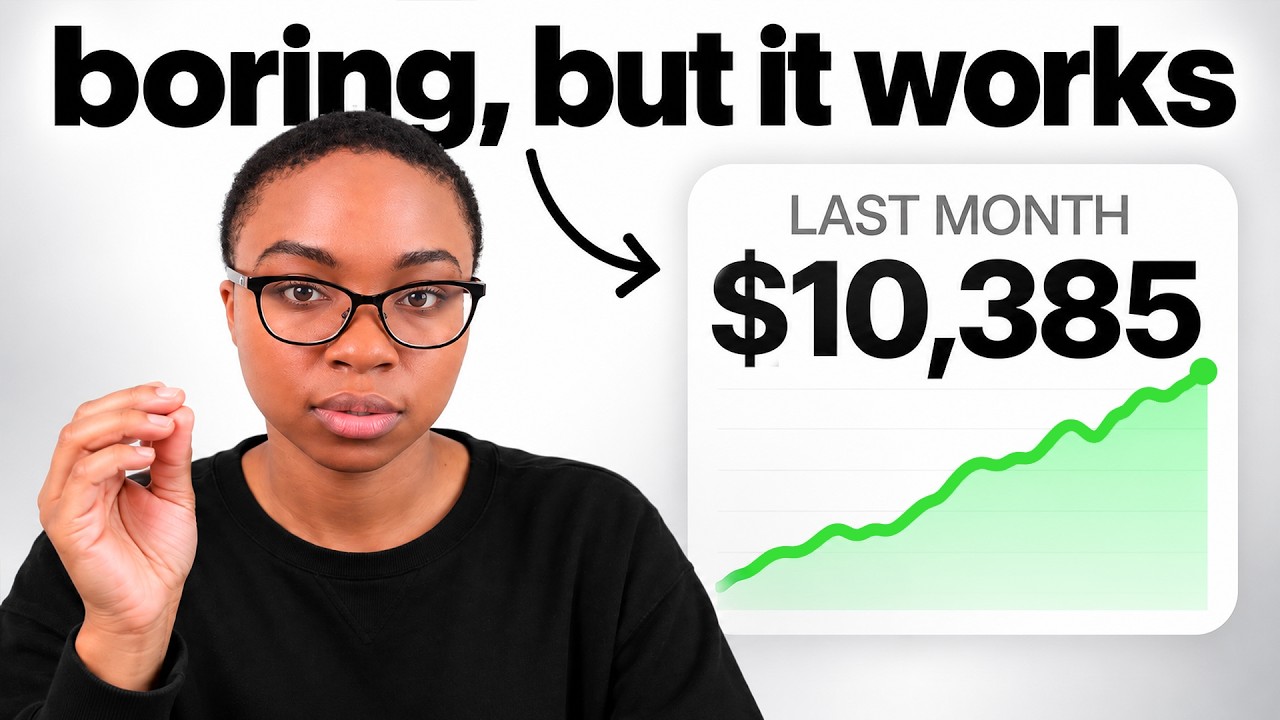
Most people think landing a data analyst job takes years of studying, spending a small mortgage on university fees, and a whole lot of trial and error. But what if I told you I have consistently seen people do this in just 90 days? Now, if you're new here, my name's Kedeisha, and I personally landed a 6-figure role in data in about 3 months. And since then, I've trained and placed thousands of other aspiring analysts in data roles worldwide. But during this time, I've noticed a strange pattern. The top 1% of analysts who landed a job in under 90 days all followed the exact same repeatable steps. So today I'm going to show you what those steps are so you can land your first $100K role by Christmas. When most people decide they want to get into data, they immediately start looking for something else to learn. Another certificate, another course, maybe a master's degree, maybe a bootcamp. And I understand why, because you're coming from a completely different career and education feels like the safest thing to do. But you're basically thinking, I don't have experience yet, so I need to keep learning until somebody considers me qualified. But this is where I see people get stuck. They'll finish one certificate and still feel not ready, so they'll start another And then someone tells them that Python is more important, then they add Python. Then they hear data science pays more, so they start looking at machine learning courses. And then 6 months later, they learned a little bit of everything, but they still don't know what would actually make someone hire them. And that's the part I think traditional education misses. I remember when I was making my own transition, and there was this very popular bootcamp teaching HTML and CSS in the data analyst curriculum. And I remember thinking, why would anyone learn this? Not because HTML and CSS are useless skills. They're not. But if I only had a certain amount of time to make a career change, why would I be spending time learning something that's not important to be a data analyst? That's the question I wish more people ask themselves. Because the issue isn't that there's not enough information anymore. There's just far too much. You can go on YouTube tonight and then watch 10 Excel courses, 20 SQL courses, Python tutorials, Tableau tutorials, Power BI tutorials. You can literally have an AI explain a concept to you over and over again until you understand it. So access to information anymore is not the problem. The problem is knowing which information actually deserves your time. And that becomes even more important when the work itself is changing this quickly. The way analysts work today is not the same way analysts worked 5 or even 10 years ago. Even 2 years ago, before AI became such a normal part of everyone's workflow, things looked completely different. So when I look at training programs now, I care less about how impressive the name sounds and more about how close the training is to the actual work a day-to-day analyst does right now. Because you can spend a lot of money getting educated and still come out not knowing how to get hired at all and not even be really qualified. But even if you learn the right skills, career changers usually run into another problem. They act as if they're starting from complete zero. A lot of you already have experience that matters. You just don't call it data experience because your title wasn't data analyst this entire time. Maybe you work in operations. Maybe you've spent years tracking performance, building reports, fixing inefficient processes, and explaining numbers to leadership. All of that matters. But if your resume just says operations supervisor or retail supervisor, and then you throw in SQL and Tableau at the very bottom, you're making the hiring manager figure out the connection themselves, and they probably won't. The stronger version is showing them that you've already been solving business problems with data this entire time. Now you're just adding a layer of technical skills to do it at a higher level. That is a completely different story. And this is really the shift I want you to make. Stop thinking the person who learns the most wins. The person who becomes the clearest fit for the job wins. I didn't fully understand that until I started trying to get my own salary above $100,000. My 6-figure role was not my very first data job. My first role paid around $23 to $24 an hour. And then I moved into another role paying about $42 an hour. Then after that came the $100K role. So by that point, I had about a year or some change of actual data experience. But what's interesting is that when I started preparing for the next move, I almost focused on the wrong thing. At the time, data science was still hot. That was what everyone was talking about on social media. Machine learning, deep learning, all of that was really exciting stuff. And because I had worked in both analytics and data science, part of me assumed that was a natural next direction that I should be moving into. But then I took an audit of what I'd actually been working on for the past year. And my jobs were telling me something completely different. In both of my roles, I kept running into the same problem. The data was not ready. One of my companies was a massive corporate billion-dollar company, and the other one was a Silicon Valley startup. Completely different environment, but somehow I kept having the same experience. Before I could build a dashboard, before I could really answer the questions that my managers tasked me with, before I could do any analysis, before I could give anybody an answer to anything, I had to deal with the data itself. Where is it coming from? Why is it wrong? Why is it incomplete? How do I get it into the right place? And how do I build a pipeline so I'm not manually doing this over and Over again every week, and honestly, once I noticed that pattern, I stopped looking only at what sounded impressive and started looking at what actually I was getting trusted to do. The work I kept getting pulled towards was data engineering—not necessarily because I woke up saying I want to become a data engineer; it was because companies kept having those problems, and I stepped up to solve them. That was the point where I had to separate what was popular online and on social media from what I was actually seeing in the workplace. Online, the shiny stuff gets the attention and the views, but at work, someone still has to figure out why the numbers are wrong. Someone Someone still has to clean the data and someone still has to build a pipeline. Somebody has to take all of that and explain it to a business stakeholder in plain English. And when I looked at myself through that lens, my strengths became much easier to see. I was strong at SQL. I was great at data storytelling. I understood process improvement and I had experience with data quality and pipelines. That combination was much more valuable than me trying to present myself as someone who knew every possible area of data. So I started leaning into that. And this is what I mean when I talk about positioning. I didn't suddenly learn 20 different new skills. I got much more clearer on the skills I already had that were valuable. That's a big difference because saying that I know SQL, Python, Tableau, machine learning, Excel, Power BI sounds cool and sounds like a big list of tools. But saying that I can take any ambiguous data, turn it into something reliable, analyze it, and communicate what the business should do next. Sounds like someone I can actually give a problem to and pay a lot of money to. That is the shift that helped me. And if I were making that move again today, I would make it much earlier because I definitely wasted way too much time trying to figure it out. But even after my own experience was clearly pointing me toward analytics and data engineering, I was still spending time trying to stay sharp in data science, machine learning algorithms, deep learning, all of the stuff I thought I was supposed to do. And in hindsight, it didn't really make any sense because it wasn't the work I was doing and getting paid for. It wasn't what interviews was asking me about, and it It wasn't what was making me actually valuable, but I had that feeling that maybe I needed it because everyone else was talking about it. That is probably the biggest traps that you can do when you're trying to break into data. You don't want to feel behind. And as someone who has felt less worthy and behind due to having the college dropout tag for over 6 years, I know that feeling well, and it's not fun. So every time you see another skill, another roadmap, you think, that is a thing I am missing. And suddenly your roadmap becomes bigger and longer. If you're working full-time while you're trying to do this, that becomes a real problem. problem because you might only have a couple hours at night. And if you spend those hours learning something that has almost nothing to do with the roles you're actually targeting, you don't just lose 2 hours, you keep delaying the point when you're actually ready to compete for a job. That is why today I am much more aggressive about cutting things. If it doesn't support the job and your goal that you're targeting yet, just throw it away. But cutting the wrong learning stuff was only half of the battle because you can have the right skills and still struggle if no one understands where you fit. And that's where networking became huge for me. Every job interview I got came through networking. I had about 4 in 1 week. And I think people sometimes hear that and assume networking means begging strangers on LinkedIn for referrals. That is what most people do today. And most people are dead wrong. So don't be like most people. A big part of networking is simply just making sure people understand what you're good at. That's especially important when you're changing careers. Say you worked in operations or production for 10 years. You might look at your background and think none of it counts because you weren't called an analyst. But maybe for 10 years you've been measuring performance, spotting bottlenecks, reporting KPIs, improving processes, and helping people make decisions from those numbers. That's not something I would try to erase from the resume. That is something I would translate. So instead of acting as if your old career never happened, show how it prepares you for the new one. And when I started looking at my own experience that way, something else became obvious. The interviewers weren't necessarily impressed by these sexy things I thought they would be. They cared about communication. They cared about data cleaning. They cared about how I approach messy and ambiguous information. They cared about how I thought through problems, especially ambiguous problems. That is the real work that you get paid for. So if I had to summarize what I would change, I wouldn't tell my younger self to learn more. I would tell her to pay closer attention sooner. Pay attention to the work that you're actually doing. Pay attention to what employers keep asking for and pay attention to the skills people are actually willing to pay you for and build around that, not the crazy hype on social media. Because the fastest way to get hired isn't to become good at everything, it's to become obviously useful at the right things. And once you understand that, a 90-day roadmap becomes much simpler. Now, the biggest mistake I would avoid during these 90 days is learning everything at once. Because again, I've seen what happens. You start with Excel, you hear SQL is more important, so you jump to SQL. Then you hear someone say you need Python, so now Python gets added. And then you watch a video about AI and suddenly you're trying to learn that too. You feel busy the entire time, but nothing really sticks. So I would just do the opposite. I'd build one layer and then use that layer to make the next one easier. So for the first month, I would keep things very simple. I would start with Excel, basic statistics, and storytelling. Because before you worry about being technical, I want you to understand what you're actually trying to do with data. Take a real dataset, work through it, clean it, explore it, figure out what's actually happening behind the numbers, and then force yourself to answer a business question from it. This is the part that most people skip. People always want to skip the fundamentals and get to the advanced things, but you will always crumble on the advanced things if you don't know the fundamentals. They'll make a nice spreadsheet, add some charts, and then call it a project. But I want to hear your conclusion. What did you discover? Why does it matter? What would you tell the person trying to make the decision? That is what turns your exercise into something closer to what actual analysts do, actual expertise. And during that first month, I wouldn't even touch Python. Don't even think about data science. I wouldn't even worry about trying to become great at SQL yet. Not because those things don't matter, but because I want you to focus on the analytical thinking and problem solving first. Now, once you can do all that in Excel, moving into another tool stops feeling like starting over every single time. So during the second month, I want you to take what you already understand and move it into a business intelligence tool, Tableau or Power BI. I wouldn't overthink which one, just pick whichever one feels easiest to work with the first time you see it. The goal here is not to learn analytics all over again. You already understand filtering aggregations, you already understand the visuals is supposed to communicate something. Now you're just learning a different way to do it all. That's why the order matters. You're building on yourself instead of constantly starting from zero every time you need to learn a new tool. And once that thinking feels familiar in a BI tool, I would move on to SQL. And this is where I'd spend a little bit more time because SQL tends to take people a little longer, which is understandable. But I would also start practicing differently. A lot of people are good at SQL as long as they have Google open or a code editor in front of them. That's not the version that gets tested in an interview though. In an interview, someone might give you a problem and just ask you to work through it in front of them. Now you have to think and explain all at the same time. So I would be practicing SQL without all that support around me. Give yourself a question and work through it on a Google Doc and say your thinking out loud. If you get stuck, that's actually helpful because now you know Exactly where your gap is before an interview exposes it for you. By this point, you should have noticed something encouraging though: the concepts are repeating. The way you filter in one tool connects to doing it in another tool. The way you think about cleaning data keeps coming back. The way you summarize and communicate the results keep coming back as well. That is when you know you're not just memorizing software anymore; you're starting to think like an analyst. And that's exactly what you need before the final month of the 90-day sprint because now the focus shifts. Shifts from learning to performing. In the final month, this is where I want you to stop treating this like studying and start treating it like preparing for the job. I'd keep working on SQL, but now I would add more pressure on myself. Can I solve this without immediately searching for the answer? Can I explain why I chose this approach? If someone pushes back on my answer, can I defend it? I do the same thing with all of my projects. Instead of just having them sit in my portfolio, I would start practice talking about them because the interviewer does not want a 10-minute tour of every chart that you made. They want to understand the problem, what you did, what you found, and why it mattered succinctly. This is also the point where I would bring Python in the picture. Now Python makes more sense because you already understand what data cleaning is, you understand transformations, you already understand the analysis lifecycle, so you're not learning all those concepts for the first time while also trying to learn programming. You're just translating something familiar in a new tool. And while you're doing that, I start tightening up how you present yourself professionally. Your resume, LinkedIn, and projects feel like they belong to the same person. If your resume says data analyst, your LinkedIn says aspiring data scientist, and your projects are all over the place, it becomes very difficult for an employer to understand where you fit. I want someone to look at your profile and get it. This person understands business problems, knows how to work with data and explain what they find. Simple. Then I'd spend the rest of the month just practicing the actual interview experience, talking out loud, recording yourself, even having someone challenging your answers. If you have access to mock interviews, use them. This is exactly why I provide my students unlimited mock interviews in my program because it's all about practicing how you play and building up the confidence before you get to the interview. If you don't have those resources, use AI and just have it interview you, interrupt you, ask follow-up questions, and make you explain your reasoning. Because the first time you have to explain SQL under pressure should not be when someone is deciding whether they want to pay you or not. All right, quick pause. Now, if you want to land your first job in data analytics and avoid the lengthy mistakes that I did, click the link in the pinned comment where you can find the All right, now let's get back to it. And I wanna add one more thing about the $100,000 number. My own career didn't go from zero straight to 6 figures. It went from roughly $23 to $24 an hour, then to $42 an hour, and then to the 6-figure amount. Each role gave me experience I could use to make the next move. So I don't want you turning this video into, if my first offer isn't 6 figures, I failed. That's not the point. The point is that after 90 focused days, you should be in a completely different position and so should your career. All right, now let's get back to it. Someone who just spent those same 90 days collecting random certificates. You should understand the work, you should have proof you can do it, and you should know how your previous experience fits into the story. And when someone gives you the opportunity to interview, you should actually be ready to take advantage of it. That is what I would optimize for, not about knowing everything, getting good enough at the right things that someone is willing to give you the opportunity for. Even after you follow this plan though, there's actually one more thing that you can do drastically to increase the chances of getting hired fast, and it's learning one skill that most struggle to master, but it separates the top 1% of data earners from the rest, and that's Python. So watch this next video here and I'll show you how to learn 97% of Python in just 15 minutes. I'll see you there.
More from Kedeisha


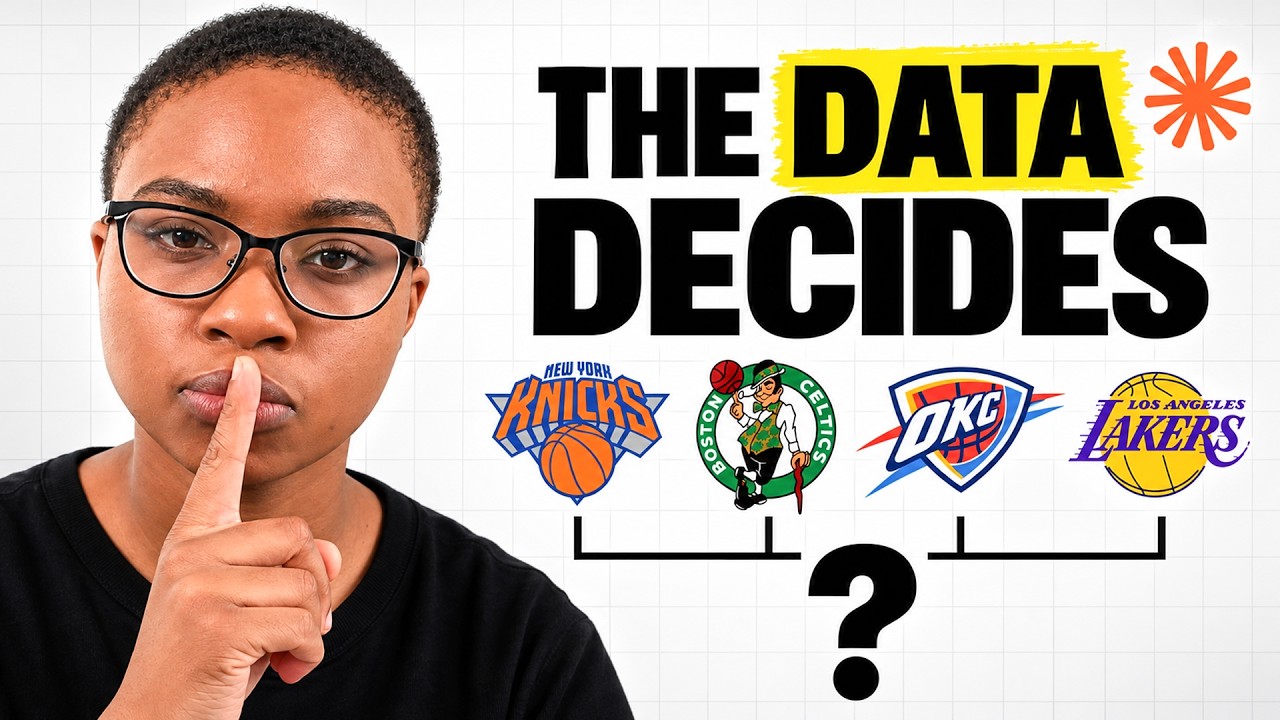
Data Analyst Portfolio Project with AI | NBA Championship Prediction Model (End-to-End Project)