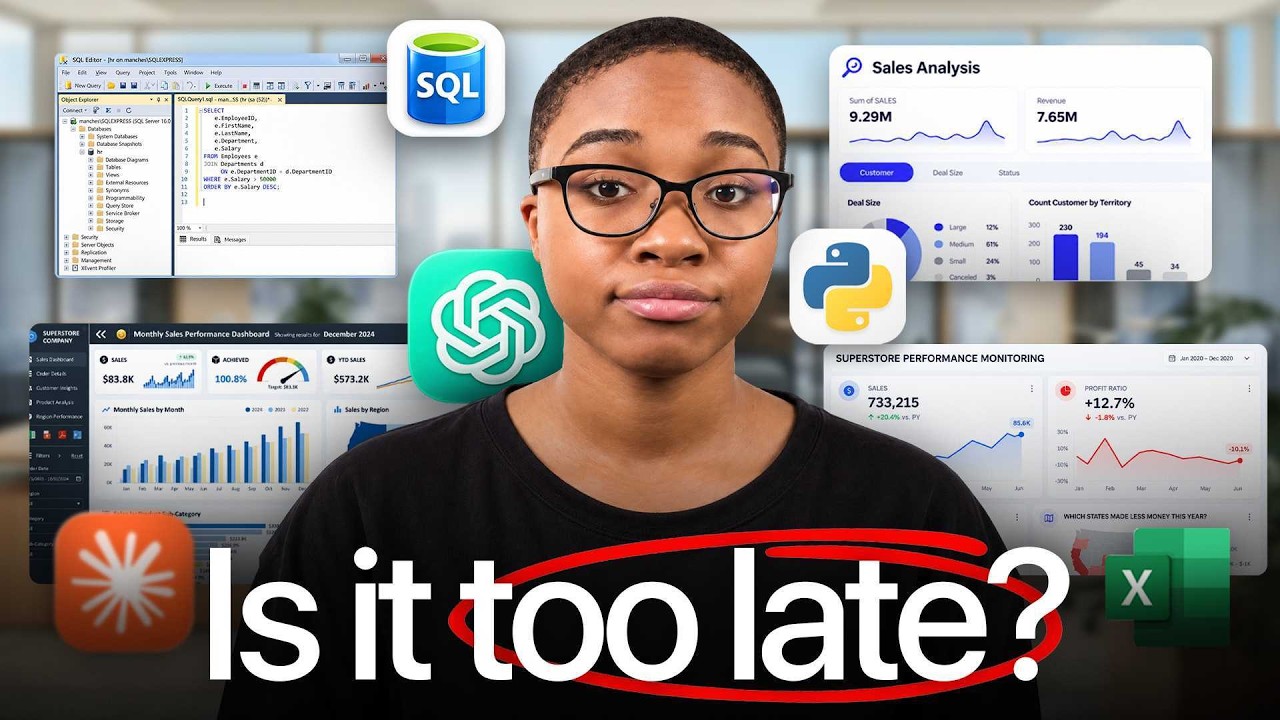
In this instructional video, the presenter outlines a five‑stage career framework for data analysts, describing the competencies, common obstacles, and growth actions required at each level. Level 1 (Excel Grunt) focuses on basic spreadsheet work and highlights the need to adopt analytical thinking and learn SQL. Level 2 (Data Detective) adds autonomous data extraction, advanced SQL, and early storytelling, while warning against messy schemas. Level 3 (Dashboard Architect) shifts to building functional BI dashboards, data modeling, and stakeholder management, recommending Python for automation and polished executive presentations. Level 4 (Code Sorcerer/Analytics Engineer) emphasizes deep Python fluency, pipeline automation, and strategic problem selection, noting imposter‑syndrome and tool overload as challenges. Level 5 (Business Strategist) is defined by executive‑level communication, domain expertise, and a track record of business impact, with the presenter stressing that strategic influence outweighs raw technical skill. The video concludes with a teaser for a follow‑up on portfolio projects that can differentiate candidates and help them secure roles at top tech companies.
Chapters
Most data analysts are stuck on level 1 and they don't even know it. They think because they can write a VLOOKUP or build a simple pivot table, they're all ready for senior roles. Well, they're not. And the gap between where they think that they are and where they actually are, that is exactly why they keep getting passed over. I see this pattern constantly in people that I coach. They've done all the courses, they've gotten all the certificates, but they're still missing the progression that takes you from a spreadsheet grunt to a strategic partner. And in this video, I'm gonna break down the 5 levels of a data analyst. What qualifies you for each one? What skills skills that you might be missing and the obstacle that keeps most people trapped. By the end, you'll know exactly where you stand and what it will take to reach the top. Let's get into it. All right, so level 1, I call this the Excel grunt. This is where most people start, and honestly, there's no shame in it. I started here, and you probably did too. At this level, you are the person that lives in spreadsheets. You're pulling data, cleaning it up, making pivot tables, and throwing together some basic charts for your manager. So what qualifies you exactly for level 1? You know your way around Excel. You can do VLOOKUPs, maybe XLOOKUPs if you're fancy, and you understand pivot tables. You can do some conditional formatting, and you might even know a little Power Query. But here's the thing, you're not really analyzing anything yet. You're just organizing, you're just reporting, you're just doing what someone else tells you to do with the data. And that's the trap. The boss fight at level 1 is the endless manual reporting loop. You know what I'm talking about. Every Monday you pull the same report, every Friday you update the same spreadsheet. You're not necessarily learning anything new, you are just maintaining. And if you stay here too long, you become the spreadsheet person and nothing more. Now, what skills are missing at this level? Real analytical thinking. You're not necessarily asking why the numbers look the way they do. You're not necessarily connecting data to business decision. You're just moving cells around. If your entire job could be replaced by a well-written macro or simple automation, you are in danger because AI tools can now do this. They can clean data, format reports, and spit out some charts faster than you can even open Excel. So how do you level up from here? Start asking questions. When you pull out the weekly report, don't just hand it over. Ask yourself, what is a story that I'm telling? What should the business do differently based on this information? That shift in thinking is what will move you from grunt work to actual analysis. And learn SQL. I cannot stress this enough. Excel is definitely the gateway, but SQL is the language that opens doors at every level. So if you're still stuck at level 1 and you don't know SQL, that's your next move, period. Okay, level 2, the data detective. This is where things start getting interesting. At this level, you're no longer just organizing data. You're hunting for answers. You are the person that can actually pull your own data from databases and you're starting to notice when something doesn't look right. What qualifies you for level 2? You've got the basic SQL competency. You write the queries, do the joins, filter data, and you pull what you need without having to ask someone else to do it for you. You understand that data isn't always clean and you know how to spot issues like duplicates, missing values, and inconsistencies. But Here's the key difference between level 1 and level 2: autonomy. At level 1, someone else hands you the data. At level 2, you go get it yourself. That's a massive shift. The boss fight at level 2 is messy schemas and confusing joins. Let me paint a picture. You're trying to answer a business question, but the data lives in 5 different tables. The column names don't even make sense. There's no documentation. And when you try to piece them together, you get duplicate rows or missing data and have no idea why. This is where most self-taught analysts hit a wall. They've learned SQL from tutorials with clean, perfectly structured data, but Real-world databases, they're a mess and you can't just navigate that mess if you're stuck. What skills you're missing at this level? You're still reactive. You're answering questions, but you're not necessarily anticipating them. You're not necessarily thinking about the business needs before they ask. And your data storytelling is probably weak at this point. You can find the answer, but you struggle to explain why it matters. So here's how you level up from level 2. First, get comfortable with more advanced SQL. Window functions, CTE, subqueries. These aren't optional anymore. They are expected. Second, start thinking about the business context. Don't just pull the data. Understand what decision is supposed to inform. Ask yourself, if I were the stakeholder, what would I exactly do with this information? And third, start building things. Not just answering questions, but creating tools and dashboards to answer questions before anyone even asks. That's what separates a detective from an architect. Okay, level 3, the dashboard architect. This is where the role shifts from just answering questions to building tools that people use. At this level, you're not just pulling data and handing over insights. You are creating systems that deliver insights automatically. So what qualities Qualifies you for level three. You know how to build dashboards that actually get used, not just pretty charts thrown on a page, but functional, intuitive dashboards that help people make actual decisions. You understand data modeling, and you know how to structure data that's easy to analyze and digest. And you're starting to automate repetitive tasks. At this level, you're working in Tableau, Power BI, and maybe even building out some data pipelines. You're thinking about how data flows from source to insight, and you're designing systems that make that flow smooth. The boss fight at level three is just difficult stakeholders. Here's what I mean: You build. The dashboard, it's clean, insightful, it answers the exact question you were asked. And then the stakeholder says, hey, can you add 15 more charts? Hey, can you show everything from this vantage point, every period? And suddenly your clean, focused dashboard can become a cluttered mess that no one uses. At this level where technical skills aren't enough anymore, you need communication skills. You need to be able to push back, to explain why less is more, and to guide stakeholders toward what they actually need instead of what they think that they want. The skills that you're missing at this level, probably Python. At level 3, you can get by without it, but you're gonna hit a ceiling. You'll be doing things manually that could be automated. You're limited in how much data you can handle and how fast you can work. And your presentation skills might be holding you back. Building a great dashboard is one thing, but presenting in front of executives that get buy-in, that's a different skill entirely. So here's how you level up. Learn Python for automation, not machine learning, not deep learning, just Pandas and basic scripting connected to APIs. The practical stuff that saves time and scales your impact. And master consulting-style presentations. I talk about this all the time because it's so overlooked. The best analysts don't just build dashboards. They build presentations that tell a story, lead with the answer, and drive action. One chart, one message, one slide. That's the formula. The code sorcerer. Now this is where you can really become dangerous. At this level, you're not just analyzing data, you're engineering solutions. You're building pipelines, automating entire workflows, and working with data at scale that can make your level 1's head spin. What qualifies you for level 4? You're very fluent in Python. You can clean, transform, analyze data programmatically, and you can understand APIs and know how to pull data from external sources. You're comfortable with automation, maybe even building out your own tools, and you're starting to dabble into maybe forecasting and predictive analytics. At this level, you're often called maybe an analytics engineer or a senior analyst. You are the person that teams rely on when the data is too big, too messy, or complex for anyone else to handle. The boss fight at level 4 is imposter syndrome and just overwhelming breadth of possible tools to use. Let me be real with you. This level is where most people just get lost. There's so many directions you can go. Machine learning, data engineering, cloud platforms, advanced statistics. And every other day there's a new tool, a new framework, or a new must-learn skill being pushed on LinkedIn. So you even start doubting yourself. Am I learning the right skills? Am I falling behind? Do I even belong here? But here's what I want you to understand. That uncertainty is part of the level. It's not a sign that you don't belong. It's a sign that you're growing. The people who make it through level 4 are the ones who stay focused, pick a lane, and go deep instead of trying to learn everything at once. So what skills are you missing at this level? Honestly, it's probably not technical. At level Level 4, your technical skills are solid. What's missing is strategic thinking. You can build anything, but do you know what to build? Can you identify high-impact problems in the organization and start prioritizing your work accordingly? And your communication with executives might still be weak. You can talk to other technical people all day, but when you walk into a boardroom and explain your analysis to executives in 30 seconds, that's when you can get hung up. So here's how you level up. Stop chasing every new tool and get really good at the fundamentals. SQL, Python, one BI tool, and storytelling. That is your stack. Everything else is a distraction until you've mastered these and start thinking like a business owner. What are the problems that cost the company money? What decisions are being made with bad data? And where can you create the most value? That mindset shift is what will make you go from level 4 to level 5. Okay, level 5, the business strategist. This is the top of the mountain. At this level, you're not just analyzing data, you are shaping strategy. You are in the room where decisions get made and your insights directly influence the direction of the company. So what qualifies you for level 5? Communication mastery. You can take complex analysis and explain it to anyone, from a junior analyst to a C-suite executive. You understand the business inside and out, and you know the metrics that matter, the levers that drive growth, and the problems that keep leadership up at night. At this level, your job isn't to crunch numbers; it's to influence decisions. You are a strategic partner, not just a report generator. The boss fight at level 5 is just presenting to executives and defending your strategic recommendations. This is where things get real. You're not just sharing insights anymore. You're making recommendations that can cost or save the company millions. And you have to be able to defend those recommendations against skeptical executives who have been in the industry longer than you have been alive. That takes confidence, it takes preparation, and it takes the ability to handle pushback without crumbling. Here's the truth about level 5. It's not about coding at all. The analysts who reach this level aren't even the best at SQL or Python. They are the best at understanding the business and communicating value. I've seen people with average technical skills reach level 5 because they can walk into any room and command attention. And I've seen brilliant coders stay stuck at level 3 because they couldn't explain their work to save their life. So what does it take to reach level 5? First, you need domain expertise. Pick an industry, whether it's healthcare, finance, marketing, e-commerce, and go deep. Understand the business problems, the metrics, the language. That knowledge compounds over time. Second, you need executive presence. Learn how to present, learn how to handle questions, and learn how to tell a story that moves people to action. And third, you need a track record of impact, not just projects you've completed, but results that you've driven. Revenue increase, cost reduce, decisions improve. That is what gets you to the top. Now that you understand the 5 levels and where you stand, there's something else most important people get wrong. They know where they're at, but they have no idea how to build projects and experience to get to where they want to go. So in my next video, I'm going to walk through the exact portfolio projects that separate you from 99% of the competition and actually will get you hired. It's the same approach my students have used to land roles at Microsoft, Roku, and other Fortune 500 companies. Click right here to watch it now.
More from Kedeisha



Data Analyst Portfolio Project with AI | NBA Championship Prediction Model (End-to-End Project)