In this instructional video, Kedisha Bryan, a self‑taught data scientist and career coach, argues that conventional data‑analytics tutorial projects no longer help job seekers because they are overly clean, generic, and fail to demonstrate real‑world consulting skills. She introduces the "Volunteer Analytics Consultant Project" as a strategic, low‑cost way for aspiring analysts to gain authentic experience and create a portfolio piece that mimics the work of a paid consultant. The video outlines a five‑step framework: (1) identify and outreach to a local nonprofit that needs data help; (2) treat the engagement like a paid consulting project with a kickoff, data‑wrangling, insight generation, and stakeholder communication; (3) deliver tangible value within 30 days, producing a dashboard (Excel, Tableau, or Power BI) and a consulting‑style slide deck built on the Pyramid Principle; (4) package the results as a case study, publish it on LinkedIn, and use it to brand oneself; (5) leverage the case study in resumes and interviews. Kedisha shares success anecdotes—students moving from truck driving to analyst roles at Microsoft, Roku, and Fortune 500 firms, earning $20 k raises in 90 days—to illustrate the approach’s effectiveness. She emphasizes the need for initiative, comfort with messy data, and rapid impact, positioning the project as a differentiator that can propel candidates into six‑figure data‑analytics careers without additional degrees or costly bootcamps.
Chapters
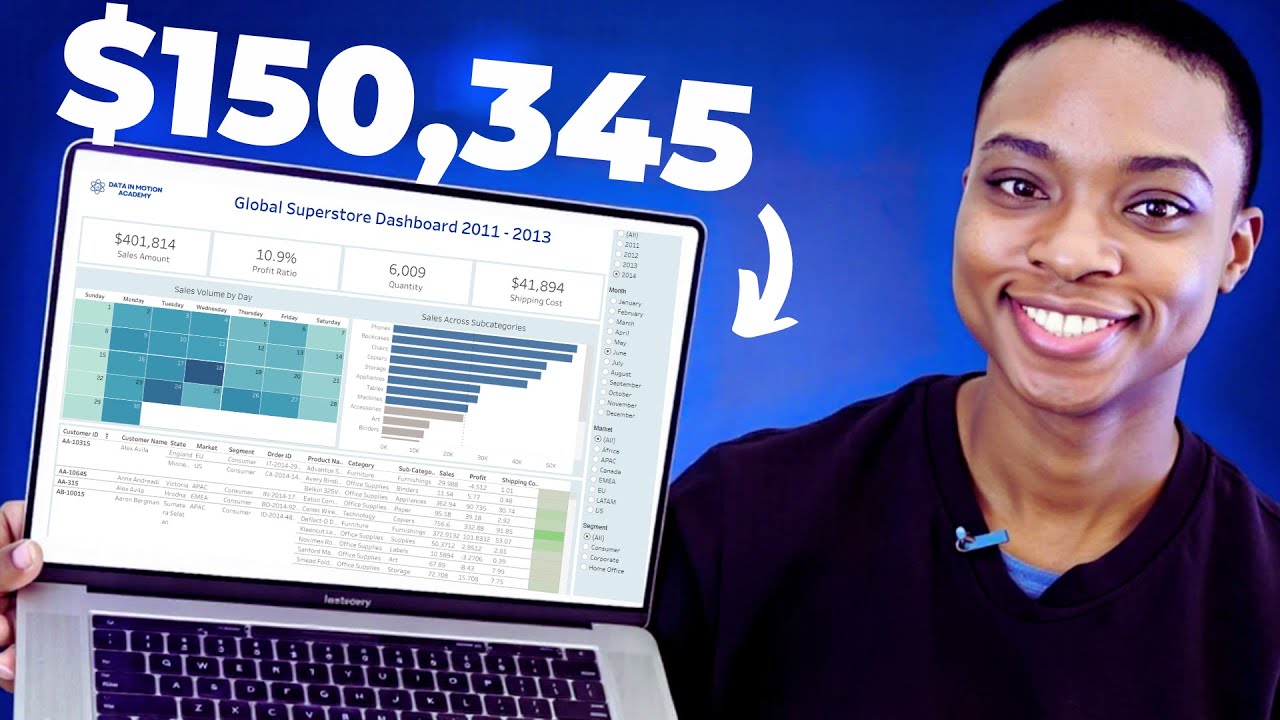
You probably don't want to hear this, but the one thing standing between you and that high-paying data analyst job is not another course. It's the right portfolio project. And no, not the projects from the Google Data Analytics course or some random walkthrough tutorial on YouTube. I'm talking one strategic, real-world project that screams, I'm already doing the job. But most people skip this, and that's why they're stuck on the job market. But if you want to bypass the gatekeepers, dodge the no experience excuse, and finally land interviews that lead to 6-figure job offers in data analytics, this is the portfolio project that will do the job. And no, it doesn't require a fancy company, another degree, or a ton of free time. What I'm about to show you has helped my students go from truck drivers to analysts and land roles at big companies like Microsoft and even score $20,000 raises in about 90 days. Now, if you're serious about getting hired in 2025, this is your blueprint. You better watch the video until the end so someone else with even less experience and talent than you takes the job that you're aiming for. Now, if this is your first time here, my name is Kedisha. I used to deliver pizzas and now I deliver insights as a self-taught data scientist, and I've coached thousands of other career changers how to break into data without going back to school. And now I'm here to teach you how to do the same. If you ever wanna work one-on-one with me to land your first data analyst role in under 6 months, click the link in the description so we can get you hired ASAP. Now let's get into it. Now, before we dive into the project, let me hit you with a hard truth most people don't wanna hear. Most data analyst projects don't get people hired, and here's why. They're built for learning, but not proving that you actually have the skills. They use perfectly curated datasets with clear instructions. They're often way too clean, too polished, and just too generic. Hiring managers have seen them a thousand times. Netflix dashboards, COVID dashboards, Superstore sales, all over GitHub, all over LinkedIn, and you blend in before they even click on your profile. But the people who actually get hired, they build projects that solve actual business problems that mimic what analysts do on the job already. Dirty data, confusing objectives, unclear outcomes. That's real life, and that's what recruiters and hiring managers are scanning for. This project that I'm going to walk you through in this video, it's different. It forces you to act like an analytics consultant, not a student, and it shows you how to take initiative, work with messy business data, and deliver clear insights that drive action. This is the same kind of project I've seen land my students jobs at Microsoft and Roku without another degree and more certifications. And the best part? Almost nobody else is doing this, which means you instantly stand out. Now let's get into the only portfolio project that you need to separate you from everyone else and the so-called aspiring data analysts out there. This is a project that flips your resume from student to strategic partner, and more importantly, it gives you what 99% of people don't have— evidence. Because in this job market, nobody cares what you say you can do. They care what you've actually done and what you can prove. And this project shows them exactly how. And this is what I call the Volunteer Analytics Consultant Project. But let me be clear, this isn't just volunteering. This is real business analytics, real decision-making, real deliverables, and a real transformation for organizations and for you. And no, you don't need to wait for someone to hire you. This is how you create your own experience. And I'm not making this up. This is the same kind of project my business school gives to students who are paying over 6 figures to earn this degree, and the same kind of project that gets those same students $150K roles after graduation. But I'm going to teach you how to do it yourself without the gatekeeping and without the debt. So let's break it down step by step. Step 1, reach out to a local nonprofit. Start with a Google search and find nonprofits near you— food banks, shelters, churches, educational programs— any organization that runs on spreadsheets and is drowning in data that they don't understand. And don't overthink the outreach. Keep it simple and direct. Offer them 30 days of free analytics support. Let them know that you're looking to help organize and analyze the data that they've got— donor lists, event attendance, surveys, budgets, whatever they have. You're not asking for permission to learn here, you're offering them value. Out of 10 outreach attempts, one will eventually say yes because they need the help and no one else is offering this. Step 2: Treat it like a paid consulting project. From day one, act like you're on a client project. Set up a kickoff call, ask smart questions. What's the problem they're trying to solve? And what data do they have? And what decisions are they struggling with? Get their Excel files or Google Sheets. This will be messy, inconsistent, but 100% realistic. And then clean the data, explore the data, extract actual insights, not just stats, not just pretty charts, but real takeaways that they can act on. Once you've got the insights, it's time to build your deliverables. Your first deliverable will be a dashboard report that you can build in Excel, Tableau, or Power BI. And once you've got your analysis, Now it's time to build your second deliverable, a slide deck. And this isn't just any slide deck. This is a consulting-style presentation that follows the Pyramid Principle. So what does that mean? You lead with the answer and you support it with key insights and you structure it to drive decisions, not just dump data. It's clean, it's strategic, and it makes hiring managers pause and say, wait, this person actually gets it. Now here's what it'll look like. You start with the objective. What business questions were you solving? And set the stage clearly and concisely. Then you move on to key insights. What did the data reveal? Present 2 to 3 bulletproof insights that matter. Then data visuals. Support those insights with one strong, uncluttered chart per slide. And then your recommendations. What should the organization do based on your findings? Then impact. Quantify the business value and show how your insights lead to real outcomes. Each slide should have one clear message, one purpose, and one clear takeaway. You're not just sharing information, you're guiding a decision. That's what analysts do in the real world. And when a hiring manager sees this, you go from just an interesting candidate to a must-interview. Step 3, deliver value in 30 days or less. Now, this part is crucial. You're not staying there forever. You're delivering results in 30 days or less. Why? Because this is about building proof fast, something you can speak about in interviews, add to your resume, and post on LinkedIn. And once you deliver that value, you walk away with a polished case study, a project to showcase on your portfolio, bullet points for your resume that actually matters, and a testimonial that proves that you are the real deal. If they ask you to stay longer, that's completely up to you, but your goal is to create a measurable impact quickly that you can add to your resume and speak confidently in interviews. Step 4, make it part of your brand. So once your project is done, don't just let it collect digital dust. Post about it on LinkedIn and you turn it into a clickable portfolio project. You practice how to talk about it in interviews. That's what gets attention. That's what gets callbacks, and that's what gets offers. Step 5, the proof is in the results. So let me show you what actually happens when people actually implement this strategy. One of my students went from driving trucks to landing a process analyst role in about 90 days by treating this project like a real consulting engagement. Another came straight outta college with zero job experience, But because they had this kind of project on their portfolio, they secured not one but two internships. And someone else coming from the entertainment industry used this exact framework, paired it with solid SQL and storytelling, and is now working as a data analyst at a Fortune 500 company. This isn't theory and this isn't some bootcamp promise. This is what real execution looks like. So what are you really learning here? You're learning how to think like an analyst, not just follow instructions and follow along some tutorial. You're building experience in data wrangling, stakeholder communication, business problem solving, storytelling with visuals, and presenting to decision makers. You're doing exactly what real-world analysts do, and not just what courses teach. You're building confidence, credibility, and leverage. The pros: immediate experience, low barrier, sets you apart fast, and it costs you nothing. The cons: you have to take initiative, you have to break out of your shell and reach out to these organizations, And you'll probably be uncomfortable at first, which is why no one actually does this. But the few who do, they win and they launch 6-figure careers in data analytics. So now you have the full roadmap, not just theory, not fluff, a real portfolio project that puts you at the top 1% of applicants without another degree and without waiting. And if you're telling yourself you still don't have the experience, now there's no more excuses. You just learn how to create your own. The only question is now, will you actually do it? Because the people who win in the market, they take the messy data, unclear problems, tight deadlines, and they deliver. That's what this project trains you to do, and that's what hiring managers want to see, and that's what gets you hired in this job market. If this video helped you even just one light bulb moment, make sure you like, comment, and subscribe. Let me know what kind of organizations you're thinking of helping with your project. And if you want to work with me one-on-one to land your first data analyst role in 6 months, Click the first link in the description. You'll get a clear strategy, real support, and results that get you paid. Take the first step, build a project, and I'll see you in the next video.