10 Things That Require Zero Talent
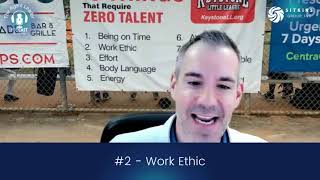
Brent Kelly and Roger Sitkins use a Little League sign listing ten zero-talent traits to discuss what matters most in insurance agencies. Being on time, work ethic, effort, and body language are non-negotiable. Sitkins shares practical tips like recording presentations to fix your tone and building appreciation, respect, and trust with clients.
Chapters
Welcome to the Agent Leader Podcast. My name is Brent Kelly, your host. Thanks so much for joining me on another episode. As always, the purpose of the Agent Leader podcast is to help you, the independent insurance agency professional, to gain clarity, build consistency and to make a commitment to become your best version possible. Which, by the way, we've teased this a couple times on this podcast. We have a brand new book coming out called Best Version Possible. It's a clear path to your agency of what is the best version possible for your agency, what does it look like? And of course, actionable steps of how to get there. And I'm welcomed today by a regular guest, also the co author of Best Version Possible, our book coming out, Roger Sitkins. Roger, welcome back to the Agent Leader Podcast, Brent.
As always, it's great to be here and share some ideas, strategies with agencies that do help them get towards that best version possible.
Well, Roger's been a regular guest here, as many of you know, if you're an avid listener. And today we're going to be talking about a topic that comes from real life. I guess all topics come from real life, Roger, but this was an experience that you had recently with your grandson. I'll get to that in just in one minute. But I do also want to have a reminder to all the listeners that if you've been on the fence or been curious or interested to say, hey, listen, this best version possible, this process, this Sitkins Network that Brent has mentioned before, is it a fit for my agency? Well, now is the time to truly take a look at it. We're recording this on December 1st. It'll come out sometime early in December. And all of our core programs for 2022 begin in January of 2022. So don't wait any longer if you're curious. If again, what does this look like? What does this mean for my agency? How is it going to help organic growth? How is it going to help the culture of the agency? How is it going to help profitability? Which by the way, it will do all those things and more. This is your time to go to sitkins.com aim sitkins.com aim to learn more. Schedule a call and see if it's a fit for your agency. We'd love to have you on board for 2022 and help your agency get the results that you've only dreamed of. And we're excited to share that with you. So without further ado, Roger, do you want to get into the topic for the day?
Absolutely.
All right, well, I'm going to set this up. And I know that you know, many of you listen, just all of you on the podcast, but we're also recording this on video. So I'm going to pull up on my background. So if you are a video watcher, I've just put on here in my back backdrop here of my screen, something that Roger sent me on an early morning text. And Roger, one of the things that I love about you is that if you have an idea that's worth sharing, you will send me a text and say, hey, look at this. And this is one of those things that that was sent to me. And I'm going to have you, Roger, tell the story where you saw this. And we're going to go through these and talk about the impact independent insurance agencies. But I want to read through what it is, all 10 of the things that are on there succinctly. And then Roger, allow you to share your story and we'll talk about these individually. So if you can see behind me and some of you can't, it says 10 things that take zero talent. So this is not a podcast necessarily about talent, although talent's important, but these are 10 things that take zero talent. And it says being on time, work ethic, effort, body language, energy, attitude, passion, being coachable, doing extra and being prepared. And I love all of these. And so, Roger, I'm going to turn it over to you and maybe just share what, where you saw this, what it means to you, and then we'll hit each of these individually. So take it away.
I'm happy to share it. I'm just sitting here smiling because this was a quick picture I took on my cell phone at the Keystone Little League. One of my grandsons, Logan, who's going to be seven here actually within a few days. This was the last game of the Little League season, his first Little League season with coach pitch, not T ball, unless you couldn't hit it. Then they finally put it up there and my wife Stephanie and I went up and got chance to see Logan play the game. It's the first time we'd seen him in Little League. We knew he practiced all the time. He really loves it. And as I was leaving, I looked over and I said, look at this. Here are some lessons that they show for the kids in Little League and do they apply with what we do. And this was just north of Tampa in Odessa, Florida. And I looked at it, I just started smiling. I showed my wife Stephanie, say, steph, come here, look at this. She said, that's the stuff you talk about most all the time. And I coached Little League, both the hard ball, the regular baseball, baseball, excuse me, and softball with my kids for, geez, 10, 12 years. So it just really hit home with me. That's why I sent it to. You know, this requires zero talent to get these things going on. So let's, let's jump into it, Brent. Just talk about each one and how they, in some cases, can certainly apply to an independent insurance agency.
Yeah, and I get, when you sent it to me, I was like, I looked at, like, what is this? And I'm like, you know, zooming in on my, on my phone and I'm like, oh, these are great. And I've seen similar things to this before. But it is funny, you know, in my situation, as many of you know, I've got, you know, five kids, all still at home at this point. And so, you know, life definitely mimics business and vice versa. And these lessons, they really don't change. Right. Whether you're 5, 10, 50, or 80. Right. I mean, some of these things, it's just doing the right things. But I do want to go through these and just talk about what we see and how it applies, specifically independent insurance agencies, because all. There are similarities. There's a few nuances that certainly things that we talk about and that we, we believe in, that we know will make an impact to you as a listener. So let's go through. And I guess, Roger, what I'll do is maybe some of these, I'll jump in and give my thoughts, and you can piggyback. And then sometimes if you have one, you want to jump in, and then I'll piggyback or whatever. And some of these are going to be a little bit. There's, there's similarities, but I think they're all very important. So we'll start with number one, being on time. And so can I go first on this one, Roger?
Absolutely.
All right. So, because I was thinking of being on time, it's like, well, duh. But one of the things that we talk about at Sitkins, and certainly when it comes to high performance teams, is an acronym art. And I think when I saw being on time, it's like, well, listen, ART stands for appreciation, respect and trust. And if you're not on time, you're showing a lack of appreciation, you're showing a lack of respect, and you're certainly not building trust. And so I think about that with insurance, independent insurance agencies, whether it's a producer or any person in the agency, if you're late for A meeting. Certainly if you're late for an appointment. Right. You have just devalued that other human being and it's just not okay. I mean, things happen, but it's just not okay. So that's my take on the first one. Roger, what do you think?
Well, I think one of the biggest ones is just the respect you're showing others. If you have a set appointment, whether it's internal or external, be on time. And I'm a big fan of Vince Lombardi, and most of the listeners may not even know who that is, the legendary Green Bay packers coach, but they say he had Lombardi time and he would start his team meetings normally five or ten minutes ahead of time. And if you showed up on time, you were late. And that was the culture there, being on time. So it's one of the things that we push for our own selves when we have a meeting, be on time. And so when you have a meeting with anybody, show up on time, maybe even be a little bit early, but never be late, because the minute you're late for something, you're losing credibility and people just don't trust you. So absolutely be on time.
As you said that, we've got our musical director in our school district. Great guy, does a great job with the kids, but he says because they have all these different practices and rehearsals, and he said, you know, being 10 minutes early is on time, being on time is late, and being late is unacceptable. And I always liked that. So in the kids minds, the culture is if we're going to be somewhere, plan on being there 10 minutes early. Because things do happen. It's like, well, I ran into traffic or I got that call or whatever. If you're at work, it's like, well, those things do happen, so plan accordingly. Give yourself some buffer. So, all right, so that's number one. Number two, work ethic. Roger, what say you on this one?
Well, one of the things that I see all too often is because in our business, you can do a half fast. I said fast job. And you can become semi successful. We talk about this all the time. And what I see is some people just aren't willing to put in the extra effort. They're not willing to put in the extra time. Effort's the next one. But just the fact that you're willing to work hard. And something we've talked about in some of our online the last few weeks is the whole concept of winning, that winning is better than not winning. And the question we ask people is, are you willing to Put in the work to win, because you just don't show up and win in life. You've got to have the work ethic. So the person that I want is the one that says, you know what, I'm going to roll my sleeves, I'm going to jump in there, I'm going to do whatever it takes. I'm going to outwork everybody else.
What I jotted down when I saw this and thought about was a book that I read, it's probably been 10, 15 ago, called thou Shalt Prosper by Rabbi Daniel Lapin. Fantastic book. It's like the Ten Commandments of Making Money or whatever, had a really cool perspective. But one of those things that he talked about, he talks about the lack of work ethic, work ethic. And some of it is, what's the purpose for your work? Now I think if you're just working only for yourself or some people have that self discipline. But when you start to say, listen, I'm doing this for another human being, or from a spiritual sense to God or a higher power, it makes it more meaningful. And so to me, work ethic is. Goes back to your purpose, your why. Why do you do really what you do? If it's, you know, I mean, you could use this for anything. It's like, well, if the purpose is, you know, I don't flipping burgers. Well, I just flip burgers. Well, no, what you do is you allow someone to eat something right for that day that they a great experience. It's just taking a higher level of whatever it is. Why do you really work? Why does it matter? Right? And why does it matter to other people? And just have that sense of pride in your work ethic. So love that one. And the next one, again similar, but take it to the next level. Effort, effort. So Roger, what do you think about from independent insurance agencies? You think of effort, One of the.
Things we challenge leaders on, and producers and account managers, everyone that we work with is real simple. If you're going to put in the time anyway, why not be great at it? If you're going to put the time in anyway, why not be great at it? And so that as you're going through life, you realize that, wow, I'm really going to get some great results here because I'm putting in the time and everybody eventually leaves the business, no matter what. And one of our favorite things, well, two favorite sayings, one is, you know, if your goal is regrets, stay the course. Don't change anything you're doing. You'll have some regrets at the end of your career. But if you want regrets, then what do you have to do and how much additional effort? So if you're going to put in the time, just be great at it. And every time we've said this, whether it's a virtual event or a live event, you see people go, yeah, that makes a lot of sense. Why not? I'm here anyway, right?
Well, I just think I 100% agree, obviously, with that. And you're right. You're at a physical space and time right, at a certain point. So just be there. And what hits me is I think this actually what hit me when I was thinking about this one is I think what happens with effort sometimes is distraction. Like we're not. We're not 100% present of where we are, which is disrespectful, number one. But you never give it your full effort. You know, you're. You're conflicted in your mind and, of course, in your actions around that. So I like what you said. If, you know, if you're going to put the time in anyway, why not be great at it? So if you've got 10 minutes, 30 minutes, one hour of doing a project or something, do it all the way and then move on to something else and do that 100%, but quit 50% or 80% and everything because it just leads to more frustration at the end of the day. Yep. All right, so number four. We got the first three. Now we are at number four. I love this one. We live this one every day, Roger. But body language, this is something I know you share and I share. This is based on a study that years ago now, and there are different philosophies maybe around what the study really means, but what the studies show, that when it comes to influence and communication, only 7% is words, 38% is our tone of voice, and 55% is body language. So, you know, not to shortchange just our audio podcast, but if you are just listening to my voice, I have got words and I have got my tone of voice, which you know are important. But also if you are just listening. Do you think I am smiling right now? Right. Am I animated? Are my hands moving? Am I slumping over? Am I frowning? Right. All those things, you know, matter so much. Roger, maybe you were going to say this anyway, but one of my favorite things that you can. Sometimes I use the word catch. But you'll notice about other people when they're having a conversation is sometimes their body doesn't match their words. In fact, You've caught me doing that a few times. So what do you think of when you think of body language, Roger?
Well, it's so simple. It's not what you say, it's how you say it. Okay, We've all heard that. And then with the body language, if it's right, you can say almost anything to anybody. And in our in person events and even the virtual events when we've done this, the one, those of you that are listening can't see it, obviously. But what Brent was referring to is when someone says, and I'm shaking my head no, you know, side to side, people say, boy, I'm really committed. No, you're not. You just said you're not. No, I'm really committed. But they're saying no. And I always watch TV commercials for that. And it drives me nuts when I see because it's not a congruency in communication. Okay. And in the events, we'll walk up to somebody and just say, hey, how are you doing? Good to see you. And then we build on it. And I say, you know, Brent, I just want to tell you. What. Thank you so much for being here. You're the dumbest person that's ever attended. People go, what? And they don't catch it right away. And I just say, start watching yourself and your communication with others. Because if you're saying, oh, yeah, I'm really committed, or I love you too, you know your head's going, no, I don't. It's just wrong. And so, so many people don't realize the power of this. 55%. 55%. Your body language. What is your body language and your tonality saying, well, I'm really excited and so committed to be here, Brent, that we might do a good job for you. Come on. You don't want to be fake, but at least use it. It's real. And most people. I'm going to guess that 90% of the people listening or watching have heard about this. But do you track yourself? It's a great example when you're rehearsing your presentations or when you're filming a live Zoom event. I sure hope you do. Is this something that you review afterwards to say, hey, how did I look? How did I sound? Was the message clear? Was there congruency or is there not congruency? And so many times we found when you debrief people, they say, I don't know why I lost that sale. And you watch and you went, here's exactly why you were not congruent in your communication it's huge. And most people ignore it.
Yeah, there's a huge disconnect in many cases, Rogers. Certainly with insurance professionals and producers in particular. We do sales discussions from what they think they said and did or how they said it and what they actually, you know, what they actually look like and how they actually said things. And so certainly, I mean, with video presentations and all these conversations we do and we'll continue to do. Record yourself and watch. What did you like? What did you not like? If you were talking to yourself, would you be annoyed? Would you be excited? Would you be compelled? What would your emotional state be? And of course, doing the in person things as we'll continue to do as well. When you're practicing those in person things, record yourself. Well, I don't want to do that. Why? Because as you know, Rod, we always get a chuckle out of this. When I ask specifically on our Producer Fit program, you know, how many you like to listen to the sound of your voice when you record it? Well, I don't like that. How many like to watch yourself, you know, video yourself and then watch it afterwards? I don't like that. And we all kind of get a chuckle out of it. But something I always say is, well, how do you think your.
More from Roger

This Shift Helped Us Unlock Growth 💡 | Agency Leadership Tips #insuranceagency #agencygrowth





How AI Can Help Insurance Agency Owners Master Their Financials (Without Being a CFO)

From AI Hype to Real Results: Steve Anderson on How Insurance Agencies Can Use AI to Grow Now



