A Tech-Savvy Yet Human-Centric Way to Grow Your Insurance Agency
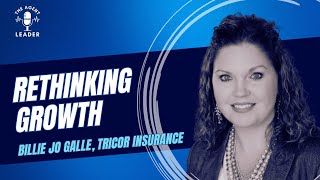
Transcript of an Agent Leader Podcast episode (host Brent Kelly) interviewing Billie Joe Galli, Senior Vice President of Marketing and Operations at Tricor Insurance. The conversation covers Tricor’s growth (M&A and organic), the agency’s emphasis on data and technology, challenges modernizing AMS and surfacing policy data, and people/culture strategies for technology adoption and high-performance teams.
Questions this video answers
Senior Vice President of Marketing and Operations
About seven years
Wisconsin
CUNA Mutual Group for about 12 years
Brent Kelly
Chapters
So how does a hyper growth insurance agency, in terms of mergers and acquisitions as well as traditional organic growth, balance the operations based in technology and the growth of their people? On today's Agent Leader podcast, I have a fantastic interview with Billie Joe Galli of Tricor Insurance. She's the senior Vice President of Marketing and operations and has a very unique perspective on on how things can and should run to make sure that people are utilizing technology and the data that they have at the highest level. Fantastic episode. Enjoy. Welcome to the Agent Leader Podcast. This is the podcast for insurance agency leaders to learn, to grow, to develop and ultimately become best version possible leaders who lead best version possible agencies. My name is Brent Kelly. I'm your host. It is my pleasure to be with you today and also my my pleasure to have an incredible guest, someone who has been a partner with the Sitkins Group for a number of years, their agency. I got a chance to know her through coaching calls and some other experiences we've had. I've got Billy Joe, Golly with me. She is the senior Vice President of Marketing and insurance operations. And I'll add this, she seems to be the chief everything Officer in so many ways for Tricor Insurance. Does a great job. So, Billy Joe, welcome first and foremost to the Agent Leader podcast.
Thank you for having me. I'm excited to be here.
Yeah, well, we're going to have some great conversation and I know that you know, your experience, Billy Joe, is you've got a unique perspective from an agency side of things. So many things that you do and so many amazing things that Tricor Insurance does. And Tricor is located in Wisconsin. I've had a few other guests from Tricor and now I've got Billy Joe. And again, there's so many things that you guys have done to learn and to grow. And before I get into some specific questions on successes and challenges that the audience can learn from, if you would just share a little bit about your background, how you got to where you are today, what specifically you do, and certainly some information about Tricor Insurance as well.
Yeah, sounds great. So, Billie Jogale, I have been working at Tricor for about seven years. So I have both our marketing as in brand and advertising. I've learned in this industry you need to let people know that side of it. And then I have the insurance operations team. So that includes our service team, our data team, so the people that run our AMS system from a data and technology side training team. We have quality assurance and training and it's just a really amazing team. That we have here. And then previous to Tricor, I worked at Cuna Mutual Group. So I was a part of the team that helped them develop the Trustage brand which is a direct to consumer insurance company. So selling life insurance, AD&D auto and home direct to consumer. So we did a lot of really fun projects but it built on my background of a data marketing so using a lot of data and technology to target market. I was there for 12 years in building that role and previous to that I was actually in the retail industry. I worked for Lands End for a period of time going through college and different things like that. So it's been a really fun ride.
Yeah, it's awesome. And I, I wrote down on my notes you're saying there, I mean this is a positive thing but you got your fingers in lots of stuff, so to speak, right? There's a lot of different areas and certainly in the fact that you think of operations, I mean that's, that's a lot of stuff. And as you said, you've been a tricore for seven years. You, you all have changed just a little bit in seven years. Is that, is that fair to say? There's been some evolution and growing and growth over the last seven years?
Yeah, it's been really fun. So not only M and A is a big portion of our growth, but so is organic growth. So really the portion that we spent a lot of time building the foundation of is our intersection of data and technology in order to leverage for multiple things, whether it's marketing, it's sales pipelining, it's reporting and business analytics. So you know, going from a owned by two brothers agency as well into full growth mode in backed by private equity now we have great partners in that helping us with capital as we're purchasing agencies as well. So. And really the industry is going through a shift of trying to modernize itself into the technology and data and just using that to make decisions and be more effective and efficient. So. And then put on top of that a really interesting hard market. So it's been, it's been a fun few years.
So yeah, I just, you know, think about this and obviously your impact personally but you know, got a lot of great people, I mean so many good people on your team but this idea of data marketing, but then you think about the changes that you've all had just as far as sheer volume and numbers plus just how you do things in people and technology and what's all involved in that and I'm so excited to get, you know, your viewpoint I mentioned just from an operation side and the part that you've got that data background, because I think there's so many agency leaders and insurance agencies that are interested in that, want to learn more about that. How do we take the next step? What did you do? What does it look like? So what may go all kinds of places on, on some of the questions and conversations. And I want to start by just leaving it super simple and wide open from your experience. And we'll just, you know, you can go anywhere with this, but you're back seven years. Maybe it's something you're working on now. Maybe it's something you accomplished three years ago. What's been, in your opinion, a great success that you've been a part of at Tricor, Right. And your team have done, and what did you learn from that? I just love to start with successes because the success leaves clues.
Oh, gosh, I could go a couple ways in this one. One avenue that we've had is we built a very talented, robust M and A team. So as we're able to bring multiple in about a week, we're bringing two more onto the system in one day. So, and that team is constantly thinking of the data and making it accurate and clean. And so we get a very good picture of what's coming in. It's really valuable to us because it could also bog you down if you did not build a team that is very efficient at what they're doing and you would never get a view of your true business analytics as those data points come into the system. The other side I would go for that is just really leaning into being a data and technology first company. You know, when I came, they had epic, they had an AMS system, not great at being accurate, of putting all the right things in all the right places. And we really leaned in and cleaned our data, cleaned all, all the workflows, everybody doing things consistently. And honestly, if we would not be able to do what we're doing today, if that really wasn't a foundational starting point for us really understanding the system, how it works, why it works different ways, and then just being very clean data experts, I just, I feel like that gave us an edge of being able to do more and bring in other technology to use.
Yeah, yeah, it's, it's, and again, you guys have done such a great job with that. And I mean, here's a couple things that I, I, I could take as assumptions that are, are correct because they're close enough. Technology is expensive, right? Certainly in different Ways, Right. And the upfront part of it and the other part that I see so often in Agen that whether agencies have an abundance of technology, an average amount of technology, maybe not much, they typically only use a small percentage in the way that they can and should of what they have. And so I'll approach my question this way. And I know that no agency is perfect, Tricor is not perfect. But you've come a long way. How have you been able or what have you guys have done to be able to integrate the technology with people? More importantly, how do you get the people to embrace it? Because a lot of the M and A's and things that you're doing, right, you have agencies, maybe they've used technology in different ways. So have you gotten. I don't know, you tell me. But this idea of like almost a fear of technology to. Well, maybe it's okay to like, okay, we'll actually use it to. This is who we are as a culture. Like Right. That whole process. So I don't know if I even had a question in there, Billy Joe, but I just, I loved. I'd love to hear more about the evolution of how you've been able to facilitate that process.
When I first started on it, I, I used actually other industries that have been through this. So you know, back in the late 90s at Lands End we were doing email marketing in a very poor, non automated way, but using the data we had to do email marketing. So you give the situation of can't use it if the email's not in the right spot, if it's in somebody's outlook and not epic. Right. You can't automate things. So you really start with a story around how other industries at cuna I got a opportunity or a voluntold on a project for. If you remember when ATMs it used to take 5 to 10 days for it to show up in your bank account. Well that's because the data wasn't connected. It was a human behind the scenes taking the data, typing it in. And so I got to be a part of a project with fiserv and the credit unions that we served at CUNA to connect the data. Well, the credit unions really wanted it because of non sufficient funds. Right. Taking money out that you don't have and then it's instant. Today it's instant. You can go anywhere and take out money as much as you would like out of your accounts. It's kind of anywhere in the world. So once you paint a picture and then you have a Vision of look at our data. This is amazing data. And you can do if this, then that scenario is, oh, if you only have the home line, you can use automation to say if it's home, and not auto send them a campaign that says, can we bundle your package together? And it's an intersection of technology and humans because it's, it's not only the email that's going to make a conversion, it's going to be somebody else following up as a human and say, hey, did you get my email? I'd really like a chance to talk. It's that whole client experience that you build or prospect pipelining experience. You build to really make the vision work for people. And then when it starts connecting, they're like, this makes total sense. Just gotta break it down. So it's in simple terms, and we're really lucky around just having the culture of thinking forward, thinking outside the box. Don't put me in a box of thinking. Just really great talent that let's have that as our values as a team. And we ask perspective and we ask for different things like that. So I think it's, it's, it's been really fun.
Yeah, that's so good. And, and again, kudos on the work that you've done, your team has done in that area because it's not easy. But what I, what I heard and took in a couple, I guess, comments and maybe a question around this is that, you know, we talk a lot with agencies about, you know, culture and process and if you don't establish parts of the culture, right. Some of the beliefs that we have, and I love what you said, like painting the picture, a vision, this is what this could look like. This is why this is so important. You know, could you imagine. Again, however, you know, people do that, if we don't establish aspects of that and instead we just start introducing a bunch of processes and stuff, shockingly, people reject that very quickly. Like, I don't want to change that, I don't want to do that. I mean, we never, you know, we've never done it that way before. All those kind of things versus being able to kind of take them on a journey. And I always say, you know, I said this in this podcast before Billy Joe, that great leaders see more and before others.
Right.
Like, I see more and before. And it's not to say that we're smarter or better, but it's like there's this vision and could you imagine? It's like, wow, maybe. And then I love what you said, being able to Say that we can have open communication around this, allows them to have some feedback and gives them buy in. And you know, I'd be willing to say you didn't have 100% buy in, but you probably have a lot more than you used to. Is that fair? You've got more than you used to?
Yeah, I think I really, I really do think there's, there's, there's people that they wanted to, you know, retire doing the things they were just doing. Right. I get it. I'll probably get there someday too. But it's, it's really a mindset of people that want to learn. They want to learn, they want to grow, they, they want to get more efficient. They don't want to do mundane tasks. They want to use their brains and think more and not use my fingertips, data entry things. So it's really a passion of, hey, if you want to get more time, all you got to do is this process. In this way. Are you willing to let go of what you used to do and have that just sort of that emotional conversation? There's so much emotional tie to what we believe is the value that we bring. And you have to let go of something you really valued that you did for a long time.
That's it. I mean, it's so true. It's about the results you want, the behaviors, but what do you believe about that? And that goes back to their values. And I love, maybe you comment on this too because you set it up about the home and auto example. We know that technology will continue to evolve and adapt and it has, I mean, at rapid paces. And the fact that you had these experiences back, what did you say, late 90s, you're doing email marketing. I mean insurance agencies in the late 1990s were just glad to have computers, I think in some cases. Right. I mean there's some truth to that, by the way. So I think about this in technology and some people can get very scared by it. Or even when I talk to, to producers or anybody in the business, it's like, oh well, technology is going to replace me. I'm like, no, technology only enhance your relationship, help you leverage relationships, have you start conversations at higher levels than you would have before. And I think for some people, let's be this is, this is my real talk on this and I'll just use producers for an example. Um, well, gosh, if you take away these mundane tasks, then what do I do? You do higher level work, you have higher level conversations, you truly become a risk advisor, for example, versus just Basic stuff that technology can do better and faster than you anyway. So I don't know if again, not really a question there, Billy Joe, but just agree, disagree. What are some of your thoughts on just how, how we can leverage our relationships by, by using technology?
Yeah, I think I absolutely agree. It's about enhancing what's already there. We're really in a world where consumers expect instant gratification. Right. If I order something and I don't get tracking messages like I'm like, what happened? Something didn't go through. There's an expectation of instant communication. And the insurance industry is probably one of the furthest industries behind being able to do that in an automated fashion. Can they absolutely do it in a manual fashion? They're not going to keep up. So as agencies get bigger and you go from oh, my client list used to be a thousand clients and I could fairly well keep up, but Now I got 4,000 and what do I, what do I do with that? How do I still keep in communication and that experience happening in a larger volume. And it's. Some of this honestly is going to either happen to you or with you. And it's a reality that everybody needs to have because the, the M and A volume between all agencies is happening, which means your client and your policy count is dramatically going up and you have to keep up to it.
There's a. And this has been around for a little while. I believe this comes from Dan Sullivan. So I want to make sure I give the right person credit. But he said this and it wasn't in regards to insurance industry, but I think it very much can be and will be. But he said, you know, what you used to get paid for, you'll eventually do for free. And when I think about that, that's like the insurance placement or transaction, like that part actually is kind of easy. But he said what you currently do for free is what you actually be paid for. And that's the advice. It's the consultation. Right. It's those going deeper into really understanding things. And the other part of it too is, you know, one of my favorite books called Humans are Underrated and just talks about what are some things that humans can do that computers never can't or would be able to. Excuse me. And it's emotion, empathy and teamwork and collaboration. And you know, you talked about this internally, but emotions matter. Humans are really good at that. Computers, not as much, but they get the stuff done you need to get done. And I just think about it so funny you said this just today. I'M like, oh yeah, I was the same person. I was dropping my kids off at school this morning and I realized that my windshield wipers were like, oh, these are starting, these are starting to get a little old. And by the time I got office, I already had ordered windshield wipers that are coming tomorrow through Amazon. You know, it's like instant gratification, like see it, get it done next.
Yeah.
But there are higher level things. Yeah. So it's such an important thing. I want to take maybe again a different side of this. Talk about some of the things you're doing. Well, we know there's always frustrations. There's always going to be frustrations. What are some of the biggest hurdles maybe you've overcome or you're working to get through in your position right now at Tricor, whether it's operations, technology, data and how are you dealing with that? Because they're there.
Yeah. I think one of the biggest hurdles we have as the industry's modernizing AMS systems are not quite keeping pace with what's needed. So some of the automation we need, we use software as a service. We do not own our AMS system. We have to take whatever they're working on and updates they're doing. We can give input, but we don't build it. Right. And so we have all these ideas and things that we give them and it's just like we need these to happen faster and to keep up ourselves. And because we don't own that and we don't make decisions on what they choose to work on, it becomes highly frustrating when you're trying to get the right data out of the system or why do I have to check a box here to get the commissions to calculate? Why does that just not check itself? That especially if you've worked outside the industry and industries that are have just made it through a modernization like retail. Highly frustrating. Like I remember when I first came and I'm like, so they download a PDF into the system, that's a policy, but the data is nowhere else. It's inside this PDF that a human would have to read to, to compare the new policy. Interesting, because in the mortgage world and you're changing mortgages, there's, there's AI reading those to make sure that one mortgage legal language matches the other, you know, from different companies. So it's just interesting. Yeah, it's a challenge.
It's. Yeah. I mean obviously it's. All of a sudden it hit me just thinking of it, you came from outside the insurance world and popping in, I Can't think about. I just can't imagine how many different times you're like why are they still doing that? Like what, what, what, what, what year are we in? Right. It happens so often. We know there's a lot of great, you know, data companies and tech companies that have continued to come in. A lot of it's integrated and all those things. Maybe this is part of the frustration, maybe not. But where do you see and maybe this isn't fixed yet or you're in the process of it or it's coming down the road. Where do you see some of the major areas of duplications? We're replicating things we don't need to replicate. There's bottlenecks, there's friction. Is there a certain area? I'm sure it's more than one but that jumps out at you that goes this, this is something that as an industry, you know, we need to address or certainly a tricor we hope, you know, we can resolve down the road.
There's a lot of really great things happening in the world of AI as it comes to taking out that policy data. So our biggest, you know, exposure is when we move from one carrier to the other for the most part because we have 200 plus carriers. They all treat things different. This is an endorsement, this is not. You could have outsourced that work to another human doing that. That has to one by one compare documents. So there's a lot of work being done to build that as it's content. Like machine driven learning is perfect for reading one thing and then reading the other and giving you the compare. Because a lot of it is the same wording, it's just different spots in a, in the policy. So there's some really great tools coming up for that bottleneck. There's no way we could look at every policy that we had. But you should be right and huge bottleneck there just data that isn't surfaced when we do proposals and an expectation of a customer is well show me last year, show me this year, even five years ago when we like what has changed in our evolution. And it's just that would manually have to be all pulled together for the most part.
Right.
So it's frustrating.
Yeah. Oh absolutely. I mean and I'm sure there are people listening, I know there are people listening out going yep, yep, yep, yep. I agree with all that. Very, very true. Well, I'm interested my next question and I say this, I said there it seems to be self serving. I don't mean it to be because I'M generally curious, but, you know, we've had a long relationship with Sipkins and Tricor. You've evolved over the year. We've evolved in different ways as well. I think Covid is part of that, amongst other things. And as you continue to change. But from an operations perspective, if you could say there's one thing that you've taken out, whether it's a principle that we have or strategy or process, it could be anything. What jumps out at you most, Billy Joe? Just some of the most impactful things from our relationship together.
I believe that falls 100% in putting in process the high performance team meetings. I think they are hugely valuable alongside the contract. So when we, when we have contracts that we are like, you do this, I do this. And it's very clear. It's easier to have the conversation around, okay, the salesperson's dabbling in service and not making sales, or the service person isn't doing what they're supposed to be doing. That's been really impactful for us. And because it's time management, it really comes down to people recognizing, oh, yeah, I did stop at your door probably 15 times today. Every time you get disrupted, they say it takes 20 minutes to get back into your routine. If you get disrupted a lot at your door, it's owning your day. You have to own your day. You have to own your time. And the hpts of we meet every Monday. This is what we talk about. This is our rundown of what is the most important. It also makes you feel as a human, like you're running the show, the show is not running you. So I think a lot of the control and consistency really came across really well for our employees.
Yeah, that's great to hear. And again, it's one of those things where, as simple as that may seem or sound, that majority of agencies don't do it at all or don't even think about it. It. It's just, oh, what do you mean? And you know, I think it's important. I love that you said the contract too, because it's one thing. Oh, you should do more sales and you should do more service. Well, what does that mean? And every agency takes it a little bit differently. But this idea of same goal, different roles. We talk about appreciation, respect and trust. And one of my favorite phrases. Maybe you heard me say this before. I always tell this to, to groups, high performance teams, you have two choices. You either prepare or you repair. Which one do you want to spend more time doing? And you know, oh, because you mean we Got to have a 20 or 30, whatever it is, you know, minute meeting on Monday. I'm like, you could. Or what you could do is interrupt each other the entire week and be frustrated that we didn't talk about it before. And. And that, to me, is the foundation of those high performance teams. So I appreciate you sharing that, Billy Joe. All right, I have one final question, which is my favorite question. And I don't know, maybe it's the hardest question, maybe it's not. But I always find it fascinating as we look back and we think about what we've learned in our own experience, personally and professionally. So let me just paint the picture here. It's an. Is it a nice day? I'm not too far from you. So it's a decent day, right? In Wisconsin today. Not bad, right? Nice day. So you're gonna go out, let's say. I know it's lunchtime here coming up. It's recording this. So you're gonna go out, maybe you're gonna go for a little walk, and you happen to bump in to the younger version of you who's just starting off their career, right? Just kind of getting ready, going. You could, whatever age you want that to be, younger version of you. And that younger version of you looks at yourself today and says, oh, wiser, more experienced. Billy Joe, if you could give me one piece of advice right now in the next 30 seconds or so, what would it be?
I think what I've learned is every. From a career standpoint, every situation is valuable. Every time you find yourself being asked to do something that scares you a little bit, you don't know what you're doing, it's a valuable piece to build wisdom from. You know, there's a lot of projects. I. I was the creative manager at True Stage, and all of a sudden I'm in the project for automated underwriting, working with it to tell them how to do their automated underwriting. You know, it's. It's. Take it, take, take those situations because they're all valuable in learning and pushing yourself and stepping outside your box.
Yeah, that's. It's great. And it's, you know, it's the. The common phrase that I say, and it's not mine, but, you know, get comfortable being uncomfortable. And. Yeah, that's one thing that I think it's easy to say as a catchphrase. Get comfortable, get uncomfortable, and. Oh, yeah, right on. And then it's like a situation appears yourself and you're like, oh, don't like that at all. And you know, I don't know enough about it. I'm not smart enough. I'm not used to that. It's different. And most people, the human hair is. You know what? I will avoid that at all, at all costs versus you know what? I'm going to take it on as a challenge. I may do great, I may not, but I'm gonna learn a heck from it. And you start stacking those experiences. You really do grow as a human.
Absolutely. You know, they. When you have kids, they just send them home with you and you're supposed to know what to do. Right. And you figure it out. You know, everybody's really smart and they just need to let go of the fear of failure.
Yeah, that's. That is a great point, isn't it? Think about how many I had a conversation with someone else. It's like, well, they don't have instruction manuals for this or this. I never thought about that with kids, you know, we're like, I don't know enough yet. It's like, well, all of a sudden you have a kid, you like, you better figure it out. You know best that you know how. And we keep learning so well. Listen, it's been a pleasure to have you on here. I knew you'd been bring great value and different perspective, and we appreciate being a partner with us and being part of many of our programs and conversations. And I love just having these conversations to get your perspective and I applaud your growth. It's awesome of all your experiences and. And I know you'll continue to ascent to a whole bunch of new and exciting things in the future. So thanks so much for being part of the podcast.
More from Roger

This Shift Helped Us Unlock Growth 💡 | Agency Leadership Tips #insuranceagency #agencygrowth





How AI Can Help Insurance Agency Owners Master Their Financials (Without Being a CFO)

From AI Hype to Real Results: Steve Anderson on How Insurance Agencies Can Use AI to Grow Now



