Agency Leadership with Intention - Click #8 for Insurance Professionals
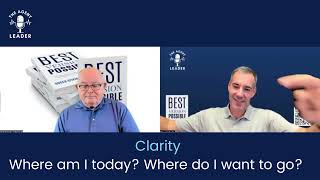
This content was created by Roger Sitkins. This content was uploaded by Roger Sitkins. This is a YouTube video titled "Agency Leadership with Intention - Click #8 for Insurance Professionals" created on August 30, 2022. It features a conversation between Brent Kelly, the host of the Agent Leader podcast, and Roger Sitkins, CEO of Sitkins Group. They discuss leadership in the insurance industry, focusing on transitioning from management to leadership, developing agency leaders, and perpetuation strategies for agencies.
Chapters
Welcome to the Agent Leader podcast. My name is Brent Kelly, your host. Thanks so much for joining me on this episode. This is a very special episode because it is the finale of our eight click series that we've been doing on the Agent Leader podcast. And if you have been following along and thank you, if you have been, we have gone through a series of eight clicks, this being the final click of different breakthroughs that agency leaders and their teams can have that are obviously hugely impactful. And I've had a very special guest on with me for all seven now, number eight of these special sessions and Roger Sitkins. So at this point, if you haven't listened to the sessions, you would, you would know this if you have, but if you haven't, Roger Sitkins is with me. He's a CEO of Sitkins Group. And Roger, I'm going to, first of all, before I do some more formal introductions on this episode and some other things, want to say hello. Hello and thank you for being part of the eight click series.
Well, Brandon, as always, it's great to be with you and it's great to share some of the strategies that we know work and some of the proven processes. So I'm excited about this one because everything, you've said this so many times, everything rises and falls on leadership.
That's right. Yeah. And that's, we're going to talk about leadership today and the click itself is going to be how do you move from a manager to a leader? Right. How do you move from manager to a leader? And you know, Roger, you said everything rises and falls on leadership. That's a statement that I initially heard from John Maxwell, who's very well known in the leadership space. And I'll tell you, you know, when I heard that from John Maxwell, everything rises and falls on leadership, my brain was, okay, everything does everything really rise and fall in leadership. And I'll tell you and, and, and that's why I want to get your feedback today, Roger, because you've worked with literally hundreds and hundreds of agency leaders over, over, over the many years. And you know, I've had the opportunity to work with many, many, many agency leaders as well and certainly currently do today. And that idea that everything rises and falls seems like a lot of pressure and weight. But it's true. I mean, at the end of the day, it all starts with leadership and how, how good of a leader are you? And, and by the way, you know, I talk about transitioning from a manager to a leader. This doesn't mean that we don't need good management or managers in an agency? Of course we do. There's things that need to be managed. But the best agencies have leaders who have people that follow them not because of a title or a position or just because they get paid, which is important, by the way, but because people want to follow them because they're great leaders. And by the way, and we'll get to today's discussion, the best leaders perpetuate by finding the next level of leaders, right? They're finding more leaders and developing more leaders who develop more leaders. And so that's a big part of what we're going to be talking about today. Now, I do want to mention that the purpose of this podcast is always is to help agencies gain clarity, build consistency, and to make a commitment to become your best version possible. And so obviously, the best agencies that become the best version possible have leaders who themselves strive to be their best version possible. And to use the term one more time, our the best version possible. Our Best version possible book is available. Go to sitkins.com bvp to get a copy of your book for love for you to get this in your hands and share it with other agency leaders or around the country that are also striving to become their best version possible. So, Roger, you ready to, to dive in to absolutely. Click eight on leadership. You know, I want to, I want to ask you, you know, what you see obviously in qualities of leadership. But, and I don't want to steal any of your thunder, but it's something that we do share. I want to make sure I say this up front. Maybe you can help me answer this question, even though it wasn't a list of some of the questions that I, I sent over to you is this what's the number one job of a leader? You know, above all things, what's the number one job of a leader? And you know, I'll tell you, typically when I ask that question, you might get some different responses. I'll just ask you, Roger, when you, when you ask that question, and we ask that question, certainly in our CEO boot camp that we run for our Sipkins programs, what kind of answers do we typically hear when we ask that?
Well, they start talking about results right away. It's to get better results. It's the classic cliche of I'm gonna improve my top line, I'm gonna improve my bottom line, I'm gonna sell more, I'm gonna earn more. And that's not it. That's not it. The real job, as you and I preach all the Time, it's to develop your people. So whether it's a CEO with the agency overall, or the CRO, Chief revenue officer, sales leader, especially with the sales leaders, what's your job? Improve sales. No, improve your salespeople. So the. The real goal here is the improvement, the development of your team members. That's the leader's job. And then they go out and they get the results you want.
That's Amen. Amen. Amen.
Hallelujah.
Hallelujah, Hallelujah. We all rejoice. But, you know, it's. It's obviously that, you know, there's a challenge to that. And I. I always joke with agency leaders. I said, you know, leadership would be really easy if it wasn't for the darn people. Right? And everyone kind of chuckles because it's true, right? So the idea that the number one job of an agency leader and whatever, whether it's sales leader or agency leader or you're running an apartment, right? You got influence in your agency, is saying, my number one role, my number one job, as Roger just alluded to, is I've got to develop my people. I've got to be a people developer. And if I can do that at a high capacity, guess what happens? Results. Right. Because my people are doing the right thing. So I want to ask you, Roger, just overall, obviously, you know, we can talk about a number of things today, but just overall, what do you see as the best qualities, the top qualities of agency leaders that you've worked with?
They define, they represent, and they constantly reinforce culture, the language and behaviors that are normal because they're the cultural leaders. And I don't want to say cult like cult, but they are the cultural leaders. And I look at this, I was thinking a lot this morning about this in preparation. I was thinking about the best leaders we know, the ones we work with, the ones that get absolute great results. But they personally aren't getting great results. Their team is getting great results. I guess it's like a head coach of a football team. You know, he's not in the game, but he's got his players ready to play the game. So I look at this, and there are a bunch of things that jump to my mind around culture. And again, culture is the language and behaviors that are normal. And we've talked about this before, that if you want to know what's going on in your age, you just walk around and listen to what people are talking about, what are they focused on? All right, that comes back. You mentioned the three Cs. Clarity, consistency, and commitment. And I think sometimes that gets overlooked because we talk about it a lot and it's. I guess we go through it pretty fast. But clarity, where am I today? Where do I want to go? How will I get there? We've had some deeper thoughts on that, too. Clarity, where am I today? And what is my agency's business model? And we've talked about this several times on the clicks, you know, your current business models, perfectly designed for you to achieve the results you're currently achieving. So where's my agency today? What's the business model we're following? Even though it may be unintentional, that's getting us to where we are? Where do we really want to go in the next three, five, ten years? And then what's the path for us to follow? In other words, what's the new, in many cases, refined business model we're following? Because if they just keep doing the same business model, it's pretty predictable they're going to get the same results. So the clarity, the consistency, and we talk about this so much. It's the guardrails again, it's the agency's way of doing business that there's absolute clarity on consist on the agency's way. This is the way we do things. And it comes back to what we talk about. So much knowledge, you know, what are the simplified and proven processes? And then people have got to follow the process. So the consistency. And then when we look at the absolute best ones, if there were one phrase, one word we would use, it's pretty simple. It's what. It's accountability. It's accountability. So that's a huge one to me. I think the other one, I think it ties them all together, is something we were talking about yesterday in a workshop we were doing with our team. It's the whole concept of congruency. Are you congruent? And I guess that we could define that again as the agency's way. But the best leaders are very congruent. And by the way, they're great role models. They do what they said they're going to do. It's not like your kid's going, wait a minute, your bike's in the driveway, too. Your room's messy, too. So those would be my starting ones. And of course, I have 97 others, but those would jump to the top. Yeah.
Well, I appreciate sharing that because I, I do. I mean, obviously. And if you listen to this podcast regularly, I, I say, I think on every episode. Right. The purpose is clarity, consistency, and commitment. And I do Go through it pretty quickly. Oh, that sounds nice. But when you really get into it, Roger, there's. There's such importance to it and there's a lot of weight and, and, you know, and to go back, if you haven't heard the story before, is, you know, I was sitting with Roger, gosh, four or five years ago, I might have been, and we were just talking about stuff, and I was asking Roger questions just like this. You know, what has he seen in agencies? What has he seen in leadership? What has he seen in getting results? And it always came back to the fact that the best agencies, and of course, their leaders and their leadership was that they were very clear on what they wanted, why they wanted it, and how they were going to get there. Doesn't mean it was perfect, but it means they were clear. And by the way, I'm going to be doing an article later today. We both do, Roger, for rough notes and. And that's kind of part of what I'll be talking about, but it's a big thing here is, you know, how do I find, how do I attract, how do I keep the best talent? Well, a big part of this is if you don't have great clarity or a vision that's compelling that people are interested in and want to be part of, there's challenges there, a lot of it. Well, why should I be? Oh, because, you know, it's a job and it's good. You make really good money and, you know, it's just going to be. It's good opportunity. And people don't. They don't feel it and see it. And one thing that I say often in our agency leadership discussions is that leaders see more and leaders see before others. Right. That leaders can see oftentimes the good leaders, the great leaders, a bigger picture that people want and are excited to be part of. And that may seem. Oh, that's. No, like, it's. There's. There's an emotional connection to that. So I'm glad you share that. Roger, I want to ask you more on a personal level. I think one of the. The greatest things that we can learn as humans of how to do something well is to figure out who did stuff well for us. So, you know, I think there's so many lessons in that. And I say, well, if you want to be a great leader, you know, think about leaders that have been great leaders for you and emulate them. So what leaders, Roger, have impacted you most in your life and business and why?
You know, I have three that immediately jump out and I actually get pretty emotional even thinking about them here. The first one is my savior. It's Jesus. You know, that's. That's. I have pretty darn good faith. I constantly work on it. And people, you know, I mentioned Andy Stanley quite a bit in our session. So the lessons there are, you know, they're, to me, irrefutable. Next was my dad, who, you know, came to this country at age 4 through Ellis Island. I often refer to my Polish heritage that I'm very proud of, and kid around saying, my dad changed it from Sitkiewicz to Sitkins because it wouldn't fit on the back of a jersey. Back then, they didn't put him on jerseys. Yeah, but he. He had a tough life. Age 10, he's here at age 4. Age 10, his mother dies of the influenza, the Spanish flu. He's a great athlete. He goes off to Michigan State to play football. You know, he's in a. He and his brother have the dad. There's not a. Not a second mom that comes in or anything. And he's up there as his freshman year, he's 19 years old and at Michigan State to play football, and his father's murdered, so he's got to come home. And you look at that and you go, how did he get through all of that? And then how did he get into the life insurance business? Became very successful at it. And that was the core of starting the property and casualty agency, literally in the basement of our house with my mom being the property and casualty person. Then at age 57, he becomes a quadriplegic due to doctor's malpractice. And, you know, when I. One of my favorite sayings that I see all the time, you hear me say is, you know, there but for the grace of God, go I. Yeah. And I still looked at. I get emotional here. I still always think about the respect he had for others, Even in the 18 years he lived in a wheelchair, two years in the hospital, 16 years back home, and the respect he had for others, especially the love for my mom. It was. That was pretty amazing.
Yeah.
Yeah, I guess I told you. I get emotional here. The next one high school football coach. And in three of the four years I played in college, he was there. I talked about him a lot. Coach Dick Mosley, Moe's. And the absolute commitment to be the best. One of the things he does. And my wife, Stephanie, every time we talk about Mose, she. She will always bring this up to one degree or another. When you talk to him, there might have been 200 people in the room, but you were the only person in the room. He had exact. He was so good at the. The personal relationships and again went on to the pros and everything as a coach. And I think other than the discipline and the purposeful bombardment of repetition and the importance of visualization and everything, it's the fact that he simplified things. He got things down. And I've used analogy before. We had eight plays. We ran over the right, we ran into the left, but that's all we had. And so I would say those three, and if there's a word or a phrase that would cover those three, to me, it's integrity. They did what they said they were going to do and realize that even though, other than Jesus, I don't think my dad and Mose knew they were role models, but all of us are role models, whether we want to admit it or not. Well, the best leaders, I think, are much more intentional because they're congruent in their message to themselves and the message to others, and they never get caught doing something against what they wanted. So, yeah, I could probably go 16 more hours on this. I'm going to stop. But those would be my three.
Oh, well, I mean, first of all, thank you for sharing that. And I know emotional talking about your dad in particular, understandably so. I, you know, I think again, part of this is I love you sharing, you know, sharing your heart and your story on that, because obviously there's, you know, I say success leaves clues. And, and, you know, for me, even writing this down, like, here's again, I'll just take my takeaways from what you just said there, because I think we all internalize things a bit differently. But you talk about Jesus to me. You know that the theme there is. It's bigger than you. Right? Like, I think that's a big part. I think, you know, one of the things that. And again, we won't go down a biblical journey here, but just for a moment. I mean, one thing that's just always impressed me, obviously, more than the fact that, you know, he's Jesus, but the fact that he was a humble servant. And it's the fact that, like, there's humility within that. I think there's such, such. So, so many leadership lessons in that with your dad. I mean, what you said there, Roger said lots of things, but respect people. Respect those you love, right? With respect. Like, wow, there's a lesson that would be really nice to be more in leaders in today's world. And then with your coach, Moe's, again, a few things that jumped out there. But that one first thing you said really struck me. Be present where you are.
Yeah.
And be a hundred percent present with the people you're with. And I'll just share this because it's, you know, something that I, I truly believe in. And you said that. It really, it hit me again is I tell people all the time. And part of this is because it's real and it's true. And you see, it is that I believe the number one gift you can give another human being, especially in today's distracted, crazy, noisy world, is giving people your full time and your full attention.
Yep.
And. And when you do that, it's like, oh, someone's actually speaking with me, they're with me. And so I just think there's a lot of so many great takeaways, Roger. So, so thank you for, for sharing that. All right, we'll move past that. We'll move away from you personally a little bit. But just again, kind of going back to the agency leader side, we said at the beginning of this, the number one job of an agency leader is to develop their people.
Right.
That's what great agency leaders do. And again, those stories you share that help develop you. Right. I mean, you think about that, that's to help develop me. That. Now, guess what, you're developing others. And, and the chain continues. But just in general, how can agency leaders do a better job at developing people? Because I think if someone, if I told agency leader, hey, you know, agency leader, go develop your people, they may go, okay, how do I do that? So what's your response?
Well, the people development, I think, starts with one of our favorite sayings. Do not complain about that which you tolerate. Oh, this person not doing this, and they're not doing that, or why are they doing this and why are they doing that? I'm thinking, why are you wasting your time asking those questions to me? Why don't you go to them? Why don't you go to them and talk to them about their development rather than say, hey, you need to get better, you need better results. Talk to them about their development. So I think, number one, is an absolute awareness of where the individuals are and what's their role on the team. There's something we talk about all the time, that the best agencies are totally in alignment. It's foundational to everything we do within the best version possible. And what we see as far as alignment is we have a common goal, but an acknowledgement and appreciation of the different roles we've got probably already said that 15 times in this series. Okay, so same goal, different roles, appreciate, respect each other's role. But at the end of the day, what do we want to do? We want to retain and obtain ideal clients. So if we can set that as our foundation and then everything we do, we say what we're doing right now is that in alignment with our common goal. And it's a singular goal. Most agencies have way too many goals. I could do this, I could do that, I could do this, I could do that. We, we've talked about this before. Trying to chase the gimmick of the month or the week or the day doesn't give you alignment, it just gives you stuff you're chasing. And because most of us have, I've kind of refer to it times the microwave, thinking they put a bag of popcorn in the microwave and after 10 seconds they're going, come on, let's go. Three minutes, right? It's three minutes, okay? And, and none of us can get something to be like the one magic thing that changes everything overnight. So I look at this and I said, well, the first thing you have to do is invest in your people. Invest in your people. We've used this statistic in our documentary movie too, based upon the best practices study. And every year I look at it, this number is very consistent. The best practices agencies, which are good agencies, they wouldn't even be in there. You know, Reagan Consulting does a great job on this. The average best practices agency spends.04% of their revenues on training and education, in other words, development of their people. And too often they think that maintaining the license, okay, the continuing education credits they have to have will really change things. Well, we want them to have their license, obviously, if they have a certificate. A certificate, cic, whatever. Yes, you want to continue that because that's your professional technical knowledge. All right. But when you look at what are the skills, what are the processes and what are the attitudes you need to do as an individual that your team needs to do, that the whole agency needs to do? That's where we develop them. That's where it's okay, what are the skills? And the skills for an account manager, an account executive, a producer, a leader and admins, but everybody has different skill sets they should have. And we've got to develop their skills. Okay? And just like the selling skills, it's always amazing to us when we say to producers, okay, you've been practicing asking questions. The most important skill you have is asking questions. When's the last time you practice that a couple years ago. What about referrals? I mean, that's not important, is it? We've talked that before. Yeah, asking for a referral right now. You know, anybody wants to buy insurance? No. What about your phone skills? What about anything? So skills next we have to develop. We have to get absolute clarity on what are the process, what are the simplified and proven processes we have. And there's a core set of processes that should be in place. Whether it's new business, whether it's continuation, whether it's claims advocacy, whether it's promise making, promise keeping, use of technology, what are the processes there? And then so much of it. We've talked about this several times already. The attitudes, the mindset. It's how you think about things. It's how you think about things. So I look at this when I say, number one, are we investing enough in our people? And everybody will give the lips of oh, our people are our most important asset. Really? Okay, what are you doing to develop them if they're such an important asset?
That's right.
Well, they're pretty busy and you know, this was one that they want to.
Be left alone, Roger. No, they don't.
Yeah, yeah, they're doing pretty good. And it just drives me crazy. We're too busy to get better. Well, the sad news is you'll still do quote unquote, compared to the world, you'll do okay. Yeah, but, but you'll get into that semi successful track we talk about. Ultimately, to me, Brett, it comes down to the leaders saying the only way my team gets better is if the individuals get better. And what am I, what am I investing in them? We've shared the statistic before. I always talked about the. Already talked about the point four. But the bigger thing here is that if you look at professional services firms, across all professional services firms, the best ones, the studies I've seen say that the average firm spends 2% with their people getting better. Think about that. I hadn't thought about this till just now. If I invested 2%, let's just say just sales and service and leadership. Okay. Many other areas and getting the right skills, processes, attitudes in place, could I improve my results, my net new revenue by 4, 5, 6% over what I was doing before because I invested 2%, that's a hell of a return. Okay. I never thought of it that way before. All right, so then ultimately what it comes down to is the leaders with buy in from their team developing their guardrails. This is the way we do things. So a Lot of feedback on that one. But again that hit me that if I can spend 2%.
Yeah.
And get 4%, 6%, 8% more than I would have got without doing anything, what a great return.
Well, it's fantastic answer. A lot of different, you know, so many takeaways there. You know, Roger, that my brain always thinks in pictures or stories or analogies, especially when I just get to sit and listen. And so all of a sudden I had this image. I think you're related to this. I've always careful my analogies because they literally just like come in my brain. I'm like, this may work, this may not. So you get the live version of this. But it's, you know, my, my kids are. Many people right now is recording this. Their, their kids, if you have school aged kids are back in school recording this end of August and my kids actually are going back a little later this year, but they're going to go back. I said it's the analogy. To me, it's like sending your kids to school and they show up and they say, here's a desk, here's some pens and here's a book. And you know, for the next year I want you to come to this desk and then do some pens and read through the book. And hey, you just keep, you keep your nose in the grindstone there. You're going to figure some stuff out and never giving them a path, never understanding that every kid in that room is a bit different. The teacher needs to understand, you know, where to affect people, impact change in the right way. Not taking some of those things in the book and applying the skills that they can practice and work on. Right. Could you imagine like reading a math book but never doing math problems? Right. There's, there's skills that are involved there. So that's what hit me is the fact that we have a lot of agency leaders I'm not trying to pick on because there's, there's a lot of great ones that do these things as well. But many times we see in the marketplace where it's like in essence and people joke about this. You've heard this too, Roger. I mean, especially for producers.
Yeah.
They gave me a desk and a phone and said good luck. Ha ha ha. Well, it's really not that funny. Like the truth of it is is that we've got to educate, we've got to equip and we've got to empower. And it comes back to if you're not developing your people, what, how are they going to get Better. And of course, Roger, to your point, how are we going to get the return? You've invested a lot, even just in capital to your people. But that's just, that's just the hard cost in there. But what if we invested more, as you said, the skills, the processes, the attitudes to truly maximize that return.
So anyway, I want to jump on something you said there. Yeah, it hit me when you're talking about the kids going back to school and there's your desk, there's your books. Okay, that's what happened to kids that were had, that had to stay home and use zoom for school. I know my daughter with now seven and a half year old almost going on eight year old twins that are in second grade. Well, I remember she set up literally a classroom in her family room where they had their desk and she bought these posters like you would have in school, because she tried to make the environment as much like school as possible. But it wasn't. And we've talked about that. And maybe that's the analogy too many of your employees where you say, well, just, just go do your work. You know, that's the problem with remote work, which we've talked about before. And you could do 97 hours on that. But the analogy I think is really true. Are we just saying, hey, you know, sit at home, do this, don't worry about it, we won't check up on you. Because the kids certainly didn't get the. Although Dana and her family were very fortunate that the teacher they had literally once a week would come by the house and you know, just homework and just to make a connection. But anyway, it's just, it's a great analogy.
It's just, it's just, But I mean, it's just, you know, part of this is agency leaders that are listening to you and again, it's not to, to beat anybody up, but hoping to get you thinking and going, wait a second, where, where am I, you know, selling my team short? Where am I not providing some of the things that they need? And I know there's a lot of work in that, but just again, as Roger said, I mean a, there's the return and the investment of the people that you've already made, obviously. But to me it's, it's other thing, it's kind of called, I don't know, the right thing to do. There's, there's, there's that aspect of it as well. So. All right, moving on. And this is a huge issue that I wanted to ask you about because listen, we Always. You always say this, Roger, like you're going to leave your business sometime, right? We're all going to leave our business. And in fact, I just had a, a podcast that'll be coming up out after this. Had a conversation with a tech leader and, and he talked about this. He's like, well, you know, you're gonna, you're gonna, you're gonna exit your business and it's either going to be by perpetuation, right, internally, or you're going to get acquired. I mean, at some point you're going to perpetuate somewhere or you're going to be acquired. So leaders, find the next leaders. But why do so many agencies struggle with this? Roger that. I mean, it's like, what's next? How do I perpetuate? And I know it's a very broad question, but just what are some of your thoughts on perpetuation for agencies today?
Well, agencies, overall, when you look at perpetuation, you hit it a little bit on the head there. There's two types of perpetuation. There's financial perpetuation and there's leadership perpetuation. Yeah, well, the financial perpetuation is if you're going to do an internal perpetuation plan, if you wanted to get it done this year, this should have started five years ago. And what happens is, because there's no structure around it, it's like, well, you know, we'll sell internally and you guys will do this and you'll get that. And they haven't started like in the old days they had Christmas clubs, okay? You put money in the bank every week, you know, $10 or $5, you. Christmas money. Well, it's the same thing here. What are they setting aside? Working with their financial advisors, working with their cpa, working with their attorney, their trusted adviser team, saying, what are we going to put together so that when it gets to be time to perpetuate it internally, the dollars are there. And how do we provide the discipline, literally the discipline for the internal people that want to buy it? Because if they're not managing their own money and they don't have money to do it. You remember the story I told you, I don't think we've ever talked about here, I'll make it. I'll take the adult beverages out of this when it happened. But Walt Kudelski and I were at the, the last Big Eye convention that was held under the old format. And we're the downtown Marriott and we're there with our wives and we go up to the bar to Get a drink. And this guy come, I see, goes over and he talks to Stephanie and Sharon and then he comes over to us and he's had a few pops, let's just put it that way. And he said, hey, hey, hey, I hear you guys are with one of the big brokers. You with Brown and Brown or something like that? And I said, no, we're with Polack and Polack. Okay. And he didn't get it. And he said, let me tell you what I've learned. He's sort of like the old Foster Brooks guy. This is how this guy was. He was having a religious experience, speaking in tongues.
That's great.
He said, let me tell you what I sold my agency to so and so. And let me tell you what. What? Let me tell you what. What they buy you with your own money. And I said, I'm glad you figured that out, Sparky. But it's just. Yeah, they will. The cat. They don't buy you because they're going to take all of their money and give it to you, although they will up front. The reality is it's a cash flow game. I don't care what anybody else says, it's a cash flow game and how you turn it around. That's why so much of the private equity money has come in, because it's such a great business, even if you do a crappy job, okay? So the getting the financial part of it, ready to, quote, do an internal perpetuation. But then at least you've got options. And something we talk about all the time with our leaders. Something that hit me probably 10 years ago, and I've shared it with so many of my lead, my clients and friends that at the end of the day, you have to have options.
Okay?
And you work really hard now. Do the hard stuff now. It'll be easy later because you'll have options. I could do this or I could do this. Because most agencies don't think that far ahead. The great leaders do. The great leaders aren't thinking about next quarter. They're thinking about three years, five years from now. But if you can get to the point where you say, okay, let's say five years from now, I'm going, what are the options I want? Well, I either want to be able to do it internally because my people have continued to develop and they're. They're really getting better themselves. They're better leaders. They're driving their departments, their areas, or I could sell it externally, but at least I have an option. The reality is that most Agency principals don't have options.
That's right.
And even though they say they want to do an internal perpetuation, that's one of the things, too, is we say it, but we don't do it. Well, I want to do an internal perpetuation. Where's your plan? Well, you know, we're working on. I always get around saying, here in the south, we're fixing to. We're fixing to do it. Okay. So that's the financial part of. It's huge. And then the next part is the fact that, okay, if we're. If we get the financial model in place, where we've got options, then the bigger thing is, what's the leadership model? Well, guess what? Your agency is going to be worth a lot more money, whether it's internal or external, if you've got a leadership perpetuation plan in place.
There you go.
Okay. Because now that next level of leaders, that next level of partners, owners, whatever, they've been getting developed, they're doing better. If I'm buying your company, and I know that part of what I get is a leadership team that is in place that's been really been running the place already, Guess what? You're worth more money to me. If I get this hodgepodge of stuff that I've got to fix, you're not going to get a very good multiple or you're going to try to. You're going to try to do it internally. And one of the fears I see for people that are not prepared is when they do it internally, they're the bank, because they didn't have the plan in place to say, okay, here's where we go. Let's go get the financing shape or whatever it may be. So to me, it's so much of just that decision. What options do you want? 3 years, 5 years, 10 years from now? And then the next part is, don't fall into the trap of saying, okay, my next leader, the next owner, is my best producer. And now I'm trying to take he or she out of production and get them into leadership. No, get them in production, get them out there doing the stuff. And then when you decide they're going to do it, how do you hand it off? I know you and I have talked about this before. I'm not sure we've done it in a podcast, but one of the best internal perpetuations we had is with an agency that I consulted with, did private consulting, private annual planning. They're part of our network for 20 years. 20 years. We got together and about eight or 10 years into it, the sun came in. And a lot of times the next generation hasn't been led well, maybe they kind of just show up and stuff. But, but this, this young man was really sharp, great education, and he got into one area, started in the benefits area, really grew that and kept growing. You could just tell that he was committed to the legacy because he was the third generation. And when we decided one of our plans that it was time now to move him into the president's role, we sat with the dad and said, okay, I went for the, for one month, starting on the 15th of the month, I want you to list everything you do. Just start a big list. It doesn't matter anything, just write everything you do. And then what we'll do is we'll put it into buckets, if you will, and we'll put together a training plan starting with the easiest thing to the hardest, saying, okay, here's what quote, unquote, junior needs to learn. And it, we had it spread out over 36 months. We said, okay, for the next 36 months, here are the things we're going to teach them. Here are the things we're going to hold them accountable to so that we would be transferring the wisdom, not just the knowledge, but the wisdom from the dad, who was a very successful businessman, to the son in this case, okay? And in a very logical manner, very step by step. What was interesting is it works so well that 18 months into it, we had already gone through the 36 month plan and we made him the president and today he's a CEO. And the agency's, it's a phenomenal agency, really a great agency. But it was the very purposeful, not just, hey, you're going to be the leader. What are the roles of that leader? Let's identify him. Let's put them on a training plan.
So, I mean, boy, I mean, lots of, lots of nuggets there for, I mean, if agency leaders. Oh yeah, oh yeah. I mean there's some, some, just some great wisdom there, Roger. And you know, it's just, there's one word that just jumps to my mind. Intentional. I'm just being with it. And as you said that again, I have one of my many analogies. And actually this came from a conversation I mentioned previously of, of analogy of, of agency leaders kind of running the track of business, so to speak. I did a video on this recently. But it's this idea that, you know, you're an agency leader and you're, you're going around the track, so to speak. And maybe you're coming to the final leg, right, that you come around the last curve, and for you, maybe that's one year, maybe that's two years, maybe it's three years, I don't know. But you're kind of coming down that last stretch and it's like so many agency leaders instead of accelerating through the line. And this is, by the way, it's a relay race, right, because you're going to hand the baton off, and it's either going to go to. Again, it could be an external source, but it could be internal. But either way, are you building momentum through that finish line to the hand the baton off, or are you stumbling, bumbling, falling over, rolling and just going, I just hope I get to the end. And, and you said it, right? If you want to comment us, there are millions of dollars left on the table when you're stumbling and bum work. So. All right, you got your finger up. You want to comment on that?
Well, yeah, because a lot of times I see is, okay, three years from today, it's done. So now we're in the, we're in the last lap. We're in the last quarter. Yeah. And you got the baton in your hand. Here it is. Here's the keys to the, to the kingdom, right? And they get there and they go, oh, I'm not ready yet. Another one. I like that.
Yeah, yeah, I like that.
They go, no, let's run another lap. Yeah. Even though I'm tired, I'm exhausted. Let's run another lap.
So I'll be back around again later. That's, that's.
I gotta add that, that piece of.
Story, because it is true. It's like the, the next generation, whoever, right, is leaning their hand back to grab that baton and you pull it away and say, just move the side. I'm gonna go one more lap around the track. Even though I, even though that I might need some help to get around it. I'm gonna, I'm gonna wait.
The younger leaders grasping air.
Oh, that's good. That's good. Well, hey, Roger, I want to, I want to get some final comments. Again, thank you for, for participating in these eight clicks. A lot of value there. And again, if you haven't listened to him, go back. These are eight breakthroughs that we see. And this last one, I mean, is it. I love them all. They're all my favorite, as I always joke, but, you know, I am truly passionate about leadership and I think there's just so much here. And we Go back to the beginning. We said that everything rises and falls on leadership. It really does. And I know there's a lot of pressure and weight in that, but the opportunity and what you can provide to others with some of these things that Roger talked about, talked about today is absolutely powerful. And I'm just going to wrap up this, by the way, Roger, I know the series is over. I don't.
I.
You've done a pretty good job. So maybe at some point I'll invite you back on the podcast.
Appreciate.
We'll see what happens. I'm just being funny here, but go, go ahead, Roger. You're gonna.
I got one more. I've got one more list. I'm gonna give you my closing thought.
Okay? All right. Go ahead, please.
And we, we talked about this yesterday in our, in our two day team session. I said the highways and roadways are littered with indecisive squirrels. In other words, they run out into the middle of the road and they freeze. And if you've seen this, I had this happen. My, my wife and I were going into Athens, Georgia the other day and this squirrel ran out and we were in the back road, you know, and, and the squirrel ran out and he froze. And I started laughing. He said, he said what? I said, the. The roads are cluttered with indecisive squirrels. So here's my thing to you as a leader. Don't be an indecisive squirrel. Don't sit in the middle of the road and go, should I go this way or should I go this way? Because that's when you get run over. That's when you get run over versus saying no. I'm going to make a decision. I'm going to be clear. I'm going to figure out why I'm not going to knee jerk it and then I'm going to run. Yeah.
Yeah, absolutely. Absolutely. So some great, great.
We have a guest.
We, we do have a guest. The great Janie Cahill. Janie hopped on our podcast and she didn't know we recorded on this channel. So that's not fair to Janie. Janie, do you want to say anything to the podcast audience?
Good morning, Janie.
Good morning, Janie. We, we are, we are, we are wrapping up and I'm going to give one final thought to everybody who's listening out there on this. And we talked about developing people, you know, our whole best version we recorded on this channel. So that's not fair to Janie. Janie, do you want to say anything to the podcast audience?
Good morning, Janie.
Good morning, Janie. We are, we are. We are wrapping up. And I'm going to give one final thought to everybody who's listening out there on this. And we talked about developing people. You know, our whole best version possible is about people development. And, you know, the best version possible experience that we've hinted at a few different times that we're going to be releasing here and talking more about the end of 2022 and certainly into 2023 as we start a new year is all about people development. If you're asking yourself, how can I best develop my people, we want to be the solution, the answer to that question. And, and we do that through alignment. We do that through getting producers in the right spots to win. We do that through the idea that there is a predictable imbalance in the universe, and we want you to take control of that. We want to do that by helping you separate from everyone else in the marketplace to truly have that unique selling process. And so this is all part of the. As Roger mentioned earlier, there's absolutely a process and a plan. There's also skill development. There's also a different and deeper level of thinking, a bigger level of thinking. It's all part of the experience. So continue to be on the lookout for what the best version possible experience is all about, because it really is designed to answer that question, hey, Brent, how can I best develop my people to go out and get the results that I want? That's what the best version possible experience is all about. And can't wait to share more about it because we want to help empower agencies to do just that. So, Roger, thank you again for being a part of the podcast again. We may, we may get you back at some point. We'll see. All right, we'll see. But as a listener, thanks for listening Again, the best version possible book is available. Go to sitkins.com bvp and thanks for listening.
More from Roger

This Shift Helped Us Unlock Growth 💡 | Agency Leadership Tips #insuranceagency #agencygrowth





How AI Can Help Insurance Agency Owners Master Their Financials (Without Being a CFO)

From AI Hype to Real Results: Steve Anderson on How Insurance Agencies Can Use AI to Grow Now



