Be a Goldfish - Interview with Sales Leader Paul Corder
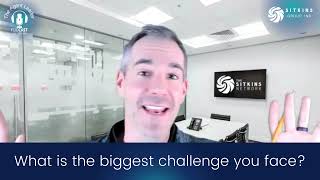
Brent Kelly interviews Paul Corder, senior director of sales and marketing for Peel in Holland, about leadership and sales strategy in insurance. Corder explains why leaders should "be a goldfish" and forget past failures to move forward, and discusses how clarity and alignment drive team performance.
Chapters
Welcome to the Agent Leader Podcast. My name is Brent Kelly, your host. Thanks so much for joining me on another episode. So glad that you're with me and with us as I have a special guest today who I'll introduce in just a minute. The purpose always of the Agent Leader Podcast is to help you, the agency leader, whether you are the agency principal, a sales leader, like the guest I have on today, a producer, a service professional, but to help you, the agency leader, gain clarity, clarity on what is really important to build consistency in the key habits and behaviors that are going to drive your success, and ultimately to make a commitment to yourself, to your team, to your clients, to your community to be your best version possible. And I would say, without a doubt, the guest that I have on, definitely he and his team are making the commitment to become their best version possible. And I am very fortunate. It is my pleasure to have Paul Quarter, who. Who is. I want to get this right, Paul, officially the senior director of sales and marketing for Peel in Holland. Did I get that right?
That's right on the money.
Awesome. Well, thanks for being here. And if you remember the name, maybe you do, if you're an avid agent leader podcast listener, and why wouldn't you be? But if you're a listener of the podcast we had Brittany Stinnett on, who is a producer there, a sales advisor at Peel in Holland. It's probably been a couple months ago since we aired that, but if you haven't listened to that podcast, go listen to it, because then you realize who is the leader of that agency from a sales perspective that's helping people like Brittany be so great. Well, guess what? I've got them on today. Paul. So. Hey, Paul, without further ado, if you could just maybe a brief overview of yourself, your role specifically in the agency, and just a little bit about what you guys do and all that good stuff.
Sure, sure. First off, Brent, thanks for having me on. I'm excited to be here today. Just a little bit about what I do in Peel and Holland. Killer Holland is an agency based out of Western Kentucky, and we've been doing this thing for almost 96 years now. So still working, still trying to get better every year, every day. For me, personally, I've been in sales a little over 10 years, but I've really spent the last six years of that focusing on sales coaching and team development. Funny enough, I've actually only been in the insurance industry for two years, but my primary function in the role is just working with our sales and marketing team just to ensure that we're utilizing the right tools in our toolbox to give us the best opportunities and ultimately give us the competitive advantage.
Yeah, I'm glad you brought that up because that may come up in our conversation. You know, people will ask me from an agency perspective, like, well, does everybody have to have insurance experience to be good at what they do? And, hey, it doesn't hurt, right? Obviously. But in some cases, I will say this. You have to unlearn things to learn things. Right. In the business. So I'm sure that'll come up in our conversation. But, yeah, you've got a great sales background and sales coaching. But from the insurance side of things itself, still pretty new at this, which has been a lot of excitement in our conversations. And, you know, we've, I guess, officially known each other for. It's coming up on about a year. That's right. Which it's hard to believe now that I said that. It's been a year already.
Time.
Time flies. And you're having a good time, right?
That's right. That's right. You know, and it's funny just to go back to kind of what you were saying about being in the insurance industry. I was actually having coffee with one of our advisors this morning, and the conversation came up and was like, you know, sometimes there's not always clarity in, like, what my role is versus what a senior advisor. Something's role is, is one of the great things, and I never really thought about it before, is like, I really focus in on, like, the art of sales and not so much as being like, the insurance tactician. That's what's been really great about being in this role, is that I can take, and some cases, the insurance out of it and make it more about a lot of what we do with our work with sick and just building that value and building that relationship.
That's a great point. And as you said that, you know, I've been part of a number of different masterminds, and we do a lot of mastermind and roundtables in our own groups. You just had a couple of your producers come to our elite group last week, which is just a big mastermind. Right. But it's also, it's really cool to mastermind with people outside of your industry, too, in different ways. Because although there's not as many tactical things which are certainly important, there are some strategic things that oftentimes people from outside the industry will be like, why don't you just do that? And you're like, oh, I've been inside of this for so long that I didn't even see it. So I know you bring that perspective, and it's been a big. A big plus to all the folks at Peel in Holland, so. And valuable to our group, too, right. In the conversations that you're having. So now that we got all the positive, fun stuff out of the way, Paul, I want to ask you a question right off the bat about what is a key challenge. You know, the question that I ask anybody is, hey, what's frustrating you?
The most powerful question.
What's frustrating you people? All this stuff. But for you, whether it's in your specific role or just from an agency perspective, whatever it may be, what is your biggest challenge, Paul, that you face?
Yeah, I would say there's probably a lot of sales leaders out there that would say it's a lot of. A lot of what I'm about to say. And for me, it goes back to, you know, we can be really impatient inside of our role, and when things aren't firing fast enough, things aren't clicking fast enough, it's like, okay, what's the next thing we can try? What's the next book we can read? What's the next. Who's the next coach we can bring in to help move that along? And one of the things that I've really learned over the past, especially over the past year, Brent, working with. With you and with Roger, is that you got to trust the process. You've got to slow down. You've got to just trust what you're doing. If you can get all those pieces in place and really drive them into those behaviors that get to the results, that's. That's where. That's where you start to see success. And our leadership team, we recently just read a little monograph that was, like, accompanied to the book Good to Great, and it's called oh, My Mind Just Went Blank.
It's Turning the Flywheel.
Turning the flywheel, Yep. And one of the references in there talks about firing cannonballs versus bullets. And we get so quick, sometimes we just want to, like, find the next big cannonball and fire, fire, fire. We're really. I think a lot of success falls into just, you know, can we. Can we find those little bullets that start to get us to win and get us closer to the target?
Yeah. Someone I think must have been from the elite 50 group. Last week, we guys were talking about that, and Good to Great's been around forever, and that really goes deeper into the hedgehog concept. Correct, Right. In some different ways around that. And, you know, I was writing that down as you were saying that, Paul, because, you know, we talk a lot about, you know, what's one of the biggest inhibitors. And I've heard this from many sales professionals, but agencies holistically as well. It's distraction, where we get caught up in distraction. But I found it interesting that what you said is probably what leads to some distraction, is impatience, right? Like, I want it now. Like, let's make this happen now. And it is a really hard thing to trust the process because, you know, the question is, well, how long do we give it? And, you know, it doesn't mean we're not going to change anything. I think we always got to make course corrections. So, you know, I guess to expand upon that first question, because part of it is, you know, how do you overcome that challenge, right? And what you're doing, how do you know you're on the right track? And how do you help your team, Paul, stay consistent? Certain things, even if it feels like it's taking longer than you want it to.
Yeah. Constant feedback. You know, either reaching out to the team, you know, reaching out to your leadership team. You know, one of the great things about Peel and Holland is that, you know, you're a phone call away from the president, from the SVP of commercial sales. You know, there you have so many people that are so invested in the success of this company that everybody wants to be a part of it. And when you can get that feedback and when you can get that honest feedback, you know, good or bad sometimes, right? If you can just. If you can figure out, you know, are we tracking in the right place and not just assuming that you have all the answers, but not being afraid to just reach out to the people who are in the trenches doing that, saying, hey, what does this look like? Are we hitting the mark? Are we missing.
Yeah, that's, you know. And of course, you know, to go back on the podcast that I had with Brittany, the title that was own your success, I mean, was it. We didn't intend to set out in that title. That's just kind of what the conversation led to. And I think that has been a huge part of Peel and how on the culture of that, I think of understanding what is it really all about and being open and honest enough to say, hey, I love you enough and care about you enough to tell you that we need to make some improvements here. And, you know, a lot of people, a lot of agencies, certainly initially that we start working with or that are struggling are like, well, don't tell me Anything that's bad or I can improve upon because I don't like that news. But that's not how you get better.
No. And you know, and it's something you have, we have to push ourselves on every day is, you know, there's. We owe it to our team, we owe it to our peers to sometimes have those hard conversations because that's how we learn, that's how we grow.
Yeah. And I would just, for the listeners here, if you're not driving a car, I mean, that might be a great question to write down. That Paul just said is, you know, what do we owe our team? And just think about that. What do we really owe them? It seems like a very simple question, but if you start to break it down, it's like, wait, and we really owe them this. We owe them this. And then of course it means what do we need to do to satisfy that or meet that expectation of what we really owe them? So great, great feedback, Paul. You know, obviously we talked about some of the challenges. Let's flip the switch and talk about the good stuff because you guys do a lot of really good stuff at Peel and Holland. And you know, what I appreciate about you as an agency and being able to coach and work with you as a team is that, yes, you're doing great things, but you're always learning. Okay, how do we take that and make it even a little bit better? Right. But what are. Is the thing or the things, Paul, whatever they may be, that you guys are doing at a very high level right now? I feel good about.
Yeah. The big thing that we really honed in on this year was our work around the service handoff and developing our core processes. And the big things specifically with the service handoff, was that we wanted to make sure that our producers have the bandwidth available to invest at least 80% of their time on those sales related activities. And so not only did we take that step, but we even took it a step further and said, okay, we also just need to rip the band aid off here. We need to establish our minimum account sizes. We need to start working on trading off of accounts and really honing in on really like each producer. Sweet spot.
Yeah, yeah, just we can elaborate on both those. Those are great things. The first thing you talked about, you know, I've mentioned, and whether that's my having Roger on or other guests, about the concept of just freeing up the producers and the term that we always use, you've heard from us many times, is we got to get the producers in the green Zone, which is the sales zone. And I think logically we all kind of know that, but it is so important. And I think what I, again, what I appreciate about you as an agency certainly is to understand that starts from the leadership down. And, you know, we've got a lot of agencies or producers in particular, like, oh, I would love to get more in the green zone. I really do want to get in the green zone. Now, sometimes producers are saying that and they're really hiding behind activities because they don't really want to do some of the green zone stuff. But in many cases it's the fact they really do. They're just not sure how. How do I have conversations with the team? And by the way, is leadership going to be like, yeah, go sell. Which seems like it would be the most common sense thing to do. We've got people who, their role is to produce, and we're actually telling them not to produce. And so, you know, for you, Paul, and again, as an agency, you guys have done a really good job. And you mentioned the term you want to get your producers 80% right, which is the term that we talk about as well. What would be maybe one area or something you have done with your team itself to help them get more focused in those pay activities, the green zone.
I mean, first and foremost, getting our producers to go through profit, that's been, you know, the biggest. And just full transparency. This was, this question was not prompted. I'm not getting paid to answer that. But, but honestly, if, if you want a way to get your team focused on what's most important, sending them through something like profit, where they can drink from the fire hose for eight weeks. But then I, we can go back as a team and look at that and go, okay, let's meet you where you are. Where does that first step need to be in order to get you more focused as a producer?
Yeah, Paul, we didn't rehearse that, although maybe we should have. I enjoyed that, but I appreciate you saying that. And I think one of the things that, you know, and we truly believe in is certainly what we're doing in our coaching and training right now with agencies is the word holistic. And I mean, that's really what you guys are experiencing, is you're allowing all of your advisors, your producers are getting an opportunity to hear a similar message. And, and we always tell people you're not going to agree with everything and you're not going to implement everything, and that's okay. I mean, we don't expect that. But the fact And I applaud you so much. And this is being a sales leader, is that you have gone through the program with them. We're part of that journey with them. And so it's not a disconnect of, hey, I producer, I heard this. You, the leader, you didn't hear this. And so you may or may not agree or understand what I'm talking about. So we didn't prompt this question either. But I want to ask, how has that helped you as an agency to have a similar message? Right. Whether it's a Sitkins message or just a Peel and Holland message. Right. But what does it mean for you to have a unified type of message?
Oh, it's just been huge. You take it. I mean, take it all the way up to our leadership team. When we sit in quarterly planning, there are Sitkins principles that go into that conversation as we're developing our. Our goals are our rocks for the quarter. And I mean, it can cascade down. I mean, it didn't stop at our producers. I mean, it's going. Our account managers are going through amphithe mean myself going through CRO Fit. There. There's just. Everybody is anxious to learn. I mean, you talked about Elite 50 last week. I mean, one of our principals was at elite 50. So we're. We're all investing and we're all chasing the same message at this point. And it makes it just honestly so much easier to coach and develop because there's no extra noise. It's. Here's the. Here's the lanes. We're going to stay in them, we're going to stay focused, and we're going to get there.
Yeah. The term we love to throw out, it's not our term, certainly, it's been around for a long time, but the term is alignment. And, you know, the analogy we like to use because I think most people get it, is, you know, four wheels on a car, right? I mean, if you get one wheel out of line, you talk about noise and there's that little bit of friction or vibration that's uncomfortable or we don't like. Right. If we don't address that noise, it gets worse. And so, again, I applaud you as a team and you being part of that, as a sales leader, really to embrace the idea of, hey, listen. And we always tell people, you know, whether you're not going to agree with everything, but you guys are having these discussions again, whether it's in a quarterly meeting and even if there's maybe some disagreements or, hey, I don't know about this or this. When you guys walk out together, it's like we put our hands in. This is the play we're going to run, we're going to run it together. And I think that's often missed in agencies. And again, kudos to you for doing that. I do have one other. You mentioned two things of what you're doing. Well, the first was the 80% in the green zone. The second, when you talk about core processes and I think what you said, that struck me and I want to get maybe a little more feedback from you, Paul, is you mentioned that there's certain things that have become. The term that we use is not optional. Like this is the play you talk about minimum account size, I believe so. Could you give me an example of kind of how you've done that? This is not something we're going to just. And we'll think about it, we'll talk about it. We might or may not do it. Like, hey, no, this is really important. We're doing it.
Yeah. So it starts with the why. Right. The advisors, producers, they've got to understand why we're doing this. And you know, profit does a great job of setting the stage for that and creating that time and ultimately be able, you know, if we're moving off accounts from that producer's book and we're freeing up the bandwidth, bandwidth for them to replace that with, with additional revenue and ultimately be able to write or only have to write half the accounts over time that we're trading off. And I think that was a big part going a little bit back to the core processes piece. Brent, one of the things that we've done over the past and really over the past year and a half was also really worked to better define what those metal levels are. AVs, we use metal levels and really identifying what are the service expectations for a gold account, for a silver account, for. For a bronze account. Can we identify the Y accounts inside of that as well? Which has been so crucial to make sure that we're not over promising on certain accounts.
Yeah. By the way, the Y accounts, if you're not sure what those are, those are the. Why do we have these? Every agency I've got a, B and C or platinum gold or whatever terms you want and then you got the ones you're like, how do we get that one? And why do we still. What's going on there? Right. So, you know, I appreciate you sharing that. I think that, you know, the word that I wrote down, this goes back to the very beginning. What I say in Every podcast episode is clarity. Like, clarity like, this is. This is why we do what we do. This is how we're going to do it, and then we're going to execute upon it. And even thinking about Simon Sinek and his books, start with why it's been around forever, it seems like. But there's a lot of truth in that. And you know, Paul, and you've heard this in some of our programs, the fact that certainly with culture of an agency, and you guys have done a great job with or without, you know, with us, we want to be a part of that, your journey moving forward. But a big part of that is a lot of agencies just start with, here is the process, or here is the thing we're now going to do that we haven't done before, and either it falls on deaf ears because, oh, yeah, here they go again, right? Or it's never followed through, or as you said, they don't even know. Understand, really, why is this important? Why are we doing it? And I love the fact that you guys have really brought that home of this is a key area, because blank, this is why this is going to be impactful for us or our clients and continue to talk about that. So then when you begin to say, okay, we're going to introduce a minimum account size now, it's like, oh, okay, I guess that makes sense. Versus, by the way, we're going to have minimum account size. You can only write those accounts and go, what? What are you talking about, Paul?
Surprise.
Yeah, surprise. Hey, it's a new day. So anyway, very interesting that you said that last. You've talked about some of the relationship with Sitkins, and we appreciate that. If you have anything else you want to add, go for it. But I want to ask you, really just for the question I love to ask, is if you could talk to your younger self or if you could talk to a younger sales leader that's kind of starting off or an experienced sales leader, and you can give them one piece of advice that you seem to really help you in your journey. What would that be?
Oh, wow. I think John Wooden put it best when he said, failure isn't fatal, but failure to change might be. And I think there's a lot of wisdom inside that quote. And for me, my younger self, I think I was definitely. I would look back and be like, there were chances I would never take because I would be afraid of failure inside of that. And what, you know, when you're younger, you know, you never want to fail. As I've gotten older, And a little bit wiser. The thing for me is that failure is not always a bad thing. I mean, what is the good that can come out of a failure? We were at the Global Leadership Summit earlier this year, and I can't remember the speaker's name, but one of the things that she leaned in on so much is, like, instead of asking yourself, like, what's the worst that can happen? Ask yourself, what's the best that can happen by stepping out and doing that? And I think, you know, we try to drive that message home with our. With our team regularly, is that we don't get out there and try. If we don't get out there and. And stretch ourselves just a little bit, you know, we're always going to be inside of this box.
Yeah, well, there's a lot of wisdom there. Hopefully, again, if you're not driving, you're taking some notice what Paul just said. And again, the timing is funny because this morning we did a sales leadership program, and we. We actually spent a lot of time talking about debriefing lost sales opportunities. That's one example, like a nice account you're working on. You feel like you had a good opportunity, and boom, you didn't write it. Like, that's one example of failure that typically, certainly most producers and even agencies, like, okay, let's not talk about that, because that hurts. Right. Or sweep it under the rug, or let's not deal with it. I love what you said there. I mean, that John Wooden quote is. Is gold. You know, failure is not what they say. Failure is not fatal. It's a failure to change. Yeah. And I think the biggest thing is we're all gonna. We're all gonna fail. I think I've got three or four today already. Paul, you know, the question is, what are we gonna learn from that? And obviously we don't want to repeat it. And I think that's one of the things that, again, I appreciate you sharing that. It's so valuable to the audience. But for you, as an audience member, as a listener, hey, what are some failures you've had that maybe it's a good idea to. Instead of trying to, you know, push them away, hey, let's face them for a second and talk about what really happened there and how I can. Or we can grow and learn from that. So. And the last thing, too, I love what you said there, because Roger says it all the time on our programs is just stop and ask yourself what's possible, what's really possible, because I think you can live in a Scarcity mindset, which is that idea, that fear of failure or, you know, it is always going to be what it is. And then there is an abundance mindset of, hey, what if, what if, you know, we really did some things different? What would that look like? And could you imagine and just giving yourself some time to do that. So, Paul, thank you so much for being part of this. Anything, any last word that I'm going to put you on the spot, but any last things that you want to share to the audience that you didn't get off your chest or that you want to share that you did during our time together today.
You know, I don't know if you, I don't know if you're a Ted Lasso fan or not, but if you have seen the show, great. If not, there's something. I've been, We've talked about this as a leadership team a lot and there's been things that have happened even over the past couple of weeks, I have to keep reminding myself. And there is a quote that Ted Lasso says is there's another player on the field. He misses a tackle, um, and he's, he's frustrated and he goes back. Ted has the, the soccer player come over and he goes, you know what the, you know what the happiest fish or happiest animal in the world is? And the player's like, I don't know. He goes, it's a goldfish. And the player likes. I'm like, what? Yeah. Got a 10 second memory. Be a goldfish.
Yeah.
And, and I think, like, that's so true. And I think if you're a producer, you can take that. If you're a sales leader is that at the end of the day, the quicker that we're a goldfish, the quicker that we just, we wipe that out and we just keep moving forward, the better off we're going to be. Because there's no sense in dwelling on the past. So, Brent, be a goldfish.
Hey, I love it. You know, it's funny, you're like the fifth person that mentioned Ted Lasso. And I don't have a subscription, but I feel like I have to get one now just for that show because everyone just raves about it.
Yeah.
Yeah, that's good.
That's good stuff.
If it's got wisdom, like goldfish wisdom, well, then I definitely have to pop in there. But I think that's such solid advice and just ways of thinking and it's easier said than done, right? And I think about like, you know, this is I always reference things to sports, but it goes right into your role, whether you're a producer or agency leader or service professional of any kind in any industry really, but certainly insurance industry. But it's like if you know you're down one point and you got two free throws, if you missed the first, which one are you thinking about? The next one or the one you just took? Right. If you're a defensive back in football and you get burnt and your next time on the field, are you thinking about how you just got burned or how next play is going to be different? I mean, and those are hard things because it's really hard to do that. But I love that. Be a goldfish. Maybe that'll be the title of the podcast, Paul. We'll see.
You might want to get with Warner or whoever does that show. Just make sure there's no copyright issues.
Yeah, well, yeah, I'll have our legal team. Well, Paul, thanks so much for being a part of the show today. I appreciate it. I know our listeners are better off for having you on here and just keep up the great work. And for all of you to have listeners, as I mentioned before, if this podcast is adding value to you, your agency, please share, please follow, please subscribe. Always looking to grow and add more value to more agencies out there in. In the world, you know, out there in the world that we're trying to help impact our mission to, to be that best version possible. And also, just so you know, our programs for 2022 and our network, our next core programs, all begin the beginning of 2022. So if you want to be on the waiting list, if you want to be an agency like Peel and Holland and have great results and have people like Paul, hey, take a look at it. We'd love to. We have a waiting list. It's open now. We'll start making contacts November 15th. But we'd love to have you part of the network and help you grow to that best version. So, Paul, thank you again. Thanks for listening. Until next time. Hey, all the best to your success. Thanks.
More from Roger

This Shift Helped Us Unlock Growth 💡 | Agency Leadership Tips #insuranceagency #agencygrowth





How AI Can Help Insurance Agency Owners Master Their Financials (Without Being a CFO)

From AI Hype to Real Results: Steve Anderson on How Insurance Agencies Can Use AI to Grow Now



