Click #6 for Insurance Professionals - Generic to Indispensable
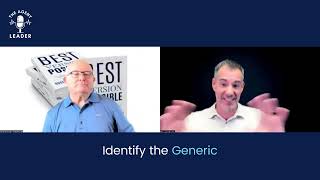
Brent Kelly and Roger Sitkins discuss how insurance agencies can stop competing on price and become indispensable advisors. Sitkins emphasizes intentional business models, deep relationships with decision-makers, and what he calls pigheaded discipline in execution to achieve sustained growth and higher agency value.
Chapters
Welcome to the Agent Leader Podcast. My name is Brent Kelly, your host. Thanks so much for joining me on this episode. The purpose always of the Agent Leader podcast is to help you, the agency leader, whether you're the agency principal, maybe you're a sales manager, you're a producer, you're a service professional trying to lead your clients at the highest level. This is to help you, the agency leader, gain clarity, build consistency and make a commitment to become your best version possible. So this is part six, this podcast episode of an eight part series that I am running here with my. I almost want to call you a co host now, Roger, but I'll call you a guest but co host and also co author of our brand new book entitled Best Version Possible which again we continue to get great feedback on this book. We'd love to get this book into your hands. If you don't have it yet, you can go to sitkins.com/bvp for best version possible. So sitkins.combvp to get a copy of your book. You know, the best version possible started off as a question and then it turned into a book and a movie which has been fun and what you're going to begin to see from the Sitkins Group. And we are so excited to release this here. I'm just going to give you a little tease here as far as I'm going to go of a true experience to take all these years of knowledge and experience and results and just systems and strategies and to say what if we could put it into four simple proven phases to help agencies get results, what would that look like? And that's exactly what we're doing. So be on the lookout. I'm going to leave it at that for the best version possible experience that will be coming out very soon for two and four independent insurance agency leaders across the country. So with that I want to get into today's podcast. And again, this is part six of, of an eight part series on clicks. And as a reminder, what's a click? Well, it's a breakthrough, it's a new mindset. It's an, it's a different way of thinking, it's a better way of thinking, it's a higher level of thinking. Of course, what should follow that is the right actions, behaviors and strategies around it. So we've had our first five clicks. Our click today is about how to move and the click is the to move from generic to truly indispensable. Right? What is that click that we see? Agency leaders and of course their agency teams get when they go, you know what, I'm gonna, I'm gonna move away from generic looking like everybody else, and we'll get into depth of what that means today to saying, you know what, we are the point of comparison in the marketplace. Like, no one wants to compete against us because we are truly indispensable. So this is gonna be a really fun conversation. Before I get into some questions, Roger, and your thoughts? Obviously, I want to go deep and ask it. I know you, Roger, have traveling, doing, speaking, you know, events, associations, carriers, you name it, right? But I had one that really relates to this topic. It's probably been three and a half, four years ago, somewhere in there, I was at an event on the east coast and I was the keynote speaker and of course, networking around, I was talking to an agency leader who, very successful agency leader, has built the agency at a very high level. And as always, I just want to ask questions to learn. And I said, you know, very basic. I said, I. What has been one of your keys or the top thing that you've done to really grow your agency at the level that you have? And he looked at me and smiled and said, that's actually a really easy question. And I said, okay, tell me more. He said, well, what I did, Bren, is I just looked around at every other independent insurance agency and I did the opposite of what most of them do. Right. I just, I didn't want to look and sound and be like them. And so we're going to talk about what that really means today. But Roger, obviously, again, thank you first of all for being on Click six and putting up with all my questions. But I just want to ask you as a starting point today, why is this topic so important?
Well, it's really simple. Success leaves clues. So does average. So does below average. So if you look at it, I love that story. I've obviously heard it quite a few times now, but I just looked at what everybody else is doing. I do the opposite, right? It's. I just see this so often that everything's out there waiting for agencies to do the right things. And in our whole model of best version possible, the best version experience, we know what works and doesn't work, but we sit out there and agents go, well, but we're doing okay. And that's. We've talked about this all the time. Semi successful in our business is pretty good. But longer term, if they don't say, wait a minute, we've, we've got to differentiate. If they don't do that, there are going to be a lot of regrets at the end of their careers. And that's something we push so hard. And I know we've mentioned it several times in our Click series here, but again, success leaves clues. And. And if you look at it, say, well, what are the really successful agencies doing? I mentioned quite a while ago in one of our podcasts how one of our early networking events, we had agencies broken up by size. And the one agency that was like two or two and a half million of revenue, whatever, I said, hey, you need to be at this roundtable. It was for the 2 to 3 million, whatever it was.
Right.
And he said, I already know how to be that. I want to go sit with the five and $10 million guys to see what they're doing. And so the best are always looking at themselves and saying, okay, if I'm like everybody else, I'm average. I've got to get away from that. So that's the starting point.
Yeah. You know, as you were saying that, Roger hitting me, and I think this will come through in some of the questions that I'll ask you and we'll discuss today. But it's interesting when you think of different. You mentioned so many times that bar's low in the industry overall. So oftentimes different isn't. This isn't like, I want to be very clear. This isn't a complete 180. When you say, you know, look and sound different, we. We joke about that. As far as, you know, I'm going to do the opposite. Well, it's just I'm going to do more. And, and I think we're going to talk today. You're going to see that these little things that you can do will very quickly establish you as a unique agency that really can make you indispensable. A lot of agencies have different tools and resources. The question is how many of them are actually using. Yeah, right. And so that's a big part of it. So I want to start off because I hopefully set this up right here, Roger. But I mean, it's just funny to think about, okay, we're going to move from generic to indispensable. So let's start with generic. And then, by the way, if you're listening here, if this is you, don't take offense because we have a lot of questions with agency leaders and they struggle with this. Right. This is not easy. We don't pretend it's easy, but I do think it's highly important. So could you. Roger, just to start off, what is a generic Agency or a producer. Right. A part of the sales team. What does that look like, sound like, feel like?
It looks like, sounds like, feels like every other agency that's out there. It looks like the bottom 80% of agencies in the country and a lot of them just again, they're semi successful. They, they don't have a plan, they don't do all the key things they should be doing. Certainly one of our core things we talk about is they confuse activity with results. Everybody's busy so things must be great. And they never really take the time to slow down and look at what's really going on because they're so crazy all the time. And that's because that's how an average agency is versus saying no. We've really got to start challenging our thought process. We're going to start looking at ourselves different. We've got to question every single thing we do because a lot of things we used to do don't work anymore or a lot of things we used to do we're not doing anymore just because we got bored with them. Yet they still get great results. So I think that's a starting point.
Yeah, it's interesting. It goes back to even one of our earlier clicks about just the way that you think, right. I mean, that's why it's starting. How are you going to think and who are you going to surround yourself with to think about, right? Because let's face it, you can get in a room and again of small minded people and thinkers and you never grow and change. So I think a big part of this is, wait a second, let's question these things that we're doing. Why are we doing it? I know you mentioned this, I believe you mentioned this on a previous click and I don't remember which episode it was. But what I see, Roger, oftentimes is because it becomes, you know, how fast, how cheap right. Can we be? You know, we're trying to compete in many cases against some of these captive companies or other companies that have unlimited marketing budgets versus you. And something that you said, and I say it all the time, is it becomes a race to the bottom.
Yep.
You work really, really hard to make less money, to wonder why, how did I get here and why am I so stressed and why am I so trapped and, and you know, I feel like all this work and effort, I'm doing okay, like you said, semi successful. But man, it's got to be better than this. I've worked too hard for not to be better than this and have more freedom than this. So with that, you know, one of the fun things that we get to do, Roger, and in our training and our coaching with agencies is that we get to see some of these clicks or breakthroughs where they go, ah. And it may be just one small thing, right. But it's like, oh, I'm seeing the light a little bit here, and I'm starting to have some success. So what are some examples, maybe that you've seen, Rod, you could share with the audience of clicks that agencies and or producers have experienced?
I love it when we see the click. And we told the story several times about Grande Gringo and the first big click there. But it's when people just literally, you know, they physically, you can see them having that blinding flash of the obvious where, oh, my gosh, what's going on? One of the first ones, when we're talking with producers and agencies overall, but those that are still stuck in the commodity trap, when we finally say to them, look, apples to apples quoting is stupid because you're trying to compare two things. What are there thousands of different types of apples just in the U.S. and in fact, somebody challenged us on that the other day, and we looked it.
Up, and it was what you look at, there's about 2,500 varieties of apples in the United States and 5,000 plus worldwide.
Yeah. And someone said, well, I thought they were just red and green. No, they're a whole bunch of different ones. So apples to apples quoting all you're really saying, first of all, you're not being an insurance professional, risk professional, you're just saying, let me see what your current agent did. And I'm going to quote, coverages are so different, and I think you're doing a disservice to your client. So that's a big one, one you talk about all the time. And I absolutely love this quote from you. You can't have a differentiated selling system if you don't know how you're different. And the minute we start challenging people to say, no, apples to apples, how are you different? How are you not stuck in the generic five, which we talk about all the time? What are you doing that differentiates? You tell me what your process is, and they look at you and say, what? What's your sales process? Well, we, you know, we kind of. We show up and we take copious notes. We look at their policies, you know, and then they fall into that look, copy quote in pray mode. I said, that's not a process. That's hysterical activity.
Right.
What is the sales process? You go through that, you can actually sit down and say with the prospect, here's exactly what we're going to do. We talk about purpose, process and payoff. That's a huge one. The other one, you mentioned this already. And every time we talk about it, someone, you can just see people go, you're right, the bar is very low. The bar is very low. Affecting. In our producer program this past week, we were talking about this and in our Q and A session where we always stay on afterwards, one of the producers said, well, you know, you said the bar is low. Tell me a little bit more about that. And how do I, what are some of the things I could do? I said, look, how many of you, honestly, whether it's high net worth, personal lines, commercial lines or benefits, how many of you have some sort of a risk survey or benefit survey you do up front? And it's almost never, it's almost. So if you just do one thing, we said, look, go to, go to rough notes, get the rough notes advantage, tell them you're a sickens friend or client, you get a discount, but go in there and start doing risk surveys. That differentiates you because when I've talked to insurance company underwriters, when either they've been at a presentation I'm making or I'm working with a carrier, and I always ask the underwriters, what percent of your submissions in mid market and above in commercial lines show up with a risk survey. What gets me is when some underwriters go, I've never seen one. And then we find like 1 or 2%. Now I understand with technology we can gain so much more of it, but there's still so much more about telling the story as part of your top of the stack submission to the carrier. So we see almost none of that happening. And it drives me crazy. Two of our latest ones, one I've talked about a few times on here, that people just, they click. Your current business model is perfectly designed for you to achieve the results you're currently achieving. And people, it's kind of like a three count. And they go, oh. Or someone said, wait a minute, I don't have a business model. I said, exactly, that's your business model. You don't have a business model. And for so many agencies, because you can do, okay, they have a business model. But it's not intentional, it's just like, well, this is the way we've always done it. And I don't exactly do it that way, I do it this way. So the whole concept of Sitting down and saying, okay, if. If my current results are, like, leading the pack and I have the total freedoms I want, from financial to time to relationships, energy, everything else, then don't worry about it. But if you look at those things and you say, that's not my best version possible, that's not an age I've ever dreamt of. When I'm all alone at night or I'm up in the morning, I'm doing my morning routine and thinking, it'd be great if we had this, this, and this. But they don't have it. And that just comes down to, what's your business model? We don't have one. So that one gets me all the time. One of the other ones, that's new, and I know we used it the other day in one of our recordings, but this just. You talk about a total mindset difference. What if our attitude was, from this point moving forward, every client we get comes from a referral or introduction. And every client we get gives us a referral or introduction because we've made enough deposits with them to earn a withdrawal. And this is one that. We just started talking about this maybe three, four weeks ago in our programs. And you could just see the producers going, oh, that would be so cool. And then we kid around, of course, well, what's your closing ratio on our referral? We always seem to get the number 80, 90%. You wouldn't want to do that all the time, would you? Yeah. And there's another click. Why wouldn't you want to do that? So those are some of the ones that really jump out at me, Brent. Yeah, those are.
Those are great. You shared a number, so thank you. You offered way more than I thought you'd. I asked for one or two clicks. You gave us, I think, four or five.
So I have six more here, but within two hours. No, we're good. We got.
We got. We got more time. You know, a few big thoughts jumped out at me, and I think you've heard me share this before. And, you know, and if anybody's been through my programs for whatever reason, I. Well, I. I know the reason. They're. They're good. It's good stuff. But I share a lot of quotes and thoughts from the late, great Jim Rohn. And some people are like, who the heck is that? But, I mean, he's a business speaker and whatever did for years and years and just had a very unique cadence and style. So if you ever listen to him, you go, oh, I get it. But one of the things that he said is exactly based on that last thing that you said on the, you know, the referrals. And, and you know that this, this idea and what he said was, your philosophy determines your attitude. Your attitude will determine your actions, your actions will determine your results, and your results will determine your lifestyle. And so he always flipped it. He said, if you don't like your lifestyle, look at your results, and if you don't like your results, look at your actions. If you don't like your actions, look at your attitude. And if you don't like your attitude, look at your philosophy. And so I say all that to go back to the importance of the mindset of if our philosophy is. It's just as you said, those different things that you mentioned, this is how we do it, which determines the attitude, the culture of the agency and who I am, which certainly determines the actions we're going to take. Well, guess what, you get better results, you get more freedom, you have a better lifestyle. So I just, it just said that. I'm like, wow. Like, that's an exact example of that based on, you know, the whole approach that you just said. And one more thing, and this was on a. And if you want to go back and listen to it, please do. But before we started this click series, I did a solo podcast talking about commission breath, which side topic. But part of this, the click that hit me on this is that you've got to know your value is. Was one of the first things I said. And I think too many agencies and producers don't truly know their value, or at least they don't believe in it. And so because of that, they become a quoting machine. Well, I'm just out there getting quotes. Well, if you know your value and what you bring to the marketplace. And as you said, Roger, that we're going to take the underwriter's view and we're going to do these things differently. Well, you should know. You should know your value. And the second part was exactly what you said, too, is you got to own your model, we got to have a mop, and if we don't, like you said, I love you said that. What's your model? Well, I don't have one. Well, there you go. You do have one. It's just not good. So anyway, I just, I wanted to throw a couple of those on there as, as you were saying that. All right, so let's get actionable here. And you kind of already done this a little bit, but if, if an agency leader, Roger, would come up to you, I know it depend on their situation and all that. But they would say, hey Roger, what would be an action step that you would suggest that we as an agency take or I could tell producer that would make us harder to replace, right? To get to that next level.
There's a couple things here and these are clicks that would carry over. First one comes back to attitude again that every event deserves my very best. I would never show up and not be relentlessly prepared. It's like, I know we've talked about this in some of the previous podcasts. One of the breakthroughs from a producer at one of our programs, we said, what'd you get out of today? And he said, well, Coach, I realize I no longer going to rehearse my presentation. During the actual presentation. Don't practice at a live event. Another big one like a singular action. This happened in a coaching call we were having with one of our private clients. Probably the best executing agency we've ever worked with and they're having their best year ever. It's amazing how the agencies that do the stuff have their best years ever. And it's a large agency, they're over 30 million of commission income and so having their best year ever. But we had the 3, 3 of the sales leaders on in a coaching call and we were double teaming them because we really wanted to get deeper. And it was just amazing to me how you asked them, said, so what's the one thing? And what's the one thing? And what it came down to is they have executed the concept of the master relationship calendar better than anybody we've ever talked to, where every one of the producers has a calendar. You know, it's, it's in their CRM where they can say, okay, like here we are, we're recording this the beginning of August, well, middle of last month or even the beginning of last month, they should have been looking at the quote August column, what things were planned for August and what things are planned for September. And, and they're not doing it perfectly. And all their producers aren't where they should be on it, but the vast majority are very close to 80 plus execution. And it was interesting how when you said to them, so overall, as we were looking at this, overall, what's the one thing? And, and they, they were kind of stumbling. You said, well, isn't it total execution of the relationship management calendar that if that's in place, everything else will happen. And it was like, you know, the blinding flash. Look at this. And it leads me to direct answer, I hope on your question If I had to say one thing, assuming as a listener, you're not totally in the commodity market, okay? And there's not. If you're in the commodity market, you've just got to be in it really, really, really, really big. You can't dabble in it. But those of you that realize, and I hope you do, that longer term, your play is, it's a relationship game. They're going from transactions to relationships, going from transactions to risk advice. It's to go deeper and wider in all of your relationships, okay? Go as deep as you can with the decision makers and go as wide as you can with the influencers. Because what you don't want to do is get easily replaced. And if you've got a great relationship and you're truly operating along your points of differentiation, you're executing them, that you have the calendar in place, you have a risk management plan for every client, you're not going to get replaced. Because when you go deep and wide and you do all those things you said you're going to do, you ultimately get to being a member of their trusted advisor team. And we, you know, I hear agents give this lip service. Boy, sure, you know, sure wish we were treated like the attorney, the cpa, the banker, the wealth manager, whatever. Why aren't you? Why aren't you? They give advice, you're doing just a transaction, right? You're renewing policies, they're doing annual plans, right? And so you look at it, and it's a mindset too, in that with our best producers that really are sponges when they're saying, okay, we know what the best version possible of us looks like, they're saying to their client right up front, my goal is a long term relationship. My goal is to be a member of your trusted advisor team. Somebody you call before you do something, not somebody you call afterwards. And finally, my goal is to create such great client experience for you that you feel really good about referring a friend or associate to me, right? I'll guarantee you 99% of producers won't have that discussion at any point. But when they do, and all of a sudden they're going, oh, yeah, I would like to be that professional. And again, when they say, well, what's the best version of you? Would you say that? Would you say that? And would you tell your clients you want a long term relationship? It's, it's such a mindset. And it comes back to what you just said a few minutes ago, Brent. If they don't believe in themselves, if they don't bring in the, believe in the value they bring, then they don't bring any value. Yeah. And, and they're just going to be floating along. It's a, it's a, it's a, it's a game when you're floating along. It's a game towards a serious amount of regrets at the end of your career.
Yeah. A lot of. I'm hoping the listeners there, if they weren't driving, they took some notes because, I mean, there's some really, really key nuggets that you shared there, Roger. And I do want to give a little more context, if I could, around that specific conversation because this is a private client that, that, you know, I have the privilege, and I really mean that privilege of coaching them and working with them. And in fact, I'll be out there next week with some of their newer producers. But the key to all of that, I know this sounds overly simplified, but if you had to sum it up or if I had to sum it up, I would say they are proactive, they are intentional, they are deliberate on relationships. And I'm using that as an example. That's what it was. It's. Well, you said relationships don't happen just because we want to want them to. You have to go earn them. Right. You have to go develop them. You know, why don't producers get more referrals? And we talk, we talk about this all the time. Oh, there goes tickets talking about referrals again. Well, if you ask any agency, hey, referrals a great way to grow your business. Yes. You know what, in fact, I did side note, I did a training yesterday with the service professionals across the country and I was asking them like, you know, they're not as focused necessarily on the money aspect, but even like, hey, do you have better quality relationships with those clients that are referred into or that those come in cold? Oh, referrals. Do they last longer? Yes. Are they more profitable? Yes. Right. I mean, are they friendlier to work with? Yes. And then you get the producers, you know, do you get a higher closing rate? Yes. And then people go, gosh, I don't know why you guys always talk about referrals. I mean, I mean, duh.
Well, yeah, because let's face it, I mean, 90% renew, but less than 10%, really less than 5% refer. It's a referral is way better than a click, ping, ring or ding that give a practice quote to.
Right. And as we'll get into, we'll share more about even just, you know, the 80% factor of this, but let's look at this like it is.
Hit me.
And you're right, we're having a conversation. Talk about, you know, what's the click? Well, you know, to be indispensable. Well, they're, by the way, this agency is doing it at a really, really high level. This will be their third year in a row. They're going to have a million dollars of revenue. Just not only, but just on broker of records. Well, how do you get that much revenue and broker of records or agent of records? We don't necessarily teach the process around it. It happens as an outcome. It's because they've developed and earned the relationship and were proactive in it. They practice and rehearsed of how they were going to approach and ask for referrals that they've earned. And guess what, you're able to close 80% of those. They're closing at 80% or more. They were actually closer to 90, Roger.
If I recall, 71% of their new businesses come on a Bor this year. And we don't teach it the Bor in our, in our world, the Bor is a natural outcome of a great process of differentiation. And we say it somewhat tongue in cheek, but when someone says, gee, I'm not getting any of this from my current agent. Could you become my agent? That's a buying signal. The answer is yes. Yes. But if you don't get to that, I mean, when, when there's a, and we've talked about this before, but when there's a great process of differentiation and they're saying, we don't get this, we don't get that, we've never heard about, oh, they said they were going to do it, they didn't do it. What you're doing with that prospect that, as we prefer to call them, future ideal client, is you're allowing them to design this really cool program that you're going to allow them to buy from you. And it works all the time, 90% of the time, whatever. But, but people say, well, that just sounds too simple. It is simple. It's just not easy. We have a new thing, Brent. We have a new acronym.
All right, I think I know where you're going, so go ahead, Roger.
Well, we were talking in one of our sessions about the fact that the difference between most agencies and most producers, most leaders and those who actually do what they said they're going to do is pig headed discipline. And it's truly pigheaded discipline. This here's my path, here are my guardrails I'm staying in, I'm going to do them no matter what. And Scott Gregory, one of our great coaches came up with, he said, okay, here's a new acronym. You've got to earn your PhD and it's your pigheaded discipline. So I guess we're gonna, we're gonna start getting people, maybe we'll give out certificates. I have a, I have a PhD in sitkins. I don't know what it is.
You know what I could do, Roger, is that we could, okay this, this is a little off the cuff, but we could as, as age teams go through our, our core programs and things and they agree to get their MBA to master the basic activities. When they get consistent long term with pigheaded discipline, they then can also earn their PhD. So.
Maybe.
Okay, I digress.
I hope our listeners are having as much fun as we are.
We do have a lot of fun. But I tell you what, you know what? It comes down to results. Which leads into my last question. Like we, you know, we can joke and all these kind of things but listen, like, I really don't, I don't want to be braggadocious about this because it isn't about me or Roger. It's about the work the agencies are going through. But you know, we have, and I actually, I've got to get more results in. But I know top of my head we have four agencies I know that I work with that are having their best years ever. I mean like just, just killing it. I mean with the private client, the private clients they work with. And you know, part of this is we joke, but it's the pig headed discipline. It's getting focused, it's staying focused. But guess what? The outcomes are pretty cool of the freedoms and opportunities they're getting and to be able to develop and grow their team. So I'm going to ask you, Roger, my last question. This area agencies begin to get this, click this shift to say, you know what, I'm tired of being generic and I know we're being generic in certain ways. I really want to be different. I want to become indispensable. I want to be that agency that people truly feel fear. Right? In a, in a healthy way, hopefully. Right. But what would an outcome of an agency look like? Like what are the results? What are the emotions? What, what is it? What does it look like?
Well, the results. The best year ever. And then consistently outdoing last year. Last year was our best year ever. I love that that's what our best agencies are saying. Last Year's best year we ever had, but next year is going to be even better. I remember one time one of our sales leader, one of the owners of one of our large clients, said in the producer program, he said, man, I love this stuff. I'm going to follow it. I expect to have the best year I've ever had and wind up being the worst producer in the whole group because you all are really going to take off with this. And he was more senior guy in the firm in that, but he said, honestly, he said, I'm going to do this stuff. And he'd already been doing a lot of it, but now it was like that final click. He said, I'm going to have my best year ever this coming year. I'm on track for it, but I'm going to be the worst producer amongst all of us. And boy, you talk about throwing up. Challenge, right? I think the first PhD has got to go to the agency leader, okay? Who's going to get their degree first. It's the leader that stands up, says, this is what we're going to do. And now we're going to get our team buy in. We're going to get them, understand? But the leader is still going to say, I have to have pigheaded discipline. I've got to talk about this all the time. You mentioned this about communicating all the time. At the point where you think you're over communicating, you might be close to even communicating at all. The constant reinforcement of the message. So when agencies do that and they realize that, wow, we had our best new business year ever. We had our best operating profit ever. We've now increased the value of our agency more in one year than we've done in the last 10 years. And the exciting thing is, it's doable. This is not fantasy land. If this were our first rodeo and we were making this stuff up, fine, this works. But you have to do the work. I mean, our part's the easy part. Here's exactly what to do now. Someone's got to get the PhD to go out there and do it. That's. That's, that's the end of the message. I mean, that's it.
Yeah, it's. I mean, and going back to it, like you said, we talk so much about freedoms, but it really is. And in fact, I mentioned this. I don't know what group it was this week. And Roger, you said this a number of times, so I'm certainly stealing it from you or borrowing it, whatever term I want to use for the day. But, but the idea of, like, if you want to do the easy stuff right now, which, by the way, quoting everything, working with everyone, being generic, great service. We got good people. Never really going deep into your business and saying, where can we really begin to engage our clients and future ideal clients differently and be unique? That's really easy to do that stuff. The problem is it makes the rest of your career and growing your business really hard. Right. And what you said, Roger, if we can do some of the harder stuff up front, which is working on the business, asking ourselves some of these difficult questions, challenging each other, actually practicing some of the things that we said we were going to do, guess what happens? Oh, my gosh, I did this. I did the work. I know you've had these. I've had these. Oh, my gosh, I did this. I did the work. I know you've had these. I've had these two. Where people, what's a producer and agency? I did some of these things and it was a little more work. But oh, my gosh, writing that nice piece of business was way easier. Working with these better clients was way easier. So any comments you want to make on that, Roger?
Well, you know, you teed it up. You do the take the easy way now. Your life's hard later, do the hard things now. Life is way better later. And if you want freedoms that we've talked about all the time, do the hard stuff now. Again, this is. It's simple. It's not. It's hard to make change. It's hard to get people to change. But when you do it and you realize that there really are three types of agencies, and we talked about this, we talked about it in our movie too. You know, the bottom 80% of agencies, they're quoters and floaters. And in the whole scheme of things, they'll be okay. Okay. But longer term, I just know they're going to have that regrets. I keep saying it because it's true. The top 2% of agencies have figured most of this out. Although it's interesting as we work with the largest agencies, they get the best results because they're so pigheaded, even when they come in. And then they go, okay, now, now we understand best version possible. Let's make it happen. So the quotas and floaters are going to stay there. The middle group, the next group is kind of like 18% of agencies. They've moved along, they're getting better results, and now they're really becoming trusted advisors to their clients. They understand the importance of that positioning and then finally you get up to the top 2%, whether it's top 2% of agencies or top 2% of producers, they truly become, and you used the term earlier, and I absolutely believe it, they become indispensable risk partners. Why wouldn't anybody ever fire. Do you fire your attorneys, your CPAs, your bankers or wealth managers on a regular basis? No, because there's a trust factor there. And like, I know with my best advisors, they're indispensable in my life. Okay. And we should all get that way with all of our advisors and all of our clients. Excuse me. So get to that indispensable relationship where they just can't imagine doing business without you. That you provide not just the knowledge, but you provide the wisdom that others don't have. Then you become the category of, oh.
That last part's huge. Yeah. Well, Roger, so much, so much good stuff there. And again for agency leaders out there, again, maybe you're making that first click in this. Maybe you're somewhere in the middle trying to get to the next click. But, you know, whatever it is for you, just continue to ask yourself, what's going to make us indispensable? What are some of the questions that we're not asking ourselves that we need to be asking? So, you know, we certainly here at Sitkins Group are always here to help agencies with those clicks. Also, if you're a, you know, been a fan of this podcast or been listening, it's added value to you. Always looking for a rating and review. Want to continue to grow this audience. Again, I know that, you know, personally, and I really appreciate it from some of the listeners, the feedback that I've been getting. And Roger, you've been a big part of that in the series as well, saying, listen, I appreciate you sharing, you know, some of your wisdom with us to help us think about things differently. So I want to continue to do that. If you want the book, go to sitkins.com bvp to learn more about what we do and learn about our key strategies in the best version possible book. So, Roger, thank you. Click number seven. We got two left. We could probably do 100, but we limited all the way down to eight. So click seven. We're going to get in this idea of, are you winging it or do you really have a playbook, AKA a process that you walk yourself through? So we'll get to that next click. Thanks for being a listener. We'll talk to you again soon.
More from Roger

This Shift Helped Us Unlock Growth 💡 | Agency Leadership Tips #insuranceagency #agencygrowth





How AI Can Help Insurance Agency Owners Master Their Financials (Without Being a CFO)

From AI Hype to Real Results: Steve Anderson on How Insurance Agencies Can Use AI to Grow Now



