Consistency and Communication in an Independent Insurance Agency with Sales Leader Tim Hrehor
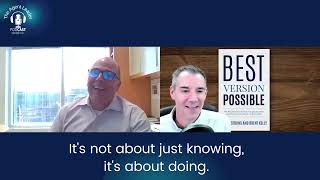
Podcast episode of the Agent Leader Podcast (host Brent Kelly) featuring sales leader Tim Hrehor. Conversation centers on leadership, internal communication, consistency, high-performance teams, and incremental behavior change (the '1% better' idea). Tim describes his commercial lines team structure, challenges aligning service and producers, successes in targeting preferred accounts and improving average account revenue, and personal mentorship advice emphasizing patience, relationships, and intentionality.
Chapters
Welcome to the Agent Leader Podcast. My name is Brent Kelly, your host. Thanks so much for joining me on this episode. So honored to have you with me, as always. The mission. The mission. The purpose of the Agent Leader podcast is to help you, the agency leader, gain clarity, build consistency, and make a commitment on becoming your best version possible. And we use that term a lot. The best version possible. In fact, if you're on video, you can see behind me on my screen. If not, I'll tell you. We've got our new book out called Best version Possible. You can go to sitkins.com bvp@sitkins.com bvp to get your copy. And today on this episode, I have a very, very special guest. And I didn't tell him this before we started recording, but he really is one of my absolute favorite people to work with. And the reason why, for multiple reasons, is him and his team have gotten great results. But he's just someone who's truly dedicated as a sales leader to the growth of his team and obviously with that, the growth of the agency. And I always say, you know, the number one job of a sales leader, what is it? People to grow sales or grow sales? Like, well, yeah, but really the number one job is to grow and develop your salespeople. And I tell you what, if you lead people, if you got producers on your team, whether you are a true sales leader with that name and title, or maybe you're the de facto sales leader, or maybe you're just trying to lead yourself better. This person I have today is going to be a great resource and have knowledge to share. So hopefully I built you enough, built you up enough there, Tim. But my special guest is Tim Rahore. He is a commercial lines manager, one of our great agency partners out in the East Coast. So, Tim, welcome to the Agent leader podcast.
Your 20 bucks is in the mail, so thank you for that. I think you spoke more highly to me than my wife does sometimes, so I certainly appreciate that. I'm glad to be part of this, you know, and. And talk a little bit about our thoughts, your thoughts, and some of the things we've worked on, our agency has worked on as a team with some of your leadership and, you know, you know, some things you've talked about, clarity and consistency and our journey together some three and a half years ago. I remember sitting in the room together and coming out of that room and going, what am I going to do first? But really the reason why we got involved with you and Roger at that point was we needed some clarity on some of the things we needed to do to grow in a beneficial way for the agency. And then we wanted the consistency and that's not just my team but also consistency around execution for myself and three and a half, three and a half years later. Glad to see the results that we've had. So I'm looking forward to this conversation, Brett.
Yeah, well me too Tim. Thank you. And again we're going to get in a lot of the good stuff of kind of, you know, your progress, your process, you know, some of the really cool successes that you've had and some of it's been successes just again with people development but then certainly what that's meant for some of the results.
Right.
With the agency as well. And you know, I've had, you know, my goal in 2022 so far. I'm off to a pretty good start is to have again many people that we work with and get the fortune of working with because we learn so much from you Tim, and people like yourself that are committed to growth. It's one thing if I sit here and blabber about stuff that, that, that you know, we see, but it's not a thing when someone who's in the field right every single day they're doing the hard work, gets to share some of your experiences. So I'll tell you again, believe me. Listen and get your notepad ready. Tim's got some great stuff. He's like many of our great leaders. He's humble so he won't brag on himself. But I promise you he's done some great things with the agency and you'll learn a lot. So with that Tim, could you just give maybe the audience a little background again, just again your specific role, how many people you work with, what it looks like again, whatever you can share to give some perspective to the audience.
Sure. So financial services insurance background 25 plus years insurance just over 8 years, managing large teams, producing both on the lending side and insurance side as well. So understanding what that takes on a day to day basis in some aspect and then the managing teams. Currently my team consists of on the commercial line side P and C got eight producers, roughly three to four states. They call on face to Face. We're a little bit different in that our COIs are mostly bank partners and there's a lot of time spent there. We, we're very fortunate in having that relationship and trying to add value and anchor those clients and then also have two employee benefits producers as well that cover the same territory. So real, real our team is a great swath of individuals with great experience. You know, I think the average, if we put all those folks together is probably 20 plus, 23 plus years of insurance. So I really, I talk a little bit about my background in insurance. You know, I'm a baby. I'm just getting wet behind the ears, really, with insurance. Right. So the technical stuff, not just the relationship stuff, you know, my team's been able to bring me up to speed on some of that over the last eight years. So I lean on them as much as they lean on me.
Yeah, well, you know, I think part of that too is you're a baby and all that, you know, as far as the technical side of things. And again, you know your stuff. But I think what's really fascinating. Interesting, and hopefully we'll get in some of the conversation is, you know, I'm just a big believer. And, you know, I think most people are. I guess I say that out loud, but it's not about just knowing. Right. It's about doing. It's the behavior change. And, you know, I think with any team, you know, when you've got people who are experienced on one side of it, you're like, wow, great. They're experienced, on the other side of it, you're laughing. They're experienced. Which means they have a lot of habits. Right. Over a lot of years. And some of them may be good, but some we can improve upon. So. And I don't want to lead you into this question, but if you go, they're great. But it just, it comes at. What I'd like to know for you as a sales leader, what are some of your biggest challenges or frustrations that you deal with, you know, every day, every week, every month, or just something that come to your mind? Tim?
Yeah, so it's a good question because we can often get, you know, go down a rabbit hole in the problems versus the things that are really good. Yep. I would say the challenges that I face probably is really just is making sure those relationships both, first of all, on our team, between ourselves and service, that, you know, we have one voice for the client. Right. And our part of our journey really was how do we communicate better behind the scenes, how do we all buy in to that BVP that you talk about? And so at an elementary level, we had to get really good at that. You know, that's a challenge, as you know, and we're a little bit different. And the approach that we take isn't a one on one. It's a one team approach. So There's a lot more producers, they have a lot more interaction with account specialists. So. So really that would be an example, kind of a challenge of communication. Obviously managing the carrier relationships. Right. Managing the bank relationships as well. Right. So you kind of look at it. I look at it as kind of a three pronged type of approach. And Right. When two of those prongs seem like they're pretty well in alignment, one of them goes way out of whack and it all goes back to like communication and consistency. Right. And it's about having a plan and a process in place and really just expecting or people expecting what you expect. So if you expect something from somebody, you better give that to them first and foremost. So I'm a big believer in that.
Yeah, that's great. I have to. Just because of our relationship together and some of the work. I mean you alluded to after that the first time and you know I came out to you guys personally. Right. And did a camp, one of our producer camps and we discussion. That's when you got back into your. In your vehicle. Like where do I start with this stuff? But I have to share a story and I think you'll nod and can elaborate on this. But you know, one of the things, and here's why I want to share the story, what you sort of mentioned that I wrote down was that the communication, like if we're going to communicate really well externally. Right. To our clients and people and centers of influence. Right. In your case, some bank partners, all that. If we're going to communicate well externally, we have to communicate well internally. And so, you know, one of the concepts that we talk a lot about and Sitkins is very well known for because it's so important is high performance teams. Right. That internal communication. And I just have to share. I know every agency we work with when we start, they're at very different places. Right. Some have been like, oh, I've heard this for 15 years and we kind of started doing on our own. And some go, I have no idea what you're talking about. And I just had to laugh because we got into high performance teams. And I will just tell you, your sales team was. Gave me the look of like what? How in the world are we going to do this? Because I don't know if we can trust them or there's a, there's a variance of things there. Right. So could you speak on just some of the challenges that you dealt with and then maybe what you guys did internally in that area?
Sure, I'd be glad To. So first of all, it's a recognition of everybody thinks they communicate pretty well, but what, what, what service? And again, there's always a process to it, right? And you guys taught us that. So what is the real service? What do you do really well? What are the things where you need to have improvement? What are the roles and responsibilities of everybody? So we've always had, we have this thing called the G drive, you know, on our. And it's Julia, my counterpart or service manager always calls it, she calls it the C of G because there's just a sea of information that nobody wants to find that, that's out there, but nobody knows how to get in and find, right? So one of those things in there was our so called roles and responsibilities or that had been built out 10 years ago over what role is it of who and how do we communicate both internally and with the client with new business and renewals. And so it was a good structure, kind of some of the, some of the, I would say the foundation for us. But were we following that? And we really weren't. I mean, I think in some ways we were, but everybody was doing it in their own way, right? So, so that was the first point. And what we really had to do is get together and as leaders talk about what is our expectation, right? And as you know, that can get messy because thousand servers doesn't matter. It was the same way in banking as it is in insurance. It's the push and pull, right? It's your role. It's your role, right? And a lot of times, especially when you're talking a lot of different people, that's a different expectation in everybody's mind. So, so we had a, you know, that communication piece. We started out very early on, very meaningful conversations. We had folks from our team that were involved in. Okay, this is the outline. This is what the new business looks like. This is what renewal looks like. This is what it looks like with each other in terms of high performance teams, right? And these are kind of the rules of engagement. And so we were pretty, we were pretty in depth with what that looked like. Now to put it into practice is one thing. I mean, you know, theory is one thing put into practice, right? And that's a continuation. You and I always talk about it. I think the thing I struggle with as a leader is I want everything to be finite, right? You want to. We see goals as, you know, I played sports in high school and college and you look at it and you go, I want to, I want, I see the scoreboard game's over. This is what the score is. These types of things. It never ends, Right. And so for somebody that's driven a certain way, it makes a little bit more. More. A little bit more difficult.
Yeah, yeah, it's. You're right. I mean, and certainly for salespeople or just, I mean, again, the certain personalities of people, it's like, you're right. The scorebo. I mean, even like sales, like, okay, my goal was X and that's my number. Right. Communication is like. It ebbs and flows and there's. There's highs and lows.
New people on the team, right? There's new people, new new approaches, there's new experiences. You know, I mean, there's all a myriad of things that are involved in that.
Yeah, My. My joke. You probably have heard this before. I said, leadership wouldn't be so hard if it wasn't for the darn people. Because they change, right? I mean, they're not. They're not static. So it's interesting. And I think the thing that we weren't using this term back when you guys were kind of starting this process and you committed to it too, because it wasn't easy. Right? And the easy thing is we'll just kind of. We're all right. But it's like, no, we know we can get this better. We know we can be better. But we talk about now all the time is same goal, different roles, right? That we're aligned with a similar goal, which really helps to unify some of those conversations. But within that, we know that we have different roles. And it's not that one is more important or less important than the other. They're all important. But we have to understand what those roles are, what they mean for us, what they mean for our clients. And again, kudos to you and your entire team for just taking that on. And it's been. And it'll continue. You'll continue on that journey.
That's it. It evolves. Right? Because one thing that seems great when you're first learning out about, it's all about one thing. It's theory. The other thing is practical experience. Right. And again, to your. To your point, it's about serving the client in a way that's meaningful, that, you know, wants them to keep doing business with us, and we don't want them to see the wizard of Oz behind the curtain of what's going on with all the levers, so.
That's right. That's right. Well, again, talk about some of the challenges. We'll go and Again, I could share several success stories that you share with me. And I've seen as part, you know, just working with you. And again, this is to your. Your hard work and your team's hard work. But share a success or two. I mean, whatever you want to do, Tim, that's something that's jumped out at you. That's really working well. Something I say we want to replicate our successes. What's the success that you're having that you want to continue to replicate? That's working well for the agency.
Yeah. For us, it's working on the accounts we want to work on. I mean, and then what that does for us, average revenue account size. Right. It allows you to start really digging into niche building as well. Right, Right. So instead of chasing business, which is very easy in our business because you could have bank referrals coming in and every one of a bank customer's clients is their best client, but it's not always a good risk client. Right, Right. So you can go down a rabbit hole real quickly. So it goes back to the success is really driving out with your guidance. Yours and Roger's guidance is particular sales process that differentiates us. And so when I talk about that success, it leads to those things. Average revenue, account size. Right. Pipelines and stuff. You want to work on the ability to start to niche yourself because you're starting to work within a specific industry because you're spending more meaningful time there instead of kind of again going down the rabbit hole. Those would be the success. And the success has led from having those differentiators and really following. And again, it's not for. I don't want this to seem like we are at, you know, closer to the finish line than we are at the starting line. But we've seen, you know, those first three years where. And even in years in Covid where just that little sales behavior coaching from you all on things to reminder, the monthly sales meeting with your team practice, you know, value statements, those types of things that, you know, one of the specific examples of that would be we had, I think three out of the six have record years last year in new business and the year prior they had made a couple folks that way too. And you spoke the experience could be great. And it also can be, you know, old dog, new tricks. And the one thing I'm really proud about our team is they understand that's that 1% better. I remember that's the one thing that stood out to me when. When I. When I met you that first day and you talked about if you do something 1% better each day, not drinking all the Kool Aid. Right, because it's never going to happen. But I kind of went a long way there. But I think the success of that all drives into, you know, building that program, the disciplines of some of the sales behaviors. Again, we're probably 10, 12% better than we were three years ago. But it shows in, you know, in our revenue and our average, you know, revenue, client per client, those types of things as well, and retention as well. So.
Yeah, I mean, yeah, it's. Well, you know, I appreciate you sharing that too because we've talked before about that, but just that we know there's a lot of things you can do. Right. And we have a lot of things that we talk about. But what I really appreciate you from a sales leader and a clarity perspective is, hey, number one, as you said there, is that we're going to become more intentional about who we want, why we want them, you know, why it matters. Right. Just part of that goes back to clarity that you talked about. Right. And just it seems simple, but oftentimes it's missed, it's just overlooked, it's brushed by. And the other thing is, I love this, is that, you know, that 1%, you know, it's just, it's something a lot of that's just a mindset to go, listen, I don't have to solve all the world's problems today. I just gotta be better than I was yesterday. You know, and hopefully that's a little bit liberating because I know for me it's like, you know, I've got just like you, Tim. It's like in any, you know, growth minded person, I got thousands of aspirations, right. Of things that I want to do. But you can set yourself up from, you know, failure from a mindset standpoint pretty quickly when you're like, well, gosh, I don't know why I didn't lose 30 pounds today. You know, I mean, come on, like, right, but it's just getting yourself in the right mindset and just starting to build some of those consistencies and all of a sudden you look back and you go, gosh, we've come a lot farther than I thought we have. And what's really exciting is I know we can go a lot further. So you want to speak to that? I see you kind of. I don't know if you wanted to comment on that.
Yeah, no, I mean, I think it's the reality of it. I think you always, what is it you always think about? You Know, you can't swallow something, you know, something whole. Right. You got to take bites out of it.
Right.
That's, again, the approach I think, that we had. We. We've always had really talented people on our team. There's no question. It was about, again, the clarity and consistency of both their work ethic around trying to drive some of those new behaviors, the communication, you know, how you spend your time, you know, being in green during the week versus red and those types of things. And then also for me, as a sales leader, just our one on ones, it gives me clarity in terms of am I working on the right stuff? You know? You know, what, what, what. What have the results been since the last time we talked? Did you really work on that? You know, and then in the midst of that, there's all these other things that are going on that just remind you that it could be just that 1% and it could be just that one behavior or, you know, simple as a thank you. You know, you talk a little bit about that, thanking your best clients or your best referral partners, or again, that's a behavior, and that's 1% better day. Maybe you didn't take the time in six months to do that, but so, yeah, it's really just establishing some of that.
It's fantastic. Yeah, it's just. It's. It's awareness. And yeah, again, we're all gonna. We're all gonna have, you know, we're gonna deviate from that best version map sometimes because we're human. But it's just to say, hey, listen, I. I know, I know we're. We're gonna get back on the right path. And it's just those subtle reminders, and they're really important. And again, you as the sales leader, we always joke that the chief revenue officer, right, or the sales leader is also CRO. The chief reminding officer. Like, you keep saying it again and again and again. It's like, oh, my gosh. But, you know, I had a mentor years ago, and I think you've heard me say this. You've communicated too much. You're finally getting close.
I know you. And I've had a lot of conversations about that, and there's times where I've asked you, I'm like, I feel like I'm beating a dead horse. You know, and you got to remember to look at the results from it, though, too. Right? I mean, there was show. Show the consistency of that, you know, and you. You. You help me with that. And, you know, certainly, I think folks on my team probably hear me and probably roll their eyes at different times. And. And I just try to remind. To remind them that, number one, what's in it for. For them, what's in it for us as an agency to continue to grow, to continue to do the things we want to do? And so some of that. The drum beat that you talked about, about the consistency and communication. And communication. And communication. I think if I think about anything, that's probably, you know, we started this conversation with that, and we're still with that, and it still sticks with me in my gut. And I think that's probably the biggest. The biggest takeaway from. From working with you all.
Yeah. Yeah. It's just. And, you know, sometimes. I was going to say, sometimes we try to get too cutesy or smart. I know I've done it, like, and I just had a. I had a coaching call earlier today with one of our clients, like you, and it was like, man, we started doing this and got more focused on it, and we're really starting to get some traction results. So it's like, well, now what do we do? And I was like, more of that. Like. Like, this is not the time to turn away from what's working. It's time to double down on what is working, because you're just starting to get traction.
That's hard. It's hard as a sales leader, though, because we're pulling 100 different directions, and it's, you know, you look at it and you go, okay, we're. And I. Exactly what you're saying. I've been there where I'm like, I'm just starting to get traction, and all of a sudden I'm going to go, I'm going to start working on this now with them. Right. And then I wonder why this starts to fail, the stuff we were getting traction on, and I have to go back to it. Right. So do it. Right. The first time, was it measure twice, cut once. Right. Kind of type Deal.
Yeah.
You know, I think that's probably a fair statement, but essentially, I mean, we do get pulled 100 different directions. Our producers are pulled in 100 different directions. Right. And it's just those subtle reminders around the consistency and the communication piece.
Yeah. Yeah, Good stuff. All right, Tim, I've got one. One final question for you. Are you ready?
All right.
All right. Well, it's my favorite question, and the podcast listeners, if they've heard me talk about it, know that I mentioned this all the time, but, you know, I believe so much in mentorship. Right. And so the Question basically is, how would you mentor your younger self? Right? So if you could give one piece advice for the young Tim Rahore, and I don't know how long ago you want to go back, let's say 20 years ago, I don't know, somewhere in there and you can see it, right? You see the younger version of you sitting there, and he looks up at you, where you are today and says, hey, older me, share some wisdom. What should I know? What would you say?
That's a good question. I would. You're never. You're never where you think. Where you are at right now is never where you're going to end up. And what I mean by that.
He looks up at you where you are today and says, hey, older me, share some wisdom. What should I know? What would you say?
That's a good question. I would. You're never. You're never where you think. Where you were at right now is never where you're going to end up. And what I mean by that is whether it's family, whether it's life. And again, we do this for a living to provide for our family, right? And, you know, you tell a lot of great stories about how you got involved, why you got involved, being at a gas pump, right. And trying to understand what was important to you. Right. Where were you going to make decisions? So I would say to my younger self is, be patient. Be kind to yourself, too. Right? Don't be too hard on yourself. I would say relationships are important, both personal and business. Right. You can never. You can never. There's always going to be somebody in your corner, right? I always tell you this story at the same time, I think Lou Holtz was the one. I was a big Notre Dame fan. So Lou Holt says 90% don't care, and the other 10% are glad you're in the situation you are, right? So. So if you're gonna go boohoo, right? If you're gonna go boohoo again, those folks probably aren't gonna matter. But at the same time, you've got a lot more friends and people that are pulling for you that want to help you. It's no different than asking for referrals with your best clients. I think sometimes we feel guilty because of that. So I would say be patient. It's. It's a, it's, it's a marathon and it isn't a sprint, right? Make sure you spend the best clients. I think sometimes we feel guilty because of that. So I would say be patient. It's. It's A. It's a marathon and it isn't a sprint. Right. Make sure you spend the quality time with your family because, you know, I've had some losses in my life at an early age that it's important and it really builds a character of what's important to you. And really, again, you work with your work families, your work family. I think of them as just as important. So building those, Building that character with those people, showing them who you are, learning who they are, it's going to get you a long way. Right. And that's never going to change whether you're 15 or 70. And, you know, I get quality time with your family because, you know, I've had some losses in my life and I'm a big Irish, Irish, Catholic, Slovak family, five kids a year apart. An early age that it's important and it really builds a character of what's important. And, you know, again, I started this with treat people the way you want to be treated. And it really is the golden rule. And that's probably why I would just continue to tell myself, I don't know if that helps.
No, that's fantastic. I mean, there's. There's not a wrong answer to that question. It's just, you know, everybody's got unique perspectives. But, you know, it's funny, I've done enough of these now. I don't. I don't often hear often ever have I heard, just make a bunch of money because it's all just about the money, right? Which is nothing wrong with it. But then again, there's so many. The reason why I asked that there's depth to that of what, you know, really is meaningful. And, you know, I think what you said, again, it's your answer. I don't want to summarize your answer, but just for me as I listen to this, because I always try to learn, right? And Tim, you've been a mentor to me in different ways, you know, just having conversations. But we always say it's, you know, just because it's simple doesn't mean it's easy. And with that being like, whether it's family or relationships or deposits and things that you talked about, um, we also say it's, you know, it's easy to do and it's really easy not to do. And, you know, it's, it's, it's. And so I just, I think of this and I don't know if there was an underlying theme in this conversation, but what, what hit me is everything you talked about was just be intentional yes, absolutely. Be more intentional. So any last words you want to share, Tim, with the fine agent leader podcast audience before we do you?
And really, again, you work with your work family's. Your work family. I think of them as just as important. So building those, building that character with those apart. No, I just. Your relationship, Relationship with Sitkins has been very important to our growth. You know, our personal relationship. I feel like we've got a connection. Obviously, we spent some time even before our call talking about family and all those other good things, but I just can't thank you guys enough. It's given me some direction, gave our agency some direction on some of the small things. And again, it really has been about 10% better. But it's probably been an undertaking that I can't imagine the day you got out of the car. If I were to know what I had to go through to get to this point, I probably would have said, to your point, I'm not going to be so intentional anymore. I just wanted to be less people. Showing them who you are, learning who they are. It's going to get you a long way. Let it be the way it is, you know, joking, of course.
Right, right.
But I just want to thank you guys, Sitkins, you know, Chris, Chrissy, Janney, Chrissy, Janie and Bethany. And I mean, just, it's been a great relationship. We continue to those little things that you guys just remind us of. And again, we're not great at it all the time, but it's reminders and it's, you know, it's a kick in the pants to just go, be better, you know, just be better.
It's, it's. I mean, you know, we. Last thing I'll share. I've shared this with the audience before, but I mean, the title of our book and what happened, I mean, this idea of best version possible. We, we honestly weren't necessarily the word intentional about a title or that's this new thing. It just kept, we kept talking about it, I kept asking questions, and it's like, listen, it's not like Tim versus another sales leader or this agency for this agency. It's just, hey, what is you and your team's best version? What does that look like? And guess what? We're never going to attain the best version. I mean, it's never going to be perfect. But are you at least in the game?
And that's never going to change whether you're 15 or 70. And you know, I came from a big Irish, Irish Catholic, Slovak family, five kids a year apart.
Are you giving yourself a chance? Are you pushing yourself in that direction? Because, listen, it's like, you know, the idea is that we all know this, and it's a cliche life short. And, you know, you just don't want to look back and be like, well, I gave it a pretty decent effort, you know? No, like, live all out. And part of that comes back to do it to where you could experience some of those freedoms. Right? Whether it's time and money, but relationships, as you said, and purpose. Like what?
And, you know, again, I started this with treat people the way you want to be treated.
And I do matters. And by the way, this business can be a ton of fun, Right? It's a challenge, but it can be just such a great opportunity and fun. So, Tim, thank you for being a partner. Thanks for coming on the podcast. Certainly appreciate it in the relationship. As a reminder, again, we've got our book, Best version possible out there. If you go to sitkins.com bvp you can order your copy today. So with that, Tim, thank you and everyone else, all the best to your success. Thanks for listening.
Really is the golden rule. And that's probably why I would just continue to tell myself, I don't know if that helps.
No, that's fantastic. I mean, there's. There's not a wrong answer to that question. It's just, you know, everybody's got unique perspectives. But, you know, it's funny, I've done enough of these now. I don't. I don't often hear often ever have I heard, just make a bunch of money. Because it's all just about the money, right? Which is nothing wrong with it. But then again, there's so many. The reason why I asked that there's depth to that of what, you know, really is meaningful. And, you know, I think what you said, again, it's your answer. I don't want to summarize your answer, but just for me as I listen to this, because I always try to learn, right? And, Tim, you've been a mentor to me in different ways, you know, just having conversations. But we always say it's, you know, just because it's simple doesn't mean it's easy. And with that being, like, whether it's family or relationships or deposits and things that you talked about, um, we also say it's, you know, it's easy to do, and it's really easy not to do. And, you know, it's. It's. It's. And so I just. I think of this, and I don't know if there was an underlying theme in this conversation, but what, what hit me is everything you talked about was just be intentional.
Yes, absolutely.
Be more intentional. So any last words you want to share, Tim with the fine Agent Leader podcast audience before we depart?
No, I just your relationship, relationship with Sitkins has been very important to our growth. You know, our personal relationship. I feel like we've got a connection. Obviously we, we spent some time even before our call talking about family and all those other good things. But I just can't thank you guys enough. It's given me some direction, gave our agency some direction on some of the small things and again, it really has been about 10% better. But it's probably been an undertaking that I can't imagine the day you got out of the car. If I were to know what I had to go through to get to this point.
More from Roger

This Shift Helped Us Unlock Growth 💡 | Agency Leadership Tips #insuranceagency #agencygrowth





How AI Can Help Insurance Agency Owners Master Their Financials (Without Being a CFO)

From AI Hype to Real Results: Steve Anderson on How Insurance Agencies Can Use AI to Grow Now



