Creating Luck and Taking Calls with Ryan Teubner of Rich & Cartmill Insurance
Ryan Teubner of Rich & Cartmil Insurance talks about running his family's agency, founded in 1922, and why he left corporate sales at LifeLock and Liberty Mutual to join it. He shares his approach to leadership, client relationships, and the unglamorous work that actually grows accounts: taking calls, knocking doors, showing up.
Chapters
Welcome to the Agent Leader Podcast. My name is Brent Kelly, your host. Thanks so much for joining me on this episode. As always, I want to thank you, the Agent Podcast, Agent Leader Podcast listener for being part of this growing community. Our purpose, our mission of the Agent Leader Podcast is to help you, the agency leaders out there. Whether you're the principal, a producer, a high level professional, you just want to get better at your craft. You know, leadership is influence. We want to help you gain clarity, build consistency and make a commitment to become your best version possible. And if you're watching this on YouTube, you'll see in my graphic I've got a copy of our book Best Version Possible which came out this year. As always, if you want to download a copy or get your copy, you go to sitkins.com bvp for best version possible. Sitkins.com bvp grab your book. We're getting some great feedback on that and want to get that into more agency leaders hands. So take a look at that. I've got a fantastic guest today. I've done a bunch of different, different podcast episodes in the weeks that I've just recorded here and Roger Sitkins and myself did an eight part series on some clicks. So take a listen to that if you haven't. I've had some great interviews from the tech space. Rick fox from R4 was with me recently and this I'm really excited about this conversation today I've got with Ryan Tubner, he's with Rich and Cartmel in Oklahoma and I was actually initially connected to, to, to Ryan through Jim Schubert of another podcast that he does and got to, got to hear Ryan through a little bit of his story on email and kind of like me, he's involved in lots of stuff and loves his family and his agency and building relationships and been involved in different things. So excited to hear Ryan's story. I know he's going to add a ton of value to, to the agency's leaders out there. So Ryan, without further ado, welcome to the Agent Leader podcast.
Thank you and thank you for having me and I need to thank you and for I guess listening to Jim and Jim for referring me to you. So I'm excited started reading my best version possible. The book, my copy. So I'm excited to have a good discussion with you today.
Wonderful, wonderful. Well, I know you come from a long time family agency and some of the background and the history but if you could just for the audience Ryan, just share a little about that history, the background, how you got to where you Are some of the things your agency focuses on, all that good, important stuff?
Sure. So Rich Carmill in itself started in 1922. So we are celebrating our 100 year of this year. My grandfather actually merged his small little agency in the early 50s, mid-50s, to Richard Carmel to join some other guys in there. So my grandfather was a member, a partner agent of Richard Cartmel all the way up until he finally decided, I'm done, no longer the chairman of the board. I am out this past December. So it was a long time that he was involved in the agency and with my grandfather, he was the first president for our national, for the national association out of the state of Oklahoma. And so seeing him go through what he did, you know, growing up and then knowing a little bit about his path, the people he's helped, the stories he's told, the friendships he's made, really kind of got me into wanting to become part of Richard Cartmel. As we sit. Richard Carmel is shareholder owned. It's privately owned, one of the largest privately owned agencies in the nation. We will not sell. I don't see a reason for it. I don't see how we're going to do it because you have 22 shareholders that have to make an agreement on that. So I just don't see that happening. Plus, we are unique in the fact that we all own our own books of business. Rich and Cartwheel does not own a single book of business. Our commission split goes to the overhead and then to us. So it's very producer friendly. Yeah, we concentrate a lot of our markets that we work or target industries that we work with. Our construction, health care manufacturing and then a lot of other general business. You know, your Main Street America group or Main Street America type businesses. Your home and autos. We do some home and autos as well. We, we have a. We have about 70 agents that do really whatever they want to do, focusing on. So that's kind of the big picture. Rich and Cartmel love it.
And thanks for sharing that. A couple things I've got. I told you, Ryan, it's to be like we're having a cup of coffee. So I hear things that, that hit my ear. I'm like, oh, I want to know more about that. And first of all, it's interesting because you know how you guys are set up and we've got some agencies we work with that are similar in structure of that. And I think a big part of that is it's a very sales focused. Right. Producer focused agency, which again, I'm one of Those weird people. Ryan. That I believe sales is a good and noble thing because we do the right things for people. That we're doing them, we're doing them good work and we're adding value to their lives and their business and all that good stuff. So I love that. I did want to ask you a little bit about your, your background because obviously you grew up around the agency. But then, you know, part of the information you sent me. You started with Liberty Mutual, Right. Or you were with Liberty Mutual prior to that. So tell me about that. And then how you kind of got transition and of course the impact of working with the carrier side for a while.
Absolutely. So my sales career actually started at Lifelock. That's where I say my sales. My true bonafide sales career started at Lifelock and that a ton. I, I actually, I was so thankful that I got to spend two and a half years over at Lifelock because I learned the C suite. I learned how to talk to decision makers. I learned the importance of relationships. I learned from the. One of the founders, Todd Davis, that you don't have to be just stuck in the office to get your sales. He always said, and I always remember, I don't care where you are. We could be on a beach in Hawaii. As long as you get your numbers in, I'm fine. So. But it was that time where I learned that that was valuable for me. Moving on there, I went to Liberty Mutual on the personalized side.
Gotcha.
And the training was great. Got to meet. I'm still buddies with one of the guys from that time. And that was back in, I want to say 0809 somewhere around there. Okay. But I quickly realized that if I want to be in the insurance business, I want to be on the independent side. It suited me better. I didn't like doing the personalized, the more complex commercial side. I knew you could make more money there. I knew I could provide for the family. I knew I could reach my goals and really follow in the footsteps of my grandpa. At that time, though I will admit, at that time I, I didn't wanna. I wanted to pave my own path. I wanted to go that way. I didn't want to go to Racer Carmel right off the bat because my grandfather was such a huge shoes to fill. Right. But I realized that it truly is the best spot for me. I had a. After Liberty Mutual, I went to a little independent agency in my hometown of Stillwater. And it tried to make it work. It just didn't work. It didn't have the trading didn't know what I was doing. I was just spinning my wheels. I was getting frustrated. If I did leave there to come to Richard Carmel, I probably wouldn't be in the insurance business. So I'm thankful that I was able to at least go there just to see what doesn't work and what I needed. And then called my grandpa, called Richard Carmel, talked to Mark Blackson, one of our former shareholders. Then the rest is history. Been here since 2010 and loving it. And so it worked? It worked out?
Yeah, absolutely. Well, of course it did. And it's, it's, you know, it's interesting. Everybody's got their own path and, and how they, you know, whatever that, however that works for them and their agency. But it is interesting. I mean a lot of the, the agencies you work with that are family agencies, it doesn't always have to be this way, but many cases similar to your path, Ryan, where they may spend some time on the carrier side or somewhere else. And it could be a number of reasons for that. Some of it is like you said, like, you know, I don't want to be just, just because grandpa or dad or mom are there that I've got to start in there because I kind of want to have my own, you know, I want to create my own future to a degree. And then at some point you realize, man, that's a pretty, pretty great spot, right? There's pretty great opportunities in that. But then you come to the agency with some, some great experience in different ways and not necessarily always insurance experience like you said, but just business acumen experience about what do relationships really mean? You mentioned that I, I need to get out of the office, right. And do different things as long as I'm bringing results. Right. So these things that can carry through as you move forward I think are really, really powerful. I just share a quick side story. It's funny of the, you talk to people and especially the producers out there and like some of the back jobs they had and there's always these little lessons that you learn like you know, some of that you shared there. You know, I'll never forget, you know, when I, I worked at a, I worked at a clothing retail store part time. I like two or three jobs and in college and I didn't, I don't like clothes or I don't really care. I just needed a job and it was a commission based job in clothes. And like one of the first lessons I learned is that I don't need to sell to the 17 year old kid. I find the 45 year old mom who has three kids and I just focus on her, right? And it was the idea of just like, you know, the vital few versus the trivial many. I never thought about that, where that would come to. But it's just funny, these little things that you learn along the way. So I want to ask you a question because you, you, you know, having a grandpa and a family, right, and coming down in the business and now in your position of where you're at, you've been there since 2010, as you mentioned, question I want to ask, and you're one of the first people I've asked in this way because it's pretty broad, so you can take it wherever you want. This is the Agent Leader podcast. And you've learned from leaders. You now are a leader and you have been in your community and with the agency. What does leadership mean to you, Ryan? When you think of leadership, what does it mean to you?
I think you're right. It can be so broad. It can be leadership in itself. And the way I think of it is making those hard decisions when nobody else wants to. Holding yourself to a higher standard, representing not only like at a national conference, I'm representing not only Richard Carmel, but Oklahoma and my family. I mean my family name as well. I mean, it's a lot of the younger generation that are up and coming, don't know the history of my grandpa within the Iiaba, but all the past presidents that I look up to that I see that our leaders do. So when I go to those conferences or even when I'm acting, you know, what I'm, whatever I'm posting on social or anything like that, then I think for me, being a leader per se, you have to, you have to represent not only your family name, your agency, your state and the industry as well. It's, it's, you know, there are some tough decisions you have to make and being a leader and I think you have to have the ability to make those tough decisions. Do I know. But learning from those mistakes. Mistakes, yeah. And learning from those decisions that you may have made early on or at a specific time, but now you know you're not going to make that decision again. And then when that time comes up or that situation arises, then you know the exact decision you need to make. And so I think, I mean, it's a rambling way to say what being a leader is. To me, however, I think it's all encompassing. I think it's doing the right thing. It's like when people say what Is integrity or what is in character. I think it all goes hand in hand to where it's doing the right thing when no one's looking. It's making those tough decisions that have to be made. You don't like to make it, but it has to be made. It's things like that that you just, I think, just builds upon the leadership. And I think most importantly, honestly, you have to be able to learn, being able to learn from other leaders and listen to people that may not be a leader, but may be up and coming. I mean, it's those that instance as well. You got to learn from others. If I'm talking to my account manager and she has a good idea, even though I'm technically the leader of her per se, I have to realize that's a great idea. Let's do that instead of what I say. So it's, it's things like that that I think really models a great leader.
Yeah, I love it, Ryan. And I said, oh, I'm, you know, it's a tough question, right? I mean, and I know that because it can go so many different ways. But I mean, I took your, I took what you said there, and I had three main bullet points that I think the listeners could absolutely take away. I know I did. In listening to you. And you know, number one, I think it starts. Leadership starts with yourself. I've got to hold myself to the highest standard possible. And like you said, it's the idea that I represent myself, but I represent my team, I represent my company, I represent my state. Right. Depending on what it is you're doing. And the big part you said there, I think was really interesting, is that, um, you gotta make hard decisions. And here's the thing about this too, and I'm sure you've had this. You sometimes you gotta make hard decisions and there's no guarantee of the outcome. Right. Like you're using your best judgment. And the fact is that this decision can affect a number of people, but someone's gotta make it right. We gotta make a choice on something. And so you've gotta take all the data, information, emotional capacity you have and say, listen, I'm doing what's best for the company or for the team or the organization. And there's no guarantee. And you've gotta, you gotta make that decision, but also understand that it may not always be the right decision. And that's, that's, that's why there's a lot of pressure in that. And then the last one too, I think. And this is where I was getting to this molds together is being coachable. Right.
And the fact that I agree you have to be coachable. When I first started, my grandpa told me two things. He said be a student of the game like Mike Cole. And Mike Cole was the guy that bought my grandpa's book out over in Tulsa. And he said, the other thing he said is you pay attention and watch Travis Brown and he's our current president of our agency. And I did. I mean I'm not gonna go against a guy, even though it's my grandfather, I'm not gonna go against a guy that has the proven formula and wisdom to help me succeed. Did it take longer for me to get where I want to be? Absolutely. I tell every young agent I did things massacre. I got involved in the, in the industry and in the association and going up through the young agents way too quickly. I should have built my book first, but is the path and so I wouldn't change it for the world. But it's that being coachable, I did things my way that helped me out to become where I am today and during those lean years. Because we all know in the first few years in the insurance business is lean. When you start building it and building that book, you look back and you are thankful for those times because you're more appreciative of what you have now. So when I first started and my grandpa told me what to do, I. He's. I mean, I knew every month when those numbers came out, he'd be calling me accountability as well.
Yeah, right.
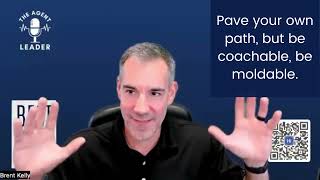
Absolutely. He'd asked how the month was. I said, hey, you know how my month was? You got those numbers. So. But it's, it's listening as well. You got to listen to those that came before you because they have a lot of wisdom to bestow upon us. I mean, try best bond guys that I've ever met. Construction 8 Construction, Insurance and Bond agents that you'll ever meet. So brilliant. And thing I love about him is he's willing to help, he's willing to help out the knowledge that you need, etc. But he's also humble about where he is and he's, he's laid back. He's like, like me laid back guy. So it's, it's things like it's guys like that that you, you want to or your, your career after pave your own path. But be coachable, be moldable. I mean we're always learning. I'm always learning about new things, new ways to structure an account from an insurance Perspective, bond wise, et cetera. You can't be afraid to ask questions.
Oh, absolutely. I mean, again, just two big no's. I mean, be a student of the game and find mentors, right? I mean, there's just so much of that and I love that. It's interesting to me, like, you know, and I get the opportunity to talk to a lot of different people and different backgrounds, but like, it's always the, the most successful and again, however you want to define success, that typically ask the most questions or the most curious. And I just always find that it's not, it's not interesting in the way that surprises me anymore. It's just interesting as you look at humans and how they approach things and their mindset. And like you said, I'm always going to ask why or how or try to learn something a little bit differently. And I'm also going to model people that are doing good things right, which is what you said. So I love that. All right, I'm guessing you got challenges going on, Ryan, somewhere in your life or business, right? We all have them. Probably one, maybe two, who knows? But if you were to say right now, and again, you can take this question wherever you want, but you think about challenges you're facing, what would be, would you say your number one challenge you're dealing with right now and what are you doing to address it?
I think it's, I think a lot of people, when they ask this question, I would assume the vast majority say time management. I mean, other time management. It's being able to balance my work, my insurance business, the clients, new business prospecting, everything that goes into the insurance business. I mean, we're in football season. We talked about that before we started. I always tell people in the insurance business, you're playing offense, defense and special teams all day, every day. I mean, that's what you're doing. You're trying to go get more clients, you're trying to be on the defense of other agents coming in, you're trying to round out accounts, you're trying come up with ways to ensure a specific need that this account is doing. So you're just doing a lot of things, but you also have a home life and you also want to be with your kids. I enjoy being with the kids, family, training, dogs. I absolutely love that. It's my get away from insurance life. I love it. And it, to me, my biggest challenge is managing that work life balance. It is not checking my emails. It is not checking an email. Every time something comes in, I'm checking It or a text message from client comes in, I'm checking it. It's managing that work life balance. It's managing the fact that if we're on vacation, I only get maybe an hour of the day right off the bat before the kids wake up to do something, you know, with work, I think for me, I'm just a pleaser and I want to make sure that I'm providing the best customer service as possible. But in doing so, am I sacrificing time away? Two say that, but in, in reality, my. With our setup the way we are, I'm barely in the office. I'm either out and about. I have a little setup at the house. I will have a setup. I mean, my daughter's in gymnastics four and a half hours a day, every day. So there's a little place over there that actually it's an office area that's closed off that I have set over there. So if I take her and I can watch her doing gymnastics, then I can do that. My biggest has always been to build this book to, as a level and continuing build it to meet my goals, but also to have that flexibility to where I can be with the kids and watch the kids grow up. That was absolutely non negotiable for my wife and I. She would stay at home, she's doing homeschool with the kids, and I would be able to have that flexibility. Now if I was just starting out, I wouldn't feel like I have that flexibility. The good thing is we waited to have kids.
So, yeah, it's. I mean, no, it's not. I mean, it's not unusual, but it's, I mean, how you presented it was really interesting. And I wrote something down there. I was like, this is true a lot of businesses, but certainly for insurance professionals. Like, you can work anywhere, which is a great thing. You can work anywhere, right? Like, that's, you know, part of it. Yeah, I mean, I'm sitting there. I know you've got. You said your kids were 10 and 5.
Yes.
So, you know, those ages obviously are so multiple. And you know, it's like as a parent, like, you want to, you want to be part of a lot, you know, as much as you can of those things because they are fleeting. I just had one go to college. So it's like, oh my gosh, where did that go? And you sit there and you're. But at the same time, your mind's like, gosh, what would one more call or one more email or one more minute of preparation mean? And Then the other side of you going, what would. One more hug, one more, how are you? One more, I love you mean, right. And to try to balance those together, it's, it's, it's an ongoing challenge. So just to go a little deeper than that, have you, have you found some ways that you've, I don't know if I say find peace, but found greater focus maybe even around doing that? I know it's a challenge, but have you had anything that's worked for you?
Yeah, it's, it's communicating with my wife, telling her, okay, this day on next week, we go through our schedules every week, make sure we're, we're good to go. Because, you know, my daughter's in gymnastics. Nine to 1:30 every day. And then Tuesdays, Wednesday she has two hour break and goes back for two hours.
When are we going to see her on the Olympics, by the way? I don't mean to interrupt you, but I got to ask. What? Are we going to see her on the Olympics?
No, no, I would be fine if she continues, has fun and goes to college.
Okay. All right. Absolutely.
I'm good with the college scholarship.
That's not a bad deal.
That's what I'm good with. And we, we're fortunate to know some really good families that, that's been where we are on the gymnastics side with their daughter. We're great friends with the Bowers over with at ou. She's a stud gymnast, sophomore at University of Oklahoma, and we can lean on them and lean on her parents and, and ask them questions. So. And they all said on the elite level it's tough. And, and my wife and I talked about that too. I don't know if we want that for Dixie unless she is adamant that she wants to become an elite Olympic level gymnast. Is she on the right track? Yeah, she's doing really, really well. However, me personally would be happy with the college scholarship.
Hey, like I said, you're speaking my language here, right. I'm living in that world right now.
So I think it's just communicating with my wife and because she knows I absolutely love going out there prospecting. Yeah. Yesterday I was with clients, I was with prospects. I was going around knocking on doors. I love doing that.
Yeah.
Last week, for last Friday, one of my clients invited me to a Ducks Unlimited event there in Stillwater. I love doing that. There were plenty of guys around there that I knew that I could kind of put a bug in their ear and see if I can work on their insurance. So that's where I go do my work stuff. And she knows I need to do my work stuff to continue building the book and providing for the family and meeting the goals that we have. But it's also, hey, one day I want to just go hang out at gymnastics and go watch gymnastics and take my iPad and computer there and work, work from the office there. I say office loosely, but it literally, it's. It's a sweet set. Not gonna lie.
It sounds like it sounds. You know, one thing I, I take listen, I hope the, the listeners will get you talk about communication with your wife up front. And we actually, and you'll see this in the book, if you haven't already. We talk about high performance teams versus high maintenance teams. And this is true certainly in an office. But, you know, you think about a team of a family and works both ways. I mean, what hits me is that like, the clearer that we can be on the expectations or the calendar that week, or our focus and our goals, the more that we can be in the moment and be 100% present when we're doing things right. That to me is the big thing, is that, hey, I, I need to be for this next three hours or whatever, focus on prospects, you know, work or pipeline stuff. Because I know that when that three hours is over, I'm gonna have two hours with my daughter, whatever it is, right. Like, and you feel and you're clear about it. So the biggest thing is like, just be where you are.
Exactly. You know, I completely agree. I love that, that mindset. Just be, you know, be present. And that's what I continually have to work on because my mind goes elsewhere sometimes. My mind goes to a client. I'm sleeping at night, I'm like, oh, crap, did I do that? Dang it, I gotta get that done. You know, you're somewhere else. And my wife will call me out on it, in which I'm glad she does. So I need to be able to be present more often. And it's a challenge, but it's one that I continually to strive to do better because the kids start calling me out too. It's like, okay, you're right. So it's, it's things like that. But it's, you know, it's funny how life puts in things perspective to the tragic tragedy of some other. Other people. Where you have friends. We have some good friends that their son surgery and he's off in college at the Navy Academy and they live in Montana, so he had to drop everything to go over there. And then another friend, his Son died tragically. So it's things like that, events like that, for me personally, that put. Puts things in perspective and. And helps me realize, okay, work is always going to be there, period. Insurance, business and the way we're set up at Rich and Carmel, at least. And for me, I have the flexibility. It's always gonna. I need to be able to give that extra hug, say that extra. I love you. Go spend some time with Clancy, playing with trucks and tractors and his toys, talking trucks with him, being with my wife, just being present. Last night, we were just hanging out in the front yard watching Clancy play with the puppy that we're about to. It's. We bred a dog. One of our dogs in. The puppy's about to leave this weekend, so we're just hanging out, having a cocktailing and being present. So. And that was great. I did. I was going to skip a workout and do that. And that, for me, is largely due in the fact that I got to put things in perspective. And I think life has a funny way of doing that for all of us. No matter if you're in the business or not in the industry, putting things in perspective, being able to say, oh, crap, I got to balance this work, life, work, family balance a little better so I can be present. And I think that's what this industry affords individuals. Flexibility. Young producers coming up, you have that flexibility to be able to do that. Any other industry, if I was selling widgets or wherever, I don't think I'd have that flexibility.
Yeah, we. We say on our producer camp, typically in the first session, you know, like, you know, how many of you are, you know, making more money than some people in your family, and they raise their hand or, you know, how many are making more money or different. Your friends, you know, it's like, how many of them are making more money than if you had a real job? And they kind of laugh, and I go, how many would be fired if you had a real job? Right? And it's just, you know, it's. It's kind of a joke, but you all kind of go, gosh, you probably would be.
Right?
And so it's. It's such a great opportunity, and it really is a great business for so many different reasons. I think the thing on there, Ryan, you just said, it's like a couple things that jump out. I mean, obviously, number one is just you've got freedom and flexibility, but you still got to prioritize, right? And be diligent and disciplined. I think it's for some certain like insurance producers and professionals get off track because, wow, I can do whatever I want. Yep, you can. And so, you know, make good decisions. And the other part, too, then it's kind of the flip of what I'm going to say here is I had. I had a coach years ago that I was working with, and I was telling her, I'm like, well, I got to do this, and I got to do this, and I got to do this, and I got to do this, and I got to do this, and then I got to go do this, and I got to do this. And she's like, why? You got a lot to do? I said, well, yeah, I got. I mean, I got a family. I got to run this business. And she goes, you know, if I recall, I think we're called human beings, not human doings. Are you ever. And I was like, oh. I go, you know, I get it. She's like, at some point, certain times, you just need to be. You need to be with people. So I appreciate you sharing that. I think there's such great wisdom in what you just provided. I want to go on to talk about some challenges, and maybe this. This bleeds into some of this, but successes, I think, you know, like, we talk about having mentors and people you model for the agency leaders. Listen to this again, whatever the role position, what's the success that you feel confident about or that you feel proud about that and you're trying to replicate it that you think would be worthwhile to share to others out there?
Oh, gosh. I think a lot of my successes are due to luck sometimes. But. But hold on. However you can. I think you can build your own luck. I think hard. Go knock on doors, and at some point, it's all going to pay off. The relationships. Key thing there is relationships with the customers. One of my longest friends, he moved from Cali. Where were they? New Mexico. I want to say to Stillwater. When we were in the third grade, I was the first friend he knew, and we're still friends in this date. He's been one of my biggest advocates in the in and for my clients. So he. I mean, he's built a company and business that's really cool and doing a lot of cool things for property and real estate down in Oklahoma City. Midtown, downtown Oklahoma City. I mean, it's my second largest account now, and it grew from. See, it started maybe at a $20,000 account, and it's exponentially higher. So just those relationships with the right people has helped me on this success. The other Thing never be afraid of is taking a call in from the outside. So if somebody just calls the agency looking for a quote, don't be afraid to take that, because I'll tell you this other cool story. And we just renewed this policy, I want to say, a couple two years ago, maybe right before pandemic started, or right there of we had a call in and I got it. And the policy was for a big furniture store down in southern part of. And it was maybe a $40,000 account for a call in, and now we just renewed it at 66. So never be afraid to take a call in. Some of the guys, some of the young agents may think, yeah, I'm not gonna waste my time on that. It's worth calling them back. One, here's the deal. If you think about it, if you call them back, then at least you're not making the agency look bad and not returning calls.
Sure.
So that's the biggest thing. Even though it may be a waste of time and you don't want to do it, you think you have a pipeline elsewhere. Call those people back because you don't want egg on the agency. You don't want them to go to their friends and say, hey, I called them, but they never called me back. So don't call that agency. Call them back. It's 5 seconds, 10 seconds. Call them back. Conversation.
Yeah, some of that. I mean, just, hopefully just a professional courtesy, right. Of some kind of doing the right thing. And, you know, part of this, too. In fact, I think it's been many years ago, I wrote an article about the, the Friday 4pm phone call. And I typically, I joke, as you probably know, many of those, there's a reason why they're calling Friday at 4pm but at the same time, if you qualify it, you never know. I love what you said there. You got to explore that opportunity. But I want to go back to something earlier said because I think it was interesting and you even kind of caught yourself maybe, or qualified yourself about luck. Like, oh, I've been. I've been lucky. And then all of a sudden it's like, well, lucky. Or you were building relationships and making deposits in certain ways, which gave you more opportunity, right? And then you took action upon that opportunity. So. And again, I love how you shared that because it's like, we'll have, we'll have producers in our camp sometimes, Ryan, like, well, that big account I wrote, I. I got pretty lucky. I go, well, tell me about it. And they'll be like, well, you know, I was Referred in from. I have an influencer here and whatever. Right. It could be another professional firm of some kind. I kind of know them and he introduced me to them and they were having issues and we're able to take care of it's great account. I'm like, oh, so you just got lucky or maybe you had a relationship that you have developed and you know, over a period of time and it gave you better opportunity. So I think there's a lot of value there.
I think you hit the head right there. Hit the nail on the head right there. It's. I don't. Probably not luck. And you're right, I did catch myself on that. It's. It's building those key relationships and just having those relationships and building upon them.
Yeah.
There's an account I write. There's two accounts that I write that took me, no lie, four years to get one of them and eight years to get the other. And when I got the eight year one, it was not a big account. Is $40,000 account. It's not a big account, but it was the pride that account finally away from that other agent. Same with the one that I worked on for four years. That account when I first wrote it was around $50,000. Now it's a $97,000 account. So if I didn't have an attitude of perseverance that I'm not going to give up, I'm going to continue building those relationships even though I may not get them the first year. You still build that relationship, then you're going to opportunity because at the end of the day, clients do business with who they want to do business with. I mean they're going to. You may come in and be 15 lower on a deal, but if you don't have the relationship and they have a relationship with somebody else, they're going to want to do business with that other person. No matter what. They find ways and find do find ways to do business with who they want to do business with. So you have to build those relationships and with key individuals. And those key individuals may be referral sources. They may be your current clients. They may be, I don't know, a real estate dealer or construction association or anything like that. Relationships and working and molding those relationships and putting forth and your best effort. That's where your perceived luck comes in to be able to build that book and write those accounts and do all this. So I mean, shoot. One of my clients I literally got from a parent is started out as a $900 policy and now it's going to increase because they have more need. So is just. It's anywhere you go, you can always network, you can always build those relationships. You can always, you know, carry yourself in a positive, non egotistical way. Right? People are gonna want to do business with you. So for me, it took me longer to realize that because remember when I said my entrance more my sales career started, right? Lifelock, it was a lot of dialing phone numbers, dialing specific areas and industries targets to work on building relationships with them. So it's a lot over the phone. When I got to Richard Cartmel, I kind of tried to do the same thing. It didn't work out. So you have to pivot and go to more face to face relationships and building those relationships, going to knock on doors, prospecting the right way in a more effective way. And when I started doing that, my luck, if you will, started turning.
Right, Right. Part of that too comes back to like what you said earlier. It's about, you know, that, that quest to learn and be coachable, right? Because you, some people go, ah, that works, yeah. But to say, okay, well, what did I learn from that? How can I grow from that? What something else. I could try and just continue to build those experiences, right, that you have. And I had someone, I forgot where I heard this from a few different places. But people say experience is the best teacher. And this person said, no, experience isn't the best teacher. Evaluated experience is the best. Right? Everyone can have experiences. But what do you learn and how are you growing from that? What are you adapting to? So a lot of great wisdom. The listeners here hope you're not driving the car because you can take some things that Ryan's saying and start to put that, to put that to use. All right, I got one more question for you. And I want to be respectful of your time here. And this is my favorite question I ask for any guest that is on my podcast, is the fact that if you had, like, I don't care how far back you go, I mean, maybe 10, 15 years or back to your, your first job or whatever, but if you had to have a conversation or if you did have a chance to have a conversation with your younger self, right? So you go back and maybe the very beginning of your career and your younger self is looking at you today and says, ryan, give me one piece of advice that you think will help me as I move forward. What would you tell them?
Don't be afraid, don't be afraid, don't be afraid. And you can take that. However you want. Don't to get told no because that can be an opportunity. They're just saying no right now. They're not saying no forever. Remember that. Don't be afraid to go in and knock on a door. And when I say knock on doors, I'm not saying go around to a residential neighborhood and knock on the residential. Okay. I'm saying go to your commercial businesses. If you see, if you have a client that's, I don't know, a contractor or whomever and there's businesses around there, go knock on doors, what are they going to do? Throw you out? I mean, they're not going to physically throw you out. They're going to probably say, thank you, you were good, or thanks, I'll give it to the person that needs this card. So I would say don't be afraid. Don't be afraid to put forth the work that needs to be done that nobody else wants to do. One of the biggest things that I'll always remember growing up playing baseball and going to baseball camps is the head coach at Oklahoma State at the time was Gary Ward. And he always said, somewhere someone is practicing and when you meet him and heavy head competition, they'll beat you. So I think that don't let that guy beat you or girl or whomever. Don't let that other agent beat you. You go out work and you go practice on your craft. You go be a student of the game and you are the ones that are going to be able to beat that person. So don't be afraid. It all comes back. Don't be afraid.
I love it. And so many great examples there. And I just think I don't want to overqualify this or whatever I'm trying to say. But think about, like fear. Where does that come from? Well, a lot of different things, but I think what I see often, Ryan, is lack of belief. And I think, well, why do people have lack of belief? Well, in many cases they have lack of belief because maybe they have certainly come to lack of confidence. Well, why is that? Well, lack of preparation in many cases. Now, obviously, if you're out starting, you're always going to have that. And we all have this head trash around us, but you're right. I love what you're. You said. Was the baseball coach at Oklahoma State. Yeah, I mean, it, you know, it's like one of those things you, you know, and I played sports, but you know that like, you know, even though you wouldn't come out and say you didn't put as much time in as you know it like deep down your subconscious, you know, if you're prepared and practiced and done the things, which gives you confidence, which helps you overcome some of that fear. So that's good stuff. I knew. See, I knew having you on here was going to have great value to the audience. And you have delivered, Ryan, hopefully.
So I appreciate it.
You have to. You have delivered well. Hey, anything else you'd want to say before we wrap up here?
No, I think if, I mean the audience listening, I mean, there's probably a multitude of different roles in which they play within their own specific agency or business. I think it's just have fun. This business is fun. I enjoy it. If you're not having fun in this business, you probably should get out and find something else because it truly can be so much fun. But I thank you for having me. I appreciate it. Hopefully we can do it again sometime and then in the future. But I've thoroughly enjoyed it and thank you, Ryan.
Thank you. Appreciate it. Again to listeners out there, thank you. If this podcast, other podcast, the Agent Leader podcast, added value to you and in any way we love, whether it's a subscribe or review, again, we're trying to share with your friends out there. Want to continue to add value to the marketplace with great guests like Ryan today. So with that, I wish you and your agency all the best and your success. Thanks for listening.
More from Roger

This Shift Helped Us Unlock Growth 💡 | Agency Leadership Tips #insuranceagency #agencygrowth





How AI Can Help Insurance Agency Owners Master Their Financials (Without Being a CFO)

From AI Hype to Real Results: Steve Anderson on How Insurance Agencies Can Use AI to Grow Now



