Dont Complain About That Which You Tolerate
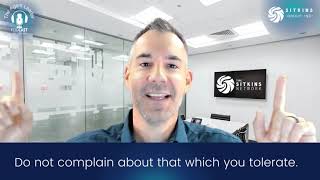
Brent Kelly argues you can't complain about problems you accept. He walks through insurance agency examples: producers wasting time on low-value clients, leaders without clear accountability systems, principals without a written vision. Stop tolerating it or stop complaining.
Chapters
Welcome to the Agent Leader Podcast. My name is Brent Kelly, your host. Thanks so much for joining me on another episode. It's my pleasure and honor to be with you on today's show. And today's show is going to be me having a conversation from my heart to your heart on a subject that I think is extremely, I don't think I know is extremely important. And I would say it's certainly applicable at every agency, for every insurance professional that we see, that I see across the country. Now to go back, the purpose of the Agent Leader podcast and every podcast that we do, our mission, our purpose for you, the Agency Leader, is to help you gain clarity, build consistency, and to make a commitment to become your best version possible. By the way, best version possible. It may just be the title of a new book that's coming out here very soon. Should be fourth quarter here of 2021. Myself, Roger Sitkins, have co authored a book about helping your agency truly become that best version possible with strategies and philosophies and some action steps that you can take with you. So more to come on that in the coming weeks and podcast episodes for sure. Now, over the past several episodes, I've had a number of fantastic guests. I had Kristin Schonenberger who talked about how she got two Bors, big Bors before lunch and some of the preparation and work and mindset that she had in that. I had Joe Venz who talked about his specialty focus, his niche focus and what that means. We talked about the power of having a niche. And I've had my regular guest, Roger Sitkins on I'll have Roger on again, certainly more and more, but had Roger on talking about mindsets of top level successful insurance professionals. And also the one we recently did was about the value of an appointment. So if you haven't listened to those episodes, go back and take a listen. They're powerful episodes. Got a lot of great feedback and we've got more great guests to come here in the future. But today I just want to take a little bit of time. This will be a shorter podcast episode. At least that's my intention here. But just talk about something that has really been on my heart. And you know, one of the great things about delivering programs and we are in our running program season right now at Sitkins. In fact, we've got our leadership program, our sales leadership program, our producer program, and our account manager program. As I'm recording this week. We, we did all of those sessions this week. You know, we've got multiple sessions for each of those groups, but this week they've all collided. We also did a sales, a sales process on the risk concierge, which is for our private clients this week. So it's been, you know, like many of you, it's been a very packed schedule, but a powerful schedule. And this week, in particular, of all the training programs, and there were some different topics that we talked about. And obviously with different groups, there's different topics and different conversations that we have. One central theme really seemed to jump out. In fact, today. I'll be leading our sales leader discussion later today after I get off this recording. And it's going to be around the subject of accountability. And the phrase that I want to share with you, and I want you to think about this, this is the important part of this podcast. This is the phrase that I want to focus on is this, this idea of do not complain about that which you tolerate. Do not complain about that which you tolerate. Now, maybe you'd say it a different way. Do not complain about those things that you allow, whatever the case may be. And that phrase has been out for a while in different arenas, but it's so important and so powerful in insurance, in the insurance agency world. I also think it mirrors life. I think life mirrors business, business mirrors life. There's a lot of. A lot of great lessons on both sides. And, you know, I can. I'm going to give specific examples of this accountability of what we're allowing in many cases where we see that insurance professionals are allowing, that we continue to complain about, right? The things that we hear again and again. And this has been a frustration and this has been a problem, and I can't seem to get through this yet. We don't really do much to change it. Personal example, call myself out here for a second. I think it's a great way to tell a story. Say, listen, I'll go first, right? I'll be vulnerable here. But, you know, I talked about that business mirrors life, Life mirrors business. In my own family, there are many things that I've noticed, maybe not many now, several things that I've noticed that I will tend to go, oh, my gosh, here we go again, or, why are you still doing this? Or, you know, why are you not getting ready on time? And all these kind of different things that we have in the home life. And I've got, again, if you don't know me, I've got five kids from the ages of 18 to 4. So they're all still at home. It's crazy, right? And so for me, as A parent as a father, if I allow things to happen day after day or week after week or month after month in certain situations, and then I complain about it, well, I have to ask myself, like, tell myself, well, if you're going to allow it, shut up. Stop complaining about it. Perfect example of this is, for a while, my son has been struggling with bedtimes. Now, again, we've got different things, events that we go to. So not every night is the same. My daughter's in volleyball and all that kind of stuff, but basically to try to find a routine to get him in bed in time. And so what usually happens is that, you know, we get lackadaisical some evenings or whatever the case may be. And the next thing I know that it's later than what I want it to be, and then he gets in bed later than he wants, which means I get in bed later than I want. And I don't have the quality time with my wife that I want to have conversations because it's always chaotic. And just get ready for a bed and get enough sleep for myself because I like to get up really early to start my day with intention. And then I'm tired. And he's frustrated. Everybody's frustrated, right? And I'm sitting here going like, week after week going, wait a second, man. You're the one that has allowed the bedtime routine to get away. You're the leader, right? You're the one that sets these things and said, listen, we're going to start to do this earlier because we know what happens. You know, it's like we do the same thing. It's the definition of insanity. Do the same thing again and again, expect a different result. And so this idea of do not complain about that which you tolerate hits me square in the eyes. There are certain things in my life and in business that we see that we allow this to happen. So my question to you, my listener, the agent leader, whether you're running your agency or your sales team or you're running your, you know, your sales department or your own book of business, right? Agency leaders from all over, all different perspectives. My question, or have there been times or are there times right now that you find yourself complaining or frustrated by or maybe muttering under your breath, right? Little things like that that you've been allowing to happen for a period of time, whether that be weeks, months, some cases, years, right? I mean, it's like, well, I've been doing this for years and it's still not working, but I still do it. So let me just share just a few examples. And again, this is really about you, the listener thinking about this. And this is just the awareness of are there areas that I'm allowing things to happen that I'm not willing to change? Thus, I still complain about it. And if that's the question, just like I told myself I would ask you, if you're not going to do anything about it, whatever it may be, then stop talking about it. I don't want to hear that. You know, you got the same problem again and again and again, but yet you're not willing to do things to change it. You're tolerating it, you're allowing it, whatever the case may be. So let's just go through just three different areas of insurance professionals that we see. Again, you may have your own story. I hope you do. But here's some things that I can tell you as a coach and as a trainer as I'm on these calls with producers and sales leaders and agency leaders across the country. And we always talk about what's working, what's not working, how long has it's been going on, Right. And we all have challenges. It doesn't mean we're just going to mentally solve them. But these are the things that we typically hear for producers. One of the most common things we see with insurance producers is they say things like, I'm covered up, I'm busy. I don't have time to do these different things. Right. But then the question is, okay, what will you do next week to make it look different than this week? What will you do next month to make it look different than last month? What will you do next quarter to make it look different than what you've experienced this quarter? Because otherwise you're just going to repeat the same stuff and you're going to be sitting here one week, one month, three months from today, and you're going to say, I'm still frustrated. I can't believe this is happening in my business. Why aren't things getting better? Well, because you've tolerated them. Right. That's the reality of the situation. Now, quick aside here before I get into specific examples. Are there some things that happen in our lives, in business that truly are out of our control? Yes, there are things that happen. There are seasons in business. I can tell you right now. And talking to the producers in particular, certainly the benefits producers, but some of the PNC, if you've got a big 1:1 renewal date and you've got 90% of your business that renews on 1:1, this is probably going to be a different season the fourth quarter of this year, then you're going to have the first quarter of next season. Right. Or whatever the case may be. So understand that I get that right. There are always limited exceptions to it, but don't allow the exceptions to become your rule. And that happens oftentimes. So for producers, if I'm so busy, how am I going to get through this? Well, let me ask a couple of questions. Are you still telling your clients that you can do anything at any time for them for any reason? If you need anything, you call me. I'm your gal, I'm your guy, whatever the case may be. And then we're frustrated that our clients only come to us for service issues when we know as a producer we're not the best person to do service because we're not always the most efficient. We oftentimes make mistakes. In fact, we don't love to do service work. That's not our unique abilities for most great producers, right? And we have this service team that's designed to do a great job. In fact, they love to do that. That's their unique abilities. But yet we allow ourselves to go through day by day and week after week still doing the busy, the busy work. And we're not educating our clients. We're not empowering our service team. That's a big part of what we teach because we hear it all the time of how do we build a high performance team. Or I would love to have a high performance team, but I'm not willing to do some of the things that it requires to get there. So therefore I continue to complain about that I'm too busy. Or how about this, you know, I would I'm so busy or I'm so covered up because I just have so many clients. By the way, typically we hear this. We have so many clients that pay us so little money that oftentimes we so don't love to work with. Not all of them, but a few of them, right? You have those. We've all had those. This is called the 22 syndrome. Too many clients, paying you too little money. So what are you going to do about that? Because either you're going to continue to say, well, I'm going to write every client or keep every client, no matter what, because I guess I just have to. Or going to say, is there a better model? Is there a better way? Could I begin to focus on the right clients for me, maybe find ways to pass down a client to other producers or to a select account unit on My agency, if you happen to have one of those. So these are just some of the things that we think about. Again, I'm just giving a couple examples. We go in depth in our programs and high performance teams and the power of the 80, 20 and priority principles and all those kind of things. But these ideas that we hear, we hear all the time from producers. Well, I just, I don't know what to do. I just. It's terrible. I'm always covered up and people always call me and I just can't get ahead and I can't do that. And I can't do that. You may have a different story, you may have different issues. But my question to you again, again, is what's going to change now, today, this week, next month, next quarter so that you don't talk about it again? What about sales leaders? I know we've got some sales leaders that listen and watch. I'm on video here as well. Listen and watch this podcast. What are you allowing or tolerating that you're still complaining about? And don't get me wrong, being a sales leader is a really tough job. Right. It's a lot. I always joke with leaders in general that, you know, leadership would be really easy if it wasn't for the darn people. Right? People laugh, but it's true. Right? Because people are people and they've got different opinions and emotions and all these kind of things that go into it. But as a sales leader, if I'm allowing in this case producers to not have accountability, to not have agreements, to not have design specified behaviors and actions and results that are expected, well, why would anything change? And we hear sales leaders, gosh, I'm so frustrated because the producers just don't do the things that I want them to do. They don't do the things they said they were going to do. Well, what did they say they were going to do? Well, they said lots of stuff. But what specifically? Well, I don't remember. But stuff they go sell more. Well, okay, but how are they going to do that? What are the agreed upon actions? Well, they just need to do what I used to do or they just need to go do the stuff they know they need to go do. Well, what is that? Well, I don't know. Right. And we talk in these wandering generalities and then we're frustrated with our production team. Now, don't get me wrong, the producers have ownership in that, right? They have accountability. But you, as a sales leader, my question is, have you truly defined results, behaviors, actions? And when you as A sales leader are going to have these discussions with the producers. You've got to design something together. You're the leader, but we got to design that. Secondly, is there anything documented on what those things may be? Right. And are you, as a sales leader, helping to improve the performance of your sales team, or are you just micromanaging numbers and being frustrated? And by the way, are you, as a sales leader, if there is a difficult conversation to have? And by the way, those aren't easy. That's why they're called difficult conversations. Are you willing to have them? Are you having them or are you going? Yeah, I don't really want to ruffle feathers this week. You know, this person's been around for a while, and I know if I say something, you know, they're gonna get mad or they're gonna. Whatever it may be. And then I gotta deal with that and whatever the case is. So I'll just let it go. I'll just let it go and maybe it'll work itself out next week, next month. Well, of course we know that never, never happens. Do not complain about that which you tolerate. So just a few things, you know, we teach in our program and we give examples of a producer's performance. Agreement. It's an agreement. An agreement means we agreed upon this. Now, again, you, as a sales leader, need to lead this. But isn't it funny? The best producers want to be accountable. They want to know. I mean, the best producers, they like, listen, I know I'm going to do some things great anyway, because that's my mindset. But I want you as my sales leader to help me, keep me on course for the right behaviors and actions to get the results I want so I can go do the things I wanted to do, whatever that may be. So I'll be accountable to you, you be accountable to me. But we've got to have those conversations up front. If we haven't defined it, if we haven't documented, we're not having ongoing conversations to make the improvements necessary to have these discussions as needed, then we're going to continue to complain about that which we tolerate. What about agency leadership overall? Again, you may be all three of these. You may be the producer, the sales leader, and the agency leader, but you may just be the agency leader, the principal. I think one of the biggest things we see with agency leaders that is missing is casting compelling vision. And here's why I think this is important. I've talked about this in different podcasts. This is one example. It could be something else for you as an agency leader. But I really believe that today people want to be part of something that matters versus just being somewhere, just working somewhere. And you may not like that. And oh, gosh, the new generation, I mean, you know, whatever, millennials, the next generation after that, I mean, millennials are well grown up at this point. We all know, right? But gosh, in my day, you just said to work and you worked. True. But don't you want to do more than that? Right? Don't you want to compel, inspire people to do something that truly makes a difference for your agency, for your community, for your clients, for your team? Cast that compelling vision of the future, of what it's going to look like. And this is not an easy thing to do, but here's what happens. Oftentimes I hear agency leaders. I don't know why my team just isn't rallying and doing the things that they said they were going to do, whether it's sales, service, operations, whatever the case may be. I just don't know. I don't understand why they're not fired up like I am. Now, listen, first of all, as an agency leader, there's a reason why the agency leader or the agency owner, right, you've got more skin in the game in many cases. So not everyone's going to think and act like you. But you can, as an agency leader, share vision that's compelling, really understand the heartbeat of the agency, your mission. I don't mean some just long winded statement that you put on a wall that no one reads. But why do you really do what you do? What? What's the purpose for your existence? Why should people show up every day to work and be excited? Doesn't mean it's going to be perfect. But why should they? You got to lead them. I believe this. I heard this from John Maxwell. Leaders see more and they see before leaders see more. You, as a leader see more because you're thinking about these things and you see before you understand ahead of time what it may look like. You've got to tell that story. Now, for you, it may be something else. But again, the thing that I hear from leaders is why can't I get my team on the same page? Gosh, I can't. I don't know why they're on the same page. Why aren't they being consistent? Why aren't they doing the things they said they were going to, all these kind of things? Well, a big part of that is you as a leader can't just allow sporadic behaviors. You can't just allow. I'll show up and see what happens. One of the my favorite things that we teach on in our program and give resource to and help agencies walk through is to have a one page business plan. Sounds too simple, right? Well, it works because it's simple. People can get it but on one page. The idea of the one page business plan is this. It's like to get your team on one page. Shouldn't your plan be on one page? This isn't your entire plan, but this is the summary. This talks about why you do what you do, where the agency is going, what are the critical things that we must do, otherwise known as non optional. This is, this is who we are. Share some of the key performance indicators that are important to your agency and have a focused message. This is what we're about, right? Just take that one page and go. This is who we are, why we do what we do, where we're going, and some stats, some KPIs to track that we're doing the right things. So we all know the score, right? Because don't you want to know the score? I would. If I'm playing a game, I want to know the score. Whether I'm on the bench or I'm in the game or I'm a starter or I come in later or whatever my role, I want to know the score. I'm part of the team. The same is true with your agency, right? So my purpose, as you can get from this, this podcast today, is pretty simple. I want you, whether again, whatever your specific role is in the agency, to understand that if you're complaining about something right now, and by the way, that's human, I do it too. But my, my stance to myself and I challenge to you is I'm going to complain about something today, I better be doing something to make sure I'm not complaining about it tomorrow. Otherwise I need to be quiet and just say, hey, if I'm not going to do anything about it, then I ain't going to talk about it because all it is a waste of energy and breath. So I would say here's my call to action to you identify just one area right now. Whatever your agency role is one thing that you've been complaining about too long, that you're finally going to say enough is enough, no more. And by the way, that doesn't mean that suddenly the next day everything is rosy and perfect. But you are taking the next step. Don't take all the steps. Take the first step, take the next step to make sure that in the future this becomes certainly much less of an issue or a problem for you and the agency. My conversation, from my heart to your heart. Thank you so much for being a listener. If you can't tell, we have passion. I have passion for agency success. I just want to help agencies get results. And I am in a very fortunate position to be able to work with hundreds of agencies, hundreds of insurance professionals, to hear their stories, to take 40 years of the Sitkins philosophies and tie these together. Say, listen, let us help your team get on one page. Let us help you, give you, your entire team a consistent process. Let's help you connect you with other agencies, coaches and peers that can share stories and ideas to make sure that you're compressing time. Life's too short. Let's accelerate your success. And right now you can get on our waiting list. I mentioned earlier that we are running all of our programs right now. We're in the middle of the majority of our programs here as I record this in October of 2021. However, all of our next level programs, our monthly sales meetings, we're adding deep dives for our agency, all online that agencies have access to. We are adding more and more important content for your entire agency team to get results. We're doing live interactive sessions. We're hosting masterminds. If you want to be part of this movement, of this community, of the Sitkins network, we would love to get you on our waiting list. And what that means is we'll make sure when the time is right, sometime in November, that we start getting your team ready and you understand the things need to get ready for the January sessions that start. So don't wait. If you go to sitkins.com aim that's sitkins.com aim you can go to that page and you'll see again, you can't register, but you can get on the waiting list, go and add your name. You'll get a notification that you've been added to the waiting list. We can give you more information. When the time is right, get your agency to kickstart 2022 like you've always wanted to do. Just like the message today, do not complain about that which you allow. If you're tired of allowing average or complacency or you know there's more in you that you know there's the best version, now is the time to get on our waiting list. We would love to be part of your agency's transformation and success story. For me, to you, all the best in your success. Thanks for listening.
More from Roger

This Shift Helped Us Unlock Growth 💡 | Agency Leadership Tips #insuranceagency #agencygrowth





How AI Can Help Insurance Agency Owners Master Their Financials (Without Being a CFO)

From AI Hype to Real Results: Steve Anderson on How Insurance Agencies Can Use AI to Grow Now



