Empowering Teams for Lasting Agency Growth
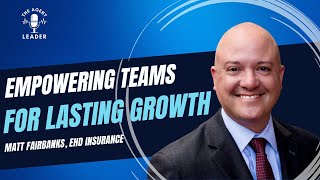
Podcast episode hosted by Brent Kelly (Sitkins Group) with guest Matt Fairbanks (VP of Sales & Producer Development at EHD Insurance). They discuss Matt's background (15 years at EHD), EHD agency profile (privately held, >$30M revenue, ~130 employees, ~30 producers), Matt's transition from producer (grew to $2M book) into a leadership role focused on producer development, and strategies for recruiting, mentoring, succession planning, specialization, relationship-building, and measurable seller behaviors.
Questions this video answers
Vice President of Sales and Producer Development at EHD Insurance.
Almost 15 years (will be 15 years in November).
Greater than $30 million (privately held).
About 130 individuals total; approximately 30 producers.
He passed the $2 million mark in personal production.
Chapters
Welcome to the Agent Leader podcast. This is the podcast for agency leaders across the country and quite frankly, the globe. We have international listeners to learn more about how to grow, develop their team and their book of business and ultimately to become their best version possible. I am your host. My name is Brent Kelly. I'm the president of the Sitkins Group. It's a pleasure to be with you today and I am honored to, on this specific podcast to have a long time. Matt, can I call you a friend? We're friends, right?
Absolutely.
Longtime friend and a client, someone who I respect at a super high level. I just have attained a new position with his firm, ehd, which is located in the great state of Pennsylvania. I have Matt Fairbanks, which his new official title. Make sure I get this right. Matt, vice president of sales and and producer development at EHD Insurance in Pennsylvania. Matt, did I, did I do okay on that?
You did. Brent, thanks so much for having me on the podcast today. I really appreciate it.
Yeah, I, I'm again, I'm super stoked to talk to Matt just because there's going to be a lot of great content we can get into. Also, knowing Matt, for a long period of time, I always tell anybody that comes on this podcast that, hey, it's just. Imagine we're having a cup of coffee and we're gonna, we're gonna talk shop. And Matt and I have had many conversations off podcast airwaves that I think would be super beneficial. And now we can record it and share it with you because he's got some great perspective on things and it always, we always go in some pretty interesting directions. So, Matt, before we get into. I really want to spend a lot of time on this podcast about your new role. Producer development. Right. Things in that area. But before we go there, you've got a pretty long track history and record a good track record of success in production. So if you would, you know, share with the audience your backstory and also a little bit about EHD as an agency. Scope, size of ehd.
Yeah, that's probably, probably a great place to start. I've been with EHD almost 15 years. It'll be 15 years in November. Came to them really as my first foray into production and did, did okay. Moved, moved up the ladder there. Focus on benefits. My, my concentration through my career has been on the employee benefits side of things. EHD is an agency. We're greater than $30 million privately held independent agency, something we're super, super proud of. Like many agencies that fall into our size, we probably have 65 to 70% of our business in the property and casualty space and the remainder in employee benefits. And you know, over my time at ehd, I've had the opportunity to progress, move up, move into more player coach roles, sales managers, helping my team to, to continue to grow their individual blocks of business. Really proud of the fact, Brent, you know, I think when I started with you, I guess our relationship now is about what, six years old? Yeah, six years. So in that time when I, when I met you, I, I was, I was that guy searching for the million dollar book of business with about an 800, $800,000 book of business. I'm, I'm, as I transitioned to this new role and, and crested out last year having passed that $2 million mark, which was one of my, one of my goals, one of the things I wanted to do. But as I continue to take on more responsibilities, I am transitioning some of those clients to other real qualified professionals and, and then assisting and coaching them through that. But it's what I love to do and helping them grow their block as well. Part of why I've progressed into this new role.
Yeah, it's, that's why I'm so fascinated to have this conversation because you know, we talk a lot about player coaches and you really are making a big transition. Right. And I'm not going to say a leap of faith, maybe that's not the right terminology, but a big jump right into a new role. But prior to that success as a producer, to be a $2 million producer, million dollar producer isn't anything to sneeze at, to say the least. And it does remind me, as you said, that you know, six year old relationship. So I guess what, we're in kindergarten now, Something like that. Maybe first grade. Yeah. Somewhere in there. Well, we started the relationship. I remember some of our side conversations. We came in and did our producer training with your group and I don't know if it happened right away or somewhere in the middle of that, but it was basically like I'm at about 800k and I think I'm kind of about tapped out. Like I want to get to that million, I got to figure a way to sneak across that million dollar line at some point. And now you're at 2 million. And of course there's a lot of concepts and strategies and things about giving up and trade downs and all of that. But Matt really lived and breathed so much of the philosophies. And by the way, you would have grown with or without Sitkins. Right. But I Think hopefully to accelerate some of these things in different ways of thinking is, is critical. So before we get into the producer development side, anything just from your own experience, I know we've got a ton of agency leaders listening, but also sales leaders and producers. Just maybe what you've learned to get from 800, like, and I'm going to say one thing, but to get from 800 to 2 million, that's a, that's a big jump. Why? How did you do that?
Yeah, it's kind of a conflict on what I'm going to say. There's, there's, there's two pieces that, that I think help me with that. One is to make sure I trusted myself enough to specialize where I could focus. And when I say that, it led me down the path of identifying larger clients. You know, you don't get to $2 million by writing 25 life employee benefits groups. Nothing against those companies, you know, they're, they're the breadbasket of what we do. But having that confidence to do that and to specialize and become an expert in particular areas, you know, such as self funding, such as pharmacy benefit management, and be able to have those conversations. When you talk about specialization, in my mind, it leads you to a series of complexities. You know, you're the ability to handle the complex. These are more complicated groups. But ultimately where I've tried to place my focus, and this goes back to God, probably middle school, early high school, when a wise person told me about, you know, keeping it simple, stupid, and, and that's something that I've really tried to focus on with my clients, to take the things that are complicated like that and, and really make it simple. And it's, it's not that easy. You know, we, we joke about it, about, oh, you know, it's just, it's easy. You know, it's not rocket science. I mean, how many times do we say that? But being able to take the complex. These are tremendous spends from our employers. Whether you're looking at health insurance or commercial property and casualty insurance, such tremendous line item. And that's something where you have to make it simple. Because when you do that and you can talk to it on the appropriate level, and that's what I say. I'm not saying dumb it down. I'm saying on the appropriate level, what is the conversation with the human resources professional, a risk manager, a cfo, a president, and being able to put it in the terms of how it impacts their job. Right. That's really part of my process that I learned And I do credit sickens to some of that because it, it gave me the time to sit there and focus on how am I going to do this, how am I going to attack each of these future ideal clients.
Yeah, it's. We, we can spend more time here. And I, I'll spend a little bit, but it's because it's so interesting. But I, I think, Matt, as you said that, and I broke down on my notepad here, you know that wiifm and we talk about all the time, what's in it for me and.
Right.
It is, it is fun because the more that you specialize, yes, it's more complicated, there's more things, but it's not even so much how much you know about your product and services and deliverables, which is certainly important. It's how they think about those things. Right. Like the impact that to me is the power of specialization isn't so much about, well, now I know more about the products and yes, that's important. It's. Now I know more about them and how they think and want from those things. And that's what changes the conversation. And people often take that for granted and the other thing they'll say. And if you want to comment on this, please do. But I always joke with producers in our producer camp. I said, hey, are you going to be a better producer one year from now, two years from three years from now than you are today? And of course, everyone. And I said, well, shouldn't your clients be better clients?
Exactly. And you know, that's a, that's a, that's an incredibly, incredibly important statement and, and very fair. You know, one of the, one of the things that I always say to my clients when I'm having that conversation, I think, I think we've talked about it in some of our trainings. Brent, what are, what are, what is EHD going to do with their clients to move their business forward? You know, it's a, it's a line I use all the time. What am I doing to move, you know, forward? And it gets back to that trusted advisor piece. You know, if we always talk about, you want to be the guy at the table with the attorney, with the accountant, maybe with the banker, depending on their financial situation, I want to be there. And I learned this with a, I was with a prospect and he said that to me and he goes, he actually said, he goes, the only, the only guy who's helping move my business forward is my accountant, because he's the one who's coming up with solutions to help me minimize my tax exposure, my tax risk as a business. So of course I stole it because all good ideas are stolen. And I sure. What am I going to do to move this guy's business forward so that he hires me? What am I going to do with all of my clients to retain them to move their business forward? And, and it's, and you have to keep thinking like that because I don't think there's many businesses out there that just want to stay exactly where they are.
Right.
You know, so, so we're trying to move them forward too. I mean, maybe there's some out there, you know, the what, whatever it might be a little mom and pop shop who's like, we're happy doing this and we're going to do it till we retire. But, but most of the businesses we're calling on, where we're looking for 50, 60, 100, $200,000 in revenue, they're looking for what's next for their business as well.
Yeah, yeah. And let's face it, you mentioned the accountants, maybe an attorney. Right. They may be giving advice and ideas of how to help them, but it doesn't happen that often, or at least enough in the insurance space. Right. And when you're able to do that, they're like, say what? I haven't thought about that. Oh, what would that mean for me? How would that impact me? Right. I mean, and we were talking, you know, we've talked about this many times. It just comes back to what's in it for me? And, and to be able to.
I need to stop you there. I need to stop you there one second. Because I, I wouldn't, I wouldn't be doing my job if I didn't call out the fact that, that wiifm that when we first went through training, I had to get clarity on what that was and I had to call out Roger because I was like, roger, nobody listens to the radio anymore. We gotta come up with something new. But I mean, but I'm all about the what's in it for me. I get it. But I, I, I did call Roger out for, for that. Nobody listens to the radio anymore. That's a good podcast. We got to come up with a podcast.
Yeah, I have to, I, I don't. That's a great point. That'll be one of my side tests after this. And by the way, for all the listeners, if you could come up with something that would better acronym of you know what's in it based on podcast today. Yeah, I hear you I don't listen to radio too much, but yes, I get you. That's funny. That's funny. All right, here's where I want to go. And Matt, again, you could take this obviously wherever you want to take it, because I think there's like a, there's a production side. And then as you move into your new role, right, and producer development. Right. And VP of sales, like the words I use. And maybe you agree, maybe you don't. But I said moving from addition, like how big can I grow my business, my book of business, to how much can I help others grow theirs? That's about as basic as it gets. And kind of in translating that. And you mentioned, you know, EHD being 30 million plus in revenue, privately held.
Right.
Really important. And back to the best practice study. A few years ago, they asked a question to 45 CEOs of privately held firms. What are the three things that are most important to help you remain private and prosper? And it was people, culture, leadership.
Right?
I mean, that was it. And you go, and now here's your role of. Okay, now you've got a huge impact in all three of those things, right? People, culture, and leadership. And the first thing is that's not easy, right? That's not easy when you've got it. By the way, how many, how many people approximately currently in your firm today, Matt?
So we have about 130 individuals in our firm, and about 30 of those would be considered producers now, various levels of production. But. But 30 would, would fall into that category. Yeah.
So I mean, and you know, 30 producers, but obviously they interrelate with the rest of the hundred in some different way. Right? I mean, it's, it's a team effort on this. And I would say your leadership would be super easy if it just weren't for the darn people. And you've got, you got 30 people and then 100, you know, else in the agency. Different backgrounds, different experiences, different thoughts. Right. I mean, different levels of education, different passions. How do you mold that together to like start moving this ship, so to speak, forward in the culture. So we going to start with this. And again, you can take this wherever you want. I like to talk about wins and successes first, you know, what's worked. And again, you can take this from an individual side, a team side, production side, whatever it is you want to do. But I, I just want you to think about what have been some of the successes that you or your team have experienced and why. And again, you can take this wherever you want, Matt.
Yeah. And I, I, I think this is where we're kind of going. So the, the producer development side of my new job title as you went through it and looking, we, and look at some of the successes of where our next generation of production is going to come from. You know, it's no secret in the independent agency space that it's, it's grow or die and we're committed to our independence. We worked very hard to remain independent, to, to have a true succession plan for our organization. And in order to make that work, we need to continue to grow as a, as a business and, and be competitive in the markets where we compete. And when we took a step back at who were some of those successes and they were some individuals that ultimately it comes through Brent and some of the things people that were willing to agree and adopt to our culture really understand the way that EHD works, why we're independent, what we want to do to continue to grow our business. They had to have a certain passion, passion for sales, a passion for their, for their own growth. But the successes really came from throwing them fully into our culture, giving them that opportunity to shadow our employees, giving them, I mean, I hate to use the word safe space because it's way overused these days, but giving them that opportunity to come in, in an environment where they can learn without that, that immediate pressure of if I don't sell something in the first month, I'm going to be let go. Because there is a lot to learn in this business. You know, here I am, I'm contradicting myself again. I talk about making everything simple, but there is a lot of knowledge that needs to be obtained and garnered to be a, to be a successful insurance producer. So really we, we looked at that and that's what we're trying to replicate at this point. Those individuals that we were able to bring in and see their success and growth over year, over the years by really mirroring our successful producers. And one of the other things that we're looking to tap into now, and this is systemic across the, across the industry. Brent there's a lot of us retiring. You know, there's, there's been a many, many years of non growth in the industry, people coming in and now you're looking at it and you've got 30, 40 years of experience, relationships, and you can't just let that go. So we're trying to tap into that now and we're seeing some of that success by saying, you know what, yeah, it's different, the technology is different, whatever it is but ultimately, you have something that you can share with our younger producers, and we're going to tap into that as you look at the other side of your career, you know, and, and sail off into the, into the sunset. And good for you that you've earned that and you can do that. But this is what we need from you. As you look at your last three to five years towards retirement, you know, share that knowledge and do it. That's where we're seeing success, sharing that knowledge. And that's kind of what it, what excites me about this opportunity with my position to grow our company. Because if I can take one of those individuals, you know, you talk about that growth moving from addition to multiplication. So it's not just me taking what I was able to do and multiply that out across the agency, but look at all of our successful producers because we do have a lot of. And take them. And if I can turn that one successful producer into three younger producers and it's going to take a little time for them to build there, that's how we're going to hit our growth strategy.
Yeah. Oh, well, a lot of really good nuggets there. I mean, the, the biggest one. Matt, again, just so I want any other feedback you have on this as I, as I give you my thoughts on this, because it's important. You know, we always say success leaves clues. And that's true. We always talk about that in terms of, you know, production right around the marketplace. There's truth to this, but it reminded me a little bit, or at least I thought of it. And, and you'll appreciate this because I think you'll remember this. And for the audience, I don't want to make this complex, but we often see with producers is that when they write a really good account, instead of saying, gosh, how do I replicate that? They go, well, I got lucky. Right? Oh, I got, you know, I kind of just, even, even, even a blind squirrel finds a nut once in a while. Oh, good, I got something versus the idea of, huh, how did that work? And how do I replicate that? And I think it's true a lot with insurance agencies, with producers. Like, we just hope we're going to hit this home run like, well, once in a while, you know, you get enough of there, one of them is going to hit.
Right?
Right. And that can happen saying, well, maybe we'll just get lucky versus what is a way that we can look from clues that have worked from others, combine those clues together in a puzzle piece and going, maybe there's a way we can better replicate success of what the best producers have done. And I know that's a big part of what your new role is and what you're looking and you're exploring and things. And I think one thing that you hit too, Matt, that was really powerful. I don't know if the audience heard this I did in my ears is not only having a plan for people to come in and, and by the way, not give them the sphincter complex. I'll go ahead and I said that. Which means, you know, they can not pucker up too much. Like, oh my gosh, like you said, like, I got all this pressure on me. But to say, hey, there is a tangible plan we're going to help you walk through. Now, they've got to do the behaviors right, but they've got an outline of what it looks like. That's the front side. The back side is what happens with those and the term that we use. And Carrie Glennon, our senior consultant, talks about this. The gliders, the ones that are gliding out those last three, four, five, six years, what is their responsibility other than just to kind of disappear? Because they've got a ton of knowledge, a ton of relationship, a ton of wisdom that we can share, but we got to have a plan around that. So I ask you zero questions there, Matt. I just went on a semi monologue, but any response to those things that I brought up there?
No. I mean, it's, it's the, it's the one thing, right? What is the one thing? And you know, we know one thing is a series of one things, but bringing it together in that one thing of a, you know, it is, it is a little bit of a cradle to grave approach. You know, when we're looking at, at our organization and what are the needs of that new producer that we're bringing in, what can they bring to the team? Because they also have things beyond insurance that they can bring to us. The idea of how to better use technology. How do you interact with the next generation of business leaders that we want to talk to? What are those connections that they have? How do we make sure that we're embracing that, you know, and, and that's really part of it. It's like, okay, you don't know insurance, but, but, you know, the son of the business owner who is the heir apparent, he's had a relationship with somebody for years. We know that it's been a terrible insurance program. You're going to give me that opportunity to do that. So how do we Tap into that side of it. How do we continue to grow the producers that are in, you know, the best years of their production?
Yeah.
Looking at them and, and again, having them play that middle ground, helping out the younger producers, assisting, assisting our, our more veteran producers as, as you say, as they glide to make sure that all of those transitions occur appropriately and then again, making sure that, that our, our veteran producers know that, you know, we still have a place here for you. I understand it gets tiring. You've been selling for 40 years and you're like, I got a great book and I'm doing okay. Yeah, that's great. Yeah, you earned that. But here's, here's what you're going to give to our culture, organization as we, as we continue to move you through the rest of your process. So bringing that all into that one thing, that one piece, that's really, that's the, that's the challenge. I mean, that, that's, that's where my focus is right now.
It's, it's a huge challenge. And you know, Matt, a question that we ask agencies and we have initial conversations with some form of this question is, you know, well, first of all, back up and we'll say, you know, is, is, are your people your number one asset? And, you know, yes, of course. Right, okay, agreed. So question, what is your growth and development plan for your number one asset, your people? And I'm not gonna say it's an easy question, because it's not, but it's an important, like, vitally important question. And for all the agency listeners, again, you don't have to answer this. You're driving in your car or whatever, like, to me. But to yourself, if you'd say, okay, as an agency leader, what is the growth and development plan that we have for our number one asset are people? And if you go, I don't really know, it's a really good question to explore and begin to figure out. And you know, Matt, to your point, is that that plan, regardless of your age and experience, everybody, even the ones on the way out, do desire some.
Form of plan, right? They absolutely do.
You know. Yeah, go ahead, man.
No, no, I mean, on that piece. And I, I do think about this often as we look at individuals that, you know. Yeah. Migrate out of, out of the industry when you've worked so hard to build these relationships over the years and, and, you know, joke. It's a relationship business and it does sound cliche, but it is. And you've worked so hard and these people become your friends, you Know your colleagues, all of those things, they don't want to see that. I just walked away and that was it. And these people were, were left out to dry. You know, they don't want to do that. There's too much pride in this industry. Those that are successful, I mean, that's part of what makes them successful, the pride and the ability to do that, to maintain relationships. I mean, it's. You joked about how we're in kindergarten now, but I mean, think about how hard it is over time to maintain relationships even with people that you're friends with. How many friends are you still friends with from high school, from college, from, from grade school? You know, when you look at that and when you're maintaining relationships and you're trying to have 20, 30, 40 year business relationships, the amount of effort and time that goes into that and then you don't want to just see it all go away. So those are, those are things that, that we continue to talk about in, again in our culture and we want to assure those that are, are moving the other way. That's part of that transition, of that process. You're going to help us bring in the new individual who's going to continue to maintain that relationship at the next generation level to show that we can provide that top level of service.
Yeah, there's so much in there because I just, you know, relationships take work, but they're worth it. But they do take work. Like, oh, yeah, it, it takes work. And I think the other thing. And one final comment I have on this and it's interesting in my brain, like thinking through this because you do think about oftentimes the producers near the end of their career and like, oh, you know, they're just kind of gliding out. They just want to kind of coast the finish line and to some degree, maybe financially they might. But here's the thing, what is important to them? And you just hit it. Like, I've spent years and years building, developing, improving these relationships, right. And different aspects of their business. For example, the last thing that any dedicated producer would want is that all just falls apart and it's all over like that. And so to tap into that and say, how can we help you as a leader to continue have continuity in that relationship, make it more of a legacy relationship than just totally based on you and people go, well, let's talk about that, right? So it's, to me, it's finding the areas that are most important.
Right.
For the people you're trying to serve and, and tap into those. So I I think that's incredibly impactful, Matt, that you shared that. All right. We could probably spend a lot of time here and I know you probably have a, a hard cut off here at some point. But I want to talk about the challenges because I mentioned this isn't easy. Right. The things that you're trying to do and the things that EHD's doing. So again, very open ended question, Matt, but if you had a lister and think about what are the top challenges that you believe that you're going to face in growth from the agency, growth from your department, what's jumping out at you?
Yeah. And these are challenges that are, you know, there's nothing earth shattering in my first comments here, obviously finding the appropriate talent. And I think part of the challenge in that is being confident in your decisions. And that's the good and the bad of those decisions. So as, as we continue to develop our process in producer development to identify those that we feel can be committed to this work, as we talked about, Brent, it's a lot of work, committed to it, committed to the process, because we're clearly identifying for them this is what we need you to accomplish in 3, 612 months before we're really setting you off to go sell, but finding those people. And the challenge is having that confidence in yourself that you're picking the right person, but also admitting defeat when you realize I did not pick the right person. And I think that's one thing I've seen with a lot of agencies and I know that we've had some struggles with it here where we will hire someone and you want to consistently convince yourself they just need another month, they just need another two months.
Right.
They, they told me they got this one that's coming down the pike and they're going to sell that one and then it doesn't go, but they got another one. And, and the real, the real problem with that is you're talking yourself out of your process. So going back to the beginning part of our conversation, we know what works, we've seen what's successful, we've seen that consistent approach to developing your relationships, developing your pipeline, all of those things. And if you're not doing that, consistently building your network, finding those opportunities, building your own brand and being out there in public so that people know who you are. If those things aren't happening, I can't sit back and say, well, you know, we gave them a shot. I really think they're going to work out two, three months from now. They got this one opportunity, they're not doing all the pieces rent, it's not going to work. And, and that's hard. That's a challenge because it's, it's really a, a self reflection. You know, nobody likes to fail. And you're like, and every time you bring someone in and if they don't work out in that short time, I mean you made the decision to hire them, you've got to make the decision to depart ways with them. That's a huge, huge challenge. So you know, finding the people out of the talent pool that are willing to work but then also willing, being willing to, to cut your losses, that's, that's a huge piece. It sounds a little cold, but it's not, it's better for you, it's better for them. You know, in, in the long run, not everybody's cut out to do this. And, and in my time of doing this, I've unfortunately seen the people who come in, they see success, you know, they've seen the people who have been successful. Yep. And they can't understand why they're not there like that, you know, and quickly and, and that's a struggle for them, you know, who, who's gonna bring them along. But ultimately it comes down to putting a lot of time in.
I just wrote something down about I've got a few other follow ups on this, but it hit me. So obviously we're doing a podcast here and I said, I feel like from a leadership dilemma is you're trying to sell a two or three hour Joe Rogan podcast. Right. Or a long form podcast in a TikTok world. Right. I mean, right. It's like, oh, I just want it now. I want this thing and it's going to be quick and it's going to be great. And it's like, you know, to be able to recruit people in with the idea of hey listen, this is an incredible fulfilling career personally, financially, you name it. But it's a really hard job certainly up front and oh well, you know, so it's like, it's, it's true and again it is, it's challenge and, and I'm not trying to blame a younger generation not going there. But it's this idea of there is a different mindset and culture. Like there's a lot more instant, quick, give it to me now. I want to get it done. I don't want to deal with it versus I can see a long term way. This will be a life changer. Why don't. I don't have time for all that, man. I'M you know, but, but so, I mean, is there a way. And I, again, I don't know if there's a question. Is there a way you try to balance that? Have you found some ways to communicate with people as you're trying to bring people in, to be able to show them the big picture and why it's worth it?
Yeah. So that, that is one of our major challenges right now. One of the challenges in my new position as we're talking to some of these recruits from, you know, maybe, maybe a year or 2 of B2B experience. And, and it is, you know, we talk about freedoms a lot. Right. And, and earned freedoms, and that's part of that. But getting them to understand, you know, your. Your freedoms are earned. Like, you don't. Don't just get them. But also then to look at the opportunities exist within this business and what, what you should identify as freedoms, you know, that one of the things that we keep pushing on here is, you know, what is your place in your community, where you live, work, sell, whatever it might be. That is one of the great freedoms of their job. And when I talk to my successful producers, that fact that I'm not sitting here with a cold call phone list all day, eight hours a day, like my job, gives me the freedom to, with my success, go out and meet people a different way, build those relationships in a different way. So I'm kind of going around answering your question, but it's showing them that there is the opportunity. And again, time we talked about time, you know, our only diminishing handset. Brent, we talk. You and I talk about it all the time.
Yeah.
I have the way to choose how to use my time. So you're trying to sell something beyond the, hey, I just need $80,000 and I can come work and start selling for you. Or a hundred thousand dollars or $120,000. I mean, I know your, your podcast is all over and there's different, there's different amounts on that and kind of boggles my mind when I talk to a young person. I'm like, you want that for not proving me that you can. Proving to me that you can really accomplish anything. And that's like, you know, winning the starting quarterback position, but you've never thrown the ball, like, you know, and it's. And, and so when you're having those conversations, these are all the things that we're giving you.
Yeah.
So you can get to that point. And, and that's really the, the conversation we've had to move to. Of These are. You're getting freedoms right away because we're allowing you to develop your sales process, to find your sales process. Now we've got guardrails on what you're going to do, but these are the things you need to accomplish. We're going to give you the freedom to go do it as opposed to, say, sit at your desk. And I'm only going to judge you based on the fact that you're making 25 calls a day, 125 calls a week, and just pounding your head against the, you know, against your desk. Because when you're doing that, all you're trying to do is make the appointment. But you haven't learned anything about insurance.
Yeah.
You know, and you haven't learned anything about the culture of the company, and you haven't learned anything about the people you're going to be working with. All the things that make this job great.
Yeah.
So. So, I mean, it's. It's a challenge to communicate that to people and get them to take that leap and, and understand that there's so many great things. But then also show them the picture of what does it look like for the people who successfully do this? What does that look like in year two, what does that look like in year three? And what's it look like? You know, all of those. All of those things. So that's. That's really the picture. And then really trying to map out that strategy to show them that it's a long game. Like, like we talked about earlier.
Yeah, that's. And then again, those are. Those are challenging conversations. And I mean, we said. I think you said, you know, the idea of. Right. Like we say, it's. Is it a birthright or earn. Right. Well, you know, and I think about my daughter, who's going to be starting to get her. Her permit. Right to drive and like, you know, right or privilege. Well, I mean, you know, all these things. But it's like, well, you don't just get it.
You. Yeah.
Starting to get her her permit. Right to drive and like, you know, right or privilege. Well, I mean, all these things. But it's like, well, you don't just get it. Yeah, you have to earn it. Right.
You do. I mean, that's funny you bring that up because my twins just got their license, so they went past their. And I took them for their test on the same day, and one passed and one did not. But you talked about it was a real definition in, like, earning. Not everybody just gets this. Here we are, two people. It was an Interesting ride home, by the way.
But I, yeah, I would have a whole separate podcast on how you deal with that situation. I bet that was a fun ride home.
Yeah, it was, it was, yeah. One, one twin trying to kind of limit her exuberance and the other trying to limit her disappointment. So it was a, it was an interesting, interesting ride. But anyway, we digress. I apologize.
I, I, I do want to hit one more thing. And, and, and do you have a hard cut off? I did ask you, I should have asked you for. We started here in the next couple minutes.
I have another, I can go for another 10:15.
All right, we'll try to do another 5ish minutes here. Just, audience are hanging. This is, this is important stuff. I mean, I, I, I love this conversation. And again, we could go all over here, but I just, it hit me and one of the things that I heard kind of between the lines, Matt, that you were talking about from a sales leadership perspective is like this idea, we talk about this. You can't manage numbers. You a list of specific behaviors that we know that work right. And knowing that outcomes are not guaranteed. Leadership and sales leadership is that, you know, it's like, well, by the time I look at the numbers or whatever that is, or we don't have anything to check and all of a sudden we're like, I don't really know if they're doing all the right things. And then on the leader go, I don't know if I did all the right things. And that's a hard thing. Like, is this the wrong person or am I not a good leader? And maybe they don't say that out loud, but like, these are these internal conflicts because, like, I really hope for this person, I really thought this person was going to work out. And maybe I fail them or maybe they're not right or I don't know. And then we live in this weird albatross of like, I will just let it go a little longer and see what happens. Versus saying there are very few specific things that we know that work behavior wise.
Right.
And we want to see you model behaviors. It's just like in sports, right? Because you go practice your brains out all week doesn't guarantee you win the game. Does it give you a better chance to win? Yes. Will you win more often? Yes. So part of it is if you just put enough time. It's like the coach that was like, you know what? All of a sudden this person explodes in a game and you go, we've seen that the last three weeks in Practice. It hasn't come to fruition, but it finally did and we knew it would. So you're nodding your head. Is that, I mean, does that align with some of your thinking behavior wise?
Well, it is, it's. It kind of goes back to one of the points I, or a couple of the points I was making. So, you know, the behaviors we can control and define for a new producer. And you know, you're talking about it, if you put someone out on the practice field, using your analogy and you just, you know, you give them a pair of cleats and a ball and you say go practice, right, what's going to happen? There's that going to make them better for the game? No, they're not learning the right plays. They're not doing that. Part of our, part of our strategy as we move forward and where we're, what's going to happen there's not going to make them better for the game. No, they're not learning the right plays. They're not doing that. Part of our, part of our strategy as we move forward and where we're measuring is what are they doing to commit to the veteran producers, what are they doing to be with them, to shadow them, to, to learn the right measuring is what are they doing to commit to the veteran producers? What are they doing to be with them, to shadow them, to, to learn the right behaviors? You know, that's the one thing that makes this business not the one thing, but one of the things that makes this, this business interesting and fun to me is the, the variables in the situation. You know, I can go talk to a large municipality and I'm going to deal with a whole certain set of issues. I can go deal with a manufacturing firm, it's going to be completely different. And then I go to a third that's actually another manufacturing firm. And it looks like, you know, their, their, their designs on insurance and benefits are completely different. So they need to constantly be seeing that it's behaviors. You know, that's the one thing that makes this business not the one thing, but one of the things that makes this, this business interesting and fun to me is the, the variables in the situation. You know, I can go talk to like facing a different defense every week. You've got to learn all of those, all of those pieces again, going back to that, that sports analogy. So doing that, the other a large municipality and I'm going to deal with a whole certain set of issues. I can go deal with a manufacturing, they're a big piece of a behavior we can measure and I think it's been lost. I, I don't. I didn't think we'd get there. But I have to mention Pandemic again. Firm is going to be completely different. And then I go to a third that's actually another because I, I saw it. I saw it with myself. It made it easy for us to sit behind these screens. It made it easier, easy for us to. To lose those connections. And when I look at what I've done in the last six months. The events I've attended, the, the and these are, these are things I was at manufacturing firm and it looks like you know their, their. Their designs on insurance and benefits are coming A little sidebar here. I was at an event last week and a gentleman there, just a. Just a guy I know in the community and he walks up completely different. So they need to constantly be seeing that it's up. And he's like Matt, how are you? I said good. He said look at this crowd. All the old usual suspects finally back out mingling. You know. And it was facing a different defense every week. You've got to learn all of those, all of those pieces again going back to that as in like it was. It was a. An event for a non profit in town. And I would say from the front to back of this rooftop is probably that sports analogy. So doing that the other 150ft and I would make it 3ft at a time before I had to stop and talk to someone else and, and how great that felt and the fact that they knew who Matt Fairbanks was. I knew who they were. It actually introduced me to several other people. I mean I know it sounds strange in this business to still like their big piece of a behavior we can measure and I think it's been lost. I, I don't. I actually have people that you know and that respect you. Introduce you to other people. Of course. Sarcastic comment. There's. But it was great. I was like I've been actually for you. Didn't think we'd get there. But I have to mention Pandemic again. Years trying to meet that person and couldn't find the right way. And it just so happened at this event. So going back to what I was saying when what is measurable in those behavior? Because I, I saw it. I saw with myself. It made it easy for us to sit behind these screens. It made it easy for us to. To lose those connections. Here's what can you look at? You can look at how are they aligning themselves with our veterans what are they doing to be visible, to build themselves in the brand? I mean, if you're in this business and you don't want everybody to know your name for good or for bad, probably not the right business for you. They should know your name. And everybody talks about, oh, do they know ehd do they know whatever. And when I look at what I've done in the last six months, the events I've attended, that's the company's job. Your job is for you to be known. And, and that's where the successful people continue to, to see success because people know who they are. I want to talk to Matt Fairbanks. I want to talk to whoever it might be. And these are, these are things I was at one again, a little sidebar here. I was at an event last week and B, because they're the guy that is the one that can solve my problem. And a gentleman there, just a, just a guy I know in the community and he walks up and that I can trust because I was told by this guy they could trust him. So those are measurable things. Brent. Yeah, you can measure cold calls but I feel like cold call is what I described earlier. Giving them a ball and just going to throw it. These are, these are things like we're taking the insurance out of it a little bit in that, in that building your community and that's so important to be successful. He's like, matt, how are you? I said good. He said, look at this crowd. All the old usual suspects finally in this business.
Yeah, you know, Matt. And again, I want to be cognizant of time here but I mean so much value in what you shared there in relationships. I think a mentorship. Right. I mean part of that is like.
You can see one of the back out mingling, you know. And it was, and like it was, it was an event for a non profit in town.
And behaviors you can see from a newer producer is like, are they asking a lot of questions? Are they following people that have been successful in asking them questions? Are they just hanging out with.
I would say from the front to back of this rooftop is probably them. Right.
Are they curious? Like they're about as basic as it gets, but it matters. And part of that what you're getting into is not only the connection relationships, which is hugely important obviously. Right. I mean those things build and branch out but obviously borrowing influences.
150Ft and I would make it 3ft at a time before I had to stop and talk to someone else.
Well, and credibility from others, like it's it's like you know and part of it's not to manipulate. I mean I'm sitting here on a.
Platform and and how great that felt.
And the part of the Sipkins network I'm very aware I borrowed influence like you know like and I don't it's not like oh but the same time just like in the fact that they.
Knew who Matt Fairbanks was. I knew who they were. It actually introduced me to fully to.
The next part of this is that there's a ME Inc. Which is part of we ink and this is a sickens phrase but as a ME Inc Leader you are the.
CEO several other people. I mean I know it sounds strange in this business to still like the.
Cfo, the chairman of the board, the president. You've got to run your individual production business like you are an entrepreneur because guess what you are. And it's part of that and part of a great entrepreneur is building relationships borrowing influence influence building credibility and using all different ways of doing that to where that you become someone that's known.
And respect actually have people that you know and that respect you. Introduce you to other people of course.
Sarcastic comment there and eventually trusted in your community or in your network. So I just think it's. It's super important and yeah but it was great.
I was like I've been actually for years.
It's very hard to put a tangible measure on that. But it's like it's like a lot of things you you know it when you know it.
Right. You know it's like you're trying to meet that person and couldn't find the right way and it just so happened at this event. So going back right.
I know what that is like I could see that. So all right I again I've got.
What I was saying when what is measurable in those behaviors?
A couple of questions. If you got a hop let me know. I want to be respectful but and I always say I don't mean this to be self serving although it probably is we are I guess in kindergarten together maybe first grade. Matt as far as our relationship certainly with Sitkins and EHD but I'm always curious. There's been lots of things you've had lots of discussions and I'm very you know I I show that what can you look at?
You can look at how are they aligning themselves with our veterans.
What are PhD mirror right. And different stuff. So a lot of different philosophies and strategies but if you had to pinpoint one thing or a couple Things that.
Really jump out doing to be visible to build themselves in the brand. I mean if you're in this business and you don't want everybody to know your name for good that have had.
The greatest impact or value for EHD in our relationship. What. What jumps out at you better for bad.
Probably not the right business for you. They should know your name and everybody talks about oh you know, do they know ehd do they know whatever was that consistency of approach not just for our producers but how we worked to align our sales team with our service team. That. That was huge for me. You know RIP to quote Roger, emergencies in flight only and trying to step away so you can focus on production but done in a respectful way. You know when you that that's the. The company's job. Your job is for you to be known at our structure our high performance team meetings that we've. We've done with that. That's. That's a sign of mutual respect. I am going and and that's where the successful people going to give you this time every week to meet with you to understand what problems and challenges you're having from a service side. That was something that was not formal prior to our. Our introduction to Sickens and I'll take it a step further. That's something I actually use that is sometimes shocking when I'm in a sales presentation but I mean shocking. Shocking to the. The. The prospect. Yeah. Continue to see success because people know who they are. I want to talk to Matt Fairbanks. I want to talk to whoever it might. Yeah. We actually meet every week to discuss what's going on with other cases to make sure we're not missing anything and they're like oh interesting. So yeah we just you know we don't. We don't want anybody to suffer in silence. I don't want to be because they're the guy that is the one that can solve my problems and that I can trust because I was told by this guy they could trust him. So my service team to suffer in silence. I you reach out to me. Sometimes I'll forget to tell my sale my service team here's what's going on. So so we all want to be on that same page. And then we also took that relationship calendar piece both on our existing block of clients. It's always as well resell we talk about that. Those are measurable things. Brad. Yeah. You can measure cold calls but I feel like cold call is as well as looking at what are you doing from a a constant connection and contact you know, there is a lot involved in, in timing in this business, both preserving the clients you have, making sure you're out in front of them, making sure you're bringing them the solutions. And what I described earlier, giving them a ball and just going to throw it. These are, these are things like we're taking the insurance out of it a little bit in that, in that. And then obviously when you're selling and making sure that you are the person they're thinking about when the time is right. Because. Because it's not always right. And sometimes it does take a little longer than we would all like in order for, for things to sell. And you've got to be there and you've got to be constantly bringing your community. And that's so important to be successful in this business.
Yeah. You know, Matt, and again, I want to be cognizant of time here, but.
Them ideas and bringing them solutions. So those are probably two of the biggest things that I took in that in, in the program that I make sure that I use every day.
Yeah. And again, we talked about this before we even went live on this. But that's constant reinforcement too. And, and we, we know those aren't perfect. They have in flow and it's getting recommitted. And I think all I wrote down is something I already said earlier. I mean, so much value in what you shared there in relationships. I think a mentorship. Right. I mean, part of that is like you can see one of the behaviors you can see from a newer producer is like, are they asking a lot of questions? Are they following people here in this podcast? Like, are relationships worth it? Yes. But they take work. Right. And, and that's true Internal. You talk about high performance people that have been successful in asking them questions. Are they just hanging out with team meetings? Like, it takes work, whether you like or not, for a service team member and a sales professional to proactively get together and be prepared and discuss key items that are important to them as a team and the clients they serve. Like there's work in that. But I always tell them, right. Are they curious? Like the. About as basic as it gets. But it all agencies, you've got two choices. You either prepare or you repair. You pick which one you want to do. And you know, part of that is, oh, we'll be fine. We don't need to do that. And guess what? We do now we got a problem here. And you didn't tell me this and I didn't know this was going to happen. Now we're fixing a bunch of stuff which is going to happen anyway because there's things called life. But the more that we can be matters. And part of that what you're getting into is not only the connection relationships which is hugely important obviously. Right. I mean those things build and proactive. So I think that's super critical. All right, Matt, are you ready for the final question? And I think you know what it's going to be or at least revolved around want. But it's my favorite question. Branch out. But obviously borrowing influences we have asked at some point I always try to change the context or tell a story. So here's a story. I might screw this up. All right. But bear with me. So here, here's the scenario. Okay. Oh, actually I'll change it because you just brought up a networking event. This is going to sound super weird but just go along with me. Okay. So you go to your next networking event, right. You're. You're talking to someone, you know and you bump into kind of behind you someone and you look and it's the younger version of wealth and credibility from others. Like it's. It's like you know, and Matt Fairbanks.
There we go.
Ah, there it is right.
There it is.
Right.
So just beautiful flowing hair.
He's got flowing hair. And part of it's not to manipulate. I mean I'm sitting here on a platform as part of the sipkins network. I'm very aware I borrowed influence like you know, like. And I don't. It's not like oh. But the same time just like. I mean, I mean in fact he looks at the older you and I can't believe how good looking I got. But anyway, so you're both like a sound right. But here's the deal. You know where this is going. So the younger Matt Fairbanks and you only have just a little bit of time. Does something happen in my screen? Oh, you look. So anyway, so you're looking at.
You're good now.
Okay.
All right.
We'll edit that if I if I cut out there for a second or glitch. So the younger Matt Fairbanks only has a few moments before he has to head out. And he looks at you currently, Matt Fairbanks and says matt, I've only got a few moments.
Right.
What's the one piece of advice you could give me that be most important. Impactful. We'll lead to the next part of this is that there's a me inc. Which is part of we ink and this is a sickens phrase but as a me inc. Leader you are the CEO, the cfo, the chairman of the board, the president. You got to run your individual production business like you are an entrepreneur. Because guess what? You are. And it's part of that and part of a great entrepreneur is building relay for me starting my professional career. What do you tell yourself?
Yeah, so the decision asked this question. So I, I guess it, it was several versions of me. But we had a great intern drop this summer at ehd, brought in some great. And I told him, I said, you guys are so fortunate and I'm hoping this is going to show up on screen. Oh, there's my girl. Sorry I won't show this, but if I had known the power of having that device in my pocket when I started my career and the ability ships.
Borrowing influence, influence, building credibility and using all different ways of doing that to.
Just plug in information about the people I meet, the context in what I met, how I met them, what it was, you know, how they're connected to anybody. And you know, you talk about it.
To where that you become someone that's known and respected and eventually trusted in your community or in your network. So I just think.
And it'd be really awkward with the, you know, the old school little black book.
It's, it's super important and yeah, now.
I sound old, you know, and you're writing all that down. But if you're, if you meet someone and you just duck away for two seconds of the two people you met and you type their name in a notes, you know, or a contact, create a contact for them or ask them for their contact information, say, oh, it was great talking to you. You mind if I just grab your cell? Because who doesn't share their cell with everybody? Mind if I just grab your cell in case I need a question? I need to talk to you about something and I give my kids a hard time. I mean, I, I showed you the picture of the three of them there because they're on my, on my screen, three of my five.
It's very hard to put a tangible measure on that. But it's like, it's like a lot of things.
You, you know it and the. And I look in there and when.
You know it, right, you know, it's.
Like, and like you'll be in the car with them and they're driving now, you know, and it pops up on the screen and it's like these names that pop up. It's like four A's and then like Googie Monster, blah, blah, blah, whatever. And I'm like, who Is that and I was like and four years from now are you going to remember who that is when you're in college and you've you know lost touch with that person in Right.
I know what that is like I, I could see that so all right I again I've got a couple other questions if you got to hop let me know I'm going to be respectful.
But in some way and you know they, they don't understand that so I actually had that conversation with our interns and I said clean up your directories now you know you're, you're not going to always be able to just look on Snap Map and find out where.
You'Re and I always say I don't mean this to be self serving although it probably is we are I guess in kindergarten together maybe first grade Matt as far as our relationship certainly with.
Sipkins and eh friend doesn't remember who they are when they've got some random name like put them in there build your directory now because you just never know and you're like I met that guy I know his dad owned that company. I'm calling on a company like that he may have some insight for me you know and you can search through put some keywords in there so but.
I'm always curious there's been lots of things you've had lots of discussions and I'm very you know I, I show the.
I know I went a long way on that but I mean I've been trying to rebuild that for the last 10 years in my phone of like this information of people building my own essential CRM and we've got these tools in this technology why aren't we using it? Why aren't we putting in keywords to say this guy's in construction this guy.
Lives in Manhattan Mirror right And different stuff so a lot of different this.
Guy lives here so that when I have something I could reach out and I, I don't think they, they understand how I mean how important good data is in clean data and you've got the opportunity to put in the cleanest data to start and you don't know.
Five philosophies and strategies but if you had to pinpoint one thing or a couple things that really jump out years.
From now in your career how important that person may be in your life so that would be. I went a long way without that.
Have had the greatest impact or value for EHD in our relationship. What, what jumps out of you?
Well that consistency of approach not just for our producers but how we worked to align our sales team would be the advice. And younger Matt Fairbanks probably walked away and said, this guy's crazy. You know, he's talking too much. But. But that would. That would be ultimately my. My one recommendation for them.
That's fantastic. Yeah, it's. And it's almost like, you know, the kind of mini theme in this podcast just comes back to relationships and so many different forms. And. And you said it so well. Like, we all talk about. Yeah, it's important, but I mean, all these things that require some level of work and not that there's a ton.
Of work of doing that with our service team. That. That was huge for me, you know.
But you hit me, Matt. My own brain is like, oh, my gosh, how many people in contact have I just been like, oh, yeah, I'll stay in touch or I'll know about them.
And I'm like, you know, to quote Roger, emergencies in flight.
Oh, my gosh. Who?
What? What?
And I get people that text me stuff today, and I'm like, honestly, this is terrible. Like, I don't remember who you are or, like, only.
And trying to step away so you can focus on production.
How do we meet? Like, I know there's this one thing, and I feel embarrassed. So really good. Really good information. Matt, any final words? I know we got to go. We went a little long here, but thanks so much for being on here. Any final comments before we depart?
No, no, I. I appreciate it. I appreciate. But done in a respectful way. You know, when you. Any. Any comments or feedback on this, and I know our structure, our high performance team meetings that we've. We've done with that. Oh, there's a lot of people out there with a lot of these same challenges trying to grow there. That's. That's a sign of mutual respect. I am going to give you this time every week to meet with you to understand what problems and challenges you're having from a service side. That was something that was not formal prior to our. Our introduction to Sickens. And I'll take it a step further. That's something I actually use that is sometimes shocking when I'm in a sales presentation, but, I mean, shocking. Shocking to the. The. The prospect. Yeah. Yeah. We actually meet every week to discuss what's going on with all our cases, to make sure we're not missing anything. And they're like, oh, interesting. So, yeah, we just, you know, we don't. We don't. We don't want anybody to suffer in silence. I don't want Business grow that and and I look forward to the that that's one of the. One of the things I've. I've always taken from sick ins and I built my sick ins network out and that idea sharing. So I look forward to being able to continue to do that with people through through sick ins and share those ideas of you know this worked for us. This didn't work for us. My service team to suffer in silence. I you'll reach out to me sometimes I'll forget to tell my sale my service team. Here's what's going on. So. So we all want to be on that same page and then we also took that relationship because some of my ideas sounded good today but we, we always need more.
Well you know we talk about a collective genius and this podcast is one platform for that right. To bring people on and share ideas and listen and collaborate. So you know, I know.
Hey just barrage map calendar piece both on our existing block of clients. It's always this row resell. We talk about that as well as looking at what are you doing from.
A Fairbanks them as much stuff as you can. Right. But no I know you're always there to help and serve. We appreciate you Matt. So go be on your way. Thanks so much for listening podcast. We appreciate you and we'll talk to you soon.
A constant connection and contact. You know, there is a lot involved in. In timing in this business. Both preserving the clients you have, making sure you're out in front of them, making sure you're bringing them the solutions and then obviously when you're selling and making sure that you person they're thinking about when the time is right because. Because it's not always right and sometimes it does take a little longer than we would all like in order for. For things to sell and you've got to be there and you've got to be constantly bringing them ideas and bringing them solutions. So those are probably two of the biggest things that I took in that in in the program that I make sure that I use every day.
Yeah. And again we talked about this before we even went live on this. But that's constant reinforcement too. And, and we, we know those aren't perfect. They eb and flow and it's getting recommitted and I think all I wrote down is something I already said earlier in this podcast. Like our relationships worth it. Yes. But they take work.
Right.
And, and that's true internal you talk about high performance team meetings like it takes work whether you like or not for a service team Member and a sales professional to proactively get together and be prepared and discuss key items that are important to them as a team and the clients they serve. Like there's work in that. But I always tell agencies, you've got two choices. You either prepare or you repair. You pick which one you want to do. And you know, part of that is, oh, we'll be fine. We don't need to do that. And guess what? We do now. We got a problem here. And you didn't tell me this and I didn't know this was going to happen. Now we're fixing a bunch of stuff which is going to happen anyway because there's things called life. But the more that we can be proactive. So I think that's super critical. All right, Matt, are you ready for the final question? And I think you know what it's going to be or at least revolved around run. But it's my favorite question. At some point, I always try to change the context or tell a story. So here's a story. I might screw this up. All right. But bear with me. So here, here's the scenario. Okay. Oh, actually I'll change it because you just brought up a networking event. This is going to sound super weird, but just go along with me. Okay, so you go to your next networking event, right? You're, you're talking to someone, you know, and you bump into kind of behind you someone and you look and it's the younger version of Matt Fairbanks.
There we go.
Ah, there it is. Right?
There it is.
Right.
So just beautiful flowing hair.
He's got flowing hair. I mean, I mean, in fact, he looks at the older you and I can't believe how good looking I got. But anyway, so you're both going like a sound, right? But here's the deal. You know where this is going. So the younger Matt Fairbanks and you only have just a little bit of time. Did something happen in my screen? No, you look. So anyway, so you're looking at.
You're good now.
Okay. All right, we'll edit that if I, if I cut out there for a second or glitch. So the younger Matt Fairbanks only has a few moments before he has to head out. And he looks at you currently, Matt Fairbanks, and says, matt, I've only got a few moments, right? What's the one piece of advice you could give me that'd be most important, impactful for me starting my professional career? What do you tell yourself?
Yeah, so the. Since you asked this question. So I, I guess it, it was Several versions of me. But we had a great intern drop this summer at ehd. Brought in some great. And I told them, I said, you guys are so fortunate and I'm hoping this is going to show up on screen. Oh, there's my girl. Sorry I won't show this, but if I had known the power of having that device in my pocket when I started my career and the ability to just plug in information about the people I meet, the context in what I met, how I met them, what it was, you know, how they're connected to anybody. And, you know, you talk about it. I mean, it would be really awkward with the, you know, the old school little black book and now I sound old, you know, and you're writing all that down. But if you're, if you meet someone and you just duck away for two seconds of the two people you met and you type their name in a notes, you know, or a contact. Create a contact for them or ask them for their contact information, say, oh, it was great talking to you. You mind if I just grab your cell? Because who doesn't share their cell with everybody? Mind if I just grab your cell in case I need a question? I need to talk to you about something. And I give my kids a hard time. I mean, I, I showed you the picture of the three of them there because they're on my, on my screen, three of my five and the. And I look in there and like, you'll be in the car with them and they're driving now, you know, and it pops up on the screen and it's like names that pop up. It's like four A's and then gooey monster, blah, blah, blah, whatever. And I'm like, who is that? And I was like. And four years from now, are you going to remember who that is when you're in college and you've lost touch with that person in some way and they don't understand that. So I actually had that conversation.
More from Roger

This Shift Helped Us Unlock Growth 💡 | Agency Leadership Tips #insuranceagency #agencygrowth





How AI Can Help Insurance Agency Owners Master Their Financials (Without Being a CFO)

From AI Hype to Real Results: Steve Anderson on How Insurance Agencies Can Use AI to Grow Now



