Five Mindsets of Successful Insurance Professionals
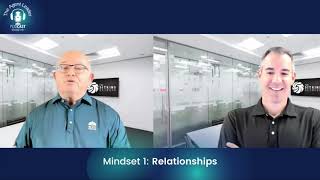
This is a recorded Agent Leader Podcast interview (YouTube) where Brent Kelly and Roger Sitkins outline five core mindsets for insurance professionals: relationship, productivity, growth, integrity, and alignment. The episode mixes mindset framing with practical, operational advice (KPIs, ‘green zone’ activities, promise reports, account management, and team alignment) and ends with program invitations and a call to adopt small, consistent improvements.
Chapters
Welcome to the Agent Leader Podcast. My name is Brent Kelly, your host. Thanks so much for joining me on another episode. And if you are joining me via video, you can already see that I have a very special guest. Roger Sitkins will be joining me today on the Agent Leader Podcast. And we're going to be talking about five critical mindsets of successful insurance professionals. And we'll get to that in a minute. But I do want a reminder again, if you were listening on audio, you do now know that we also be on video. So whether it's on our YouTube channel or or on our website, you can check that out. And if you want a visual representation, maybe you do, maybe you don't, Roger, I don't know. But if you want some video, we're going to have both audio and video for this podcast. As always, the purpose of the Agent Leader Podcast is to help you and your insurance agency to gain clarity, build consistency, and to make a commitment to become your best version possible. Something we truly believe in and we continue to hear again and again with the insurance agencies and professionals and producers that we love working with. It really is about that clarity, consistency, and commitment of the best version possible. One note, too. If you're an agency leader looking for some clarity right now, as of today, we've got a tool for you. Go to sitkins.comscorecard sitkins.comscorecard and you can get a scorecard that allow you to see exactly what where your agency is today in some critical areas. This has been a very useful resource for a lot of agencies and want to offer to you as a listener or viewer of this podcast, at no cost. So with that, Roger, you ready to dive into today's content on mindsets?
Absolutely, Brent. It's one of our favorite topics and things that we're seeing that people are really, really reacting to. Realize at the end of the day, it is all about mindset.
We just kicked off, and again, I'm recording this a day after, so I'm not sure when it will be released, but we just yesterday kicked off. It's our seventh virtual producer program, and we've done a lot of producer programs. Our seventh virtual producer program, which is live and interactive. And, you know, one of the things that we continue to hear again and again about our programs is, you know, one of the things that you guys really have challenged me on and encouraged me on is am I thinking right? Is my mindset in the right spot? In fact, our first session is primarily a mindset session. A lot of people are like, well, geez, like, you know, when are we going to get to all the strategies and the processes? Don't worry, we will. But here's what I always share, Roger, and get your thoughts before we get into these five key mindsets that we've talked about is the fact that for you to have external change, improvement, transformation in your business, in your life, you got to look within first. And a big part of looking within is that thing between the ears. So mindset is so critical of what we are thinking. So before, before we get into the five. And by the way, hopefully you get your pen and paper unless you're driving to take notes, because I promise Roger and I have talked about some of these things. He's going to go very deep and give you some practical ideas on some mindset shifts that you need to have before we get into the five. Roger, anything you want to say as a precursor?
Well, I think probably one of the biggest breakthroughs we see in the producer program, especially like you said, the seventh one we're running, by the way, they're eight sessions each, so it's not like one day thing, because we all know those don't work. But one of the things we're seeing is when we start talking to people about getting a mindset around what's your best version possible? Because all of us have a much, much bigger and better version possible if we'll commit to it. And a term that, boy, that was really sticky yesterday with 100 and some people on there was the fact that stop negotiating with your best version possible. And that's what we say. It's, well, I know I should do it. But then they come up with excuses or they, I guess one of my new favorite words or sayings is justify. They can tell you exactly why they're not doing it. And I heard a great definition of justify. It's just a lie. You're really lying to yourself. And boy, when we've said that to people, we noticed that even yesterday they went, wow, you're right, I am negotiating with myself. I'm justifying why I'm not doing it. And then, Brent, the other big reason is the semi successful trap. I'm still doing okay. Yeah, you are, but you're not on the road to financial freedom, you know, unless you've got a bazillion dollars on your book. I mean, we don't know what that number is, but it's just, again, stop negotiating with yourself. And then the other big mindset, before we get into some specific ones here is the fact that all of us have roadblocks. There's always going to be a roadblock, an obstacle that comes up. And we stressed to him yesterday say, look, the reality is you have to have your guardrails in place. And guardrails, just like on a highway, keep you lined up. You won't always be in the middle of the road, you won't always be perfect, but your guardrails will keep you going in the right direction. And for us, the guardrails are. When you get to the point of what are my non optional behaviors and strategies as a producer? It's one of our favorite things we talk about because we see people going, you're right, there are certain things I just have to make non optional. That's a mindset. And then realize that when we come to the roadblocks, okay, we'll get around and we'll slowly navigate, but then we're still going to get back on the path to that best version possible. So it's really been impactful with the people. Yeah, it has.
Stop negotiate with your best version possible. I mean, you just think about that and we, we all do it to a degree and we catch our. And I think that the biggest thing with mindset before we get into these five specific areas is just the awareness of when it's coming in play right in my life. And you've had a few of those, Roger, you mentioned to me. I've had some of those like, wow, you know what? Because I've been talking about it, because we teach it, you feel it. And so in the podcast today, again, we're going to go through five and are there more than five? Probably. But I think if we talk, these five really stand out. And so, Roger, I want to get your perspective on each of these. Certainly we can just have some open dialogue and some lessons that you've learned and I have learned. But I know for the audience, get them to think practically on, you know, okay, mindset. It's a bit of a buzzword. Mindset, Mindset. But what do we mean by that and where do we see this come to play? So we're going to go through five. We'll start with number one here, which is a relationship mindset. So what does that mean, Roger? Say a mindset relationship. What does that mean to you?
Do you believe that it's still about relationships? I absolutely believe in technology. People think, I don't necessarily embrace it. I embrace it more than most people even know we do. But I don't believe technology is going to replace the relationship. In fact, the one book that we've recommended for a couple of years now is that humans are underrated. And that what brilliant performers or high performers know that high impact or intense machines, whatever they're calling it, don't know. And so, yes, I want to use technology. I want to get all the tools and resources I can through technology. But at the end of the day, it's still about relationships. At least that's what I believe, because I don't want to be in the commodity business. If you're in the commodity business and a lot of you have a big part of your agency there, and that's fine, and it can be profitable, okay? But when you start looking at the top 20% of everything we do, Prato's principle, and apply it to relationships, well, then we say, okay, what are the relationships we really have to manage? And how do we identify who the most important ones are? The vital few versus the trivial many? So we look at it, we say, well, number one, it's clients. Now, all clients, if we keep them in the agency, if they're not in a service center, if they're in our agency, they deserve great service, but they deserve service at the level that they've paid for. And many times what we see is that the A accounts are under serviced and the C accounts are overserviced. And we've talked about 80, 20, 1000 times at least. But it starts with, what are your relationships with your clients and what's that client experience? And if it's not designed, it's just random or sporadic. Well, guess what? You're going to have some retention issues. And more importantly, you're not going to create raving fans that turn into multipliers for you. So the first one, Brent, is clients. Okay. Next one, of course, is not suspects, not prospects. Get rid of those words. Suspects. And prospects are the ones that the clicks, pings, rings and dings that give you an opportunity to practice, quote, and do some unpaid consulting. Because you've not identified them, you're not marketing specifically to them. Okay, Brent, I think you were the one that taught me the term. I'm not sure where it came from, but if you market to all, you market to no one. Yeah. Versus just getting very, very specific. So knowing exactly what a future ideal client looks like. Every agency will be different. Every producer will be different. But if you don't know exactly what a future ideal client looks like, and if you don't have a specific marketing plan for each one of your top 20, well, you know, you're going to be busy and everything, but, but you're not really going to manage the relationship. And the reality is with the best customers, their best future customers you're going after. It's rare that the first year you try to go to them, you get them. Some of the best producers we work with tell stories all the time. One of my best friends in the business ever always tells the story about the time that had an account that he worked for eight years. He didn't quote it for eight years, but he marketed to it for eight years because his attitude was, and I hope this is the attitude for everybody listening or watching today, is that every great account will eventually move and when it moves, it's going to move to me because I will be positioned as the logical next choice based upon value. I'm bringing them, marketing I'm doing to them, branding I'm doing whatever it may be. And so he worked this account eight years and finally got it. But it was $400,000 of commission income. Divide that out, it's still a pretty good annual return. It just took time to get it. But knowing what those top 20 are constantly working on. So clients, future ideal clients. Next one. Carriers. Yes. So much of the underwriting is total, based on technology. And I get it and I appreciate it. But on those larger accounts, those ones that are the whales, that'll make a major difference. Those ones that will be maybe not just the top 5% but the top 2%. The top 2% of the clients are a third of the revenue. Top 5% or 50%. Those type of accounts you're going after, you still need to be very, very close to the underwriter. The underwriters overall, the carriers overall, do you really know what their appetite is? Are you sending them stuff you should never, ever, ever them? Okay, we just see some of the statistics on this and it's ridiculous. The things that carriers receive from agencies. What about your, your top of the stack submission? Are you making sure that what you send them is something that when they see it come in, in their inbox, their online portal, or if it's snail mail, however it shows up that the underwriter looks at it, they know your name, they've got, you've got a great brand with them and they say, wow, this is going to be complete, accurate and total and it matches my appetite and I've got a really good chance of getting so a big part of the carrier's little thing. Brent, are you thanking them? Are you reaching out and recognizing them? How many thank you notes have you written to underwriters in the last quarter, how many letters did you send to the underwriter's boss saying, you know what? She did a great job. He did a great job. Those things go in their personnel file. Make deposits. Make deposits. Next one, of course, is the team members. So we've got clients, future Ideal Clients, carriers, and now our team members. I'm really amazed, Like, I haven't had a chance to tell you this one yet. One of the chief revenue officer sales managers that we work very close with, one of our private clients called me and he said, we've got a producer. We're going to call him Brent because it's not Brent, but we've got a producer that's really. He's going to call you. I said, well, actually, he already called me today. I have a voicemail. I haven't had a chance to return it. He's got a major problem. He doesn't understand it. He is constantly talking down to his service team and he can't understand why people keep quitting. And so there's no real. We talk about the art of account management, the alignment, respect and trust. Okay, and appreciation. And what's the other rapport and teamwork. All right, so we've got.
We've got all kinds of stuff, but you got it.
Yeah, but, but. So I'm going to have a call with this producer. He's a great guy. He's got a great book of business at a million dollars, but he's really struggling because he's not thanking his team. So clients, future Ideal Clients, carriers, our team members making deposit with them. And finally, the centers of influence. If relationships still matter at the highest level of accounts, then we darn well better understand that the best referral we can get is from a center of influence who's already working with the client, one of the future ideal clients, current trusted advisors, who says, you know what? You need to go see Brent Kelly from Kelly Risk Services. Because we all know that those type of referrals and introductions are easy sales. This is something we talk about a lot. We talked about it yesterday with a new group. All too often we see that a producer makes an easy sale, and they say, well, that was easy. Well, why was it easy? Well, this attorney referred me in, or the CPA referred me in, or the wealth manager banker referred me in. And I just kind of took it over. I said, okay. And that was easy. I said, well, what isn't easy? Okay, first of all, it wasn't easy. You might have done a decade of work to Build the trust factor there. But understanding that the key is if it's easy, figure out why it was easy and replicate it at least five times. So those are the key relationships, Brent. And it's a mindset saying, you know what, at the end of the day I want relationships. Yes, I'm going to embrace heck out of with technology. I'm going to bring all the tools and services in I can, but it's still going to be at the type of accounts I want to write in the non commodity sector, whether it's small, commercial, large, commercial, large benefits, whatever it may be that we're saying, you know what, some way somehow there's going to be a relationship here. Short term relationships are price. Long term relationships create friendships and a heck of a lot more money.
Well, last thing you said, Roger, it really hit me too is just the idea of, you know, what game are you playing? Are you a short game or long game? And you know, anybody that really has a career in the business wants a career in the business. They know it's a long term project, so to speak. And you know, you mentioned the word and just to reiterate it, we talk a lot about it is are you making more deposits, Are you taking more withdrawals? And that's true in all those different areas. You mentioned the relationship. Last thing I want to share on this because it hit me, I made a note as you're writing, it struck me. It's been a while since I thought about it. I went to a large leadership event, it's been a few years ago now. And you know, part of it was be able to ask questions that here was talking about adding value, right? Which is about relationships. How do I add value to your life, Roger, and someone else's life and what does that look like? What's the best way to add value? Like of all the things out there, what's the best way to add value? And the speaker who's up there, by the way, his name is John Maxwell. Many of you know who that is?
He knows a little bit.
Yeah. So he's written 100 books, ish on leadership. But I just here I'm like, well I'm asked John a question. I said, what's the best way you've seen to add value to people in their lives? And I'll never forget he kind of stopped and I thought, oh, I got him, you know, I don't know if he has a great answer here. And he kind of looked and he stopped and he said, brent, I didn't know my Name. I had my name tag. But he's like, the best way to add value is to first value people. And it was almost like it was part of this is that we try to put these deposits in because Roger told me to, so to speak, versus, you know, what I value you and what you do. And because of that inherently, guess what I'm probably going to do? Add value to you.
So think of the last time or anybody watching or listening. Think of the last time you said, wow, that was really nice.
Yeah.
Isn't that really what the reaction you want from clients? Future ideal clients, carriers, team members and centers of influence. Wow, that was. That was really nice because you did something extra. And it's, you know, you don't have to do a lot. You just have to do something because the bars we've talked about before, it's so low in our industry in this area.
Yeah. And if you don't think relationships are important, just ask them how your last 18 months went on. Relationships. Right. I mean, it's just, it's just, it's one of those things, but again, it's just taken for granted. And I love what you said, Roger. It's just, it's a mindset. I'm going to wake up every day and go, how can I provide value? How can I add to this relationship? So thank you for sharing that.
And by the way, you better think you better remember this at home, too.
Well, yeah, yeah. Well, and I've said this on this podcast. I say this in our camp, but you just said it. And you know, it's one of those things when we speak and teach you feel sometimes when you're falling short. And one of my favorite sayings, Rod, you've heard me say this many times, that silent gratitude is no gratitude at all.
Oh, yeah. Today, by the way, is my wife's birthday, so I've got to get done with this. Okay.
Yeah, thanks. Reminded me too. So we'll both add value. Yours is more important than mine. Number two we had on for mindsets was productivity mindset. And to say that you're not passionate on this, Roger, would be the understatement of the year. So tell me about this mindset of productivity. Getting stuff done.
Well, it's not wearing busy as a badge of honors. We talk about. That's not productivity. It's not getting results. This is about compressing time and accelerating results. Being productive. What does productivity mean? Being productive. But I mean being highly productive. So what are some of the ways we measure it? Well, an easy measurement for Everybody, of course, is to take a look at their revenue per employee, more importantly, spread per employee, and take a look at the best practices. And I'll just tell you this, rate out. If your agency is not at at least $200,000 of revenue per employee, you better take a hard look at it. You better take a hard look at it. Certainly a minimum. I remember, Brent, when the minimum used to be 100, then it was 150. Now maybe 175 and 180. But if you look at best practices, it's over 200,000 now. That's where you should be. Now how do you get that up? Number one, you've got to start taking a hard look at how productive your producers are. So look at your gross re, gross commission per validated producer. Is it at a level it should be. Look at the revenue and number of accounts your account managers are handling, your service teams handling, whether it's personal lines, vip, personal, small, commercial, large. Commercial, small benefits, large benefits. Start measuring those things to find out what's the productivity. It's amazing to me when we work with agencies and we dive deep on some of these numbers and we'll find that we have two service people handling the same type of accounts. And one will have 500 accounts and the other one will have 750. But they're both busy. And just even knowing from a productivity perspective, what percent of the technology, the agency automation system, agency management system are they using today, it's really low. So we take all of that, but one of the biggest things is we've got to have producers who actually produce this way. Let's get around definition of a producer. Someone who actually produces. And if we're going to compress time and accelerate results, the number one thing we have to do. And here's Brent, this is sitkins, not even 101@sitkins1, we have to have a strong division between sales and service. We have to get the producers doing just four key activities. And this is what we've talked about before, red zone versus green zone. The green zone is when producers are doing one of four things or a combination of the four. They're selling, they're managing relationships, which we just talked about. They have a formal continuation process, not a renewal process. And finally they're filling up their pipelines. Those are green zone activities. What we see, and we've been just randomly talking to some agencies recently, agencies that are looking to join us or some that may be struggling. We say, how many appointments per week is your average producer having? And it's blowing me away. I was talking to, I think we might even mention this in one of the other podcasts recently. I was talking to a prospective client of ours. Okay. We had identified them as a future ideal member and had a great conversation. I said, and we had the new sales manager with the agency owners. I said, how many appointments per week are your average producers having? And the sales manager said, two. I said, no, no, not per day, per week. She said, two. Well, we dug a little deeper, by the way, afterwards and found out it was actually closer to four because she wasn't including some of her. He wasn't including some of the virtual meetings are happening. 4. That's not very productive. So getting the producers into a situation where we start identifying one of the most important KPIs for an agency, TSS time spent selling. We're not going to get productive if we don't improve time spent selling. That's the four key areas. So we just come back to it and say, do you have part time or full time producers? Well, if you have part time producers, you're not going to be very productive. You know, you only score points when you're in the game. Or I like to use the analogy because I like to fish. I don't do it enough, but I like to fish. I notice I'm not catching a lot of fish right now because I'm not fishing and I don't have my bait in the water, so I don't care. You look at it. But the end of the day, are you just saying, well, things are going along pretty good. Are you saying, how do we compress time to get results and accelerate the actual results? Well, you've got to do the things we just talked about, number one.
Yeah, it's so many nuggets in there. And I hope again, people are taking notes at home and writing these things down. But, you know, it just, it hits you. One of the things Roger, we talk about all the time too. In fact, this was a little. The conversation we had yesterday and we certainly will have in our next session of our camp because we get a lot into the activities versus results area of business. But it's just this idea that, you know, back to what you said, the definition of a producer is one who produces. And if I would say, hey, what's your ultimate role? Like, what are you really here for in this profession of yours? Well, it's to sell, right? I mean, it's, it's. Obviously you've got to do that through relationships, other aspects, but it's to retain and obtain ideal clients. Something you say all the time, Roger. And then we look at like, what does your calendar look like for next week? Well, two things. We hear either it's filled with just random stuff or filled with nothing. And then the week goes by and it's like, well, I, you know, I was just pretty busy. I mean, to me it's no different, you know, in preparation for anything in life, if it's that important, why would it not be on your calendar? And by the way, if I. Well, I love to have more appointments or just not on there. Well, then maybe you need time in your calendar next week to make sure the following week there are more appointments. Right. However you're going to do that and you know the analogy and you kind of teed up a little bit. But when I talk to agencies off time, Roger, we're really struggling to grow or our producers aren't, aren't doing as much as we like them to do. And you find out it's like, well, it's because you're trying to play, for example, a four quarter game. I don't care if it's football or whatever sport you want, but your producers are really only in the game for about a quarter.
Yeah.
And then you wonder why you're struggling. They're not doing the things they're supposed to be doing, period. And it's, it's basic as that, but it's so often overlooked. So any additional comments from that?
Yeah, I mean, it reminds me of one of the podcasts we did that really got a lot of response, which was the one about producer recruitment starts at home. Stop. I agree. You've got to recruit. You should be recruiting all the time, there's no question about that. But don't think adding two or three more producers is going to solve your problem. If your current model, your business model, is that your producers spend less than 20% of their time in the green zone, well, guess what then the new producers you have will pretty much figure out, well, I guess that's our model. It's something we've talked about a lot lately, is that your current business model is perfectly designed for you to achieve the results you're currently achieving. You know, that's a big duh and blinding flash of the obvious. And everything else, whatever results you're getting today are based upon your current business model. And if your business model is, it's okay for the producers to stay in the red zone 60, 70, 80% of the time, which is the service trap or Just hiding behind activities, then you're going to have trouble. Producer recruitment starts at home. Get your current producers producing. Okay. Productivity. Get your current producers producing. So that when you bring the new ones in, they look at the role model and they go, oh, on this agency, I'm supposed to have 12 appointments a week. Got it, got it. So it's talking about mindset.
Well, I mean, obviously you mentioned producer mindset in particular, but obviously it's agency mindset. You know, it goes back to culture. And part of that is what's what, you know, what is. What are the language and behaviors that are normal in your agency. And if it's normal, they're like everyone else. Meh, you know, that's it's normal. So very important ideas there. So we've talked about relationship, we've talked about productivity. Let's get to number three, Growth mindset. One of my favorites. They're all my favorite, but this one's, I love this one too. So, Rob, tell me about growth mindset.
Well, I don't know too many agencies that if you went to them and said you guys want to grow, that they go, nah, we're just kind of coasting. And of course the law of gravity says you can only coast in one direction. Okay. But most would say they want to grow. And we'll say, well, how are you going to grow? We're going to sell more insurance. How are you going to do that? We're just going to sell more insurance. It's just crazy. That doesn't work that way. Okay, it doesn't work that way. So the growth mindset, first of all always comes back to an attitude of continual and never ending improvement. Can I Continually never ending improvement. When we look at the best people we work with and when we challenge ourselves, Brad, as you know, it's how do we continue to get better? How do we continue to grow? What's our continual and never ending improvement? Because my attitude is I'm going to out learn so that I can out earn others. And I would hope that every agency has that attitude. When you come back to it though, I think people really are. They're looking for too big of a jump right away. Oh, we're going to go from 3% growth to 15% growth. Well, that sounds good, but how many people are doing it? How many people are doing it? Can you 2x or 3x your growth rate? Yeah, yeah. But the mindset has to be small, incremental things that are consistent. You know, you have the law of compounded. I think you're going to talk about.
That one and consistency.
Thank you. That's why we're a great team.
Hey, I'm here. I'm here.
Okay, but you look at this and say, if you just could get 1% better, if you were really focused, could you get 1% better in a week? Well, that would be tough. What about a day? Certainly not in a day. What about in a month? If you really focused, could you get 1% better in all the important areas? Yeah. What does that mean? Then at the end of the year, you'd be 12%. It actually would be more because of the compounding. Okay. But we look at this. In fact, there's something I pulled the other day, and I just love this one. I've got it down here, so I wouldn't forget it. First of all, a quote. This is from Charles Kettering. If you've always done it that way, it's probably wrong. Think about that. And that's something I hear all the time. Why are you doing this? Well, it's just the way we've always done it. And because in our industry, you can be semi successful doing it the way you've always done it. Things are changing so fast, people don't even realize they've been disrupted yet because it's still such a great business. Huge changes coming. Okay, but if you've always done it that way, it's probably wrong. And I love this whole attitude of the 1% rule. And the 1% rule states that over time, the majority of rewards in any given field will accumulate to the people, teams and organizations that maintain just a 1% advantage over. Over their competition. Let's face it, the vast majority of agencies, what you have to offer is not really that much different. Really isn't. Okay. And then people say, well, then does come down. Does it come down to price? Well, yes, but I'll bet there have been times on a piece of new business, you bid low and didn't get the account. And there's other times where you were on a renewal, you were high and kept the account. So yes, price matters, but it's not the only thing. Start looking for what are some of the advantages you have. In fact, Brent, you just did one of our monthly sales meetings for our members this past Monday, and it was scratch your niche. How to really make sure that you're very focused because the best producers have that. But getting to the point where you start thinking, what's our slight advantage? Because there's not much difference. And the slight edge fact, there's a Book the slight edge that I really, really love. And it just talks about this. What's the thing you can do to just be 1% better? Because here's what's really interesting. If you're taking notes, please write this one down. The game you play is a winner take all game. It's a winner take all game. See, this is not like the Olympics where there's a medal for second place or third place. Okay? There's no medal for second place in our game. And so what are we going to do, like 1%? Olympic athletes win by less than 1% of the time. You know, it's 1 1000th of a time. You look at the PGA and the average scores. If I remember correctly, somebody will correct me on this, but it's pretty close that the average winning score of the pros versus the average 10th place is way less than like 1% at the end if you accumulate, or maybe it's 2%. The point being is you don't have to do a lot different. You just have to be different. And this is one of our favorite topics and yet greatest frustrations. What are your five points of differentiation? If you just knew those and you ran with them on a regular basis and that was your 1%, it would be amazing. But, so the key is, how do I grow at least 1% at a minimum every month in every key area of my agency? You take that attitude and you start challenging your leaders and all of your team members on that. It's amazing because again, it's not about making this quantum leap in a day. It's about consistently getting better. Brent? Yeah.
Two things I want to share from all that was powerful things and a lot of note taking. Hopefully people are having here two things. I'll start with one of the more you recently mentioned, which just I think what happens, the growth mindset, is that we expect it all to happen overnight, or at least we want it to happen overnight. And so the easiest analogy to me is, again, you've seen these two, Roger, where you see the before and after pictures of people who are trying to get in shape and they go from, let's just say, right, flabbing out of shape to like lean and ripped, right. Whatever that is.
Well, that's sort of like the two of us, you know, I'm the before, you're the after.
I got a lot of work to do still. But it's just this idea that, like, you look at it and I think with producers like, oh, I want to be a million dollar producer or whatever, the case is our agency wants to be this. And it's a good idea, it's a good thought. But what we forget is all that stuff in the middle, that's that consistent stuff that gets you there. And so what seems to happen is it's like, well, that would be really cool. And then you realize some of the work that has to go in, like, well, I don't know if we could ever get there anyway, so just forget it.
Hitting home things are good enough.
Yeah, I mean, so that's just one of those mindsets that I think with growth that gets in people's way. And here's the other thing is the last thing I'm going to share. I get on my soapbox for a while on this one. But, you know, my. I've gotten many of. You know, Roger, you certainly know that I've got five kiddos now. My oldest couple are pretty much, well, pretty close at least to stop physically growing. But my other kids that are, you know, my 11 year old and my 8 year old and my 3 year old, what I've noticed, this is some magical thing, Roger, you've experienced this too, is that if you give them food and water, they need bigger shoes and clothes. Right.
They.
They physically grow. And that happens physically for a while. But then what happens when we hit adult? We stop growing. And I think there's a very similar analogy that happens to insurance professionals that, you know, I automatically got some stuff, I went to a class, I did this, and then they just stopped the growth. I am what I am. And it's one of the biggest frustrations because this is something that, again, I could talk about a lot of aspects, but for producers, I always say this, you've heard me say this. As you get better, and hopefully you're getting better, shouldn't your clients get better? Right. I mean, it's that constant thing that I want to grow into someplace that I'm not yet versus well, I guess this is where it is. So I know you probably have some thoughts on that.
It's just, you know, your clients have got to get better. Maybe they think just the reverse. And that's where you're going. You've got to get better. Better clients.
Right.
I wish I could write larger accounts. Okay. We had in our. We always do the Q and A, as you know, share it with everybody here. After the formal part of the producer training, we Normally stand for 30 minutes and just ask questions. And one of them was from a very interesting guy. We won't go into that right now. But just changing careers is amazing. And you start talking about how do I do this, how do I do that? I said, well the first thing you've got to do is do the research to understand what the real problems and concerns are in that type of business. Don't just go in going, I'm a general practitioner and I've got a yellow legal pad or maybe I've just got my iPad and I've taken some notes on it asking copious questions. I said, just spend an hour a week. And I really haven't rather do an hour a day because he's a brand new producer. Spend an hour a week studying the underwriting problems and concerns for X class of business. Well, how do I find that? I said, have you ever heard of the big G? Google, Google. Underwriting problems and concerns on mechanical contractors. You'll get all the information. So that's you don't earn the bigger accounts until you learn more about them so that you then are worth more to them. Because at the end of the day, this 1% difference, so much of it, just what's the value you bring them? One of our best producers in our sales mastery program, as you know, our Elite 50 program had this just great mindset. He said, I don't worry about price. I don't even quite frankly worry about coverages that much because I'm specialist and most of them programs are pretty much the same. My question is how do I bring more value to this client and help them move their business forward? And that's what he talks about. Because as we know you talk about just relationships overall. With your best relationships, insurance is the last thing you talk about about. With your worst relationships, insurance is the first and only thing you talk about. Think about that.
So one more thing, when I get to number four, but I love this discussion and I heard this years ago and this may be a Maxwell thing too or affiliated somewhere, but it's powerful. And when I first heard it I'm like, yeah, okay, but it said this, that we don't attract what we want, we attract who we are. And I was like, okay, this is not just oh foo foo, but the point of it was what I understood. And now I get better and I see as a coach and in my own life, is that as you said, Roger, like when you get better at your skill, your craft, your game, your profession, suddenly people that are higher level are attracted to you because they see it and you communicate it better. And guess what else, you're more confident when you're doing these things. And people of higher levels want to be around people who are confident in what they're doing and the value they bring, versus, gosh, I hope it's okay that I'm here right now. So it's just a really important concept of just that growth mentality. But you got to start, you know, wherever you're at, you start. But start that growth process and it never ends. Which should be exciting.
Yeah. But rather than the producer that walks in, I'm not worthy. I'm just so lucky to be here. Thank you so much for accepting an appointment with me. Oh, my God. Put yourself in a losing situation starting the first second you walk in the door or they're making their phone calls and they're going, God, I hope they don't answer.
And here's one thing for the audience too, and this is common sense, but it's like, well, gosh, I wish I could be more confident. I mean, people could say it about, you know, whether it's you or me, if we're speaking somewhere, it could be anybody who's good at what they do. Well, you know, I guess good for them. Well, guess what? You only get confidence by the hard work of preparation and practice. And when you put the time and effort in, you're not going to be perfect. But boy, you feel like you've earned the right to be there. And there's a difference in what people feel in your presence. So. All right, my last thing, number four, we're going deep in these, Roger. But it's fun. Number four is integrity mindset. What is integrity mindset? I know this has been really impactful to you lately, so tell the audience about integrity.
Well, integrity to me is really simple. Are you keeping your word? Are you doing what you said you're going to do? I just finished a series with the pastor Andy Stanley on this topics of a month long series. And it was about life overall. But it just, it hit me so much the fact that when you think of integrity, it's pretty simple. It's are you doing what you said you were going to do? And do people view you as a person with integrity? I know we mentioned this at least once before in the podcast, but two years ago now it's are you doing what you said you were going to do? And do people view you as a person with integrity? I know we mentioned this at least once before in the podcast, but two years ago now just. And we were having our live event with our network members and that next morning, the second morning of it, as I was doing My debrief of the previous day and brief of the day and getting ready because I owe it to our clients to be ready. And it hit me, this question about integrity and accountability. And I just walked. I walked into my opening other than, hey, great to see you all again. Great day yesterday. What if everybody in your agency did everything they said they were going to do? How great would your agency be? And of course, people start going, oh, wow. And so many people comment, well, that's my frustration. That's what drives me crazy. And so when you get to people, first of all, leaders have to lead. It can't be where, like your kids say, well, yeah, your room doesn't look so good either. Okay. Or you left your bike in the driveway type thing. But people with integrity do what they say they're going to do. And it's not a perfect world. You know, if it was a perfect world, they'd be trained monkeys or robots or whatever running around doing all of the work. But if you could just get an attitude within your agency that people realize that we are an agency that operates under an integrity model. To all of those relationships we've talked about, when we make a promise, we keep it. And that's like with the best accounts that our agents work with, we say, look, don't do a stewardship report. Because a stewardship report turns into a here's every transaction we've done for you. And the client looks at it and they say, well, that's just what I expect you to do. What did you do different? So a promise report ties back to, here are the promises we made. Here's how we kept them. Here's what we did. So here's the risk management plan we had in place for you, all of the services, and here's exactly what happened on it. That's a promise report. So just think of the subtle difference. First of all, I wonder how many people are doing a stewardship report, or whatever you want to call it, on at least the top 20% of their customers that are 80% of their revenue. It's a pretty low percent. And then people wonder why, Gee, I wonder why that client doesn't remember everything I did for them. Because they're busy running their own business. You've got to remind them what's the same thing. Here, think about this. What if every time you sent something to a client, future ideal client, center of influence, carrier team member, whatever, when you. When you told somebody you were going to do it, what if it started off something like this? Dear Brent, as promised, Please find, as promised, please find. What does that say about your organization overall? Are you a promise keeping organization? This is also going to come back though, the integrity with yourself. And we can certainly go all the personal things with our families, our loved ones, our churches, our community, any integrity, anything we've said. But just go back and look in the mirror. This is again, what we said earlier today was that stop negotiating with your best version possible. Make a promise to yourself and keep the promise. Okay, little things like did you debrief last week, pre brief this week? What promises have you made to yourself of the things you will accomplish this week? So this is so, I mean we could go hours on this, but at the end of the day it's really simple. First of all, are you willing to make a commitment that you will do what you said you're going to do and people realize, you know, your personal brand that people say, you know what, that's someone that always does what they said they were going to do or if they can't do it for whatever reason, they communicate that to me up front. And if you think about every, I'm gonna say every. You can't say every. The majority of frustrations you have with others or lack of a relationship, for whatever reason or relationship breaks up, I just see that a high percent of them are because somebody didn't maintain integrity. Somebody didn't maintain their integrity. So again, just think what if, what if 100% of the people did at least 80% of what they said they were going to do. By the way, life as a leader is a lot easier. Well, those of you that are producers, individuals, guess what, you've got to become that self managed producer, but self managed and accountable to yourself and by the way, an accountability partner. Brent.
You know the phrase that comes to me and I heard this a while back too, says no, no trust, no nothing. Yeah, and it is true. I mean I think and I'm not going to go off any rails here of political or any of that, but just an overall leadership of everything. To me, the lack of trust from all different angles. And if you don't have it, nothing that anyone says or does matters. I mean really, because you're like, I don't know, don't trust that, don't trust that. And this again, it comes from all different angles. And I think the one thing that you said, Roger that, I mean you said a lot of great things but what really stood out is what I wrote down is own it, just own it. And it is not always fun and I've struggled with this too. It's like, well, it'd be easier to kind of massage the truth or extrapolate some things or you know, whatever it is. But the truth of it is I didn't do it. And I'll tell you what I know for me, I don't know for you, Roger, but when I hear a leader, again, not that you need to do what you said you were going to do, but we are human, we do fall short and we do make mistakes. And so when I hear a leader say, and you've done this, Roger, and our team, I know, but, but you know, and I've done it two of different ways. But it's like when you say, listen, I dropped the ball on this, it's on me. To me, that is one of the most empowering things that I can hear from a leader. And it's because, listen, this is a person that they've got commitments but when they fall short, I'll know where they have and they'll be honest with me because I know they care enough about the company and our team and our clients to make sure that they're going to own it. So anything you want to add to that, Roger?
Well, I mean it comes back to don't justify why you didn't do it. And maybe a better way of looking at this, Brent, the guardrails, maybe the sponsor on the guardrails, the sign on the guardrail should say integrity. So when you think about the promises you've made and when you think about things that become the non optional behaviors and strategies and if you're getting close to the guardrail, maybe you see the sign that says oops, integrity. I'm not going to be doing what I said I was going to do. And you don't have to make a lot of promises, you just have to keep the ones that you make. And the things where we've all done, oh, that's a great idea. That's a great idea. That's a great idea. And we, we talk about this a lot, that there are always more great ideas than there is time or capacity to execute them. Okay, that's the trivial. Many determine the things in all areas of your life that will have be the vital few. And we wind up focusing on fewer things but our execution and our results are much greater. So that's our concept of within the agency world, delivering excellence in every process. Going deep.
Okay, well, I'm going to transition to the fifth one because actually as you were saying that it hit me, it's Obviously, you got to keep, you know, you got to keep your own word and don't lie to yourself. But obviously what happens too, out in the marketplace or in agencies in particular, is that maybe it's sometimes not done out of malice, but it's done because, oh, we can do this or that can happen, and we can do that. And sometimes we're making promises and doing things that we really can't deliver. We haven't told the people that need to help us deliver. So I heard that. And it takes me to number five, which is a mindset of alignment. Alignment mindset. So, Roger, what does that mean?
Yeah, we could, we could make the case that this one would cover a lot of different. We talk about this a lot, that there are always more great ideas than there is time or capacity to execute them. Okay, that's the trivial many determine the things in all areas of your life that will have be the vital few. And we wind up focusing on fewer things, but our execution and our results are much greater. So that areas, because it does alignment to me, is pretty simple. And it's just like looking at a car. Is it aligned? And when you. We've all seen maybe a little bit old, older car, junkie car going down the road, and you can see that the tires might be going this way, but the body in the cars turn. So the reality is the car's totally out of a line or you hit a pothole or you hit a curb or so that's our concept of, within the agency world, delivering excellence in every process going deep.
Okay, well, I'm going to transition to the fifth one because actually, as you were saying that it hit me. It's obviously you got to keep, you know, you got to keep your own word and don't lie to yourself. But obviously what happens too, out in the marketplace or in agencies in particular, is that maybe it's sometimes not done out of malice, but it's done and.
The car gets out of alignment. Well, if you don't straighten it out right away, what happens? Well, number one, you wear the tires up much quicker. Number two, you can affect the suspension overall, et cetera, et cetera. And so what we see all too often now is that we don't have absolute alignment on exactly where the organization's going. So, so think of a fancy because.
Oh, we can do this or that can happen, and we can do that. And sometimes we're making promises and doing things that we really can't deliver. We haven't told the people that need to help us Deliver. So I heard that. And it takes me to number five, which is a mindset of alignment. Alignment mindset. So, Roger, what does that mean?
Yeah, we could. We could make the case that this one would cover a lot of different race car. Think of just a regular car or pickup truck. I don't care what it is. A vehicle with four wheels. So what are the four wheels, if you will, of alignment? Well, I think it's certainly sales, service leadership and that administrative and internal operations. So sales scenarios, because it does alignment, to me, is pretty simple. And it's just like looking at a car. Is it aligned? And when you. We've all seen maybe a little bit old, older car, chunky car going down the road, and you can see that the tires might be going this way, but the body in the cars turn. So the reality is the car's totally out of a line, or you hit a pothole or you hit a curb or service leadership and admin and ops. So if those four going along together, pretty darn good results. Once they get out of line and people lose trust or people make promises they don't keep, or let's say a producer makes a promise to a client and doesn't tell the service team about the promise, they've made something and the car gets out of alignment. Well, if you don't straighten it out right away, what happens? Well, number one, you wear the tires up much quicker. Number two, you can affect the suspension overall, et cetera, et cetera. And so what we see all too often now is that we don't have absolute alignment on exactly where the organization's going. So think of a fancy, and then the account gets goofed up and who gets blamed? The service team. But they didn't even know it. When we can get an alignment where people are saying, okay, where are we going? And this comes back to one of the things, Brent, that you've added a couple of years, maybe two years ago now they've been so impactful with our account manager program. It's the fact that the producers come in and they hear the story. Race car. Think of it. Just a regular car, a pickup truck. I don't care what it is. A vehicle with four wheels. So what are the four wheels, if you will, of alignment? Well, I think it's certainly sales, service leadership and that. Administrative and internal operations. So sales. And they go, great. Green zone. I got it. I got it. Time spent selling. Got it. But the service team had never really heard the message at the same level, nor understood it deep enough. So now what we find like the tomorrow, we've got the account manager program with the producers that just started yesterday because we want them to hear the same message. We want them to understand it, but at the end of service leadership and admin and ops. So if those four going along together, pretty darn good results once they get out of line and people lose trust or people make promises they don't keep, or let's say a producer makes a promise to a client and doesn't tell the service team about the promise they've made the day. This is the powerful thing, the saying you added simple but powerful, which I love of course, is that we have the same goal but different roles. Well, the same goal should be very simple. Roi, Retaining and obtaining ideal clients. If you've listened to the podcast all you've heard it 517 times, retain and obtain ideal clients. All right, and then the account gets goofed up and who gets blamed? The service team. But they didn't even know it. When we can get an alignment where people are saying, okay, where are we going? And this comes back to one of the things, Brent, that you've added a couple of years, maybe two years ago now they've been so impactful with our account manager program is the fact that the producers come in and they hear the story. The different roles, where there's a sales role, there's a service role, there's a leadership role, and there's an administrative and ops role. Are we getting together and just talking about that for the agency overall? Is there a monthly state of the agency meeting and alignment as a topic? Where are we out of line? Where are we lined up? Okay, the producer and their service partner or partners. Are you having a. And they go, great. Green zone. I got it, I got it. Time spent selling. Got it. But the service team, weekly high performance team meeting with a set agenda that's reviewed. If not, you're out of alignment. Have you, did you do your debrief and pre brief? Did you debrief last week, but never really heard the message at the same level nor understood it deep enough. So now what we've pre briefed this week, have you talked with your service partner where you're going? Have you talked what you need? Have they shared with you what they need? If there's not alignment, then people show like tomorrow we've got the account manager program with the producers that just started yesterday because we want them to hear the same message, we want them to understand it. But at the end of the day, this is the powerful thing the saying you added simple but powerful, which I love. Good intentions. Hysterical activity takes over. The end of the week they say, God, I was busy. And then you see. How many appointments did you have? Producer? Three. Three. Three. Okay. What did you do rest of the week? Why? It's tough. Well, love, of course is that we have the same goal but different roles. Well, the same. What were the plans? What did you do? I was busy. Okay. And then once they get goal should be very simple. Roi. Retaining and obtaining ideal clients. If you've listened to the podcast at all, you've heard it 517 times. Retain and obtain ideal clients. All right, what are the different roles? Where there's a sales role, there's a service role, there's a leadership role and there's an admitted out of alignment. Now we start having this between sales and service and if you have a straight of it ops role, are we getting together and just talking about that for the agency overall, it got this conflict. Those of you that are listening, I'm knocking my fist together. If you have sales and service and conflict on a regular basis, number one, there is no same goal, different roles. There's been no discussion about the roles. One of the great pictures that we use within the account means they're a monthly state of the agency meeting and alignment is a topic. Where are we out of line? Where are we lined up? Okay, the producer and their service partner or partners. Are you having a weekly high performance team meeting with a set agenda that's reviewed if not your manager in producer programs? Is the race car. It's a top down view of the race car in a pit out of alignment. Have you, did you do your debrief and pre brief? Did you debrief last week and whether 14 or 17.
I think 17.
17 people between putting pre brief this week. Have you talked with your service partner where you're going? Have you talked what you need? Have they shared with you what they need? If there's not alignment, then people showing gas on, putting tires on, et cetera, so that car can get done like in 5 second pit stop, fuel and gas or fuel tires, they're out there again. It's an indy racing car. So you can really see all four up. Good intentions. Hysterical activity takes over. The end of the week they say, God, I was busy. And then you say, how many appointments did you have? Producer? 3. 3. 3. Okay, what did you do rest of the week? Why? Stuff. And it's such a great analogy of what are we doing as a team to get all the fuel all the tires, everything that's needed on the vehicle, and quickly. And this is also the whole concept about will it make the boat go faster? That British rowing team that never finished higher than. What were the plans? What did you do? I was busy. Okay. And then once they get seventh in any international competition. But they took on one theme. Everything. They talked out of alignment. Now we start having this between sales and service. And if you've got this conflict, those of you that are listening, I'm knocking my fist together. If you have sales and service and conflict on a regular basis, number one, there is no same goal, different roles. There's been noted about will it make the boat go faster? That to me is alignment because everybody's talking about the same thing. And then they wound up, guess what? They won the gold medal in the Olympic. They'd never been higher than seventh. Their one change. In fact, they have a book about it. You can look it up. Will it make the boat? Discussion about the roles. One of the great pictures that we use within the account may go faster. It's an amazing thing. Don't try to do everything. Get people aligned. Doing a few things exceedingly well. All right, so that's an alignment mentality, a mindset. And leaders ask themselves, are my teams aligned? Everybody on my team, are we putting college football. We had a playbook. We didn't have. Well, we had offense and defense, but we had a playbook. We didn't have. You guys have your playbook, we'll have our playbook. That's an aligned playbook. Most agencies don't have a playbook.
Yeah. And in your playbook, I'm assuming there was a quarterback that had a job and a running back that had a job and an offensive lineman that had a job and a wide receiver that had a job or whatever it was right for those plays and the goal. My guess is you didn't design plays to go backwards.
We never. We never drew up a plate. I dropped back and fumble.
Yeah. So I mean, you know, it's like, that's the goal. Now we've got these different roles and I know, you know, we use that tongue in cheek, but it's. It is so true in agencies like, you know, I mean, in some cases, like you said, the butting heads, and I'm using my hands now, too. Is that in some cases we may have. If you want to make the producer the quarterback. I'm not saying they are, but there's there the offensive lineman, the service team. The service team's like, olay, look the.
Lookout block.
Have it right. Because there's, there's no alignment, no communication and that's important. I just want a couple of things you said there. And this is something you said to me a couple of years ago after a chiropractic visit. Now my back is bothering me. I have it too. And this is what you said. Right. Even a small adjustment can make a big difference. Right. Even a small adjustment. So I'm thinking too. And you talk about those four wheels. Even if one wheel of the four is a little off, it messes everything up. And just that, have that conversation, have that dialogue.
It's the 1%. What if just one wheel is 1% off and you continue on that, how long before that tire wears out?
Yeah.
And most of us have had that happen at some point when we didn't know about it.
Yeah, it's important stuff. Last thing I'll show. I want to get some final thoughts for you. Just overall, have you summarized mindset? I want to go first. Just a couple of things. First of all, I do want to share this. Now we've launched our programs but we still have open invitation to our all inclusive model, our Sitkins network and our profit experience. And we continue to embrace and enhance that experience. Even higher levels in fact. Now Roger, obviously you're very well of this. Not only do we have complete access for the entire agency, but we're adding deep dives where we're taking agencies through one specific area after they hear the core program of everything and all the different things. And I do want to go back to the, to the, the clarity and core which is the first phase of our profit experience. Because a big part of that, and we just talked about it, is allowing your entire agency to hear and be part of a similar message that is part of the culture, it's part of.
The buy in manager and producer programs is the race car. It's a top down view of the race car in a pit.
And you know, it's just one of those things where, you know, we don't have the producers running off in this.
Direction and whether 14 or 17, I think 17 people between putting with the.
Service team getting dragged along to some degree. Right. And we're not having it. Everyone understands that there's a common purpose and a vision. Ultimately it's your agency's purpose and vision. But we want to help you through our programs and through our Sitkins network model and the profit experience to help.
You accelerate gas on, putting tires on, et cetera, so that car can get done like in 5 second pit stop, fuel and gas or fuel tires, they're out there. Again, it's an Indy racing car so you can really see all four.
And the word that you use, Roger, I love is compress time. Want to help you compress time in that. So if you're interested in learning more about that again, we would love to see if it's a fit for your agency, sitkins.com aim and that's our all inclusive model. It's got all the information there. We've got some really, some really cool stuff coming in the works as well. My last comment on this and I'll turn to Roger is this, and I wrote this down for some reason because I was thinking how do you get started in mindset? Like what I am listening to? Roger and Brent said some things and a lot of good things, but where do I start? This is something that hit me and I had a coach years ago kind of say this is that, you know, we are human beings before we are human doings. And so you think about that. I guess my question is this. I was looking through relationship, productivity, growth, integrity, alignment. My question to you as a listener is who are you going to be in these areas? Who are you going to be? And to me, that starts off waking up the day. Of course we've talked about morning routines, but thinking about that, who am I going to be in relationships? Who am I going to be in productivity? Who am I going to be in a mindset of growth? Who am I going to be in keeping my word? Who am I going to be in aligning with people around me before I do? So that just hit me. I don't know if that is, if that, if that makes a lot of sense or not. But I think it starts with that understanding of that, of who I'm going to be, then going out and doing the things you said you were going to be. So Roger, what are some final thoughts from you?
Well, I mean, at the end of the day it's a very small percent that will do what we talk about. Sorry, it's reality. Yeah, 80% of agencies are going to do fine whether they ever come to one of our programs or not. They'll be semi successful. And one of the things we talk about looks if your ultimate goal is regrets, stay the course because at the end of the career you're going to say I could have been a lot better and maybe have other investments that are going to really operate well for you. The next 18% of agencies have an awareness now there's Aware that there's a best version out there. There's an awareness that every $100,000 of unrealized profit that they don't get because of unrealized revenue, bad expense control, et cetera. But end of the day, unrealized profit, every $100,000 right now is worth at least 1.4 million revenue. So I look at this and I say, what strategic hire could I make in an agency that would make a big difference? Well, I'm going to be very blatant here. Hire a coach. Whether it's us or someone else, hire a coach, because a coach is going to cost you way less than 1, way less than 50% of the cost of one employee. And I guarantee you this much, you work with us, you're going to increase your personal net worth by at least a million dollars a year. And that sounds like a trite number. And people throw the number out. It's really simple. It's $100,000 of increased profit. And it's such a great analogy of what are we doing as a team to get what about 200, what about 300, what about 400? Okay, so take a look at it all. The fuel, all the tires, everything that's needed on the vehicle, and quickly. And this is also because it may not be for you, but what we're looking for. The 18% of agencies that have an awareness that says, you know what? I want to get to the top 2%. Something I learned, Brent, early, early, early in my coaching career, and I'm not even sure where I read the study, but it said that only 2% of people can make long term, meaningful change. So that's who we're looking for. We want the 18% that want to be the 2%. So much of this comes back to mindset. And when I was preparing for this last night and reviewing this morning, I said, I wonder what good idea. What's the definition of mindset? And it says, it's the established set of attitudes by someone. Mindset is really the whole concept about will it make the boat go faster? That British rowing team that never finished higher than seventh in any international competition, but they took on one theme, everything. They taught an attitude. And I'll say it again, it's the established set of attitudes by someone. So if your attitude is, I'm okay, that's your mindset. If your attitude is, now there's a best version possible of me sitting out there, waiting for me to arrive, that's your mindset. Okay? If your attitude starts becoming, you know, What? I got to stop negotiating with myself. I've got to go do these things. It's your mindset one. And I think we talked about this the other day too. One of the sales managers that just finished our program on his cell phone. Grab my cell phone here, my cell phone. On the screensaver he took off his family picture. I said, what's going on? He said, no, I've got something I got to show you. And on the screen it says, why not me? Why not me? And he said, coach, just that thing you shared with me three weeks ago has caused so many great changes in my mind. So I would challenge all the listeners here. Why not you? Why not you? Why don't you get the right attitude? It's an attitude of growth. It's an attitude of gratitude that you realize how lucky you are to have this great career, this great business and the things you can do to impact your world and others worlds by doing the things you know you should do. So the attitude is going to be, I would hope it's an attitude of integrity. I'm going to do what I said I was going to do, but I'm going to challenge myself to no longer certainly not be the 80 percenters. They won't do anything. It's fine. But the 18% that say, you know what, I want to become a 2 percenter, those are the ones we want to work with. That sounds like you. Let's have a conversation.
The profit experience that we have set up, and I say this at the beginning, I said in every podcast, and there's a reason behind it. I don't say it because it's just fun or tried. It's true. It's the fact that it's about clarity and helping agencies get really clear.
And what about will it make the boat go faster? That to me is alignment because everybody's talking about the same thing.
What is it you really want? And clear on where am I really and how did I get here? I mean that's, that's like one of the first steps. And then of course, then where are you going to go with that?
And then they wound up, guess what? They won the gold medal in the Olympic. They'd never been.
Which builds into consistency. And you said a million times, the vital few versus the trivial minute. Let's just, let's just find the vital few things that we're going to be really consistent with and actually do. Which by the way, requires what, higher than seventh?
They're one change. In fact, they have a book about it. You can look it up, you know, will it make the boat commitment? It's the commitment to the Sitkin 7, which will kind of leave them hanging with that.
Yeah, I mean, there's some things and I wasn't going to share one more thing, but gosh darn it, Roger, you triggered another thought and it applies directly. And you know how much I love using Jim Rohn R o H in his quote. And when you said attitude, hit back. And I would even go further than that and say, what's your philosophy? And something he said, bigger word, Something that he said. And I Man, you were saying that. I'm like, well, there's so much truth to this. Here's what he said. I think it's just so good.
Go faster. It's an amazing thing. Don't try to do everything. Get people aligned doing it.
He said our philosophy determines our attitude. Our attitude will determine our actions, Our actions will determine our results, and our results will determine our lifestyle. And so I love what he says, if you don't like your lifestyle, look at your results. If you don't like your results, look at your actions. If you don't like your actions, look at your attitude. If you don't like your attitude, look at your philosophy. So last thing, I'll lead you with what's your philosophy and how important will that be to your success? So with that, Roger, thank you for taking. We had a great conversation and I know the listeners are better for it, the viewers are better for it. We appreciate it. To all the agency leaders out there, wish you all the best to your success. Thanks for listening and watching a few things exceedingly well.
All right, so that's an alignment mentality, a mindset, and leaders ask themselves, are my teams aligned? Everybody on my team, are we putting on college football? We had a playbook we didn't have. Well, we had offense and defense, but we had a playbook we didn't have. You guys have your playbook, we'll have our playbook. That's an aligned playbook. Most agencies don't have a playbook.
Yeah. And in your playbook, I'm assuming there was a quarterback that had a job and a running back that had a job and an offensive lineman that had a job and a wide receiver that had a job or whatever it was right for those plays. And the goal, my guess is you didn't design plays to go backwards.
We never, we never drip a plate of drop back and fumble.
Yeah. So, I mean, you know, it's like, that's the goal. Now we've got these different roles and I know, you know, we use that tongue in cheek, but it's, it is so true in agencies like, you know, I mean, in some cases, like you said, the butting heads and I'm using my hands now too, is that in some cases we may have. If you want to make the producer the quarterback, I'm not saying they are, but there's there the offensive lineman, the service team. The service team's like Olay, the lookout block out, go have it right. Because there's no alignment, no communication and that's important. I just want a couple of things you said there. And this is something you said to me a couple years ago after a chiropractic visit. Now my back is bothering me. I have it too. And this is what you said. Right. Even a small adjustment can make a big difference. Right. Even a small adjustment. So I'm thinking too. And you talk about those four wheels. Even if one wheel of the four is a little off, it messes everything up. And just that, you know, have that conversation, have that dialogue.
It's the 1%. What if just one wheel is 1% off? And you continue on that, how long before that tire wears out?
Yeah.
And most of us have had that happen at some point when we didn't know about it.
Yeah, it's, it's important stuff. Last thing I'll show you. I'm going to get some final thoughts for you. Just overall, have you summarized mindset? I want to go first. Just a couple of things. First of all, I do want to share this. Now we've launched our programs, but we still have open invitation to.
More from Roger

This Shift Helped Us Unlock Growth 💡 | Agency Leadership Tips #insuranceagency #agencygrowth





How AI Can Help Insurance Agency Owners Master Their Financials (Without Being a CFO)

From AI Hype to Real Results: Steve Anderson on How Insurance Agencies Can Use AI to Grow Now



