Five Reasons Why You Don't Need a Coach
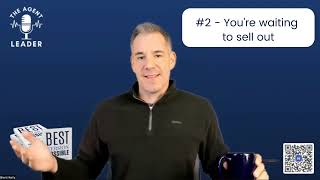
Brent Kelly lists five scenarios where an agency doesn't need a coach: if it's immune to market shifts, the owner just wants to sell, the leader won't invest in the team, it's already the feared top competitor, or it's already getting exceptional results. Otherwise, coaching matters.
Chapters
Welcome to the Agent Leader podcast. My name is Brent Kelly. I am your host and it is my pleasure to be with you on this episode today. Agency leaders out there, I'm going to challenge you a little bit. In fact, I may challenge you quite a bit. And I want to do this. It's part of my passion, my mission, our mission of an organization. My mission of this podcast is to help you, the agency leader, gain clarity, consistency and make a commitment to, to become your best version possible. And if we're going to provide clarity, consistency and a commitment to become your best version possible, that requires that I challenge you. That requires that maybe on this episode, this podcast, I may ruffle some feathers. And I'm good with that. I'm good with that because we believe in what we do. We believe in the value we bring to the agency marketplace. And I also know that every time there's transformation or change done in my own life or in the agencies or insurance professionals that I work with, it's because they were challenged to do things and maybe think a bit uncomfortably right, to do things that may be outside of the norm. So today I'm going to share with you the title of this podcast is five reasons your agency doesn't need a coach. Five reasons your agency doesn't need a coach. Now think probably if you know me at all or listen to podcasts, you know that coaching, consulting, working with agency, agency development is what I do, what we do at the Sitkins Group. So certainly this is a bit of a play on words in the sense of I'm going to challenge you. Of the people that say, well, I don't really need a coach, I don't really need mentorship in this area. I really don't need a network of other professionals that are going to, you know, challenge me and encourage me in different ways. Now I know you as an agency leader are probably involved in a number of different things and I understand that and I respect that. But I do want to challenge you today about, you know, if you're, well, I don't really need a coach. And by the way, is this a bit self serving? Probably, probably. But that really honestly isn't my intention. If by listening this podcast someone says, you know what, I want to learn more about Sitkins, then great, you can go to sitkins.com experience and you can learn about how we work with agencies and it may or may not be a fit for you. You know, that's, there's a number of factors that involve. But go to sitkins.com experience but you may also want to work with a different kind of coach or somebody else, you know, in a different specialty. You know, what we work with agencies is around talent development. Certainly in the aspect is as I speak on this podcast, around agency leadership. And we certainly want to educate, we want to empower, we want to equip agency professionals within an entire agency to strive for more to work on their skills, to work on processes, to, to instill better and reinforce attitudes that are part of the culture of the agency. But there are a lot of coaches that do similar things and different things that help agencies. In fact, some of our best agencies work with a number of people in different areas. Whether it's technology or, or automation. It could be some, something more personalized to a certain skill set. That's great, right? What I believe is the greatest investment that you can make is an investment into yourself. The greatest investment you can make as an agency leader is an investment into your team. Why? Done right, there's always a return, but you got to make the investment. So today, again, I want to share with you 5 reasons why your agency doesn't need a coach. Right. Why don't you need a coach? And I think about this actually was inspired a bit by Lewis Howes. And Lewis Howes, if you haven't heard that name, runs a very successful podcast in a business. His podcast is called the School of Greatness. So you may want to add that to your list of shows that you listen to outside of the Agent Leader podcast, of course. Right. The Greatness or the School of Greatness podcast. And he has written a new book about greatness and what greatness looks like. And I think it's really interesting because we think of greatness that always kind of success and all this kind of stuff and revenue, that's a big part of it obviously, but there's more that goes into it. And Lewis talks so much about, about coaching and you know, the best people he's worked with and thousands of people. The same is true with the, the agencies and professionals we work with. They have a coach, they have people that challenge them when they need to be challenged. They encourage them when they need encouragement. They realize that you have these conversations that if you ever ask yourself, gosh, am I the only person, are we the only agency dealing with this? Probably not, right? So it helps you to learn from others mistakes, it helps you to be able to accelerate certain areas and maybe you're running into roadblocks. But I love that Lewis House talks about this is so many people that do desire to be successful. One of the things that holds them back is they have a lone wolf mentality. Right. If it is to be, it's up to me. I think to a degree that spirit is great. Right. There's the fact that there's ambition and drive in that. But lone wolf, no one ever accomplished anything great alone. And you know, I hope you've got a great agency team around you and some support systems, but the more people and the more ideas that will inspire you and engage you and challenge you. What? Well, guess what? The faster and higher you will grow it personally and professionally. And we certainly see that with our agencies. And again, it's not all about the numbers, but the numbers are important. We always say, you know, numbers are the outcome of behaviors and strategies that you put in your agency. Numbers are the outcome. You can't manage numbers. You can manage the behaviors and strategies. And so a lot of these things that I'll be talking about to a degree, there's going to be a mix of five reasons why you don't need a coach. Some of them around behaviors and strategies, some of them more mindset. Some of them are a bit of an outcome as well. But just to reiterate, and I shared this on a previous podcast, it is important. It's interesting. You know, success leaves clues. We look at some of the top agencies that we have the privilege and honor to work with and be an agency growth partner. Their numbers over the past three years have been incredible. Why? Based on behaviors and strategies that they've instilled in their agency over. Over a three year period. Same agencies we tracked over a three year period, the agency average, 33% growth in revenue, 38% in growth in profitability. And of course that leads to agency valuation. Whether you want to sell your agency or not, agency valuation is critical. Using a 10x multiple, we saw an 80% growth in agency valuation. Why? Behaviors and strategies, right. That drive those numbers. So let's talk about that because a lot of agencies will say, well, I don't really need that. We're doing okay. And again, by the way, I'm not, I never would force anybody or, you know, nor can I to hire a coach. But I do want to get you to thinking. And part of this is to be a bit. I said, I'll ruffle some feathers, be a bit prolific, right. And not be vanilla. I'm not going to tell you everything you may want to hear. I want to challenge you in different ways. You may agree, you may disagree, but I would challenge you to think about these five areas and if your agency, how your agency is doing in these specific areas or how your agency would be impacted, so to speak, in these five different areas. Here's the first thing. If you're taking notes at home, number one, you're immune to the outside forces in the world. You're immune to anything on the outside forces of the world. Now, what could that include? Well, certainly, I would say first and foremost, immune to the economy. Right. Immune to things that happen in the marketplace. Right. And by the way, these things I'm sure you've already felt and seen. Now, the problem with outside forces is they can be a force for good and. Or evil. Right. You could have outside forces that actually help propel your agency. We've had many of those conversations. You may be dealing with that now, where you have market conditions that harden the market and you're in a position where you're able to retain a number of clients that get huge increases. We joke that the insurance industry is one of the only areas, only, only industries you can coast uphill and you can to a degree with market conditions. The point is, is that a lasting tactic? Well, no. In fact, one of the things that I've had conversations with agencies over the past couple weeks has become a bit of a mantra. Comes back to some of my sports days and working with coaches as an athlete was they would say things like, brent, you have to control the controllables. Control the controllables. You don't have the ability to control some things that will impact you. Market conditions, you don't have direct control. They will impact you. It's like walking outside if it's raining outside. You don't control that. It does impact you. Now the question is, how do you respond? What are you doing? What are the things that you can control? Both, you know, both different sides, good or bad, to help your agency, to help yourself. Prosperity. You know, one of my favorite quotes, very enlightening quote comes from Warren Buffett, who said this. You know, when the tide rolls out, we'll know who's been swimming naked and if you've been experiencing some increases in growth because of market conditions. And by the way, many agencies have. I don't think this would be. That would be prolific for me to say. There's a lot of truth to that. Right? That's great. Take advantage of it. Right. Make as much money as you can in the meantime. But know that at some point, right, when the tide rolls out, we'll know who's been swimming naked, we'll know who doesn't have some of the foundational behaviors and strategies in place that when the next thing happens. And by the way, what's going to happen in the economy in the next few years, we're already seeing some things, right? So part of this is if your agency is completely immune to outside forces, including economy and market conditions and others, you don't need a coach, you're fine, right? Number one. All right, so that's number one. Number two, you're waiting to sell out. I talked about agency valuation. It's important whether you want to sell or not sell. But this is something that we will either hear directly, in some cases, not too often, but sometimes a bit indirectly, that in essence, hey, listen, Brent, I've got five years, three years, one year, whatever could be shorter, could be longer, that at some point, you know, we know all the offers that are coming in. We know that the acquisition market, merger market is still fast and furious. Will it slow down? Maybe a little, but it's going to be around. Right? And obviously you run an agency, you probably get numerous solicitations, maybe even every day, certainly every week. But this idea that I'm going to wait until I sell out, hey, eventually it's going to, you know, I'll sell at some point, we'll figure it out and I'm going to be okay. If, if that's where your mindset is and you really believe that, then you absolutely don't need a coach. Obviously, I'm going to challenge this. I had a friend of mine, and this is just my thinking, working with agencies. I think most of you will relate to this. I had a friend of mine who had worked in a corporate job for a long period of time and we were having a conversation over dinner and I was just talking to this person asking how things were going and you know, what happens and kind of complain about the job and it's tough and don't like the B.O. and, you know, I don't know, but I'm going to, I'm going to get through it. I'm going to get through it. I'm going to get through it. You know, kind of things that you'd hear and I'd say, well, what's the, what's the long term plan like? What are you wanting to do? Well, this person said to me, I'll never forget this. I have about six years left until I qualify for early retirement. So I'm just going to wait it out for the next six years. Now, I understand that there's financial impact to this Right. There's families involved in different stuff. But just hearing that, it. It broke my heart. I mean, it honestly did. I'm thinking time is so precious, time is so limited. And we say that it's a bit cliche, but it's true. Like, things move quickly. Life on this earth is very short when you really stop and think about it and say, you know, for six years, in essence, what the person said to me is that I'm going to be average, I'm going to be unsatisfied, I'm going to be unfulfilled. But at the end of the six years, we'll figure out what happens to that happens then was sad. And maybe it's not a direct correlation of what I'm getting to for agencies, but there's some truth to this. You know, the culture isn't great. Our producers really aren't producing like they should. There really isn't much accountability. We don't really have a clear vision. We really haven't acknowledged the client experience at the highest level. We really haven't developed a sales playbook or set offense that we should to differentiate in the marketplace. And I could go on and on and on and on, but you know, what good is good enough? Eventually we'll get to the end and I'll sell for a good amount of money. Great. I mean, if that's where you are, then you certainly don't need a coach. And part of this too, obviously there's a financial impact at what cost? And certainly a cost of your time and your energy and your effort. The only diminishing asset we have is time, but a financial cost. I mean, I talked about agency valuation and what we see with our agencies. You know, the multiples out there are still really big, and they'll continue to be pretty large, I think, for a long period of time. Right. You could look at different studies on that. But basically, you know, even if you use a 10x multiple, which is pretty darn low at this point, every hundred thousand dollars of unrealized profit in your agency, which is based around culture, strategies and behaviors of things I talked about, is a million dollars in lost agency valuation. Every a hundred thousand dollars is at least. I'm sure it's more than that in most cases is a million dollars in agency valuation. At what cost do you want to be complacent for one year, three years, five years or beyond? So if you're waiting just to sell out, guess what? You don't need a coach. There's no reason to. All right, so that's number two. Number three. This is, this is my passion project, a number three. And I will be very straightforward with agencies when I have initial conversations. And this is it. If you believe that your team is not worth investing in, then you don't need a coach. If you don't believe that the people, the resources in your office or remote or wherever they are, where they're part of your agency team, if you don't believe they are truly worthy in your investment and just a general investment of time, energy, effort, in skill development. Right. In growth, personally, professionally, in growth and how we do things and growth around culture, all these kind of things we get into that are so important in team development, then you don't need a coach. If you've listened this podcast for any length of time, I talk about leadership, I believe the number one job of an agency leader. Number one. Number one job, not seven or 10. The number one job of an agency leader is to develop your people. Develop your people. There is not a magic development button that happens. Now. Here's what happens and where we fool ourselves. You're going to have a few people and again, depending on the size of your agency, it could be one, it could be several. That they're just extremely self motivated and that's who they are. Right. I, I would hope that I'm one of those people that if I work for an agency that whether you, you know, whether you develop me or not, I'm going to find ways to develop myself. But here's the thing about this. Even the best, they want more development, they want more accountability. They want more resources and tools and skills that can help them enhance their career. Your sevens or eights or nines out of 10 on your team could be in all nines or tens if only they had more opportunities to develop at an even higher level. And by the way, that's your, a huge capacity for growth in your agency as well. And sometimes our best performers get overlooked. Why? Because the squeaky wheel gets the grease, right? The squeaky wheel gets the grease. Yeah. You know, Pam and Joe and, and Jenny and whatever making up names here. I mean, they're, they're pretty darn good and they're going to be okay without me. I'm going to leave them alone. And by the way, they probably want to be left alone to a degree that, guess what they also really want. They want to be acknowledged, appreciated and challenged to go even higher. I mean, think about the best athletes, the best performers, the best musicians. Well, they're already really good. They want More. Is it because they're just ego hungry maniacs? No, it's because it's the highest expression of themselves. To not do that, not be challenged is why these type of people leave your agency. Well, we just couldn't, couldn't support them. Maybe there's a reality there. I could have a whole different topic on that. Right. We know what's going on with lift outs and different things, but I would have to challenge you is have you given them a true compelling vision and reason to stay that we're going to develop and challenge you at the highest level long term growth is available here. So that's the top end, of course. Then you've got some maybe middle people in your office, so to speak, that they're dying for some coaching. They need it, they just don't really get it. And then you have some maybe poor performers that you're allowing to hang on for a long period of time. Because guess what, it's all the same anyway. Guess what the average to above average performers get very frustrated with when you allow poor, poor performers to be treated just like they are. Hey, no one's really required to develop. No one really has accountability. No one really has to be challenged here. So they're all the same. What is the culture that you're building? An agency. So again, I knew I'd go on a bit of a, of a rant there, but it's important, I believe in it. And I just think that, you know, anybody that's part of your organization is worthy of your time, energy and effort to develop at the highest level you know how. And certainly coaches and groups and organizations can be a big part of that. It's a big part of what we do with agencies. And again, this may be self serving, but it's true. Listen, you as an agency leader run your agency and your team, right? Runs your agency and you lead and it's your culture. But if we can help educate, we can help equip you as leaders in your team and help empower them to do more and be part of that. Well then let's do that because there's so much more that's possible. If only, right? If only we could do that. So that's number three, number four reason why you don't need a coach. Because you are truly the competition that is feared in your marketplace. You are like the top of the top that if your agency is on an account, no one else ever wants to touch it. If you walk into account, you know, the incumbent and others that around go, oh no, Right. If you're at that level, right at that highest level, you are an indispensable risk partner. That top 2 or 3%, you probably don't. By the way, I'm going to say you probably don't need a coach. Those are the agencies that still have a coach, which is always interesting to me as well. But hey, if you're there, you probably technically, you know, for the sake of this podcast, don't, don't need one. Now, what are some things to think about? And this is something we talk about all the time. Does your agency, does your department, do your producers, does your high performance teams, do they truly understand the points of differentiation that make them unique and compelling? Can they tell a compelling story? Do you have a compelling story? Do you have an agency playbook or set offense that does truly differentiate you and separate, separate you in the marketplace to be that category of one. And excuse me, back to the talent development, are you reinforcing the skills, are you doing practice in the agency that they're so good at what they do? In fact, all those skills that you have in your agency, your team has gotten so good they could teach it to other people. That's when you get to that, that highest level. The, the ongoing, the ultimate competitive advantage of preparation, practice, things we talk about all the time. That's when agencies become truly the competition that's feared. Right? Because they understand their differentiation, their values, what makes them unique. They've got a unique selling proposition and they can tell it very, very well because they have a playbook and a process that's built into that. And they continue to refine and develop the skills which, the people to communicate it at the highest level. Right? So if you got all that, you, you probably don't need a coach. All right, which leads me to number five. All right, number five, why don't you need a coach? Because you're getting incredible results. I'll say the same thing I said in the last one. It's interesting. The agencies that get the most incredible results continue to look for other ways to improve because there's, there's always another level. But if you're getting incredible results, and I wrote some things down, these are some of the, the top things we see. I mean, some of the best agencies, and again, we had the pleasure of seeing some of this with our, with our agencies we work with. If you get a revenue per employee of 275,000 and higher, if you've got overflowing pipelines, right, More opportunities than there is time from your Sales pipeline overall, because you're earning, asking for referrals, you have a true future ideal client marketing system in place. Every client you get comes from referral. You get a referral from every client. That's a philosophy. I've talked about that before. It's pretty powerful. If you're have an 80% or higher on your conversion and your closing ratio. And we have agencies that are doing very close to this, if not over this conversion ratio is that first appointment that goes to the next appointment. On larger accounts that you've done a great job of identifying future ideal clients, telling a compelling story, qualifying that account and moving it to the second appointment or the next appointment. 80% higher on closing ratio. Some of that comes back to opening the sale correctly. Right? With a true proven process that we're qualifying, we're asking the right question, underwriting differently that from the first conversation we, we just continue to separate ourselves from everybody else. We're very different in how we approach things. And the biggest thing we see that agencies that don't close sales very well is because they haven't done a very good job up front of opening or engaging that relationship, effectively establishing rules of the game up front. If you've got 15% or higher organic growth rate now we know some of the market conditions we've had agencies that have been able to attain close to that or close get that. But long term, over year after year, 15 plus organic growth rate or 25 or and or 25% profitability numbers excluding contingency. So the profitability agency is 25% or higher. In fact, a term that we use is grow fit, which is a combination of organic growth percentage and profitability percentage of an agency excluding contingency. The goal and agencies you work with is 40 or higher. Which means you'd have in this example, 15% higher organic growth rate, 25% higher profitability. Here's the thing, I'm just throwing out some, some numbers for you. But most agencies settle at good enough, right? Our numbers are pretty good. And by the way, if, if you're happy with stuff on things, good for you. We want agency. I want you to be fulfilled. I want you to have freedom in your life. Right? That's what we aspire to for agencies. But it's just interesting to me that the best agencies, the agencies that, that achieve these numbers and it comes back to strategies and behaviors. It's a mindset of good is the enemy of the best version possible. And it's not the fact that we shouldn't be grateful for what we have and what we're doing. Absolutely. It's the fact that are you waking up every day with passion and conviction of what's next for me and my team, what's next for our agency that we can accomplish to do great things? Because guess what I had. There's a book I read years ago called Thou Shall Prosper by Rabbi Daniel Lapid, a great book, Thou shalt prosper. One of the things that he said, he's got a number of, of principles in that book that he talked about is that so often we don't realize what that, that end result of dollars really means. And he said, you know, dollars are simply a certificate of appreciation. It's a certificate of appreciation that you've done a great job, you've served people with excellence, you've served others with excellence. That includes your clients. That certainly includes your team members. Right? That the more dollars that, that our clients are paying us, the more dollars that we can pay our team members are all parts of certificates. Appreciation. Life's way more than money. 100% agree with that. But money is a great indicator is if we're doing the right things at the highest level. So I wanted to share this with you today. A bit of a, bit of some rants in there, but it does come from my heart. It also comes from what we see in the marketplace and working with agencies, talking to agencies every week. Listen, I love what the independent insurance agency industry, what it represents and how we serve people. And there's so many good people and I just wouldn't feel I would be doing my job. And I want to go to this podcast to share some of the frustrations we see. Not because we're mad at agency leaders, because we see what's possible. And when you can see it right, you certainly can achieve it. And that's a bit cliche, but it's true. So if you want to learn more about what we do at Sitkins love have a conversation, you certainly can go to our site. But if you go to sitkins.com experience it shares our best version possible experience roadmap, how we engage with agencies, what that looks like, I've said it before, I'll say it again. We're not a fit for everybody. But we are looking for agencies that are growth minded. We're looking for agencies that are hungry for the next level of success, agencies that are hungry to learn new things, to share new ideas. We have an expanding network of agencies that are collaborating and communicating. We're going to be having on site events. We certainly have virtual programs that we continue run. We do personalized coaching with agencies. We do assessments for agencies to help you and your agency see what's possible so you can go achieve what's possible. Appreciate you being a listener of the Agent Leader podcast. I haven't asked this for a while either. If this podcast is helpful for you and your agency and I've challenged you, inspire you, maybe giving you a nugget to think about, an action item to go do, and any of the podcasts that I've done, whether it's me with Roger Sitkins with the guests. But appreciate a review. We continue to want to grow this podcast, share with others and get the information out. So appreciate you. Wish you all the best and your success. Thanks for listening.
More from Roger

This Shift Helped Us Unlock Growth 💡 | Agency Leadership Tips #insuranceagency #agencygrowth





How AI Can Help Insurance Agency Owners Master Their Financials (Without Being a CFO)

From AI Hype to Real Results: Steve Anderson on How Insurance Agencies Can Use AI to Grow Now



