Get Profit from Becoming ProFit
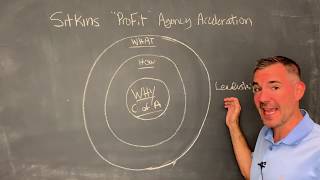
Brent Kelly explains how agencies reach profitability through professional fitness: start with leadership and accountability, adopt a 30/40/30 model (30% profit, 40% service and overhead, 30% sales), and increase time spent selling. The framework uses Simon Sinek's Golden Circle to move from why to how to what.
Questions this video answers
Brent Kelly (Sitkins Group).
October 1, 2019.
30% profit, 40% service/overhead expenses, 30% sales expense (30/40/30).
Time Spent Selling.
Chapters
Hey there. Brent Kelly here of the Sitkins Group with my profit tip helping your insurance agency become its best version possible. And I want to take a few minutes today on this video to talk about the profit experience and what that really means for insurance agencies. Now, when I do profit tips and we talk about the profit experience, it is a play on words. Obviously, you can see profit is spelled like profit. And I truly believe that profit is the most important thing for your agency. It's not just what you make, it's what you keep. And so we've got to understand profitability. But to get the profit, you must become profit, which is professional fitness. And so I wanted to share what is professional fitness? How does that mean? What does that do? How does that lead to profit for your agency? And to do that, I want to share a tool that something that Simon Sinek did years ago. But I'm going to take it a little step further for insurance agencies, something he called the Golden Circle. And if you followed Simon Sinek for any length of time, you'll probably know his book is called Start with why. But Simon talked about the fact that the great businesses, the great leaders in business, they don't start with what or how, they start with why. And of course, he wrote a book and created a movement around Start with why. So how does this apply to insurance agencies? You know, at Sitkins, we work with agencies, we have a process or a system and I think more importantly a mindset that we help lead them through to get the results that they want to get profit, they've got to get profit. So let's start with why. What does that mean? Well, with agencies that we work with, I think the most important thing with why, and I don't know your agency's why. They're all a little bit different. But I can tell you a fundamental consistency that we see with great agencies with their why is they have something called a C of a culture of accountability. Now, there's two words in this, right, culture. Number one is the normal language and behaviors that are, that are typical in your insurance agency. So what are your people saying? What are your people doing? What's the attitude in the agency? Of course, it's all part of culture and then accountability, meaning are your people doing what they said they were going to do. Now, this is absolutely critical because I don't care what type of systems or processes or models that you have in your agency, whether they're amazing or average, it doesn't really matter because if you don't have a positive or A strong or at least a growing culture. And you don't have accountability behind that culture. It doesn't really matter. It's just words, just phrases. And so we work with agencies. We start with this, which, by the way, is a leadership issue, right? It's leadership. And I believe just John Maxwell says that everything rises and falls on leadership. And so we've got to start with the leaders of what is your true vision and mission and what are those things you're going to consistently communicate with your team? Because if you're not consistently communicating in leadership, you'll never develop a strong culture and you'll certainly never develop a culture of accountability. So that starts with why. Now let's move to how. Well, how do we do this? Well, how are the models behind the agency? Now, a lot of different models you can look at and talk about, but I think just a couple things very simply that we like to talk about at Sitkins. Number one is this idea of 8020 that we can tell you that most agencies understand that 20% of their clients produce 80% of the revenue, that 20% of their carriers produce 80% of the revenue,that 20% of their producers in many cases produce 80% of the revenue. So we're always talking about 8020 and the vital few. So we look at 8020 in many different areas because the model tells a lot about what are the most important things that our agency needs to do to get the results. What's that 20% of effort we put in to get the 80% of results? Most agencies do this backwards. They work really, really hard. They're really, really busy. Just ask them. But they're not getting the results they want because they're not focusing on the right thing. So 8020 is critical. And then also, I don't want to dive too deep in this, but just an overall profitability model. Back to being profitable. 30, 40, 30. In the best agencies, and this is hard to get to, we see agencies that are producing a 30% profit, 40% of service or overhead expenses, all the expenses, and a 30% sales expense. 30, 40, 30. It's a very powerful model. Some people go, oh, that's incredible. How do you get to that? Well, we jokingly say the best way to get a 30% profit is only spend 70%. But we have models around that to help agencies see how to do that. And by the way, for many agencies, it is a process. It's not an overnight thing. But. But there's got to be a model behind this. You have leadership, we have models lastly is what do we do? What are the true strategies and the behaviors, if you want to call them tactics. I don't care what you want to call them, but what is the actual what we're going to do? Well, there's four main things that I want to focus on. On what? Number one is an acronym and I'll talk about this for a second. TSS Time Spent Selling. I can tell you, most agencies that we talk with initially, you are real honest with their production team. Those people that are out to get sales right to drive revenue for the agency are spending very little time, or at least not enough time actually in sales and sales related activities. And so we spend a lot of time in working on building a high performance team, sales and service, getting people on the right seats, doing the right things at the right times to generate results. And we look at again a metric called tss Time spent Selling. So that's number one. Number two, and again, this is a little bit generic to a degree. But let me just talk about this for a second. The customer experience. We forget about this. Oh yeah, the customer experience is important. We want to meet and exceed our client's expectations. But have we actually clearly defined what that is, what that looks like? Do we have a true continuation process in place? Not just a renewal process, but a continuation process so that we no longer renew accounts, we continue relationships. It's about relationship management and doing the right things up front so that we maintain and we deliver upon a world class experience that produces long term relationships. So you're a long term risk advisor in your client's life. So the customer experience next and again may seem a little bit obvious, we've got to talk about pipelines. Didn't do that very well. But and with pipelines understanding that we want pipelines of future ideal clients only, and this goes back a little bit to 80, 20. But who are those right clients that we want to work with that will enhance our business that we have fun working with, that we're tailored to do a great job with. That's more important than just working with everybody because I believe if you market to everybody, you market to nobody. So we talk a lot about what to do and how to build pipelines. Having a target account strategy plan with your future ideal clients. And the last thing is actually having a sales system. Sales system. Sales process. An agency named Sales System that is flexible by producer because we have producers with different personality traits and skill sets. But we don't dilute what it is for the agency. It's a sales system that we can train around, that we can learn from, share experiences and it changes the conversation from quoting in transactions to risk advice and relationships. That's the what. So just to recap this as best that I possibly can, the profit experience professional fitness for your agency to get the outcome of profit. Because I believe again that numbers are only an indicator. They're only the end result of the strategies and behaviors that we have in place. So to get profit, we need to get profit. And what does that mean? Well, first of all, it starts with leadership. What's the why? What is the vision and the mission of the agency? What do you stand for and what don't you stand for? And how do we communicate that to build a true culture of accountability? We say it again and again and again and again that our team knows exactly what we're all about and they buy into that. Again, maybe a process. We got to start that process. Next is how the models, the 8020 philosophy principles and also the model of 30, 40, 40 when it comes to profit, service expenses and sales expenses. And then lastly, what do we need to do? Well, we've got to get more productivity from our entire agency, but certainly our producers we got to develop and really understand the client experience for our agency. What does that look like? We've got to talk about pipelines and not just suspects or prospects with future ideal clients. And lastly, we've got to have an agency sales system and certainly we help agencies with all of these to build a pro fit agency experience. Hopefully this is helpful to you. You can take some nuggets from this or at least get you thinking about it. And I can tell you, as I mentioned before, we don't work with all agencies. But if you're an agency that's committed to growth, that you're tired of the same old same old and you're looking for a leg up, you're looking for a turbocharged whatever you want to call it in your agency and start to be challenged to be your best version possible. We'd love to talk to you. Go to sitkins.com, reach out to us or email me brentidkins.com I wish you all the best in your success.
More from Roger

This Shift Helped Us Unlock Growth 💡 | Agency Leadership Tips #insuranceagency #agencygrowth





How AI Can Help Insurance Agency Owners Master Their Financials (Without Being a CFO)

From AI Hype to Real Results: Steve Anderson on How Insurance Agencies Can Use AI to Grow Now



