Insurance Agency Leaders' Panel Discussion
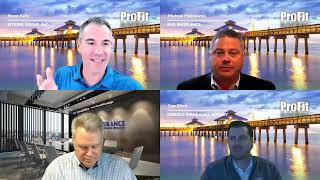
Panel discussion (recorded Apr 7, 2022) featuring insurance agency leaders Michael Malinowski (EHD Insurance), Dan Elliott (Diebold Insurance), and Todd Leikey (TCL Insurance) moderated by Brent/Roger. Participants discuss leadership, sales culture, getting comfortable with being uncomfortable, talent recruitment, organizational structure (sales vs. service), and processes for growth. Agencies share recent successes (EHD: $28M revenue, strong new sales year; Diebold: improved accountability and separation of sales/service; TCL: rapid growth to ~$3M) and current challenges (producer recruitment, consistency of process, managing growth).
Chapters
Thanks, Bethany. Bring in some of our great agency leaders and obviously all of you part of this program. We appreciate being a member, but I want to bring on some of our members who have really done some extraordinary things with their agency and it just exemplified some key areas in leadership. And I've actually got three panel members that are from different parts of the country, different size revenue agencies, different specializations. So we're getting a pretty good scope here. But from a leadership perspective, and as you can see in this section, if you're looking at the workbook, the idea that the topic was getting comfortable, being uncomfortable, right. And so I'm going to ask these leaders, I'll give you all a brief intro here so people get to know you a little bit. I'm going to brag on you just a little bit because I know you won't brag on yourselves because you're humble servant leaders. But I do want to add, I've asked him some questions ahead of time, but I, I've also told them as well, I want them to begin to think about some of these questions in terms of where have they had to get uncomfortable in certain areas to get the results they want or maybe whereas leaders have we stayed comfortable too long that has maybe hindered some of our progress. Right. In different ways. I was, as I was preparing for this over the past couple of weeks, something hit me. I said before and Roger said before that nothing grows in the comfort zone, right? Wherever we've just been for a long period of time, not much grows there. And I was thinking, except for one thing, complacency. Complacency grows in your comfort zone. We just get used to doing the same thing, right. So just keep that in mind. In fact, you know, that maybe something you want to write down at the top is the only thing that grows in my comfort zone is complacency. I don't think any of you are here to be complacent, right? You wouldn't be part of the network. You wouldn't be part of our. Of our structure and what we want to do and want to accomplish. So I'm going to give you see the guests spotlighted here. We've got Michael Malinowski, Dan Elliott, Todd Leikey. I'm going to give a brief intro. If you guys need to add anything, feel free to do it. If I say something incorrect, you can correct me. But I think we got this pretty well said here. I first wanted to mention Mike Malinowski. Mike is the CEO of EHD Insurance in Pennsylvania. We had Several offices in Pennsylvania. And again, I'm just versus going through all the vernacular of this and that I just want to hit some highlights that I know at Sitkins we personally have appreciated and applauded from each of these agencies. And I would just say this EHD Insurance. And then we've mentioned them on several of our trainings because they are if not the top implementer, they're certainly right there at the top. And we've kind of joked, Mike, back even with John Miles of your number one agency, maybe number two, not quite there yet, but doing some great things. And I do want to share because part of this we talk about is culture and I've shared this in different programs. Mike, obviously you're going to be aware of this and it's going to be hard for many of you to see with my screen. So I'll read it. But it just goes back to when we it says here at the top, this is a mirror that is in all of the EHD offices. Right, Mike? And it says there at the top, is this your best version possible? So we talk about that with, with ehd they didn't just go, oh yeah, that's something like they made it a thing. And at the bottom, which is fun, is they have on there, it's hard to see. I know, I'll read it says producers if it's Tuesday, Wednesday or Thursday between 9am and 3pm you should not be reading this. Right. Just a culture of the fact that A we are going to be our best version possible, number one, and B producers get in the green zone, right? Get out there and do those things. So I wanted to share that. Just a couple of things. EHD and Mike, again, correct me if I'm off on some of these a little bit, but $28 million in revenue, right. And I want to bring this. It's interesting too. Two years in a row and maybe they're going on a third now. They had over $1 million in BOR or AOR business, which is pretty cool. 1 million in revenue. Just. And by the way, it wasn't. That's not their only revenue. Obviously, as most of you know, we don't teach necessarily a BOR or AOR process. We believe that a BOR AOR happens. It's the end result of a great process. Right. Is the fact that they're choosing. So kudos to you. And of course that comes in a Covid year as well. And then you just recently informed us, which we didn't know about this until recently, you had Your best new sales year in EHD history. Last year, 2.2 million in revenue. So everybody applaud Mike and the EHD team. That's pretty cool stuff, right? So we say leaders in the clubhouse, EHD is doing a great job. So Mike, want to introduce you and I'll get to your questions here just in a second. I want to also introduce Dan Elliott. Dan Elliott is the VP at Diebold Insurance Agency in Michigan. He's third generation, right, Dan of the. Of the agency.
Technically fourth.
Technically fourth. So, you know, sometimes we joke. Dan, if you ever watch the movie Multiplicity, you make a copy of a copy of a copy, it doesn't always get so good, but in your case, you've broken, you've broken the mold. You guys are doing great. Dan's a great leader along with Pete. Amy in your office. Obviously your dad Kevin's been around with Sitkins for a very long time, you know, and been a huge implementer. But just some things that Diebold has done. And it's not even just the numbers. You guys are doing a great stuff, but probably one of our best agencies, not the best of understanding low risk practice and preparation. Right. You guys really understand this nature of accountability and a sales culture and your producers hit your goals. Right? Like that's part of what we do. If we're going to set goals, we're going to hit them. And Diebold has done a fantastic job. Also mention on a personal note from Dan, just had your number two child, right?
Yeah. Back in December. So I think things are busy around here, but good busy. I know you don't like that word, but I'll use it in this context.
It works right off. Applause for Dan being our panelist. Thank you, Dan, appreciate you being here. Congratulations on number two. And then last but not least, Todd likey from TCL Insurance in the great state of Texas. Todd is our at least on this panel and actually from almost this whole group here, one of our newest members of the Sitkins Network hasn't been with us that long yet. About a year. Todd, right. Or so at this point. Todd's a trucking specialist. Their agencies and tire trucking again had tremendous growth. And I asked Todd to share me kind of where they're at. And over his course of time and obviously been with us for a year, had a very successful year. But Todd started, get this, this is pretty interesting talk about committed to growth. I use terms of revenue, Todd, so you can correct me a little bit, but about 30k in revenue when you started eight years ago. And you're now about 3 million. Am I close?
300,000 in revenue.
I'm sorry, 300,000 in revenue now. Now you're at what, closer to 3 million, $3 million revenue. And so I just wanted to give a scope of, you know, getting where agencies are at and where they're going. Because the bottom line of this is all three of you have done things as leaders to get uncomfortable, help your team to get uncomfortable. So with that I've got a few questions. And Mike, can I start with you? Sure. All right, so the question is if.
I said no, would it matter?
No, it wouldn't. If he said no, I would still still call on you. That's how we're going to roll here. So I want you to and I ask you to share your agency's top success. Right. And obviously ehd you guys have had a number of successes but we can replicate success all learn from each other. I want to know this though. I want you to share your agency's top success. And my question is this. How and where have you and or your team had to get uncomfortable to accomplish that success and how are you planning to replicate it? It's kind of a loaded question there, but.
Sure, yeah, there's a lot around that. I guess, I guess what we can really attribute a lot of I think obviously the Sitkins has helped us tremendously. And I'm not doing this because of commercial but you know, we have four offices all over the states so our language was siloed and we weren't going through the same process. And Brent and Roger kind of help us put that together. And where we really concentrated on that really helped us grow and hit our new business numbers that we want to is the trading down, the building and development of our, we call it special business unit which for us is 10 grand in revenue and below. And it was tough for producers. It was tough because we wouldn't pay them on it. We were making them concentrate on the larger deals because that's what we were paying them to do. But we hear the same thing is, well that's my best friend and I need to talk to him. And not really trusting the group that's built to do that. And there were some struggles. There was some folks in my office several times and no one else can do it as good as me and that's not what we were paying to do. So there was a lot of uncomfortability around that. But we thought if we built a good structure for that business it would help these guys concentrate on Referrals and all the stuff that we've done. But it was, you know, probably 18 months where there were some producers, especially the tenured producers, who got very uncomfortable about that process. But now they don't even want to look at it, which is good. We built the unit up. They do a good job. But I think that was probably one of the main things, Brent, that was really, you know, helped us build a platform where we can grow our larger commercial stuff. So, yeah, if that answers your question, that's probably the most uncomfortable we were as an agency.
Yeah. Fantastic. And it was, I mean, talking to some of your producers, there's always those thoughts of, well, that's, that's not something really want to do. And no producers like, well, I'm not giving up revenue. But, you know, one of the things is, hey, let's. Let's replace them before we release them.
Right.
In certain ways. And then let's get more focused on what we're going to accomplish now, obviously. And again, with some of the agencies on here, where you guys have done an EHD, you move to a $10,000 minimum account size, which, you know, it's like, that's a big number. Right. Certainly some of the agents. Now, that may not be right for your agency, but what's interesting for every agency. But what's interesting is what Jim Lewis is the sales manager, told me about the results as you guys establish a true minimum account size and started focusing the larger accounts, that you really could be a value added provider. Right. And be that indispensable risk partner. From what Jim told me, I don't have the numbers right in front of me, but in essence, you basically tripled your close ratio on those accounts. And so they're working on larger accounts and closing more of them. It was kind of like the oh, yeah, so. And I know that was uncomfortable moment. Right. For you as leaders and for your producers. So thank you. All right, I'm going to go to Dan. Dan, same question to you. You can share your agency's top success. No, it's hard to brag. And also within that success where maybe have you had to get uncomfortable to do that?
Yeah, and I'll kind of answer that in two different ways. There's probably two different, you know, philosophies of the success and how we got there and how people are uncomfortable structurally. First of all, it was really getting the right people in the right seats of the bus. I think that that's crucial. And those are tough conversations and tough movements that we had to do. Throughout the agency to get there. That was a long process. When it came to our coo, we had some big changes there. We had some turnover in our CFO also with some of our support team and account managers just focusing on right seat of the right boss. But really, when it came down to sales, it was having that clear divide between sales and service. We talk all the time, you know, same goal, different role and what that mentality looks like. And it's uncomfortable to get there. It's well worth it in the end. And we're finally as close to there as we've ever been. But, you know, it's hard to sit there and tell your sales guys, listen, I know you've always done it this way, but we need to do it this way, and this is why. And same with our account managers. You know, it's not that we're taking this away from you because we don't think you're capable. It's because we need to in order to grow how we want to grow. And those weren't fun conversations, but were well worth it in the end.
Yeah. Thank you, Dan, for sharing that. It's. I mean, I wrote down there just saying that's part of. We always talk about in many of our programs, it's establishing the culture and then beginning to implement the process. And, you know, if it's. Here's our new process. And we've never really talked about the true depth behind the why. Right. Why is this so important and what is it really going to look like when done the right way? It doesn't mean you're going to get everyone going, Yay, yay, yay. But there's more of an understanding, I think. And even back to what Mike said, there's a commitment that we're going to do this. We need to do this for the health of our organization, the growth. And quite honestly, Dan, I mean, this goes back to sales and service. One of the things that we talk about in our camps is that, well, a true great client experience isn't having the producers do some of these things because they're not very good at some of those reactive services anyway. So let's just get them out of the way. But there's sometimes there's a little ego involved in that, to say the least. So. All right, Todd, same question to you, tcl. What's been a great success? Where has there been some uncomfortability to get there?
Thanks, Brent.
Well, what we're always focused on is our sales culture. And we've certainly had some. We've had success there. We just completed our and today finishes the first quarter of the year. This quarter we are celebrating our best quarter that we've ever had. First best first quarter that we've ever had in new business sales. So gosh, very, very proud of that. At the same time, our challenges have been we left money on the table. We had some unforced errors. Those numbers could have been better. They were ours to take and we messed up on it. So where have we had become uncomfortable? It was a choice, but one is following what we learned in the Sickens meetings when we look at from going back a year ago, changing the culture so that everyone on our team understands the red zone, the green zone. What are you doing? What did you do today? What'd you do last week? Using the iceberg. Okay. Using that where 80% of the results, it's 20% of the work. Okay. Doing what's really important below the water line is what's going to drive above the waterline all year long. On the 80, 20 rule, 80% of our revenue, 20% of our clients. Really focusing on that and saying, hey, wait a minute. We always have to average up. We have to, you know, it's not just picking the easy fruit. Our producers, our sales team understand they have to average those accounts up in the red zone. Red zone, green zone, average accounts, iceberg. No practice quoting. That's another issue that we look at every month. What is our close ratio? It's important to have a good close ratio. Why are we practicing and spending our valuable CSR time on low probability accounts? We're too busy for that. There's no magic bullet. It's making good decisions over and over again. But sometimes it's uncomfortable, so we have to push through that. But it is showing up and we're still trying very hard to get better.
Well, Ty, first of all, congrats on where you continue to move forward to. It's really exciting to watch. But I think you didn't say the word. But what hit me is consistency. You know, I mean, it's. And I think that's the challenge. No magic bullet, but it's just this idea. And one of my favorite books is the Compound Effect by Darren Hardy. Great read. Similar book called the Slight Edge by Jeff Olson, but similar premise. It's just, yeah, you're looking for this magic thing. We always say, you know, we joke now, Sitkins, we got to quit the gimmick of the month club and just commit to doing the things that we know we need to do. Even when it's not always fun or easy. And that's what, you know, I think Ty applaud you. And obviously, Mike and Dan and other agencies here as well as, you know, and you talk about culture. Are we a. Are we a sales culture that's focused as a sales culture that provides exceptional service? Are we a great service culture that happens to sell when we have time? And just ask yourself, as an agency, which one are we really, and what does that look like? So, Todd, again, thanks for. Thanks for answering that. I appreciate that. I'm going to kind of go on the flip of this a little bit. And, Dan, I'm going to start with you on this one. All right, so put you up first here. Every agency has challenges. I know you at Diebold have challenges. What would you say right now is the biggest challenge facing your agency today, Dan?
I would say that the biggest challenge that we have is as good as we've got with the separation of sales and service, having all of our producers and our whole sales team dedicate themselves to this process. You know, we've coached them, we've explained to them what it is and what the expectations are and the ones that are buying into it are clearly excelling. But, you know, we have a wide range of different tenured producers within our agency, and. And, you know, some of them have earned that right to do things their way as they kind of sail off in the sunset. But making sure that as we're hiring for the future, that we are really having that consistent process in place because it truly works. And I think that's been our hardest thing to manage is, you know, we have four different locations, different tenured salespeople, everybody having that same dedicated process. Because, you know, we've talked a lot, Brent, you know, off of the call here, that. That it truly, truly works if you do those basics better than anybody else. But just trying to get that consistent process against people from different industries and different tenures and things like that has been a big challenge. I think it still is our biggest challenge, but we're making progress every day.
Yeah, Dan, I think you're the only one that has that challenge. Right. I see a lot of heads nodding. One of the best analogies I heard is somebody getting producers to do the right thing together is like nailing jello to a tree, you know, just jiggles everywhere, because there's just a lot of personalities right involved in that. And so there certainly is, again, a consistent process in the culture around that. Mike, how about you? What the HD right now? What do you feel is the biggest challenge you guys are facing today.
It's by far talent, it's by far producer recruitment. And as you know, we talked to one of the breakout groups. It's probably limiting us in our accountability for those part time producers, as Roger said earlier, because we're just, you know, we're just struggling finding talent out there in the industry and I'm sure everyone's going through that. So, you know, in order to grow and as we always say, you know, bigger's great but the boulder's harder to push up the hill and you need more hands on deck. And we're just, in this particular area, we're just, we're just struggling. We're, I think as you know, we brought you. We're going to try to do it ourselves. I don't know if it'll work, but we can't just sit here and just let it happen. With the producer academy we're starting, but that's our number one challenge is we think we have the sales culture and some of that stuff going in the right direction. But you still need younger folks out there, probably more diverse folks, especially in our area, to do producing. And that's what keeps me up at night because we just can't make people, and a lot of people retiring too, that we're back filling in. And the worst thing we want to do is give someone who's, you know, actually one of our best salespeople or best producers someone's book and you know, and then they just struggle to get out and produce. So that, that's probably our number one item that, that we're trying to work on and solve that problem. And, and we have to, we have to figure it out.
Yeah. And you guys are starting a producer academy part of this too. I wanted to, as a reminder if, if any of you have a specific question for one of the panelists, again, we're technically scheduled for up to 1:40. We got a lunch after that. Be happy to, you know, ask a question you're doing. By the way, just on Mike's point, I know he's not the only one or agency is going, what are you, what is other people doing for producer recruiting? So if you've got some ideas or things you've seen working, certainly this is a networking event. You can type in the chat box or we can share it in the open networking here in a little bit. So Todd, I want to go to you what TCL today you kind of mentioned a little bit of some of the challenges, but what's the biggest challenge you're facing today.
Just managing the growth. So everything is being challenged. Obviously, we're trying to grow our organic growth at the same time managing the sales, the service team and management. And it's difficult to take on a different career or whatever the case. The waters are always Everything on the back end was smooth, but it's just not. So that's a challenge. Everything on the back end was smooth, but it's just not. So that's a challenge. And we're working through that. And once again, it's just pressing every day to do everything that we can do and make wise decisions.
Yeah, Todd, as you were saying that, I was talking to the agency leader this week and I probably said it to some of you on the call at some point, but I said, you know, I see with agencies they all get can get stuck. See, agencies are stuck at a million, 3 million, 10 million, 30 million, 50 million. And I think what hits me on this is again, there's always going to be issues and things are always going to happen. It's never oh, got it all figured out now. But it's what got you here is not going to be the same thing that's going to get you there. And I think that's a really important mindset. You know, what got us to 3 million is not going to be the exact same thing. Now, the basics aren't going to change some of the basic principles, but there's nuances to that is we got to think a little more abundantly. We got to think a little different. We've got and I'll talk about in the last session, we've got to think more like how to develop more leaders within our organization, not just followers. And what does that look like? So thank you, Todd, for sharing that. I've got one more technical question that again, if you have questions from the group here, please feel free to type in the chat if you want to raise your hand.
More from Roger

This Shift Helped Us Unlock Growth 💡 | Agency Leadership Tips #insuranceagency #agencygrowth





How AI Can Help Insurance Agency Owners Master Their Financials (Without Being a CFO)

From AI Hype to Real Results: Steve Anderson on How Insurance Agencies Can Use AI to Grow Now



